There is a corner of Hafizabad where the noise of the bazaars fades, the lanes grow quiet, and history seems to lean out of the brickwork to greet you. In Mohalla Guru Nanakpur, behind an old city’s ordinary streets, stands a gurdwara that most Pakistanis have never heard of — yet it holds a story worth travelling for. This is Gurdwara Rori Sahib (Chhevin Patshahi), the spot where Guru Hargobind, the sixth Sikh Guru, rested on his journey home from Kashmir — and the spot where he tied his horse before moving on. If you are building your own Gurdwara Rori Sahib (Chhevin Patshahi), Hafizabad travel guide and wondering whether this quiet shrine belongs on your Punjab itinerary, this article makes the case: come for a story you will not find anywhere else, stay for the old-city lanes, the living fair tradition, and a window into four centuries of Sikh-Punjabi heritage.
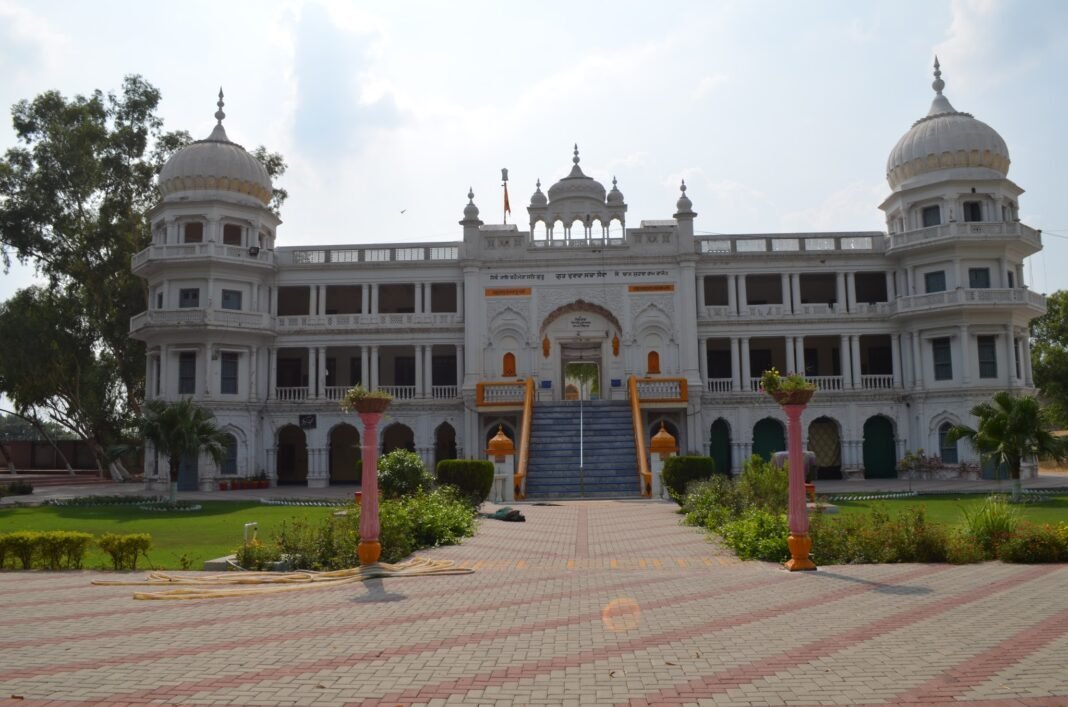
Unlike the grand, marble-faced gurdwaras that draw thousands of yatris, Rori Sahib in Hafizabad is intimate. No queues, no ticket counters, no souvenir shops — just a solid brick building, a darbar hall, an empty grave that draws an annual fair, and a mohalla whose very name remembers Guru Nanak. This is the kind of place that rewards the curious traveller: the one who likes to wander, ask questions, and stand somewhere genuinely historic without a crowd. Photographers will find weathered brick, old havelis and the rhythms of a working Punjab town. Heritage travellers will find one more link in the chain of Guru Hargobind’s travels across Punjab. And families will find a peaceful, easy half-day stop between Lahore and Gujranwala.
Quick Facts
- Location: Mohalla Guru Nanakpur, Hafizabad city, Hafizabad district, Punjab, Pakistan
- Also known as: Rori Sahib and Killa Sahib — the rest spot and the horse-tie spot of Guru Hargobind
- Famous for: The sixth Sikh Guru, Guru Hargobind (the Patshah of Meeri and Peeri), resting here on his return journey from Kashmir
- Altitude: The flat Punjab plains — no significant altitude, easy walking everywhere
- Nearest city: Hafizabad itself; Gujranwala lies about 35–40 km to the east; Lahore is around 100 km away
- Accessibility: By road year-round; roughly a 1.5–2 hour drive from Lahore via Gujranwala; nearest international airport is Lahore
- Known landmarks: The brick gurdwara building, the darbar hall with the empty grave of Lalan Wali Sarkar, the old lanes of Mohalla Guru Nanakpur
- Best for: Heritage travellers, Sikh pilgrims tracing Guru Hargobind’s route, families, photographers of old Punjab
Why Visit Gurdwara Rori Sahib (Chhevin Patshahi), Hafizabad
Let us be honest: Hafizabad is not on most tourist maps. People drive through it on the way to Gujranwala or Wazirabad, windows up, thinking about the rice fields outside. But that is exactly why Gurdwara Rori Sahib is worth your time. Pakistan’s Sikh heritage is usually told through the big names — Nankana Sahib, Panja Sahib, Kartarpur. Those matter enormously. Yet the quieter shrines, the ones where a Guru simply stopped to rest, tell a different, warmer story: of a Punjab where spiritual journeys were made on foot and horseback, and where a village honoured a traveller’s pause by building a place of worship over it. Rori Sahib is that kind of shrine, and standing where Guru Hargobind once stood is a feeling no crowded monument can give you.
The double identity of this place is its charm. According to the tradition the gurdwara preserves, the sixth Guru came here from Rasul Nagar while returning from Kashmir. The spot where he rested became known as Rori Sahib; the spot where he tied his horse became known as Killa Sahib. Two names, two stories, one small compound — and both still alive in local memory centuries later. When you walk the darbar hall, you are walking between two moments of the same journey. Few shrines in Pakistan carry their legend so compactly, and fewer still have kept it without commercial noise.
Then there is the fair. Once, a mela was held here on the 18th of Har, the Sikh calendar month that falls in early summer. In recent years an empty grave — no one is buried beneath it — was raised inside the darbar and named Lalan Wali Sarkar, and around it the custom of the annual fair continues. There is something deeply moving about that: a community refusing to let a tradition die, adapting it, keeping the lights on. Visiting during fair time is the closest you can get to the old mela culture of rural Punjab, with langar, kirtan and the general joy of a town gathering.
Finally, come for Mohalla Guru Nanakpur itself. A neighbourhood named after Guru Nanak in a Pakistani city tells you more about this land’s layered past than any museum plaque. The old brick homes, the narrow lanes, the elders who remember stories of pre-partition Sikh families — this is living heritage. Pair the gurdwara with a slow walk through the mohalla, a plate of fresh rice-belt food, and you have a half-day in Punjab that feels real rather than staged. For anyone compiling a serious Explore Pakistan itinerary beyond the usual northern valleys, Hafizabad’s Rori Sahib deserves a pin on the map.
History of Gurdwara Rori Sahib (Chhevin Patshahi), Hafizabad
The history of this shrine begins with a journey. Sikh tradition holds that Guru Hargobind — the sixth Guru, remembered as the Patshah of Meeri and Peeri (temporal and spiritual authority), the builder of the Akal Takht and the first Guru to take up arms in defence of his people — passed through this region while returning from Kashmir. Travelling with his retinue from the direction of Rasul Nagar, he stopped at what is now Mohalla Guru Nanakpur in Hafizabad. The place where he took rest came to be called Rori Sahib, and the spot where he tied his horse became known as Killa Sahib. The sangat, the congregation of devotees, marked both spots, and a shrine grew around them.
In its earliest form the shrine was a humble mud building, the kind of structure raised by devotion rather than wealth. Over time, as the sangat grew and resources allowed, it was rebuilt in solid brick — the sturdy, honest construction you still see today. During the era of Sikh rule in Punjab, the gurdwara was endowed with land: 40 ghumaon in Hafizabad and 28 ghumaon in the village of Batera were registered in its name, and the Kapur family added a considerable estate of their own. These endowments were the lifeblood of old shrines — the agricultural income that paid for the granthi, the langar and the upkeep of the building.
A fair used to be held at the gurdwara on the 18th of Har, drawing the local sangat and travellers from the surrounding villages. In more recent years, an unusual development kept the tradition alive: an empty grave was erected inside the darbar. No one is buried beneath it. It is called Lalan Wali Sarkar, and around it the custom of holding an annual fair has been maintained — a reminder that in Punjab, sacred traditions find ways to survive even when the communities that founded them have moved away. The shrine today stands as a quiet witness to four centuries of Sikh history in the Hafizabad region, cared for as part of Pakistan’s shared heritage.
Top Things to Do in Gurdwara Rori Sahib (Chhevin Patshahi), Hafizabad
Pay your respects in the darbar hall
The heart of the visit is the darbar itself. Remove your shoes, cover your head, and step inside. The hall is simple and unhurried — no crowds pressing you forward, which means you can actually sit, breathe and take in the atmosphere. Look for the spot known as Lalan Wali Sarkar, the empty grave that keeps the annual fair tradition alive. Whether or not you share the faith, there is something powerful about a place where reverence has outlasted every change of fortune. Spend a few quiet minutes here; this is the emotional centre of the shrine.
Stand at the two historic spots: Rori Sahib and Killa Sahib
Ask the caretaker or a local elder to show you the two remembered spots — where Guru Hargobind rested and where he tied his horse. The twin identity of Rori Sahib and Killa Sahib is the shrine’s signature story, and hearing it told on the ground, in Punjabi, with gestures toward the exact places, is worth more than any guidebook paragraph. It is also a good reminder of how Sikh shrines in Punjab grew: not from grand plans, but from a community’s determination to mark a holy man’s footsteps.
Walk the lanes of Mohalla Guru Nanakpur
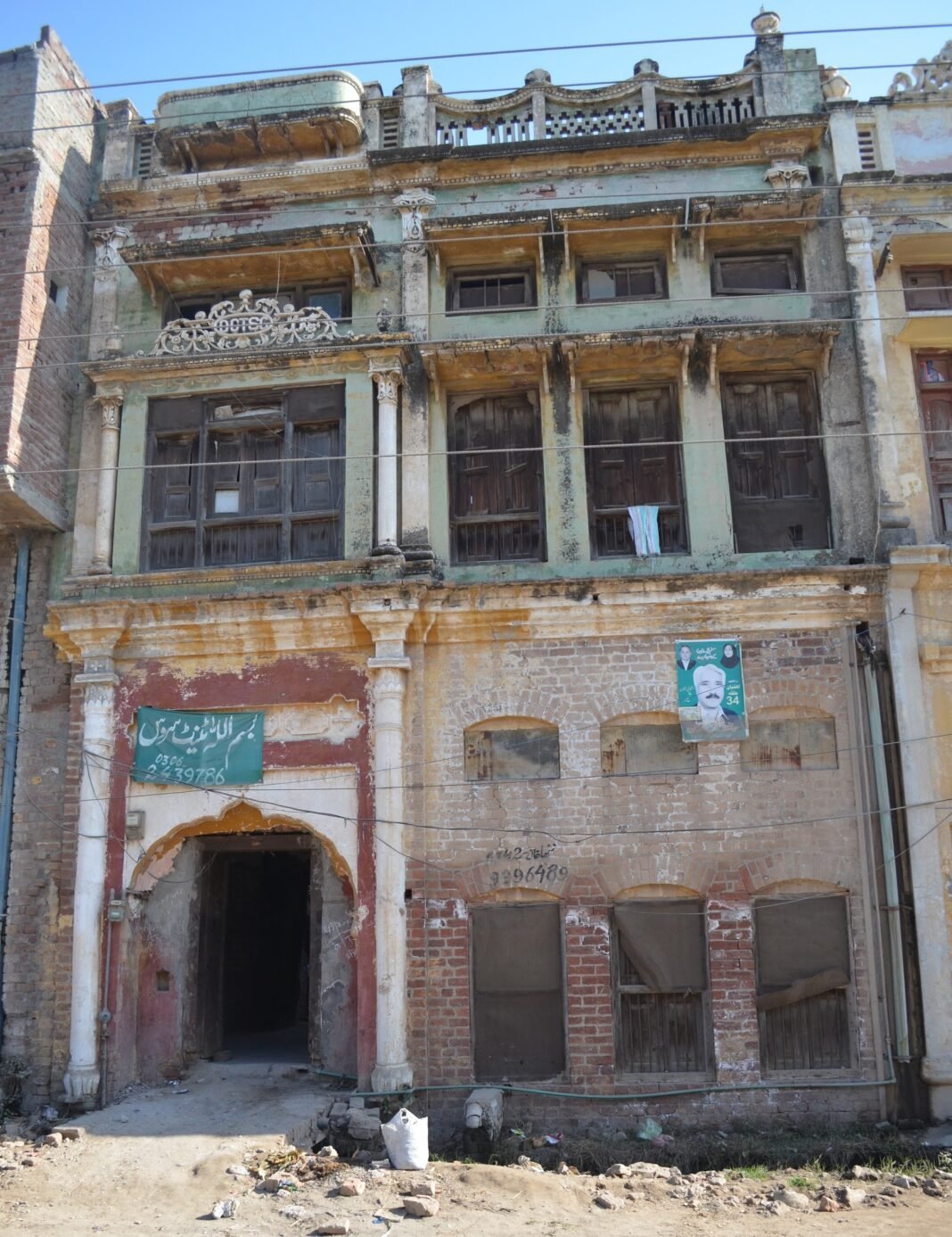
Give yourself an hour to wander the mohalla around the gurdwara. The neighbourhood’s name — Guru Nanakpur — is itself a piece of history, a surviving marker of the Sikh families who once lived here. Look for old brick havelis with carved wooden doors, pre-partition architecture hiding behind newer facades, and the small shops where the town’s daily life unfolds. Elderly residents often remember stories passed down about the gurdwara’s fairs and the Sikh neighbours of their childhood; a polite conversation over tea can teach you more than an afternoon of reading.
Photograph old Hafizabad
The gurdwara’s solid brick construction, the weathered lanes of the mohalla and the texture of a working Punjab old city make this a rewarding stop for photographers. Early morning light is kindest — the lanes are quiet, the brick glows warm, and you will have the darbar almost to yourself. As with any place of worship, ask before photographing people, and check with the caretaker about photography inside the darbar hall.
Combine it with Guru Hargobind’s route: Rasul Nagar
Tradition says the Guru came to Hafizabad from Rasul Nagar, and the Chhevin Patshahi gurdwara there is part of the same story. If you are tracing the sixth Guru’s journey through this region, pair the two shrines in one day — read our Gurdwara Chhevin Patshahi, Rasul Nagar travel guide to plan that leg. Together they turn a single shrine visit into a small pilgrimage route.
Famous Places In and Around Gurdwara Rori Sahib (Chhevin Patshahi), Hafizabad
Rasul Nagar — the town the Guru travelled from, with its own Chhevin Patshahi gurdwara; a natural companion stop. Hafizabad old city bazaars — rice markets, cloth merchants and the everyday theatre of a Punjab district town. The Chenab River — the great river flows to the west of the district; its banks make a fine evening outing. Gujranwala — about 35–40 km east, famous for its food streets and wrestling heritage, an easy add-on for dinner. Wazirabad — historic cutlery town on the Chenab, roughly the same distance northeast.
How to Reach Gurdwara Rori Sahib (Chhevin Patshahi), Hafizabad
Reaching Hafizabad is straightforward — it sits in the heart of Punjab’s road network, and the gurdwara is inside the city itself in Mohalla Guru Nanakpur, so there is no trekking or rough track involved. Any car, van or bus that can handle Punjab’s highways will do.
From Lahore (around 100 km, 1.5–2 hours): Take the GT Road (N-5) north through Shahdara and Muridke to Gujranwala, then continue west on the Gujranwala–Hafizabad road into the city. An alternative is the Lahore–Sheikhupura road westward toward Hafizabad. Both are metalled, well-travelled routes; leave early to beat Lahore’s morning traffic and the winter fog season’s late starts.
From Islamabad (around 200 km, 3–3.5 hours): Take the M-2 motorway toward Lahore and exit for the Hafizabad–Pindi Bhattian link, or continue to the Gujranwala side and approach from the east. The motorway makes this an easy half-day drive. From Karachi: fly to Lahore (or Sialkot) and drive, or take the train to Gujranwala or Wazirabad and hire a car for the last stretch.
Nearest airport: Allama Iqbal International Airport, Lahore, roughly 100–110 km away. Rail: Hafizabad has its own railway station on the local branch line, with connections via Wazirabad; most visitors, however, find road travel simpler. Local transport: rickshaws and Qingqi vans run all over Hafizabad city and can take you to Mohalla Guru Nanakpur from the bus stand in minutes.
Route Details
Step by step from Lahore: (1) Head north on the GT Road (N-5) via Shahdara toward Gujranwala (about 75 km). (2) At Gujranwala, follow signs for Hafizabad on the westward district road (about 35–40 km). (3) Enter Hafizabad city and ask for Mohalla Guru Nanakpur — everyone in the old city knows the gurdwara. (4) Park on the main lane and walk the last few minutes through the mohalla. Road conditions by season: highways are fine year-round; in December and January, dense morning fog can delay starts until 10–11 am; in the July–September monsoon, expect the usual puddled city streets but nothing a normal car cannot handle.
Where to Stay in Gurdwara Rori Sahib (Chhevin Patshahi), Hafizabad
Hafizabad is a district town rather than a tourist hub, so set your expectations accordingly — and honestly, that is part of the charm. Most visitors treat Rori Sahib as a day trip from Lahore or Gujranwala, which is entirely practical given the 1.5–2 hour drive. If you prefer to stay over, the city has a spread of mid-range hotels and guesthouses clustered along the main roads and near the bus stand: clean, air-conditioned rooms with attached baths, suited to a night or two. Budget travellers will find simple, inexpensive guesthouses and roadside inns in the same areas. There is no verifiable luxury or branded hotel inside Hafizabad city itself — for upscale stays, Gujranwala (35–40 km) or Lahore offer the full range. Book ahead only if you are visiting during the annual fair, when the town fills up; on ordinary days, walk-in rooms are easy to find. Families travelling with elders should note that most local hotels are walk-up buildings without lifts — request a ground-floor room when booking.
Where to Eat: Local Foods of Gurdwara Rori Sahib (Chhevin Patshahi), Hafizabad
Hafizabad sits in Punjab’s rice belt, and the food shows it. Start with the obvious: fresh basmati rice — this district grows some of the finest aromatic rice in the country, and a simple plate of steamed rice with daal at a local dhaba tastes better here than almost anywhere else. In winter, the classic Punjabi table appears: sarson da saag with makki di roti, white butter melting on top, lassi in tall glasses. Year-round you will find daal fry, mixed sabzi, chicken karahi and fresh tandoori rotis at dhabas along the main roads.
For snacks, the old-city bazaars offer samosas, pakoras and jalebis fried fresh through the day, and Hafizabad’s sweet shops do a respectable barfi and gulab jamun. A full dhaba meal is genuinely budget-friendly — expect to eat well for a few hundred rupees per person. If the gurdwara is holding its annual fair or a congregation day, do accept langar if it is served: the free community kitchen meal, eaten sitting together regardless of background, is one of Sikhism’s most beautiful traditions and open to all visitors. Gujranwala’s famous food streets are only 35–40 km away if you want a bigger evening food outing — the city’s desi-ghee specialities are legendary across Punjab.
Weather in Gurdwara Rori Sahib (Chhevin Patshahi), Hafizabad
Hafizabad has the classic Punjab plains climate: a blazing summer, a brief glorious winter, and not much in between. The good news for travellers is that the gurdwara visit itself needs only an hour or two on foot, so even a hot day is manageable with an early start. The old city’s lanes are partly shaded, and the darbar hall is cool inside. Here is what to expect across the year (approximate ranges):
| Season | Temperature Range | Conditions |
|---|---|---|
| Winter (Dec–Feb) | 5–20°C | Pleasant sunny days, cold nights; dense morning fog in Dec–Jan can delay travel until late morning |
| Spring (Mar–Apr) | 15–32°C | The sweet spot — warm days, cool evenings, wheat harvest colours in the fields around the city |
| Summer (May–Jul) | 30–45°C | Intensely hot, especially May–June; plan shrine visits for early morning or late afternoon |
| Autumn (Aug–Nov) | 25–38°C | Monsoon humidity Jul–Sep, then clearing skies; October–November turns mild and golden |
Language and Culture of Gurdwara Rori Sahib (Chhevin Patshahi), Hafizabad
The language of Hafizabad’s streets is Punjabi, spoken in the warm, rolling accent of central Punjab; Urdu is universally understood and works fine for visitors. The culture is classic Punjabi hospitality — expect to be offered tea within minutes of striking up a conversation, and accept it; refusing too quickly can seem standoffish. The town is religiously mixed in its history if not its present: the mohalla’s name, Guru Nanakpur, and the gurdwara itself are reminders of the Sikh families who lived here before 1947, and older residents speak of that shared past with genuine warmth.
Visiting etiquette: dress modestly (cover shoulders and knees), remove your shoes before entering the darbar, and cover your head — carry a scarf or use the head coverings usually kept at the entrance. Wash your hands at the entrance if water is provided. If langar is being served, sit, eat and accept it graciously; it is offered to everyone. Ask the caretaker before photographing inside the darbar. A small donation to the gurdwara’s upkeep is customary but never demanded.
Shopping in Gurdwara Rori Sahib (Chhevin Patshahi), Hafizabad
Hafizabad’s bazaars are practical rather than touristy, which makes them fun to browse. The single best souvenir is the district’s own pride: basmati rice, bought from a rice merchant in the grain market — fragrant, inexpensive, and a gift any Pakistani kitchen appreciates. The cloth bazaars stock Punjabi fabrics, lawn and khaddar, and you will find juttis (embroidered Punjabi shoes) and everyday phulkari-embellished textiles at prices far below Lahore’s. Sweet shops sell fresh mithai worth carrying home. There are no shopping malls in Hafizabad and no dedicated souvenir shops at the gurdwara — come for the authentic bazaar experience, not for retail therapy. Bargaining is expected in the bazaars; a friendly haggle over tea is part of the ritual.
Local Events and Festivals
The gurdwara’s festival calendar is small but heartfelt. Historically, a mela was held here on the 18th of Har — the Sikh calendar month falling in early summer (around late June/early July) — drawing the sangat from Hafizabad and surrounding villages. In recent years, that tradition has been kept alive around Lalan Wali Sarkar, the empty grave inside the darbar: an annual fair continues to be held, with kirtan, langar and the general festivity of a rural Punjab gathering. If you want to experience Rori Sahib at its liveliest, time your visit for the fair — but confirm the dates locally before travelling, as they follow the desi calendar and local announcement. The great Sikh festivals of Vaisakhi (April) and Guru Nanak’s Gurpurab (November) are also observed by the Sikh community at shrines across Punjab.
Travel Tips for Gurdwara Rori Sahib (Chhevin Patshahi), Hafizabad
Packing Essentials
Summer (May–July): light cotton clothes, a cap, sunglasses and sunscreen — the plains sun is fierce. Winter (Dec–Feb): a warm jacket or shawl for cold mornings and evenings; days are usually mild. Year-round: a headscarf (required in the gurdwara), comfortable walking shoes for the mohalla lanes, and a water bottle. If visiting in the Dec–Jan fog season, build buffer time into your schedule rather than packing anything special.
Safety Tips
Hafizabad is a calm, working district town and visitors are generally welcomed warmly. Standard Punjab travel sense applies: keep valuables out of sight in bazaars, agree rickshaw fares before the ride, and travel with a local contact or guide if you are exploring the old city lanes extensively. The gurdwara is a peaceful place of worship — behave as you would in any mosque or shrine. Women travellers will find the town conservative but courteous; modest dress earns easy respect everywhere.
Money & Connectivity
Bring cash — small shops, dhabas and rickshaws run on it. ATMs from major banks are available in Hafizabad city on the main roads. Mobile signals from all major networks (Jazz, Telenor, Zong, Ufone) are generally strong across the city and highways, and 4G data works well. There is no entry ticket for the gurdwara; donations are voluntary.
Best Time to Visit Gurdwara Rori Sahib (Chhevin Patshahi), Hafizabad
October to March — the ideal window
This is when Punjab shows its best side: golden light, mild days, cool nights, and countryside at its greenest after the monsoon or glowing with the wheat crop. The gurdwara visit, the mohalla walk and the bazaar browsing are all most pleasant now. November is especially atmospheric, coinciding with Guru Nanak’s Gurpurab celebrations observed by Sikhs across the region.
April — Vaisakhi season
Vaisakhi, the great Sikh harvest festival, falls in mid-April and is celebrated with enthusiasm at gurdwaras throughout Punjab. The weather is warming up but still manageable, and the festive mood adds colour to any shrine visit.
May to September — for the determined
Summer heat is serious (often above 40°C) and the monsoon brings humidity, but the shrine itself is a short visit — go at 8 am, finish by 10, and retreat to an air-conditioned car. If your heart is set on the traditional fair around the 18th of Har (early July), this is when it happens: come prepared for heat, crowds and a genuinely local celebration.
Final Thoughts
Gurdwara Rori Sahib in Hafizabad will not overwhelm you with grandeur, and that is precisely its gift. In a tourism landscape that chases the biggest, tallest and most crowded, this quiet brick shrine offers something rarer: a direct, unmediated encounter with a story — a tired traveller who was also a Guru, a horse tied under a tree, a village that remembered. You will leave with dusty shoes, probably a bag of basmati rice, and a story your friends have not heard before.
So add Hafizabad to your Punjab route. Pair it with Rasul Nagar, eat in Gujranwala on the way back, and give the quiet shrines of Pakistan the attention they deserve. The big gurdwaras will always be there, glorious and thronged. But Rori Sahib — the resting place and the horse’s tether, Rori Sahib and Killa Sahib — is where history feels personal. For more off-the-beaten-path Punjab, keep exploring our Explore Pakistan guides, from the peaks of Malam Jabba to the hidden shrines of the plains.
FAQs
Where is Gurdwara Rori Sahib (Chhevin Patshahi), Hafizabad located?
In Mohalla Guru Nanakpur, inside Hafizabad city, Hafizabad district, Punjab, Pakistan — about 100 km (1.5–2 hours) by road from Lahore via Gujranwala.
Why is it called both Rori Sahib and Killa Sahib?
According to tradition, Guru Hargobind rested at one spot (Rori Sahib) and tied his horse at another (Killa Sahib) while passing through on his return from Kashmir. The gurdwara preserves both memories.
Which Guru is associated with this gurdwara?
Guru Hargobind, the sixth Sikh Guru (Chhevin Patshahi), remembered as the Patshah of Meeri and Peeri.
What is the best time to visit?
October to March for the most pleasant weather; visit around the annual fair (traditionally linked to the 18th of Har, early July) for the liveliest atmosphere, but expect serious heat.
How do I reach Hafizabad from Lahore?
Drive the GT Road to Gujranwala then west to Hafizabad (about 100 km total, 1.5–2 hours). The gurdwara is in Mohalla Guru Nanakpur in the old city — any local can direct you.
Is it safe for families and women travellers?
Yes. It is a peaceful place of worship in a calm district town. Dress modestly, cover your head in the darbar, and you will be welcomed warmly.
Where can I stay near the gurdwara?
Most visitors day-trip from Lahore or Gujranwala. Hafizabad city has mid-range hotels and budget guesthouses for overnight stays; book ahead during fair time.
What should I eat in Hafizabad?
The district’s famous basmati rice with daal, winter saag with makki di roti, dhaba karahi and fresh lassi — plus langar at the gurdwara if it is being served during your visit.