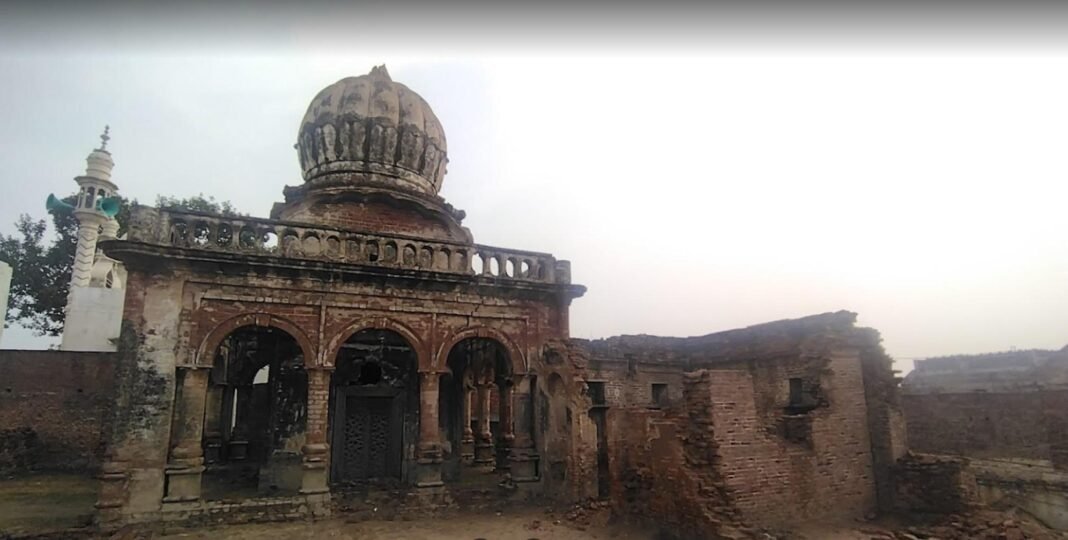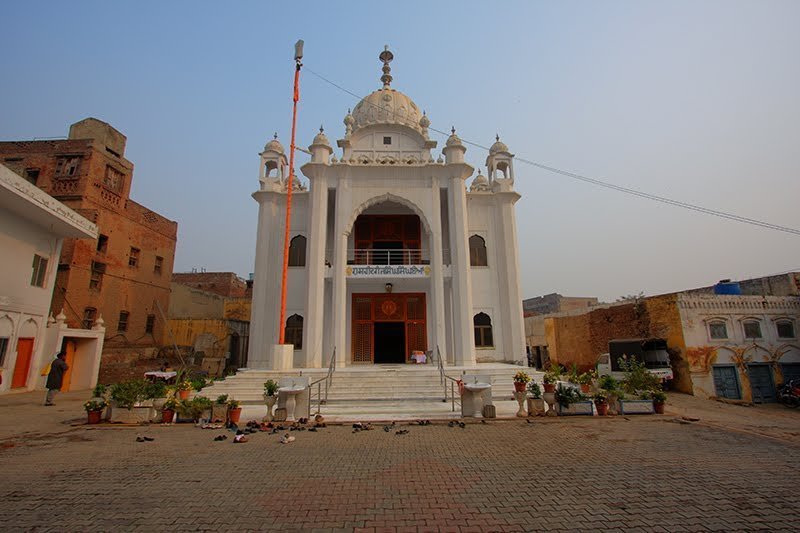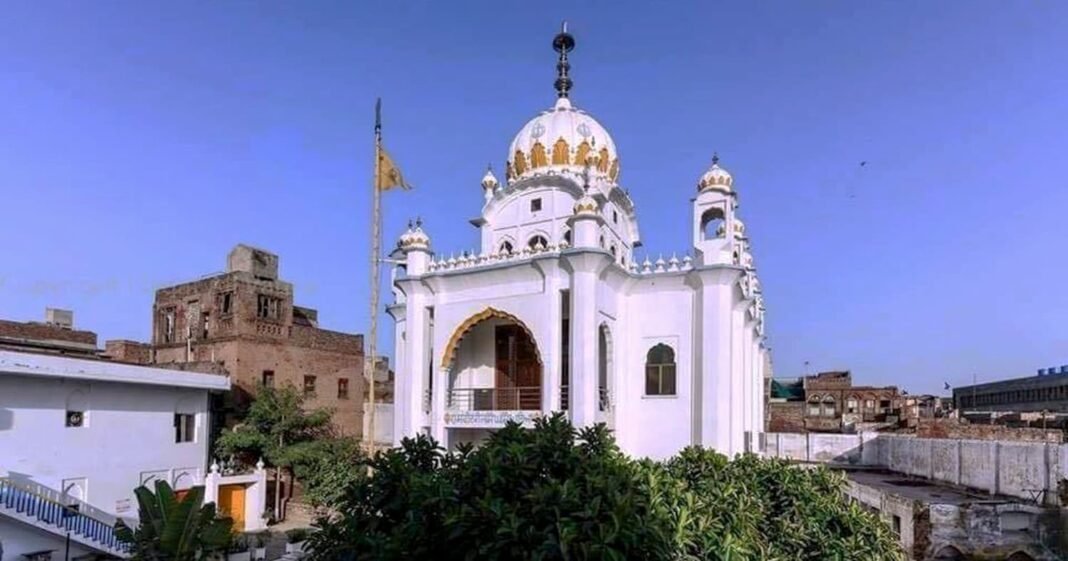
This Gurdwara Shaheed Ganj Bhai Taru Singh, Lahore travel guide leads you through a small doorway in Naulakha Bazaar to one of the most powerful martyrdom sites in Sikh history — the spot where Bhai Taru Singh, a humble farmer from Kasur, had his scalp torn from his head rather than give up his faith, and where his courage became legend. If you want to understand what Sikh heritage in Lahore really means — the sacrifice, the courts, the riots, the devotion that kept a tiny shrine alive through three centuries — start here. This guide covers the martyr’s story, the shrine’s dramatic history, how to reach it from anywhere in Pakistan, the best time to visit, and practical tips for a respectful heritage walk.
Quick Facts
- Location: Naulakha Bazaar, Lahore — behind a small door on the left as you enter the bazaar from Landa Bazaar; the bazaar runs from Landa Bazaar to Lahore Railway Station
- Famous For: The martyrdom site (shaheedi asthan) of Bhai Taru Singh, scalped alive in 1745 for refusing to renounce his Sikh faith
- Inscription: The door carries the words “Gurdwara Shaheed Ganj Bhai Taro Ji”
- Built: The shrine was raised by devotees at the martyrdom spot around 1747–48; it stands on the grounds of the historic Shaheed Ganj complex
- Opposite: Gurdwara Shahid Ganj Singh Singhnian stands directly across the lane
- Managed By: Maintained by the Gurdwara Parbandhak Committee from 1927 to 1947; now under the Evacuee Trust Property Board (ETPB)
- Accessibility: Minutes from Lahore Railway Station; reachable on foot through the bazaar, by rickshaw or by car to the bazaar’s edge
- Best For: Pilgrims, students of Sikh and Mughal history, heritage walkers, and travellers exploring old Lahore
Why Visit Gurdwara Shaheed Ganj Bhai Taru Singh, Lahore
You could walk past it a dozen times and never know it was there. That is part of its power. Between the crowded shops of Naulakha Bazaar, a small door on the left carries a modest inscription — “Gurdwara Shaheed Ganj Bhai Taro Ji” — and behind it lies one of the holiest martyrdom sites in Sikhism. Bhai Taru Singh was not a warrior or a general. He was a farmer from Polah village in Kasur district who worked with his own hands, supported his widowed mother and his sister, and quietly fed and sheltered Sikhs who were being hunted by the Mughal governor’s men. For that compassion he was arrested, tortured in every way the jailers knew, offered riches and safety if he would only cut his hair and abandon his faith — and when he refused, the Qazi ordered that his scalp be removed while he was still alive. As the hoe tore at his head, he kept reciting the Japji Sahib. He died in 1745, in the month of Assu, Samvat 1802 — and Sikh tradition holds that he outlived Zakaria Khan, the governor who had ordered his death.
That is why you come: to stand where an ordinary man’s extraordinary courage is still remembered, three centuries later, in a shrine his devotees built with their own hands. The grand gurdwaras of Lahore — Dera Sahib with its golden dome, the Janam Asthan of Guru Ram Das — are magnificent, and you should see them. But this small shaheedi asthan gives you something the grand ones cannot: intimacy with sacrifice. There is no marble vastness here, no crowds of tourists. There is a doorway, a lane, a memory — and the feeling, which every visitor reports, of standing very close to history.
The shrine’s later history is almost as dramatic as the martyrdom. The gurdwara was built on the grounds of the Shaheed Ganj Mosque, raised in 1722, and the two communities’ claims to the site produced one of the longest religious property disputes in South Asian history — court cases from 1850, a mosque demolition in July 1935 that triggered communal riots, and a Privy Council judgment in 1940 that law students still study. To visit here is to walk into a living chapter of the subcontinent’s legal and communal history, not just its religious one.
And the setting completes the experience. Naulakha Bazaar is old Lahore at its most authentic — the Landa Bazaar end famous for its second-hand clothes and bargain hunters, the lanes smelling of frying samosas and fresh paint, the railway station humming at the far end. Pair the shrine with its twin across the lane, the Gurdwara Shahid Ganj Singh Singhnian, and you have the single most concentrated heritage walk in the city. Come in the cool months, come early in the day, and come ready to be moved.
History of Gurdwara Shaheed Ganj Bhai Taru Singh, Lahore
The story begins in the 1740s, during the governorship of Zakaria Khan, when the Mughal administration in Lahore was hunting down Sikhs with systematic cruelty. Bhai Taru Singh of Polah (in present-day Kasur district) was a devout Sikh who earned an honest living by farming, cared for his widowed mother and sister, and used his earnings to feed and shelter Sikhs fleeing persecution. A complaint was lodged against him — tradition names Mahant Narayan as the complainant — accusing him of harbouring dacoits. He was arrested and subjected to prolonged torture. First he was offered temptation and reward: renounce Sikhi, cut his hair, become a Muslim, and walk free. He refused. Then came the tortures, each designed to break him. He did not break.
Finally the Qazi passed the decree: Bhai Taru Singh would be scalped alive. At the execution ground in what is now Naulakha Bazaar, his scalp was removed with a hoe — and through it all he kept repeating “Waheguru” and reciting the Japji Sahib. He died in 1745, in the month of Assu, Samvat 1802. Sikh tradition records his dying words as a prophecy — that he would outlive the governor — and holds that Zakaria Khan indeed fell ill and died before him. His devotees built a Shaheed Ganj, a martyrs’ memorial, at the very spot of his execution, and the shrine has been revered ever since.
The shrine’s physical history is inseparable from the famous Shaheed Ganj dispute. The site formed part of the grounds of the Shaheed Ganj Mosque, dedicated in 1722 by Falak Beg Khan on the premises of the shrine of the Sufi saint Pir Shah Kaku. After the Bhangi Misl Sikhs took Lahore in 1762, the small gurdwara commemorating Bhai Taru Singh’s execution was built beside the mosque — construction is dated to around 1747–48 — and during Sikh rule the mosque building itself was used as the residence of the gurdwara’s granthi. A large jagir (land grant) supported the shrine in the time of Maharaja Ranjit Singh, and from 1927 to 1947 it was maintained by the Gurdwara Parbandhak Committee, its service entrusted to Bhai Achchar Singh, who later became Jathedar of the Akal Takht.
After the British annexation of Punjab in 1849, Muslims began petitioning the courts for the site, beginning a legal battle in 1850 that would run for nearly a century. While a settlement was being negotiated in the 1930s, a group of Sikhs demolished the mosque on the night of 7–8 July 1935, triggering serious communal riots in Lahore. The litigation climbed all the way to the Privy Council, which ruled in 1940 that Muslim rights over the property had lapsed. After Partition in 1947, the shrine passed to the Evacuee Trust Property Board. A second, smaller gurdwara dedicated to Bhai Taru Singh once stood near Hanuman Gali in Gumti Bazaar in the walled city; only its gateway survives today. In December 2022 the ETPB closed the Naulakha shrine to the public — visitors should check the current access position before planning a trip.
Top Things to Do in Gurdwara Shaheed Ganj Bhai Taru Singh, Lahore
Find the small door in Naulakha Bazaar
The approach is part of the pilgrimage. Enter Naulakha Bazaar from the Landa Bazaar end and look for the small door on the left among the shops, inscribed “Gurdwara Shaheed Ganj Bhai Taro Ji.” The contrast between the roaring bazaar and the quiet shrine behind the door is the whole experience in miniature — commerce outside, contemplation within.
Pay respects at the shaheedi asthan
Inside, the shrine marks the exact ground of Bhai Taru Singh’s martyrdom. Cover your head, remove your shoes, and spend a few quiet minutes. Many visitors read the Japji Sahib here — the very hymn the martyr recited as he died. Whether or not you are Sikh, the weight of the place is impossible to miss.
Visit the twin shrine across the lane
Directly opposite stands the Gurdwara Shahid Ganj Singh Singhnian, commemorating the tens of thousands of Sikhs executed at this ground under the Mughal governors. The two shrines belong together — one honours a single martyr’s courage, the other the multitude — and visiting both gives the full story of the Shaheed Ganj ground.
Walk Naulakha Bazaar to the railway station
The bazaar itself is a heritage walk: Landa Bazaar’s famous second-hand clothing stalls at one end, the old shop-houses in the middle, and the grand colonial bulk of Lahore Railway Station at the other. It is one of the most atmospheric old-city walks in Lahore.
Combine with Lahore’s great Sikh shrines
From Naulakha you are minutes from Gurdwara Dera Sahib (the samadhi of Maharaja Ranjit Singh) beside the Lahore Fort and Badshahi Mosque, and from the Janam Asthan of Guru Ram Das in Chuna Mandi. Together they make a full day of Sikh heritage in Lahore.
Famous Places In and Around Gurdwara Shaheed Ganj Bhai Taru Singh, Lahore
- Gurdwara Shahid Ganj Singh Singhnian — the twin martyrs’ shrine directly opposite in Naulakha Bazaar.
- Lahore Railway Station — the grand 1860s colonial terminus at the end of Naulakha Bazaar.
- Gurdwara Dera Sahib — samadhi of Maharaja Ranjit Singh, beside the Lahore Fort.
- Badshahi Mosque & Lahore Fort — the Mughal masterpieces, a short rickshaw ride away.
- Anarkali Bazaar — Lahore’s oldest surviving market, for food and shopping.
How to Reach Gurdwara Shaheed Ganj Bhai Taru Singh, Lahore
The shrine is in central Lahore, in Naulakha Bazaar near the railway station — one of the easiest heritage sites in the city to reach. Enter Naulakha Bazaar from the Landa Bazaar end and find the small inscribed door on the left among the shops. Because the lanes are narrow and crowded, most visitors park or alight at the bazaar’s edge and walk the last stretch.
Route Details
- From Islamabad: Take the M-2 motorway south to Lahore — roughly 375 km, about 4.5 to 5 hours by car. From the motorway’s Lahore exits, follow the city roads toward the railway station and Naulakha Bazaar (allow 30–45 minutes in city traffic).
- From Lahore (within city): The shrine is minutes from the railway station. From Anarkali or the Mall Road area it is a 10–15 minute rickshaw or taxi ride. The Metrobus and Orange Line connect the wider city; alight near the station and walk or take a rickshaw.
- From Karachi: Fly to Allama Iqbal International Airport (about 2 hours), then 30–45 minutes by road to Naulakha; or take the train to Lahore Junction railway station — the shrine is practically next door. By road via the N-5 it is roughly 1,210 km, an overnight journey.
- By rail: Lahore Junction is one of Pakistan’s best-connected stations, with trains from Karachi, Rawalpindi, Peshawar, Quetta and Multan. The shrine is a short walk or rickshaw ride from the station forecourt.
Nearest airport: Allama Iqbal International Airport, Lahore, about 30–45 minutes away by road. Road conditions: All city roads are paved; the bazaar lanes are narrow and congested — walk the final stretch. Transport options: Rickshaw and taxi are the practical choice for the old city; ride-hailing apps work well in Lahore. Note: The ETPB closed the shrine to the public in December 2022 — confirm the current access status before visiting.
Where to Stay in Gurdwara Shaheed Ganj Bhai Taru Singh, Lahore
Lahore has Pakistan’s widest range of accommodation, and the shrine sits in the middle of it. Base yourself anywhere central and the gurdwara is a short ride away.
Luxury: Lahore’s five-star hotels on the Mall Road and in Gulberg offer the full luxury experience — the obvious choice for international pilgrims and yatri groups wanting comfort.
Mid-range: The area around the railway station, Regal Chowk and the Mall has dozens of mid-range hotels at standard city prices — clean, air-conditioned, and minutes from Naulakha Bazaar. This is the practical pilgrim base.
Budget: Simple lodges and guesthouses cluster around the station and in the old city — basic but adequate, and the cheapest way to stay within walking distance of the shrine.
Heritage option: A growing number of restored old-city havelis now operate as boutique guesthouses inside the walled city — atmospheric bases for a heritage-focused trip.
Where to Eat: Local Foods of Gurdwara Shaheed Ganj Bhai Taru Singh, Lahore
You are in Lahore, the food capital of Pakistan, and the lanes around Naulakha do not disappoint. The old city’s breakfast canon — nihari, paye, halwa puri, lassi in tall glasses — is served within walking distance of the shrine. The bazaar lanes themselves run on samosas, pakoras, dahi bhalla and fresh sugarcane juice. For the full Lahori evening, head to the Fort Road Food Street near the Badshahi Mosque, where barbecue, karahi and tandoori platters are served with the illuminated fort as a backdrop.
Landa Bazaar’s edge has the cheapest eats in the city — this is where bargain-hunters refuel. A full old-city meal is genuinely budget-friendly; even the Food Street’s tourist-facing restaurants stay reasonable by big-city standards. Do not leave without the thick Punjabi lassi with malai, and in winter, the doodh-jalebi breakfast is a Lahori rite of passage.
Weather in Gurdwara Shaheed Ganj Bhai Taru Singh, Lahore
Lahore’s climate is the classic Punjab plains cycle — pleasant winters, fierce summers. The shrine visit involves walking through bazaar lanes, so the cool months are far more comfortable.
| Season | Temperature Range | Conditions |
|---|---|---|
| Winter (Dec–Feb) | 5–20°C | Cool, often foggy mornings; the best season for old-city walks. |
| Spring (Mar–Apr) | 20–36°C | Pleasant in March; hot by late April. Good for early-morning visits. |
| Summer (May–Jul) | 30–45°C | Very hot; monsoon humidity from July. Avoid midday bazaar walks. |
| Autumn (Sep–Nov) | 20–37°C | Cooling from October; November is ideal for heritage walks. |
Language and Culture of Gurdwara Shaheed Ganj Bhai Taru Singh, Lahore
Lahore speaks Punjabi first and Urdu second, with English common in hotels and restaurants. The old city around Naulakha is the beating heart of Lahori culture — direct, warm, quick with a joke, and deeply hospitable to visitors. The lanes around the shrine are mixed neighbourhoods where Sikh heritage, Mughal history and everyday Lahori life overlap; treat the area as what it is — people’s homes and workplaces, not a museum.
At the shrine: cover your head, remove your shoes, dress modestly, and keep your voice low. Photography inside small shrines should always be with permission. In the bazaar, bargaining is expected and good-natured. If you are offered chai by a shopkeeper — and you likely will be — accept it; these small exchanges are the real Lahori welcome.
Shopping in Gurdwara Shaheed Ganj Bhai Taru Singh, Lahore
Naulakha Bazaar and its Landa Bazaar end are among Lahore’s most famous bargain markets — second-hand and surplus clothing, shoes, and household goods at prices that draw shoppers from across the city. It is treasure-hunt shopping at its best. For traditional Lahori shopping, Anarkali Bazaar (a short ride away) offers fabrics, khussas, jewellery and street food in the city’s oldest market streets; Ichhra and Liberty are the modern alternatives. There is no shortage of malls in the wider city, but around the shrine itself, the old bazaars are the authentic experience.
Local Events and Festivals
Lahore’s Sikh shrines see their largest yatri gatherings during the great Sikh festivals. Vaisakhi, in mid-April, is the biggest — Sikh pilgrim groups (jathas) from India and the diaspora visit Lahore’s gurdwaras, and the city’s Sikh heritage sites are at their most alive. The birth anniversary of Guru Nanak (usually in November) and the martyrdom anniversaries observed at the city’s shaheedi asthans also draw devotees. If your visit coincides with a yatra, expect the shrines to be busy and deeply atmospheric — but also confirm access arrangements in advance, as security and ETPB protocols apply during large gatherings.
Travel Tips for Gurdwara Shaheed Ganj Bhai Taru Singh, Lahore
Packing Essentials
A head covering, comfortable walking shoes (the bazaar lanes are uneven), a water bottle, sunscreen, and small change for the bazaar. In winter bring a jacket for foggy mornings; in summer a hat and an early start are essential.
Safety Tips
Naulakha Bazaar is busy and crowded — keep valuables secure and stay aware in the crush, as you would in any old-city market. The area is well-trafficked and generally safe for visitors in daylight. Given the shrine’s ETPB closure in December 2022, check access before you go rather than assuming entry.
Money & Connectivity
ATMs are plentiful around the station and Mall Road; the bazaar itself runs on cash, so carry small notes. Mobile coverage from all networks is excellent, with strong 4G across the old city.
Best Time to Visit Gurdwara Shaheed Ganj Bhai Taru Singh, Lahore
Winter (November to March) — the ideal season
Cool, dry days made for walking the old city. Come early in the morning to have the bazaar lanes relatively quiet, and pair the shrine with the twin gurdwara across the lane before the crowds build.
Spring (March to April) — Vaisakhi season
March is pleasant; mid-April brings Vaisakhi and the yatri season, when Lahore’s Sikh heritage is at its most vibrant. Expect company — and a special atmosphere.
Summer (May to August) — the hard season
Lahore’s summer is brutal for bazaar walking. If you must visit, go at dawn, carry water, and retreat to air-conditioning by late morning.
Autumn (September to October) — the shoulder season
October onward the heat breaks; November is superb for heritage walks, with clear light on the old city’s facades.
Final Thoughts
Behind a small door in a roaring bazaar lies one of the great stories of human courage: a farmer who would not trade his faith for his life, and whose last breaths were spent in prayer. The Gurdwara Shaheed Ganj Bhai Taru Singh is not grand, and it does not need to be — its power is in what happened on that ground in 1745, and in the three centuries of devotion, court battles and quiet pilgrimage that followed. In a city of Mughal masterpieces, this humble shrine holds its own as one of Lahore’s most meaningful places.
Come in winter, find the inscribed door from the Landa Bazaar end, stand a while at the shaheedi asthan, cross the lane to the twin martyrs’ shrine, and finish with lassi in the old city. You will have walked through one of the deepest chapters of Punjab’s history in a single morning. For more of the city’s sacred heritage, explore our Explore Pakistan guides — including the twin shrine, Gurdwara Shaheed Ganj Singh Singhnian, directly across the lane.
FAQs
Where is Gurdwara Shaheed Ganj Bhai Taru Singh?
In Naulakha Bazaar, Lahore — behind a small door on the left as you enter the bazaar from the Landa Bazaar end. The bazaar runs from Landa Bazaar to Lahore Railway Station.
Who was Bhai Taru Singh?
A Sikh farmer from Polah village in Kasur district who supported his widowed mother and sister and secretly fed Sikhs fleeing Mughal persecution. He was scalped alive in 1745 for refusing to renounce his faith.
What is the best time to visit?
November to March, early in the day — the bazaar lanes are crowded and Lahore’s afternoons are hot outside winter.
How do I reach it from Islamabad?
Take the M-2 motorway to Lahore (about 375 km / 4.5–5 hours), then city roads or a rickshaw to Naulakha Bazaar near the railway station.
Is the shrine currently open?
The ETPB closed it to the public in December 2022 — check the current access status before planning your visit.
Is it suitable for families?
Yes, as part of an old-Lahore heritage day. The lanes are crowded, so keep children close; combine with the Badshahi Mosque and food street for a full family outing.
Where should I stay?
Anywhere central in Lahore — mid-range hotels near the railway station and Mall Road put the shrine minutes away.
What food is nearby?
Classic old-Lahore fare: nihari, paye, halwa puri and lassi within walking distance, plus the Fort Road Food Street a short ride away.
What else is nearby?
The twin shrine Gurdwara Shaheed Ganj Singh Singhnian directly opposite, Lahore Railway Station, Gurdwara Dera Sahib, the Badshahi Mosque and Lahore Fort.