Quick Facts
- Location: Daftu village (Daftuh), about 4 km from Lalyani (Mustafabad) on the Lahore–Ferozepur road, Kasur district, Punjab, Pakistan
- Altitude: around 197 metres above sea level, on the Punjab plain
- Famous For: the 18th-century gurdwara where the great Sufi poet Baba Bulleh Shah took refuge when he was banished from his village
- Nearest City: Kasur; Lahore roughly 50 km north on the Ferozepur road
- Accessibility: easy by road year-round; Daftu is a short detour off the Lahore–Ferozepur highway near Lalyani
- Known Landmarks: the fort-like domed gurdwara with its inscribed Mool Mantar facade, the tomb and mosque of Baba Fatehullah Shah Noori Chishti within the boundary, and the ruined “Isherode-Mehel” palace of Bibi Isher Kaur
- Best For: lovers of Sufi poetry, Sikh heritage travellers, photographers of historic architecture, and anyone drawn to stories of sanctuary
Why Visit Gurdwara Sahib, Daftu
Some shrines are famous for their miracles. This one is famous for its mercy. In the 18th century, Baba Bulleh Shah — the Sufi poet whose verses Punjabis still sing at weddings, shrines, and quiet evenings — was hounded out of his village by its powerful chaudhris and chased by an angry mob. He ran, and the doors that opened to him were the doors of a gurdwara in Daftu. The mob demanded that the shrine hand him over. The Sikhs guarding it answered that Bulleh Shah was protected in the house of God — and the mob dispersed. That single act of sanctuary is why this building matters, and why, three centuries later, it still deserves your visit.
Think about what that means. A Sufi Muslim poet, persecuted by his own community’s orthodoxy, found safety among Sikhs — and the story has been told with pride on both sides ever since. In a region whose history is too often told as a story of division, Gurdwara Sahib, Daftu, is physical proof of the other Punjab: the one where a saint is a saint, no matter whose shrine shelters him. If that does not move you, few places will.
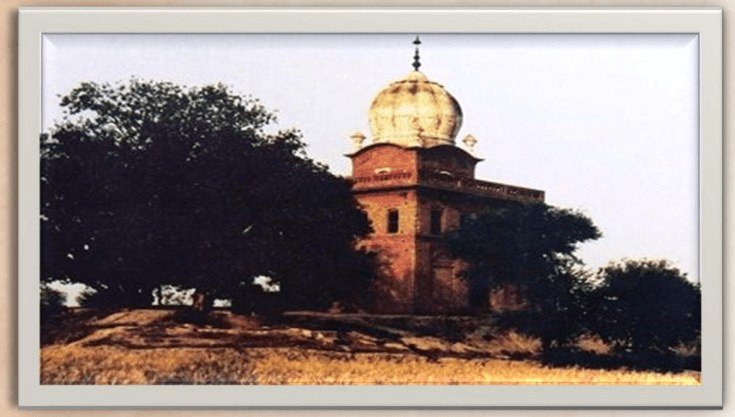
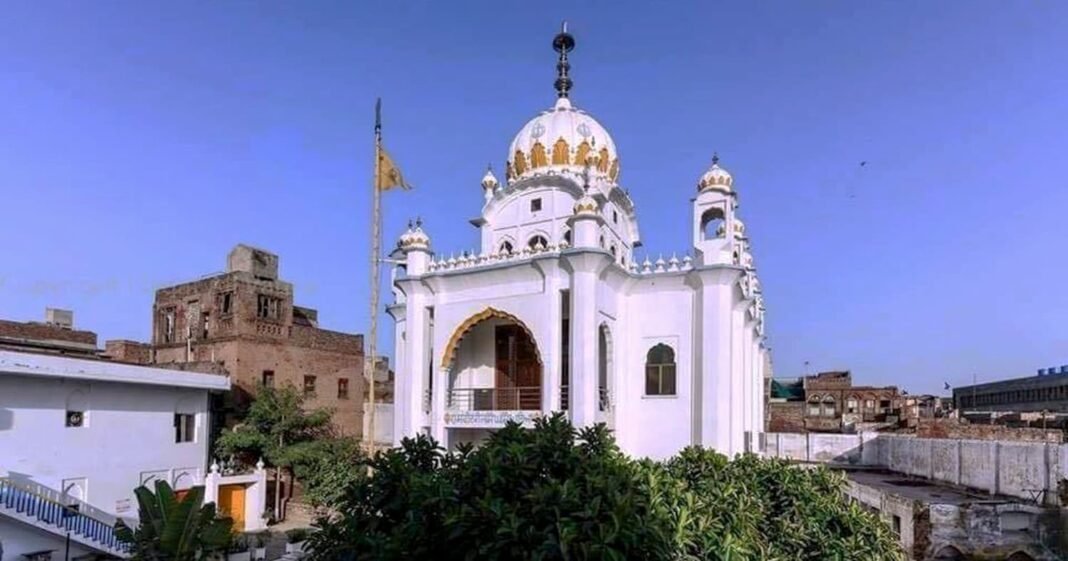
The building itself rewards the journey. This is a big, fort-like 18th-century gurdwara — multilevel, domed, its red-brick walls carrying the Mool Mantar (Ik Onkar) inscribed above the entrance and a striking black Ganesh Chakar inlay on the back wall. It rises over Daftu village the way it has for two hundred years, visible from far across the fields. And the village holds more: the crumbling “Isherode-Mehel,” palace of Bibi Isher Kaur, the formidable Sikh chieftain who endowed eighty squares of land to this very shrine.
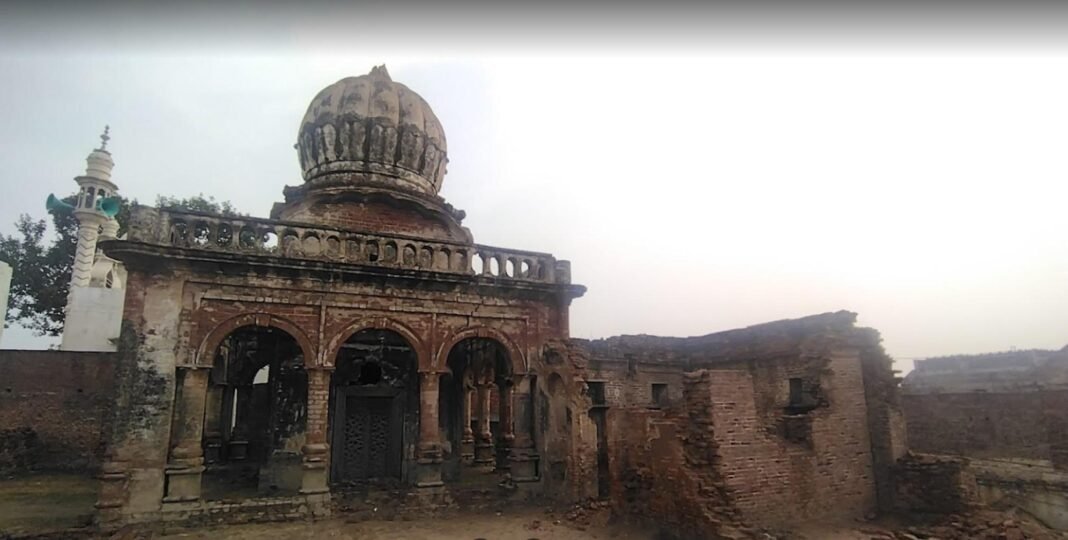
Come now, because this is also a rescue story in progress. The shrine has suffered decades of neglect — its front wall and Darshani Deorhi partially collapsed in heavy rains in July 2023 — and every visitor who comes, photographs, and speaks about it adds to the case for its preservation. Heritage needs witnesses. Be one.
History of Gurdwara Sahib, Daftu
Daftu (also spelled Daftuh) is an old settlement in Kasur tehsil, today a town and Union Council of Kasur district, sitting about four kilometres from the historic town of Lalyani on the Lahore–Ferozepur road. The gurdwara at its heart was built in the 18th century, in the era when Sikh misls held sway over much of Punjab — and it was built big. Contemporary descriptions call it a very large, fort-like structure, its domed mass visible from a distance across the flat countryside.
The shrine’s defining episode belongs to the 1700s and to Baba Bulleh Shah (1680–1757), the revolutionary Sufi poet of Kasur whose defiance of religious orthodoxy made him both beloved and controversial. After offending the powerful of his village Pandoki — the ruling chaudhris banished him — Bulleh Shah fled for his life with a mob at his heels. He reached the gurdwara at Daftu and sought sanctuary. As heritage historian Dalvir Singh Pannu recounts in Sikh Heritage Beyond the Borders, the pursuing crowd demanded that the gurdwara’s custodians surrender him. The Sikh protectors refused: Bulleh Shah was under the protection of the house of God. The mob, faced with that resolve, dispersed. The poet lived, and Punjab kept its greatest voice.
The shrine’s fortunes were tied to a remarkable woman: Bibi Isher Kaur, the female Sikh chieftain (sardarni) of Daftu, who is recorded as having endowed eighty squares of land to the gurdwara — a princely grant. Her own house in the village, popularly called “Isherode-Mehel” (the palace of Ishero), still stands in ruined form, slowly becoming, in the words of one survey, “a heap of dust.”
After 1947, the shrine shared the fate of many Sikh heritage sites in Pakistani Punjab: abandoned, then neglected. Within its boundary also stand the tomb and mosque of Baba Fatehullah Shah Noori Chishti, a descendant of the great Sufi Baba Farid — and tellingly, those structures have been kept tidy with regular repairs and whitewashing while the gurdwara building declined. In July 2023, after years of warnings, the shrine’s already-weakened front wall and Darshani Deorhi collapsed under heavy monsoon rains, an event widely reported in the press. Preservationists continue to call for the Evacuee Trust Property Board and the Pakistan Sikh Gurdwara Prabandhak Committee to intervene before more is lost. The building still stands — wounded, dignified, and waiting.
Top Things to Do in Gurdwara Sahib, Daftu
Read the Facade: Mool Mantar in Brick
Stand before the shrine’s front and look up: the Mool Mantar — Ik Onkar, the opening of Sikh scripture — is inscribed on the facade along with the gurdwara’s name. Walk around to the back wall to find the black Ganesh Chakar inlay set into the red brick. These details survived Partition, weather, and neglect; they are the shrine’s signature, and they photograph beautifully in morning light.
Trace the Bulleh Shah Story
Stand at the embellished gateway and imagine the 18th-century scene: the poet arriving breathless, the mob gathering, the Sikh custodians standing their ground. There is no museum here, no audio guide — just the building and the story. Bring Bulleh Shah’s poetry with you (his kafis are available in Urdu and English translations) and read a verse at the spot where he was sheltered. Few travel moments are this layered.
Explore the Complex
The gurdwara is a multilevel structure — note the three archways along the sides, the arched windows (some partially filled with latticework, wooden doors, or brick over the years), the low balustrade along the roof, and the small domed structure at its centre. The complex is separated from the street by a brick wall. Do not enter unstable sections — admire the architecture from safe ground, especially after the 2023 partial collapse.
Visit the Tomb of Baba Fatehullah Shah Noori Chishti
Within the same boundary stand the tomb and mosque of Baba Fatehullah Shah Noori Chishti, a descendant of Baba Farid — maintained, whitewashed, and serene. The contrast between the two structures’ conditions tells its own story about heritage priorities, and both deserve respectful visits.
Find the Ruins of Isherode-Mehel
Ask villagers for the house of Bibi Isher Kaur — the “palace of Ishero.” Little remains of the formidable sardarni’s residence, but standing before it connects you to the woman whose eighty squares of land sustained this shrine. It is a poignant coda to the Daftu story.
Famous Places In and Around Gurdwara Sahib, Daftu
- Lalyani (Mustafabad) — the historic town on the Lahore–Ferozepur road, 4 km away
- Kasur city — Baba Bulleh Shah’s shrine, the Kasur Museum, and the famous food bazaar
- Gurdwara Sahari Pir, Hardusahari — the interfaith shrine of Pir Sahari in Kasur district (see our full travel guide)
- Gurdwara Bhai Bahlol, Qadiwind — another Kasur-district Sikh heritage site
- Gurdwara Malji Sahib, Kanganpur — a Guru Nanak-associated shrine in Kasur district
- Lahore — roughly 50 km north, for the old city’s gurdwaras, mosques, and food streets
How to Reach Gurdwara Sahib, Daftu
Daftu is an easy detour off one of Punjab’s great historic highways — the Lahore–Ferozepur road. The shrine is well known in the village; once you reach Daftu, anyone can point you to the gurdwara.
- From Lahore: roughly 50 km south on the Lahore–Ferozepur road (via Gajju Matta and Kahna), about 1 to 1.5 hours by car. Turn off toward Lalyani (Mustafabad); Daftu village is about 4 km beyond.
- From Islamabad: about 425 km via the M-2 Motorway to Lahore, then south on Ferozepur Road — roughly 6 to 7 hours total. Overnight in Lahore.
- From Karachi: about 1,400 km — fly or take the train to Lahore, then drive south to Daftu.
Nearest airport: Allama Iqbal International Airport, Lahore — roughly 65 km (about 1.5 hours) from Daftu.
Road conditions: the Lahore–Ferozepur road is a busy highway in fair condition; the link road to Daftu village is paved but narrow. Monsoon rains (July–September) can make village lanes muddy — and given the shrine’s fragile state, dry weather is strongly advised.
Transport options: private car or hired van is best. Public vans run from Lahore toward Kasur and Phool Nagar along Ferozepur Road; from Lalyani, take a rickshaw to Daftu village.
Route Details
- From Lahore, take Ferozepur Road south past Gajju Matta toward Kahna and Phool Nagar.
- Reach Lalyani (Mustafabad) and turn toward Daftu village (about 4 km).
- In the village, ask for the gurdwara — the domed, fort-like building is visible from a distance.
- Park on the street outside the boundary wall and enter through the gateway on foot.
- Allow 1–2 hours at the site; combine with Kasur city (Baba Bulleh Shah’s shrine) for a full day.
Where to Stay in Gurdwara Sahib, Daftu
Daftu is a village visit — stay in the cities. Lahore, roughly 50 km north, offers the full spectrum from five-star hotels to budget guesthouses and is the natural base for this trip. Kasur city has basic hotels and guesthouses near the bazaar for travellers who want to linger over the district’s shrines and food. There is no accommodation in Daftu village itself. Heritage travellers often build a two-day Kasur-district circuit — Daftu, Hardusahari, Kanganpur, Qadiwind — sleeping in Kasur or returning to Lahore each evening. Book ahead if your visit coincides with the annual urs celebrations at Baba Bulleh Shah’s shrine in Kasur, when the city’s modest hotels fill up.
Where to Eat: Local Foods of Gurdwara Sahib, Daftu
Eat in Kasur and Lalyani, not in Daftu village — and you will eat very well. Kasur’s food fame rests on its falooda and andrassay (sesame sweets), but the city’s bazaar also serves excellent barbecue, fried fish, and chanay for breakfast. On the Ferozepur road, highway dhabas dish up the Punjabi classics: dal fry, chana, sarson ka saag with makki di roti in winter, and tandoori rotis slapped fresh from clay ovens. A roadside dhaba lunch is hearty and budget-friendly. In summer, sugarcane juice stalls and mango vendors line the highway; in winter, look for gajar ka halwa and roasted peanuts. Carry bottled water and snacks for the Daftu stop itself, as the village has only the most basic shops.
Weather in Gurdwara Sahib, Daftu
Daftu shares the Kasur district’s lowland Punjab climate: cold, foggy winters; a short spring; a long, hot summer; and a humid monsoon. Winter is by far the best season — and the safest, given the shrine’s fragile condition after the 2023 rains. Summer heat makes the village lanes shimmer, and monsoon downpours are exactly what damaged the building, so avoid July–September for this particular visit.
| Season | Temperature Range | Conditions |
|---|---|---|
| Winter (Dec–Feb) | 5°C – 22°C | Cold, foggy mornings; clear afternoons; best and safest season |
| Spring (Feb–Apr) | 15°C – 30°C | Pleasant; green fields; good for photography |
| Summer (May–Jul) | 28°C – 45°C | Very hot; visit at dawn; carry water |
| Autumn (Oct–Nov) | 15°C – 30°C | Mild and pleasant; excellent for heritage touring |
Note: avoid the monsoon (July–September) — heavy rains in 2023 partially collapsed the shrine’s front wall and gateway.
Language and Culture of Gurdwara Sahib, Daftu
Punjabi — the Majhi dialect — is the village tongue, with Urdu universally understood. Daftu’s culture is inseparable from its stories: villagers know the Bulleh Shah episode and Bibi Isher Kaur’s name the way other villages know cricket scores. The community is conservative and rural; dress modestly, greet elders with respect, and ask permission before photographing people or entering courtyards. At the shrine, standard gurdwara etiquette applies: cover your head, remove your shoes, and keep the premises free of alcohol and tobacco. The presence of Baba Fatehullah Shah Noori Chishti’s tomb within the same boundary makes this a shared sacred space — treat every part of it with equal reverence. If you speak to villagers about the shrine’s condition, listen more than you lecture; they live with this heritage daily.
Shopping in Gurdwara Sahib, Daftu
Daftu village itself offers no shopping beyond daily necessities, but the route is lined with opportunities. Kasur city’s bazaar is the place for andrassay and mithai to carry home, simple leather goods, and traditional khussay. Lalyani’s small market covers basics and fresh produce. Highway vendors sell seasonal fruit — mangoes and melons in summer, kinnows and peanuts in winter — at honest prices. There are no shopping malls anywhere on this route; Lahore, an hour north, handles everything else. The most meaningful souvenir here costs almost nothing: a small collection of Bulleh Shah’s kafis, bought from a Lahore or Kasur bookshop, to read at the shrine that once sheltered him.
Travel Tips for Gurdwara Sahib, Daftu
Packing Essentials
Headscarf or cap, modest clothing, sturdy closed shoes (the site has rubble and uneven ground), drinking water, snacks, sun protection, a camera, and a copy of Bulleh Shah’s poetry if you can find one.
Safety Tips
This is the most important section of this guide. The gurdwara building is in fragile condition — the front wall and Darshani Deorhi partially collapsed in July 2023. Do not enter, lean on, or climb any part of the structure. View it from the courtyard and street, keep children at a safe distance, and visit only in dry weather and daylight. The village itself is peaceful, but travel with a companion and keep your phone charged.
Money & Connectivity
Carry cash — no ATMs or card facilities in the village; ATMs are available in Lalyani and Kasur. Jazz, Telenor, Zong, and Ufone all cover the area with usable 4G along the highway.
Best Time to Visit Gurdwara Sahib, Daftu
Winter (November–February) — The Best Season
Cool, dry, and clear — the safest season for viewing a fragile heritage building, and the most comfortable for village walks. December fog can delay morning starts; aim for late morning.
Spring (February–April) — Very Good
Mild weather and green fields; excellent light for photographing the brickwork and inscriptions.
Summer (May–July) — Visit at Dawn Only
Extreme midday heat; come early, see the shrine in the soft morning light, and leave before the sun climbs.
Autumn (October–November) — Excellent
Mild days, golden fields, and comfortable driving weather — an ideal window for the Kasur heritage circuit.
Final Thoughts
Gurdwara Sahib, Daftu, is a shrine with a poet’s soul and a soldier’s wounds. It sheltered Baba Bulleh Shah when the world turned on him. It was endowed by a warrior woman history barely remembers. It has stood for two centuries through empires, Partition, and neglect — and it is still standing, asking only to be seen. In July 2023 it lost part of its face to the rains; what remains is no less worth your journey.
Go in winter, go in daylight, tread gently, and read a verse of Bulleh Shah where he once found refuge. Then tell someone what you saw — because buildings like this survive on attention, and attention begins with travellers like you. Continue exploring Pakistan’s living heritage in our Explore Pakistan series.
FAQs
Where is Gurdwara Sahib, Daftu located?
In Daftu village, about 4 km from Lalyani (Mustafabad) on the Lahore–Ferozepur road, Kasur district, Punjab — roughly 50 km south of Lahore.
What is the connection with Baba Bulleh Shah?
In the 18th century, Bulleh Shah fled to this gurdwara after being banished from Pandoki by its chaudhris. When an angry mob demanded he be handed over, the shrine’s Sikh custodians refused, saying he was protected in the house of God — and the mob dispersed.
Who was Bibi Isher Kaur?
The female Sikh chieftain (sardarni) of Daftu, who endowed eighty squares of land to the gurdwara. Her ruined house in the village is still known as “Isherode-Mehel.”
Is the building safe to visit?
The shrine is in fragile condition — its front wall and Darshani Deorhi partially collapsed in heavy rains in July 2023. Visit in daylight and dry weather, view from safe ground, and do not enter or climb the structure.
What is the best time to visit?
November to March. Avoid the monsoon (July–September); the 2023 collapse shows what heavy rains can do here.
How do I reach Daftu from Lahore?
Drive about 50 km south on Ferozepur Road to Lalyani, then 4 km to Daftu village (1–1.5 hours total). The domed gurdwara is visible from a distance.
Where can I stay and eat?
Stay in Lahore (50 km) or Kasur city (basic hotels). Eat in Kasur — famous for falooda and andrassay — or at highway dhabas; carry water and snacks for the village.
What else is nearby?
Gurdwara Sahari Pir, Hardusahari, Kasur city and Baba Bulleh Shah’s shrine, Gurdwara Bhai Bahlol, Qadiwind, and Gurdwara Malji Sahib, Kanganpur.