Under a bair tree in a village in Narowal district, the seventh Sikh Guru once sat for a few days — and the tree, the old accounts say, is still there. Gurdwara Tahli Sahib at Ghakka is the shrine of Guru Har Rai, who rested beside a tahli (shisham) tree in the shade of the bair, in honor of the love of his devotee Bhai Fateh Chand Premi. It was here that the Guru blessed a man and released him from rebirth as a rabbit; it was here that a Vaisakhi fair once gathered the countryside. The shisham has withered, but the bair tree stands, and the spacious gurdwara — fifty bighas of endowed land, a building the old surveys call beautiful — still waits on the road before the village. If you are a Sikh pilgrim, a seeker of sacred trees and living legends, or a heritage traveler pairing the great Kartarpur with the forgotten shrines of its own tehsil, this Gurdwara Tahli Sahib, Ghakka travel guide will show you why this quiet shrine deserves your journey, when to go, and how to find it.
Quick Facts
- Location: Ghakka village (twin village of Kotli), P.S. Shah Gharib, Tehsil Shakargarh, Narowal District, Punjab, Pakistan — the gurdwara stands on the road before the village
- Famous For: The shrine of Guru Har Rai (the seventh Sikh Guru); the surviving bair tree he sat under; the legend of the devotee freed from rebirth as a rabbit; a historic Vaisakhi fair
- Nearest City: Narowal (district headquarters); Shakargarh town nearby; Lahore roughly 120 km southwest
- Accessibility: Road via the Narowal–Shakargarh road (get off at Bagh or Bostan bus stop); metalled road to the village; nearest airport Allama Iqbal International, Lahore
- Known Landmarks: The bair tree, the gurdwara building, the samadh village of Boa, Kartarpur (same tehsil)
- Best For: Sikh pilgrims, spiritual travelers, sacred-tree and legend lovers, photographers, Kartarpur-combiners
- Visit Tip: The building is in poor condition and partly occupied — view respectfully from outside and ask locally before entering
Why Visit Gurdwara Tahli Sahib, Ghakka
The first reason is the tree. Sacred trees are among the oldest pilgrimage objects in the world, and Sikh tradition is full of them — but few are as intimately tied to a Guru’s presence as the bair at Ghakka. The old account is precise: Guru Har Rai sat beside the tahli (shisham) tree, under the shade of the bair tree. The shisham has withered away with the centuries. The bair tree is still there. To stand under a living tree that shaded a Guru is an experience no museum can replicate — it collapses four centuries into a single afternoon. For Sikh pilgrims, this is darshan of a rare kind; for everyone else, it is a reminder that some monuments are alive.
The second reason is the story — and what a story it is. The Guru stayed here a few days, the tradition says, in recognition of the love expressed by Bhai Fateh Chand Premi — a devotee whose affection literally stopped a Guru’s journey. And it was here that Guru Har Rai blessed a man and granted him mukti — release — from rebirth as a rabbit. His samadh stands in the village of Boa. You will not find a legend more characteristically Sikh anywhere: the Guru’s compassion extending beyond human form, the devotee’s love bending the itinerary of the divine. The shrine is, in the old phrase, a memorial of his love and affection — and love, unlike brick, does not crumble.
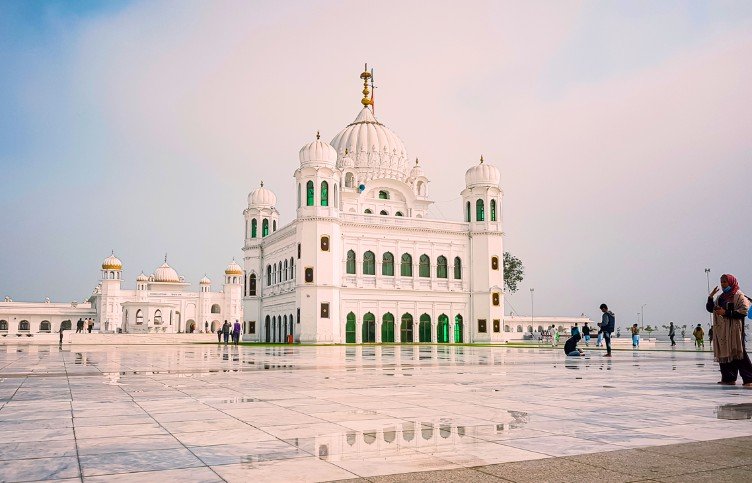
The third reason is the combination. Tahli Sahib sits in Tehsil Shakargarh — the same tehsil as Gurdwara Darbar Sahib Kartarpur, the greatest Sikh shrine in Pakistan, where Guru Nanak spent his final years and where the Kartarpur Corridor now brings pilgrims from across the border. Every Sikh pilgrim who comes to Kartarpur drives through this tehsil; almost none stop at Ghakka. Add Tahli Sahib to your Kartarpur journey and you get the full arc of the Sikh story in one district: the founder (Guru Nanak) at Kartarpur, the seventh Guru (Guru Har Rai) at Ghakka — the beginning and the flowering, twenty minutes apart by the countryside’s measure. Our Explore Pakistan series is built for exactly these pairings.
Finally, come for the honesty of the place. The surveys do not flatter Tahli Sahib: it is “a beautiful and spacious Gurdwara which is now falling apart,” its fifty bighas of endowed land a memory, its building in very bad shape. But there is a profound travel experience in witnessing heritage before restoration — or in the absence of restoration — and in understanding what Partition cost, village by village. Come with respect, with a local guide, and with no illusions, and Ghakka will give you one of the most moving afternoons of your Punjab travels.
History of Gurdwara Tahli Sahib, Ghakka
Ghakka and Kotli are twin villages in P.S. Shah Gharib of Tehsil Shakargarh — the border tehsil of Narowal district, in the fertile country between the Ravi and the Indian frontier. The shrine of Sat Guru Har Rai Ji — the seventh Sikh Guru (1644–1661), remembered as the gentle Guru, the tender of gardens and the keeper of an army he never used — stands in the village of Ghakka, on the road before the village itself.
The tradition is vivid and specific. Traveling through this country, Guru Har Rai stopped at Ghakka and sat for a few days beside a tahli (shisham) tree, under the shade of a bair (jujube) tree. He did so, the accounts say, in recognition of the love expressed by Bhai Fateh Chand Premi — a devotee whose devotion merited the Guru’s pause. It was here that the Guru blessed a man and released him (mukti) from rebirth as a rabbit; the blessed one’s samadh is in the village of Boa. The shrine that rose on the spot is, in the traditional phrase, a memorial of his love and affection — the love between Guru and devotee, made permanent in brick and tree.
The gurdwara was a substantial institution. The old settlement records assign to it land measuring 50 bighas and an estate worth one hundred rupees per annum — a comfortable endowment for a village shrine, supporting the granthi, the langar and the upkeep of the building. And the shrine had its festival: a fair used to be held on Vaisakhi (mid-April), the spring harvest festival that is the greatest day in the Sikh calendar. Picture it: the countryside converging on Ghakka, the bair tree hung with flags, the langar feeding hundreds — the living, breathing Sikh Punjab of the early 20th century.
Partition ended that life. The Sikh population of the Shakargarh tehsil migrated east in 1947, and Tahli Sahib lost its sangat. The historian Iqbal Qaiser’s field surveys record the shrine’s long decline: a beautiful and spacious gurdwara, now falling apart; the shisham withered, though the bair tree survived; the building in very bad shape, with local families settled in parts of it. The gurdwara is reached by road after getting off at the Bagh or Bostan bus stop on the Narowal–Shakargarh road, from which a metalled road leads to the village — the access route the surveys have recorded for decades. Tahli Sahib today is a monument in waiting: its legend intact, its tree alive, its building hoping for the restoration that has revived grander shrines elsewhere.
Top Things to Do in Gurdwara Tahli Sahib, Ghakka
Stand Under the Bair Tree of Guru Har Rai
This is the pilgrimage. Find the bair tree — the old accounts insist it still stands where the Guru sat in its shade beside the withered shisham — and stand under it quietly. For Sikh visitors, this is a moment of simran (remembrance); cover your head, and if you wish, say a quiet ardas. For all visitors, it is a moment to consider what it means for a living thing to outlast empires: the Mughals, the Sikhs, the British and Partition have all passed, and the tree remains. Photograph it with reverence, not as a curiosity.
See the Spacious Old Gurdwara Building
The gurdwara the surveys call “beautiful and spacious” still stands on the road before the village — though in very bad shape and partly occupied. Walk its exterior: the scale of the building, the courtyard, the arches and brickwork all speak of the confident village shrine it was, endowed with fifty bighas and an annual estate. Do not enter occupied portions uninvited; view from the road and the lane, and ask locally — a resident or elder may show you around the accessible parts and share what they remember.
Visit Boa Village: The Samadh of the Blessed Devotee
The legend’s second half lies in Boa village, where the samadh stands of the man whom Guru Har Rai released from rebirth as a rabbit. Ask in Ghakka for directions to Boa — the villages are close, and the samadh is part of the same sacred geography. Together, the bair tree at Ghakka and the samadh at Boa make the complete pilgrimage of the legend: the blessing and its memorial.
Walk the Twin Villages of Ghakka and Kotli
Ghakka and Kotli are twin villages, and walking between them is walking through the Punjab that the old accounts describe — wheat and rice fields, buffaloes, brick lanes, the slow courtesies of village life. The gurdwara stands on the road before Ghakka village, so the approach itself is part of the experience. Go with a local companion, greet the elders, and listen: village memory here reaches back past Partition.
Combine with Kartarpur: The Founder and the Seventh Guru
The essential pairing: Gurdwara Darbar Sahib Kartarpur — where Guru Nanak, the founder, spent his final years and where his samadh and grave stand side by side — lies in the same Shakargarh tehsil. Visit Kartarpur in the morning (the great corridor complex, the holy well, the langar that feeds thousands) and Ghakka in the afternoon (the bair tree, the quiet, the legend). Few pilgrimages anywhere offer the first and the seventh Gurus in a single day’s drive. Confirm Kartarpur’s current visitor procedures through the official corridor channels before traveling.
Famous Places In and Around Gurdwara Tahli Sahib, Ghakka
- Gurdwara Darbar Sahib Kartarpur — the great shrine of Guru Nanak in the same tehsil; the essential combination
- Boa village — the samadh of the devotee blessed by Guru Har Rai
- Kotli village — Ghakka’s twin village; walk the lanes between them
- Narowal city — district headquarters with bazaars, eateries and the Ravi riverbank nearby
- Shakargarh town — the tehsil headquarters and its old bazaars
- Ravi River bank — the historic river of the Kartarpur story, a short drive west
How to Reach Gurdwara Tahli Sahib, Ghakka
The shrine is reached from the Narowal–Shakargarh road: get off at the Bagh or Bostan bus stop, from which a metalled road leads to Ghakka village — the gurdwara stands on the road before the village. From Lahore (about 120 km), drive the Lahore–Narowal road (via Muridke) to Narowal, then continue on the Narowal–Shakargarh road toward Bagh/Bostan — roughly 3–3.5 hours total. The route is the same corridor used by Kartarpur pilgrims, so the roads are familiar to drivers and well maintained.
From Islamabad (about 250 km), take the M-2 to Lahore, then the Narowal road — or the scenic GT Road route via Gujranwala and Sialkot to Narowal (5–6 hours). From Karachi (about 1,300 km), fly to Lahore and drive, or rail to Lahore Junction and hire a car. The nearest airport is Allama Iqbal International Airport, Lahore; the nearest practical railhead is Narowal (on the Lahore–Sialkot line) or Lahore Junction for express trains.
Transport options: a private car or hired car with driver is the practical choice — the Bagh/Bostan-to-Ghakka leg and the village lanes need a flexible vehicle. Public wagons and buses run the Lahore–Narowal–Shakargarh route frequently and will drop you at Bagh or Bostan; from there, a rickshaw or a lift with a local gets you to the village. For the Kartarpur-plus-Ghakka day, hire the car for the whole circuit from Lahore or Narowal — drivers on this corridor know both sites.
Route Details
Lahore → Ghakka (via Narowal): Lahore → Muridke → Narowal on the Narowal road (about 90 km, 2 hours), then Narowal → Shakargarh road to the Bagh/Bostan stop, then the metalled village road to Ghakka (about 30–40 minutes from Narowal). Total: roughly 120 km, 3–3.5 hours. Visit the bair tree and gurdwara (1–2 hours), continue to Kartarpur or return.
Lahore → Kartarpur → Ghakka (the pilgrim’s circuit): Do Kartarpur first in the morning via the corridor road, then drive the tehsil’s rural roads to Ghakka for the afternoon — the founder in the morning, the seventh Guru in the afternoon. Confirm Kartarpur’s entry procedures in advance; Ghakka needs no permission, only courtesy.
Islamabad → Ghakka: M-2 to Lahore, then as above — about 250 km, 5–6 hours. Best as an overnight trip with a night in Lahore or Narowal.
Road conditions: The Narowal–Shakargarh road is a major district highway in good condition. The metalled road to Ghakka village is paved and fine for cars year-round. Winter mornings bring fog on the Narowal plains — drive after 10 a.m. in December–January. Monsoon rains (July–September) can make the final village approach slippery; take it slowly.
Where to Stay in Gurdwara Tahli Sahib, Ghakka
Ghakka is a village — there is no hotel at the shrine or in the village, and none is needed for what is a half-day visit. Your bases: Narowal city (district headquarters, 30–40 minutes away), which has mid-range hotels and guesthouses serving corridor and business travelers; Shakargarh town, closer still, with basic local hotels; or Lahore (3–3.5 hours), with the full range from luxury to budget, for the classic day-trip or overnight circuit.
For the Kartarpur-plus-Ghakka pilgrimage, most travelers base in Lahore: Kartarpur in the morning, Ghakka in the afternoon, back in Lahore for dinner — a long but entirely feasible day. If you prefer a slower pace, overnight in Narowal and do Ghakka, Boa and the Ravi bank at leisure the next morning. There is no camping at the religious site; village musafir khana hospitality exists but should not be presumed upon.
Where to Eat: Local Foods of Gurdwara Tahli Sahib, Ghakka
Eat the Narowal countryside: saag with makai di roti (corn flatbread) and white butter in winter, daal and seasonal sabzi year-round, lassi in tall steel glasses, and desi ghee on everything worth eating. The dhabas along the Narowal–Shakargarh road — especially around the Bagh and Bostan stops — serve the traveler’s canon: daal fry, chicken karahi, mixed sabzi, tandoori roti, and strong chai. A full dhaba meal costs only a few hundred rupees per person.
Narowal city’s bazaars add chanay, halwa puri breakfasts, kebab shops and sweet shops selling barfi and gulab jamun. In harvest season, the roadside sells sugarcane and fresh gur (jaggery). Carry water and snacks for the village walk — there are no eateries at Ghakka itself. And if a village family offers you tea or a meal, accept with both hands: in this part of Punjab, feeding a traveler is a blessing the host claims for themselves.
Weather in Gurdwara Tahli Sahib, Ghakka
Narowal district sits in the sub-montane Punjab — slightly cooler than Lahore, with the same classic plains rhythm: foggy winter, brief spring, fierce summer, monsoon relief. The shrine visit is outdoors, so season choice shapes the experience.
| Season | Temperature Range | Conditions |
|---|---|---|
| Winter (Dec–Feb) | 5–22°C | Cool, pleasant days; dense morning fog on the plains — the best walking weather after 10 a.m. |
| Spring (Mar–Apr) | 18–35°C | Beautiful — wheat ripening, clear skies; Vaisakhi (mid-April) is the historic fair season |
| Summer (May–Jun) | 28–43°C | Hot; visit at dawn or dusk only, carry water, seek the bair tree’s shade |
| Monsoon (Jul–Sep) | 28–38°C | Humid with heavy showers; the countryside turns vividly green; village tracks can be slippery |
| Autumn (Oct–Nov) | 18–32°C | Dry, clear and comfortable — rice harvest in the fields; an excellent time to visit |
Language and Culture of Gurdwara Tahli Sahib, Ghakka
The language of Ghakka is Punjabi — the Majhi dialect of central Punjab — with Urdu understood by most adults and the young. The villages are Muslim-majority today, and the old gurdwara building is partly occupied by local families — so the cultural contract is the traveler’s golden rule: ask before entering, ask before photographing, and accept what is offered. A greeting goes far: Assalam-o-Alaikum universally, and Sat Sri Akal will be understood and respected given the shrine’s history.
At the bair tree and the shrine, observe gurdwara etiquette: cover your head, remove shoes if you step onto any shrine platform, keep your voice low, and do not carve, mark or damage the tree — it is the living monument. Dress modestly as everywhere in rural Punjab. And remember that for the villagers, this is not a tourist site but a landmark of their home ground; the elders who can point out where the shisham stood and where the Vaisakhi fair gathered are the true guides of Ghakka. Treat their memories as the treasure they are.
Shopping in Gurdwara Tahli Sahib, Ghakka
There are no souvenir shops at Ghakka — the honest traveler buys the countryside instead. Narowal’s bazaars offer Punjabi jutti (embroidered shoes), khaddar cloth, dry fruits, desi ghee and honey at local prices. In season, the roadside sells kinnoos (the region’s famous citrus) by the sackful in winter and mangoes in summer. Shakargarh town’s old bazaar is worth a wander for everyday Punjab commerce. There is no shopping mall in the tehsil — for malls and branded retail, Lahore is the answer. The best keepsake from Ghakka costs nothing: a photograph of the bair tree in late-afternoon light.
Local Events and Festivals
Vaisakhi (mid-April) is the festival of Tahli Sahib’s history. The old records state plainly that a fair used to be held here on Vaisakhi — the spring harvest festival that is the greatest day in the Sikh calendar, marking both the ripening wheat and the birth of the Khalsa in 1699. In the shrine’s living years, the countryside would have converged on Ghakka: flags on the bair tree, kirtan in the prayer hall, the langar feeding hundreds, the fairground loud with hawkers and wrestlers. That fair no longer gathers — the sangat that held it migrated in 1947 — but Vaisakhi remains the most meaningful time for a Sikh pilgrim to stand under the bair tree, in the season the old fair belonged to.
For the living festival experience, combine a Vaisakhi-season trip with Kartarpur, where the great gurdwara celebrates the Sikh calendar in full, and with Nankana Sahib (Guru Nanak’s birthplace), whose Vaisakhi gatherings draw thousands. Guru Nanak’s birthday (Gurpurab, October–November) is the other great pilgrimage season in the district. Confirm dates and arrangements through official channels before traveling, as festival crowds transform logistics across the Narowal district.
Travel Tips for Gurdwara Tahli Sahib, Ghakka
Packing Essentials
Sun protection (cap, sunscreen, sunglasses) — the site is open and exposed. Sturdy walking shoes for village lanes. A headscarf or dupatta for the shrine. Water and snacks — nothing is sold at Ghakka. A power bank and a camera; the bair tree and the old brickwork deserve good photographs. In winter, a warm layer for the foggy morning drive; in summer, light clothes and extra water.
Safety Tips
Ghakka is a quiet agricultural village, safe for daytime visits with the usual rural common sense. Go with a local contact or guide — essential here for finding the tree, the samadh at Boa, and the right people to talk to. Do not climb the old building or the tree. Keep to lanes and paths; fields are private farmland. Foreign visitors should carry passports, inform their hotel of the day plan, and note that this is a border-district tehsil — stay on the main routes, carry ID, and cooperate cheerfully at any checkpoint. Return to Narowal or Lahore before dark.
Money & Connectivity
Carry cash — there are no ATMs in Ghakka village (Narowal city and Shakargarh town have banks and ATMs). Small vendors and rickshaws are cash-only. Jazz, Telenor, Zong and Ufone cover the Narowal–Shakargarh corridor with 4G; signals dip inside the village. Download offline maps of the area before leaving Narowal. No public Wi-Fi anywhere near the site.
Best Time to Visit Gurdwara Tahli Sahib, Ghakka
Winter (November–March): The Ideal Season
Cool, dry days made for walking between Ghakka, Kotli and Boa; clear light for photography; the bair tree’s foliage at its most photogenic. Morning fog on the Narowal plains usually lifts by mid-morning — plan to reach Ghakka around 10–11 a.m. Winter is also the sociable season in the villages, your best chance of long conversations with elders.
Spring (March–April): The Historic Season
Wheat ripening gold, the countryside at its most beautiful — and Vaisakhi in mid-April, the season of the shrine’s historic fair. For Sikh pilgrims, there is no more meaningful time to stand under the bair tree than the festival the old fair belonged to. Visit early in the day as temperatures climb.
Autumn (October–November): The Second-Best Window
Post-monsoon clarity, comfortable temperatures, rice harvest in the fields — autumn rivals winter for the visit. Gurpurab (Guru Nanak’s birthday) falls in this season, making it the other great pilgrimage window, especially combined with Kartarpur.
Summer and Monsoon (May–September): Avoid
Punjab’s summer heat (40°C-plus) makes the open site punishing, and the monsoon turns village tracks slippery. If you must travel then, restrict the shrine visit to dawn, carry abundant water, and spend midday at Kartarpur’s shaded complex or indoors in Narowal.
Final Thoughts
Gurdwara Tahli Sahib is not a grand monument, and it does not pretend to be. It is a living tree, a legend of love and liberation, a spacious old building waiting for better days, and a village that remembers. The bair that shaded Guru Har Rai still stands. The story of Bhai Fateh Chand Premi’s devotion — and of the man freed from rebirth as a rabbit, whose samadh waits in Boa — still gets told. The Vaisakhi fair no longer gathers, but the season still comes, and the wheat still ripens gold around the shrine.
Go in winter or spring, when the Punjab countryside is kind. Pair it with Kartarpur — the founder and the seventh Guru, one tehsil, one unforgettable day. Walk slowly, ask questions, stand a while under the bair tree, and let the quiet of Ghakka do what grand shrines sometimes cannot: make history feel personal. For the pilgrim and the heritage traveler alike, Tahli Sahib is exactly the right kind of destination — the one you choose with your heart. Find more journeys like it in our Explore Pakistan series.
FAQs
Where is Gurdwara Tahli Sahib, Ghakka?
In Ghakka village (twin village of Kotli), P.S. Shah Gharib, Tehsil Shakargarh, Narowal District, Punjab. Reach it via the Narowal–Shakargarh road, getting off at the Bagh or Bostan bus stop, then the metalled road to the village — the gurdwara stands on the road before the village.
What is the best time to visit Gurdwara Tahli Sahib?
November to March for the best weather; March–April for the Vaisakhi season of the historic fair; October–November for Gurpurab. Avoid the May–September heat.
How do I reach Ghakka from Lahore?
Drive Lahore → Narowal (about 90 km, 2 hours), then the Narowal–Shakargarh road to the Bagh/Bostan stop and the village road to Ghakka — roughly 120 km and 3–3.5 hours total. A hired car for the day is the easiest option.
Is the bair tree of Guru Har Rai still there?
According to the historical accounts, the tahli (shisham) tree has withered away but the bair tree under whose shade the Guru sat is still standing.
Can I combine Tahli Sahib with Kartarpur?
Yes — it is the ideal pairing. Both are in Shakargarh tehsil: Kartarpur (Guru Nanak) in the morning, Ghakka (Guru Har Rai) in the afternoon. Confirm Kartarpur’s current visitor procedures through official channels first.
Is Gurdwara Tahli Sahib safe for tourists and families?
Yes for daytime visits — it is a quiet farming village. Go with a local guide, respect occupied buildings, carry ID (it is a border-district tehsil), and return before dark.
Where can I stay near Ghakka?
There are no hotels in the village. Stay in Narowal city (30–40 minutes), Shakargarh town, or Lahore (3–3.5 hours) for a day trip.
What is the legend of the rabbit?
Tradition holds that at this spot Guru Har Rai blessed a man and granted him mukti (release) from rebirth as a rabbit; the blessed devotee’s samadh stands in the nearby village of Boa.