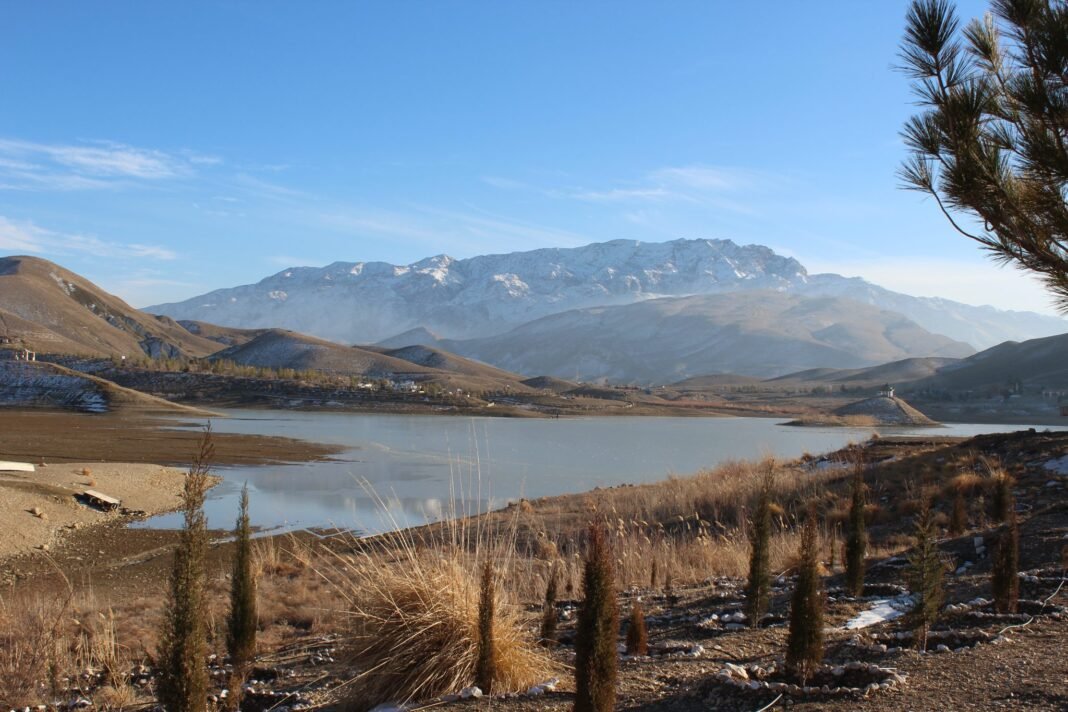
An hour and a half from Karachi’s chaos, the road opens onto water, reeds and wings. Haleji Lake — in Thatta district, Sindh — is one of Asia’s great bird sanctuaries: a freshwater lake on the Indus Flyway where, in winter, tens of thousands of migratory birds from Siberia, Central Asia and Europe descend to rest, feed and breed. Flamingos stand pink in the shallows. Pelicans and cormorants crowd two famous islands. Marsh crocodiles slide silently through the reeds. And above it all, the sky moves.
This Haleji Lake travel guide will help you decide when to time your visit and what to expect — the real history of this remarkable artificial lake, the best months for birdwatching, how to reach it from Karachi and Hyderabad, where to stay, what to eat in Thatta, and practical tips for a day in one of Pakistan’s most important wetlands. For more southern escapes, browse our Explore Pakistan collection and our Malam Jabba guide for a northern contrast.
Quick Facts
- Location: Thatta district, Sindh — about 82–90 km from Karachi, around 24 km northwest of Thatta town
- Altitude: Sea-level coastal plain; the lake is a shallow reservoir, around 5 metres (16–17 ft) at its deepest
- Famous For: One of Asia’s largest bird sanctuaries; 200+ bird species; Pelican Island and Cormorant Island; Ramsar wetland of international importance
- Nearest City: Karachi (roughly 2 hours by road); Thatta town is the nearest district centre
- Accessibility: Easy — paved road off the National Highway (N-5); suitable for any car, fine for a day trip
- Known Landmarks: Pelican Island, Cormorant Island, Hudero pond, nearby Keenjhar Lake, Shah Jahan Mosque (Thatta), Makli Necropolis
- Best For: Birdwatchers, nature photographers, families, school groups and anyone wanting a peaceful day out from Karachi
Why Visit Haleji Lake
The first reason is the birds. Haleji is not a place where you might see a bird or two — it is a place where, in season, the air itself seems to be made of birds. More than 200 species have been recorded here: flamingos, pelicans, herons, egrets, ducks, wigeon, coots, shovellers, pintails, teals, mallards, jacanas, ospreys, harriers and falcons, with the occasional Bewick’s swan. In winter the numbers are staggering — after ecological restoration in 2020, counts crossed 60,000 birds in a single season, with officials expecting far more. Standing on the shore at sunrise as flocks lift off the water in waves is one of the great wildlife spectacles in Pakistan, and it is less than two hours from Karachi.
The second reason is what Haleji represents. This is a Ramsar Site — a wetland of international importance, recognised under the Ramsar Convention — and one of the most important wintering grounds for migratory waterfowl in all of Eurasia. The birds that land here have flown thousands of kilometres down the Indus Flyway from Siberia. To watch them rest and feed is to witness one of the planet’s great migrations at close range, for the price of a day trip. For children especially, Haleji is an education no classroom can match: crocodiles basking on the banks, cormorants drying their wings on their island, pelicans gliding in formation.
The third reason is the setting and the story. Haleji began as a saltwater lagoon and was converted into a freshwater reservoir during World War II to supply water to Allied troops in Karachi — a piece of living history you can still read in its embankments and canals. It was declared a wildlife sanctuary in 1976, fell into decline after its freshwater supply was cut in 1994, and has been clawing its way back through restoration work. Visiting is a small act of support for a fragile ecosystem that nearly died and is coming back to life.
Who is it perfect for? Birdwatchers and photographers, obviously — but also Karachi families who want a real day out that is not a mall; school and college groups; nature lovers; and photographers of all levels. When to go? November to February is the prime season, when the migratory birds are in and the weather is cool and pleasant. The rest of this guide fills in the details.
History of Haleji Lake
Haleji’s story begins with geography: a natural depression in the coastal plain of lower Sindh that collected seasonal rainwater, forming a shallow saltwater lake. For centuries it sat quietly in the landscape, a saline lagoon of little economic use but some ecological value.
Everything changed in the early 1940s. With World War II raging and large numbers of Allied troops stationed in Karachi, the colonial administration needed a reliable freshwater source for the city. Engineers drained the saltwater, built an embankment around the depression, and fed the lake with freshwater through a canal from the Indus — creating, in 1943, the artificial freshwater reservoir we see today. Haleji thus became one of Karachi’s major water sources, and almost by accident, a wildlife paradise: the new freshwater ecosystem, fringed with reeds, grasses and lotus, proved irresistible to waterfowl on the Indus Flyway.
Recognition followed. In 1976 the Sindh government declared Haleji a wildlife sanctuary, and the same year Pakistan’s ratification of the Ramsar Convention made it a Ramsar Site — a wetland of international importance. The lake’s fame spread internationally: the Duke of Edinburgh visited in 1982 and declared it a bird-watchers’ paradise, and national and foreign dignitaries made the trip from Karachi.
Then came the decline. In 1994, the flow of fresh water to the lake was cut off — one major factor being the installation of the Right Bank Outfall Drain carrying waste from nearby areas — and the ecosystem began to deteriorate. Bird numbers collapsed: where hundreds of thousands once came, only around 4,000 birds were recorded in 2019. For a quarter-century the sanctuary was largely neglected. Then, in a restoration effort reported in early 2020, an investment of just half a million rupees cleared channels and revived water flows — and the birds returned in force, crossing 60,000 in that winter alone. Haleji’s modern history is thus a small parable: ecosystems can recover remarkably fast when given water and a little political will. The sanctuary remains under the Sindh Wildlife Department, and its future depends on sustained freshwater inflow and protection from pollution — things every visitor should know about, because informed visitors become the lake’s best advocates.
Top Things to Do in Haleji Lake
Birdwatching at dawn
This is the main event, and dawn is when it happens. Arrive early — around sunrise — when the birds are most active and the light is soft and golden. Bring binoculars if you have them; even a basic pair transforms the experience. Scan the reed beds for herons and egrets, the open water for ducks, coots and grebes, and the skies for raptors — ospreys, marsh harriers, buzzards and falcons all hunt here. In winter, look for the great skeins of migratory ducks arriving from the north. Local wildlife staff and experienced birders can help with identification; the lake has recorded more than 200 species, so every visit adds something new.
Pelican Island and Cormorant Island
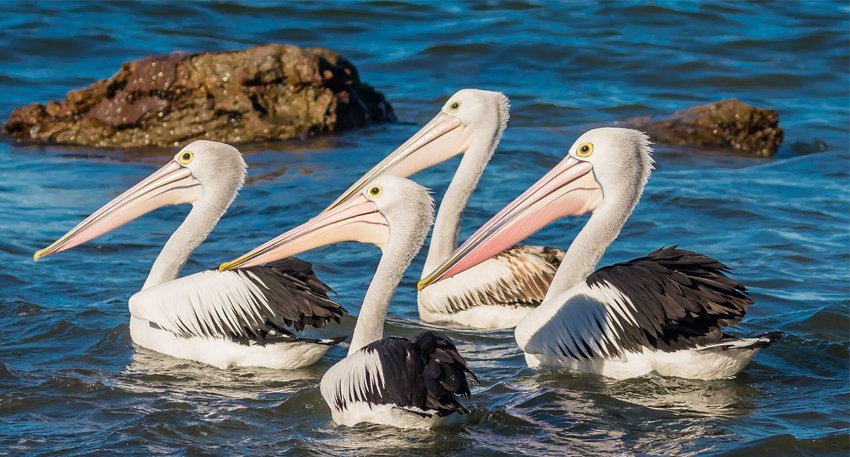
Two small islands in the lake have become famous in their own right. Pelican Island and Cormorant Island are resting places where thousands of these big waterbirds gather to rest and dry their wings in the sun. From the shore or a boat you can watch pelicans — huge, prehistoric-looking, impossibly graceful in flight — and cormorants standing with wings spread like black flags. Late afternoon, when the birds come home to roost, is the best time to see the islands at their busiest.
Spot marsh crocodiles
Haleji is home to marsh crocodiles (mugger crocodiles), often seen basking on the banks or gliding through the shallows. Wildlife officials have counted around 250 of these freshwater crocodiles in the lake complex. Seeing a crocodile slide off a mudbank into the water, barely rippling the surface, is a genuine thrill — keep a respectful distance, stay on designated paths and viewpoints, and never approach the water’s edge carelessly. For children, the crocodiles are usually the highlight of the day.
Boating on the lake
Small boats take visitors out on the water, giving a completely different perspective — gliding through reed channels, drifting past feeding flocks, getting closer to the islands than the shore allows. Early morning boat rides, when the mist is lifting off the water, are magical. Confirm boat availability with the wildlife department staff on site, wear a life jacket, and keep noise down so as not to disturb the birds.
Photography
Haleji is a photographer’s playground: sunrise over misty water, flamingos in the shallows, pelicans in flight, crocodiles on mudbanks, and the wide reed-bed landscapes. A telephoto lens (200mm and up) is ideal for birds; a wide-angle works for the landscapes. The golden hours — just after sunrise and just before sunset — give the best light, and overcast winter days can produce beautifully soft, even illumination for bird portraits.
Picnic by the water
The lake’s calm setting makes it a classic Karachi-family picnic spot. There are shaded areas near the shore; bring your own food and water, carry all rubbish out with you, and keep food waste away from the water to protect the ecosystem. Combine the picnic with an early start for birdwatching and you have a full, satisfying day.
Famous Places In and Around Haleji Lake
- Keenjhar Lake: Sindh’s largest freshwater lake, nearby — another major birdwatching and picnic destination, easily combined in one trip.
- Shah Jahan Mosque, Thatta: The magnificent 17th-century Mughal mosque with 93 domes and exquisite tilework, about 24 km away in Thatta town.
- Makli Necropolis: One of the world’s largest necropolises and a UNESCO World Heritage Site, on Makli Hill near Thatta — half a million tombs spanning four centuries.
- Hudero Lake: A smaller adjacent wetland that forms part of the same waterfowl complex as Haleji.
- Banbhore: The ancient archaeological site of the port city of Debal, a longer but rewarding day-trip extension toward the coast.
How to Reach Haleji Lake
Haleji Lake sits just off the National Highway (N-5), making it one of the easiest significant nature destinations in Sindh to reach. From Karachi it is a straightforward drive of roughly 82–90 km — about two hours in normal traffic, less if you leave early. The turnoff is well before Thatta town; the lake is signposted, and the final approach is on a paved road suitable for any car.
Route Details
- From Karachi: Take the National Highway (N-5) east toward Thatta/Hyderabad. Drive about 82–90 km (roughly 2 hours; leave by 5–6 AM to arrive for the dawn bird activity and to beat city traffic). The lake turnoff is signposted before Thatta town. This is the classic day trip: leave early, birdwatch the morning, picnic at midday, and return by evening.
- From Hyderabad: Drive west on the N-5 toward Thatta and Karachi — roughly 100 km, about 2 hours. Pass Thatta town and continue to the Haleji turnoff.
- From Islamabad/Lahore: Fly to Karachi, then drive as above. Haleji is realistically a Karachi-based trip; from the north it makes sense only as part of a wider Sindh itinerary (Karachi → Haleji → Thatta → Hyderabad).
Nearest airport: Jinnah International Airport, Karachi — about 90 km from the lake. Road conditions: The N-5 is a good dual-carriageway highway; the approach road to the lake is paved and fine year-round. Transport options: A private car or hired taxi/van is the standard and most flexible option. Public buses run the Karachi–Thatta route on the N-5, but you would need local transport from the highway to the lake, so a private vehicle is strongly recommended for a birdwatching trip that starts at dawn.
Where to Stay in Haleji Lake
Haleji is overwhelmingly a day trip from Karachi, and most visitors return to the city the same evening — which is honestly the best plan, since Karachi has the full range of hotels. That said, if you want a dawn start without a 4 AM alarm, or you are combining Haleji with Thatta’s monuments, staying closer helps.
Luxury: Stay in Karachi — the city’s five-star hotels along Shahrah-e-Faisal and Clifton are a comfortable 1.5 to 2 hours from the lake. Mid-range: Karachi’s DHA and Gulshan areas have plenty of mid-range hotels and serviced apartments; in Thatta town there are basic hotels for an overnight stop. Budget: Simple guesthouses in Thatta town cater to travellers visiting the area’s historical sites. Camping: Not established at Haleji — this is a protected wildlife sanctuary, and overnight stays at the lake itself are not the norm. Plan it as a day trip: arrive at sunrise, leave by late afternoon.
Where to Eat: Local Foods of Haleji Lake
There are no established restaurants at the lake itself, so the standard move is to bring a picnic from Karachi — and Karachi’s food needs no introduction. If you pass through Thatta town, you are in the heart of lower-Sindh food culture: try Sindhi biryani (spicier and tangier than its Karachi cousin), sai bhaji (spinach and lentil curry), koki (a crisp wheat flatbread), and thadal, the cooling almond-and-cardamom drink of Sindh. Thatta’s small eateries and dhabas along the N-5 serve fresh, honest food at very budget-friendly prices. Whatever you bring, carry all packaging out — a sanctuary full of litter is a sanctuary in trouble, and the wildlife department staff will thank you for leaving the shore cleaner than you found it.
Weather in Haleji Lake
Haleji sits on Sindh’s coastal plain, so the climate is hot for much of the year — which is precisely why the birdwatching season (November to February) is also the most pleasant time for humans. Winter days are mild and sunny, perfect for long hours outdoors; summer is fiercely hot and best avoided for a full day at the lake. The monsoon (July–September) brings humidity and occasional heavy rain.
| Season | Temperature Range | Conditions |
|---|---|---|
| Winter (Dec–Feb) | 10°C to 26°C | Peak bird season; mild, sunny, ideal for birdwatching |
| Spring (Mar–May) | 22°C to 38°C | Warming up; migratory birds departing; mornings still pleasant |
| Summer (Jun–Aug) | 30°C to 42°C | Very hot and humid; visit only at dawn if at all |
| Autumn (Sep–Nov) | 20°C to 36°C | Cooling down; first migratory arrivals from October–November |
Language and Culture of Haleji Lake
This is Sindhi country. Sindhi is the mother tongue of the villages around the lake, with Urdu widely understood and English spoken by wildlife department staff and guides. The culture is the warm, Sufi-inflected culture of lower Sindh — hospitality is a point of honour, and visitors are welcomed. The villages around Haleji are fishing and farming communities whose lives are intertwined with the lake’s water.
For visitors: dress modestly (light, loose clothing works for both the culture and the climate), greet people with a smile, and ask before photographing villagers. Do not play loud music at the lake — it disturbs the birds and annoys everyone. Respect the sanctuary rules: stay on paths and in designated areas, do not feed the birds or crocodiles, and take every scrap of rubbish with you. The lake’s recovery is fragile; responsible visitors are part of its protection.
Shopping in Haleji Lake
There is no shopping at the lake itself — come for the birds, not the bazaars. The nearby town of Thatta, however, is worth a browse: look for Sindhi ajrak (the iconic block-printed shawl), rilli (patchwork quilts), traditional Sindhi caps and embroidered textiles. Thatta’s bazaar also sells dates and local produce. For a bigger selection, Hyderabad’s markets (about an hour beyond Thatta) are famous for bangles, handicrafts and Sindhi embroidery. There are no shopping malls in the immediate area — the authentic buys here are the region’s textiles and crafts.
Travel Tips for Haleji Lake
Packing Essentials
Binoculars — the single most important item; without them you will miss half the show. A camera with the longest lens you have. Sunscreen, a hat and sunglasses even in winter. Light, breathable clothing and comfortable walking shoes. Plenty of drinking water and a packed picnic. A bird field guide or a birding app on your phone for identification.
Safety Tips
The main safety consideration is the wildlife: marsh crocodiles are real and present — never dangle limbs over boat edges, keep children close and away from the water’s edge, and follow the staff’s guidance about where it is safe to stand. Stay on marked paths; reed beds can hide deep water and soft mud. Wear a life jacket on boats. The area is otherwise safe and family-friendly, with wildlife department staff on site.
Money & Connectivity
Bring cash for boat rides, snacks and any entry fees — there are no ATMs at the lake, though Thatta town has them. Mobile signals from all major networks generally work in the area, but data can be slow. Fuel up and withdraw cash in Karachi before you leave.
Best Time to Visit Haleji Lake
Winter (November to February) — the bird season
This is when Haleji earns its fame. The migratory birds arrive from Siberia, Central Asia and Europe, numbers peak, the weather is cool and pleasant, and the light is beautiful. December and January are the absolute prime months. If you visit once, visit now — and go at dawn.
Spring (March to April) — the farewell
The migrants begin departing, but resident birds remain active and the mornings are still pleasant. A good time for a quieter visit with fewer day-trippers.
Summer (May to August) — avoid
Extreme heat, fewer birds, and an uncomfortable experience for most visitors. If you must go, limit it to a dawn visit and leave by mid-morning.
Autumn (September to October) — the return
The first migratory arrivals begin touching down, temperatures start easing, and anticipation builds. Late October into November marks the real start of the season.
Final Thoughts
Haleji Lake is proof that you do not need to cross the country for a genuine wildlife experience. Ninety kilometres from one of the world’s great megacities sits a Ramsar-listed sanctuary where flamingos wade, pelicans glide and crocodiles bask — a place that was built for war, nearly died of neglect, and came back to life when people decided it mattered.
Go in winter, go at dawn, bring binoculars and patience. Watch the sky fill with wings, listen to the extraordinary dawn chorus of a living wetland, and leave with a new understanding of what Sindh’s quiet waters hold. Haleji rewards the early riser — and reminds the rest of us what we almost lost.
FAQs
Where is Haleji Lake located?
Haleji Lake is in Thatta district, Sindh, Pakistan — about 82–90 km from Karachi on the National Highway (N-5), roughly 24 km northwest of Thatta town.
What is the best time to visit Haleji Lake?
November to February, when migratory birds from Siberia, Central Asia and Europe arrive in huge numbers and the weather is cool and pleasant. December and January are the peak months.
How do I reach Haleji Lake from Karachi?
Drive the National Highway (N-5) toward Thatta for about 82–90 km (roughly 2 hours). The lake is signposted off the highway. A private car is recommended, especially for a dawn arrival.
Is Haleji Lake safe for families?
Yes, it is a popular family day trip. The one real caution is the marsh crocodiles — keep children away from the water’s edge, stay on marked paths, and follow staff guidance.
What birds can I see at Haleji Lake?
More than 200 species have been recorded, including flamingos, pelicans, cormorants, herons, egrets, ducks, wigeon, coots, teals, mallards, ospreys and harriers — plus the famous Pelican Island and Cormorant Island.
Where can I stay near Haleji Lake?
Most visitors day-trip from Karachi (1.5–2 hours away), which has the full range of hotels. Basic guesthouses are available in Thatta town for overnight stays.
What is the history of Haleji Lake?
Originally a saltwater lagoon, it was converted into a freshwater reservoir in 1943 during World War II to supply water to Allied troops in Karachi. It became a wildlife sanctuary and Ramsar Site in 1976.
Can I go boating on Haleji Lake?
Yes, small boats operate on the lake — an early morning ride is highly recommended. Wear a life jacket, keep noise down for the birds, and confirm availability with wildlife department staff on site.