Twelve kilometres out of Abbottabad, the road to Thandiani climbs into the pines — and at about 1,760 metres above sea level it passes a village whose name every local family knows: Kala Pani, “the black water.” A cold mountain stream runs through it, dark over its stones, flowing all year except in the depths of winter. Also, in summer, Abbottabad’s families drive up with picnic baskets and spend the whole day by the water. In fact, in the quieter months, hikers pass through on the forest trails from Patti and Mera Mandroch. It is not a resort and not a monument.
It is something better: a real mountain village that happens to be one of Hazara’s loveliest picnic spots.
This kala pani travel guide covers the Kala Pani on the Abbottabad–Thandiani Road in Khyber Pakhtunkhwa — how to reach it from Islamabad, Lahore and Karachi, what to do there, where to stay and eat, the weather by season. Also, the best time to go. If you are choosing between the crowded hill stations and somewhere quieter, this one is for you.
Quick Facts
- Location: On the Abbottabad–Thandiani Road, Abbottabad District, Khyber Pakhtunkhwa — about 12 km from Abbottabad city.
- Altitude: Around 1,762 metres (about 5,780 feet) above sea level.
- Famous For: A beloved picnic spot on a year-round mountain stream; pine-forest scenery; hiking trails linking it to Patti Forest and Mera Mandroch; cool summer escape near Abbottabad.
- Nearest City: Abbottabad (12 km); Islamabad is about 120 km to the south.
- Accessibility: Easy drive from Abbottabad (35–50 minutes) on the Thandiani Road; Abbottabad itself is about 2 hours from Islamabad via the Hazara Motorway.
- Known Landmarks: The Kala Pani stream, the surrounding pine forests, nearby Patti Forest and the Thandiani ridge.
- Best For: Families on picnic day-trips, couples, hikers, photographers, and anyone wanting Galiyat scenery without Galiyat crowds.
Why Visit Kala Pani
The first reason is ease. The great mountain escapes of Pakistan usually demand long drives, jeep tracks and planning. Kala Pani asks almost nothing: two hours from Islamabad to Abbottabad on the motorway, then a gentle 12-km climb into the pines. You can decide at breakfast to go, and be sitting by the stream before lunch. For families with small children, for elderly travellers, for anyone who wants mountain air without mountain logistics, that ease is everything.
The second reason is the water. Also, the stream that gives Kala Pani its name — “black water,” for the dark, deep look of its pools over the stones — runs through the year except in winter. In fact, snowfall in the upper catchment chokes the flow. In addition, in summer it is the village’s playground: children splash in the shallows, families spread their picnic cloths on the banks. The sound of running water does what mountain water has always done — slows everyone down. It is the classic Hazara picnic scene, and it is genuinely lovely.
Leopard Country in Pine Forest
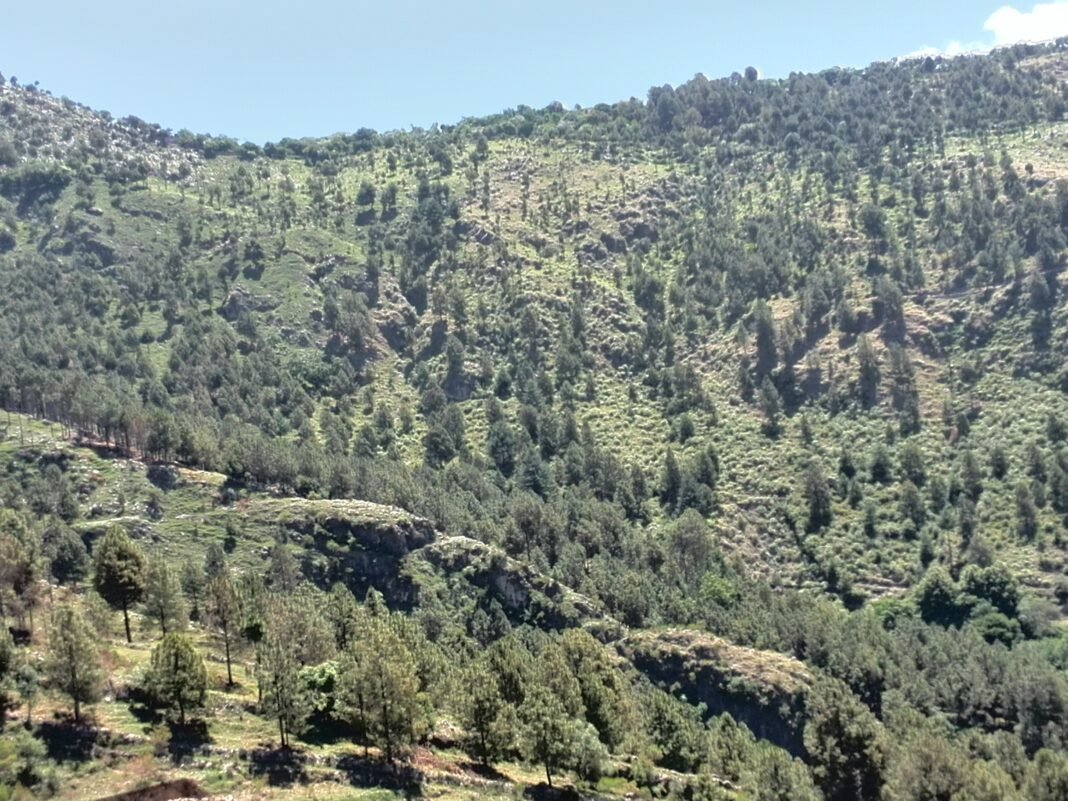
The third reason is the setting. At 1,762 metres, Kala Pani sits in proper pine-forest country. The hills around it are part of the same forested belt that runs through the Galiyat — deodars and pines, deep ravines, and views that open suddenly between the trees. It is wilder-feeling than its distance from the city suggests. This is leopard country, as the wildlife records note, and the ravines demand respect. That edge of wildness is part of the appeal: you are twelve kilometres from a city of over a hundred thousand people. You can hear nothing but water and wind.
And the fourth reason is timing and choice. Also, in summer, Kala Pani is deservedly popular — and crowded on weekends. But visit on a weekday, or come in spring or autumn. You get the stream, the forest and the views almost to yourself. Pair it with Thandiani further up the road, or with Nathia Gali and the Galiyat. You have a full highland itinerary built around one easy base: Abbottabad. For travellers choosing their next mountain destination, Kala Pani is the low-effort, high-reward option that the guidebooks skip and the locals love.
History of Kala Pani
Kala Pani’s history is the history of the Galiyat and the Abbottabad hills. Also, a region shaped by empire, forest and road-building. Abbottabad itself is a young city by the standards of the subcontinent: it was founded in 1853 and named for James Abbott, the British officer who established it as the headquarters of the Hazara district. The British developed the hill stations above it — Thandiani, Nathia Gali, the Galiyat — as summer retreats. The roads they cut through these pine forests, including the Abbottabad–Thandiani road that passes Kala Pani, defined the region’s geography of leisure for the next century and a half.
A Farming Village Turned Picnic Spot
The village of Kala Pani grew up along that road as a farming and forest community of the Hazara hills, its life organised around the stream — water for fields, for livestock, for the watermills that once ground the village grain. Also, the name, “black water,” likely comes from the stream’s dark pools, shaded by pines and deep over black stone. In fact, for generations it was simply a village. Its transformation into a picnic destination followed the same pattern as the rest of the Galiyat belt, as Abbottabad’s growing middle class took to the hills on weekends with the spread of private cars in recent decades.
The natural history is older and wilder. The forests around Kala Pani are part of the western Himalayan pine-forest ecosystem, and wildlife surveys have recorded a genuine variety of fauna here — including, notably, the common leopard. This has been a source of concern for local people in these hills. The mountainous terrain, cut by deep ravines, made these forests a natural refuge for wildlife long before they were a refuge for picnickers. Heavy winter snow — the same snow that chokes the stream’s flow — has always defined the rhythm of life at this altitude: summers of movement and visiting, winters of quiet and snow.
Today Kala Pani sits at an interesting point in its story: well-known to the people of Abbottabad and Hazara, increasingly discovered by hikers mapping the “hidden trails” of the region — the Mera Mandroch to Kala Pani route via Patti Forest is now a recognised moderate hike — but still essentially undeveloped. There are no resorts, no entry gates, no commercial viewpoints. Whether that changes will depend on how the region manages its growing tourism. For now, the village remains what it has always been, just with more visitors on summer Sundays.
Top Things to Do in Kala Pani
Picnic by the Stream
This is the classic Kala Pani day. Also, drive up from Abbottabad with a full picnic — parathas, kebabs, fruit, a thermos of chai — and claim a flat spot on the stream bank. The water runs cold and clear (except in winter), the pines give dappled shade, and children can paddle in the shallows under supervision. Come on a weekday if you can: summer weekends get crowded, and the weekday quiet is a different, better experience. Remember the only rule that matters — carry every scrap of rubbish back out with you. The stream is the village’s water; treat it accordingly.
Hike the Mera Mandroch–Patti Forest Trail
For walkers, the standout route is the Mera Mandroch to Kala Pani trail via Patti Forest. A moderate hike through dense pine forest and along mountain ridges that local hiking groups now rate as one of Abbottabad’s best “hidden trails.” The route passes traditional villages and the Patti Forest’s deep green canopy before descending to the Kala Pani waters. It is a full-day undertaking for fit walkers. Also, go with a local guide or an experienced group, carry water and food, and start early. The ridge-line views back toward Abbottabad are superb.
Photography in the Pines
Kala Pani is a photographer’s quiet delight: dark stream pools reflecting pines, mist in the ravines on autumn mornings. The long evening light raking through the forest. Winter brings snow scenes when the road is passable. Also, a polarising filter helps with the water shots; a tripod is worth the weight for the low-light forest interiors.
Combine with Thandiani
The road continues climbing past Kala Pani to Thandiani, the lovely old hill station further up the ridge. Make it a two-stop day: picnic at Kala Pani, then drive on to Thandiani for the sunset views over Abbottabad and the plains. In clear winter weather the views from the Thandiani ridge are among the finest in Hazara.
Explore the Galiyat
Kala Pani sits on the edge of the Galiyat. Also, Nathia Gali, Khanaspur, Ayubia and the famous pipeline walking track are all within easy reach of Abbottabad. Base yourself in Abbottabad for two or three days and you can do Kala Pani, a Galiyat day and Thandiani without changing hotels. Our Galiyat travel guide covers that side of the hills in detail.
Famous Places In and Around Kala Pani
The Kala Pani Stream — the dark-water stream itself, the heart of the picnic spot.
Patti Forest — dense pine forest on the hiking route from Mera Mandroch.
Thandiani — the hill station further up the road, with superb ridge views.
Nathia Gali and Khanaspur — the Galiyat’s best-known towns, an easy drive via Abbottabad.
Abbottabad City — the base town: Ilyasi Mosque, the old cantonment bazaars, and Shimla Hill viewpoint.
Bagan Reserved Forest — protected forest in the surrounding hills.
How to Reach Kala Pani
Kala Pani is one of the easiest mountain destinations in Pakistan to reach. Also, from Islamabad, take the Hazara Motorway (M-15) to Abbottabad — about 120 km, roughly 2 hours of smooth motorway driving. In fact, From Abbottabad city, follow the Abbottabad–Thandiani Road climbing north-east. In addition, Kala Pani village is about 12 km up this road, a 35 to 50-minute drive depending on traffic and conditions. From Lahore, the journey is around 380 km (about 5.5–6 hours) via the M-2, M-1 and M-15 motorways. From Karachi, fly to Islamabad and drive — the road journey is roughly 1,600 km.
The nearest airport is Islamabad International Airport. Public transport from Islamabad/Rawalpindi to Abbottabad is frequent (vans, coasters and buses from the main terminals). From Abbottabad, hire a taxi or a Suzuki van for the 12-km climb to Kala Pani — agree the fare and waiting time in advance. The Thandiani Road is paved but narrow and winding, with sharp bends and deep ravines below. Drive carefully, use the horn on blind corners, and avoid the upper road in heavy snow unless you have a 4×4 and experience. In winter, check locally whether the road beyond the village is open before heading for Thandiani.
Route Details
From Islamabad (recommended route): Join the Hazara Motorway (M-15) at the motorway interchange and drive to Abbottabad (about 120 km, 2 hours). Also, In Abbottabad, follow signs for Thandiani Road (the Murree Road climbing north-east out of the city). After about 12 km of winding climb through pine forest — 35 to 50 minutes — you reach Kala Pani village. The stream picnic spots are along the road here. Continue another stretch up the same road for Thandiani.
From Lahore: M-2 to Islamabad, then M-1/M-15 to Abbottabad — about 380 km total. Leave early to reach Kala Pani by afternoon.
From Karachi: Fly to Islamabad, then follow the Islamabad route. This is the only sensible option for the distance.
Where to Stay in Kala Pani
There are no hotels in Kala Pani village itself — and that is precisely its charm. Also, stay in Abbottabad, 12 km down the road, which has one of the best-developed hotel sectors of any mid-size city in the north: mid-range hotels and guesthouses in every part of town, many with mountain views, plus a few upscale options. Families will find Abbottabad’s hotels comfortable, affordable and well used to tourists.
For a hill-station stay, Thandiani (further up the road) and Nathia Gali (via Abbottabad) offer cottages and hotels in the pines — book well ahead for summer weekends and public holidays. Also, the entire Galiyat belt fills up. In fact, budget travellers will find basic guesthouses in Abbottabad perfectly adequate. Camping by the Kala Pani stream is not an established or advisable option. This is village land and leopard country. Stay in town and day-trip.
Where to Eat: Local Foods of Kala Pani
Bring your picnic — but know that the food around here is worth planning for too. Also, Abbottabad and the Hazara hills run on hearty dhaba cooking: chicken karahi bubbling in the wok, daal fry with white rice, mixed sabzi, and tandoori rotis straight from the clay oven. The roadside dhabas on the Thandiani Road do excellent pakoras and chai — the mandatory hill-drive combination — and in Abbottabad city you will find everything from traditional chapli kebab shops to bakeries selling fresh rusks and cakes for the picnic basket.
Hazara’s dairy is famous: try the fresh lassi and dahi (yoghurt) from Abbottabad’s milk shops, and look for desi ghee in the bazaar. Also, in season, roadside vendors sell fresh fruit — plums, apricots and apples from the surrounding orchards. In fact, a dhaba meal here is very budget-friendly; a family can eat well for a few hundred rupees. As always in the hills, drink bottled water and carry snacks and water for the stream-side picnic, as there are no shops at Kala Pani itself.
Weather in Kala Pani
At about 1,760 metres, Kala Pani has a true mountain climate: pleasant summers, cold snowy winters. The monsoon rains of July–August. The stream flows all year except in winter, when snowfall in the catchment chokes it. Also, pack for the season — mountain weather changes fast.
| Season | Temperature Range | Conditions |
|---|---|---|
| Winter (Dec–Feb) | 0–10°C | Cold with snowfall; the stream’s flow drops; the road can be difficult — check conditions; beautiful snow scenery when accessible. |
| Spring (Mar–Apr) | 10–20°C | Mild and fresh; forest coming alive; an excellent, quiet season for picnics and hiking. |
| Summer (May–Jun) | 18–28°C | Pleasantly warm; the peak picnic season — crowded on weekends, so prefer weekdays. |
| Monsoon/Autumn (Jul–Nov) | 12–25°C | Monsoon rains Jul–Aug can make the road slippery; September–November are clear, crisp and lovely. |
Language and Culture of Kala Pani
The hills around Kala Pani speak Hindko — the language of Hazara — alongside Pahari in the higher villages and Urdu everywhere. Also, Hazara’s culture is known across Pakistan for its hospitality and its strong sense of honour. In fact, guests are treated with genuine warmth. A visitor showing interest in the village is likely to be offered tea and conversation. The people here are accustomed to picnickers. Kala Pani is still a working village — fields, livestock and homes — not a resort.
Respect that: keep noise reasonable, do not play loud music by the stream, ask before photographing residents (especially women), and dress modestly. Do not dam or divert the stream, do not wash vehicles in it, and take all litter home. The water is the village’s lifeline. If a local offers to show you a viewpoint or a forest path, accept graciously. The small tip or the shared snack you offer in return is part of the hills’ economy of kindness.
Shopping in Kala Pani
There is nothing to buy at Kala Pani itself — come prepared. Abbottabad’s bazaars are the place to stock up and souvenir-hunt: dry fruits (walnuts, almonds, dried apricots) from the hills, woollen shawls and sweaters for the cold, local honey. Also, Hazara’s desi ghee. The city’s old bazaars also sell pine-wood handicrafts and everyday woollens at local prices. There is no craft market at the stream and no shopping mall near the destination. The authentic shopping here is Abbottabad’s bustling main bazaar, 12 km down the road.
Travel Tips for Kala Pani
Packing Essentials
A complete picnic kit (food, water, mats, rubbish bags. Also, there are no shops), sun protection, a light jacket even in summer (mountain evenings cool fast), sturdy shoes for the stream banks. In fact, a warm layer in spring and autumn. In winter, full cold-weather gear and a check on road conditions are essential. A camera is a must; a power bank is wise.
Safety Tips
The stream is cold and can run fast after rain — supervise children closely and do not swim in the deeper pools. Also, the ravines around the village are steep; stay on the paths. This is leopard country: do not wander into the forest alone at dawn or dusk, keep food sealed, and leave before dark. Drive the Thandiani Road with care — it is narrow, winding, and edged by drops.
Money & Connectivity
ATMs and banks are plentiful in Abbottabad — withdraw cash there, as there are no facilities at Kala Pani and local vendors are cash-only. Mobile signals (Jazz, Telenor, Zong, Ufone) cover the Abbottabad–Thandiani road reasonably well, but can fade in the deeper ravines. Download offline maps before the climb.
Best Time to Visit Kala Pani
Summer (May–June): Peak Picnic Season
Warm days (18–28°C), full stream, green forest. This is when Kala Pani is at its most inviting and its most crowded. Also, go on a weekday to dodge the weekend rush, arrive early to claim a good spot, and enjoy the classic Hazara picnic at its best.
Spring (March–April) and Autumn (September–November): The Connoisseur’s Choice
Mild temperatures, flowering or golden forest, far fewer people. Also, these are arguably the best months for hikers and photographers. The trails are comfortable, the light is beautiful, and the stream still flows well.
Monsoon (July–August): Lush but Tricky
The forest is at its greenest, but heavy rain can make the Thandiani Road slippery and the stream rough. If you go, check the weather, avoid the water’s edge in downpours, and keep plans flexible.
Winter (December–February): Snow and Silence
Cold, quiet and potentially snowy — magical if the road is passable. Also, the stream’s flow drops and access can be difficult. Only for experienced winter travellers who have checked conditions locally.
Final Thoughts
Kala Pani will not give you a checklist of monuments or a resort’s amenities. What it gives you is rarer: a mountain stream in a pine forest, twelve kilometres from a city, where you can spend a whole day doing nothing more ambitious than watching water move over stone. Also, in a country of spectacular destinations competing for your attention, there is something quietly radical about choosing the simple one.
Go on a spring weekday, pack a proper picnic, walk a little of the forest trail, and drive on to Thandiani for sunset if the mood takes you. Also, you will understand why Abbottabad’s families have been coming here for generations. And you will have found one of Hazara’s easiest, loveliest escapes. For more mountain ideas across the country, browse our Explore Pakistan collection.
FAQs
Where is Kala Pani located?
On the Abbottabad–Thandiani Road in Abbottabad District, Khyber Pakhtunkhwa — about 12 km from Abbottabad city, at roughly 1,762 metres above sea level.
What is Kala Pani famous for?
Its mountain stream (“black water”), pine-forest picnic spots, and easy access from Abbottabad. Also, it is one of Hazara’s favourite family day-trip destinations.
What is the best time to visit Kala Pani?
May–June for the classic summer picnic (prefer weekdays). March–April and September–November for quieter, equally beautiful visits. Winter brings snow but difficult access.
How do I reach Kala Pani from Islamabad?
Drive the Hazara Motorway (M-15) to Abbottabad (about 120 km, 2 hours), then climb the Abbottabad–Thandiani Road for 12 km (35–50 minutes) to the village.
Is Kala Pani safe for families?
Yes — it is a popular family picnic spot. Supervise children near the stream, stay on paths away from the ravines, and leave before dark, as this is leopard country.
Where can I stay near Kala Pani?
In Abbottabad (12 km away). Also, this has mid-range hotels and guesthouses for every budget. Thandiani and Nathia Gali offer hill-station stays further afield.
What food is available at Kala Pani?
Bring your own picnic — there are no eateries at the stream. Abbottabad’s dhabas serve chicken karahi, daal, pakoras and chai; stock up in the city before driving up.
Is this the same Kala Pani as in Kumrat or Dir?
no. Several places in Khyber Pakhtunkhwa share the name (including spots in Kumrat Valley and a pass in Dir). This guide covers the Kala Pani village on the Abbottabad–Thandiani Road in Abbottabad District.