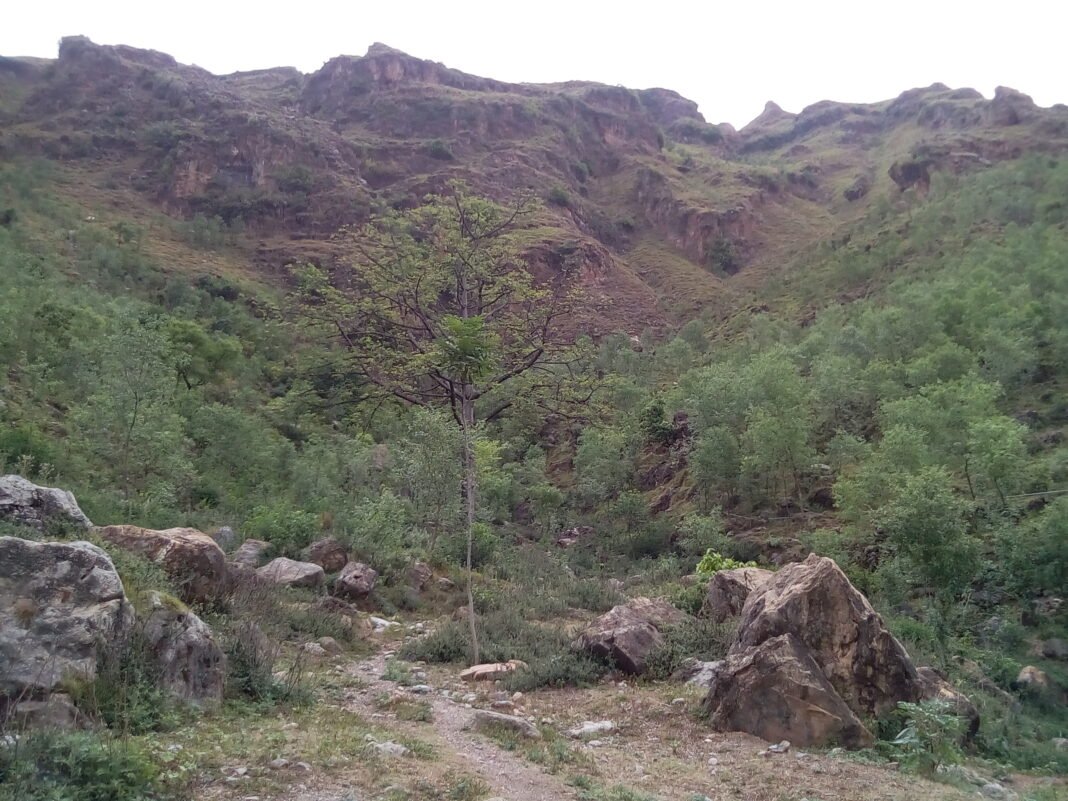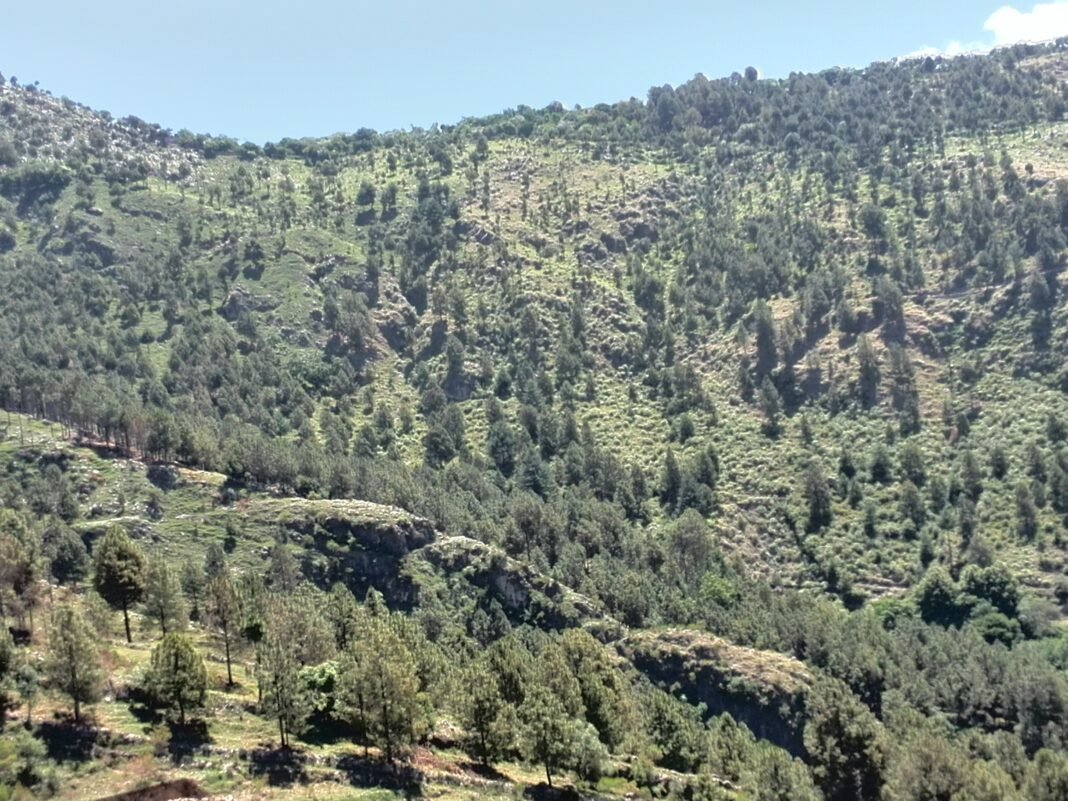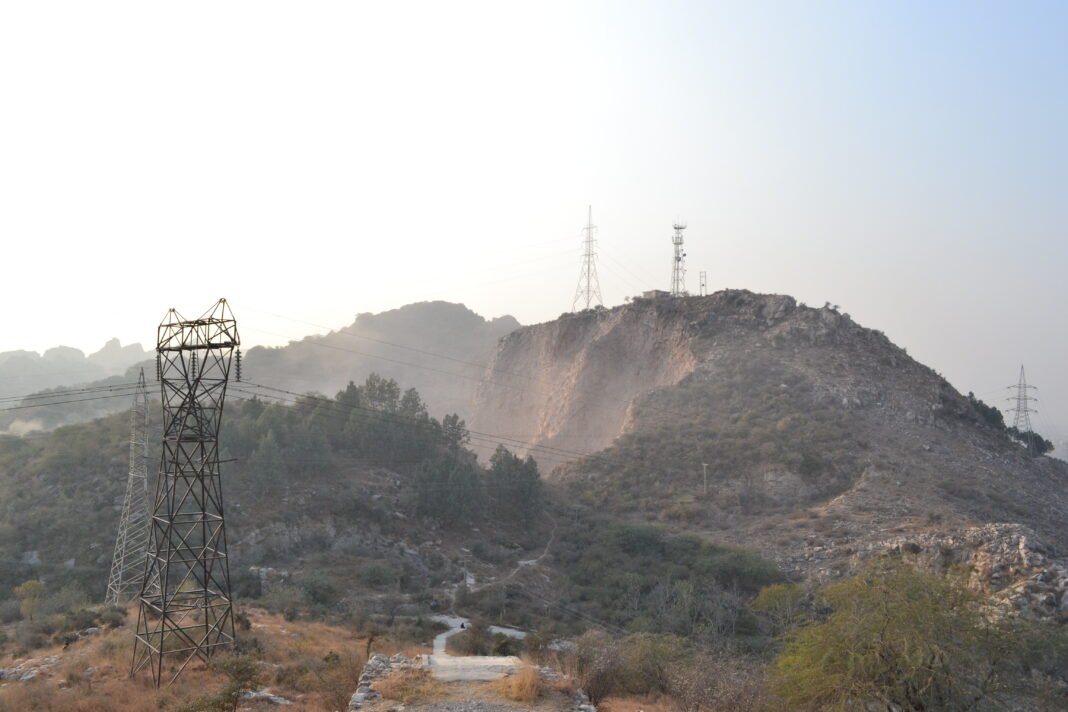
An hour and a half from Islamabad, the Pothohar Plateau wrinkles into a range of hills that look like they were painted in two colours. Also, and they were named for exactly that. Kala Chitta, “black and white” in Punjabi, is a mountain range where dark rock and pale stone alternate across the ridges, and at its heart lies one of Pakistan’s least-visited national parks. Kala Chitta National Park protects some 91,000 acres of scrub forest, grassland and dry valleys in Attock District — home to leopards, the endangered Punjab urial, chinkara gazelle and 180 species of birds.
It is also, astonishingly, the place where scientists found the fossils of the earliest whales on Earth.
This kala chitta national park travel guide is for the traveller who wants wilderness without the crowds of the northern areas — a genuine, protected, wild landscape within easy reach of the capital. Also, below: why the park deserves your visit, its remarkable natural history, the wildlife and fossils to look for, how to reach it from Islamabad, Lahore and Karachi, where to stay and eat, the weather. In fact, the best time to go.
Quick Facts
- Location: The Kala Chitta Range, Attock District, Punjab — on the Pothohar Plateau, spanning the tehsils of Attock, Fateh Jang and Jand.
- Altitude: Low hills and plains of the Pothohar Plateau — rolling ridges rather than high mountains.
- Famous For: The “black and white” hills; the endangered Punjab urial; fossils of the earliest whales (Pakicetus and Ambulocetus) in the 50-million-year-old Kuldana Formation; 180 bird species.
- Nearest City: Attock City, with Fateh Jang as the other main gateway; Islamabad is roughly 80 km to the south-east.
- Accessibility: Reached by road from Attock or Fateh Jang; visitors should check access arrangements with the Punjab Wildlife & Parks Department, which manages the park.
- Known Landmarks: The Kala Chitta ridgeline itself, the fossil-bearing Kuldana Formation, scrub-forest valleys and seasonal streams.
- Best For: Wildlife watchers, birders, geology and fossil enthusiasts, hikers, photographers, and families wanting a real nature day-trip from Islamabad.
Why Visit Kala Chitta National Park
Start with the simplest reason: proximity. Also, Pakistan’s great national parks — Deosai, Hingol, Khunjerab — demand days of travel. In fact, Kala Chitta sits on the doorstep of the capital region, yet remains almost unknown to tourists. Meanwhile, you can leave Islamabad after breakfast, walk a scrub-forest trail looking for urial and grey partridge, stand on rocks that hold the fossils of the first whales. It be back for dinner. For anyone based in Islamabad, Rawalpindi or Attock, this is the easiest genuine wilderness experience in the country.
Then there is the wildlife. The park’s dry subtropical ecosystem supports 22 mammal species. The headline names are genuinely exciting: the Indian leopard still roams the remoter sections, the endangered Punjab urial — the wild sheep of the Salt Range and Pothohar — finds refuge here. The elegant chinkara (Indian gazelle) grazes the open grasslands. Wild boar, Indian hare, foxes, jackals and the shy Indian pangolin complete the mammal list. For birders, 180 species — from Indian peafowl and grey francolin to raptors like the shikra and black-winged kite — make it a rewarding modest birdwatching destination, especially in the cool months when migrants pass through.
Fifty Million Years in the Rocks
The third reason is one of a kind: deep time. The Kala Chitta hills are world-famous among palaeontologists for the Kuldana Formation, a band of rock some 50 million years old that has yielded the fossils of Pakicetus and Ambulocetus — the earliest known whales, animals still partly living on land. Also, fifty million years ago this was the shore of the ancient Tethys Sea; the whales’ ancestors walked here. Standing in these dry hills knowing they were once a coastline, holding in your mind’s eye a four-legged whale, is the kind of perspective-shift that no ordinary picnic spot can offer.
Finally, the landscape itself. Also, the name tells the story: the northern hills are “Chitta Patthar” (white stones), the southern ones “Kala Patthar” (black stones). The contrast paints the ridgelines in alternating bands. Undulating hills, dry valleys, thorny scrub of wild olive and phulai, seasonal grasses that turn green after rain. It is the classic Pothohar look, and it photographs beautifully in the low light of winter mornings. If you want to choose a destination that is wild, uncrowded, scientifically fascinating and close, Kala Chitta should be at the top of your list.
History of Kala Chitta National Park
The human history of the Kala Chitta hills is the history of the Pothohar Plateau — one of the oldest inhabited landscapes in South Asia, a corridor between the Indus plains and the Kashmir valleys that has seen every empire pass. But the park’s official history as a protected area is recent. Meanwhile, the hills were first designated a game reserve in 1983, recognising their importance for the Punjab urial and other wildlife. In December 2008, the area was upgraded to national park status.
Its boundaries were formally declared in 2023 — making it one of Pakistan’s newer national parks, now spanning about 91,342 acres (roughly 37,000 hectares) across the tehsils of Attock, Fateh Jang and Jand.
Conservation work in the park focuses on the species that need it most. The Punjab urial, an endangered wild sheep found only in this region, is the subject of breeding and population-monitoring programmes. The park also runs community education to build local support for sustainable practices. Also, the Punjab Parks and Wildlife Department, which governs the park, manages it as a biodiversity hotspot of the Pothohar — a mosaic of hills, woodlands, grasslands and scrub that shelters over 150 plant species alongside its mammals, birds and reptiles.
Rewriting the Story of Whale Evolution
The deeper history, though, belongs to the rocks. Also, the Kala Chitta Range’s Kuldana Formation — a thin band of red continental beds within thicker marine limestones, with the Kohat Formation of shale and grey limestone above it — was laid down in the Eocene, about 50 million years ago. In fact, the Tethys Sea covered this region. In the 1980s and 1990s, palaeontologists working these beds uncovered fossils that rewrote the story of whale evolution: Pakicetus, a wolf-sized land mammal with whale-like ears. Ambulocetus, the “walking whale” that swam like an otter. These are among the earliest cetaceans known anywhere on Earth.
And they were found right here, in the hills above Attock. The park thus protects not only living wildlife but one of the great fossil landscapes of world science.
Top Things to Do in Kala Chitta National Park
Wildlife Watching: Urial, Chinkara and (Maybe) Leopard
The park’s signature experience is scanning the hillsides for its wild ungulates. Also, the Punjab urial — stocky, reddish wild sheep with magnificent curved horns on the rams — favours the rockier slopes. In fact, the dainty chinkara grazes the open grasslands. Dawn and dusk are the golden hours; move quietly, use binoculars, and watch the ridgelines. The Indian leopard is present but elusive — sightings are rare and a matter of luck — but knowing it is out there adds a electric thrill to every walk. Wild boar, jackals and foxes are more commonly seen.
Because this is a protected area, coordinate any wildlife excursion with the Punjab Wildlife & Parks Department staff. They know where the animals are and how to approach without disturbing them.
Birdwatching
With 180 recorded bird species, Kala Chitta rewards anyone with binoculars. Resident stars include the Indian peafowl, grey francolin (tittar) and grey partridge, plus doves, and raptors — shikra and black-winged kite — riding the thermals above the ridges. Winter (October–March) is the best season, when resident birds are active and migrants pass through. Also, the scrub forest and seasonal stream beds are the most productive spots. Go early, stay quiet, and the birds come to you.
Hiking the Scrub-Forest Trails
The park’s undulating hills are made for walking. There are no formal marked-trail networks of the northern-areas kind, so hikes here are exploratory — ridgeline walks with big Pothohar views, descents into dry valleys, and loops through wild-olive and phulai scrub. Also, distances are modest and the elevation gain gentle, making this excellent hiking for beginners and families. Always check with wildlife staff about routes and conditions, carry plenty of water (there are no facilities inside), and wear boots. The ground is rocky and thorny scrub is unforgiving to sandals.
The Fossil Story: Walking Through 50 Million Years
You will not find a fossil museum on the hillside, but knowing the geology transforms the landscape. The banded rocks of the range — the red beds of the Kuldana Formation, the grey limestones above — are the pages of the whale-evolution story. Read up on Pakicetus and Ambulocetus before you go, then stand on a Kuldana outcrop and picture the Eocene shoreline. For geology students and the scientifically curious, this is a pilgrimage site. (Do not collect fossils or rocks — the park is protected, and its scientific heritage belongs to everyone.)
Photography: The Black-and-White Hills
The park’s name is a photographer’s brief. Shoot the contrasting ridges in the raking light of early morning or late afternoon. The dark and pale bands stand out most strongly. Wildlife photography takes patience — a long lens, a still hide near a watercourse in the dry months, and luck. The winter months also bring dramatic skies and the clearest air of the year.
Famous Places In and Around Kala Chitta National Park
The Kala Chitta Ridgeline — the “black and white” hills themselves, the park’s defining landscape.
Kuldana Formation outcrops — the 50-million-year-old fossil beds of the earliest whales.
Attock Fort and Attock Khurd — the great Mughal-era fort on the Indus and the historic railway town below it; see our Attock Fort guide and our Attock Khurd guide.
Taxila — the ancient Buddhist university city, about an hour east; its monasteries are covered in our Jaulian monastery guide.
Fateh Jang — the market town on the park’s southern edge, a practical gateway with food and fuel.
The Indus at Attock — where the river meets the hills below the fort, a classic Pothohar view.
How to Reach Kala Chitta National Park
The park lies in Attock District, reached from Attock City or Fateh Jang. And the essential first step, as the park’s own field guides advise, is to check access with the Punjab Wildlife & Parks Department, since this is a managed protected area rather than an open picnic spot. Also, From Islamabad, Attock City is about 80 km via the GT Road (N-5) — roughly 1.5 to 2 hours of easy driving. In fact, the park’s eastern ridges begin not far beyond. From Lahore, the distance is around 340 km (about 5 hours) via the M-2 Motorway and GT Road.
From Karachi, it is roughly 1,400 km — fly to Islamabad and drive.
The nearest airport is Islamabad International Airport. Also, public transport — vans and buses — runs frequently from Islamabad/Rawalpindi to Attock City and Fateh Jang. From there, hire a local vehicle for the park. A private car or hired jeep is the most flexible option, especially if you plan to explore the hill tracks. Road conditions on the main highways are good year-round. The tracks inside the park area are unpaved and best tackled in a high-clearance vehicle, particularly after rain.
Because wildlife is the point, plan your arrival for early morning. The animals are most active at dawn, and the light is best then too. Confirm entry permissions, any guide requirements and current access points with the Wildlife Department before you set out. Arrangements can vary by season.
Route Details
From Islamabad (recommended route): Take the GT Road (N-5) west from Rawalpindi toward Attock — about 80 km, 1.5 to 2 hours. From Attock City, head toward the Kala Chitta hills (local drivers know the range). Also, alternatively approach from Fateh Jang, south of the park, which sits right on the hills’ edge. Contact the Punjab Wildlife & Parks Department in advance to confirm which access point to use and whether a guide is required.
From Lahore: M-2 Motorway to the Islamabad region, then the GT Road to Attock — about 340 km total, roughly 5 hours. An early start puts you at the park by mid-morning.
From Karachi: Fly to Islamabad, then follow the Islamabad route. The full road journey is a two-day drive.
Where to Stay in Kala Chitta National Park
There are no hotels inside the national park — and as a protected area, overnight stays within its boundaries are not a casual option. Also, base yourself in Attock City or Fateh Jang, both of which have mid-range hotels and guesthouses serving travellers and officials: functional, affordable rooms with the basics covered. In fact, Attock City has the wider choice and makes a good base for combining the park with Attock Fort and Taxila.
Many visitors simply day-trip from Islamabad/Rawalpindi, where the full range of hotels is available. The park is close enough that this is the most comfortable option, especially for families. Organised camping inside or at the edge of the park may be possible only with the Wildlife Department’s permission and guidance. Do not camp independently in a protected area that holds leopards. Book Islamabad hotels ahead on winter weekends, when the capital’s own tourism peaks.
Where to Eat: Local Foods of Kala Chitta National Park
The park sits in the Pothohar food region, and the local cuisine is the hearty Punjabi cooking of the plateau. The celebrated dish is desi murgh — free-range chicken, slow-cooked in desi ghee until tender — served at roadside dhabas around Attock and Fateh Jang. For example, Pothoharis will tell you it tastes like nowhere else. In winter, sarson ka saag with makki ki roti and a dollop of white butter is the soul-warming classic. A tall glass of lassi (sweet or salted) is obligatory at any dhaba stop.
Katwa gosht — meat slow-cooked in an earthen pot — is another regional favourite you will find in the area’s better dhabas, alongside chana chaat, daal fry and fresh tandoori rotis. Also, pack a full picnic for the park itself, as there are no eateries inside: parathas, kebabs and fruit travel well. Dhaba meals in this region are famously budget-friendly — expect to eat very well for a few hundred rupees. Drink bottled water and carry extra for the trail.
Weather in Kala Chitta National Park
The park has a harsh continental climate for its modest altitude: hot summers, cool winters and scarce rainfall (about 650 mm a year). The scrub offers little shade, so — as with all Pothohar destinations — the season you choose defines the trip. Also, October to March is the recommended window.
| Season | Temperature Range | Conditions |
|---|---|---|
| Winter (Nov–Feb) | 5–20°C | Cool, dry and clear; the best season for wildlife watching, hiking and photography. |
| Spring (Mar–Apr) | 15–30°C | Pleasant; scrub greens up after winter rains; good for birding. |
| Summer (May–Jul) | 30–41°C | Hot and harsh; wildlife hides by day; visit only at dawn or dusk, with plenty of water. |
| Monsoon/Autumn (Aug–Oct) | 25–38°C | Monsoon showers green the hills; tracks can be muddy; October turns pleasant. |
Language and Culture of Kala Chitta National Park
The villages around the park speak Potohari Punjabi, with Urdu understood everywhere. Also, Pothohar’s culture is the sturdy, martial, hospitable culture of the plateau — proud, direct, and generous to guests. In fact, the area’s people have lived alongside this wildlife for generations. Local guides and wildlife staff often know the hills intimately, and hiring them supports the community conservation the park depends on.
As a visitor to a protected area, your conduct matters more than usual: stay on agreed routes, keep noise down, never feed or chase wildlife, carry out all rubbish, and respect private and community land around the park boundaries. Dress for the outdoors rather than the city — long trousers against thorns, a hat against the sun — and greet locals with “Assalam-o-Alaikum.” If you are offered tea by a wildlife guard or a villager, accept it. Some of the best natural-history information comes with the second cup.
Shopping in Kala Chitta National Park
This is a wilderness destination, not a shopping one — and that is part of its charm. The bazaars of Attock City and Fateh Jang cover practical needs: outdoor snacks, water, basic supplies and local dry fruits. Look out for the region’s desi ghee and peanuts and chickpeas from Pothohar’s farms, sold in the grain markets. There are no craft markets inside the park and no shopping mall near the destination. Buy what you need in town before heading for the hills.
Travel Tips for Kala Chitta National Park
Packing Essentials
Binoculars (essential for wildlife and birds), a camera with the longest lens you have, a wide-brimmed hat, sunscreen, at least two litres of water per person, sturdy boots, and long trousers against thorn scrub. Also, a field guide to the birds of Pakistan enriches the trip enormously. Carry a fully charged phone and a power bank — there is no charging inside the park.
Safety Tips
This is genuine leopard and snake country — including Russell’s viper and the Indian cobra. Also, stay with your guide, never walk alone at dawn or dusk away from the group, watch where you put hands and feet among rocks, and keep children close. That said, with a wildlife-department guide and basic sense, the park is as safe as any managed reserve. Do not approach or corner any wild animal, and never leave the agreed route.
Money & Connectivity
ATMs and banks are available in Attock City and Fateh Jang — carry cash, as there are no card facilities anywhere near the park. Mobile coverage (Jazz, Telenor, Zong, Ufone) is generally available on the ridges near towns but fades in the deeper valleys. Also, download offline maps. Inform your hotel of your plans and expected return time.
Best Time to Visit Kala Chitta National Park
Winter (November–February): Prime Time
Cool, dry, clear — everything the park does best happens now. Also, Wildlife is active through the day, migrants swell the birdlist, the air is crystal clear for photography, and hiking is a pleasure. In fact, this is the season to plan around.
Spring (March–April): Green and Pleasant
Winter rains green the scrub, wildflowers appear, and temperatures are comfortable. Also, birding is excellent as breeding season begins. Meanwhile, a lovely second choice.
Summer (May–July): For the Hardy Only
Temperatures push toward 41°C, the scrub turns brown, and wildlife is nocturnal. If you come now, restrict outings to dawn and dusk, carry abundant water, and expect a quieter — but still atmospheric — park.
Autumn (August–October): The Green Return
Monsoon showers revive the hills; by October the weather turns pleasant again and the park shakes off summer. A good shoulder season with fewer visitors than winter.
Final Thoughts
Kala Chitta National Park is the wild card of Punjab’s protected areas — close enough for a day trip, wild enough for leopards, and scientifically significant enough to have rewritten the story of whale evolution. It asks a little more of its visitors than a developed tourist spot: you arrange access, you bring your own water, you walk with a guide. In return it gives you something increasingly rare — a landscape that is still, essentially, itself.
Go in winter, with binoculars and patience. Also, scan the ridges for urial, listen for francolin, and stand on those 50-million-year-old rocks and think about whales with legs. Then drive down to Attock Fort as the sun sets over the Indus. You will have had one of the great underrated days out in Pakistan. For more wild corners of the country, browse our Explore Pakistan collection.
FAQs
Where is Kala Chitta National Park located?
In the Kala Chitta Range of Attock District, Punjab, on the Pothohar Plateau — spanning the tehsils of Attock, Fateh Jang and Jand, about 80 km north-west of Islamabad.
Why is it called Kala Chitta?
“Kala” (black) and “chitta” (white) are Punjabi: the range’s northern hills are pale “Chitta Patthar” (white stones) and the southern ones dark “Kala Patthar” (black stones).
What wildlife can I see in Kala Chitta National Park?
Indian leopard (rare and elusive), the endangered Punjab urial, chinkara gazelle, wild boar, jackals, foxes, Indian pangolin, grey partridge, houbara bustard, Indian peafowl and 180 bird species in total.
What is the whale-fossil connection?
The park’s Kuldana Formation, about 50 million years old, yielded fossils of Pakicetus and Ambulocetus — among the earliest known whales, animals still partly living on land.
What is the best time to visit?
October to March — cool, dry and clear, ideal for wildlife watching, hiking and photography.
How do I reach the park from Islamabad?
Drive about 80 km via the GT Road to Attock City (1.5–2 hours), then approach the hills from Attock or Fateh Jang — but check access and guide requirements with the Punjab Wildlife & Parks Department first.
Is Kala Chitta safe for families?
Yes, as a guided day trip with the wildlife staff — stick to agreed routes, keep children close, and respect that this is leopard and snake country. Also, independent unguided wandering is not advisable.
Where can I stay near the park?
Attock City and Fateh Jang have mid-range hotels and guesthouses. Also, most visitors day-trip from Islamabad/Rawalpindi, which is only 1.5–2 hours away.