Quick Facts
- Location: Skardu Valley, Skardu District, Gilgit-Baltistan
- Altitude: Around 2,226 metres (7,303 feet) above sea level, one of the highest deserts in the world
- Famous For: Vast sand dunes at high altitude that lie under snow in winter, beside the Indus River
- Nearest City: Skardu town, a short drive away; Skardu International Airport is right beside the desert
- Accessibility: Very easy; a short drive from Skardu on paved roads, suitable for all ages
- Known Landmarks: Katpana Lake, the Indus River banks, and the dunes themselves with the Karakoram as backdrop
- Best For: Families, photographers, sunset lovers, stargazers, and anyone wanting a surreal landscape without a trek
Why Visit Katpana Cold Desert
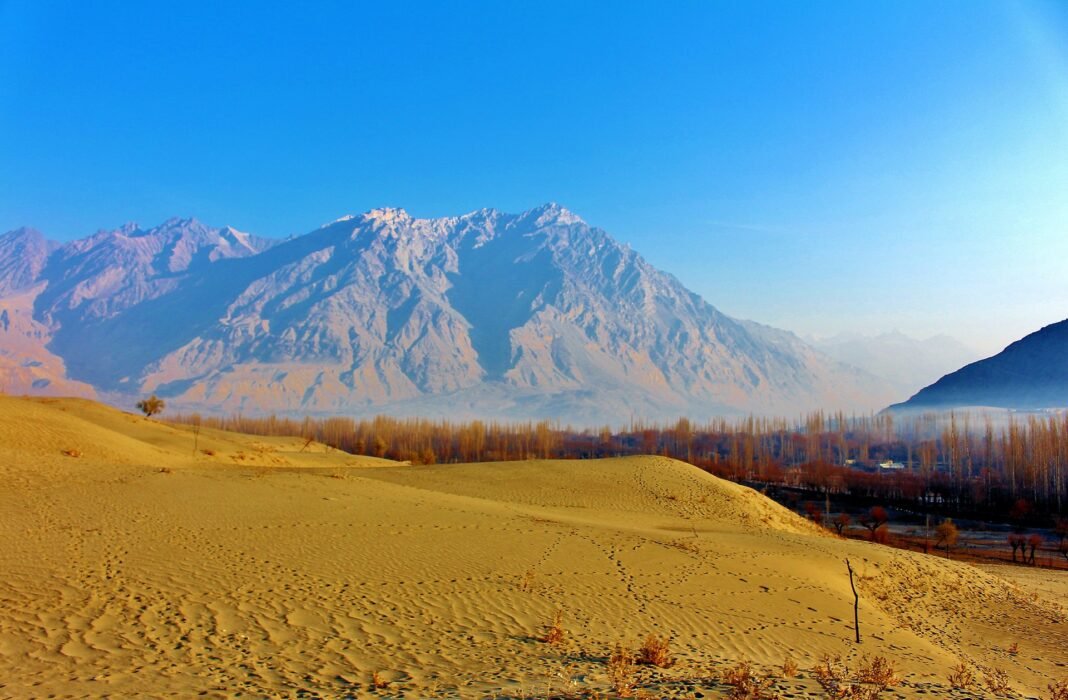
Deserts are supposed to be hot. That is the whole idea of a desert. And then there is Katpana, where great dunes of sand ripple across a valley floor more than 2,200 metres above sea level, with snow-capped Karakoram peaks rising behind them and, in winter, snow settling directly onto the sand. It is one of the highest deserts on Earth, and it looks like somewhere the laws of geography got pleasantly confused.
What makes Katpana irresistible is how accessible the surreal is. There is no expedition required: you drive a short distance out of Skardu, step onto the dunes, and within minutes you are photographing a landscape that seems to belong on another planet. The local Balti name, Biang-a Naqpo, carries the same sense of otherness. At sunset the dunes glow amber against the darkening peaks; at night the sky over the desert is among the clearest in Pakistan.
This katpana cold desert travel guide is for the traveler who wants maximum wonder for minimum effort: families with children, photographers on a Skardu circuit, couples looking for a picnic spot unlike any other, and winter visitors chasing the famous sight of snow on sand. Two to three hours is enough to fall for it, and it pairs perfectly with Skardu’s lakes and forts.
In a country of superlatives, Katpana quietly holds one of the strangest: a true desert, cold enough to freeze, sitting in the lap of the greatest mountain ranges on the planet. Come and stand on a dune with glaciers on the horizon, and you will understand why travelers remember Skardu’s desert as vividly as its peaks.
History of Katpana Cold Desert
Katpana’s history is written by geology rather than by kings. The desert’s sands are the work of the Indus River and millennia of wind: fine sediment carried down from the high Karakoram and Himalaya, deposited along the valley floor, and sculpted by the relentless mountain winds into dunes. Technically the desert stretches from the banks of the Indus south of Skardu all the way north to New Ranga village, though the dunes most visitors see are the great fields near Katpana Lake, close to Skardu’s airport.
For the Balti people of the Skardu Valley, this was always simply part of the landscape, grazing land at the desert’s edges and a landmark on the routes along the Indus. The valley itself has a deep human history: Skardu was the capital of the Maqpon rulers of Baltistan, a Buddhist land for centuries before Islam arrived via Sufi missionaries in the 14th to 16th centuries, leaving monuments like the 14th-century Chaqchan Mosque and the 8th-century Manthal Buddha Rock.
Katpana entered the traveler’s imagination much later, as Baltistan opened to tourism in recent decades and photographers began sharing images of dunes against 7,000-metre peaks. It is now a standard stop on every Skardu itinerary, visited for sunset, for camping, and in winter for the extraordinary sight of the dunes under snow. Across the Indus lies the Sarfaranga desert near Shigar, Katpana’s sister dune field, and together they make Baltistan the unlikely home of two of the world’s highest cold deserts.
Top Things to Do in Katpana Cold Desert
Walk the Dunes at Sunset
The essential Katpana experience is simply walking the dunes as the day ends. Climb a high dune, feel the sand shift under your boots, and watch the light turn the ridges gold while the Karakoram peaks behind them catch the last pink alpenglow. It is a short, easy walk, suitable for children and grandparents alike.
Photograph Sand Against Snow Peaks
Katpana is one of the most photogenic landscapes in Pakistan: foreground dunes, middle-ground Indus Valley greens, background glaciers. Come in the golden hour before sunset for the richest light, and in winter for the surreal bonus of snow-dusted dunes. Drone photography here is spectacular, subject to the usual local permissions.
Stargaze Over the Desert
Far from city lights and at over 2,200 metres, the night sky above Katpana is phenomenal. The Milky Way arches over the dunes on clear summer nights. Bring a tripod, warm layers, and patience; the desert at night is cold even in August.
Picnic and Camp by Katpana Lake
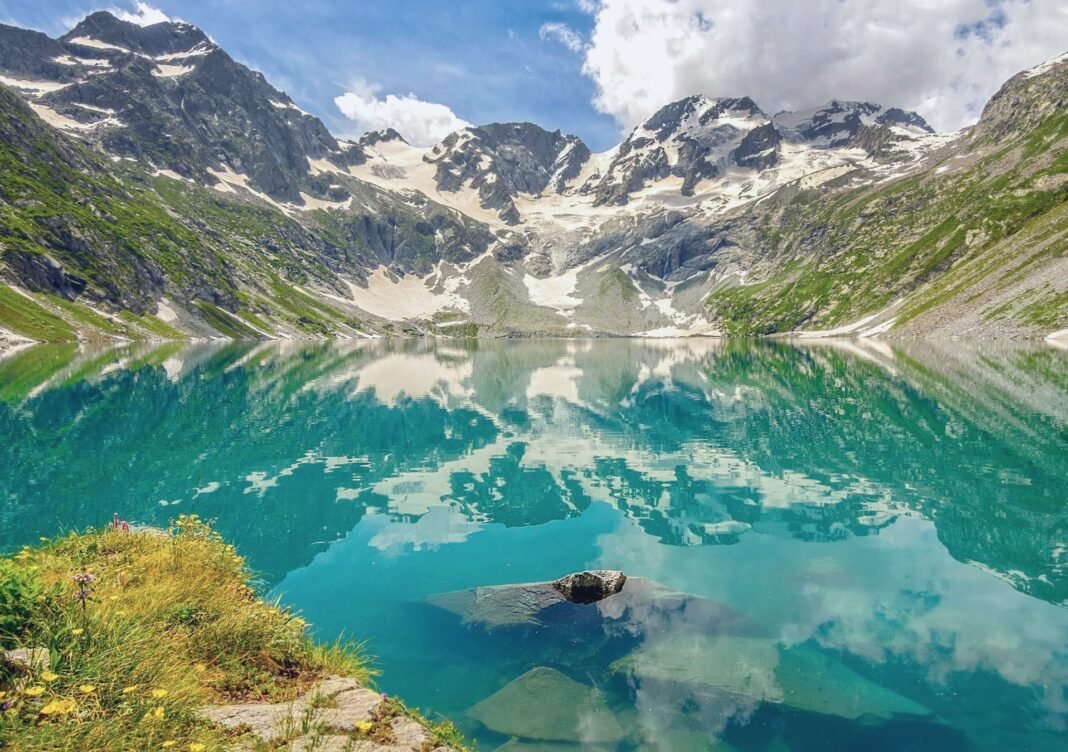
The small Katpana Lake sits at the desert’s edge, ringed by dunes, and makes a lovely picnic spot. In the warmer months, local operators arrange desert camping with tents, bonfires, and meals under the stars. Camping on the sand with the peaks looming in the dark is an experience few places on Earth can offer.
Jeep Safari and Sand Activities
Local operators run jeep excursions across the dune fields, and you will often find camel rides offered near Katpana Lake in season. Some visitors try sandboarding on the steeper dune faces. Keep to established tracks and resist the urge to drive private vehicles deep into the dunes, where getting stuck is a real possibility.
Watch the Desert Change With the Seasons
Katpana is two destinations in one. Visit in summer for golden dunes and warm days; visit in deep winter, if you can handle the cold, for the famous sight of the entire dune field lying under snow, with temperatures dropping toward minus 25 degrees. Few travelers see both faces; those who do never forget either.
Famous Places In and Around Katpana Cold Desert
- Katpana Lake — the dune-ringed lake at the desert’s edge, perfect for picnics and camel rides.
- Sarfaranga Cold Desert — the sister dune field across the Indus toward Shigar, often visited on the same trip.
- Blind Lake (Jarba Tso) — a hidden gem of a lake in the Shigar direction. (Blind Lake travel guide)
- Kharpocho Fort — the historic fort overlooking Skardu town and the Indus, with panoramic valley views.
- Shangrila (Lower Kachura) and Upper Kachura Lakes — Skardu’s famous lakes, an easy combined day trip.
- Satpara Lake — the serene reservoir south of Skardu, popular for boating and picnics.
How to Reach Katpana Cold Desert
Katpana is one of the easiest of Pakistan’s great landscapes to reach. The tourist dunes lie beside Katpana Lake, a short drive from Skardu town, close to Skardu International Airport. Any taxi or hotel-arranged vehicle in Skardu can get you there in well under an hour.
From Islamabad: the fastest way is to fly directly to Skardu International Airport; regular PIA flights connect the two cities, though mountain weather causes frequent delays and cancellations, so keep your schedule flexible. By road, the Karakoram Highway route via Gilgit covers approximately 630–650 km and takes a full long day of driving, usually 12 to 14 hours, with an overnight stop commonly made at Besham or Chilas.
From Lahore: fly to Islamabad and connect to the Skardu flight, or join the road journey from Islamabad. There are no direct commercial flights from Lahore to Skardu.
From Karachi: fly to Islamabad and connect onward to Skardu; the overland route from Karachi is a multi-day drive.
Nearest airport: Skardu International Airport, essentially at the desert’s doorstep; you can see the dunes from the air on final approach. Within Skardu, hire a car, jeep, or taxi for the short hop to the dunes, or join one of the many half-day desert excursions sold by local tour operators.
Route Details
- Fly or drive to Skardu and check into your hotel in town.
- Arrange a taxi, jeep, or tour for the Katpana Cold Desert, a short drive from the town center toward the airport side.
- Time your visit for late afternoon to catch the dunes in golden light and stay for sunset.
- Combine the trip with Katpana Lake, and optionally with Satpara Lake or the Skardu bazaar, for a full half-day outing.
Where to Stay in Katpana Cold Desert
Nobody sleeps on the dunes themselves except campers; everyone stays in Skardu town, which has the widest range of accommodation in Gilgit-Baltistan. The options run from well-known luxury resorts and comfortable mid-range hotels to simple guesthouses and hostels for budget travelers. Summer is peak season, and the better hotels fill up, so book ahead for June through August.
For the desert experience itself, several Skardu operators offer luxury glamping-style camps near the dunes in the warmer months, with proper beds, meals, and bonfires. These need to be arranged in advance through a tour company. Whether you choose a hotel bed or a desert tent, Skardu town is only a short drive away, so the dunes are never more than a sunset excursion from your room.
Where to Eat: Local Foods of Katpana Cold Desert
Skardu’s Balti cuisine is one of the quiet highlights of the trip. Do not leave without trying mamtu, the region’s beloved steamed dumplings, and plopwo, whole-wheat dumplings tossed with crushed walnuts, ginger, and garlic, finished with ghee. Fresh apricot juice is everywhere in summer, and the local marzan, a soft concave bread eaten with desi ghee, makes a perfect mountain breakfast.
Skardu’s main bazaar and the hotel restaurants serve everything from traditional Balti dishes to familiar Pakistani and Chinese food, and the trout from the valley’s cold streams is excellent where available. Meals in Skardu are generally budget-friendly by tourist standards. For the desert excursion itself, pack water and snacks; there are small tea stalls near the main dune areas in season, but nothing to rely on.
Weather in Katpana Cold Desert
Katpana’s climate is the whole story: a desert that behaves like the high mountains around it. Summer days are warm and pleasant, nights are cool, and winter is brutally cold, with the dunes themselves disappearing under snow. Katpana’s weather closely mirrors Skardu’s, so check the Skardu forecast before you go.
| Season | Temperature Range | Conditions |
|---|---|---|
| Winter (Dec–Feb) | Approximately −5 to 5°C days, −10 to −25°C nights | Dunes snow-covered; spectacular but extremely cold |
| Spring (Mar–Apr) | Approximately 8–18°C | Snow melting; apricot blossoms in the valley; crisp air |
| Summer (May–Sep) | Approximately 18–28°C days, 5–12°C nights | Golden dunes; best for camping and stargazing; cool nights |
| Autumn (Oct–Nov) | Approximately 5–18°C | Golden poplars; clear skies; first frosts by November |
Language and Culture of Katpana Cold Desert
The people of the Skardu Valley are Balti, of Tibetan descent, and speak Balti, a Tibetan dialect, alongside Urdu, which every visitor can use. The valley is predominantly Shia Muslim, with a culture famous across Pakistan for hospitality, honesty, and warmth toward guests.
Respect local norms: dress modestly, ask before photographing people, and behave quietly around religious sites such as the historic mosques. The Balti code of hospitality means you will often be offered tea and conversation; accepting graciously is part of the experience. When camping or picnicking at the desert, follow Leave No Trace principles and respect that the dune edges border community and private land.
Shopping in Katpana Cold Desert
Skardu’s main bazaar is the shopping stop for the Katpana trip. The valley is famous for dried apricots and apricot oil, walnuts, and other dry fruits, all excellent edible souvenirs. You will also find pashmina shawls, woolen handicrafts, and the region’s celebrated gemstones, including aquamarine and topaz, though buy stones only from reputable dealers.
There are no shopping malls at the desert or anywhere on the Skardu tourist circuit; the bazaar is traditional and lively, which is precisely its charm. Bargain politely, and set aside an evening to wander the bazaar after your desert sunset.
Travel Tips for Katpana Cold Desert
Packing Essentials
Pack warm layers even in summer: a fleece and a windproof jacket are essential for desert evenings and nights. Sun protection is critical at this altitude, including sunglasses, sunscreen, and a hat. Sturdy walking shoes handle the dunes, and a tripod is worth its weight for night photography.
Safety Tips
Katpana is very safe and family-friendly; the main risks are sunburn, dehydration, and underestimating the cold after sunset. Do not drive private vehicles deep into soft sand. In winter, treat the extreme cold with full respect: frostbite is a real risk at minus 20 and below, and winter travel in Baltistan requires serious cold-weather gear and local guidance.
Money & Connectivity
Banks and ATMs are available in Skardu town, but carry cash for the desert excursion, small vendors, and tips. In Gilgit-Baltistan, the SCOM network generally offers the most reliable mobile coverage, while other networks are patchy outside towns. Download offline maps before leaving Skardu.
Best Time to Visit Katpana Cold Desert
April to October: The Classic Season
Late spring through early autumn offers the Katpana of the postcards: golden dunes, warm days, cool nights, green valley edges, and full access for camping, jeep safaris, and stargazing. This is when most travelers should come.
December to February: Snow on the Dunes
For the adventurous, deep winter delivers the desert’s most surreal face: dunes buried in snow under a steel-blue sky. It is breathtaking and brutally cold, with nights toward minus 25 degrees. Come only with proper expedition-grade clothing, a flexible schedule, and local support.
March and November: The Shoulder Months
Transitional months bring dramatic skies, empty dunes, and unpredictable weather. Worth it for photographers who do not mind the gamble, but check conditions locally before committing.
Final Thoughts
Katpana Cold Desert is proof that Pakistan’s mountains still have surprises left. A desert at 2,226 metres, dunes that wear snow in winter, sunsets that set the sand on fire beneath glaciers: it is the kind of place that recalibrates your sense of what a landscape can be.
Best of all, it asks almost nothing of you. No trek, no altitude ordeal, no expedition logistics. Just a short drive from Skardu, an hour on the dunes, and a memory that will outlast most of your travels. Put it on your Skardu itinerary and give it the sunset it deserves.
FAQs
Where is Katpana Cold Desert located?
In the Skardu Valley of Gilgit-Baltistan, near Katpana Lake and close to Skardu International Airport, at around 2,226 metres above sea level.
What is the best time to visit Katpana Cold Desert?
April to October for comfortable weather and golden dunes; December to February for the famous snow-covered dunes, with extreme cold.
How do I reach Katpana from Skardu town?
It is a short drive from Skardu town. Hire a taxi, jeep, or join a half-day tour; any Skardu hotel can arrange it.
Is Katpana Cold Desert safe for families?
Yes, it is one of the most family-friendly attractions in the north: no trekking required, easy access, and suitable for children and older travelers.
Can you camp at Katpana?
Yes. Local operators arrange desert camping with tents, meals, and bonfires in the warmer months; book in advance through a Skardu tour company.
What is the local name of the desert?
Locally it is known as Biang-a Naqpo (also spelled Biana Naqpo), and it is also called the Skardu Cold Desert.
What food should I try in Skardu?
Balti specialties: mamtu dumplings, plopwo, fresh apricot juice, and marzan bread with desi ghee.
How cold does Katpana get in winter?
Daytime temperatures hover around freezing while nights can drop below minus 17 degrees, occasionally reaching minus 25 degrees, with the dunes covered in snow.
Continue your northern journey with our Hunza Valley travel guide and more in the Explore Pakistan series.