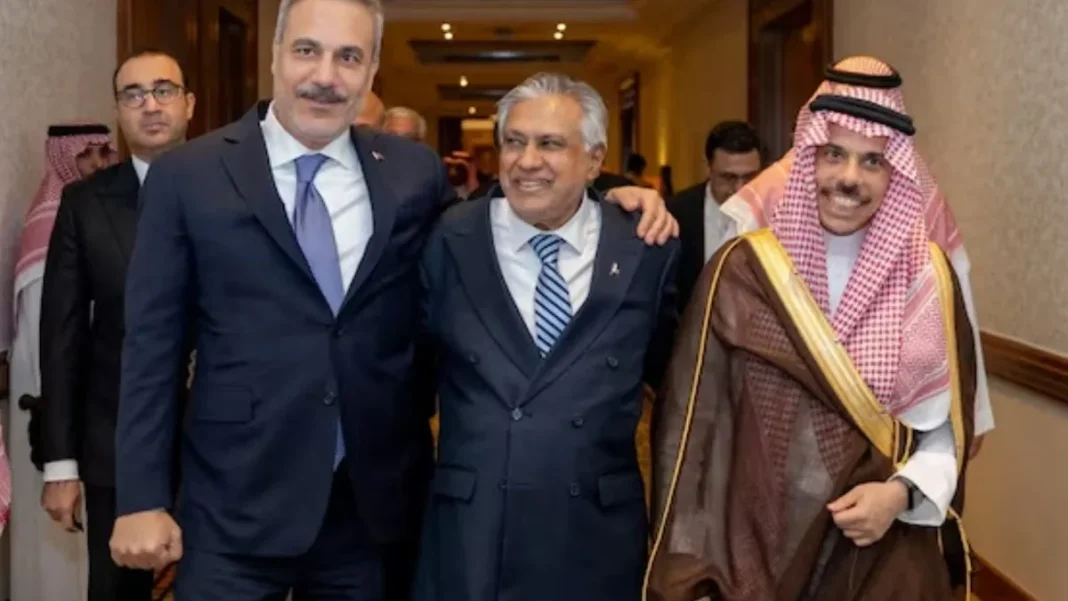
Turkiye has submitted the Saudi Pakistan Turkey defence pact to parliament for ratification, three parliamentary sources told Reuters on Tuesday, moving the three countries closer to a formal mutual-defence pledge.
The Makkah Joint Defence Agreement was signed in August. Under its terms, an armed attack on one member is treated as an attack on all three.
Saudi Pakistan Turkey defence pact: what the text says
According to a text of the agreement seen by Reuters, the first article states that the parties will use “all necessary means” to eliminate threats to one another’s territorial integrity, sovereignty, or internationally recognised borders.
The second article says that if one party faces armed attack or military aggression by another country or group of countries, the others “shall immediately provide assistance to the party under attack, utilising the full range of mutual assistance measures available to them”.
The provision resembles NATO’s Article 5 and refers to Article 51 of the UN Charter, which covers the right of individual or collective self-defence against armed attack. The three countries will decide “the scope and nature of the support to be provided following an objective assessment of the assistance required”, cooperating within their available military capabilities and resources.
At an emergency meeting in Riyadh earlier this month, the three countries agreed to ensure the “rapid deployment” of military forces and capabilities in Saudi Arabia. That meeting was covered in our earlier report on the alliance’s Riyadh session.
Why Ankara is moving now
Turkiye, which fields NATO’s second-largest army and a growing defence industry, has condemned the recent Houthi attacks on Saudi Arabia. Ankara has said it is willing to help meet Riyadh’s military technology needs and has agreed to join a Saudi-led coalition to protect navigational safety in the Red Sea.
The agreement also covers cooperation on defence industry, intelligence sharing, logistical support, and the fight against “all means of terrorism”, including at the operational level.
Parliament Speaker Numan Kurtulmus, who is currently visiting Kyrgyzstan, will refer the agreement to parliament’s foreign affairs commission on his return, two of the sources said. The contents and details of the agreement are expected to become public once it reaches the commission, which could debate it as early as Friday.
President Tayyip Erdogan’s communications director, Burhanettin Duran, said the step marked “an important milestone towards the institutionalisation of strategic cooperation” between the three nations.
What it means for Pakistan
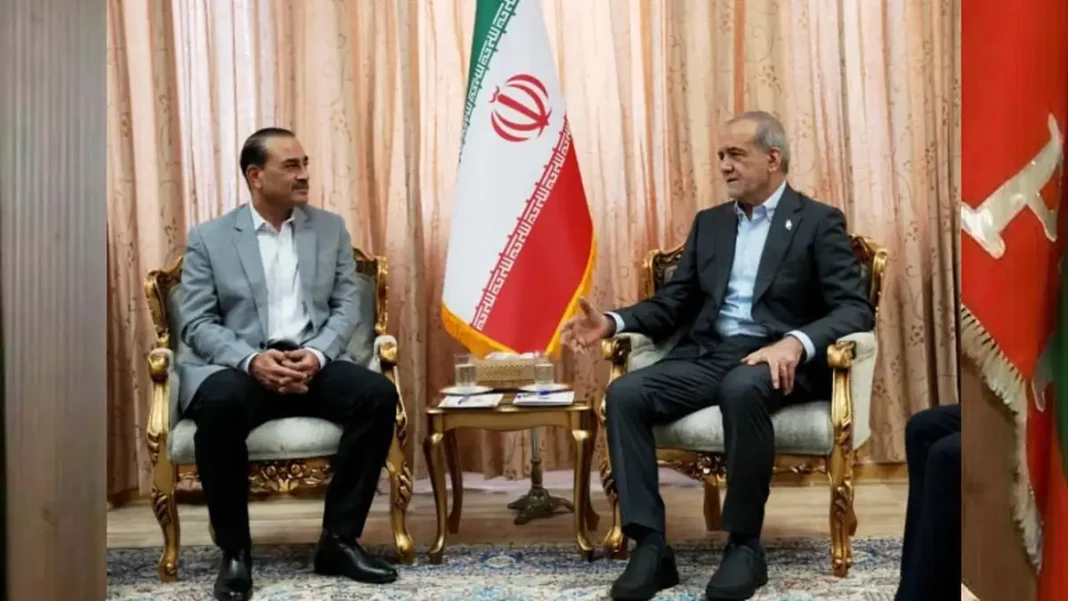
For Pakistan, ratification by the Turkish parliament would convert a political understanding into a binding legal commitment. The pact formalises the security partnership that has deepened since the agreement was signed, including the high-level coordination seen in recent meetings between Pakistan’s civil and military leadership and Saudi officials.
It also widens the circle of Pakistan’s formal security partnerships in the Gulf. Islamabad has in recent weeks expanded security cooperation with Qatar as well, as reported in our coverage of the Pakistan-Qatar internal security understanding.
The development comes as Saudi Arabia faces continued Houthi attacks, including strikes on airports and energy infrastructure that have drawn condemnation from Pakistan. A committee under Deputy Prime Minister Ishaq Dar has been coordinating Pakistan’s response to the crisis, as covered in our report on the Makkah pact committee’s Riyadh meeting.
What is the Makkah Joint Defence Agreement?
A three-way pact signed in August by Pakistan, Saudi Arabia, and Turkiye. An armed attack on one member is considered an attack on all, with mutual assistance modelled on NATO’s Article 5.
What happens after ratification?
Once Turkiye’s parliament ratifies the agreement, the pact gains full legal force in Turkish law, completing the formal process on Ankara’s side. The foreign affairs commission could debate it as early as Friday.
Why does this matter for the region?
It creates a formal collective-defence arrangement linking a NATO member with Pakistan and Saudi Arabia at a time of Houthi attacks on the kingdom and rising Red Sea insecurity.