Quick Facts
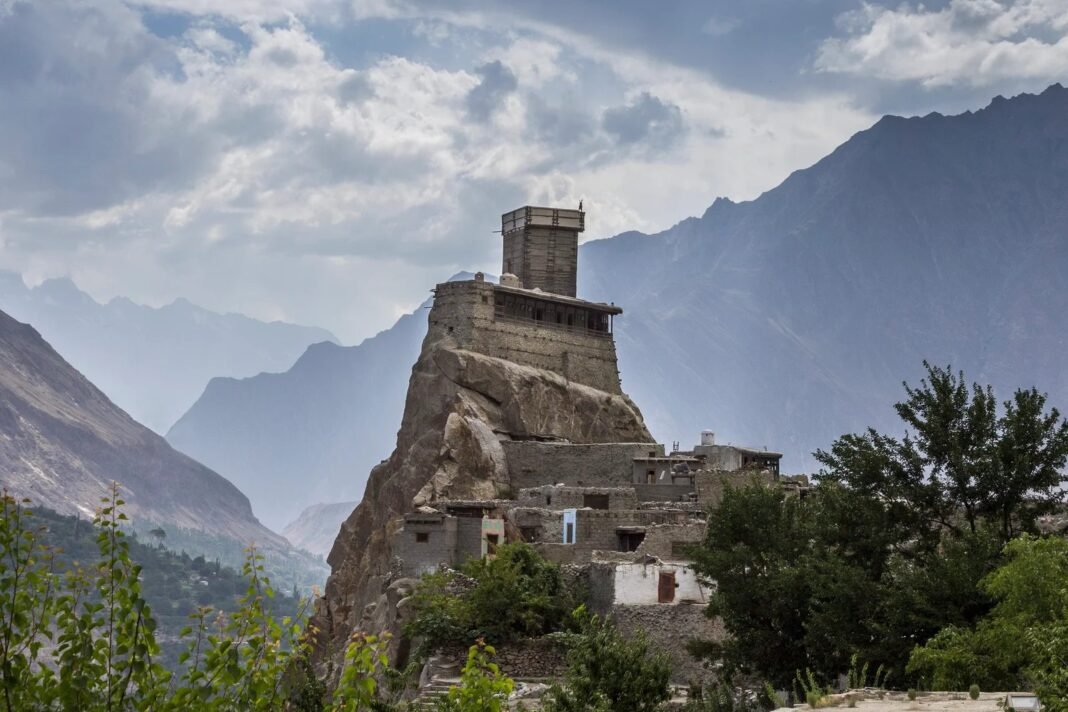
- Location: Altit village, Hunza Valley, Gilgit-Baltistan, on a cliff above the Hunza River, about 3 kilometres west of Karimabad and 3 kilometres from Baltit Fort.
- Altitude: The valley floor here sits around 2,200 to 2,400 metres; the fort stands on a rocky outcrop roughly 100 metres above the river below.
- Famous For: The Shikari (hunting) tower, believed to be around 1,100 years old, making Altit Fort the oldest surviving monument in Gilgit-Baltistan; the former seat of the Mirs of Hunza; and its award-winning restoration.
- Nearest City: Gilgit, about 100 kilometres away (2 to 3 hours by road on the Karakoram Highway). The nearest town is Karimabad, a few minutes away.
- Accessibility: Drive to Altit village from Karimabad, then walk through the old village lanes and the Royal Garden to the fort entrance. Entry is ticketed, and guided tours run through the day.
- Known Landmarks: The Shikari tower, the royal chambers and mosque, the royal throne overlooking Altit Khun, the restored Royal Garden (apricot orchard), and cliff-edge galleries with views over the Hunza and Nagar valleys.
- Best For: History lovers, architecture and photography enthusiasts, culture travellers, and families who want the deepest story in Hunza.
Why Visit Altit Fort
Hunza has two great forts, and Altit is the older, quieter, and in many ways the more evocative of the two. While Baltit Fort gets the tour buses, Altit Fort sits on its cliff above the Hunza River in the ancient village of Altit, holding close to a millennium of history in its stone and timber walls. The Shikari tower at its heart is believed to be around 1,100 years old, making this the oldest surviving monument in all of Gilgit-Baltistan. If you want to understand where Hunza came from — the Mirs who ruled it, the craftsmen who built it, the village that grew up beneath it — this Altit Fort travel guide will show you why this is the place to begin.
What sets Altit apart is not just age. It is one of Pakistan’s great conservation success stories. By the early 2000s the fort was crumbling, and a third of the village below it had already moved away to new construction on precious farmland. The Aga Khan Trust for Culture, with support from the Government of Norway, restored the village first and the fort second — a reverse order that revitalised the whole settlement — and in 2011 the work received the UNESCO Asia-Pacific Award of Distinction for cultural heritage conservation. Today the fort is a living museum, with women’s social enterprises, a traditional cafe, and a royal garden all running around it. You do not just look at history here; you walk through a community that history rebuilt.
Then there is the setting. Altit Fort was built for defence, not for views, but the views arrived anyway. From the royal galleries and the watchtower you look down the Hunza River gorge and across to the Nagar Valley, with the Karakoram peaks stacked behind. Sunset from the cliff edge is one of Hunza’s great free spectacles — stone walls glowing gold, the river turning steel blue far below, apricot orchards spreading across the village. Photographers plan whole trips around this light.
Practically, Altit Fort is also the easiest piece of Hunza’s heritage to fold into any itinerary. It sits minutes from Karimabad, needs only two to three hours for a full visit, and the guided tours are led by local guides who grew up in the lanes you walk through. Come here first, and every other fort, bazaar, and viewpoint in Hunza will make more sense.
History of Altit Fort
The story of Altit Fort begins in the 11th century, when the rulers of the Burusho people raised a stronghold on a rocky outcrop above the Hunza River. At its centre stands the Shikari, or hunting, tower — believed to be around 1,100 years old and the oldest standing structure anywhere in Gilgit-Baltistan. This was the original seat of the Mirs of Hunza, the hereditary rulers of the Hunza state, who lived and governed from here for centuries before eventually shifting their court to the nearby Baltit Fort. The name “Altit” itself comes from Burushaski — a language isolate unrelated to any other known language — and means “this side down,” describing the settlement below the fort.
The village is even older than the name. Local tradition holds that the earliest name for the settlement was Hunukushal, meaning “the village of Huns,” later changed to Broshal, “a village of Bruchiski speakers.” In the 16th century, a Hunza prince married a princess from Baltistan, and she brought master Balti craftsmen with her — artisans whose Tibetan and Central Asian building traditions shaped both Altit and Baltit forts. The timber-and-stone construction they used, with its interlocked wooden beams and dry-stone walls, is exactly what let these buildings survive centuries of earthquakes in one of the most seismically active regions on earth.
For hundreds of years Altit Fort remained the political heart of the Hunza state, even after the Mirs’ relocation, and the village at its base was restored and lived in continuously. The old order ended in 1974, when the princely state system in Gilgit-Baltistan was abolished and the Mirs’ rule came to a close. Without its royal purpose, the fort fell into neglect, and by the late 20th century it was in a highly dilapidated condition. The river cliffs that once protected it could not protect it from time.
The rescue began in 2001, when Raja Amin Khan donated the fort to the Aga Khan Trust for Culture’s Historic Cities Support Programme. From 2004 to 2007, the Trust — with aid from the Government of Norway — carried out a meticulous restoration: mending structural defects, stabilising and repairing walls, replacing roofs with traditional materials, treating the decay of ancient walnut-wood beams and carvings, and adding discreet lighting. Crucially, the project restored the village at the base of the fort before touching the fort itself, introducing water and sanitation facilities that stopped the exodus of residents. The fort opened to the public as a heritage museum in 2007, and when the full conservation work was completed in 2010, it earned the UNESCO Asia-Pacific Award of Distinction for Cultural Heritage Conservation in 2011 — recognition that the project had become a model for community-based conservation worldwide. Today the Aga Khan Cultural Services Pakistan manages the site, linking heritage preservation with women’s social enterprises and sustainable village tourism.
Top Things to Do in Altit Fort
Take the guided fort tour
The heart of any visit is the guided tour through the fort’s small rooms and low portals. Guides — many of them from Altit village itself — lead you through the royal chambers, the guest rooms, the storage areas, and the mosque, explaining how the Mirs lived, how grain and water were stored for sieges, and how the timber-laced walls absorb earthquake shocks. Tours are offered through the day, generally from around 9:30 in the morning to about 5:30 in the evening, and the guides’ local stories are the best part of the experience. Plan one to one and a half hours inside the fort.
Climb the Shikari tower
The oldest part of the fort is its Shikari, or hunting, tower — the structure believed to date back around 1,100 years. It was built on the highest point of the outcrop for a 360-degree watch over the valley, and in its time it also served darker purposes, including holding and executing prisoners. Climbing it today gives you the classic Altit view: the Hunza River gorge on one side, the village terraces on the other, and the Nagar Valley opening out beyond. Go late in the afternoon for the best light.
Visit the royal chambers, mosque, and throne
North of the tower stand the mosque, the royal guest rooms, and the royal throne, which faces a panoramic view over Altit Khun (the old Altit settlement). The galleries in front of the royal guest rooms look straight down onto the village rooftops, while the royal chambers’ hanging balconies overlook the Hunza River and the Nagar Valley. The small rooms and low doorways, carved walnut pillars, and traditional fireplaces give an intimate sense of medieval court life — this was a working palace, not just a fortress.
Walk the Royal Garden and eat at Kha Basi Cafe
The approach to the fort runs through the restored Royal Garden — an apricot orchard set in green grassland that the Aga Khan Trust restored as part of the project. In spring it is full of blossom; in summer it is deep shade. Inside the fort complex, Kha Basi Cafe serves traditional Hunza food — apricot-based dishes, local breads, and walnut oil preparations — run as part of the site’s social-enterprise programme. Eating here supports the village women’s enterprises tied to the fort’s conservation.
Wander the old Altit village lanes
Before or after the fort, spend an hour walking the old village beneath it — this is the settlement the Trust restored first, and it shows. Stone-and-wood houses, narrow covered lanes, communal water channels, and terraced fields run right up to the fort walls. The contrast between the old village and the newer concrete construction on the valley floor tells the whole story of why the “village first, fort second” restoration order mattered. It is also where you will meet the friendliest people in Hunza, who are used to — and genuinely happy about — visitors.
Photograph the cliff at sunset
Altit Fort is one of the most photographed buildings in Pakistan, and the classic shot is from below and across the gorge in the late afternoon, when the stone tower catches the last light against the Karakoram. The watchtower galleries also give photographers an unmatched elevated vantage over both the Hunza and Nagar valleys. Bring a wide lens for the gorge shots and a zoom for the village rooftops and terraced fields.
Famous Places In and Around Altit Fort
- Baltit Fort — the younger royal fort, about 3 kilometres away above Karimabad, also restored by the Aga Khan Trust; visit both to compare the two seats of the Mirs.
- Karimabad Bazaar — Hunza’s main market town, minutes from Altit, famous for handicrafts, gemstones, and dry fruits; our Hunza Valley guide covers it in detail.
- Eagle’s Nest (Duikar) — the famous sunrise and sunset viewpoint on the ridge above Altit and Karimabad, with panoramas of Rakaposhi, Ultar Sar, and the valley.
- Attabad Lake — the striking turquoise lake formed by the 2010 landslide, a short drive up the valley, with boating and the lakeside tunnels of the Karakoram Highway.
- Hoper Valley and Hoper Glacier — a lush side valley of Nagar across the river, with one of the fastest-moving glaciers in the region.
- Royal Garden and Altit village — the restored apricot orchard and old settlement at the fort’s base, essential to the site’s UNESCO story.
How to Reach Altit Fort
Altit Fort is reached via Hunza Valley, and every journey to it is either a long, spectacular road trip or a short flight plus a mountain drive. From Islamabad, the road distance to Hunza is around 600 to 650 kilometres along the Karakoram Highway (KKH), and the drive typically takes 14 to 20 hours depending on your route, stops, and road conditions — almost everyone breaks it overnight. From Lahore, add roughly another 4 to 5 hours to the Islamabad figure. From Karachi, flying to Islamabad first and then continuing by road or air is the only sensible option; the road from Karachi to Hunza is a two-day expedition.
The fastest way is to fly. PIA operates domestic flights from Islamabad International Airport to Gilgit Airport, a journey of about 50 to 60 minutes in a small turboprop aircraft. These flights are famous for their views — Nanga Parbat and the Karakoram slide past the window — but they are highly weather-dependent and are often delayed or cancelled, especially in winter, so always keep a buffer day in your plans. From Gilgit Airport, Hunza is roughly 100 kilometres up the Karakoram Highway, a 2 to 3 hour drive by taxi or shared van. From Karimabad, Altit village is just 3 kilometres further — a few minutes by car or a pleasant walk — and the fort itself is reached on foot through the village lanes and Royal Garden.
By road, you have two main options from Islamabad. The year-round route follows the Karakoram Highway the whole way: Islamabad to Mansehra, then Besham, Chilas, Gilgit, and on to Hunza. The KKH is open all year, though winter snow and the July-August monsoon landslide season can slow you down. The shorter summer alternative runs via Naran and the Babusar Top pass — spectacular, but strictly seasonal, as Babusar closes in winter under heavy snow. Most travellers overnight in Naran, Besham, or Chilas on the way up; book ahead in the June-to-September peak season.
Public transport is straightforward and cheap. NATCO and Faisal Movers run comfortable coaches from Rawalpindi/Islamabad (departing from terminals like Faizabad and Pir Wadhai) to Gilgit, taking 16 to 22 hours with fares roughly in the PKR 4,000 to 8,000 range depending on the operator and class. From Gilgit, shared vans and local buses run regularly to Karimabad and Altit for a few hundred rupees a seat. For private transport, hiring a car with an experienced local driver is the safest and most relaxing option — the KKH demands mountain-driving experience, and a local driver knows the landslide-prone stretches. Self-driving is possible but not advised for first-time mountain drivers or foreign visitors unfamiliar with the road.
One seasonal note: the Karakoram Highway continues past Hunza to the Khunjerab Pass (4,693 metres) on the Pakistan-China border, usually open from May to November. If you are combining Altit Fort with upper Hunza sights like Passu and Khunjerab, plan that leg for the May-to-November window.
Route Details
By road from Islamabad (KKH, year-round): Depart early from Islamabad → Hazara Motorway to Mansehra → Besham (breakfast stop) → continue along the Indus to Chilas (common overnight halt) → the junction of the three mountain ranges → Gilgit → follow the Hunza River upstream on the KKH → Aliabad → Karimabad → Altit village (3 km west of Karimabad) → park at the village and walk through the Royal Garden to the fort entrance.
By road via Babusar (summer only): Islamabad → Mansehra → Naran → Babusar Top → Chilas → rejoin the KKH route above. Shorter and more scenic, but check that the pass is open before committing.
By air: Islamabad International Airport → PIA flight to Gilgit (~50-60 minutes, morning departures, weather-dependent) → taxi or shared van from Gilgit Airport to Karimabad/Altit (~2-3 hours, ~100 km).
Where to Stay in Altit Fort
You do not sleep inside the fort — you sleep in the village and town around it, which is part of the pleasure. Altit village itself has family-run guesthouses, several of them in restored traditional houses, and the Royal Garden complex includes an art centre-cum-guesthouse linked to the Aga Khan Trust’s programme — staying in Altit puts the fort on your doorstep and the village lanes outside your window.
Most visitors base themselves in nearby Karimabad, a few minutes away, where the widest range of options clusters: mid-range hotels with valley views, boutique guesthouses, and family-run lodges. Budget travellers will find simple, clean guesthouses and hostels at backpacker-friendly rates; mid-range hotels here offer comfortable rooms, hot water, and restaurants serving both Pakistani and continental food. A smaller number of upscale resorts and premium guesthouses serve the luxury end — Hunza is not a five-star destination in the city sense, but the top properties here trade on location and views rather than marble lobbies.
Camping is possible in the wider Hunza area for those with their own gear, though it is better suited to the open valleys and lakeside spots than to Altit village itself. Wherever you stay, book well ahead for the peak months of June to September and for the autumn colour season in October and November, when Hunza’s limited quality rooms fill fast. In winter, many properties close or run on skeleton staff — confirm heating and hot water before you book a winter stay.
Where to Eat: Local Foods of Altit Fort
Hunza’s food is shaped by high altitude, short growing seasons, and a famous tradition of apricots, and Altit is one of the best places to taste it. Start at Kha Basi Cafe inside the fort complex, which serves traditional Hunza dishes as part of the site’s social-enterprise programme — apricot soup, local breads, and dishes cooked in apricot-kernel or walnut oil. Eating here puts your money directly into the village economy that the fort’s restoration created.
The classic Hunza dishes to look for are mamtu (steamed dumplings filled with minced meat and onions), chapshuro (a savoury meat-filled flatbread, Hunza’s answer to the pizza), dawdo (a hearty wheat-flour noodle soup), harissa (slow-cooked wheat and meat porridge), diram phitti (a rich traditional soup), and shapta (a local pancake). Burusbarikuz — fresh local cheese (burus) layered over flatbread with butter, herbs, and apricot or almond oil — is a beloved home-style dish you may find at village eateries. Breads like giyal and bursshapil, stuffed with yogurt, onion, and special oils, appear at cultural events and some local kitchens.
Apricots are Hunza’s signature: dried apricots, apricot juice, apricot kernel oil, and the local apricot-based desserts are sold everywhere, and the Royal Garden’s own orchard is the reason the fort approach smells so good in summer. Sea buckthorn juice and jam — tart, vitamin-rich, and grown in the valley — is another local specialty worth trying. Karimabad’s bazaar, minutes from Altit, has the full spread of restaurants: traditional Hunza food, Pakistani staples, Chinese dishes, and a growing number of cafes serving espresso and continental breakfasts for the tourist crowd. Meals are generally budget-friendly by city standards — a filling local meal costs far less than the same in Islamabad or Lahore.
Weather in Altit Fort
Altit sits on the valley floor of Hunza at around 2,200 to 2,400 metres, so its weather follows the classic Karakoram pattern: short, pleasant summers, long cold winters, and dramatic shoulder seasons. Days can be warm even when nights demand a jacket, and mountain weather changes fast — always check a current forecast before travelling, whatever the season. Approximate ranges:
| Season | Temperature Range | Conditions |
|---|---|---|
| Winter (Dec–Feb) | Around -10°C to -20°C at night, below freezing by day | Heavy snow, frozen pipes, some roads closed; magical but demanding; Babusar route shut |
| Spring (Mar–May) | Around 10°C to 20°C by day, cold nights | Blossom season (April–May), green fields, festivals; mild and lovely |
| Summer (Jun–Aug) | Around 25°C to 30°C by day, cool evenings | Warmest and busiest; ideal for sightseeing; occasional monsoon rain and landslides on the KKH |
| Autumn (Sep–Nov) | Around 5°C to 20°C, cooling fast | Crisp air, golden poplar and apricot foliage; October is peak colour season |
The fort visit itself is mostly outdoors — the cliff viewpoints, the Royal Garden walk, and the village lanes — so sun protection matters even in cool weather at this altitude, and a warm layer is wise in every season.
Language and Culture of Altit Fort
The people of Altit are the Burusho, and their language is Burushaski — a language isolate, meaning linguists have never found it related to any other known language on earth. The fort’s own name (“this side down”) comes from it, and you will hear it in the village lanes, in the Hareep tunes played at the fort during festival season, and in the guides’ stories. Urdu is widely understood, and English is spoken by most guides, hotel staff, and younger people — Hunza has one of the highest literacy rates in Pakistan, and communication with visitors is easy.
Religiously, most of Hunza — including Altit — follows Ismaili Islam, a tradition known for its emphasis on education, community service, and pluralism. This shapes the visitor experience in real ways: the valley is famously welcoming to travellers, women travel comfortably here, and community institutions (schools, health centres, the Aga Khan development network) are visible everywhere. Dress norms are relaxed by Pakistani mountain standards, but modest dress is still appreciated, especially when visiting the fort’s mosque — cover shoulders and knees, and women may want a headscarf for the mosque itself.
Cultural etiquette is simple: greet people warmly, ask before photographing individuals (most will happily agree, and many will pose), accept offered tea when you can, and walk — don’t drive — through the old village lanes out of respect for residents. The restoration story is a point of deep local pride; asking your guide about the village-first restoration will get you the best conversation of your trip.
Shopping in Altit Fort
There is no shopping mall anywhere near Altit — and that is rather the point. The shopping here is Karimabad Bazaar, a few minutes away, one of the most enjoyable traditional bazaars in northern Pakistan. Its lanes sell Hunza’s signature products: dried apricots and apricot kernel oil, walnuts and almonds, sea buckthorn juice and jam, local honey, handwoven wool shawls and caps, embroidered textiles, and gemstones from the Karakoram (aquamarine, topaz, and tourmaline are local specialities — buy from reputable dealers and ask for authenticity).
Around the fort itself, small stalls and the fort’s own craft outlets sell souvenirs tied to the site’s social enterprises — handicrafts made by local women’s groups, postcards, and books on Hunza’s heritage. Bargaining is gentle and expected in the bazaar; in the fort’s enterprise shops, prices are generally fixed and fair. For the widest selection of dry fruits at the best prices, shop where the locals shop in Aliabad, the district’s commercial town just down the road.
Local Events and Festivals
Ginani (21 June) — Hunza’s great harvest festival, held on the summer solstice, the longest day of the year. For ten days before Ginani, musicians at Altit Fort play the traditional Hareep tunes, and on the day itself the community gathers at the Chattaq near the royal palace for wheat-blessing rituals (butter spread on the wheat plants, prayers for prosperity), cooked wheat grains served in diltar (lassi), polo, tug-of-war, music, and dancing. It is the single best day of the year to be at Altit Fort, and one of the great cultural experiences in Pakistan.
Bafao (February) — the traditional wheat-sowing festival marking the start of spring, revived by the local community after a gap of decades. Historically arranged under the Mirs in February, it is celebrated at the Chattaq near Altit Fort with traditional music, dancing in traditional dress, and poetry praying for a good harvest. The ruling family once stayed at Altit Fort for several days to celebrate it.
Nauroz (21 March) — the spring equinox new year, celebrated across Hunza with community gatherings, traditional food, and music as the valley shakes off winter. If you visit in late March, you will find the valley in a festive mood and the first blossoms on the apricot trees.
Travel Tips for Altit Fort
Packing Essentials
Layers are everything. Even in summer, bring a warm fleece or jacket for evenings and the windy cliff viewpoints, plus sun protection — hat, sunglasses, sunscreen — because mountain sun at 2,200+ metres is fierce. Sturdy walking shoes with grip are essential for the fort’s stone steps, the tower climb, and the village lanes. In winter, pack serious cold-weather gear: thermal layers, a down jacket, gloves, and warm boots. A power bank helps on long KKH travel days, and a reusable water bottle cuts plastic waste in a valley that prizes its environment.
Safety Tips
Hunza is widely considered one of the safest tourist regions in Pakistan, and Altit village is a settled, welcoming community. The main safety considerations are environmental, not criminal: never walk near cliff edges in high wind or rain, watch your step on the fort’s old stone stairways, and stay on marked paths in the gorge. On the road, avoid night driving on the KKH, check landslide and weather updates in the July-August monsoon season, and keep buffer days around any Gilgit flight. Altitude here is moderate (around 2,200-2,400 metres), so serious altitude sickness is rare, but take it easy on your first day if you have flown in.
Money & Connectivity
Carry cash. ATMs exist in Karimabad and Aliabad but can run dry or go offline, and small village shops and cafes are cash-only. Cards are accepted at very few places in Hunza, so withdraw in Gilgit or Islamabad before heading up. For mobile signals, SCOM (the Gilgit-Baltistan network) has the strongest coverage in Hunza; Telenor, Zong, and Jazz all work in Karimabad, Altit, and along the main road, though signals fade in side valleys and the gorge. Most hotels and cafes offer Wi-Fi, but expect it to be slow by city standards — download offline maps before you travel.
Best Time to Visit Altit Fort
Spring (April–May): Blossom Season
Spring is many travellers’ favourite time in Hunza. In April and May the valley explodes into white and pink blossom — apricot, cherry, and apple orchards, including the Royal Garden below the fort, all flowering at once against the snow peaks. Temperatures are mild (around 10-20°C by day), crowds are thinner than summer, and the Bafao and Nauroz festival season adds cultural colour. This is the best time for photographers and anyone who wants Hunza at its prettiest.
Summer (June–August): Peak Season
Summer is the most popular and most practical time: all routes are open, the weather is warm (around 25-30°C by day with cool evenings), and every hotel, cafe, and tour service is running. Ginani on 21 June makes late June culturally special. The downsides are crowds — book accommodation well ahead — and the July-August monsoon, which can trigger landslides on the KKH and delay road travel. Build in buffer days.
Autumn (September–November): Golden Season
October is Hunza’s famous golden month, when poplar, apricot, and mulberry trees turn the valley amber and gold. The air is crisp, the skies are clear, and the harvest is in — it is arguably the most beautiful season of all, and the fort photographs superbly against the autumn colours. Early autumn (September) still feels like summer; by November the cold is setting in and some services begin to close.
Winter (December–March): Snow Season
Winter in Altit is stark and beautiful — snow on the fort’s timber roofs, frozen waterfalls in the gorge, and almost no other tourists. It is also demanding: temperatures drop to -10°C to -20°C, the Babusar route is closed, Gilgit flights are frequently cancelled, and many hotels shut. Only experienced winter travellers should attempt it, and confirm heating, hot water, and road access before you go. The reward is Hunza entirely to yourself.
Final Thoughts
Altit Fort earns its place in every Hunza itinerary not because it is the biggest or the grandest fort in Pakistan, but because it tells the deepest story. In one small cliff-top complex you get eleven centuries of Hunza’s history — the Mirs’ original seat, the Balti craftsmen’s earthquake-proof timber work, the end of princely rule, and then the modern miracle of a village that restored itself before restoring its monument, winning a UNESCO award in the process. Few heritage sites anywhere let you see conservation working as a living community project rather than a museum piece.
So go in the morning for the guided tour, stay for lunch at Kha Basi Cafe, walk the old village lanes in the afternoon, and be back on the cliff for sunset. Pair it with Baltit Fort the next day and you will understand Hunza the way its own people do — from the oldest stones first. For the wider valley, our Hunza Valley guide and the Explore Pakistan collection will help you plan the rest of the trip. If you are flying in via the capital, our Islamabad places to visit guide covers a worthwhile stopover, and northern-mountain fans can compare notes with our Malam Jabba travel guide.
FAQs
Where is Altit Fort located?
Altit Fort stands in Altit village in Hunza Valley, Gilgit-Baltistan, Pakistan — on a cliff above the Hunza River, about 3 kilometres west of Karimabad and 3 kilometres from Baltit Fort, near the confluence of the Hunza and Nagar rivers.
How old is Altit Fort?
The fort dates to the 11th century, and its central Shikari tower is believed to be around 1,100 years old, making it the oldest surviving monument in Gilgit-Baltistan. It was the original seat of the Mirs of Hunza before they shifted to Baltit Fort.
What is the best time to visit Altit Fort?
April to November is the main season: April-May for blossom, June-August for full services and the Ginani festival (21 June), and October for the famous golden autumn colours. Winter (December-March) brings snow and solitude but also closed routes and cancelled flights.
How do I reach Altit Fort from Islamabad?
Either drive the Karakoram Highway (around 600-650 km, 14-20 hours, usually with an overnight stop in Naran, Besham, or Chilas) or fly PIA from Islamabad to Gilgit (50-60 minutes, weather-dependent) and drive 2-3 hours to Karimabad/Altit. Coaches from Rawalpindi/Islamabad to Gilgit take 16-22 hours.
What are the fort’s timings and entry tickets?
Entry is ticketed at a modest fee, and guided tours are offered through the day — generally around 9:30 am to 5:30 pm. Timings can vary by season, so confirm locally, and arrive with enough daylight left for the cliff viewpoints at sunset.
Is Altit Fort safe for tourists and families?
Yes. Hunza is one of Pakistan’s safest tourist regions, and Altit is a welcoming, settled village. The fort visit involves stone steps and cliff-edge viewpoints, so supervise small children near edges, wear grippy shoes, and avoid the cliff areas in high wind or rain.
Where should I stay near Altit Fort?
Stay in Altit village itself (family-run guesthouses, some in restored traditional houses, plus the Royal Garden’s art centre-cum-guesthouse) or in nearby Karimabad, which has the widest range of mid-range hotels, boutique guesthouses, and budget lodges. Book well ahead for June-September and October.
What local food should I try at Altit Fort?
Try mamtu (steamed dumplings), chapshuro (meat flatbread), dawdo (noodle soup), and harissa at Kha Basi Cafe inside the fort complex, plus dried apricots, apricot kernel oil, and sea buckthorn juice from the bazaar. Karimabad’s restaurants, minutes away, cover the full Hunza menu.