Hidden in the wheat fields and quiet villages of Khyber Pakhtunkhwa stands one of the oldest and most mysterious monuments in Pakistan: a ring of giant standing stones known as the Asota Megalithic Circle. Often called the Stonehenge of Pakistan, this prehistoric stone circle predates the Gandharan civilization, the Buddha himself, and possibly even the earliest cities of the Indus region. Unlike the crowded heritage sites of Taxila or Mohenjo Daro, Asota is almost entirely unknown to tourists, which means you can walk among stones raised more than two thousand years ago in complete peace. This Asota Megalithic Circle travel guide brings together everything you need for a visit in 2026: its real history, the best time to go, what to see, and exactly how to reach it from Islamabad, Lahore, or Karachi.
Quick Facts
- Location: Village of Asota Sharif, near the border of Swabi and Mardan districts, Khyber Pakhtunkhwa
- Famous For: A prehistoric circle of standing limestone pillars, the largest and best-preserved megalithic site in Pakistan
- Nearest City: Mardan, about 30 kilometres to the south-west
- Accessibility: Easy day trip by road; the site sits just off the main Swabi-Mardan road, reachable in around three hours from Islamabad
- Known Landmarks: The stone circle itself, locally called Lukoto Baba; nearby Gandharan-era archaeological sites
- Best For: History lovers, archaeology enthusiasts, photographers, and off-the-beaten-path day trippers
Why Visit Asota Megalithic Circle
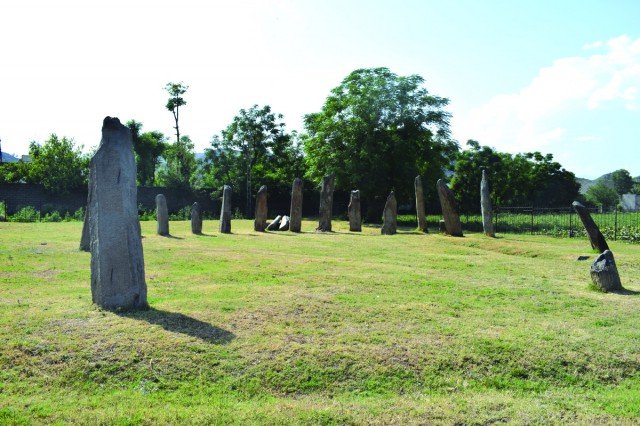
Pakistan is full of ancient places, but very few of them feel like Asota. There is no ticket office, no crowd, and no gift shop. You simply walk through village lanes, step into an open field, and there they are: sixteen massive limestone pillars, each about three metres tall, standing in a near-perfect semicircle under an open sky. The stones are older than most of what we call ancient history in this country. Standing among them, it is impossible not to wonder who raised them and why.
Archaeologists believe this circle was the remains of a sun temple built by a civilization that worshipped the sun. Some British-era researchers dated it to around 400 BCE, when this region was under the Achaemenid Persian Empire. Later Pakistani research linked it to the Indo-Aryan expansion into South Asia around 1500 BCE. Either way, the circle was already old when the great Buddhist monasteries of Gandhara were still young. For anyone interested in deep history, it is one of the most important sites in the country.
Asota is also famous simply because it looks astonishing. The pillars are single blocks of limestone, each one man-hewn and raised by hand in an age before cranes or iron machinery. They are arranged in a circle that once held as many as thirty-two stones. The British writer who covered the site for The Friday Times described arriving with low expectations and leaving impressed, noting that the stones are far larger in person than they appear in photographs, and that unearthed fallen stones lying behind the standing ones suggest there were once multiple concentric circles.
Finally, Asota makes an ideal day trip. It is less than three hours from Islamabad on the motorway, sits close to the world-famous Gandharan ruins of Takht-i-Bahi, and costs nothing to see. You can pair the stone circle with some of the richest Buddhist archaeology in Asia in a single day. For travelers hunting for places that are genuinely ancient and genuinely uncrowded, Asota is one of the best-kept secrets in Pakistan.
History of Asota Megalithic Circle
The story of Asota begins long before written history. The village name itself comes from the Sanskrit words Auss, meaning upright, and Watta, meaning stone, a clear reference to the standing pillars that have dominated this landscape for millennia. The people of the area have long called the stones Lukoto Baba, and the word Sharif was added to the village name out of respect for Hazrat Hameedullah Babajee, a venerated saint credited with spreading Islam in this region.
What exactly the circle was is still debated, but the leading theory is that it was a sun temple. According to the PakTurkFile research on the site, the megaliths are thought to have been built by a sun-worshipping civilization that lived in this region between 2,500 and 3,000 years ago. The structure, with its boundary in the form of a stone circle, is said to have had thirty doors, each used on a different day, possibly tied to a ritual calendar. Only sixteen pillars remain standing today, though archaeologists from the University of Peshawar have recorded that the circle originally held twenty-four to thirty-two megaliths.
British Raj-era archaeologists, working in the early twentieth century, surmised that the circle must have been built around 400 BCE, when the Peshawar Valley and the surrounding plains were controlled by the Achaemenid Persian Empire. Later Pakistani researchers reached a different conclusion: they linked the site to the Indo-Aryan expansion into South Asia around 1500 BCE, because grave sites belonging to that culture have been found near Asota. Both theories agree on one thing: the circle is far older than the Gandharan Buddhist civilization that later made this region famous as the Land of Fine Fragrances.
The region around Asota was a cradle of the Gandhara civilization, which flourished through strong city-states in both religious and commercial terms up to the fifth century AD. Buddhism and Hinduism spread from this region toward Central Asia and East Asia. The megalithic circle sat in these fields through all of it: through the Persian empire, the Greek conquests, the Mauryans, the Kushans, and the Buddhist centuries. A University of Peshawar excavation report notes that close to Asota, graves made of large slabs have been discovered that may belong to the Kushana period, and the famous Rani Ghat archaeological remains lie to the north-east of the nearby Aziz Dheri site.
Modern archaeology has paid the site too little attention. A University of Peshawar paper on the region notes that since independence, no proper attention was given to studying the megaliths of Pakistan, with the country’s first ever excavation of a megalithic site taking place at Dumlot in the Malir Basin near Karachi in 1975. The Asota circle today is preserved and protected under the Antiquity Act of Pakistan. It remains the largest and best-preserved megalithic site in the country, with similar stone circles reported from Turlandi and other places on the Mardan-Swabi plain, though none as impressive as Asota.
Top Things to Do in Asota Megalithic Circle
Walk Among the Standing Stones
The main experience at Asota is simply being there. The pillars stand in an open field, and you can walk right up to them, around them, and among the fallen stones scattered behind the standing row. Each pillar is roughly three metres of single limestone, and the near-perfect semicircular arrangement is best appreciated from a slight distance. Visit in the late afternoon, when the low sun throws long shadows across the field and the stones glow golden. Do not climb on the stones or try to move them: this is a protected archaeological site, and the stones have survived for millennia precisely because people left them alone.
Photograph the Circle
Asota is a photographer’s delight. The pillars frame the foothills of the Hindu Kush in the distance, and the surrounding wheat and mustard fields change colour with the seasons. Early morning brings soft light and often mist; late afternoon brings warm tones and dramatic skies. A wide-angle lens captures the full sweep of the semicircle, while close-ups of the weathered limestone show tool marks and centuries of erosion. There is no entry fee and no restriction on personal photography.
Trace the Archaeological Story
Before you visit, read up on the site so the stones make sense. Note the fallen and half-buried stones lying behind the standing pillars: they are evidence that the circle was once larger, possibly with multiple concentric rings. Look for the nearby large-slab graves, comparable to the Adina graves to the west, which archaeologists believe may date to the Kushana period. The circle sits in one of the richest archaeological landscapes in Pakistan, and understanding even a little of the research makes the visit far more rewarding.
Visit the Shrine and Village of Asota Sharif
The village of Asota Sharif is one of the oldest settlements in north-western Pakistan. After seeing the stones, take a short walk through the village. The shrine tradition associated with Hazrat Hameedullah Babajee gives the village its respectful suffix, and village elders can often share local legends about the stones that never made it into the research papers. Be polite, ask before photographing people, and accept the offer of tea if one comes: hospitality here is genuine.
Famous Places In and Around Asota Megalithic Circle
- Aziz Dheri — An archaeological site about 4 kilometres from the Asota megaliths, rich in Kharosthi inscriptions and prehistoric remains, studied by the University of Peshawar.
- Takht-i-Bahi — A UNESCO World Heritage Buddhist monastery complex near Mardan, one of the finest Gandharan sites in the world; pairs perfectly with Asota in one day.
- Shahbaz Garhi — Near Mardan, home to the famous rock edicts of the Mauryan emperor Ashoka carved in Kharosthi script.
- Rani Ghat — Ancient remains situated to the north-east of Aziz Dheri, part of the same archaeological landscape as the Asota circle.
- Jamal Garhi — Another major Gandharan Buddhist site in the Mardan region, known for its stone carvings and sculptures.
- Shewa village area — The fields around Shewa, close to the megaliths, hold additional ancient mounds and megalithic remains.
How to Reach Asota Megalithic Circle
The Asota Megalithic Circle is an easy day trip from the major cities of northern Pakistan. It sits just off the main road connecting Swabi and Mardan, close to the Peshawar-Islamabad Motorway (M1), so the drive is smooth for most of the journey.
From Islamabad: The drive is roughly 130 kilometres and takes about two and a half to three hours. Take the M1 Peshawar-Islamabad Motorway toward Peshawar and exit toward Mardan or Swabi. From the Mardan-Swabi road, the village of Asota Sharif is well known locally; ask for the megaliths or Lukoto Baba and villagers will point the way. The site lies about 30 kilometres north-east of Mardan.
From Lahore: The drive is around 500 kilometres and takes roughly five to six hours. Take the M2 to Islamabad, connect to the M1, and follow the Islamabad route above. It is a comfortable single-day drive if you leave early.
From Karachi: Driving the full distance is not practical for a single site. Fly to Islamabad or Peshawar, then drive to Asota. Peshawar’s Bacha Khan International Airport is the nearest airport, roughly an hour and a half from the site by road.
Nearest airport: Bacha Khan International Airport, Peshawar.
Road conditions: The motorway and the Mardan-Swabi road are in good condition year-round. The final approach to the site runs through village lanes that are paved but narrow; any ordinary car can manage them. There is no trekking or off-road driving required.
Transport options: The most practical option is your own car or a hired car with driver from Islamabad, Mardan, or Swabi. Public vans run between Mardan and Swabi, but from the main road to the stones you will need a local taxi or rickshaw, and you will need to explain the destination in local terms (Lukoto Baba / Asota Sharif). For first-time visitors, a car with a driver is strongly recommended.
Route Details
Here is a simple step-by-step route from Islamabad:
- Leave Islamabad on the M1 (Peshawar-Islamabad Motorway) heading toward Peshawar.
- After roughly two hours, take the exit toward Mardan / Swabi (follow signs for Mardan).
- Join the main Mardan-Swabi road and drive toward the village of Asota Sharif, which lies near the border of the two districts.
- Before entering the main village, ask locals for the megaliths (Lukoto Baba); the stones stand just off the main road in the fields.
- Park on the roadside and walk a short distance into the field to reach the circle. The walk from the road takes only a few minutes.
Where to Stay in Asota Megalithic Circle
Asota is a village site, not a town, so there are no hotels at the stones themselves. Plan your stay in one of the nearby cities and visit Asota as a day trip. This is the most comfortable way to see the site, and it keeps your options wide open.
Mardan: The nearest city, about 30 kilometres away, has the best choice of accommodation in the area. Mid-range hotels cluster along the main roads and near the city centre, and there are simple, clean guesthouses suitable for overnight stays. Staying in Mardan also puts you close to Takht-i-Bahi and the Ashokan edicts at Shahbaz Garhi, making it a good base for a two-day archaeology trip.
Swabi: Slightly closer to the site for visitors coming from the east, Swabi town has basic hotels and guesthouses. It is a quieter base than Mardan and works well if you are combining Asota with a visit to the Tarbela area.
Peshawar or Islamabad: If you prefer a wider choice of hotels, Asota is an easy day trip from either city. From Islamabad it is under three hours each way on the motorway, so you can leave after breakfast, spend two or three hours at the stones and nearby sites, and be back by evening.
There is no camping infrastructure at the site, and camping in the fields is not recommended. Day-tripping is the right approach for Asota.
Where to Eat: Local Foods of Asota Megalithic Circle
There are no restaurants at the stone circle, so plan your meals in Mardan, Swabi, or along the motorway. The good news is that this region is famous across Pakistan for its food, and eating here is one of the pleasures of the trip.
Chapli kebab: The Mardan-Peshawar region is the home of the chapli kebab, the flat, spice-crusted minced-meat kebab fried in a large pan. Any food street in Mardan serves excellent versions, and it is the one dish you should not leave without trying.
Namkeen gosht and karahi: The local cuisine leans toward simple, meat-heavy Pashtun dishes: salt-and-pepper mutton (namkeen gosht), tomato-based karahi, and seekh kebabs cooked over open coals. These are widely available in Mardan’s bazaars and along the main roads.
Desi breakfast: Start the day like a local with halwa puri or paye (slow-cooked trotters) in Mardan’s old bazaar before driving out to Asota. Sweet milky chai and fresh lassi are everywhere.
Roadside dhabas: The M1 motorway has clean rest areas with standard Pakistani and fast food. The real flavour, though, is in the dhabas along the Mardan-Swabi road, where meals are budget-friendly and portions are generous. A full local meal for one person typically costs a few hundred rupees, not thousands.
Bring drinking water and snacks for the site itself, as there are no shops at the stones.
Weather in Asota Megalithic Circle
Asota sits on the open plains between Mardan and Swabi, at low altitude, so its weather follows the classic pattern of the Peshawar valley: cold, foggy winters and very hot summers. The stones are in an open field with no shade, so the season you choose genuinely shapes the experience. The table below gives approximate seasonal ranges for the Mardan-Swabi plains.
| Season | Temperature Range | Conditions |
|---|---|---|
| Winter (Dec-Feb) | 2-12°C | Cold mornings, frequent fog, occasional frost; crisp clear afternoons |
| Spring (Mar-May) | 15-32°C | Pleasant and green; wheat fields around the site; best visiting weather |
| Summer (Jun-Aug) | 32-42°C | Very hot and dry; the open field offers no shade; visit early morning only |
| Autumn (Sep-Nov) | 20-35°C | Warm days, cooling evenings; harvest season; excellent for photography |
Language and Culture of Asota Megalithic Circle
The people around Asota are predominantly Pashtun, of the Yusufzai tribe, and Pashto is the main language you will hear in the villages. In Mardan and Swabi towns, many people also speak Hindko and Urdu, so visitors who speak Urdu will have no trouble in the cities; in the village itself, a few words of greeting in Pashto go a long way. English is understood in hotels but not widely in the villages.
The culture is conservative and deeply hospitable. Guests are treated with honour, and it is normal for strangers to offer directions, tea, or help. Dress modestly: long trousers and covered shoulders for both men and women, and women may prefer a dupatta or shawl in the villages. Ask permission before photographing people, especially women.
At the archaeological site itself, the key cultural rule is respect for the stones. Do not climb on them, carve names into them, or move fallen pieces. The circle is protected under the Antiquity Act, and it has survived for thousands of years; leave it exactly as you found it so it survives for thousands more. Take your litter back with you.
Shopping in Asota Megalithic Circle
There are no souvenir shops at the stones, but Mardan’s bazaars, a short drive away, offer plenty of regional shopping. Peshawari chappals, the famous handcrafted leather sandals of the region, are sold in Mardan’s shoe markets in every quality and price range. Khaddar, the handwoven cotton cloth of the region, makes a good buy, as do woollen shawls in winter.
The area is also known for dry fruits: almonds, walnuts, and dried apricots brought down from the northern valleys are sold in the main bazaars at reasonable prices. If your trip falls in the right season, the roadside stalls along the Mardan-Swabi road sell fresh local produce, including the famous blood-red oranges of the region in winter. There are no shopping malls at or near the site; shopping here means traditional bazaars, which is part of the charm.
Travel Tips for Asota Megalithic Circle
Packing Essentials
Pack for an open-field visit: a hat or cap, sunscreen, and plenty of drinking water, because there is no shade and no shop at the site. Comfortable walking shoes are enough; no hiking gear is needed. Bring a camera with a wide-angle lens if you have one. In winter, carry a warm jacket for the foggy mornings; in summer, plan the visit for early morning or late afternoon and avoid the midday heat.
Safety Tips
Asota is a safe, peaceful rural area, and visitors are generally welcomed warmly. The usual common sense applies: travel in daylight, keep valuables out of sight, and let your hotel know your plans. The stones themselves are safe to walk around, but watch your footing among the fallen blocks. There are no cliffs, water, or wildlife hazards at the site.
Money & Connectivity
There are no entry fees and no ATMs at the site, so carry enough cash for the day: fuel, food, and any taxi fares. ATMs and banks are plentiful in Mardan and Swabi. Mobile signals from all major networks (Jazz, Telenor, Zong, Ufone) work fine in the area, including at the site. There is no Wi-Fi at the stones; download offline maps before you leave the motorway.
Best Time to Visit Asota Megalithic Circle
Spring (March to May) — Best Season
Spring is the ideal time for the Asota Megalithic Circle travel guide’s top recommendation. Temperatures are pleasant, the wheat fields around the stones are green and golden, and the light is perfect for photography. This is when the site looks its best and feels most alive.
Autumn (October to November) — Excellent
Autumn is nearly as good as spring: clear skies, warm days, and harvest activity in the fields. The post-monsoon clarity gives long views toward the Hindu Kush foothills. An excellent time for combining Asota with Takht-i-Bahi.
Winter (December to February) — Good, with Caveats
Winter afternoons are crisp and clear, and the site is at its quietest. However, morning fog on the plains can delay your drive and hide the views, and it can be genuinely cold. If you visit in winter, plan to arrive at the stones after 10 in the morning.
Summer (June to August) — Avoid if Possible
Summer on the Mardan-Swabi plains is harsh, with temperatures crossing 40°C. The field has no shade and no water. If summer is your only option, visit at sunrise and be gone by 9 in the morning.
Final Thoughts
The Asota Megalithic Circle is the kind of place that rewards the curious. It has none of the infrastructure of a major tourist site, and that is exactly its magic. You stand in a quiet field among stones raised by hands that lived and died thousands of years before the first Buddhist monk walked the Gandharan plains, and you share the moment with nobody but the wind and the wheat. Few experiences in Pakistan feel this direct, this unmediated, this ancient.
Pair it with Takht-i-Bahi, eat a proper chapli kebab in Mardan, and drive home on the motorway before dark, and you will have had one of the best-value history days in the country. In 2026, when so many heritage sites are crowded and commercialised, Asota remains what it has always been: a mystery in a field, waiting for whoever bothers to come and look. Come and look.
FAQs
Where is the Asota Megalithic Circle located?
It is in the village of Asota Sharif, near the border of Swabi and Mardan districts in Khyber Pakhtunkhwa, about 30 kilometres north-east of Mardan and just off the main Swabi-Mardan road.
What is the best time to visit the Asota Megalithic Circle?
Spring (March to May) and autumn (October to November) are the best times, with pleasant temperatures and green or golden fields. Avoid the midday heat of summer and the morning fog of winter.
How do I reach the Asota Megalithic Circle from Islamabad?
Drive the M1 Peshawar-Islamabad Motorway toward Mardan (about two and a half to three hours), then follow the Mardan-Swabi road to Asota Sharif village. Ask locals for Lukoto Baba, the local name for the stones.
Is the Asota Megalithic Circle safe for tourists?
Yes. It is a peaceful rural area where visitors are welcomed. Travel in daylight, dress modestly, and respect the protected archaeological site by not climbing on the stones.
Is Asota suitable for families with children?
Yes, very. There is no climbing or difficult walking involved; the stones stand in a flat field a few minutes’ walk from the road. Children often love the mystery of the place. Bring water, hats, and snacks.
Where can I stay when visiting Asota?
There are no hotels at the site. Stay in Mardan (about 30 kilometres away, the best base), Swabi, or make it a day trip from Islamabad or Peshawar.
What food should I try near Asota?
Try the chapli kebab, namkeen gosht, and karahi in Mardan’s bazaars, plus a traditional desi breakfast of halwa puri or paye. Roadside dhabas along the Mardan-Swabi road are budget-friendly and generous.
How old is the Asota Megalithic Circle?
Its exact age is debated. British-era archaeologists suggested around 400 BCE, while later Pakistani research linked it to the Indo-Aryan expansion around 1500 BCE. Either way, it predates the Gandharan civilization and the Buddha, making it one of the oldest monuments in Pakistan.
For more ideas on heritage travel across the country, explore our Explore Pakistan section, and see how the northern mountains compare in our Hunza Valley guide and Malam Jabba guide.