Quick Facts
- Location: Gilgit District, Gilgit-Baltistan, in the Karakoram Range — about half an hour’s drive from Gilgit city
- Altitude: Valley villages sit well above 1,800 metres, with alpine pastures climbing to nearly 5,000 metres
- Famous For: Unspoiled Karakoram scenery, the Bagrot, Rakaposhi and Diran glaciers, terraced apricot orchards, and traditional Shina-speaking villages
- Nearest City: Gilgit (the nearest tourist destination to the city, and an easy day trip)
- Accessibility: Narrow mountain road from Gilgit; a 4×4 vehicle or local jeep is strongly recommended
- Known Landmarks: Bagrot Glacier, Rakaposhi and Diran viewpoints, high summer pastures, village cable cars over the glacial river
- Best For: Trekkers, photographers, cultural travelers, campers, and anyone seeking the Karakoram without the crowds
Why Visit Bagrot Valley
Every famous valley in Gilgit-Baltistan has a twin that the tour buses forgot. For Hunza, that twin is Bagrot. Barely half an hour from Gilgit city, this long Karakoram valley packs in everything travelers cross the world for — glaciers grinding down from 7,000-metre peaks, terraced fields of apricots and potatoes, villages where the Shina language and old mountain customs still order daily life — yet it remains wonderfully, stubbornly uncrowded.
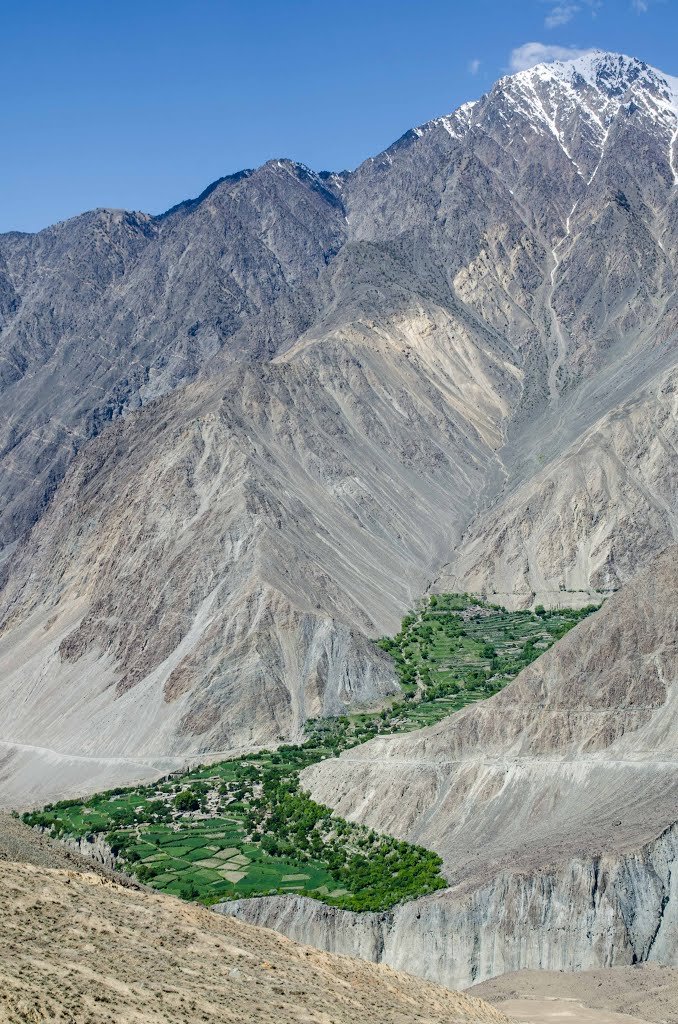
The scenery is the headline. Rakaposhi rises to the north-west, Diran to the north-east and Dobani to the east, and their glaciers — Bagrot, Rakaposhi and Diran — feed the milky river that threads the valley floor. The slopes climb from orchards and wheat fields through pine forest to alpine pastures at nearly 5,000 metres, where shepherds still take their flocks in summer. Because the Rakaposhi-facing side of Bagrot is lush, forested and far less visited than the peak’s other approaches, campers prize it as one of the finest quiet camping grounds in the region.
But Bagrot’s deeper appeal is cultural. The valley’s villages are connected by an unmetalled road, and where the road cannot go, cable cars and wooden bridges span the glacial river, carrying people, goods and livestock between settlements on either bank. Life here runs on mountain farming — barley, maize, wheat, potatoes, apples, pears and the valley’s celebrated apricots — supplemented by jobs and services in Gilgit. Visitors are welcomed into this rhythm rather than staged around it: homestays and small guesthouses, home-cooked food, and hosts who will happily explain a terraced field or a traditional house if you show genuine interest.
If you want the Karakoram raw — no commercial strips, no inflated bazaars, just peaks, glaciers and people — this bagrot valley travel guide is your invitation. Come in summer, bring your walking boots, and let the valley reveal itself slowly.
History of Bagrot Valley
Bagrot’s history is not written in emperors and battles but in settlement, language and the patient conquest of a difficult mountainside. The valley is home to the Bagoreh, a distinct ethnic group whose vernacular — a local form of the Shina language, spoken and understood in every village of the valley — sets them apart even within Gilgit-Baltistan. Their distinctive lifestyle, food and customs are the product of centuries of relative isolation in a side valley of the Karakoram, connected to the wider world mainly through Gilgit.
For most of its history, Bagrot was a self-sufficient farming valley. Its people terraced the mountainsides by hand, channelled glacier meltwater into intricate irrigation networks, and built a mixed economy of grain, fruit and livestock that still defines the valley today. The river that runs beneath the villages’ cable cars and wooden bridges — born from the glaciers of the Karakoram Range — was both the valley’s lifeline and its boundary, with settlements on either bank linked by ropeways that carried goods and animals long before any road arrived.
The modern chapter began with the road. The construction of the Karakoram Highway, and later the improvement of the valley’s own link road from Gilgit, ended Bagrot’s isolation within a single generation. Small cinemas, retail outlets selling mountain equipment and apparel, and modest hotels and guesthouses appeared to serve a new kind of visitor. Yet Bagrot never followed Hunza or Naltar into mass tourism. It remains what it has always been at heart: a working farming valley that happens to sit beneath some of the most beautiful mountains on earth — and that restraint is precisely what today’s travelers value most about it.
Top Things to Do in Bagrot Valley
Trek Toward the Glaciers
Bagrot is a trekker’s valley. Trails climb from the villages through forest and meadow toward the snouts of the Bagrot, Rakaposhi and Diran glaciers, with routes to suit both casual walkers and serious hikers. The high summer pastures — the same meadows where shepherds graze their flocks — make spectacular day-hike destinations, and multi-day treks into the upper valley reward the fit with ever-closer views of the ice. Hire a local guide in the villages; the trails are unmarked in places, weather moves fast at altitude, and a guide’s knowledge of water sources and safe campsites is worth every rupee.
Camp Beneath Rakaposhi and Diran
The forested slopes on the Bagrot side of Rakaposhi are considered some of the best quiet camping terrain in Gilgit-Baltistan — lush, green and far less crowded than the peak’s more famous approaches. Pitch a tent in a clearing with Diran’s pyramid or Rakaposhi’s great white wall filling the sky, and you will understand why photographers guard this valley’s name. Camp only on established or obviously durable ground, carry all rubbish out, and keep noise down after dark out of respect for nearby villages and grazing livestock.
Walk the Villages and Ride the Cable Cars
The lower valley is a joy to explore on foot. Wander between villages along the unmetalled road, watch the terraced fields being worked, and cross the glacial river on the local cable cars and wooden bridges that link settlements on opposite banks. These ropeways are working infrastructure, not tourist rides — ask politely before using one, offer a small contribution, and you will often be rewarded with stories as well as a crossing.
Photograph Peaks, Orchards and Pastures
Bagrot is brutally photogenic. Dawn lights Rakaposhi’s snows pink; midday turns the apricot orchards emerald; evening gilds the high pastures. The contrast of cultivated terraces against raw Karakoram rock is the valley’s signature composition. Spring brings blossom, summer brings deep green, and autumn sets the poplars and orchards ablaze in gold and red — every season has its palette.
Taste the Valley’s Produce
Bagrot is famous across Gilgit for its fruit and vegetables. In season, eat apricots straight from the tree, buy dried apricots and apricot products from village homes, and taste whatever the terraces are yielding — potatoes, tomatoes, wheat and barley all grow here. Much of the valley’s surplus is transported to Gilgit’s markets, along with ice cut from the glaciers in summer, a trade as old as the road itself.
Fish the Glacial Streams
The valley’s cold, clear streams hold fish, and angling is a popular pastime for visitors with the patience for it. Bring your own gear — there are no tackle shops in the valley — and check locally about any customary rules before casting in a particular stretch.
Famous Places In and Around Bagrot Valley
- Gilgit city — the regional capital, half an hour away, with bazaars, restaurants and the Kargah Buddha rock carving.
- Naltar Valley — the famous lake valley, reachable as a separate excursion from Gilgit.
- Hunza Valley — the Karakoram’s superstar, a few hours up the Karakoram Highway for travelers continuing north.
- Nagar Valley — Hunza’s quieter neighbour across the river, with its own Rakaposhi views.
- Rakaposhi and Diran viewpoints — the great peaks themselves, visible from multiple points in the upper valley.
How to Reach Bagrot Valley
Every journey to Bagrot starts in Gilgit, the capital of Gilgit-Baltistan. From Gilgit city the valley is only about half an hour’s drive — the nearest real mountain escape to the city — but the road is narrow and rough in places, so the final leg needs the right vehicle.
From Islamabad: The classic route is the Karakoram Highway (N-35) via Mansehra, Besham and Chilas — roughly 480 km and a full 10 to 12 hours of demanding mountain driving. In summer, the shorter scenic route via Naran, Babusar Top and Chilas is open (usually June to October, weather permitting) and cuts significant time. Public transport options include comfortable coasters and buses from Rawalpindi/Islamabad to Gilgit, and PIA operates flights from Islamabad to Gilgit airport (weather-dependent — build a buffer day into your plans).
From Lahore: Travel to Islamabad/Rawalpindi first (about 4 hours by motorway), then continue as above. Most Lahore-based travelers break the journey with a night in Islamabad or Besham. Flying via Islamabad to Gilgit is the fastest comfortable option.
From Karachi: Fly to Islamabad and continue by air to Gilgit or by road up the Karakoram Highway. The full Karachi–Gilgit journey is realistically a two-day affair even with flights, so plan accordingly.
Gilgit to Bagrot: From Gilgit city, hire a 4×4 jeep or go with a local driver who knows the valley road — roughly 20 to 30 km to the lower villages, about an hour depending on conditions. Sedans and low-clearance cars are not advisable; the road is unmetalled in stretches and narrow throughout. During and after rain, check conditions before setting out.
Route Details
Step 1: Reach Gilgit — by the Karakoram Highway from Islamabad (10–12 hours), via Babusar Top in summer, or by air from Islamabad to Gilgit airport.
Step 2: In Gilgit, arrange a 4×4 jeep with a local driver (hotels and the main bazaar area can connect you).
Step 3: Drive up the Bagrot valley road — narrow, winding, spectacular — to your chosen village or guesthouse.
Step 4: For day trips, start early to allow a full day; for treks and camping, overnight in the valley and begin climbs at dawn.
Where to Stay in Bagrot Valley
Set your expectations honestly: Bagrot offers modest guesthouses and homestays, not hotels with room service. What you lose in luxury you gain in authenticity — family-run places where the warmth is in the hosts as much as the blankets, home-cooked mountain food, and first-hand advice on trails and weather. Book ahead in the peak summer months (June to August), when the limited rooms fill with domestic tourists escaping the plains’ heat.
For more choice and comfort, Gilgit city — half an hour away — has the region’s full range of accommodation, from budget hotels to comfortable mid-range options with hot water and reliable electricity. Many travelers sensibly base themselves in Gilgit and visit Bagrot as a day trip, returning to the city each evening. Campers can pitch tents in the upper valley’s meadows with a local guide’s advice on suitable, respectful sites. Wherever you sleep, our Hunza Valley guide covers the wider region’s stays if you are touring Gilgit-Baltistan.
Where to Eat: Local Foods of Bagrot Valley
There are no restaurants in the fine-dining sense in Bagrot — you eat what the valley grows, cooked by the people who grew it, and it is delicious. The staple flavours are apricot in all its forms: fresh in summer, dried through winter, pressed into oil, and cooked into local dishes. Butter tea (salted tea churned with butter) is the valley’s signature drink, served to every guest and the perfect warmer after a cold morning’s walk.
Mountain staples include hearty wheat and barley breads, potato and vegetable dishes from the terraces, lentils and rice, and meat — usually chicken, mutton or beef — on special occasions. If you stay in a homestay, ask your hosts about the day’s cooking; meals are typically simple, fresh and generous. In Gilgit city before or after your valley trip, you will find a wider range — trout from the region’s streams, Chinese-influenced dishes, and the standard Pakistani grill menu. A homestay meal in the valley is very budget-friendly; carry cash, as no cards are accepted anywhere in Bagrot.
Weather in Bagrot Valley
Bagrot is a true mountain valley, and its weather follows mountain rules: big daily swings, fast changes, and winters that close the high country entirely. The valley floor villages sit well above Gilgit’s 1,500 metres, so nights are cool even in midsummer. Approximate conditions:
| Season | Temperature Range | Conditions |
|---|---|---|
| Winter (Dec–Feb) | -8 to 5°C | Heavy snow in the upper valley; villages quiet; only for the hardy. Roads can be difficult. |
| Spring (Mar–May) | 5–20°C | Blossom season in the orchards; melting snow swells the streams; crisp, fresh air. |
| Summer (Jun–Aug) | 15–30°C | Warm days, cool nights; prime trekking and camping season; occasional rain. |
| Autumn (Sep–Nov) | 5–22°C | Golden orchards and poplars; clear skies; superb photography; nights turn cold fast. |
Above the villages, temperatures drop roughly 6°C for every 1,000 metres gained — pack for winter conditions on any high trek even in July.
Language and Culture of Bagrot Valley
The valley speaks Shina — a distinctive local vernacular understood in every village — and the Bagoreh people form a recognised ethnic group with their own customs, foods and traditions. Urdu is widely understood, especially by younger people and anyone involved in tourism, so visitors can communicate comfortably; English is limited to the most tourism-exposed hosts.
Culture here is mountain culture: strong community bonds, deep hospitality, and a life ordered by the agricultural calendar. Guests are honoured — expect to be offered tea and food, and accept graciously. Dress modestly (cover shoulders and knees; women should carry a scarf), ask before photographing people, and respect prayer times and religious spaces. The valley’s traditional house-building — timber and stone construction adapted to earthquakes and snow — is itself worth observing. Tread lightly on the terraced fields: they are someone’s livelihood, not a backdrop. Bargaining is not really part of village commerce; pay fair prices for produce and handicrafts happily.
Shopping in Bagrot Valley
Shopping in Bagrot means buying from the source. Dried apricots are the valley’s signature product — buy them directly from village homes for quality and prices no city market can match. In season, fresh apricots, apples and potatoes are sold at farm gates. A few small retail outlets in the lower valley sell mountain equipment and apparel for trekkers who arrive underprepared.
For a wider selection, Gilgit’s bazaars — half an hour away — offer the region’s full range: dried fruits and nuts, woollen shawls and caps, gemstones, and handicrafts from across Gilgit-Baltistan. As in the villages, fair fixed prices are the norm for local produce; gentle bargaining is acceptable in Gilgit’s tourist-oriented shops.
Travel Tips for Bagrot Valley
Packing Essentials
Good trekking shoes with ankle support are the single most important item — trails are rocky and uneven. Pack layers: a warm fleece and a windproof/waterproof shell even in summer, because mountain weather turns in minutes. Sun protection is critical at altitude (sunscreen, sunglasses, cap), along with a headlamp, a basic first-aid kit, water purification tablets or a filter, and a power bank. Bring all snacks and any special food from Gilgit; village shops stock only basics. A sleeping bag is wise even if your guesthouse provides bedding, for high camps.
Safety Tips
Bagrot is peaceful and its people are famously hospitable, but mountain hazards are real. Never trek alone on unfamiliar trails — hire a local guide. Start high walks early to avoid afternoon cloud and rain, and turn back if weather closes in; the peaks will still be there tomorrow. The glacial river is dangerously cold and fast — do not swim in it, and cross only by the established bridges and cable cars. Inform your guesthouse host of your planned route and expected return. Carry a basic altitude awareness: headaches and nausea above 3,000 metres mean descend and rest.
Money & Connectivity
Carry all cash in Pakistani rupees — there are no ATMs in Bagrot and no card acceptance anywhere in the valley. Withdraw in Gilgit before driving up, and budget for jeep hire, guide fees, homestay payments and produce purchases. Mobile signals are patchy: expect weak or no coverage in the upper valley and inside stone houses, improving near the lower villages. Download offline maps of the area before leaving Gilgit, and do not rely on live navigation in the valley.
Best Time to Visit Bagrot Valley
Summer (June–August): The Classic Season
This is when Bagrot is at its most accessible and alive — green fields, full streams, open high pastures and the best trekking weather. It is also the busiest period, so book homestays ahead and start popular trails early. If you only get one trip, make it summer.
Spring (March–May): The Blossom Season
Apricot and apple blossom transforms the valley into something out of a storybook, with snow still crowning the peaks above. Temperatures are cool but pleasant, crowds are thin, and photographers get the year’s most delicate light. Higher trails may still hold snow early in the season.
Autumn (September–November): The Golden Season
Many connoisseurs rate autumn above summer: the orchards and poplars burn gold and red, the skies are at their clearest, and the summer crowds have gone home. Nights turn cold quickly, so pack accordingly — but the daytime walking is sublime.
Winter (December–February): For the Bold Only
The valley sleeps under snow, the upper reaches become inaccessible, and only the hardiest travelers venture up. If you do, you will find profound stillness and possibly the valley’s most dramatic photography — but go with local guidance, proper winter gear and zero illusions about comfort.
Final Thoughts
Bagrot Valley is proof that Gilgit-Baltistan still keeps secrets. Half an hour from a regional capital, it offers the full Karakoram catalogue — glaciers, 7,000-metre peaks, alpine meadows, orchards, and a living mountain culture — without the crowds, the commercialism or the performance. It is not the easiest valley to visit, and it does not try to be; its roads are rough, its guesthouses are simple, and its rewards go to travelers who meet it on its own terms.
Walk its villages, cross its cable cars, sleep in a meadow under Rakaposhi’s wall of ice, and eat apricots picked that morning. You will leave with a quieter, deeper memory of the Karakoram than the famous viewpoints provide — and with the feeling, rare in modern travel, of having been somewhere genuinely itself. For the next chapter of the high mountains, our Malam Jabba guide heads west to Khyber Pakhtunkhwa’s ski slopes.
FAQs
Where is Bagrot Valley located?
Bagrot Valley is in Gilgit District, Gilgit-Baltistan, in the Karakoram Range — about half an hour’s drive (roughly 20–30 km) from Gilgit city, beneath the peaks of Rakaposhi, Diran and Dobani.
What is the best time to visit Bagrot Valley?
May to October is the overall window. Summer (June–August) is best for trekking and camping; spring (March–May) for blossom; autumn (September–November) for golden colours and clear skies. Winter brings heavy snow and is only for well-prepared travelers.
How do I reach Bagrot Valley from Islamabad?
Drive the Karakoram Highway to Gilgit (10–12 hours), use the seasonal Babusar Top route in summer, or fly from Islamabad to Gilgit. From Gilgit, hire a 4×4 jeep with a local driver for the valley road — sedans are not suitable.
Is Bagrot Valley safe for tourists?
Yes — the valley is peaceful and locals are known for their hospitality. The risks are mountain ones: rough roads, fast weather changes and cold glacial rivers. Hire local guides for treks, inform your host of your plans, and never swim in the river.
Can families visit Bagrot Valley?
Yes, for a day trip or a gentle overnight — the lower villages, orchards and viewpoints suit all ages. High treks and camping are better for fit, older children and adults. The bumpy jeep road may trouble very young children or anyone with back problems.
Where can I stay in Bagrot Valley?
In modest family-run guesthouses and homestays within the valley (book ahead in summer), or base yourself in Gilgit city — half an hour away — which has hotels across budgets, and visit Bagrot as a day trip.
What language do people speak in Bagrot?
The local vernacular is Shina, spoken in all the valley’s villages by the Bagoreh ethnic group. Urdu is widely understood, so visitors communicate easily.
What should I pack for Bagrot Valley?
Trekking shoes, layered warm clothing plus a waterproof shell, sun protection, a headlamp, first-aid supplies, water purification, a power bank, cash in rupees (no ATMs), and snacks from Gilgit. Even in summer, pack for cold nights.