Quick Facts
- Location: On the northern bank of Gharo Creek, on the N-5 National Highway between Dhabeji and Gharo, Thatta District, Sindh.
- Altitude: Near sea level — a flat coastal plain on the edge of the Indus Delta.
- Famous For: The ancient port city widely identified as Debal, the remains of one of the earliest mosques in South Asia (circa 727 CE), and the Sassui-Punhun love legend.
- Nearest City: Karachi, about 65 kilometres to the west; Thatta lies a short drive to the east.
- Accessibility: Directly on the National Highway from Karachi; paved road with a short rough access track to the museum and ruins. Best done as a day trip with your own car.
- Known Landmarks: The excavated city ruins, the early Islamic mosque foundations, the Banbhore Archaeological Museum, and Gharo Creek.
- Best For: History lovers, archaeology fans, photographers, school and college groups, and anyone tracing the story of Islam’s arrival in South Asia.
Why Visit Bhambore (Banbhore), Thatta
Most visitors to Sindh rush to Mohenjo Daro or Makli Necropolis and drive right past one of the most important archaeological sites in South Asia. Bhambore, also spelled Banbhore, sits quietly on the N-5 National Highway between Dhabeji and Gharo, yet the ground beneath it holds over two thousand years of continuous history. This is where scholars place the legendary port of Debal, the city conquered by the young Arab general Muhammad bin Qasim in 711-712 CE — the campaign that brought Islam to the subcontinent. Standing among the excavated stone foundations, you are quite literally walking through the doorway of South Asian Islamic history.
What makes Bhambore special is not grandeur but depth. The ruins are modest — low stone walls tracing out streets, houses, and a remarkable early mosque — but the story is enormous. Three civilizations lived here one after another: Scytho-Parthian traders, Buddhist settlers, and early Muslim merchants who turned the city into a thriving port connecting China with the Middle East. The on-site museum packs that story into a single visit, with pottery, coins, jewelry, and the famous heavy jars that archaeologists say show craftsmanship ahead of their time.
There is a poetic side too. Sindhi folklore ties Bhambore to Sassui, the heroine of the Sassui-Punhun romance immortalized by Shah Abdul Latif Bhittai. In the Shah Jo Risalo, Sassui cries out outside Bhambore for her lost beloved. For anyone who grew up with the tale, visiting the site feels personal. And for the practical traveler, Bhambore is one of the easiest history day trips from Karachi — you can combine it with Makli, the Shah Jahan Mosque at Thatta, and Keenjhar Lake in a single weekend circuit.
History of Bhambore (Banbhore), Thatta
The documented history of Bhambore stretches from the 1st century BCE to the 13th century CE — a lifespan of roughly fourteen hundred years. Archaeological work has identified three distinct cultural periods on the same ground. The earliest is the Scytho-Parthian period (1st century BCE to 2nd century CE), followed by a Buddhist phase (2nd to 8th century CE), and then the early Islamic period (8th to 13th century CE), when the city reached its greatest prosperity as a port.
The city’s great claim is its identification with Debal. When the Umayyad general Muhammad bin Qasim arrived on the coast of Sindh in 711-712 CE and defeated Raja Dahir, the last Hindu ruler of Sindh, the port he captured is widely — though not universally — identified as this very site. Historians and archaeologists have debated the Debal-Bhambore link for decades, and it remains unconfirmed, but the early Islamic layers, the mosque remains, and the trade evidence all point to a major Arab-period port here. Some scholars have also suggested the city was known to the Greeks as Barbari or Barbaricon, though that too is unproven.
The most striking relic is the mosque, dated to around 727 CE, making it one of the earliest known mosques in the region and among the first places of worship built by Muslims in South Asia. Its foundations show a simple, grand plan. Excavators also found the remains of a temple, evidence that the pre-Islamic city had its own religious life, and the layers reveal shops, houses, water cisterns, and textile workshops — a cosmopolitan trading city where many languages were spoken.
Modern scholarship began with Ramesh Chandra Majumdar’s preliminary dig in 1928, followed by Leslie Alcock in 1951. The most extensive excavations were led by Pakistani archaeologist Dr. F. A. Khan between 1958 and 1965, whose work revealed the city’s layout and history in detail. In 2004, Pakistan’s Department of Archaeology and Museums submitted Bhambore for UNESCO World Heritage status, and it remains on the tentative list. The on-site museum was established by the Department of Archaeology on 21 August 1960 and inaugurated on 14 May 1967; in May 2010 its management passed to the Culture Department of the Government of Sindh. An international conference on Bhambore was held in March 2012, and new excavations with international collaboration continue to uncover the site — some experts say only a small fraction of the ancient city has been dug so far.
The city’s end came in the 13th century. The accepted explanation is that the Indus River shifted its course, cutting off the port’s waterway and trade, and the city was gradually abandoned. By the time the river settled into new channels, Bhambore had slipped into the sand — until its stones were brought back to light in the twentieth century.
Top Things to Do in Bhambore (Banbhore), Thatta
Walk Through the Excavated City Ruins
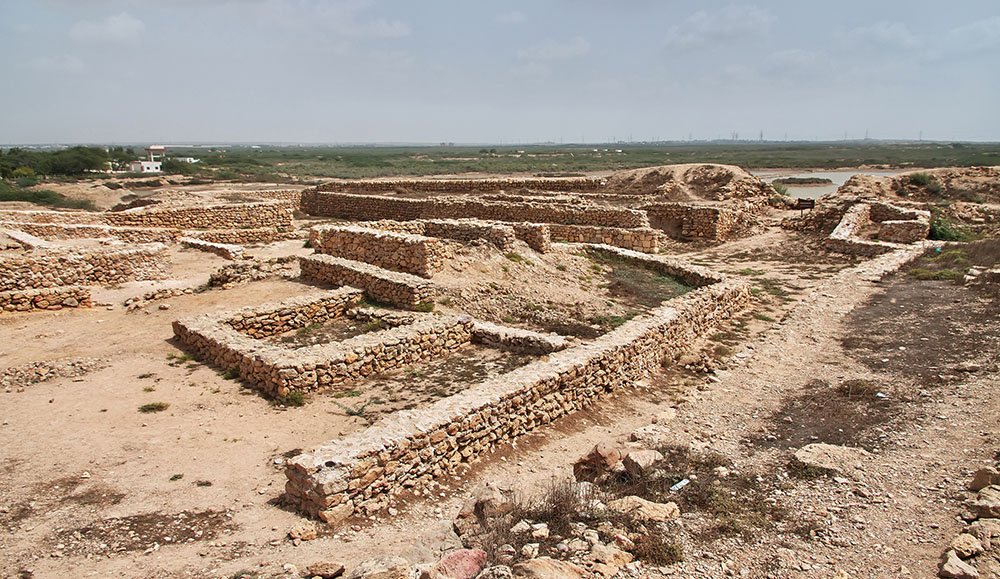
The heart of any Bhambore travel guide is the archaeological site itself. Walk the cleared areas where stone foundations trace out the ancient streets and houses. Information boards and the museum staff can help you read the ground plan — you can make out residential quarters, the citadel area, and the mosque complex. Bring a hat and water; there is almost no shade, and the open ground gets bright and hot by midday. Early morning or late afternoon light also makes the stones photograph beautifully.
See the Remains of the 8th-Century Mosque
Ask the staff to point out the mosque foundations, dated to around 727 CE. This is one of the earliest Islamic monuments in South Asia, and it is humbling to stand where worshippers prayed more than twelve centuries ago. The structure’s simplicity — broad walls, a large prayer area, no surviving dome or minaret — tells you how early Islamic architecture in the region looked before the grand styles of later centuries.
Visit the Banbhore Archaeological Museum
Do not skip the museum. It holds the artifacts pulled from the site: coins from different eras, glazed and unglazed pottery, jewelry, tools, and the large storage jars archaeologists admire for their symmetry and craftsmanship. The museum staff are known to be knowledgeable and will often walk visitors through the exhibits. Plan at least forty-five minutes here — it turns the ruins outside from a pile of stones into a living city in your imagination.
Trace the Sassui-Punhun Legend
Sindhi folklore places Sassui at Bhambore, and the Shah Jo Risalo verses about her cries outside the city are part of the site’s cultural soul. If you know the story of Sassui and Punhun, stand by the creek and picture the tale. Local guides and teachers love retelling it, and it is a wonderful way to connect the archaeology with living Sindhi culture.
Photograph Gharo Creek at Sunset
The site sits beside Gharo Creek, and the water and wide sky make for fine landscape photography, especially in the golden hour before sunset. The flat delta scenery — marsh, fishing boats in the distance, and wind farms on the horizon — is a striking contrast to the ancient stones in the foreground.
Famous Places In and Around Bhambore (Banbhore), Thatta
- Makli Necropolis (Thatta): A UNESCO World Heritage Site with magnificent carved stone tombs of Sindh’s rulers and saints, a short drive east.
- Shah Jahan Mosque, Thatta: The 17th-century Mughal mosque famous for its 93 domes and superb tilework.
- Keenjhar Lake: One of Pakistan’s largest freshwater lakes, a favorite picnic and boating spot, also near Thatta.
- Haleji Lake: A peaceful birdwatcher’s lake, easily combined with the Bhambore day trip.
- Gharo and Dhabeji: The nearest towns on the highway, with bazaars, eateries, and fuel stations.
- Debal Beach: The creek-side coastline near the site — quiet and scenic, good for an evening stroll.
How to Reach Bhambore (Banbhore), Thatta
The easiest way to reach Bhambore is by road from Karachi. The site lies about 65 kilometres east of Karachi on the N-5 National Highway, between the towns of Dhabeji and Gharo, and the drive typically takes one to one and a half hours depending on traffic. Follow the highway toward Thatta and Hyderabad; signage near Gharo points to the museum and ruins. The access road from the highway to the museum has some rough patches but is manageable in an ordinary car. From Thatta, the site is a short drive west along the same highway. From Hyderabad, allow roughly two hours.
From Islamabad or Lahore, the practical route is to fly to Karachi and then drive — the site is a classic Karachi day trip, often combined with Makli and Keenjhar Lake. Buses run regularly between Karachi and Thatta, and from Thatta you can hire a taxi or rickshaw to the site, but most travelers prefer their own car or a hired van for flexibility, since the site has no public-transport stop of its own.
Route Details
- Start from Karachi on the N-5 National Highway heading east toward Thatta and Hyderabad.
- Pass through the Landhi and Port Qasim corridor and continue past Dhabeji.
- Between Dhabeji and Gharo, watch for the Bhambore/Banbhore museum signboards on the left.
- Turn off onto the access road, park at the museum, buy your entry ticket, and explore the museum before walking the ruins.
- On the return, the same highway takes you back to Karachi — or continue east to Thatta, Makli, and Keenjhar Lake.
Where to Stay in Bhambore (Banbhore), Thatta
Bhambore is a day-trip destination, so most visitors sleep in Karachi. If you want to stay near the site, there is a small government rest house close to the ruins with a handful of rooms — book well in advance through the Sindh culture or tourism department, as availability is limited. For a longer heritage circuit, Thatta town has basic hotels and guesthouses, while Karachi offers the full range from budget guesthouses to five-star hotels. Camping is not an organized option at the site, and given the lack of facilities, an overnight stay only makes sense if you have confirmed the rest house booking.
Where to Eat: Local Foods of Bhambore (Banbhore), Thatta
There is a small canteen at the site for tea and snacks, but plan your main meal around the nearby towns. The highway towns of Gharo and Dhabeji have dhaba-style restaurants serving classic Sindhi and Pakistani road food: daal fry, bhaji, fresh tandoori roti, grilled kebabs, and cold lassi. Gharo’s proximity to the creek means fresh fish appears on local menus — grilled or fried river and sea fish is worth trying. In Thatta, you can find Sindhi specialties such as sai bhaji (slow-cooked greens with lentils) and hearty Sindhi biryani at local restaurants. Carry drinking water and snacks for the site itself, as the nearest proper restaurants are several kilometres away on the highway.
Weather in Bhambore (Banbhore), Thatta
Bhambore sits on the coastal plain of lower Sindh, so its weather follows the Karachi-Thatta pattern: mild winters, very hot and humid summers, and little rain outside the monsoon. The site has almost no shade, so season choice matters a lot for comfort. These are approximate ranges for the area.
| Season | Temperature Range | Conditions |
|---|---|---|
| Winter (Dec – Feb) | 14°C to 25°C | Mild and pleasant, clear skies, the best weather for walking the ruins. |
| Spring (Mar – Apr) | 22°C to 34°C | Warming up; comfortable in the morning, hot by midday. |
| Summer (May – Sep) | 30°C to 40°C | Hot and humid with sea air; visit early morning or late evening only. |
| Autumn (Oct – Nov) | 25°C to 35°C | Heat easing off; late autumn becomes pleasant again. |
Language and Culture of Bhambore (Banbhore), Thatta
Sindhi is the mother tongue of the area, and you will hear it everywhere — in the bazaars of Gharo, at the museum, and from the site staff. Urdu is widely understood, and some English is spoken at the museum and rest house. The culture is warmly hospitable Sindhi: greet people with a smile and an “Assalam-o-Alaikum,” accept offered tea if you can, and dress modestly — the mosque ruins are a place of religious significance, so cover shoulders and knees and avoid loud behavior there. Photography of people should be asked for first. The Sassui-Punhun legend is a point of deep local pride; showing interest in it is a quick way to make friends.
Shopping in Bhambore (Banbhore), Thatta
There are no shops at the archaeological site itself beyond the museum’s basic counter, so do your souvenir hunting in Thatta’s bazaars. The area is known for Sindhi handicrafts: ajrak (the block-printed shawl of Sindh), embroidered textiles, and simple pottery. Thatta town’s market also sells dates and local sweets. Do not buy or accept “antique” artifacts offered by touts anywhere near the site — removing or trading archaeological material is illegal, and genuine-looking pieces are usually fakes. There are no shopping malls anywhere near Bhambore; this trip is about history, not retail.
Travel Tips for Bhambore (Banbhore), Thatta
Packing Essentials
Sun protection is the top priority: a wide-brimmed hat, sunglasses, and sunscreen, since the ruins have no shade. Carry at least two litres of drinking water per person, comfortable walking shoes (the ground is uneven stone and sand), and a fully charged phone for photos and GPS. A small backpack with snacks helps, as food options at the site are limited.
Safety Tips
The site is safe and managed, with staff on the premises during opening hours. Stay on the marked paths among the ruins — the ground is uneven and some excavated areas have loose edges. Avoid visiting in the peak heat of summer afternoons. If you combine the trip with the creek, do not swim; it is a tidal waterway, not a swimming spot. Travel in daylight, as the access road is not well lit after dark.
Money & Connectivity
Entry to the museum and site costs a small fee paid at the booking office — students in groups are often admitted free. Carry cash, as there are no card machines or ATMs at the site; the nearest ATMs are in Gharo and Dhabeji. Mobile signals from the major networks (Jazz, Telenor, Zong, Ufone) generally work along the highway and at the site, though data speeds can be patchy.
Best Time to Visit Bhambore (Banbhore), Thatta
Winter (November to February)
This is the ideal season. Daytime temperatures are mild, the sky is clear, and you can comfortably walk the ruins and the museum grounds for hours. Weekend crowds are thin, and the light is perfect for photography.
Spring (March to April)
Still workable, especially in March. Start early in the morning to finish the outdoor walking before the midday heat builds. The surrounding delta greenery looks its best after any spring rain.
Summer (May to September)
The least comfortable season — hot, humid, and exposed. If you must go, limit the ruins walk to before 10 am or after 4 pm, and spend the midday at the museum or on the Thatta circuit.
Autumn (October to November)
A good shoulder season. The humidity drops, temperatures ease, and the site becomes pleasant again, making it a fine time for a combined Bhambore-Makli-Keenjhar weekend.
Final Thoughts
Bhambore is not a place of sweeping palaces or towering monuments — it is something rarer: a quiet field where fourteen centuries of South Asian history lie stacked in the earth. The Debal question, the 727 CE mosque, the Sassui legend, and the trade goods of three civilizations make this one of the most intellectually rewarding stops in Sindh. For anyone putting together a serious explore Pakistan itinerary, it belongs on the list alongside the great UNESCO sites.
Go in winter, start at the museum, walk the ruins slowly, and let the staff tell you the stories. Then drive on to Makli and Thatta with your sense of Sindh’s past deepened. That is the Bhambore travel guide experience at its best — modest in scale, enormous in meaning.
FAQs
Where is Bhambore located?
Bhambore (Banbhore) is on the N-5 National Highway between Dhabeji and Gharo in Thatta District, Sindh, on the northern bank of Gharo Creek — about 65 kilometres east of Karachi.
Is Bhambore really the ancient city of Debal?
Many historians and archaeologists identify Bhambore as Debal, the port conquered by Muhammad bin Qasim in 711-712 CE, but the identification is debated and not yet confirmed.
What is the best time to visit Bhambore?
November to February, when the coastal weather is mild and you can walk the exposed ruins comfortably. Avoid the hot, humid afternoons of May to September.
How do I reach Bhambore from Karachi?
Drive east on the N-5 National Highway toward Thatta; the site is between Dhabeji and Gharo, about a one to one-and-a-half-hour drive. Follow the museum signboards off the highway.
Is Bhambore safe for families?
Yes. It is a managed archaeological site with staff, washrooms, and a canteen. Keep children on the paths, carry water and sun protection, and visit in daylight hours.
How much time do I need at Bhambore?
Plan two to three hours: around forty-five minutes in the museum and one to two hours walking the ruins. Many visitors combine it with Makli, Thatta, and Keenjhar Lake in one trip.
What should I eat during the trip?
Eat at the dhaba restaurants in Gharo or Dhabeji (daal, kebabs, fresh fish, lassi) or in Thatta town, where you can try Sindhi dishes like sai bhaji. Carry water and snacks for the site itself.
Is there really a 1300-year-old mosque at Bhambore?
Yes — the mosque foundations are dated to around 727 CE, making them among the earliest known Islamic monuments in South Asia. Only the foundations and low walls survive, but they are clearly identifiable.