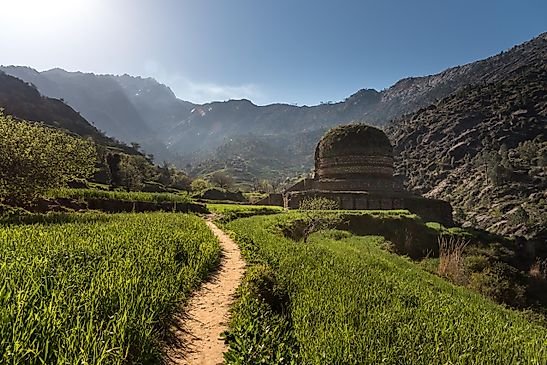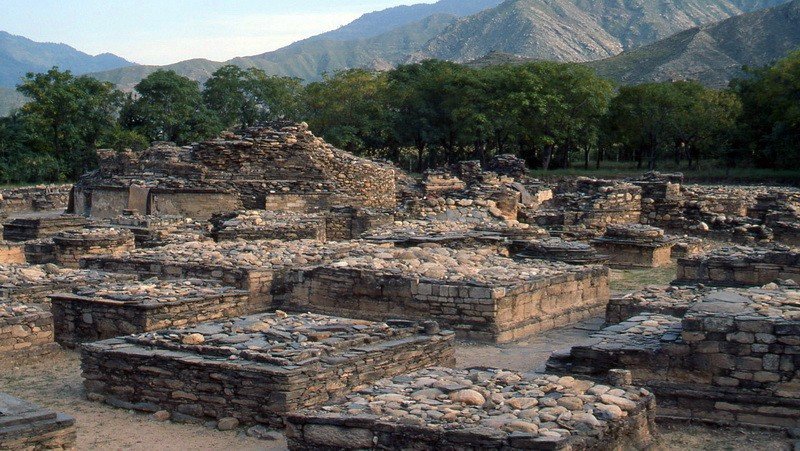
Everyone who visits Swat’s Buddhist heritage goes to Butkara I — and almost everyone stops there. But a few minutes further, past the turn-off to the famous great stupa, a short climb up a gully leads to the valley’s quieter, stranger, and in some ways more fascinating monastic site: Butkara III. Excavated not by the famous Italian mission but by Pakistani archaeologists from the University of Peshawar, this is a different kind of Buddhist complex — an open stupa court with underground chambers, shrines, and rows of monastic cells, decorated with garland-bearing spirits and panels telling the Jataka tales of the Buddha’s past lives. This butkara iii mingora travel guide will convince you why this overlooked site deserves a place on your Swat itinerary, and show you exactly how to find it.
Quick Facts
- Location: near Mingora, Swat District, Khyber Pakhtunkhwa, Pakistan — a short distance beyond the Butkara I turn-off
- Altitude: around 950–1,100 meters (valley floor rising to low hillside)
- Famous For: its open stupa court, underground chambers, and Jataka-tale sculptures excavated by the University of Peshawar
- Nearest City: Mingora (minutes away by road, then a short climb on foot)
- Accessibility: drive from Mingora, then a roughly five-minute uphill walk; ask locals for the exact path
- Known Landmarks: Area A (stupa court, underground chambers, shrines) and Area B (six monastic rooms in a row)
- Best For: archaeology enthusiasts, off-the-beaten-path travelers, photographers, and anyone who has seen Butkara I and wants more
Why Visit Butkara III, Mingora
There is a particular pleasure in visiting the site that the tour buses skip. Butkara I gets the crowds and the guidebook chapters; Butkara III gets the travelers who ask “what else is here?” — and rewards them richly. Where Butkara I is a single great stupa with its rings of votive shrines, Butkara III is a full monastic world: courtyards, underground chambers, shrines, and living quarters, partly reconstructed so you can read the architecture the way its monks once moved through it.
The art found here is what makes the climb worthwhile. The University of Peshawar excavations uncovered large numbers of stone sculptures — garland bearers, those joyful carved figures who seem to dance around Gandharan shrines, and narrative panels depicting the Jataka tales, the beloved stories of the Buddha’s previous lives. These are storytelling stones: each panel is a chapter, and standing before them you are reading a picture-book that monks contemplated fifteen hundred years ago.
Butkara III also tells a proudly Pakistani archaeological story. While Butkara I was dug by the Italian mission, this site was excavated under Prof. Dr. Abdur Rahman of the University of Peshawar’s Department of Archaeology, and its finds are housed in the university’s own Sir Sahibzada Abdul Qayyum Museum — a reminder that the exploration of Gandhara is now carried forward by Pakistani scholars. For visitors interested in heritage as a living discipline, not just ruins, that matters.
And then there is the simple adventure of it. Reaching Butkara III feels like a small discovery: past the Butkara I turn-off, on to a culvert, up a gully with a village on the way, and suddenly the reconstructed courtyard of stupas opens before you. It is the closest thing in Mingora’s backyard to an explorer’s find — and you will likely have it to yourself.
History of Butkara III, Mingora
Butkara III belongs to the mature flowering of Buddhism in Swat, dating from the 1st to the 5th century CE — the Kushan and post-Kushan centuries when Gandharan art reached its greatest sophistication. Where Butkara I began in the Mauryan age, Butkara III represents the later monastic world: a fully developed complex of worship and daily monastic life, built when Swat was among the most important Buddhist centers in Asia.
The site is divided into two distinct areas. Area A contains the religious heart of the complex: an open stupa court, underground chambers, and shrines. Area B consists of a series of six rooms arranged in a row — the domestic, lived-in side of the monastery where monks slept, studied, and ate. Together they give a remarkably complete picture of how a Gandharan monastery actually worked, from public ritual to private routine.
The excavation was led by Prof. Dr. Abdur Rahman of the Department of Archaeology at the University of Peshawar, one of the major Pakistani-led excavations in the Swat Valley. The dig uncovered a large number of stone sculptures, including the characteristic garland bearers and panels depicting scenes from the Jataka tales. These finds are now housed in the Sir Sahibzada Abdul Qayyum Museum at the University of Peshawar. The site was first published in the volume “Buddhist Shrines in Swat” in 1993, and it is protected under the Khyber Pakhtunkhwa Antiquities Act of 2016.
Visitors should know the honest context too: the site is partly reconstructed, and local reports note that it needs better protection and security — a reminder of how vulnerable Pakistan’s archaeological heritage can be. Visit respectfully, leave everything as you found it, and your visit itself becomes a small vote for the site’s preservation.
Top Things to Do in Butkara III, Mingora
Explore the Stupa Court of Area A
Area A is the ceremonial core: an open court of stupas — both round and square in plan — partly reconstructed so the geometry of the complex reads clearly. Walk the court slowly and notice the symmetry the builders imposed on the hillside: stupas, shrines, and chambers arranged with a precision that still impresses. This is where the monastery’s ritual life centered, and on a quiet morning you can almost hear the chanting.
Descend into the Underground Chambers
The underground chambers of Area A are among the site’s most atmospheric features. These cool, dim spaces — used for storage, meditation, or ritual — give a visceral sense of monastic life that open courtyards cannot. Bring a torch or use your phone light, watch your footing, and take a moment in the quiet: fifteen centuries of stillness live down here.
Read the Jataka Panels (in the Museum)
The narrative heart of Butkara III’s art — the Jataka tale panels and the garland-bearer sculptures — is housed in the Sir Sahibzada Abdul Qayyum Museum at the University of Peshawar. If your travels take you to Peshawar, the museum visit completes the Butkara III story: the tales of the Buddha’s past lives, carved in Swat stone, displayed where Pakistani archaeology students study them today. In the field, look for the carved fragments and architectural details that remain in situ.
Walk Through Area B’s Monastic Row
The six rooms of Area B, arranged in a neat row, are the monastery’s domestic quarter — the monks’ cells and workrooms. Less dramatic than the stupa court but deeply human, they remind you that this was not just a monument but a home, where real people lived, argued, studied, and grew old. Stand in a doorway and look out over the valley the monks saw every morning.
Combine with Butkara I
The two Butkaras are natural companions, minutes apart but excavated by different missions in different eras of scholarship — Italian at Butkara I, Pakistani at Butkara III. Visit Butkara I first for the great stupa and the deep chronology, then come here for the monastic complex and the Jataka art. Together they give you the fullest picture of Buddhist Swat available in a single afternoon. See our Butkara I travel guide for the full story of the great stupa.
Famous Places In and Around Butkara III, Mingora
- Butkara I: the great stupa complex, about half a kilometer back toward the main turn-off
- Swat Museum (Saidu Sharif road): the valley’s main museum, essential for the Gandharan context
- Saidu Sharif Stupa: another ancient stupa near the old capital
- Amluk Dara Stupa: the dramatically sited stupa near Barikot — see our Amluk Dara travel guide
- Mingora bazaar: the valley’s bustling market town, minutes from both sites
More heritage journeys await in the Explore Pakistan collection.
How to Reach Butkara III, Mingora
Butkara III is slightly harder to find than Butkara I — which is exactly why it stays quiet. The approach is straightforward once you know it, but the final stretch is on foot.
Route Details
- Islamabad to Mingora: take the M-1 motorway to Peshawar, then the Swat Expressway toward Chakdara and Mingora — roughly 260–280 kilometers, about 5 to 6 hours by car. Daily air-conditioned coaches also run between Islamabad/Rawalpindi and Mingora.
- Lahore to Mingora: via the motorway network to Islamabad/Peshawar, then the Swat route — about 8 to 10 hours by road, or fly to Islamabad first.
- Karachi to Mingora: fly to Islamabad (about 2 hours), then drive to Swat.
- Mingora to Butkara III: drive toward Butkara I in the Gulkada area, but continue about 500 meters past the Butkara I turn-off until you reach a culvert. From there, climb for about five minutes up the gully to the right. The path can be tricky to spot — there is a village on the way, and someone there can point you to the site.
Practical notes: the road to the turn-off is paved and fine year-round; only the final climb is on foot, and it is short but uneven — wear proper shoes. Hiring a local driver or guide in Mingora for the half day is money well spent: they know the culvert, the gully, and the village shortcuts. Allow extra time in Mingora’s bazaar traffic, and note that the site has no facilities — bring water.
Where to Stay in Butkara III, Mingora
Like Butkara I, this site is visited from Mingora or Saidu Sharif — there is no lodging at the ruins themselves, but the twin cities have the valley’s widest choice of accommodation.
Mid-range hotels: the Mingora–Saidu Sharif road and Mingora’s main streets are lined with comfortable mid-range hotels aimed at domestic tourists — the best balance of comfort, price, and location for a heritage-focused trip.
Budget guesthouses: simple, friendly guesthouses cluster around the bazaar areas. The hosts are often fountains of local knowledge and can arrange drivers who know the archaeological sites.
Quieter options: Saidu Sharif, the old capital, is calmer than Mingora and close to the Swat Museum — a good base if your trip leans toward history rather than shopping.
Swat fills up on summer weekends and holidays, so book ahead in peak season. For a Butkara-focused day, stay on the Saidu Sharif side to be near both the museum and the sites.
Where to Eat: Local Foods of Butkara III, Mingora
You will eat in Mingora, and you will eat well. Swat’s Pashtun mountain cuisine is built for hungry travelers: chapli kebab sizzling fresh from the griddle, Kabuli pulao crowned with carrots and raisins, seekh kebabs, tikka, and slow-cooked meat curries. In the colder months, makai ki roti (maize flatbread) with greens is the valley’s comfort food.
Swat’s orchards deserve their own mention — peaches, plums, and apricots in summer, persimmons glowing orange in autumn — and the valley’s honey is famous across Pakistan. Finish meals with fresh yogurt or a tall glass of lassi, the way the locals do. The eateries around Mingora’s bazaar range from humble dhabas to proper restaurants, and prices are gentle: a full local dinner costs very little, leaving you more budget for honey and dry fruit to take home.
Weather in Butkara III, Mingora
The site shares Mingora’s valley climate at roughly 950–1,100 meters: hot summers, mild winters, and delightful springs and autumns. It is accessible year-round, though the short foot climb is most pleasant outside the midday summer heat.
| Season | Temperature Range | Conditions |
|---|---|---|
| Winter (Dec–Feb) | roughly 0°C to 15°C | Crisp and clear, crowd-free site, snow on the surrounding peaks |
| Spring (Mar–May) | roughly 12°C to 28°C | Green valley, blossoming orchards, perfect walking weather |
| Summer (Jun–Sep) | roughly 22°C to 38°C | Hot midday — climb to the site early morning or late afternoon |
| Autumn (Oct–Nov) | roughly 8°C to 25°C | Golden fields, harvest season, superb photography light |
When is the Butkara III Mingora weather best? Spring (March–May) and autumn (October–November) are ideal — mild temperatures for the climb and beautiful valley scenery. Winter offers solitude; summer works if you time the walk for the cooler hours.
Language and Culture of Butkara III, Mingora
The valley around the site speaks Pashto (Yusufzai dialect), with Urdu universal in Mingora’s bazaars and hotels. The people of Swat are Pashtuns, and their celebrated hospitality — melmastia — extends to strangers asking directions up a gully: expect offers of tea and genuine help finding the path.
Swat is conservative and Muslim, and the same respectful etiquette applies here as at Butkara I: dress modestly, ask before photographing people, and treat the ruins with care. This site in particular needs its visitors to be guardians — do not move stones, do not carve names, take nothing but photographs. The Antiquities Act protects it on paper; respectful travelers protect it in practice.
Shopping in Butkara III, Mingora
There are no shops at the site — your retail therapy happens in Mingora, minutes away. Swat’s bazaars are excellent for woolen shawls and blankets, embroidered caps, and woodwork; the valley’s dry fruits (walnuts, almonds, dried apricots) and honey are the edible souvenirs worth carrying home. Bookshops and museum-area stalls stock titles on Gandharan art and Swat’s history — the perfect companion to a day among the stupas. As in any bazaar, polite haggling is expected everywhere except fixed-price stores.
Local Events and Festivals
No festival is held at Butkara III itself, but Swat’s event calendar rewards well-timed heritage trips. The Kalam Summer Festival (Swat Summer Festival), staged each year in July or August in Kalam Valley roughly 100 kilometers up from Mingora, fills a week with paragliding, handicraft exhibitions, jeep rallies, traditional dances, and concerts — an ideal pairing with the Buddhist sites for a full Swat itinerary. In winter, the Kalam Snow Festival brings snow sports and cultural programs to the upper valley. Eid celebrations throughout Swat are warm, open, and welcoming to respectful visitors. Confirm festival dates before you travel, as schedules vary year to year.
Travel Tips for Butkara III, Mingora
Packing Essentials
Sturdy walking shoes are essential — the final climb is short but uneven, and the site’s ancient surfaces are irregular. Bring water (there are no facilities), a hat and sunscreen, and a phone torch for the underground chambers. A small daypack, a camera, and a sense of adventure complete the kit. If you plan to visit Peshawar’s university museum afterward, note its name: the Sir Sahibzada Abdul Qayyum Museum.
Safety Tips
Swat welcomes tourists warmly, with tourism police visible at major sites. The climb to Butkara III is easy but remote-feeling — go in daylight, ideally with a local guide or driver waiting below, and let your hotel know your plans. Do not enter the underground chambers alone if you are unsure of conditions. As everywhere in the north, drink treated water and keep valuables discreet in busy bazaars.
Money & Connectivity
Carry cash: Mingora has ATMs and banks, but the site area runs on cash only. Mobile signals from all major networks are good in Mingora and usable at the site. There are no restrooms, shops, or ticket offices at Butkara III — prepare in Mingora before heading out.
Best Time to Visit Butkara III, Mingora
Spring (March to May) — the sweet spot
Mild days, green valley, blossoming orchards, and perfect conditions for the short climb. The site is at its most inviting, and the whole valley feels alive.
Autumn (October to November) — the golden season
Harvest colors, clear air, thinning crowds, and wonderful light on the old stones. Many photographers’ favorite season in Swat.
Summer (June to September) — hot but rewarding
Fully accessible, but schedule the climb for early morning or late afternoon and pair the site with the air-conditioned Swat Museum at midday. Festival season up in Kalam adds another reason to come.
Winter (December to February) — quiet and clear
Cool, crowd-free, and contemplative, with the peaks white above the valley. Bring a warm layer for the exposed hillside.
Final Thoughts
Butkara III is Swat’s best-kept archaeological secret — a complete monastic world of courts, chambers, and cells, decorated with the stories of the Buddha’s past lives, excavated by Pakistani archaeologists, and visited by almost no one. It lacks the fame of Butkara I and the polish of the museum, but it offers something rarer: the feeling of discovery.
Go for the Jataka stones and the underground chambers; stay for the quiet. Climb the gully, walk the reconstructed court, and look out over the valley that sustained this monastery for four centuries. Then carry the story home — places like Butkara III survive on the attention of travelers who care. Be one of them.
FAQs
Where is Butkara III located?
Near Mingora in Swat District, Khyber Pakhtunkhwa — about 500 meters past the Butkara I turn-off in the Gulkada area, then a five-minute climb up a gully to the right at a culvert.
What is the best time to visit Butkara III?
March to May and October to November are ideal. The site is open year-round; in summer, visit early morning or late afternoon.
How do I reach Butkara III from Islamabad?
Drive the M-1 and Swat Expressway to Mingora (5–6 hours), then drive to the Gulkada area and walk the final short climb. A local driver who knows the site is recommended.
What is the difference between Butkara I and Butkara III?
Butkara I (3rd century BCE–10th century CE) centers on a great stupa excavated by the Italian mission; Butkara III (1st–5th century CE) is a monastic complex of courts, underground chambers, and cells excavated by the University of Peshawar, famed for its Jataka-tale sculptures.
Is Butkara III safe for families?
Yes, with the usual care — the final climb is short but uneven, so it suits families with older children better than toddlers. Go in daylight and wear proper shoes.
Where are the Butkara III sculptures now?
The excavated sculptures, including the garland bearers and Jataka panels, are housed in the Sir Sahibzada Abdul Qayyum Museum at the University of Peshawar.
What food should I try near Butkara III?
Mingora’s chapli kebabs, Kabuli pulao, seekh kebabs, seasonal orchard fruit, and Swat’s famous honey.
Do I need a guide to find Butkara III?
It is strongly recommended. The site is unsigned and the path is easy to miss — a local driver or guide, or directions from the village on the way, will save you a frustrating search.