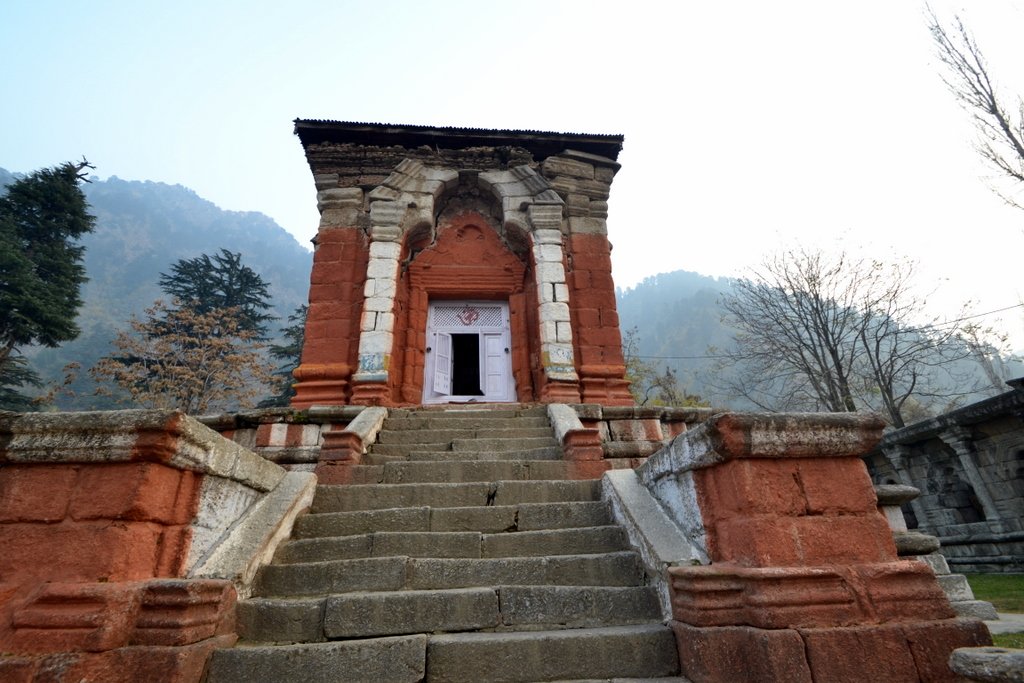
There is a tiny temple on a quiet rural road in Azad Kashmir that most Pakistanis have never heard of — and that is exactly why it deserves a place on your travel list. The Chak Pandit Temple near Chamb village in Bhimber district is a small, double-spired Hindu shrine from the 19th century, standing almost alone in the fields where it was raised some two hundred years ago. It has no crowds, no ticket counters, and no souvenir shops. What it has is atmosphere: weathered brickwork, the hush of the countryside, and a direct link to the days when this corner of Kashmir was a crossroads of faiths and empires.
This chak pandit temple bhimber travel guide is for the traveler who likes their history unpolished and their destinations uncrowded. If you enjoy heritage walks, photography, or simply driving down country roads to find something no one else has photographed, read on. Here is everything you need to plan the trip — what the temple is, how to reach it, when to go, and what else to see while you are in the Bhimber area.
Quick Facts
- Location: Chamb village, along the Chamb–Gujrata road, Tehsil Barnala, Bhimber district, Azad Jammu and Kashmir
- Altitude: Lowland countryside, a few hundred metres above sea level
- Famous For: A small 19th-century Hindu temple with two spires, dedicated to Lord Shiva and Lord Krishna
- Nearest City: Bhimber town, about 40 km northwest of the temple
- Accessibility: Reachable by car via paved roads from Bhimber and Gujrat; the last stretch is a quiet rural road
- Known Landmarks: Baghsar Fort and lake in Samahni Valley, Jandi Chontra, Deva Vatala National Park
- Best For: Heritage lovers, photographers, history buffs, offbeat road trippers
Why Visit Chak Pandit Temple, Bhimber
Pakistan’s heritage tourism has a well-worn circuit: the forts of Lahore, the stupas of Taxila, the palaces of Baltistan. Chak Pandit Temple belongs to none of those circuits, and that is its greatest charm. This is a heritage site you will likely have entirely to yourself. The temple’s twin spires rise from a modest brick structure no bigger than a small room, yet the craftsmanship — framed panels, a milk-outlet channel for ritual offerings, a narrow stairway — speaks of a time when even the smallest shrine was built with devotion and care.
For the thoughtful traveler, the temple is also a quiet lesson in the layered past of Azad Kashmir. Bhimber sits at the junction of Punjab and the old princely state of Jammu and Kashmir, a place the Mughals themselves called the “Door to Kashmir.” The temple belongs to the Dogra and Sikh period of the 19th century, when this region was a marchland between empires. Standing before it, you are standing at a meeting point of histories — Hindu, Sikh, Dogra, and Mughal — in a landscape that has absorbed them all.
Then there is the setting. The drive to Chamb passes through the green fields and small villages of Barnala tehsil, and the temple sits in exactly the kind of peaceful rural scene that city dwellers dream about on busy weekdays. It is perfect for a day trip from Gujrat, Jhelum, or Mirpur, and it pairs beautifully with the area’s other attractions: the Mughal-era Baghsar Fort overlooking a lake, and the scenic Jandi Chontra hills. Come for the temple, stay for the countryside.
History of Chak Pandit Temple, Bhimber
To understand the temple, you have to understand Bhimber. This town, the headquarters of its district, was once the capital of the Chibhal dynasty, which ruled here from 1400 to 1856. Bhimber appears in the Ain-i-Akbari, Emperor Akbar’s administrative record compiled around 1595, where it is listed as a mahal under the Lahore Subah. The Mughal emperors used the route through Bhimber on their journeys to the Kashmir Valley — Emperor Jahangir himself mentions Bhimber in his memoir, the Tuzk-e-Jahangiri. It was the “Baab-e-Kashmir,” the Door to Kashmir.
After the Treaty of Amritsar in 1846, when the British sold Kashmir to Maharaja Gulab Singh, Bhimber and its surroundings came under the control of the Dogra rulers of the princely state of Jammu and Kashmir, after a period of Sikh influence. The Chak Pandit Temple belongs to this era. Researchers who have surveyed the site — notably in a 2023 archaeological study of Bhimber’s heritage published in the Annals of Human and Social Sciences — assign it tentatively to the Dogra Raj or Sikh period of the 19th century.
The temple itself is modest: it measures roughly 2.25 by 2 metres at its base and rises about 5.5 metres, built of standard-size bricks set in lime mortar. Its defining feature is the pair of shikharas — tapering spires — that crown the structure, sheltering two inner sanctums, or garbha-grihas. The Express Tribune, reporting on the site in 2014, described the two spires, the sanctum, the place for the lingam, the framed panels, the stairs, and an outlet for the ritual offering of milk. The temple is believed to be dedicated to two deities, Lord Krishna and Lord Shiva.
Like many heritage sites in Azad Kashmir, the temple has suffered from neglect, and some parts of the structure have been damaged. It stands today as a reminder of how much of this region’s history is still waiting to be documented and protected — a thought that gives your visit a quiet weight.
Top Things to Do in Chak Pandit Temple, Bhimber
Study the Twin Spires
The two shikharas are the temple’s signature. Walk around the structure and look at the brickwork up close — the framed panels and the lime-mortar masonry are classic features of small Dogra-period temples in this region. The twin spires are unusual for such a tiny building, and they make the temple instantly recognizable in photographs.
Step Inside the Inner Sanctums
The temple holds two garbha-grihas, the inner chambers where the deities were once enshrined. One chamber was meant for the murti, the other associated with the Shiva lingam. The chambers are very small, but stepping inside gives you a genuine feel for how intimately worship was practiced here — a far cry from the grand temples of the cities.
Photograph the Rural Setting
Early morning or late afternoon light turns the brick of the temple a deep gold, and the surrounding fields and village make for lovely landscape shots. The temple is an excellent subject for heritage photography precisely because it is undisturbed — no crowds, no barriers, just the building and its landscape.
Talk to the Villagers of Chamb
The people of Chamb have lived alongside this temple for generations. A respectful conversation can add layers to your visit that no book provides. Ask about the road, the fields, and the old stories of the area — rural Kashmiri and Punjabi hospitality usually means you will not leave without tea.
Famous Places In and Around Chak Pandit Temple, Bhimber
- Baghsar Fort and Lake (Samahni Valley): A Mughal-era granite fort standing on a hill above a half-kilometre sheet of clear water, about an hour’s drive from Bhimber via Gujrat. The four-storied fort played a role in the histories of Ahmad Shah Abdali, Ranjeet Singh, and Gulab Singh.
- Jandi Chontra: A scenic hilltop spot about 17 km from Bhimber town, known for the shrine of Baba Shadi Shaheed and panoramic views. The tourism department runs a guest house here.
- Deva Vatala National Park: A protected wildlife area in Bhimber district, home to a variety of birds and small mammals, popular with nature walkers.
- Bhimber Town: The old “Door to Kashmir,” with its bazaars, historic streets, and the route the Mughals once travelled.
- Mangla and Mirpur: The nearby cities of Mirpur (about 50 km from Bhimber) and the Mangla reservoir area make easy extensions to the trip.
How to Reach Chak Pandit Temple, Bhimber
The temple lies near Chamb village, roughly 40 km southeast of Bhimber town along the Chamb–Gujrata road in Barnala tehsil. Because Bhimber sits on the Grand Trunk Road corridor, getting to the town is straightforward; the final leg to Chamb is a quiet rural road that any car can manage in dry weather.
Route Details
From Islamabad: Take the Grand Trunk Road southeast through Gujar Khan and Jhelum toward Gujrat. Bhimber is about 166 km from Islamabad, roughly a 3 to 3.5-hour drive. From Bhimber town, head southeast through Barnala toward Chamb and the Gujrata road — about 40 km, allow an extra hour.
From Lahore: Drive north on the Grand Trunk Road through Gujranwala to Gujrat (around 110 km), then turn toward Bhimber, which is about 48 km north of Gujrat. The total journey is roughly 160 km, about 3.5 to 4 hours, and then the final stretch onward to Chamb village.
From Karachi: This is a long haul — roughly 1,400 km by road. The sensible plan is to fly to Lahore or Islamabad and drive from there. Both cities connect easily to the Grand Trunk Road corridor.
Nearest airport: Islamabad International Airport, about 170 km from Bhimber town, is the most convenient option, with regular flights from Karachi, Lahore, and other cities. Sialkot International Airport is another possibility for travelers coming from the Gujranwala–Sialkot side.
Road conditions: The Grand Trunk Road is a good all-weather highway. The rural road from Bhimber to Chamb is paved but narrow in places — fine for cars in dry weather, and best avoided immediately after heavy monsoon rain. A private car or a hired taxi from Bhimber or Gujrat is the most practical transport. Public transport runs between the main towns, but reaching Chamb village itself will need a car or a local van.
Where to Stay in Chak Pandit Temple, Bhimber
There are no hotels at Chamb village itself — this is a day-trip destination. The sensible base is Bhimber town, where you will find a handful of modest hotels and guest houses suited to a comfortable overnight stay. They are simple, clean, and budget-friendly, the kind of places where the manager will happily arrange a car for your trip to the temple.
For a wider choice, Gujrat (48 km away) and Mirpur (about 50 km away) both have well-established mid-range hotels. Travelers who want a scenic overnight can use the tourism department’s rest house at Jandi Chontra, 17 km from Bhimber, which sits in a pleasant hill setting. If you are touring the whole district, pairing the temple with Baghsar Fort makes a full day, with the night spent in Gujrat or Bhimber.
Where to Eat: Local Foods of Chak Pandit Temple, Bhimber
The Bhimber district sits at the meeting point of Punjabi and Pahari food cultures, and the local table shows it. In Bhimber town’s bazaars and along the Grand Trunk Road, you will find roadside dhabas serving the classics of this belt: hot tandoori roti, dal fry, chicken karahi, and saag with desi ghee in winter. The Pahari side of the menu appears in dishes like makki di roti with lassi, and in the generous use of fresh dairy — this is milk-and-butter country.
For snacks, Gujrat’s famous kulfi and the sweet shops of the GT Road corridor are worth a stop on the way. A simple, filling meal at a local dhaba is very budget-friendly, while the restaurants of Gujrat and Mirpur offer a wider menu. If you are visiting in summer, ask for fresh lassi or sugarcane juice — the villages around Barnala grow both.
Weather in Chak Pandit Temple, Bhimber
Bhimber district is lowland country at the foot of the hills, and its weather follows the Punjab plains more than the mountains of Kashmir. Summers are hot, winters are mild and pleasant, and the monsoon brings heavy rain in July and August. Here is what to expect:
| Season | Temperature Range | Conditions |
|---|---|---|
| Winter (Dec–Feb) | 5–20°C | Mild, sunny days; cool nights. The most comfortable season for heritage visits. |
| Spring (Mar–Apr) | 15–30°C | Pleasant and green; fields are lush after winter rains. Excellent for photography. |
| Summer (May–Jul) | 30–42°C | Hot and dry, especially in June. Visit early morning or late afternoon. |
| Autumn/Monsoon (Aug–Nov) | 20–35°C | Monsoon rain in July–August makes the countryside green; roads can be muddy after heavy rain. |
Language and Culture of Chak Pandit Temple, Bhimber
The people around Chamb and Barnala speak Pahari and Pothwari, with Punjabi and Urdu understood everywhere. The culture here is a gentle blend — Kashmiri warmth with Punjabi openness. Guests are treated with real respect, and it is normal to be invited for tea.
When visiting the temple, dress modestly and behave as you would at any place of worship: speak quietly, do not climb on the structure, and ask before photographing people. Remove your shoes if you step into the inner chambers. If you visit during Friday prayers or religious occasions, plan your village stops around them. A few words of greeting in Urdu or Pahari go a long way.
Shopping in Chak Pandit Temple, Bhimber
Chamb village itself has no souvenir shops, so plan your shopping in Bhimber town or Gujrat. Bhimber’s bazaars sell everyday Kashmiri and Punjabi goods — shawls, embroidered fabric, and local sweets are the typical buys. Gujrat, famous across Pakistan for its pottery, ceramics, and furniture, is a much bigger shopping destination; its ceramic shops along the GT Road are worth browsing. If you pass through on the way, pick up desi ghee and fresh dairy products from the villages — they are the area’s most genuine souvenirs.
Travel Tips for Chak Pandit Temple, Bhimber
Packing Essentials
Bring sun protection, a hat, and plenty of water if you are visiting between April and September — the walk around the temple is in open sun. Sturdy walking shoes help on the uneven ground around the structure. A camera with a wide-angle lens is ideal for the small interior chambers, and a power bank is useful since rural electricity can be patchy.
Safety Tips
The Bhimber area is peaceful and welcoming to visitors. The main cautions are practical: drive carefully on the narrow rural road to Chamb, keep to daylight hours for the temple visit, and carry enough fuel — petrol pumps are sparse on the village roads. Note that Chamb sits in a district close to the Line of Control, so stick to the main roads and village areas rather than wandering into remote border zones.
Money & Connectivity
Carry cash in Pakistani rupees — there are no card facilities at Chamb, and ATMs are only in Bhimber town, Barnala, and the bigger cities. Mobile signals from the major networks generally work around Bhimber and Barnala, though coverage can dip on the rural stretch to Chamb. Download offline maps before you set out.
Best Time to Visit Chak Pandit Temple, Bhimber
Winter (December–February): The Ideal Season
Mild sunny days, cool air, and soft light make winter the best time to explore the temple and the surrounding countryside. Roads are dry and the visibility is excellent for photography.
Spring (March–April): Green and Pleasant
The fields around Chamb are at their greenest, the temperature is comfortable, and the whole landscape feels alive. Spring is arguably the most beautiful season for this trip.
Summer (May–July): Hot but Possible
Daytime heat can be intense, so plan the temple visit for early morning or late afternoon and spend the midday hours in Bhimber town. This is also mango season in Punjab, which is its own reward.
Autumn (September–November): Post-Monsoon Freshness
After the monsoon, the countryside is washed clean and green. September and October are lovely months for the trip, with warm days and comfortable evenings.
Final Thoughts
Chak Pandit Temple will not be the grandest heritage site you ever visit. It is small, weathered, and partly damaged — and that is precisely the point. In a country where the great monuments get the crowds and the cameras, this little double-spired temple in a Chamb village field offers something rarer: a direct, quiet encounter with history, without a single barrier between you and the past.
Go in winter or spring, when the light is soft and the fields are green. Pair it with Baghsar Fort and Jandi Chontra, and you have a full, deeply satisfying day in a part of Azad Kashmir that most travelers never see. If you love exploring Pakistan’s hidden corners, the Explore Pakistan collection has more offbeat destinations waiting for you.
FAQs
Where is Chak Pandit Temple located?
The temple is in Chamb village, along the Chamb–Gujrata road in Barnala tehsil, Bhimber district, Azad Jammu and Kashmir — about 40 km southeast of Bhimber town.
What is the best time to visit Chak Pandit Temple?
Winter (December to February) and spring (March to April) offer the most comfortable weather, with mild days and green countryside.
How do I reach Chak Pandit Temple from Lahore?
Drive the Grand Trunk Road to Gujrat (around 110 km), continue to Bhimber (about 48 km further), then take the rural road southeast to Chamb village — roughly 160 km in total, about 3.5 to 4 hours.
Is Chak Pandit Temple safe for families?
Yes. The area is peaceful and the visit is a simple walk around a small structure. Keep children close on the uneven ground and plan the trip in daylight.
What is the temple dedicated to?
The temple is believed to be dedicated to Lord Krishna and Lord Shiva, with two inner sanctums — one for the murti and one associated with the Shiva lingam.
How old is Chak Pandit Temple?
Archaeological surveys tentatively date it to the Dogra Raj or Sikh period of the 19th century, making it roughly 150 to 200 years old.
Where can I stay near the temple?
Base yourself in Bhimber town, Gujrat, or Mirpur, all within 50 km. The tourism department’s rest house at Jandi Chontra is a scenic option.
What local food should I try in Bhimber?
Try the Pahari-Punjabi mix of the local dhabas: tandoori roti, dal, saag with desi ghee in winter, fresh lassi, and Gujrat’s famous kulfi on the way.