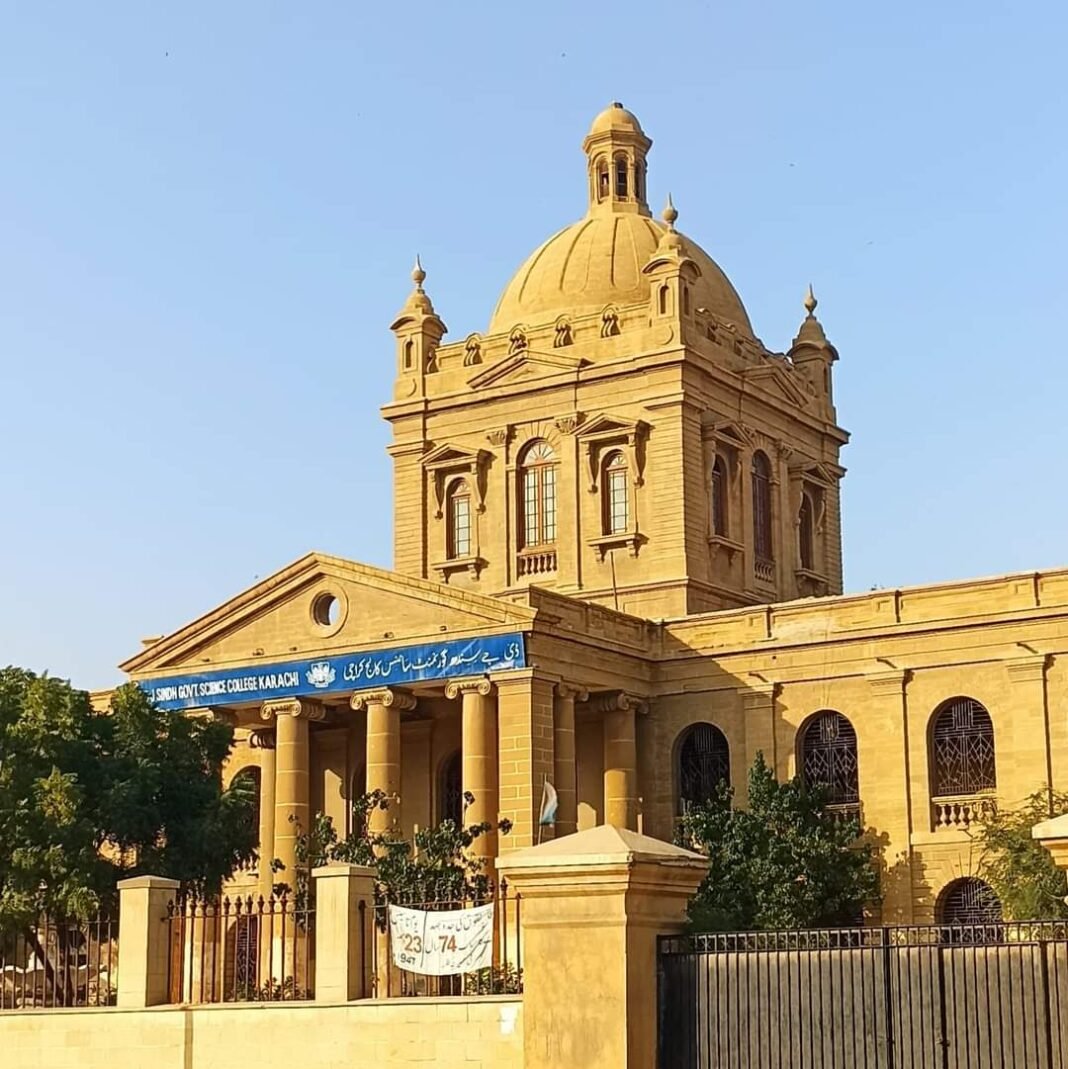
Every city has a building that taught it how to dream. For Karachi, that building is the D.J. Sindh Government Science College — the grand colonial-era college near Burns Road where the city first learned to take science seriously, where a young Dr Abdul Qadir Khan once sat in class, and where Karachi’s heritage still stands tall in yellow stone. This D.J. Sindh Government Science College travel guide will show you why this 1887 landmark deserves a place on your Karachi itinerary — and how to explore the old city around it like a local.
Heritage lovers and curious travellers, this one is for you. Most visitors to Karachi head straight for Clifton beach or the malls, and they miss the old city’s greatest treasure: a working college that is also a living museum of the British Raj. The D.J. Sindh Government Science College is not a ruin behind glass — it is a place where students still rush between classes under the same arches their great-grandfathers might have walked. If you want to feel Karachi’s history with your own hands, come here first.
Quick Facts
- Location: Dr Ziauddin Ahmed Road, Pakistan Chowk, Saddar Town, Karachi, Sindh, Pakistan
- Nearest City: Central Karachi — in the heart of the old city near Burns Road
- Famous For: One of Karachi’s oldest and most prestigious colleges (opened 1887); colonial-era heritage architecture; alumni including Dr Abdul Qadir Khan and Ardeshir Cowasjee
- Accessibility: Road — easy to reach by car, rickshaw, or local transport from anywhere in Karachi
- Known Landmarks: The heritage college building itself; nearby Pakistan Chowk, Burns Road food street, Empress Market
- Best For: Heritage architecture fans, history lovers, photographers, education enthusiasts, and travellers exploring old Karachi
Why Visit D.J. Sindh Government Science College
Let us start with the obvious question: why would a traveller visit a college? Because some buildings are not just buildings — they are the biography of a city. The D.J. Sindh Government Science College is where modern Karachi began its love affair with learning. Long before the skyscrapers and the sprawl, before Partition redrew the map, this institution was already producing the lawyers, scientists, and thinkers who would shape Sindh. To stand in its courtyard is to stand at the source.
The architecture alone is worth the trip. The college’s historic building is a declared heritage site — a handsome colonial-era structure in the heart of old Karachi, with the arched verandas, high ceilings, and solid stonework that the British Raj left across the subcontinent’s great institutions. In a city that has bulldozed so much of its past, the college survives as one of the finest examples of 19th-century educational architecture in Pakistan. Photographers, bring your wide-angle lens: the facade at golden hour is magnificent.
Then there are the ghosts — the good kind. Walk these corridors and you walk where Dr Abdul Qadir Khan, the scientist who would lead Pakistan’s nuclear programme, once studied. Where Ardeshir Cowasjee, the fearless columnist and philanthropist, formed the convictions that would make him Karachi’s conscience. The college began in 1887 with just 28 students and 5 teachers; at its zenith it offered faculties of Arts, Sciences, Engineering, and Law, and even PhD programmes. Few places in Pakistan compress that much ambition into one address.
And the neighbourhood seals the deal. The college sits at Pakistan Chowk, steps from the legendary Burns Road food street — Karachi’s most beloved eating destination. No other heritage site in the city lets you pair a morning of colonial architecture with an afternoon of the finest street food in Sindh. Visit the college, then eat your way down Burns Road: that is a perfect Karachi day, and this guide will show you exactly how to do it.
History of D.J. Sindh Government Science College
The story of the college begins with a problem: in the 1880s, bright young students in Karachi who wanted a proper college education had to travel all the way to Bombay — a journey most families could not afford. A far-sighted Sindhi lawyer, Dayaram Gidumal, campaigned to bring higher education to Karachi itself. His efforts, backed by both the Bombay and Karachi governments and by generous public donations, made the college possible.
The foundation stone of the college was laid on 19 November 1882 by the Viceroy of India, Lord Dufferin. The college itself opened on 17 January 1887, inaugurated by Lord Reay, the Governor of Bombay, in a bungalow in the Thaitai Compound on Bunder Road — and it was originally called the Sind Arts College. It began humbly, with only 28 students and a staff of 5, but it grew fast: within a few years it was a full-fledged institution with faculties of Arts, Sciences, Engineering, and Law.
In 1889–90, two donors — Doulatram Jethmal and Bulchand Dayaram — gave Rs 25,000 toward the college on the condition that it be named after the philanthropist Diwan Dayaram Jethmal, whose family had been among its great benefactors. The college became the Dayaram Jethmal Sind College — the “D.J.” generations of Karachiites would revere. The present historic building was completed in 1887, and the college shifted into it in 1892, where it has stood ever since, through the Raj, Partition, and the birth of Pakistan.
After 1947 the college became a government institution — the D.J. Sindh Government Science College — affiliated with the Board of Intermediate Education Karachi and the University of Karachi, offering Intermediate (Pre-Engineering and Pre-Medical) and B.Sc programmes in Mathematics, Physics, Chemistry, Geology, Statistics, Microbiology, Biochemistry, Botany, and Zoology. Its alumni roll reads like a who’s who of Pakistani achievement: the scientist Dr Abdul Qadir Khan, the columnist and philanthropist Ardeshir Cowasjee, and countless others. The historic building has been declared a heritage site, though recent years have seen public concern over encroachments and maintenance — all the more reason to visit, appreciate, and advocate for this treasure while it stands.
Top Things to Do in D.J. Sindh Government Science College
The college is a working institution, so visit respectfully — weekends and public holidays are the best times to explore without disturbing classes. Always ask permission at the gate before entering and photographing.
Admire the Heritage Facade
Start outside, across the road, and take in the full sweep of the historic building. The colonial-era architecture — arched openings, deep verandas, and the solid masonry of the 1880s — is best appreciated in the soft light of morning. This is one of Karachi’s great heritage facades, and it rewards slow looking: notice how the building was designed for a pre-air-conditioning age, with every arch and veranda placed to catch the sea breeze.
Walk the Courtyard and Corridors
If permitted inside, walk the corridors where generations of students have hurried to class since 1892. The high ceilings, the worn stone steps, the notice boards layered with decades of announcements — it is a living museum of Pakistani education. Stand quietly for a moment and imagine the 28 students of 1887; then imagine the thousands who followed, including a future national hero.
Visit the Principal’s Heritage Bungalow Area
The college premises include the historic principal’s bungalow, a heritage structure in its own right that has been the subject of public conservation debate. Viewed from the grounds, it is a reminder of how the Raj housed its educators — and of why Karachi’s citizens fight to protect these buildings.
Photograph Old Karachi Around Pakistan Chowk
Step outside the gates and you are in one of Karachi’s most characterful old quarters. Pakistan Chowk and the surrounding streets are dense with colonial-era buildings, old signboards, and the beautiful chaos of the old city. Heritage photographers can spend hours here: carved wooden balconies, fading painted advertisements, and street life that has barely changed in a century.
Pair It with Burns Road Food Street
No visit is complete without the short walk to Burns Road, Karachi’s legendary food street. Time your college visit for late morning, then surrender your afternoon to the food — this pairing of heritage and cuisine is the definitive old-Karachi experience, and it is all within a few hundred metres.
Famous Places In and Around D.J. Sindh Government Science College
- Burns Road Food Street: Karachi’s most famous eating destination, a short walk from the college.
- Empress Market, Saddar: The great Victorian-era market hall, the beating heart of old Karachi’s shopping.
- Frere Hall: The beautiful colonial-era hall and gardens, a short drive away.
- Merewether Tower: The landmark clock tower of the old city, an icon of Raj-era Karachi.
- Quaid-e-Azam House Museum: The Flagstaff House where Jinnah lived, for the full story of the city’s founding father.
How to Reach D.J. Sindh Government Science College
The college is at Pakistan Chowk on Dr Ziauddin Ahmed Road in Saddar Town — right in central Karachi, near Burns Road. It could hardly be easier to reach once you are in the city; the journey is getting to Karachi.
From within Karachi: The college is minutes from Saddar, Burns Road, and the city centre. Careem, Uber, auto-rickshaws, and local buses all serve Pakistan Chowk. From Jinnah International Airport it is roughly a 30–45 minute drive depending on traffic — leave extra time, because Karachi traffic is legendary.
From Lahore: About 1,200 km by road (15–17 hours), so flying is the practical choice — frequent flights of around 2 hours connect Lahore’s Allama Iqbal International Airport with Karachi. Daewoo and other luxury bus services also run the route overnight.
From Islamabad: Around 1,400 km by road; fly instead — about 2 hours from Islamabad International Airport to Karachi, with frequent daily flights. Pakistan Railways also runs trains between Islamabad/Rawalpindi and Karachi Cantonment station.
The nearest airport is Jinnah International Airport, Karachi. The nearest major railway station is Karachi Cantonment. Saddar’s streets are congested and parking is difficult — a rickshaw or ride-hailing car is far more practical than driving yourself to Pakistan Chowk.
Route Details
- Reach Karachi by air (Jinnah International), rail (Karachi Cantonment), or road.
- Head for Saddar / the old city centre — ask for Burns Road, which every driver knows.
- From Burns Road, continue to Pakistan Chowk on Dr Ziauddin Ahmed Road.
- The college’s historic building stands at the chowk — look for the heritage facade and the name board.
- Visit on a weekend or public holiday for the quietest experience, and ask at the gate before entering.
Where to Stay in D.J. Sindh Government Science College
You will stay in Karachi, not at the college — and the city offers everything from five-star luxury to backpacker basics. For this heritage itinerary, location matters more than thread count: stay near Saddar or Clifton and the old city is at your doorstep.
Luxury: Karachi’s top five-star hotels are around Clifton and Shahrah-e-Faisal — full-service properties with sea views, pools, and fine dining, about 20–30 minutes from the college depending on traffic.
Mid-range: Saddar and Shahrah-e-Faisal have a strong selection of three- and four-star hotels and serviced apartments at reasonable rates. Staying in Saddar puts you within walking distance of the college, Burns Road, and Empress Market.
Budget and guesthouses: The Saddar and Burns Road area has numerous budget hotels and guesthouses — simple, clean, and unbeatable for location if your days are built around old Karachi. Hostels and budget stays also cluster near the railway station area.
Tip: Karachi’s traffic can turn a 5 km trip into a 45-minute ordeal, so choose your base near the places you plan to visit most. For a heritage-and-food trip centred on the college and Burns Road, Saddar is the smartest base.
Where to Eat: Local Foods of D.J. Sindh Government Science College
This is where the trip becomes legendary. The college sits a short walk from Burns Road, the food street that Karachiites defend with the passion other cities reserve for sports teams. Come hungry — very hungry.
Burns Road’s greatest hits are the stuff of national legend: slow-cooked nihari, rich haleem, smoky seekh kebabs and malai boti, biryani with the Karachi kick, and rabri and falooda for dessert. The street wakes up in the evening and stays alive late — the classic Burns Road evening means grazing from stall to stall, finishing with a glass of doodh patti or kashmiri chai. Prices are famously budget-friendly; a feast for two costs little more than a cinema ticket.
Beyond Burns Road, the old city offers bun kebabs at street carts, fresh samosay and kachoris, and the great Karachi breakfast of halwa puri with chanay. For a sit-down meal, Saddar’s old restaurants serve Mughlai and Sindhi dishes in dining rooms that have not changed in decades. If you only eat one thing in Karachi, make it Burns Road nihari — your taste buds will understand why this street is famous across Pakistan.
Weather in D.J. Sindh Government Science College
Karachi’s coastal climate is milder than the interior’s extremes, but it has its own personality: long, humid summers and short, pleasant winters. The college is best explored on foot, so the cool months win easily.
| Season | Temperature Range | Conditions |
|---|---|---|
| Winter (Dec–Feb) | 13°C – 28°C | Mild, dry, and delightful — the best season for walking tours of old Karachi. |
| Spring (Mar–Apr) | 19°C – 35°C | Warming and humid; pleasant mornings, warm afternoons. |
| Summer (May–Jun) | 27°C – 36°C | Hot and very humid; sea breeze helps but sightseeing is best early or late in the day. |
| Monsoon (Jul–Sep) | 26°C – 33°C | Humid with monsoon showers; streets can flood after heavy rain — check conditions. |
| Autumn (Oct–Nov) | 17°C – 36°C | Cooling down; November is lovely, with clear skies and comfortable evenings. |
Language and Culture of D.J. Sindh Government Science College
Karachi is Pakistan’s great melting pot, and the area around the college reflects it. Urdu is the lingua franca — spoken and understood everywhere — while Sindhi, Punjabi, Pashto, and English are all widely heard. On campus, English and Urdu share the academic space.
Culturally, old Karachi is a blend of Sindhi roots, Muhajir heritage, and a century of mercantile cosmopolitanism. When visiting the college, remember it is a working educational institution: dress modestly, speak softly in corridors, ask permission before photographing students or staff, and avoid visiting during examination periods. A polite “Assalam-o-Alaikum” at the gate and a clear explanation of your purpose will open doors — Karachiites are proud of this college and happy to show it to respectful visitors. If you are offered chai by a staff member, accept it; some of the best stories about the college are told over a cup.
Shopping in D.J. Sindh Government Science College
The college’s neighbourhood is one of Karachi’s great shopping districts. Empress Market in Saddar — the Victorian market hall built in the 1880s, a contemporary of the college itself — is the essential stop: spices, dry fruits, and household goods under one magnificent roof. The lanes around it sell everything from vintage books to old vinyl records.
Zainab Market and the Saddar bazaars are famous for fabrics, ready-made garments, and handicrafts at bargain prices — ajrak prints, Sindhi embroidery, and leather goods make excellent souvenirs. Burns Road’s side streets have old bookshops where you might find vintage volumes on Karachi’s history. As in all of Saddar, bargaining is expected and part of the fun — start low, stay friendly, and enjoy the theatre of it.
Travel Tips for D.J. Sindh Government Science College
Packing Essentials
Comfortable walking shoes (Saddar’s pavements are uneven), a sun hat and sunscreen, a water bottle, and a camera. Carry a light shawl or scarf — useful for sun, for mosque visits, and for the occasional overzealous air conditioner. In winter, a light jacket suffices for Karachi’s mild evenings.
Safety Tips
Saddar is busy and generally safe during the day, but it is crowded — keep your phone and wallet secure, avoid flashing expensive equipment unnecessarily, and stay aware in packed markets. Visit the college during daylight and working hours; the area quiets down after dark. Use ride-hailing apps rather than hailing unknown vehicles late at night.
Money & Connectivity
ATMs are everywhere in Saddar and on Shahrah-e-Faisal. Burns Road’s street stalls are cash-only, so keep small notes handy. Mobile coverage is excellent across Karachi on all networks (Jazz, Zong, Telenor, Ufone) with strong 4G — you will have no trouble navigating or sharing photos from Pakistan Chowk.
Best Time to Visit D.J. Sindh Government Science College
Winter (November to February) — The Ideal Season
Karachi’s winter is made for walking: mild days, cool evenings, and clear skies. This is the best time to explore the college, Pakistan Chowk, and Burns Road on foot — and to eat your way down the food street without melting.
Spring (March to April) — Good Mornings
Still pleasant, especially in the mornings. Plan college and market visits before noon, and save the afternoons for indoor attractions or a rest.
Summer and Monsoon (May to September) — Challenging
Hot, humid, and occasionally waterlogged. If you visit then, go early in the day, carry water, and treat Burns Road as an evening activity when the street comes alive and the day’s heat eases.
Autumn (October to November) — The Sweet Spot
October and November bring Karachi’s most comfortable weather — warm days, pleasant evenings, and the city’s festive pre-winter energy. An excellent time for a heritage-and-food trip.
Final Thoughts
The D.J. Sindh Government Science College is proof that the most meaningful destinations are not always the most dramatic. There is no waterfall here, no snow-capped peak — just a beautiful old building where a city learned to believe in itself, standing watch over the food street where that same city celebrates life every single evening. It is Karachi in miniature: ambitious, warm, a little worn at the edges, and utterly unforgettable.
So put it on your itinerary — a morning at the college, an afternoon wandering Saddar’s heritage lanes, and an evening on Burns Road. That is not just a day of sightseeing; it is a day inside the real Karachi. For more journeys across the country, browse our Explore Pakistan collection — and when you are ready for the mountains, our Malam Jabba guide is waiting.
FAQs
Where is D.J. Sindh Government Science College located?
On Dr Ziauddin Ahmed Road at Pakistan Chowk, Saddar Town, Karachi — near Burns Road in the old city centre.
What is D.J. Science College famous for?
It is one of Karachi’s oldest colleges (opened 1887), a declared heritage building, and the alma mater of figures like Dr Abdul Qadir Khan and Ardeshir Cowasjee.
When is the best time to visit?
November to February, when Karachi’s weather is mild and perfect for walking tours of the old city.
How do I reach the college?
Fly into Jinnah International Airport, then take a 30–45 minute ride to Saddar/Pakistan Chowk. From Lahore or Islamabad, flying is far more practical than the 1,200–1,400 km road journey.
Can tourists enter the college?
It is a working institution, so ask permission at the gate. Weekends and public holidays are the best times to visit without disturbing classes.
Is it safe to visit the area?
Yes, during daytime. Saddar is busy and crowded — keep valuables secure and use ride-hailing for transport.
What food should I try nearby?
Burns Road food street: nihari, haleem, seekh kebabs, biryani, rabri, and falooda — all famously budget-friendly.
What else is near the college?
Empress Market, Frere Hall, Merewether Tower, and the Quaid-e-Azam House Museum are all a short drive away.
Why is it called D.J. College?
It is named after the philanthropist Diwan Dayaram Jethmal, whose family were great benefactors; the college was renamed in his honour in 1889–90.