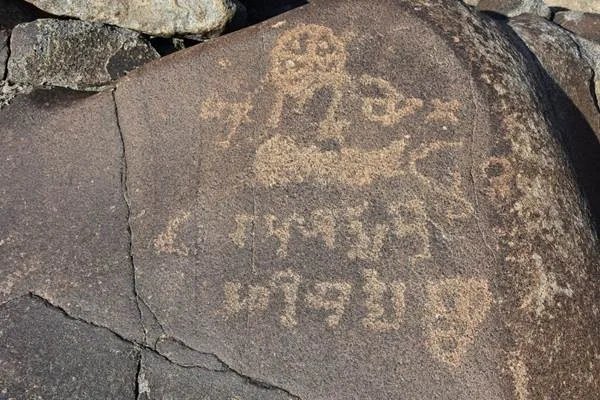
Imagine this: you turn off the Karakoram Highway into a narrow village lane, knock on the door of an ordinary house, and in its courtyard stands a boulder that has been speaking for thirteen centuries. Five lines of Sanskrit, carved in elegant late-Brahmi script, naming kings who ruled these mountains when Gilgit was a prize fought over by Tibetans, Chinese, and local dynasties. This is the Danyore Inscription — locally called “Likhitu Giri,” the old writing stone — and it is one of the most thrillingly intimate encounters with ancient history you can have in Pakistan. No museum glass, no ropes, no crowds: just you, a family courtyard, and a rock that remembers empires. This Danyore Inscription travel guide will show you why this hidden treasure deserves a detour on your Gilgit journey, when to go, and how to find it.
Quick Facts
- Location: Danyore town, on the Karakoram Highway about 5 km north of Gilgit toward Hunza, Gilgit-Baltistan — the inscribed boulder stands in the courtyard of a private house off a narrow lane
- Altitude: Around 2,000 meters (6,600 feet) — the height of the Gilgit valley floor
- Famous For: A gigantic boulder bearing a five-line Sanskrit inscription in late-Brahmi script from the 7th–8th century AD, naming the Buddhist-era rulers of Gilgit
- Nearest City: Gilgit — about 10 minutes by car
- Accessibility: Easy by road on the KKH; the final approach is on foot through village lanes — ask locals for “Likhitu Giri”
- Known Landmarks: The inscription boulder, Danyore Suspension Bridge (510 ft, 1960), the Chinese Cemetery, Buddhist rock carvings near KIU, Danyore’s hand-dug tunnel
- Best For: History lovers, archaeology enthusiasts, Buddhist-heritage pilgrims, photographers, and curious travelers who love off-the-beaten-path discoveries
Why Visit Danyore Inscription
Pakistan’s north is famous for its mountains, but its stones tell stories just as dramatic. The Danyore Inscription is one of the great whispered secrets of Gilgit-Baltistan: a massive boulder, about thirteen feet across, carrying a royal inscription from the 7th and 8th centuries AD — the era when Tibetan kings, Chinese armies, and local Buddhist dynasties all contended for these valleys. To stand before it is to touch the deep history of the Silk Road, not in a textbook but in solid rock.
What makes the visit unforgettable is how gloriously un-touristy it is. There is no ticket office, no interpretive center, no gift shop. The boulder sits in the premises of a private house at the end of a narrow, unpaved lane off the Karakoram Highway, partly sheltered by a simple tin cover provided by the archaeology department. You find it by asking — “Likhitu Giri?” — and being led through the village. The family living there may not know the full scholarly weight of what stands in their courtyard, but they know it matters, and they will let you look. It is history at human scale, and it is magical.
The inscription itself rewards the effort. Those five lines of Sanskrit in late-Brahmi characters record the names and grand titles of Gilgit’s rulers — the Patola Shahi kings, “king of kings” and “supreme lord” in the flowery titulature of the age. The renowned Pakistani archaeologist Dr. Ahmed Hasan Dani studied these lines and traced them to the Vikramaditya family of rulers, connecting Danyore’s stone to the wider web of inscriptions across the region. You are reading, in effect, a 1,300-year-old royal press release.
And Danyore town gives you a full half-day around it: the legendary 510-foot suspension bridge with its hand-dug rock tunnel, the poignant Chinese Cemetery where 88 of the Karakoram Highway’s builders rest, ancient Buddhist rock carvings, and the roaring confluence of the Hunza and Gilgit rivers. The inscription is the hidden jewel; the town is the setting. Together they make one of Gilgit’s most rewarding short excursions — ten minutes from the city, a world away in time.
History of Danyore Inscription
The story of the Danyore rock begins in the 7th and 8th centuries AD, when Gilgit was one of the most strategically coveted valleys in Asia. Perched on the ancient Silk Road routes between China, Kashmir, and Central Asia, the valley was ruled by Buddhist dynasties — notably the Patola Shahis — while the expanding Tibetan Empire pressed in from the east and Tang China maneuvered from the north. It was an age of kings, monks, and mountain fortresses, and its rulers advertised their power the way rulers always have: carved in stone.
The Danyore boulder carries a five-line inscription in Sanskrit, written in the late-Brahmi script of the period. According to the celebrated archaeologist Dr. Ahmed Hasan Dani, the inscription was engraved by a prince named Kumaramatya and belongs to the same line of rulers mentioned in the Hatun inscription of the Ghizer Valley. It confers the resounding royal titles of Patola Shahi Shahanushahi (king of kings of the Patola Shahis) and Parama-Bhattaraka (supreme lord) upon the ruler Jayamangala Vikramaditya Nandi of the Vikramaditya family. The period is associated with the reign of Navasurendradityanandi, and the inscription stands as key evidence for the Buddhist culture and kingship of early medieval Gilgit.
Remarkably, this treasure hid in plain sight for over a thousand years. It was first noticed by the outside scholarly world in 1958, when the Austrian archaeologist and ethnologist Karl Jettmar — traveling through the region with a Vienna University expedition — spotted the inscribed boulder in Danyore village, near the confluence of the Hunza and Gilgit rivers. Jettmar recognized it immediately as the second great historical inscription of the region, alongside the inscribed rock of Hatun. His discovery opened a window onto a dynasty and an era that written histories had largely forgotten.
Locally, the stone was never entirely forgotten — in the Shina language it is called “Likhitu Giri,” the old writing stone. But its scholarly significance is known only to a limited circle of archaeologists and heritage travelers, which is why the site remains so wonderfully unspoiled. The boulder is protected under Pakistan’s Antiquities Act, and the archaeology department has provided a simple tin shelter over it. It waits, as it has for thirteen centuries, for travelers curious enough to come and read it.
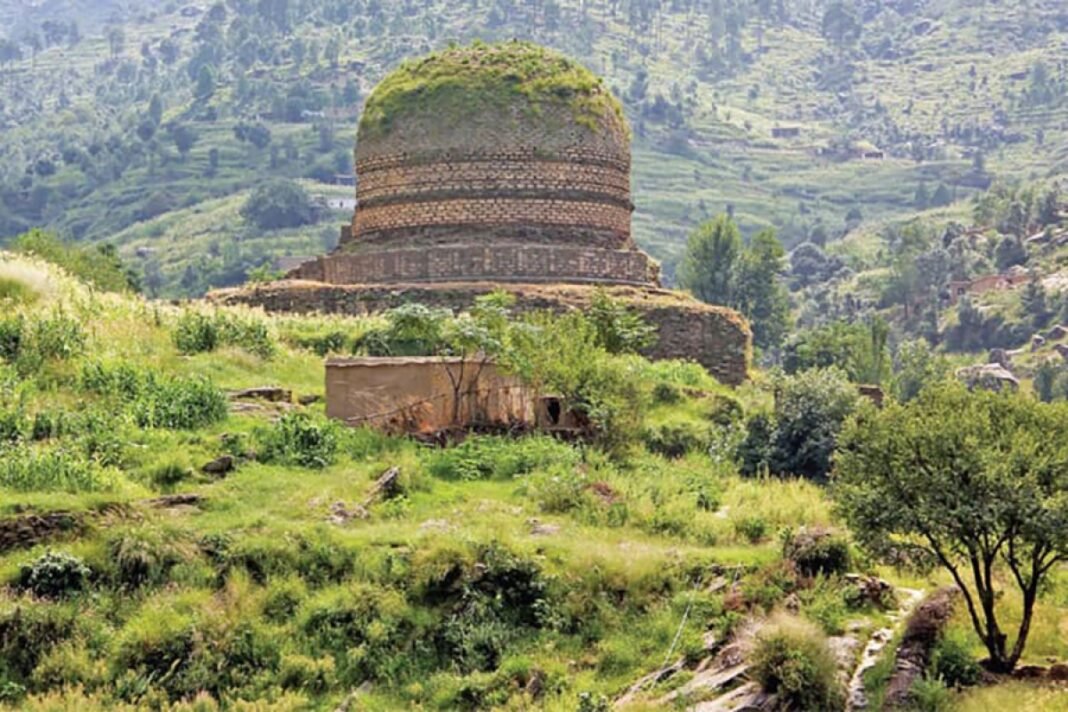
The deeper history of the ground it stands on stretches even further back. The Gilgit region has yielded some of the most important Buddhist manuscripts ever found, and the valleys around Danyore are scattered with rock carvings from the Buddhist era. The inscription belongs to the twilight of Buddhist Gilgit — within a few centuries, the valleys would embrace Islam, and the old writing stone would become a silent monument to a vanished world.
Top Things to Do in Danyore Inscription
Find the Likhitu Giri
The main event is the treasure hunt itself. From the Karakoram Highway in Danyore, turn into the village lanes and ask for “Likhitu Giri” — the old writing stone. The boulder stands in a private house’s courtyard at the end of a narrow street. Be polite, greet the family, ask permission, and take your time with the stone. Look closely at the five lines of script — even without reading Brahmi, you can feel the deliberation in every chisel mark. Photography is fine; gratitude and a kind word to the household are essential.
Walk the Danyore Suspension Bridge
Just minutes away spans one of Gilgit-Baltistan’s most legendary structures: the 510-foot Danyore Suspension Bridge, built between 1957 and 1960 by the self-taught Hunza engineer Ahmed Ali, known as Bireno. Before it, villagers crossed the Hunza River on a wooden raft called a jaalo. The bridge is now closed to vehicles and preserved as a heritage attraction for pedestrians — walk its swaying planks, feel the Hunza River roaring below through the gaps, and exit through the extraordinary single-lane tunnel hand-dug through solid rock by local people without machinery. It is as much a monument to human grit as the inscription is to royal power.
Visit the Chinese Cemetery
On the Karakoram Highway near Danyore lies the Chinese Cemetery, where 88 of the 200 Chinese engineers and workers who died building the KKH between 1966 and 1989 are buried. It is a solemn, beautifully kept place — a reminder of the human cost of the “eighth wonder of the world” you drove in on. A must-visit for anyone traveling the highway.
See the Buddhist Rock Carvings
Near the Karakoram International University campus and the old suspension bridge area, preserved Buddhist-era rock carvings speak of the same world as the inscription. They are weathered but evocative — Buddhas and stupas etched by hands fifteen centuries gone.
Visit the Shrine of Shah Sultan Ali Arif
Above the Danyore tunnel sits the shrine of Shah Sultan Ali Arif, a revered local saint. It offers both spiritual atmosphere and fine views over the valley — a peaceful counterpoint to the day’s archaeology.
Stand at the River Confluence
Danyore sits near where the Hunza River meets the Gilgit River — two great Himalayan-Karakoram waters joining in a rush of grey-green power. The viewpoints around the bridges offer superb photography, especially in the clear light of morning.
Explore Danyore’s Green Fields and Bazaar
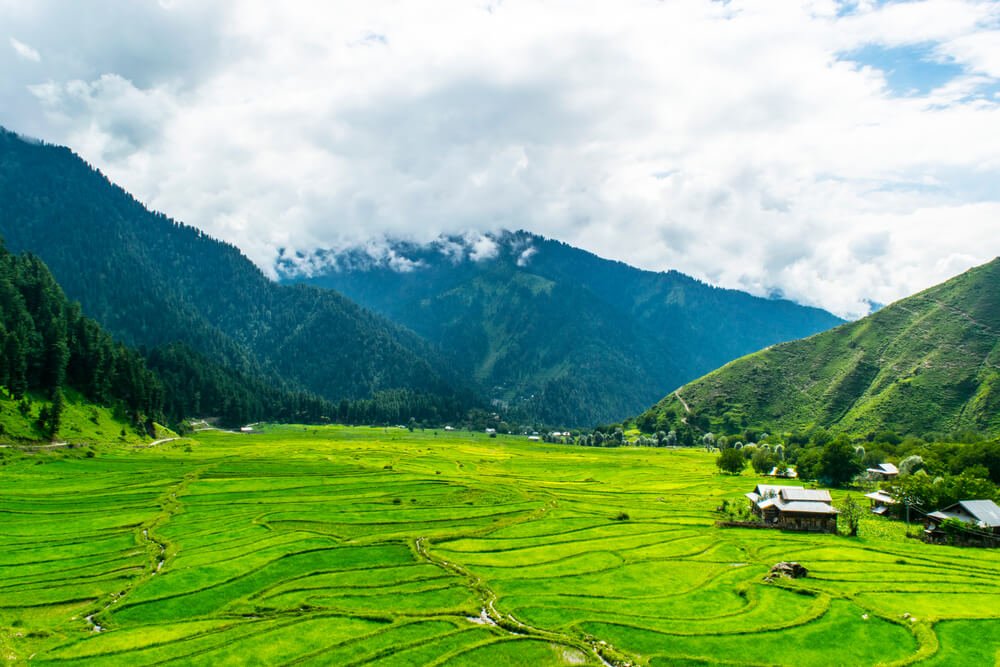
Danyore town itself — population around 25,000 — is known for its green fields and poplar trees, a startling patch of cultivation against the barren mountains. Wander the narrow streets and bustling bazaar, sample local snacks, and enjoy the small-town warmth that makes Gilgit-Baltistan so beloved.
Famous Places In and Around Danyore Inscription
- Danyore Suspension Bridge & hand-dug tunnel — the 510-ft 1960 heritage bridge; pedestrians only.
- Chinese Cemetery — memorial to the KKH’s Chinese builders, on the highway.
- Buddhist rock carvings (KIU area) — ancient carvings near the university and old bridge.
- Shrine of Shah Sultan Ali Arif — revered shrine above the Danyore tunnel.
- Hunza–Gilgit river confluence — dramatic meeting of two great rivers.
- Gilgit city (10 min) — bazaars, the Kargah Buddha rock carving, and your base.
- Hunza Valley (2–3 hrs) — Karimabad, Baltit and Altit forts, Attabad Lake — the natural extension.
- Naltar Valley — lakes and pine forests, a popular day trip from Gilgit.
How to Reach Danyore Inscription
Danyore sits on the Karakoram Highway just 5 km north of Gilgit toward Hunza — about 10 minutes by car from Gilgit city. The inscription itself is off the highway down a narrow village lane, so the plan is simple: get to Gilgit, take a taxi to Danyore, and ask the locals to guide you to the Likhitu Giri.
From Islamabad to Gilgit: Two options. By air: PIA operates flights from Islamabad to Gilgit Airport (about 1 hour) — spectacular, but weather-dependent and often fully booked; confirm and have a backup plan. By road: The Karakoram Highway via Besham is roughly 500+ km and 12–14 hours of dramatic mountain driving; the shorter seasonal route via Naran and Babusar Pass cuts hours off when open (typically June–October). Most travelers hire a private car or join a tour van — the KKH is an experience in itself.
From Karachi: Fly to Islamabad, then connect to Gilgit by air or road as above. Budget at least two days each way for the overland journey.
From Lahore: Fly or drive to Islamabad first, then onward to Gilgit.
Gilgit → Danyore: Taxis and local vans run constantly along the KKH between Gilgit and Danyore (10 minutes). Ask the driver to wait or arrange a pickup time; for the inscription hunt, having your driver ask directions in Shina/Urdu smooths everything.
Road conditions: The KKH to Danyore is paved and in reasonable condition. Village lanes to the inscription are narrow and unpaved — you will walk the last few minutes. In winter, check for ice and snow on shaded stretches.
Route Details
- Reach Gilgit: Fly into Gilgit Airport or drive the KKH (via Besham) or the Babusar route (seasonal). Settle into your Gilgit hotel.
- Gilgit → Danyore: Take the KKH north toward Hunza for about 5 km. You will cross the new concrete bridge area near the old suspension bridge — Danyore town spreads out on both sides.
- Finding the inscription: Leave the highway for the village lanes and ask for “Likhitu Giri” (the old writing stone). Shopkeepers and elders will point you down the narrowing streets to the private house. Greet the family, ask permission, and enjoy one of Pakistan’s most intimate heritage encounters.
- Round out the half-day: Suspension bridge and tunnel, Chinese Cemetery, river confluence viewpoints — all within a few kilometers.
Where to Stay in Danyore Inscription
Stay in Gilgit city, 10 minutes away — it has the region’s widest choice of hotels, and Danyore is an easy half-day trip.
Luxury: Gilgit offers several well-appointed hotels with mountain views, modern amenities, and in-house restaurants — the comfortable base for exploring the inscription, Hunza, and Naltar.
Mid-range: A solid range of mid-range hotels and guesthouses in Gilgit town: clean rooms, hot water, heating for cold nights, and helpful staff who can arrange taxis to Danyore. This is the sweet spot for most travelers.
Budget: Budget hotels and backpacker guesthouses cluster in Gilgit’s bazaar area — basic, friendly, and very affordable. Perfect if your days are spent out exploring.
In Danyore: A few simple local guesthouses exist in the town for travelers who want to wake up among the poplar fields — but with Gilgit so close, most visitors day-trip.
Extending the trip: Hunza (2–3 hours north) offers everything from luxury resorts to family guesthouses in Karimabad — the Danyore inscription pairs beautifully with a Hunza itinerary.
Where to Eat: Local Foods of Danyore Inscription
Eat in Gilgit before or after your Danyore excursion — the city is the food hub for the whole region.
What to eat: Gilgit-Baltistan’s mountain cuisine is hearty and distinctive. Do not miss chapshuro (the region’s famous meat-filled flatbread, like a pizza-meets-paratha), mamtu (steamed dumplings), dawdo (a warming noodle soup), buckwheat pancakes, and fresh river trout. Apricots — dried, fresh, or as oil and jam — appear everywhere, and the local walnuts and almonds are superb.
Where to eat: Gilgit’s main bazaar and the roads around it hold everything from traditional dhabas to modern cafes; the better hotels have restaurants serving both local and Pakistani-Chinese fare. In Danyore’s small bazaar you will find bakeries, chai dhabas, and snack shops for a mid-excursion refuel.
What it costs: The north is kind to wallets. Dhaba meals cost a few hundred rupees per person; a full restaurant dinner with trout or chapshuro stays very reasonable. Carry cash — card acceptance is patchy outside the bigger hotels.
Weather in Danyore Inscription
At 2,000 meters, Danyore shares Gilgit’s dry mountain climate: intense sun, big temperature swings between day and night, and far less rain than the southern mountains. The inscription hunt involves village lanes, so fair weather makes everything easier.
| Season | Temperature Range | Conditions |
|---|---|---|
| Winter (Dec–Feb) | -5–10°C | Cold, dry, and brilliantly clear; snow is possible but the valley floor often stays open. Fewest tourists, starkest mountain views. Heavy layers essential. |
| Spring (Mar–May) | 10–25°C | Blossom season — apricot and cherry orchards flower across the valley. Mild days, cool nights, superb light. One of the best times to visit. |
| Summer (Jun–Aug) | 20–35°C | Warm, dry days with powerful sun; the classic northern-areas season. Rivers run full with glacial melt. Start excursions early to beat the midday heat. |
| Autumn (Sep–Nov) | 8–25°C | Harvest golds — poplars and orchards turn amber against grey rock. Clear skies, thinning crowds, magnificent photography. A favourite of seasoned northern travelers. |
Language and Culture of Danyore Inscription
Languages: Danyore’s people speak Shina and Burushaski — the ancient languages of these valleys — and the town’s very name for the stone, “Likhitu Giri,” is Shina. Urdu is widely understood and works for all practical needs; English is spoken in hotels and by guides.
Culture: Gilgit-Baltistan’s mountain culture is famously welcoming. Danyore’s residents are proud of their town’s heritage — the bridge, the tunnel, the Chinese Cemetery, and yes, the old writing stone. Greet people warmly, accept offered chai, and ask before photographing anyone. Dress modestly in the village lanes, remove shoes if invited into a home or prayer space, and treat the inscription courtyard as what it is: someone’s home that happens to hold a national treasure.
Heritage etiquette: The boulder is protected under the Antiquities Act. Look closely, photograph freely, but do not touch the inscribed surface with oily hands, lean on it, or attempt any “cleaning.” Leave the thirteen centuries exactly as you found them.
Shopping in Danyore Inscription
Shop in Gilgit’s bazaars — Danyore’s lanes are for the inscription, not for retail therapy.
What to buy: The north’s classic souvenirs: dried apricots (the region’s gold), apricot oil, walnuts and almonds, local honey, handmade woolen caps and shawls, and gemstones from reputable dealers. Danyore’s own orchards mean the dried fruit here is as fresh as it gets.
Where: Gilgit’s main bazaar is the regional shopping hub — sprawling, lively, and full of mountain goods at local prices. Bargaining is expected and friendly. There are no large shopping malls in Gilgit or Danyore; the bazaar is the authentic (and better) experience.
Travel Tips for Danyore Inscription
Packing Essentials
Sun protection is non-negotiable at this altitude (hat, sunglasses, high-SPF sunscreen), layered clothing for big day-night temperature swings, sturdy walking shoes for the village lanes, water and snacks, and your camera. In winter: thermal layers, a down jacket, gloves, and lip balm for the dry mountain air.
Safety Tips
Gilgit-Baltistan is among Pakistan’s most peaceful and tourist-friendly regions, and Danyore warmly welcomes visitors. Go in daylight, walk the suspension bridge carefully (mind the gaps in the planks and hold the cables), do not attempt the hand-dug tunnel interior without a local’s guidance, and keep to the village paths when hunting for the inscription. Standard mountain sense covers the rest.
Money & Connectivity
ATMs exist in Gilgit — withdraw there before heading to Danyore’s lanes. Carry cash for taxis, snacks, and small purchases. Mobile networks (notably SCOM, plus Jazz, Telenor, and Zong with varying coverage) work in Gilgit and Danyore town; signals fade in side valleys, so download offline maps for the wider region.
Best Time to Visit Danyore Inscription
Spring (April–May) — Blossom Season
Apricot blossoms, mild weather, and the valley at its most photogenic. The lanes to the inscription are dry and pleasant, and the whole region feels celebratory.
Autumn (September–October) — Golden Season
Harvest colors, crystal-clear air, and fewer travelers. For photography and quiet exploration, many northern veterans call this the finest window of the year.
Summer (June–August) — Peak Season
Warm, accessible, and lively — the classic time for a full Gilgit-Baltistan circuit including Hunza and Naltar. Book Gilgit hotels ahead in July.
Winter (December–February) — For the Hardy
Cold but often brilliantly clear, with the valley nearly to yourself. Flights can be disrupted by weather, so build buffer days into a winter trip.
Final Thoughts
The Danyore Inscription is proof that the greatest travel experiences are not always the grandest ones. A boulder in a courtyard, five lines of ancient script, a family that lets you stand and stare — and suddenly thirteen centuries collapse into a single afternoon. In a region famous for the highest mountains on earth, this quiet stone reminds us that Gilgit-Baltistan’s depths are historical as well as geological.
So when you drive the Karakoram Highway — and if you love Pakistan’s north, you will — give Danyore half a day. Find the Likhitu Giri, walk Bireno’s swaying bridge, stand quietly at the Chinese Cemetery, and watch two great rivers become one. Then drive on to Hunza with a deeper sense of the ground beneath your wheels. For more northern journeys, explore our Hunza Valley travel guide and the full Explore Pakistan collection.
FAQs
Where is the Danyore Inscription located?
In Danyore town, about 5 km north of Gilgit on the Karakoram Highway toward Hunza. The inscribed boulder stands in the courtyard of a private house off a narrow village lane — ask locals for “Likhitu Giri” (the old writing stone).
What does the Danyore Inscription say?
It is a five-line Sanskrit inscription in late-Brahmi script from the 7th–8th century AD. Studied by Dr. Ahmed Hasan Dani, it records royal titles — Patola Shahi Shahanushahi and Parama-Bhattaraka — of the ruler Jayamangala Vikramaditya Nandi, engraved by prince Kumaramatya.
What is the best time to visit the Danyore Inscription?
April–May (blossom season) and September–October (golden autumn, clearest skies) are ideal. Summer is the peak tourist season; winter is cold but crowd-free.
How do I reach Danyore from Islamabad?
Fly to Gilgit (about 1 hour, weather-dependent) or drive the Karakoram Highway (12–14 hours via Besham, or the seasonal Babusar route). From Gilgit, Danyore is 10 minutes by taxi on the KKH toward Hunza.
Is the Danyore Inscription easy to find?
It takes a little asking — there is no signboard on the highway. Turn into Danyore’s village lanes and ask for “Likhitu Giri”; locals will direct you to the house. A taxi driver who knows the town helps enormously.
Is Danyore safe for tourists and families?
Yes. Gilgit-Baltistan is one of Pakistan’s most welcoming regions for travelers. Visit in daylight, be respectful in the village and at the private house, and take normal care on the suspension bridge.
What else can I see in Danyore?
The 510-foot 1960 suspension bridge and hand-dug tunnel, the Chinese Cemetery, Buddhist rock carvings near KIU, the shrine of Shah Sultan Ali Arif, and the Hunza–Gilgit river confluence — a full half-day of sights.
Where should I stay to visit the Danyore Inscription?
Gilgit city, 10 minutes away, has the widest range of hotels at every budget. Danyore works perfectly as a half-day excursion from a Gilgit base, ideally combined with a wider Hunza–Naltar itinerary.