Swat is called the Switzerland of Pakistan for its valleys and rivers — but two thousand years ago it was known by a holier name: Uddiyana, the garden of Buddhism, a land so sacred that Chinese pilgrims crossed deserts and mountains just to walk its soil. Scattered across these green valleys are the remains of that golden age — stupas, monasteries, and rock carvings by the hundred. Among them, in the quiet hills near Manglawar south of Mingora, stands the Dangram Stupa: a serene, little-visited monument where you can stand alone with ancient stones and hear nothing but the wind and the birds. If you want Swat’s history without the crowds, this Dangram Stupa travel guide will show you why this hidden stupa deserves your journey, when to go, and how to weave it into an unforgettable Gandhara trail.
Quick Facts
- Location: Near Dangram village in the Manglawar area, Swat Valley, Khyber Pakhtunkhwa — a short drive south of Mingora
- Altitude: Lower Swat valley hills — accessible by road with a short walk, no mountaineering needed
- Famous For: An ancient Buddhist stupa and the rock-carved Buddhas of the surrounding valleys — part of Swat’s extraordinary Gandhara heritage
- Nearest City: Mingora (the valley’s main town), roughly 20–30 minutes by road
- Accessibility: By road from Mingora; the final approach is on footpaths through village and hillside — hire a local guide
- Known Landmarks: The stupa itself, nearby Buddhist rock carvings of the Jambil and Saidu valleys, Butkara I ruins, Swat Museum
- Best For: History lovers, Buddhist pilgrims, photographers, solitude seekers, and travelers doing a Swat heritage circuit
Why Visit Dangram Stupa
Most visitors to Swat come for Kalam’s waterfalls and Malam Jabba’s ski slopes — and they miss the valley’s deepest magic entirely. Swat holds one of the densest concentrations of Buddhist heritage on earth: Italian archaeologists have documented hundreds of sites here, and the hills around Dangram are studded with stupas and rock carvings that most tourists never see. Visiting the Dangram Stupa is like being let in on a secret the crowds have not found yet.
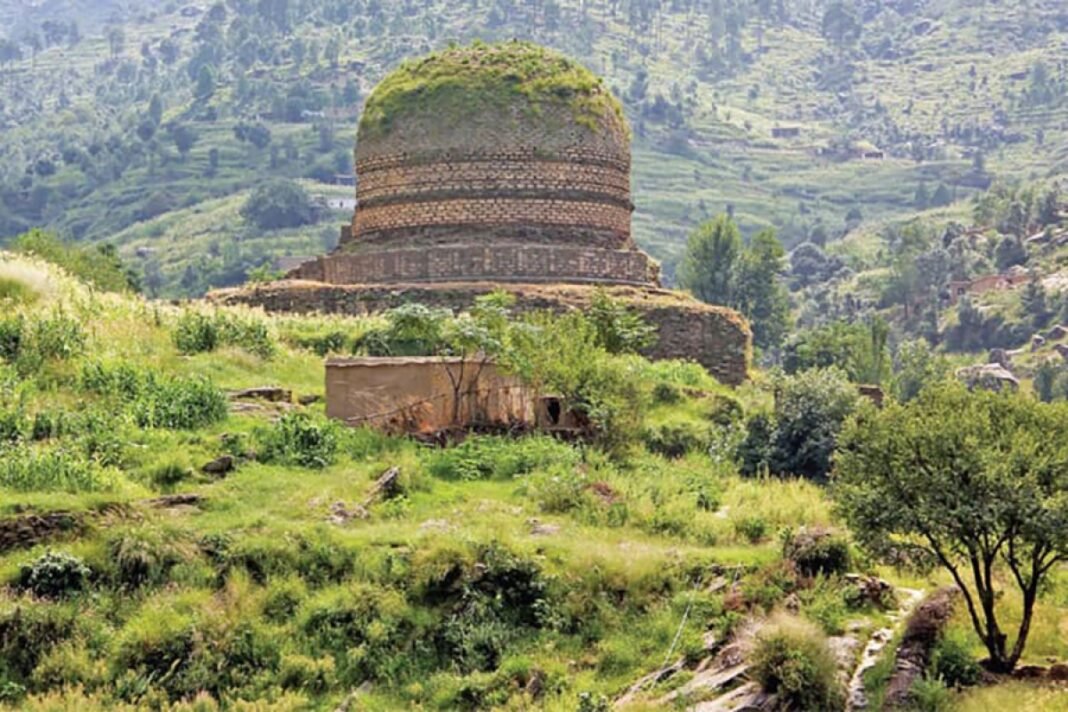
What you get here is intimacy. The great Buddhist sites of the world — Sarnath, Bodh Gaya, Taxila — are magnificent but busy. At Dangram, it is often just you, the ancient masonry, and the immense quiet of the Swat hills. The stupa rises from its terrace with the same graceful geometry its builders gave it some two thousand years ago, and the surrounding slopes hold rock carvings of the Buddha placed by monks who chose these spots precisely for their solitude. You do not observe this history from behind a rope; you walk through it.
It is also the perfect anchor for a Gandhara pilgrimage. Within an hour’s drive sit Butkara I — one of the most important excavated stupas in South Asia — the Swat Museum with its world-class Gandhara sculpture collection, the Amluk-dara Stupa at Barikot, and the giant rock-carved Buddha of Jahanabad. Dangram is the quiet chapter in that story, the one you will remember most precisely because you had it to yourself.
And then there is Swat itself, which makes every history trip a nature trip too. The drive to Dangram winds through terraced fields, poplar-lined lanes, and villages where life moves at the pace of the seasons. Come for the stupa, stay for the valley — the emerald river, the snow-dusted ridges, the trout dinners in Mingora — and you will understand why the ancient Buddhists called this place a paradise.
History of Dangram Stupa
To understand Dangram, you must understand Swat — ancient Uddiyana, one of the holiest lands in Buddhism. The valley’s recorded history is a roll call of empires. It was an important province of the Persian Empire under Darius I (522–486 BC); Alexander the Great conquered it in 327 BC; the Mauryans under Chandragupta reclaimed it in 305 BC; Indo-Greek kings brought Hellenistic art around 180 BC; and in the first century AD the Kushans took control of Gandhara. When the great Kushan emperor Kanishka (reigned circa 127–150 AD) embraced Buddhism, the faith flowered across the region — and from Swat and Gandhara, Buddhism traveled onward to China, Japan, and beyond.
The result was a unique artistic civilization: Greco-Buddhist or Gandhara art, where the Buddha was sculpted with the drapery and naturalism of Greek statuary. Swat became one of its greatest centers, and stupas — dome-shaped reliquary monuments — rose across the valley from the 3rd century BC onward, rebuilt and enlarged by successive generations of devotees through the first millennium AD.
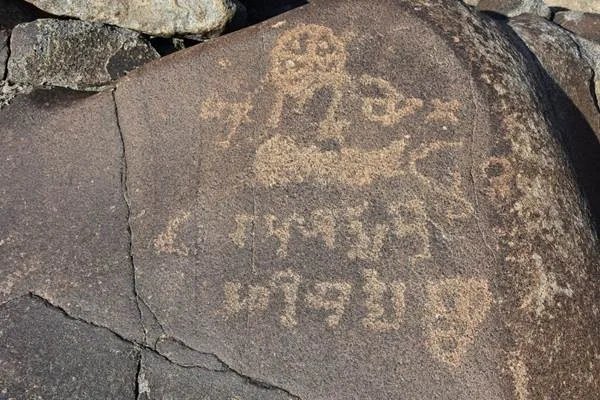
The Dangram area belongs to this world. Archaeologists note that the entire Jambil Valley — including Panr, Dangram, and Kokaria — is rich in Buddhist rock carvings, as are the Saidu, Manglawar, and Banjot valleys, with sculptures distributed from Manglawar to Barikot. These rock-carved Buddhas, many belonging to the late Buddhist schools active in Swat between the 7th and 9th centuries, were placed by monks in spots chosen for “perfect solace, serenity, and isolation” — which describes Dangram’s hillside setting exactly.
Scientific archaeology came to Swat with the Italian Archaeological Mission. At nearby Butkara I, excavations led by Domenico Faccenna from 1956 to 1962 — after locals found coins while digging — revealed a stupa first built around the 3rd century BC and monumentalized with Hellenistic decoration in the 2nd century BC, suggesting direct Indo-Greek royal involvement. Over 9,400 statues and hundreds of coins were recovered there. The mission’s work established Swat’s stupas as key monuments of Greco-Buddhist architecture, and ongoing research by the Italian Mission continues to uncover the valley’s past.
Buddhist Swat endured until the Hindu Shahi period — a watchtower of that era still stands near some Swat stupas, evidence of habitation into the 9th century — before the valley’s religious landscape changed with the coming of Islam. Today the stupas stand as silent witnesses to a millennium and a half of devotion. Visiting Dangram is visiting the layer of Pakistan’s history that connects it to the spiritual heritage of half of Asia.
Top Things to Do in Dangram Stupa
Explore the Stupa Terrace
Take your time walking the stupa’s platform. Notice the masonry — the careful stonework of Gandhara builders — and the dome’s geometry, designed two thousand years ago to focus a pilgrim’s mind on the relics within. Circumambulate slowly, as pilgrims have done for centuries; it is a meditative walk even for the non-religious.
Find the Rock Carvings
The hills around Dangram hold Buddhist rock carvings — serene Buddha figures etched into cliff faces by monks over a thousand years ago. They are not signposted like museum pieces; ask your local guide to lead you to them. Finding a weathered, thousand-year-old Buddha smiling from a rock face in a silent valley is one of Swat’s great quiet thrills.
Photograph the Valley Setting
Dangram’s magic is inseparable from its landscape: terraced fields below, forested ridges above, the Swat valley unfolding in the distance. Morning light is soft and golden; late afternoon brings long shadows across the ancient stones. Bring a wide lens for the setting and a zoom for carving details.
Sit in Silence
This sounds simple because it is — and it is the point. The monks chose these hills for meditation. Sit on the stupa terrace for fifteen minutes with no phone, no talking, and listen: birdsong, wind in the pines, perhaps a distant stream. Travelers consistently name this stillness as their strongest memory of Swat’s Buddhist sites.
Visit Butkara I (Mingora)
No Gandhara trip is complete without Butkara I, near Mingora — the great excavated stupa whose history runs from the 3rd century BC to the 10th century AD. Seeing its excavated chapels and imagining its painted, gilded, umbrella-topped dome in its prime gives you the full glory that Dangram’s quieter ruins only suggest.
Spend Half a Day at the Swat Museum
On the Mingora–Saidu Sharif Road, the Swat Museum houses a superb collection of Gandhara sculpture — Buddhas, bodhisattvas, and narrative panels excavated from valley sites. Come here before or after Dangram and the stones you saw in the hills will suddenly have faces, stories, and exquisite detail.
See the Amluk-dara Stupa (Barikot)
About 10 km south of Mingora at the foot of Mount Elum, the Amluk-dara Stupa is one of Swat’s most beautifully situated monuments — possibly the largest stupa in the valley, built on a 34-meter-wide podium and dating to the 3rd–4th century. Pair it with Dangram for a full day of stupa-hopping.
Visit the Jahanabad (Ghaligai) Buddha
The giant rock-carved Buddha near Jahanabad/Ghaligai — over 5 meters tall, carved into a cliff with a panoramic valley view, some 20 km from Mingora — is Swat’s most dramatic single carving. It completes the picture of the valley’s rock-art tradition that Dangram’s smaller carvings introduce.
Famous Places In and Around Dangram Stupa
- Butkara I Stupa — the great excavated stupa near Mingora; allow 1–2 hours.
- Swat Museum — world-class Gandhara sculptures on the Mingora–Saidu Sharif Road.
- Amluk-dara Stupa — monumental stupa at Barikot, at the foot of Mount Elum.
- Jahanabad Buddha — giant cliff-carved Buddha with valley views, ~20 km from Mingora.
- Shingardar Stupa — another fine valley stupa near Barikot.
- Manglawar — the historic town near Dangram, worth a wander.
- Mingora & Saidu Sharif — bazaars, the White Palace of the former Wali, and your base for the valley.
- Malam Jabba — ski resort and alpine scenery, an easy extension for mountain lovers.
How to Reach Dangram Stupa
Dangram lies in the lower Swat valley near Manglawar, a short drive south of Mingora — the valley’s main town and the natural base for your visit. You cannot just “drop in” on Dangram the way you can a city monument; the final approach is via village roads and footpaths, so plan it as a half-day excursion with a local guide from Mingora.
From Islamabad: About 240–260 km via the M-1 Motorway and the Swat Expressway to Chakdara, then on to Mingora — roughly 4 hours of good highway driving. The Swat Expressway has transformed this journey; what was once an all-day expedition is now a comfortable morning drive. From Mingora, Dangram is under half an hour by car toward Manglawar, plus a short walk.
From Lahore: About 480–500 km via the M-1 and Swat Expressway — roughly 7–8 hours. Most Lahore travelers overnight in Mingora or break the journey in Islamabad.
From Karachi: Fly to Islamabad (about 2 hours), then drive the Swat Expressway route. Alternatively, fly to Peshawar and drive to Mingora (about 4–5 hours by road).
Nearest airport: Islamabad International Airport is the most practical gateway. Saidu Sharif Airport near Mingora has had intermittent service; check current schedules, but plan on Islamabad.
Road conditions: The motorways and the Mingora road are excellent. Village roads around Manglawar/Dangram are narrower — a normal car manages fine in dry weather; after heavy rain, ask locally. The last stretch to the stupa is on foot, so wear proper shoes.
Public transport: Regular buses and vans run from Peshawar and Islamabad to Mingora (4–5 hours from Peshawar). From Mingora, hire a private car or taxi for the Dangram excursion — agree on the fare and waiting time upfront — and pick up a local guide in Manglawar or through your Mingora hotel.
Route Details
- Islamabad → Mingora: M-1 Motorway to the Swat Expressway interchange, expressway to Chakdara, then the valley road to Mingora. Fuel up and stock snacks before the expressway — services are spaced out.
- Mingora → Manglawar → Dangram: Drive south from Mingora toward Manglawar (the N-95 valley road). At the Dangram turnoff, follow village roads as far as vehicles go, then continue on foot with your guide — typically a gentle 15–30 minute walk to the stupa terrace.
- The heritage circuit: Do Dangram in the morning, Butkara I and the Swat Museum after lunch, and you have covered 2,300 years of history in a single day.
Where to Stay in Dangram Stupa
Stay in Mingora (or nearby Saidu Sharif) — it has Swat’s widest range of accommodation and is minutes from Dangram, Butkara, and the museum.
Luxury: Mingora and the Fizagat/Saidu Sharif area offer the valley’s top-end hotels with river or mountain views, full amenities, and restaurants — a comfortable base for heritage days and valley excursions alike.
Mid-range: Dozens of mid-range hotels line the Mingora valley road and Fizagat area: clean, heated rooms (important in winter), hot water, and on-site restaurants. This is where most heritage travelers stay, and the value is excellent.
Budget: Budget hotels and guesthouses cluster in Mingora town — basic but friendly, ideal if you spend your days out exploring and just need a clean bed.
Near Dangram itself: Do not expect hotels at the stupa — it is a village hillside. A few village guesthouses exist in the Manglawar area for the truly adventurous, but Mingora’s comforts are half an hour away, so day-tripping is the sensible plan.
Extending the trip: If you continue up the valley, Kalam, Bahrain, and Malam Jabba offer everything from luxury resorts to riverside camping — Dangram pairs beautifully with a 3–4 day Swat itinerary.
Where to Eat: Local Foods of Dangram Stupa
Eat in Mingora before or after your Dangram excursion — the town is one of the great food stops of northern Pakistan.
What to eat: Swat’s signature is its trout — fresh from the valley’s cold streams, fried simply with local spices, best enjoyed in Bahrain or Kalam but available in Mingora too. Beyond trout: chapli kebabs, lamb karahi, chicken tikka, and hearty desi staples; in winter, look for warming soups and the valley’s famous honey. Breakfast on fresh tandoori parathas with doodh patti (milky chai) is a Swat ritual.
Where to eat: Mingora’s main bazaar and the Fizagat road are lined with restaurants from humble dhabas to well-appointed family restaurants. Your hotel restaurant is a safe bet for the first night; the bazaar is where the adventure (and the best kebabs) lives.
What it costs: Swat is very reasonable. A full dhaba meal costs a few hundred rupees per person; a trout dinner at a good restaurant is the splurge of the trip but still modest by city standards. Carry cash — many smaller eateries do not take cards.
Weather in Dangram Stupa
Dangram sits in the lower Swat valley, so its climate is milder than Kalam’s alpine heights but still refreshingly cooler than the Punjab plains. The valley follows a classic four-season mountain rhythm.
| Season | Temperature Range | Conditions |
|---|---|---|
| Winter (Dec–Feb) | 0–12°C | Cold and crisp; snow falls in the upper valley and sometimes dusts the lower hills. Clear, crowd-free days — magical for photography, but carry warm layers and check road conditions after snowfall. |
| Spring (Mar–May) | 12–28°C | The valley bursts into blossom — fruit orchards flower, fields turn green, and temperatures are perfect for walking to the stupa. The best all-round season. |
| Summer (Jun–Aug) | 20–32°C | Warm days, cool evenings; the classic Swat escape season when the plains bake. Afternoon showers are possible; the hills are at their greenest. |
| Autumn (Sep–Nov) | 10–25°C | Golden light, harvest colors, thinning crowds, and crystal-clear air. Superb for heritage visits and photography — many travelers’ favourite. |
Language and Culture of Dangram Stupa
Languages: Pashto (the Yusufzai dialect) is the mother tongue of the valley. Urdu is widely understood in Mingora, hotels, and bazaars; English works at hotels and with guides.
Culture: Swat is Pashtun country, and Pashtun hospitality (melmastia) is real — guests are honoured, and you will be offered chai in the most unexpected places. The valley is conservative: dress modestly (women should carry a headscarf for village areas; men should avoid shorts in villages), always ask before photographing people — especially women — and accept hospitality graciously.
At the heritage sites: These are sacred to Buddhists worldwide and precious to Pakistan. Do not climb on the masonry, do not remove stones, and do not carve or mark anything. Tread lightly — you are walking through a millennium and a half of devotion.
Shopping in Dangram Stupa
Do your shopping in Mingora’s bazaars, not at the stupa (where there are no shops at all — part of the charm).
What to buy: Swati shawls and embroidered textiles, famous Swat honey, dried fruits and walnuts, and the valley’s gemstones (Swat emeralds are renowned — buy only from reputable dealers). Handicrafts, woodwork, and traditional caps make good gifts.
Where: Mingora’s main bazaar is the valley’s commercial heart — lively, sprawling, and full of discoveries. Prices are local, bargaining is expected, and the shopkeepers’ chai is excellent. There are no major shopping malls in the valley — and nobody comes to Swat for malls.
Travel Tips for Dangram Stupa
Packing Essentials
Sturdy walking shoes (the footpath to the stupa is uneven), layers for changing mountain weather, sun protection, water and snacks (nothing is sold at the site), a fully charged phone/camera, and a small daypack. In winter: a proper warm jacket, gloves, and a cap.
Safety Tips
Swat is firmly back on the tourist map and welcomes visitors warmly; the valley’s main towns and sites see thousands of Pakistani families every season. Standard mountain sense applies: hire a local guide for Dangram (the paths are unmarked), stick to daylight hours for the excursion, keep to marked routes, and check weather before heading out. Respect local customs and you will be treated like an honoured guest.
Money & Connectivity
ATMs are available in Mingora — withdraw there before heading to the villages. Carry cash for guides, taxis, and bazaar shopping. Mobile coverage (Jazz, Telenor, Zong) is good in Mingora and along the main valley road; signals thin out on remote hillsides, so download offline maps.
Best Time to Visit Dangram Stupa
Spring (March–May) — The Peak
Blossom season in the valley, perfect walking temperatures, and the stupa framed by green hills and flowering orchards. Book Mingora hotels ahead on spring weekends.
Autumn (September–November) — The Connoisseur’s Choice
Harvest golds, the clearest air of the year, and far fewer visitors. For photography and quiet contemplation at the stupa, this is hard to beat.
Summer (June–August) — The Family Season
Warm but pleasant — Swat’s classic escape from the plains’ heat. Combine Dangram with Kalam, Bahrain, and the valley’s riverside spots for a full family itinerary.
Winter (December–February) — The Adventurous
Cold, crowd-free, and starkly beautiful — the stupa against snow-dusted hills is unforgettable. Only for travelers comfortable with winter mountain conditions.
Final Thoughts
Dangram Stupa will not shout for your attention. It waits — as it has waited for two thousand years — for the traveler willing to leave the highway, follow a village path, and stand quietly among ancient stones. In return it offers something the famous sites cannot: solitude with history, a direct line back to the monks who chose these hills for their serenity and to the pilgrims who walked here when Buddhism was young.
Build your Swat trip around it: Dangram in the morning stillness, Butkara and the museum in the afternoon, trout for dinner in Mingora, and the valley’s green ridges all around. That is a day you will still be talking about years from now. For more northern inspiration, explore our Malam Jabba travel guide and the full Explore Pakistan collection.
FAQs
Where is Dangram Stupa located?
Near Dangram village in the Manglawar area of Swat Valley, Khyber Pakhtunkhwa — a short drive south of Mingora, followed by a gentle walk with a local guide.
What is the history of Dangram Stupa?
It belongs to Swat’s Buddhist (Gandhara) heritage, which flourished from the 3rd century BC through the first millennium AD — through Mauryan, Indo-Greek, and Kushan rule. The surrounding valleys are famous for Buddhist rock carvings, many from the 7th–9th centuries.
What is the best time to visit Dangram Stupa?
March–May (spring blossoms, perfect walking weather) and September–November (clear air, golden light, fewer crowds). Summer is pleasant too; winter is beautiful but cold.
How do I reach Dangram Stupa from Islamabad?
Drive the M-1 and Swat Expressway to Mingora (about 4 hours), then take a car toward Manglawar/Dangram (under 30 minutes) and walk the final stretch with a local guide.
Is Dangram Stupa safe for families and tourists?
Yes. Swat welcomes thousands of visitors each season. Hire a local guide, visit in daylight, wear proper shoes for the footpath, and follow standard mountain-travel sense.
What else should I see near Dangram?
Butkara I stupa, the Swat Museum, Amluk-dara Stupa at Barikot, the Jahanabad rock-carved Buddha, and Mingora–Saidu Sharif’s bazaars — a complete Gandhara circuit within an hour’s drive.
Where can I stay near Dangram Stupa?
Base yourself in Mingora, 20–30 minutes away, which has the valley’s widest range of hotels at every budget. There are no hotels at the stupa site itself.
Do I need a guide for Dangram Stupa?
Strongly recommended. The site is unmarked and reached via village paths; a local guide from Manglawar or arranged through your Mingora hotel will find the stupa, the rock carvings, and the best viewpoints — and enrich the visit with local stories.