Delhi Toxic Air Pollution 30 Times WHO Limit
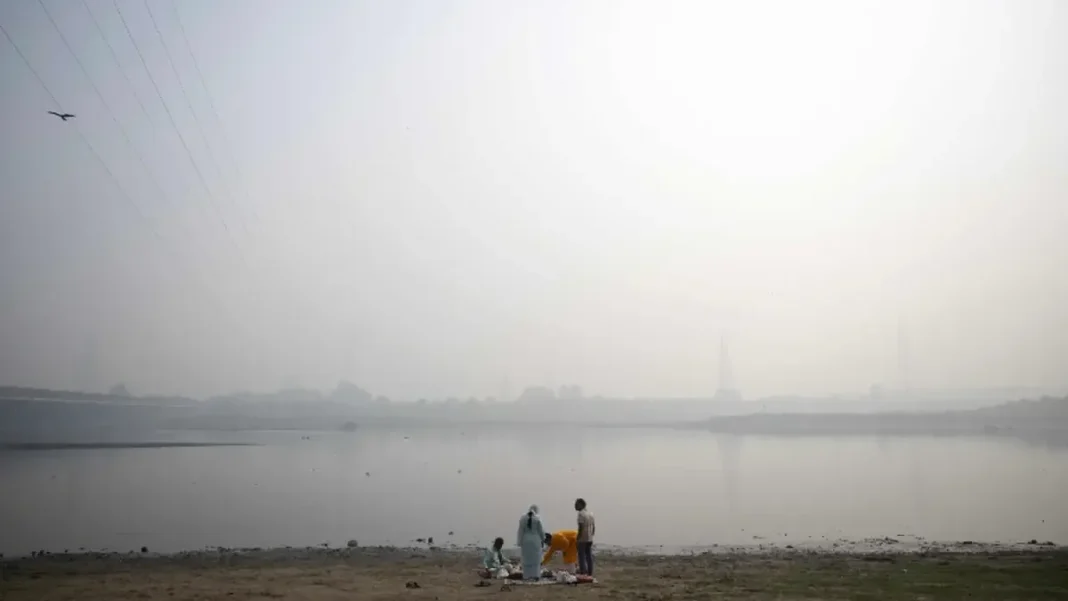
Delhi toxic air pollution surged on Wednesday to more than 30 times the World Health Organisation’s recommended daily limit, data from air monitors showed.
The deterioration came three days after authorities tightened measures, including restrictions on traffic and construction, to curb smog in one of the world’s most polluted capitals, with the wider metropolis home to more than 30 million people. Dawn reported the surge on Thursday.
On Wednesday, levels of PM2.5, cancer-causing microparticles small enough to enter the bloodstream, hit over 461 micrograms per cubic metre in parts of the city, according to monitoring firm IQAir. The WHO’s recommended daily limit for PM2.5 is 15 micrograms per cubic metre, which puts the Delhi reading at more than 30 times the safe level.
Diwali fireworks set to make it worse
Pollution is expected to worsen ahead of Sunday’s Diwali, the Hindu festival of lights, when firework displays add to the already poisonous air. The Supreme Court this month allowed limited use of so-called “green” firecrackers, designed to reduce emissions, during Diwali. But restrictions are routinely flouted, with the city reverberating with explosions.
The timing could hardly be worse. Diwali falls just as the seasonal smog is building across the whole region, when cooler air traps pollution close to the ground and farm fires add smoke to the mix. Delhi’s authorities have tried traffic and construction curbs, but the measures have not stopped the surge.
What drives Delhi toxic air pollution in winter
Vehicles account for 23 per cent of Delhi’s winter pollution, while biomass burning, including farm stubble fires, contributes 20 per cent, according to India’s environment ministry. Industry, including coal-fired power plants, contributes about nine per cent.
The largest share, 27 per cent, comes from secondary particles, formed when gases released by vehicles, industry, power plants and biomass burning react in the atmosphere. The formation of these particles is also fuelled by the vast quantities of fertiliser spread on fields around the capital, argues Jacob Koshy, author of a new book on pollution.
Ammonia released by fertilisers reacts with other pollutants to form secondary particulate matter. “The sheer quantity of ammonia that is going into the atmosphere creates a base layer for other pollutants to react with,” said Koshy, science editor of The Hindu newspaper and author of The Nitrogen Bomb.
Lahore faces the same season across the border
Delhi’s crisis is not an isolated one. Across the border, Lahore is living through the same smog season, and the two cities share more than a calendar. A report released this week found that Lahore’s air pollution stayed above Pakistan’s prescribed standards for 12 straight months, including the cleaner summer season, and that between 13 and 30 per cent of Lahore’s pollution comes from across the border, according to different studies.
Feature Pakistan reported earlier this week on fire hotspots around Lahore, and air pollution already costs Pakistan about 6.5 per cent of GDP each year. On Monday, Lahore’s air quality index crossed 530, with PM2.5 at 343 micrograms per cubic metre. Delhi’s reading of 461 is worse, but the gap is a matter of degree, not of kind.
The shared problem also has a shared cause in the fields. Stubble burning after the rice harvest adds smoke on both sides of the border at exactly the moment when the air stops dispersing it. October was Pakistan’s sixth-hottest in 66 years, which adds to the strain as the smog season sets in. Punjab has fixed its wheat support price at Rs4,500 a maund for the new season, and the province’s farmers are moving from the rice harvest to wheat sowing, which is when the burning peaks. Until the burning stops and the baseline emissions fall, both capitals will keep choking every winter.
Frequently asked questions
How bad is Delhi’s air pollution?
PM2.5 hit over 461 micrograms per cubic metre in parts of the city on Wednesday, more than 30 times the WHO’s recommended daily limit of 15.
Why is it expected to get worse?
Diwali falls on Sunday, and firework displays will add to the smog. The Supreme Court allowed limited “green” firecrackers, but restrictions are routinely flouted.
What causes Delhi’s winter smog?
Vehicles account for 23 per cent, biomass burning including stubble fires 20 per cent, industry about nine per cent, and secondary particles formed in the atmosphere 27 per cent, according to India’s environment ministry.
Does the smog affect Pakistan too?
Yes. Lahore faces the same season, and studies estimate that 13 to 30 per cent of Lahore’s pollution comes from across the border.