Quick Facts
- Location: Inside Shikarpur town, Shikarpur District, Sindh, Pakistan — about 25 kilometres from Sukkur
- Altitude: Around 60 metres above sea level (Indus plain)
- Famous For: A living Udasi dharamsala where the verses of the Sikh Gurus are still sung twice a day, with a daily sangat and langar
- Nearest City: Sukkur, about 25 kilometres away (roughly 30-40 minutes by road)
- Accessibility: Easy road access inside Shikarpur town; reached from Sukkur by car, taxi, or public van
- Known Landmarks: The dharamsala building, Shikarpur’s Clock Tower, Dhak Bazar, Shahi Bagh, the famous achar shops
- Best For: Spiritual travellers, Sikh heritage seekers, history lovers, food lovers (Shikarpur’s famous pickles)
Why Visit Dharamsala Bhai Gurdas, Shikarpur
Some places you visit for a view. This one you visit for a sound. Inside the old town of Shikarpur, in a beautifully built dharamsala, the verses of the Sikh Gurus are still sung twice a day, exactly as they have been for generations. Walk in, cover your head, sit with the sangat, and the kirtan wraps around you — a living thread of devotion in a town that was once one of the great Sikh and Hindu trading centres of Sindh. It is a quiet, deeply moving experience, and it costs nothing but your respect.
The dharamsala belongs to the memory of Bhai Gurdas, an Udasi sadhu who preached the religion of the Sikhs in this region. Dev Bhai Sahib is remembered for having written explanatory notes in the margins of the Guru Granth Sahib, a scholar’s devotion set down in ink beside the sacred text. That this place of learning and song still gathers its sangat daily, with its langarkhana still serving, makes it one of Pakistan’s most authentic surviving Udasi sites — not a museum, but a working house of faith.
This destination is perfect for travellers drawn to spiritual heritage and for anyone tracing the Sikh and Hindu history of Sindh. It suits visitors who prefer meaning over crowds, photographers of old-town architecture, and food lovers, because Shikarpur itself is a destination: the famous Shikarpuri achar, the historic Dhak Bazar, and the elegant decay of one of Sindh’s richest old merchant cities. A morning at the dharamsala and an afternoon wandering the old bazaars make a perfect day.
Come with an open, unhurried spirit. Time your visit for the morning or evening kirtan, join the sangat, share the langar if it is offered, and then walk the narrow streets of Shikarpur to buy a jar of the city’s legendary pickle. You will leave with your camera full of carved wooden balconies and your heart full of song.
History of Dharamsala Bhai Gurdas, Shikarpur
The story of the dharamsala begins with the man it honours. Bhai Gurdas was an Udasi sadhu — a member of the ascetic Udasi tradition founded by Sri Chand, the son of Guru Nanak — who preached the religion of the Sikhs in the Shikarpur region. The Udasis were the great missionaries of early Sikhism, travelling far from Punjab to carry the Gurus’ message, and Bhai Gurdas established his dharamsala inside Shikarpur town as a centre of that mission. Historical accounts of Sikh shrines in Pakistan record that he personally wrote explanatory notes in the margins of the Guru Granth Sahib, marking him as both preacher and scholar.
Shikarpur itself gives the dharamsala its context. Founded in the early 17th century by the Daudpotas, Shikarpur grew into one of Sindh’s wealthiest cities, a banking and trading hub whose merchants — the famous Shikarpuris — ran businesses stretching into Central Asia. Before 1947 it had a large and prosperous Sikh and Hindu population, and its bazaars, havelis, and shrines reflected that plural past. The dharamsala stood at the centre of the Sikh community’s spiritual life here, its sangat assembling daily and its langarkhana feeding all who came.
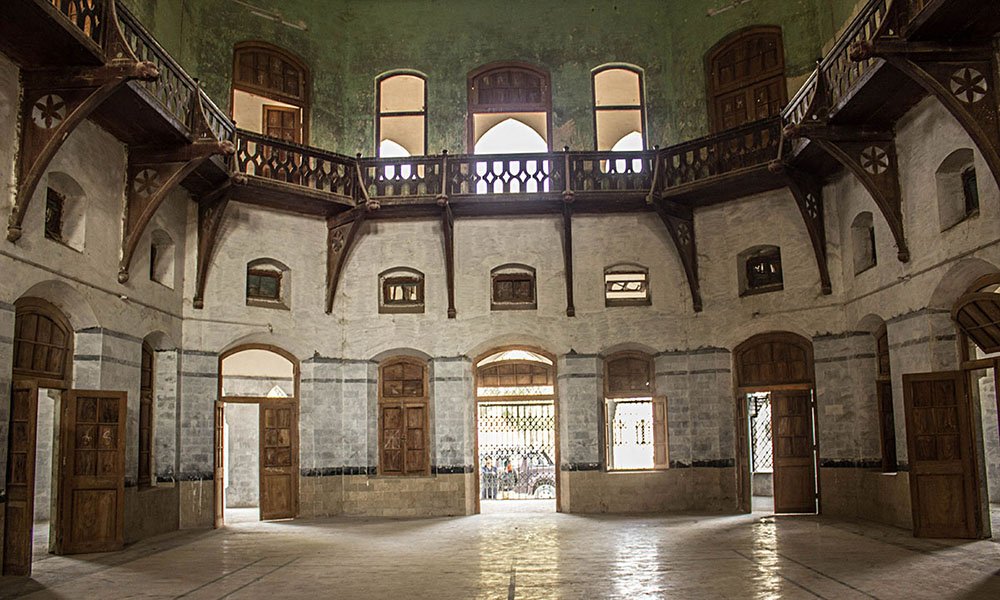
The partition of 1947 changed Shikarpur profoundly, as most of its Sikh and Hindu families migrated across the new border. Many of the city’s Sikh shrines fell silent or were repurposed. That the Dharamsala of Bhai Gurdas still holds daily kirtan is therefore remarkable: it is a survivor, kept alive by the devotion of those who remained and by the reverence of visitors. The building is described as beautifully built, and its continued use makes it a rare living link to the Udasi missionary tradition in Sindh.
Today the dharamsala sits within the old town’s fabric of narrow lanes and merchant havelis, near Shikarpur’s other heritage sites. Travellers who come here are visiting two histories at once: the intimate story of one preacher’s dharamsala, and the grand story of a merchant city that once connected Sindh to the markets of Asia.
Top Things to Do in Dharamsala Bhai Gurdas, Shikarpur
Join the Morning or Evening Kirtan
The heart of the visit is the singing of the Gurus’ verses, held twice daily. Arrive a little early, cover your head, remove your shoes at the entrance, and take a seat with the sangat. You do not need to be Sikh to attend; respectful visitors of all faiths are welcome. The experience is meditative and powerful, especially in the morning when the old town is still quiet.
See the Dharamsala Building and Langarkhana
The dharamsala is a handsome building, and its langarkhana — the community kitchen — continues the Sikh tradition of free meals for all. If langar is being served during your visit, accept it graciously; eating seated together with the sangat is part of the experience. Ask a caretaker about the building’s history and the memory of Bhai Gurdas’s scholarly notes.
Walk Shikarpur’s Old Town: Clock Tower and Dhak Bazar
Step outside the dharamsala into one of Sindh’s great heritage walks. Shikarpur’s Clock Tower is the old town’s central landmark, and the nearby Dhak Bazar is a historic covered market of wooden gates and old alleyways, once a bustling centre where merchants from across regions converged. The lanes around it are lined with carved wooden balconies and brackets on old havelis — bring your camera.
Buy Shikarpuri Achar From the Source
No visit to Shikarpur is complete without its legendary pickle. The city’s achar is famous across Pakistan, made with locally grown vegetables, Shikarpur’s sweet groundwater, and spice recipes passed down for generations. Visit one of the famous old shops — names like Haji Moula Bux Memon’s have been trusted for decades — and buy mixed, mango, garlic, and lemon varieties as gifts. Travellers from all over Pakistan stop here for jars to carry home.
Combine With the Udasi Ashram and Sukkur’s Sadh Belo
Shikarpur also has an Udasi ashram worth visiting for those tracing the tradition. If you have a second day, drive the 25 kilometres to Sukkur to see the Sadh Belo Temple on its island in the Indus, one of the great Hindu pilgrimage sites of Sindh, plus the Lansdowne and Ayub bridges and the Sukkur Barrage.
Famous Places In and Around Dharamsala Bhai Gurdas, Shikarpur
- Dhak Bazar: Shikarpur’s historic covered market, celebrated for its wooden gates, old alleyways, and traditional trade atmosphere.
- Clock Tower: The central landmark of old Shikarpur, a gathering place steeped in the city’s heritage.
- Shahi Bagh: Shikarpur’s famous old park, a pleasant green stop in the city.
- Abdul Latif Shah Mosque: A historic mosque of Shikarpur, reflecting the city’s layered religious heritage.
- Sadh Belo Temple, Sukkur: The island temple complex in the Indus near Sukkur, about 25 kilometres away — combine it with your trip.
- Gurdwara Nanakwara, Kandhkot: Another sacred Sikh shrine in the region, built to commemorate the arrival of Guru Nanak, around 65 kilometres from Shikarpur.
How to Reach Dharamsala Bhai Gurdas, Shikarpur
Shikarpur sits about 25 kilometres from Sukkur, and Sukkur is the gateway for the whole trip. From Sukkur, Shikarpur is a straightforward 30 to 40 minute drive by car, taxi, or public van on the connecting road. The dharamsala is inside Shikarpur town; ask locally for directions once you reach the old town area, and any rickshaw driver will know the way.
From Karachi, the drive to Sukkur is around 450 kilometres, roughly 6 to 7 hours on the motorway. From Lahore, Sukkur is around 930 kilometres, about 11 to 12 hours; from Islamabad it is around 800 kilometres, roughly 10 hours. Most travellers from the north break the journey or fly: Sukkur Airport has flights from Karachi, Lahore, and Islamabad, and Shikarpur is a short taxi ride from the airport.
The nearest airport is Sukkur Airport, about 25 kilometres from Shikarpur. There is no train station in Shikarpur itself, but Sukkur’s railway station connects to the main Karachi-Peshawar line, and from Sukkur you continue by road. Within Shikarpur, rickshaws and qingqis are the easiest way to move between the dharamsala, the bazaars, and the achar shops.
Route Details
- Reach Sukkur by road (motorway from Karachi, Lahore, or Islamabad) or by air to Sukkur Airport.
- Take the Sukkur-Shikarpur road, about 25 kilometres, roughly 30-40 minutes.
- Enter Shikarpur town and head to the old town area near the Clock Tower and Dhak Bazar.
- Ask locally for the Dharamsala of Bhai Gurdas Ji; remove shoes and cover your head before entering.
- Time your arrival for the morning or evening kirtan to hear the verses of the Gurus sung.
Where to Stay in Dharamsala Bhai Gurdas, Shikarpur
Shikarpur is a day-trip town for most travellers, and the comfortable base is Sukkur, 25 kilometres away. Sukkur has a good range of mid-range hotels and budget guesthouses, with clean rooms, air conditioning, and restaurants at budget-friendly rates. Business travellers’ hotels near the city centre are the most reliable choice.
Shikarpur itself has small local guesthouses and rest houses suitable for a simple overnight stay if you want to be in the old town for the early-morning kirtan. Keep expectations modest: these are basic but functional. For a longer heritage tour of northern Sindh — combining Shikarpur with Sukkur, Rohri, and Kot Diji — base yourself in Sukkur and do day trips.
Where to Eat: Local Foods of Dharamsala Bhai Gurdas, Shikarpur
Shikarpur is a food town, and eating here is half the trip. The headline act is the achar: mixed, mango, carrot, garlic, whole green chilli, lemon, and dozens of other varieties, made by the city’s famous pickle houses and sold in jars that travel across Pakistan as gifts. Taste before you buy — every shop offers samples — and budget for several jars.
Beyond pickles, try Shikarpur’s famous falooda, a rich, creamy dessert of milk, vermicelli, and syrups that locals swear by on warm days. Sindhi beh (lotus root), a regional delicacy, appears in local eateries, and the dhabas serve classic Sindhi fare: daal, sai bhaji, and fresh roti at very budget-friendly prices. Near Deewan’s and other sweet shops you will find fresh mithai. A full meal at a local dhaba typically costs a few hundred rupees per person.
Weather in Dharamsala Bhai Gurdas, Shikarpur
Shikarpur shares upper Sindh’s hot, dry climate. Summers are fierce, with temperatures climbing toward 48 degrees Celsius from May to July. Winters are mild and pleasant, which is why the November-to-February window is the recommended season for the dharamsala visit. The monsoon brings some rain in July and August but far less than in Punjab.
| Season | Temperature Range | Conditions |
|---|---|---|
| Winter (Dec-Feb) | 8 to 24 C | Mild, pleasant days; cool nights; best season for visiting |
| Spring (Mar-Apr) | 18 to 36 C | Warming quickly; mornings still comfortable |
| Summer (May-Aug) | 35 to 48 C | Extremely hot and dry; avoid midday outings; not recommended |
| Autumn (Sep-Nov) | 22 to 38 C | Cooling gradually; late autumn is good for heritage walks |
Language and Culture of Dharamsala Bhai Gurdas, Shikarpur
Sindhi is the language of Shikarpur’s streets and bazaars, with Urdu widely understood and Saraiki and Punjabi also spoken. A greeting in Sindhi or Urdu opens every door. The city’s culture is the old merchant culture of Sindh: courteous, businesslike, and proud of its heritage.
The dharamsala follows the customs of Sikh places of worship. Cover your head (carry a scarf or use the cloths often provided), remove your shoes before entering, and wash your hands. Sit on the floor with the sangat, keep your voice low, and do not smoke or bring alcohol or meat onto the premises. Photography inside the prayer hall should be avoided unless a caretaker permits it. Outside, in the bazaars, dress modestly and bargain with good humour — it is expected and enjoyed.
Shopping in Dharamsala Bhai Gurdas, Shikarpur
Shopping in Shikarpur means two things: pickles and old-town crafts. The achar shops near the main bazaars are the essential stop — buy mixed, mango, garlic, and lemon varieties in sealed jars for the journey home. Dhak Bazar and the surrounding lanes sell traditional goods: embroidered textiles, bangles, dry fruits, and household items in the old merchant style. The bazaar is a covered historic market, so the shopping itself is a heritage experience. Prices are fair; gentle bargaining is normal.
Travel Tips for Dharamsala Bhai Gurdas, Shikarpur
Packing Essentials
Carry a headscarf or large handkerchief for the dharamsala and any mosque visits. Wear slip-on shoes, since you will remove them at the dharamsala. Bring sun protection and water even in winter, because Shikarpur’s sun is strong. A small bag for pickle jars is wise — you will buy more than you planned.
Safety Tips
Shikarpur is a busy working town; keep valuables secure in crowded bazaars and travel with a local driver if you are unfamiliar with the area. At the dharamsala, follow the caretakers’ guidance and keep the prayer hall peaceful. If you continue to Sukkur, the Sadh Belo visit involves a short boat ride — use the official boats and wear the provided life jackets.
Money & Connectivity
Carry cash. The achar shops and bazaar stalls take cash only, and while Sukkur has ATMs, you should not count on finding one in Shikarpur’s old town. Mobile signals from all major networks work in Shikarpur. Download offline maps of the town before you go, since the old lanes can confuse navigation apps.
Best Time to Visit Dharamsala Bhai Gurdas, Shikarpur
Winter (November to February) — the best season
This is the best time to visit the dharamsala and explore Shikarpur. Days are mild, the old-town walks are comfortable, and the morning and evening kirtan sessions are at their most atmospheric.
Spring (March to April) — still pleasant
Temperatures rise but early mornings remain fine for the dharamsala and the bazaars. A good shoulder season with fewer visitors.
Summer (May to August) — avoid
Upper Sindh’s summer is punishing, with temperatures approaching 48 degrees. Heritage walks become exhausting; if you must travel, limit outings to early morning and evening.
Autumn (September to October) — the return
As the heat breaks, October brings back comfortable days for sightseeing. A fine time for the achar shops and a quieter dharamsala visit.
Final Thoughts
The Dharamsala of Bhai Gurdas is not the grandest shrine in Pakistan, and that is precisely its power. It is a small, living place where faith is practised daily rather than displayed — where the verses of the Gurus rise twice a day over an old merchant town, and where a scholar-preacher’s marginal notes in the Granth are still remembered. Pair it with Shikarpur’s bazaars, its pickles, and its carved wooden balconies, and you have one of Sindh’s most rewarding day trips.
Go in winter, arrive for the kirtan, sit quietly with the sangat, and then lose yourself in Dhak Bazar with a jar of Shikarpuri achar in your bag. For more on the Sikh heritage of Pakistan, see our Ali Baig Gurdwara guide, and browse every destination in our Explore Pakistan collection.
FAQs
Where is Dharamsala Bhai Gurdas located?
The dharamsala is inside Shikarpur town, Shikarpur District, Sindh, about 25 kilometres from Sukkur.
What is the best time to visit Dharamsala Bhai Gurdas?
November to February, when Shikarpur’s weather is mild. Visit in the morning or evening to hear the Gurus’ verses sung.
How do I reach the dharamsala from Sukkur?
Drive the Sukkur-Shikarpur road, about 25 kilometres and 30-40 minutes, then head to the old town near the Clock Tower and ask locally.
Who was Bhai Gurdas?
Bhai Gurdas was an Udasi sadhu who preached the Sikh religion in the Shikarpur region and is remembered for writing explanatory notes in the margins of the Guru Granth Sahib.
Is the dharamsala open to non-Sikh visitors?
Yes. Respectful visitors of all faiths are welcome. Cover your head, remove your shoes, and follow the customs of the sangat.
What is Shikarpur famous for besides the dharamsala?
Shikarpuri achar (pickle), famous across Pakistan; the historic Dhak Bazar; the Clock Tower; Shahi Bagh; and the carved wooden balconies of its old havelis.
Where should I stay when visiting?
Base yourself in Sukkur, 25 kilometres away, which has mid-range hotels and guesthouses. Shikarpur has only basic local guesthouses.
What food should I try in Shikarpur?
The legendary achar in many varieties, the city’s famous falooda, Sindhi beh (lotus root), and classic Sindhi dhaba meals of daal and fresh roti.