Everyone knows Murree, and most travelers have heard of Nathia Gali — but the sweetest spot in the Galiyat hills might be the one quietly sitting between them. Dunga Gali is a small pine-forested hill town in Ayubia National Park at about 2,500 meters (8,200 feet), just 3 kilometers from Nathia Gali, and it holds two of the Galiyat region’s greatest treasures: the famous Pipeline Track, a flat four-kilometer walk through thick conifer forest that the British carved out in 1930, and the trailhead for the Mushkpuri summit trek. If you are planning a Galiyat trip and want the mountains without the Murree crowds, this Dunga Gali travel guide will show you why this little town deserves to be more than a stop on the way.
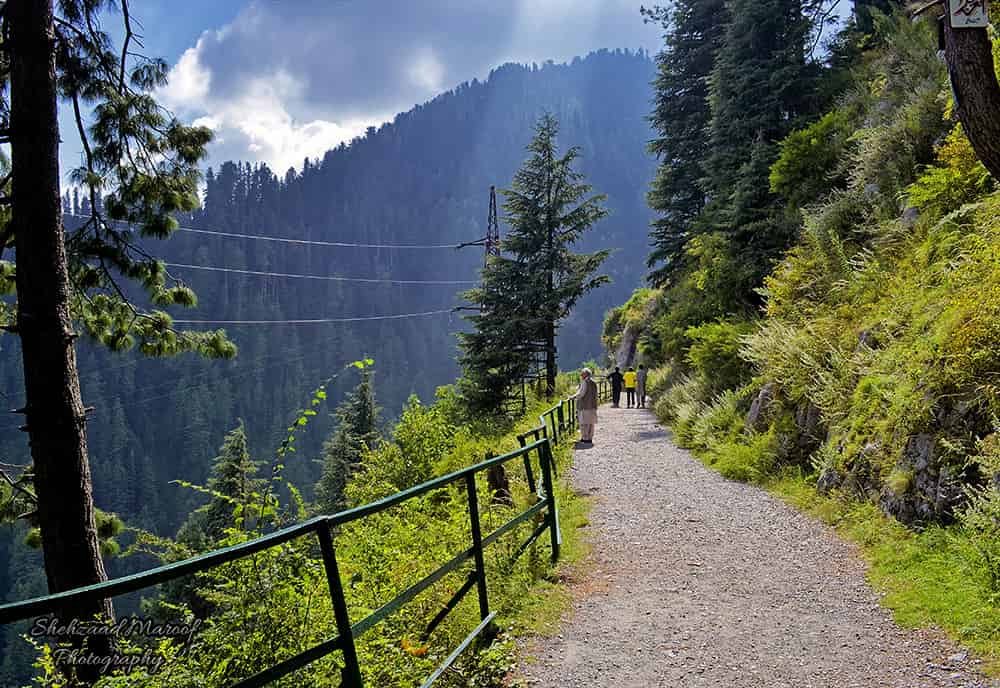
Dunga Gali is the kind of place that rewards travelers who slow down. The air smells of pine resin and wet earth, monkeys chatter somewhere in the canopy, and the famous Pipeline Track begins right here — a famously level walk through Ayubia National Park where a colonial-era water pipeline still lies beneath the path. From the town’s slopes, trekkers climb Mushkpuri, the Galyat’s second-highest peak, for some of the finest views in northern Punjab’s border hills. Come in summer for green forests and mist, come in autumn for golden foliage and clear skies, or come in winter to see the whole town wrapped in snow. This guide covers everything you need: the town’s British-era history, the best things to do in and around Dunga Gali, how to reach it from Islamabad, Lahore, and Karachi, where to stay, what to eat, the weather through the year, language and culture, shopping, travel tips, and the best time to visit.
Quick Facts
- Location: Nathia Gali Union Council, Abbottabad District, Khyber Pakhtunkhwa — inside Ayubia National Park, Galiyat region
- Altitude: Around 2,500 meters (8,200 feet) above sea level
- Famous For: The Dunga Gali–Ayubia Pipeline Track (1930); the Mushkpuri trek trailhead; dense Himalayan pine forests; Haro River’s origin
- Nearest City: Abbottabad, about 34 km away; Nathia Gali is just 3 km down the road
- Accessibility: Good — paved road via Murree–Nathia Gali; about 80 km from Islamabad; the town itself is walkable
- Known Landmarks: The giant colonial water storage tank at the Pipeline Track’s start; Mushkpuri peak; the old British-era church site
- Best For: Families, easy walkers, beginner trekkers, nature lovers, photographers, and anyone escaping city heat
Why Visit Dunga Gali
Visit Dunga Gali because it gives you the very best of the Galiyat hills without demanding anything difficult in return. The town’s star attraction, the Pipeline Track, is famously flat — it was leveled in 1930 so water could flow by gravity from Dunga Gali to Ayubia and Murree — which makes it one of the rare mountain walks in Pakistan that small children, grandparents, and first-time trekkers can all enjoy together. Four kilometers of soft forest path, moss-covered benches, towering Himalayan cedars and pines, and birdsong the whole way: it is the easiest great walk in the country, and it starts right here.
Then there is the view upward. Dunga Gali sits on the slopes of the Mukshpuri mountains, and the trek to Mushkpuri Top — the Galyat’s second-highest summit at about 2,800 meters — begins a short walk from the town’s bazaar. In about two to three hours of steady climbing you can stand on a summit where, on clear days, the Jhelum river, Circle Bakote, Bagh district, and even Islamabad are said to be visible, with the white mass of Nanga Parbat sometimes appearing far to the north. Few hill towns in Pakistan hand you both a gentle forest stroll and a proper summit in the same weekend.
Dunga Gali is also a history you can walk through. During the British Raj this was a sanatorium for British soldiers, with its own hotel, post office, and church, and European families kept summer houses on the southern slopes of the Mukshpuri range. The giant open steel water tank at the start of the Pipeline Track — a huge circular reservoir built by the British engineers — is still there, a piece of 1930s engineering sitting quietly in the forest. The town is small enough to feel like a village and developed enough to feed and house you comfortably, which is exactly the combination that makes a mountain weekend work.
Finally, Dunga Gali is perfectly placed. It is inside Ayubia National Park, 3 kilometers from Nathia Gali’s bazaar and restaurants, within reach of Ayubia’s chairlift and the Miranjani trek, and only a few hours’ drive from Islamabad. You can use it as a quiet base and fan out across the whole Galiyat region — or you can simply walk the pipeline, climb Mushkpuri, and spend your evenings watching mist roll through the pines. For a full look at the national park that surrounds the town, see our Ayubia National Park travel guide.
History of Dunga Gali
Unlike the ancient cities of the plains, Dunga Gali has no Mughal tombs or Indus ruins — its recorded history begins with the British discovery of the Galiyat hills in the 19th century, and it is honestly told as the story of a colonial hill sanatorium. When the British established themselves in the Punjab after 1849, officers and their families began fleeing the summer heat of the plains for the cool forests of the Murree hills and the Galiyat. Dunga Gali, sitting at 8,200 feet on well-watered slopes thick with Himalayan cedar and pine, was developed as a sanatorium for British soldiers. By the late 19th century the little settlement had a hotel, a small church, and a post office — the full kit of a functioning British hill station in miniature.
The town’s most famous piece of history is its waterworks. In 1930 the British built a water pipeline starting from Dunga Gali to supply the hill stations of Ayubia and Murree below. The engineering was elegant: in the heights behind Dunga Gali, run-off from natural springs and rain-water channels was networked into a huge circular steel water tank — about 30 meters across and 10 meters high, open to the sky — built right at Dunga Gali. Then a track roughly three meters wide was carved along the mountain slope through thick forest, following a level line so the water would flow by gravity, and the pipeline was laid in the middle of it. That maintenance track, running about 4 kilometers from Dunga Gali to Ayubia, is what travelers walk today as the Pipeline Track. It is one of the finest surviving pieces of colonial engineering you can visit on foot in Pakistan.
European civilians loved the area too: British and European families built houses on the southern slopes of the nearby Mukshpuri mountains, drawn by the same cool summers that made the sanatorium work. The Dunga Gali range itself once formed Abbottabad’s eastern boundary with the princely state of Jammu and Kashmir — the town literally sat on the edge of British India. After Partition in 1947, Dunga Gali became part of Pakistan’s Khyber Pakhtunkhwa, and its forests were eventually protected inside Ayubia National Park, which was declared a national park in 1984 and expanded in 1998. The park is named after Field Marshal Ayub Khan, who came from the Hazara region, and it now protects the moist temperate forests that make the Pipeline Track so beautiful.
Today Dunga Gali is a quiet tourism town rather than a military sanatorium, but the layers show: the church is gone and the hotel of the Raj is long replaced, yet the water tank still stands, the pipeline still runs beneath the walking track, and the forest the British engineers carved through is now one of Pakistan’s best-protected national parks. When you walk the Pipeline Track, you are walking a 1930s public-works project that became, almost by accident, the country’s most beloved forest walk.
Top Things to Do in Dunga Gali
Walk the Dunga Gali–Ayubia Pipeline Track
This is the reason most people come, and it deserves its fame. The Pipeline Track runs about 4 kilometers one way from Dunga Gali to Ayubia through the heart of Ayubia National Park, and because it was graded for a gravity-fed water pipeline, it is almost completely flat — a 40 to 50-minute walk each way at an easy pace. The path passes under Himalayan cedar, pine, and oak, with ferns and moss softening everything, benches to rest on, and the old pipeline itself visible in places. Start early in the morning for mist hanging in the trees and the best bird activity. At the Ayubia end you can ride the chairlift or simply turn around and walk back; the round trip makes a perfect half-day outing for all ages.
Trek to Mushkpuri Top
The trail to Mushkpuri — at about 2,800 meters (9,200 feet), the second-highest peak in the Galiyat after Miranjani — begins near Dunga Gali, roughly 2.5 to 4 kilometers of steady climbing that most walkers finish in two to three hours. The path rises through subalpine conifer forest of fir and oak, opening near the top to wide grassy slopes and a summit with sweeping views across the Galiyat ridgeline. On clear days travelers report seeing the Jhelum river, Circle Bakote, Bagh, and even Islamabad far below, with Nanga Parbat sometimes visible to the north. In winter the trek becomes a proper snow walk and needs warm gear and good shoes; in summer it is a flower-strewn climb. Go with a local guide if you are unsure of the route, and start early to be down before afternoon weather builds.
See the Colonial Water Tank
At the Dunga Gali end of the Pipeline Track stands the great circular steel water tank the British built in 1930 — a huge open reservoir, roughly 30 meters in diameter, that collected spring and rain water for the pipeline to Ayubia and Murree. It is a striking piece of industrial heritage sitting in the middle of a forest, and it makes a fine photograph before you start the walk. The Moto Tunnel, a restored colonial-era tunnel near the track, is another small piece of the same engineering story worth a look.
Explore Ayubia National Park’s Forests
Dunga Gali sits inside Ayubia National Park, and the forests around the town are the park at its best: moist temperate forest of Himalayan cedar, blue pine, oak, and horse chestnut, with wildflowers in summer and brilliant color in autumn. Dawn walks from the town are excellent for birds, and lucky walkers sometimes spot monkeys in the canopy — leopards live in the park too, though they are rarely seen. Keep to the marked tracks, carry your litter out, and remember you are in a protected national park where the forest department manages both the wildlife and the pipeline.
Day-Trip to Nathia Gali
Nathia Gali’s bazaar is only 3 kilometers away — a short drive or a pleasant walk — and it is worth an afternoon. Browse the shops, eat at one of the restaurants, and walk the town’s own short trails. The Mukshpuri and Miranjani treks also start from the Nathia Gali side, so Dunga Gali makes a quieter, cheaper base for tackling the Galiyat’s big walks while Nathia Gali handles your shopping and dining.
Famous Places In and Around Dunga Gali
- Mushkpuri Top — the Galyat’s second-highest summit (~2,800 m); the trek starts near Dunga Gali
- Pipeline Track to Ayubia — the famous flat 4 km forest walk ending at Ayubia’s chairlift
- Nathia Gali — the Galiyat’s main bazaar town, 3 km away, with restaurants and shops
- Ayubia — chairlift, picnic spots, and the national park’s other mini-resorts (Khaira Gali, Changla Gali, Khanspur, Ghora Dhaka)
- Miranjani — the Galyat’s highest peak (2,992 m); a longer day trek from the Nathia Gali side
- Lalazar — meadows and picnic area reachable from the Galiyat road
- Haro River headwaters — the river that waters Haripur district rises on the southern slopes of the Dunga Gali range
How to Reach Dunga Gali
Dunga Gali is one of the easiest hill towns in northern Pakistan to reach: it sits on the paved Murree–Galiyat road network, and the drive from Islamabad climbs through some of the prettiest scenery in the country. Most travelers come by road, and the town is compact enough that once you arrive you can walk everywhere.
Route Details
- From Islamabad (~80 km, 2.5–3 hours): Take the Murree Expressway (N-75) from Islamabad toward Murree, then continue on the Galiyat road through the hills to Nathia Gali and on to Dunga Gali. The road is paved and scenic but winding — drive carefully, especially in fog or rain. Leave Islamabad early to arrive by midday.
- From Lahore (~450 km, 7–9 hours): Take the M-2 motorway to Islamabad, then follow the Islamabad route above. Most Lahore travelers either drive straight through or break the journey with a night in Islamabad. Tour vans and private cars are the most comfortable option for groups.
- From Karachi: Fly to Islamabad (about 2 hours) and continue by road — this is by far the fastest and most practical option. Alternatively, take the train or a long-haul bus/coach to Rawalpindi/Islamabad and pick up road transport from there.
- Nearest airport: Islamabad International Airport, from where the drive to Dunga Gali takes roughly 3 hours depending on traffic.
- Road conditions by season: The road is open year-round, but in winter (December–February) heavy snowfall can close or slow the Galiyat roads — check conditions before leaving, carry tire chains in deep winter, and prefer daytime driving. Monsoon (July–August) brings mist and occasional landslides; the road usually stays passable but drive slowly.
- Transport options: Private car or rented car with driver is the most flexible. Public vans and coasters run from Rawalpindi/Islamabad to Murree and Nathia Gali, from where a short taxi hop reaches Dunga Gali. Many travel companies run weekend Galiyat tour packages from Islamabad and Lahore that include Dunga Gali and the Pipeline Track. Within the town, walk — it is small.
Where to Stay in Dunga Gali
Dunga Gali has a modest but comfortable range of places to stay, and the town’s small bazaar area holds several hotels and guesthouses within walking distance of the Pipeline Track’s starting point. Official tourism listings for the Galiyat name establishments such as Hotel Amore, Track View Hotel, Snow Land, and Al-Makkah in Dunga Gali itself — mid-range, family-friendly hotels of the sort that serve Galiyat travelers well: clean rooms, hot water (confirm in winter), and on-site restaurants or easy access to the bazaar’s eateries. Book ahead in peak summer weekends and on public holidays, when the whole Galiyat region fills up.
For more choice, Nathia Gali — just 3 kilometers away — has the Galiyat’s biggest concentration of hotels across budgets, from well-known mid-range properties to pricier resorts, and Ayubia’s PTDC Motel is another reliable option a short drive off. Many travelers stay in Nathia Gali and treat Dunga Gali as a day trip; equally, staying in Dunga Gali itself means you wake up at the Pipeline Track’s doorstep and enjoy quieter evenings. Camping is possible in the wider area for experienced campers, but inside Ayubia National Park you should stick to designated spots and follow forest department rules — the forest here is protected, and rightly so.
Where to Eat: Local Foods of Dunga Gali
Galiyat food is hearty mountain food, and Dunga Gali’s small bazaar serves it well. Expect the northern Punjab hill-station staples done properly: chicken karahi and desi murgh (village chicken) curries, BBQ and tandoori platters, daal fry with fresh tandoori roti, and chapli kebabs. Breakfast in the hills means parathas with omelets or anda-paratha and doodh patti — strong milky tea — which tastes twice as good in cold mountain air. On the road up, the famous stop at Charra Pani for hot, spicy pakoras is a Galiyat tradition worth keeping.
Hotel restaurants in Dunga Gali serve Pakistani and continental basics, and Nathia Gali’s larger bazaar (3 km away) widens the choice with more restaurants and bakeries. Prices are budget-friendly to moderate by city standards — a full meal at a bazaar dhaba-style eatery is easy on the wallet, while hotel restaurants charge a bit more. Carry some snacks and water for the Pipeline Track and the Mushkpuri climb; small shops in the bazaar cover the basics. If you are visiting in winter, nothing beats coming down from a snowy walk to a steaming bowl of soup or a karahi shared with your group.
Weather in Dunga Gali
At 8,200 feet, Dunga Gali’s weather is a world away from the plains: summers are cool and fresh, winters bring real snow, and the monsoon wraps the pines in romantic mist. Pack for the mountain, not the city you left behind.
| Season | Temperature Range | Conditions |
|---|---|---|
| Winter (Dec–Feb) | -5 to 10°C | Cold with regular snowfall; the town and Pipeline Track turn white; some tracks close after heavy snow |
| Spring (Mar–May) | 8 to 20°C | Pleasant and green; wildflowers appear; excellent walking weather, cool evenings |
| Summer (Jun–Aug) | 15 to 25°C | Cool and comfortable while the plains swelter; monsoon mist and afternoon showers in July–August |
| Autumn (Sep–Nov) | 10 to 20°C | Clear skies and golden foliage; arguably the prettiest season for photography |
Weather in the hills changes fast — a sunny morning can turn misty by afternoon. Always carry a light jacket and rain protection, even in summer.
Language and Culture of Dunga Gali
Dunga Gali sits in the Galiyat region of Abbottabad district, where Hindko is the local language of daily life, with Urdu spoken and understood everywhere and English common in hotels and among guides. The people of the Galiyat are known for their hospitality to travelers — tourism has been the region’s lifeblood for generations — and you will find shopkeepers, hotel staff, and trekking guides welcoming and helpful.
Culturally the area is conservative in the gentle way of mountain communities: dress modestly (covered shoulders and knees are appreciated, especially for women), ask before photographing people, and greet shopkeepers and elders politely. The town has mosques for prayer, and during Ramadan restaurants may keep shorter daytime hours. On the trails, the local ethic is simple and worth copying: take your litter back with you, stay on marked paths, and keep noise down in the national park’s forest — the wildlife was here first.
Shopping in Dunga Gali
Dunga Gali’s own bazaar is small — a handful of shops selling snacks, trekking basics, and souvenirs — so plan your real shopping for Nathia Gali, 3 kilometers down the road. There you will find the classic Galiyat haul: warm woolen shawls, sweaters, and socks (very welcome in winter), local honey, walnuts and other dry fruits, and pine-wood handicrafts and walking sticks. Ayubia’s shops sell similar souvenirs near the chairlift. Prices are tourist-town prices — polite bargaining is normal and expected. There are no shopping malls anywhere in the Galiyat; the bazaars are the experience, and they are charming enough without one.
Travel Tips for Dunga Gali
Packing Essentials
Sturdy walking shoes with grip are non-negotiable — the Pipeline Track is flat but the Mushkpuri trail is not, and both can be slippery when wet. Pack layers: a warm jacket even in summer (evenings are cool), rain protection in monsoon, and full winter gear (gloves, cap, thermal layers) from December to February. Bring sunscreen and sunglasses — mountain sun is strong — a reusable water bottle, snacks for the trails, a basic first-aid kit, and a power bank. If you plan the Mushkpuri trek, a walking stick helps on the descent.
Safety Tips
Dunga Gali is a well-traveled, family-friendly hill town and the Pipeline Track is one of the safest walks in Pakistan — but mountain sense still applies. Start treks early and aim to be back before dark; stay on marked trails in the national park; do not wander off the Pipeline Track into the forest. In winter, check road and weather conditions before traveling and avoid driving the hill roads at night in fog or snow. Keep hotel and emergency numbers saved, and let your hotel know your trekking plans if you head up Mushkpuri.
Money & Connectivity
Carry cash. Dunga Gali’s small bazaar runs largely on cash, and while Nathia Gali has some ATMs, they can run dry on busy weekends — withdraw in Islamabad, Murree, or Abbottabad before climbing into the hills. Mobile signals from the major networks generally reach the Galiyat towns, but coverage gets patchy inside the forest and on the upper Mushkpuri slopes; download offline maps and tell someone your plans before a long trek. Wi-Fi is available at most hotels but can be slow — plan for a semi-digital detox and enjoy it.
Best Time to Visit Dunga Gali
Summer (May–August): The Classic Season
This is when Dunga Gali shines for most travelers: 15–25°C days while Lahore and Islamabad bake, green forests, misty monsoon mornings, and every hotel and restaurant open. It is also the busiest season — book accommodation ahead for weekends and Eid holidays. Perfect for: families, the Pipeline Track, Mushkpuri trekking, and escaping the heat.
Autumn (September–November): The Photographer’s Season
Clear skies, crisp air, golden and russet foliage, and thinner crowds. The Pipeline Track is at its most photogenic, and the views from Mushkpuri stretch furthest on autumn’s clear days. Perfect for: photography, couples, quiet walkers, and budget travelers (shoulder-season rates).
Winter (December–February): The Snow Season
Dunga Gali under snow is magical — the pines heavy and white, the Pipeline Track a winter postcard. But it is also the most demanding season: roads can close after heavy snowfall, some hotels shut, and you need proper winter clothing and flexible plans. Perfect for: snow lovers, winter trekkers with experience, and anyone who finds an empty snowy forest romantic.
Spring (March–April): The Gentle Season
Mild days, wildflowers, fewer visitors, and the forest waking up. A lovely time for easy walking before the summer rush. Perfect for: relaxed travelers, nature lovers, and anyone who prefers their mountains quiet.
Final Thoughts
Dunga Gali does not shout for attention the way Pakistan’s great peaks do — and that is exactly its charm. It is a town built around two simple, perfect pleasures: a flat walk through one of the country’s most beautiful protected forests, and a climb to a summit with views across the Galiyat. Add a genuine slice of British hill-station history, the smell of pine in cool mountain air, and a location that puts Nathia Gali, Ayubia, and Miranjani all within easy reach, and you have one of the most complete long-weekend destinations in northern Pakistan.
Whether you come for a single misty morning on the Pipeline Track or a full week of Galiyat trekking, Dunga Gali rewards the traveler who takes it slowly. Walk the pipeline early, climb Mushkpuri if your legs are willing, eat well in the bazaar, and let the forest do the rest. For more mountain inspiration, browse our Explore Pakistan collection — and if the high valleys call you next, our Malam Jabba guide is a natural follow-up.
FAQs
Where is Dunga Gali located?
Dunga Gali is in the Galiyat region of Abbottabad District, Khyber Pakhtunkhwa, inside Ayubia National Park — about 3 km from Nathia Gali, 34 km from Abbottabad, and roughly 80 km from Islamabad.
What is Dunga Gali famous for?
The Dunga Gali–Ayubia Pipeline Track — a flat, 4 km forest walk built in 1930 along a British water pipeline — and the Mushkpuri trek trailhead. Its pine forests, colonial history, and cool summer climate complete the picture.
How long is the Pipeline Track and how difficult is it?
About 4 kilometers one way (8 km return), almost completely flat, taking 40–50 minutes each way at an easy pace. It is one of Pakistan’s easiest and most family-friendly walks.
How do I reach Dunga Gali from Islamabad?
Drive the Murree Expressway to Murree, then continue on the Galiyat road via Nathia Gali — about 80 km and 2.5–3 hours. Private car, rented car with driver, public vans to Nathia Gali, or weekend tour packages all work.
What is the best time to visit Dunga Gali?
May to August for cool summer escapes, September to November for clear skies and autumn color, and December to February for snow (with proper winter preparation and flexible plans).
Is Dunga Gali safe for families?
Yes — it is one of the most family-friendly hill destinations in Pakistan. The Pipeline Track suits all ages, the town is compact and well-served, and standard mountain precautions (daylight travel, staying on marked trails) are enough.
Where can I stay in Dunga Gali?
The town has mid-range hotels and guesthouses near the bazaar (including properties listed by the tourism department such as Hotel Amore, Track View Hotel, Snow Land, and Al-Makkah), with much wider choice 3 km away in Nathia Gali. Book ahead on summer weekends.
What food is available in Dunga Gali?
Hearty hill-station Pakistani food: chicken karahi, desi murgh, BBQ and tandoori platters, daal, chapli kebabs, parathas and doodh patti for breakfast. The Charra Pani pakora stop on the way up is a Galiyat tradition.