Lahore is famous for its Mughal tombs, its forts, and its food — but some of the city’s most fascinating stories live quietly between bookcases. The Dyal Singh Trust Library on Nisbat Road, near Lakshmi Chowk, is one of the oldest public libraries in Pakistan: founded in 1908 in pursuance of the will of Sardar Dyal Singh Majithia, a 19th-century philanthropist who gave his entire fortune to education, it holds roughly 176,000 books and 10,000 periodicals in a handsome colonial building that has survived Partition, a 12-year closure, and more than a century of Lahore summers. If you love books, history, or simply seeing a different side of Lahore, this Dyal Singh Trust Library travel guide will show you why this literary landmark deserves a morning of your trip.
This is not a museum you glance at and leave — it is a working library with nearly 7,000 members, 150 to 200 readers passing through every day, a children’s section, a women’s reading room, and a research cell that has published over a hundred books. The building itself is worth the visit: verandahs that serve as reading rooms, three main halls with original wooden bookcases, and the particular hush that only a century-old library has. Around it sits some of Lahore’s most characterful old-city life — Lakshmi Chowk, Gawalmandi’s food streets, and the book bazaars of Urdu Bazaar a short ride away. This guide covers the library’s remarkable history, what to see inside and around it, how to reach it from Islamabad, Lahore’s airport, and Karachi, where to stay, what to eat, Lahore’s weather, language and culture, shopping, practical travel tips, and the best time to visit.
Quick Facts
- Location: Nisbat Road, near Lakshmi Chowk, Lahore, Punjab
- Altitude: Around 200 meters (700 feet) — Lahore is a plains city
- Famous For: Founded 1908 from the will of Sardar Dyal Singh Majithia; ~176,000 books and 10,000 periodicals; colonial-era building; quarterly journal “Minhaj”
- Nearest City: Lahore itself — Allama Iqbal International Airport is roughly 20 km away; Lahore Railway Station is nearby
- Accessibility: Easy — central Lahore, reachable by car, rickshaw, taxi, ride-hailing, or metrobus from anywhere in the city
- Known Landmarks: The library’s verandahs and three main halls; Lakshmi Chowk; nearby Gawalmandi food street
- Best For: Book lovers, researchers, history buffs, students, architecture admirers, and travelers exploring old Lahore
Why Visit Dyal Singh Trust Library
Visit the Dyal Singh Trust Library because it is one of the rare places in Pakistan where you can physically touch the country’s intellectual history. The collection — built up over more than a century — spans English and oriental languages across history, literature, religion, law, economics, medicine, and engineering. For researchers and serious readers, it is a working treasure: the library even buys books on members’ request, filling a requisition form if the title you need is not on the shelves. For casual visitors, simply standing in the three main halls among the original bookcases is an experience no modern bookshop can replicate.
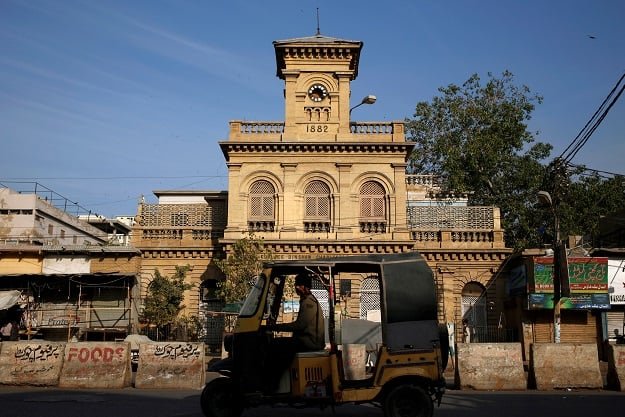
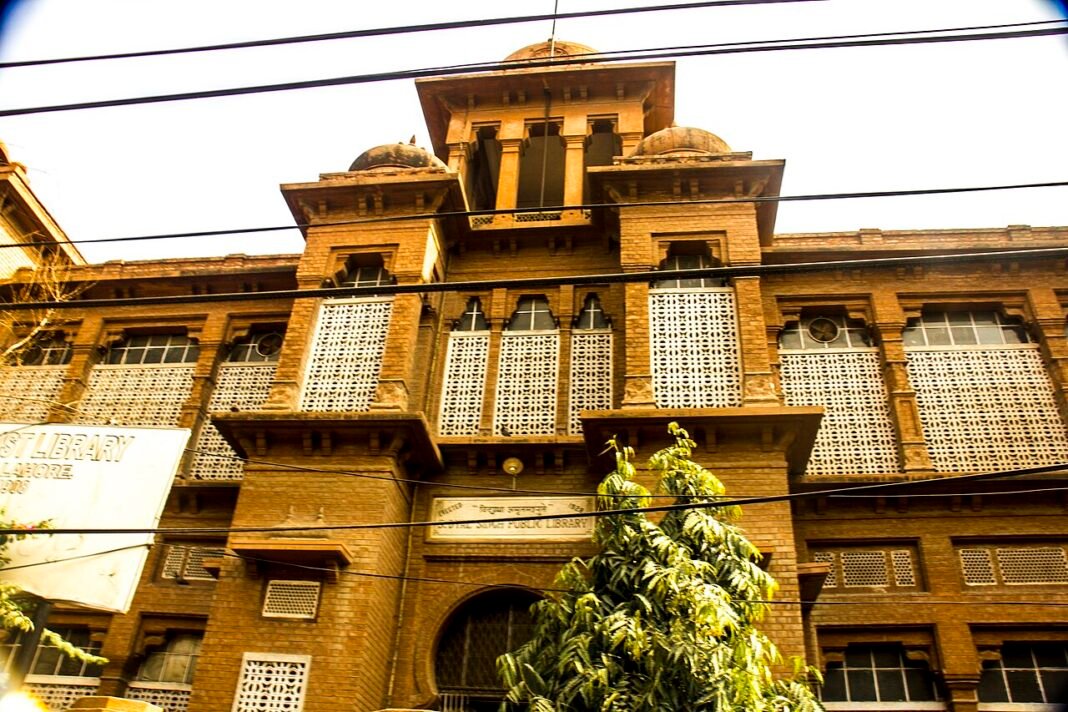
The building is a destination in itself. Described by visitors as a place that feels like “walking into literary times,” it keeps its original character: two beautiful verandahs at the main entrance that serve as reading rooms, a grand hall, spacious rooms including a children’s section and a cultural forum, and three storeys of well-stocked halls. It is the kind of colonial architecture Lahore does beautifully — solid, shaded, and made for reading — and photographers will find the light through the verandahs irresistible.
Then there is the story. Sardar Dyal Singh Majithia (1848–1898) was one of the most enlightened figures of 19th-century Punjab: a wealthy Sikh aristocrat who, being childless, willed his entire fortune to three trusts for spreading education — a college, a library, and a newspaper. The newspaper was The Tribune, which still publishes today; the college became Dyal Singh College; and the library became this one. That a single man’s will created institutions that still serve readers on both sides of the Partition border — the Dyal Singh Public Library also runs in New Delhi — is a story worth knowing, and this building is where you come to feel it.
Finally, the library sits in one of Lahore’s most atmospheric old neighborhoods. Lakshmi Chowk and Gawalmandi put you minutes from legendary food streets, and the great Mughal monuments — the Badshahi Mosque, Lahore Fort, and the Walled City gates — are a short ride away. A morning at the library pairs naturally with an afternoon in old Lahore; see our Badshahi Mosque travel guide and Delhi Gate travel guide to plan the rest of your day.
History of Dyal Singh Trust Library
The library’s history begins with its founder. Sardar Dyal Singh Majithia was born in 1848 (some accounts say 1849) at Kashni in India, the son of Sardar Lehna Singh, a respected Sikh sardar who had served Maharaja Ranjit Singh. Inheriting vast estates after his father’s death in 1854, Dyal Singh grew into one of the richest — and most broad-minded — men of the Punjab. Married to the daughter of the Raja of Ambala but childless, he resolved to devote his wealth to the public good. On his death on 9 September 1898, his will established three trusts for education: Dyal Singh College, the Dyal Singh Library, and the newspaper The Tribune, which he had founded to give voice to liberal opinion in the Punjab.
The library was established in 1908 in pursuance of that will. It began modestly, as a reading room in Sardar Dyal Singh’s own residence, housing his personal collection of about 1,000 books, with an initial grant of Rs. 60,000 for books and the library’s financial needs. When the purpose-built library building was completed, the collection was shifted there in 1928 — the handsome Nisbat Road building visitors see today, with its verandahs, halls, and three storeys of bookcases.
Partition nearly ended the story. In 1947, amid the riots and mass migration in Lahore, the library suffered badly: large numbers of books and furniture were damaged, and with the migration of its non-Muslim trustees, the institution closed its doors. It remained shut for twelve years — a silent building full of books nobody could read. In 1964 the Evacuee Trust Property Board of the Government of Pakistan took administrative control and revived it, reopening the gates to the public. In 1985, under a directive of the President of Pakistan, control passed to the Education Department of the Government of Punjab, but in 1989 it was repatriated to the Evacuee Trust Property Board, which manages it to this day.
The modern library has grown far beyond its 1,000-book beginnings. It now houses around 176,000 books and 10,000 periodicals, adds roughly 1,500 to 2,000 new books every year, and serves about 7,000 members — a thousand of them lifetime members — with 150 to 200 readers visiting daily. Its research cell has published about 108 books and brings out the quarterly journal “Minhaj”; two of its publications on the Seerat of the Holy Prophet received Presidential Awards. From a philanthropist’s private reading room to one of Pakistan’s great public libraries, the Dyal Singh Trust Library has kept its founder’s mission alive for well over a century.
Top Things to Do in Dyal Singh Trust Library
Explore the Three Main Halls
The heart of the visit is the library’s three main halls, spread over three storeys, with their original furniture and tall wooden bookcases. The collection covers industrial engineering, geology, medicine, mathematics, religion, economics, public administration, law, psychology, accounting, history, and literature — in English and oriental languages. Wander the stacks, pull out a volume that catches your eye, and settle into the particular quiet that only old libraries have. Members can borrow; visitors can read in the halls.
Sit in the Verandah Reading Rooms
At the main entrance, two beautiful verandahs serve as reading rooms — shaded, breezy, and lined with readers. This is the building’s most atmospheric spot: the light, the ceiling fans, the rustle of newspapers. The library subscribes to national and international newspapers in English and Urdu, plus magazines and journals, so the verandahs double as Lahore’s most civilized newsroom. Bring a notebook; the place invites reflection.
Visit the Children’s Section and Women’s Reading Room
The library was designed as a public institution in the fullest sense: it maintains a dedicated children’s section and a separate reading room for women, alongside the general halls. If you are traveling with children, the children’s section is a calm, welcoming stop; the women’s reading room reflects the founder’s vision of education for everyone. Ask the staff about current facilities — the library also offers photocopy services, computer stations, and internet access.
Browse the Research Cell’s Publications
The library’s research cell has produced about 108 books and the quarterly journal “Minhaj” — ask the librarians about available publications. Two of the library’s Seerat publications received Presidential Awards at the annual Seerat Conference in Islamabad, a distinction the staff are proud of. For researchers of Islamic studies, Urdu literature, or Punjab history, the cell’s output is worth investigating.
Walk Lakshmi Chowk and Gawalmandi
Step outside and you are in old Lahore at its most vivid. Lakshmi Chowk is one of the city’s historic commercial squares, and Gawalmandi — a short walk away — is among Lahore’s most famous food streets. Combine your library morning with a Gawalmandi lunch and you have one of the great Lahore days: books, then food. The area is busy and gloriously chaotic — exactly as old Lahore should be.
Famous Places In and Around Dyal Singh Trust Library
- Lakshmi Chowk — historic square and market right by the library
- Gawalmandi Food Street — legendary Lahore eateries a short walk away
- Urdu Bazaar — Lahore’s famous book market, a short ride from the library
- Badshahi Mosque — the great Mughal mosque of Lahore (see our Badshahi Mosque travel guide)
- Delhi Gate & Walled City — the old city’s historic entrance (see our Delhi Gate guide)
- Data Darbar — the shrine of Hazrat Ali Hajveri (see our Data Darbar guide)
- Dai Anga’s Mosque — a 17th-century Mughal mosque nearby (see our Dai Anga’s Mosque guide)
How to Reach Dyal Singh Trust Library
The library sits in central Lahore on Nisbat Road near Lakshmi Chowk, so reaching it is straightforward from anywhere in the city — and Lahore itself is well connected to the rest of Pakistan by motorway, rail, and air.
Route Details
- From Islamabad (~380 km, 4–5 hours): Take the M-2 motorway to Lahore, then follow city roads toward Lakshmi Chowk/Nisbat Road. The library is in the older central part of the city — your driver or ride-hailing app will know Lakshmi Chowk.
- From Lahore Airport: Allama Iqbal International Airport is roughly 20 km from central Lahore. A taxi or ride-hailing car to Nisbat Road takes 30–45 minutes depending on traffic.
- From Karachi: Fly to Lahore (about 1.5 hours) — the fastest option by far. Alternatively, take the train to Lahore Railway Station, which is close to Lakshmi Chowk, or a long-haul coach.
- Within Lahore: The library is easily reached by rickshaw, taxi, or ride-hailing from anywhere in the city. The Lahore Metrobus and feeder routes serve the broader area; ask locally for the nearest stop to Lakshmi Chowk. Parking near the library is tight, as in all of old Lahore — arrive by rickshaw or taxi if you can.
- Visiting notes: The library is a working institution, not a ticketed monument — it opens for members and readers. If you are not a member, be polite at the entrance, explain you are a visitor interested in the historic building, and ask the staff about viewing the halls. Membership is open to all, and day visitors are generally accommodated; avoid exam-season rushes if you want a quiet look around.
Where to Stay in Dyal Singh Trust Library
You will not stay at the library — but its central location puts you within easy reach of Lahore’s full range of accommodation. The area around Lakshmi Chowk and the Railway Station has budget hotels and guesthouses popular with domestic travelers; they are basic, affordable, and put you within walking or short-rickshaw distance of the library, Gawalmandi, and the Walled City. For mid-range comfort, the Gulberg and Model Town areas (15–25 minutes by car) offer well-known hotels with reliable standards, restaurants, and easier parking.
Lahore’s luxury tier — the big five-star properties on or near The Mall and in Gulberg — is a short drive away and suits travelers who want old-city sightseeing by day and full comfort by night. Wherever you stay, choose your base by trip style: old-city budget hotels for maximum atmosphere and minimum travel time to heritage sites, Gulberg/Model Town for comfort and dining, and the Cantonment side for quieter nights. Book ahead during the winter tourist season (November–February) and around major events, when Lahore’s hotels fill fast.
Where to Eat: Local Foods of Dyal Singh Trust Library
One of the great joys of visiting this library is that you emerge straight into one of Pakistan’s best food neighborhoods. Gawalmandi’s food street — minutes away — is legendary for Lahori breakfast and barbecue: siri paye (trotter curry), nihari, channay, halwa puri, and lassi served in tall glasses. Lakshmi Chowk itself has long been famous for its eateries, and the surrounding streets offer dahi bhalla, gol gappay, samosas, and fresh juices at every corner.
For the full Lahori experience, plan your library visit for the morning and lunch at Gawalmandi — it is the natural pairing, and exactly what generations of Lahoris have done. Prices are budget-friendly at street level: a hearty breakfast or lunch at a food-street eatery costs little by any standard, while sit-down restaurants charge moderate rates. If you want to take the book theme further, Urdu Bazaar’s bookshops are best browsed on a full stomach. Do try the lassi; in Lahore it is practically a food group.
Weather in Dyal Singh Trust Library
Lahore’s weather is classic Punjab plains: blazing summers, a humid monsoon, and short, pleasant winters. The library’s verandahs are loveliest when the weather is kind — plan accordingly.
| Season | Temperature Range | Conditions |
|---|---|---|
| Winter (Dec–Feb) | 5 to 20°C | Cool and pleasant; foggy mornings in December–January; the best season for sightseeing |
| Spring (Mar–Apr) | 20 to 35°C | Warm and comfortable; ideal for walking around old Lahore |
| Summer (May–Jun) | 35 to 45°C | Intensely hot; plan indoor activities midday and carry water |
| Monsoon/Autumn (Jul–Nov) | 25 to 38°C | Humid monsoon rains July–August; pleasant again by October–November |
The library’s shaded verandahs and high-ceilinged halls stay cooler than the street outside, which is one more reason a summer morning there beats a summer afternoon anywhere else.
Language and Culture of Dyal Singh Trust Library
The library lives at the intersection of Lahore’s two great literary languages: Urdu and Punjabi are what you will hear in the streets around Lakshmi Chowk, while the collection itself spans English and oriental languages — a reminder of the Punjab’s layered intellectual history. English is widely understood in the library and among educated Lahoris, so visitors will have no trouble communicating.
As a working library, the culture here is one of quiet respect: keep your voice down in the halls, switch your phone to silent, and handle old volumes gently. If you wish to photograph the interior, ask the staff first — permission is usually granted politely when asked politely. Dress is casual by Lahore standards, but modest clothing is appreciated in this old-city neighborhood. The staff and regular readers are proud of the institution; a genuine question about its history will usually earn you a story.
Shopping in Dyal Singh Trust Library
The library’s neighborhood is a book lover’s shopping district waiting to happen. Urdu Bazaar — a short ride away — is Lahore’s historic book market, where new and second-hand booksellers line the streets and you can find everything from Urdu classics to competitive-exam guides at bargain prices. Anarkali Bazaar, one of South Asia’s oldest markets, is nearby for clothes, shoes, and traditional goods, while Ichhra offers everyday shopping at local prices.
For souvenirs with a literary flavor, ask at Urdu Bazaar for old prints, calligraphy, and second-hand treasures — the kind of finds that make a trip memorable. There are no malls in the immediate old-city area, and that is part of the charm: this is bazaar shopping, with bargaining expected and chai breaks mandatory. For modern malls, Gulberg and DHA are a drive away.
Travel Tips for Dyal Singh Trust Library
Packing Essentials
Lahore is a city trip, so pack light and practical: comfortable walking shoes for old-city streets, sun protection (cap, sunglasses, sunscreen) for most of the year, and a light jacket for winter mornings. Bring a notebook — the library inspires them — and a reusable water bottle. If you plan to use the library’s reading rooms seriously, carry identification; membership applications and reader formalities go smoother with ID in hand.
Safety Tips
The Lakshmi Chowk area is busy and generally safe during the day, but it is crowded — keep valuables secure, be alert in packed bazaars, and use ride-hailing or known taxi drivers rather than hailing unknown transport late at night. Traffic around old Lahore is famously chaotic; let your driver handle it and cross streets carefully. The library itself is a calm, secure public institution.
Money & Connectivity
Cash is still king in old Lahore’s bazaars and food streets, though cards are accepted at larger restaurants and hotels. ATMs are plentiful across the city — withdraw before heading into the most crowded bazaar lanes. Mobile coverage in Lahore is excellent on all major networks, and most hotels and cafes offer Wi-Fi. The library itself provides computer stations and internet facilities for readers.
Best Time to Visit Dyal Singh Trust Library
Winter (November–February): The Ideal Season
Cool, clear days made for walking old Lahore: visit the library in the morning, explore the Walled City after lunch, and eat your way through Gawalmandi in the evening without breaking a sweat. This is peak Lahore season — book hotels ahead. Perfect for: first-time visitors, photographers, and anyone combining the library with the city’s Mughal monuments.
Spring (March–April): The Pleasant Shoulder
Warm but comfortable, with the city’s parks in bloom. Fewer tourists than winter, easier hotel rates, and lovely light for the library’s verandahs. Perfect for: budget-conscious travelers and leisurely sightseers.
Summer (May–August): The Indoor Season
Lahore’s summer is fierce, but the library’s shaded halls and verandahs make it one of the city’s better refuges — plan your visit for the morning, rest midday, and emerge for food in the evening. Perfect for: readers who want long quiet hours, and travelers who don’t mind the heat.
Autumn (September–October): The Return of Comfort
Temperatures ease, the monsoon fades, and the city becomes walkable again. A fine time for combining books, bazaars, and monuments. Perfect for: relaxed itineraries and festival-season energy in the city.
Final Thoughts
The Dyal Singh Trust Library is the kind of place that changes how you see a city. Lahore’s forts and mosques tell you about emperors; this library tells you about readers — about a philanthropist who believed education was the best thing money could buy, and about the generations of Lahoris who have sat in these verandahs with newspapers and books for over a century. It survived Partition’s fires, a twelve-year silence, and the churn of governments, and it still opens its doors to anyone who wants to read.
Give it a morning. Walk the halls, sit a while in a verandah with a newspaper, then step out into Lakshmi Chowk for lunch — books and food, the two things Lahore does best. For more of the city’s heritage, explore our Explore Pakistan collection, including the Data Darbar and Dai Anga’s Mosque guides.
FAQs
Where is the Dyal Singh Trust Library located?
On Nisbat Road near Lakshmi Chowk in central Lahore, Punjab — close to Gawalmandi food street and a short ride from the Walled City and its Mughal monuments.
When was the Dyal Singh Trust Library established?
In 1908, in pursuance of the will of Sardar Dyal Singh Majithia (1848–1898). It began in his residence with about 1,000 books and moved to its present building in 1928.
Who was Sardar Dyal Singh Majithia?
A 19th-century Sikh philanthropist of the Punjab who willed his entire fortune to three educational trusts: Dyal Singh College, the Dyal Singh Library, and the newspaper The Tribune.
How big is the library’s collection?
Around 176,000 books and 10,000 periodicals in English and oriental languages, with roughly 1,500–2,000 new books added each year. It also publishes the quarterly journal “Minhaj”.
Can tourists visit the library?
Yes — it is a working public library, not a ticketed monument. Non-members are generally welcome to view the historic halls; be polite at the entrance, explain your interest, and ask staff about visiting. Membership is open to all.
How do I reach the library from Islamabad or Karachi?
From Islamabad, take the M-2 motorway to Lahore (4–5 hours) and head to Lakshmi Chowk. From Karachi, fly to Allama Iqbal International Airport (about 1.5 hours) and take a taxi to Nisbat Road (30–45 minutes).
What is the best time to visit?
November to February, when Lahore’s weather is cool and pleasant for combining the library with old-city sightseeing. Spring (March–April) is a good shoulder season.
What else can I see nearby?
Lakshmi Chowk, Gawalmandi food street, Urdu Bazaar’s bookshops, and — a short ride away — the Badshahi Mosque, Delhi Gate and the Walled City, Data Darbar, and Dai Anga’s Mosque.