



FBR Makes Sales Tax Invoices Mandatory for Advance Payments
The Federal Board of Revenue has made advance payment invoices compulsory for sales tax registered businesses receiving advance payments for goods or services, including instalments.
The change comes through S.R.O. 2063(I)/2026, issued on November 5, which amends the Sales Tax Rules, 2006. A business must now issue an advance receipt invoice when each payment arrives and declare the sales tax on it in the return for the same tax period.
ProPakistani reported that the notification substitutes Rule 160 of the Sales Tax Rules. Profit, the business desk of Pakistan Today, confirmed the same requirements, reporting that the FBR issued the notification on November 5.
What businesses must do now
Every advance receipt invoice must carry the particulars required under Section 23 of the Sales Tax Act, and will count as a tax invoice for the purposes of Sections 7 and 8 of the Act.
The practical change is one of timing. Until now, many businesses accounted for sales tax when the goods were delivered or the service was completed. From now on, the tax on an advance must be declared in the return for the tax period in which the money arrived, even if the supply comes months later.
That matters most for businesses that take large advances, such as builders and manufacturers working to order. Their tax liability will now arrive with the cash, not with the delivery.
Advance payment invoices: one per payment
Where a customer makes more than one advance payment against the same supply, the business must issue a separate invoice for each payment. Each later invoice must be electronically linked to the earlier ones, so the full chain of payments for one transaction stays traceable.
Once the goods are supplied or the service is delivered, the business must issue a final sales tax invoice that refers to all the advance receipt invoices. The value of the advances and the sales tax already declared on them cannot be counted again when the tax on the final supply is worked out.
Businesses must also electronically link and maintain all advance receipt invoices, debit notes, credit notes and final sales tax invoices, giving the tax authority a complete record of every transaction that involves an advance.
Which tax rate applies
The notification also settles how sales tax rates apply when an advance is paid before the supply. The rate for each advance payment will be the rate in force when that payment is received.
For the unpaid part of the supply, the business must apply the rate in force on the date the supply takes place. Extra tax will be charged only on the portion not already covered by advance payments.
If an advance payment or the value of the supply increases, decreases or is refunded, the business must adjust under Section 9 of the Sales Tax Act and Rules 19 to 22 of the Sales Tax Rules. The same applies if a supply is partly or fully cancelled.
Third FBR notification in the SRO 2060s series
SRO 2063 is the third FBR notification in the SRO 2060s series issued on November 5. The other two, SRO 2060(I)/2026 and SRO 2061(I)/2026, set new property valuations for Abbottabad and rural Islamabad, and Feature Pakistan reported those changes on Friday morning.
The burst fits a wider pattern. The FBR has already extended the 2026 income tax return deadline twice after glitches in the IRIS filing portal, and it has issued detailed sales tax procedures for steel mills while giving the industry until December 30 to install digital production monitoring.
Tax officers have pushed back. The Inland Revenue Service Officers Association has rejected further restructuring plans, arguing that reforms already under way, including digital invoicing, need time to show results first.
Why it matters for businesses
For registered businesses, the new rule changes cash flow as much as paperwork. Sales tax on an advance will now leave the business in the same tax period as the receipt, which shortens the gap between taking a customer’s money and paying tax on it.
It also raises the stakes on record keeping. A business that takes instalments against one order will need a linked chain of invoices for it, and a mistake in one link will show up at the final invoice. Small firms that still track advances informally must bring that process into the formal system.
The FBR’s aim is traceability. By forcing an invoice at the point of payment and linking every document in the chain, the board can match advances, supplies and returns without waiting for the final invoice. For businesses that already invoice properly, the change is mostly administrative. For the rest, it closes a gap the board has decided to police.
Frequently asked questions
What is SRO 2063(I)/2026?
It is the FBR notification, issued on November 5, that amends the Sales Tax Rules, 2006 by substituting Rule 160. It requires advance receipt invoices for every advance payment against a supply.
Who must issue advance receipt invoices?
Sales tax registered businesses covered by Section 23 of the Sales Tax Act, whenever they receive an advance payment for goods or services, including payments made in instalments.
When must the sales tax on an advance be declared?
In the sales tax return for the tax period in which the advance payment is received, not when the goods are supplied or the service is delivered.
What if a customer pays in several instalments?
The business must issue a separate advance receipt invoice for each payment, and each invoice must be electronically linked to the previous ones for the same supply.
Will the same amount be taxed twice?
No. When the final sales tax invoice is issued on supply, it must refer to the advance receipt invoices, and the advances and the tax already declared on them cannot be counted again.
Which tax rate applies to an advance?
The rate in force when the advance payment is received. The rate in force on the date of supply applies only to the part of the value that remains unpaid.
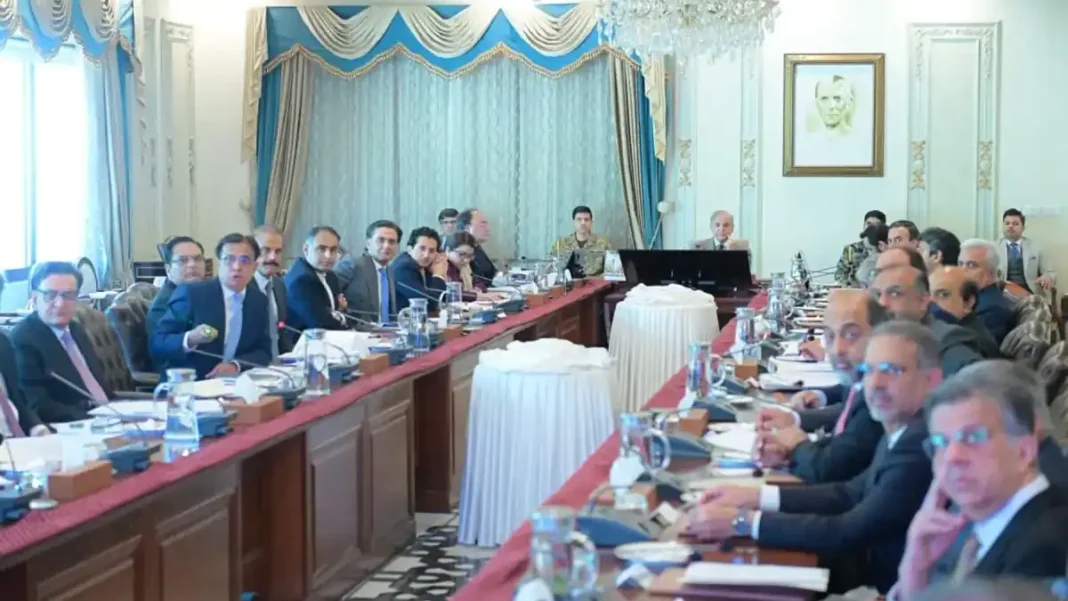

/2026 makes advance payment invoices mandatory for sales-tax registered businesses receiving advance payments for goods or services.)