France Protests: 448 Arrested, 53 Officers Hurt
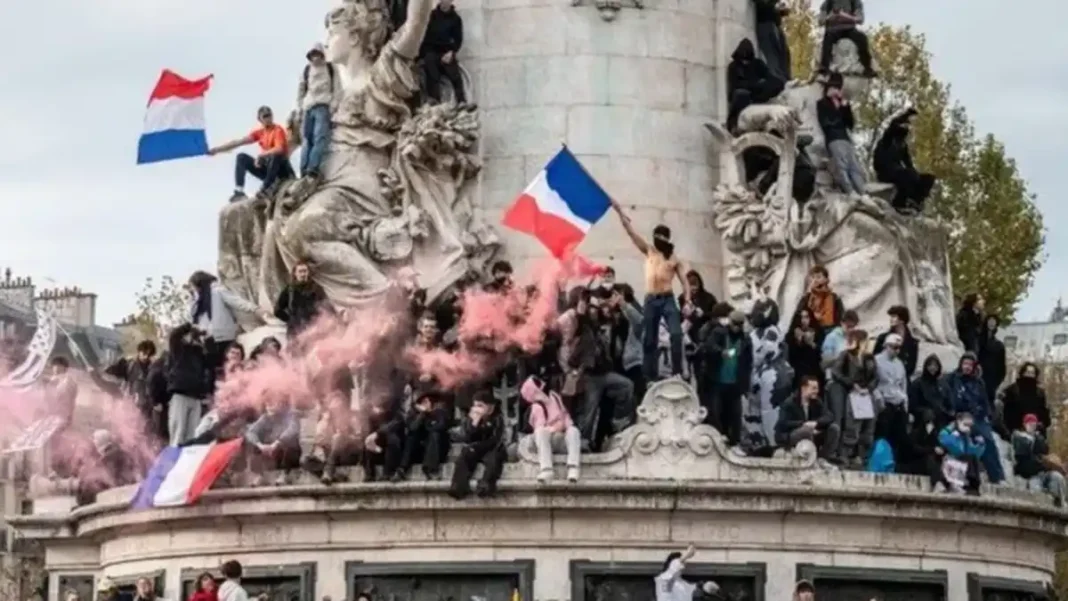
French police arrested 448 people and 53 officers were injured as hundreds of thousands marched across France on Thursday over wages and the cost of living. The France protests brought strikes and street marches to around 260 towns and cities, in the largest day of demonstrations this autumn.
The interior ministry released its final tally at 6pm. It also counted 86 fire incidents during the day. Police fired tear gas in Paris and Lyon as clashes broke out in several cities.
The turnout figures are disputed. The ministry put the national total at 575,000 people, including 65,000 in Paris. It revised down an earlier provisional figure of nearly 600,000. The CGT union federation put the total at nearly 1.6 million, with 350,000 in the capital.
What the unions want
The CGT called the strike “extremely effective”. Its secretary-general, Sophie Binet, told the Paris crowd that the government must answer workers’ demands. The union wants a 10 per cent rise in the national minimum wage.
The more moderate CFDT wants an extra 100 euros a month in take-home pay. Its leader, Marylise Leon, said workers must be able to earn a decent living. Binet welcomed the government’s willingness to raise the minimum wage beyond the adjustment already planned for January, but she dismissed a further rise of 0.5 or 0.6 per cent as inadequate.
Prime Minister Sebastien Lecornu has called a “social conference” with trade unions and employers’ groups. It will take place at Matignon, his office in Paris, on Monday. The meeting is the government’s first formal response to the strike.
Where the violence broke out
Most marches passed off peacefully. Clashes broke out in Paris, Lyon, Rennes, Marseille, Nantes, Bordeaux and Strasbourg. The interior ministry said groups of several hundred radical protesters attacked police in those cities.
Lyon saw some of the worst trouble. Local authorities reported 40 injuries there, including 34 among police officers, and 24 arrests. In Paris, protesters marched from Place de la Republique to Place de la Nation.
Around 70,000 police officers and gendarmes were deployed across the country. Interior Minister Laurent Nunez had promised an “extremely firm response” to any violence before the marches began.
Why the France protests matter
The strike was called by unions covering teachers, rail workers, hospital staff and postal employees. Some energy workers joined them. The protesters want higher pay, changes to the tax system and better conditions in schools.
The day’s turnout passed the 550,000 recorded on October 17, when demonstrations were marred by riots and looting. That makes Thursday the biggest protest day of the autumn so far, on either count.
The unrest comes six months before elections to replace President Emmanuel Macron. The far right leads in the opinion polls. The government faces pressure to show it can answer the cost of living crisis without losing control of the streets.
The Yellow Vest movement has called for nationwide blockades on Friday and mass demonstrations on Saturday. That means the pressure on Lecornu’s government will not ease after Monday’s talks.
Feature Pakistan has followed the French unrest through the autumn. Trade unions called the nationwide strike earlier this week, and clashes were reported during earlier protests. The political backdrop includes Marine Le Pen’s campaign for the French presidency, the Halloween protests that brought a security curfew and the weekend protests that saw a heavy police deployment.
How many people were arrested in the France protests?
448 people were arrested by 6pm on Thursday, and 53 police officers were injured, according to the interior ministry. It also recorded 86 fire incidents.
How many people took part?
The ministry counted 575,000 people across France, including 65,000 in Paris. The CGT union put the figure at nearly 1.6 million nationwide, with 350,000 in Paris.
What do the protesters want?
Higher wages and relief from the cost of living. The CGT wants a 10 per cent rise in the minimum wage, while the CFDT wants an extra 100 euros a month in take-home pay.
What happens next?
Prime Minister Sebastien Lecornu will hold a “social conference” with unions and employers at Matignon on Monday. The Yellow Vest movement has called for blockades on Friday and demonstrations on Saturday.