Quick Facts
- Location: Mansehra District, Khyber Pakhtunkhwa — a side valley off the Naran road near Balakot, in the lower Kaghan Valley region
- Altitude: valley floor around 1,500 metres, rising to high meadows and peaks (Manna/Danna Peak area) above 3,000 metres
- Famous For: Untouched pine forests, gushing milky streams, red-rock scenery, the Shinkiari Hut viewpoint, and Manna Meadows — plus its new status as a government Integrated Tourism Zone
- Nearest City: Balakot (the gateway town); Mansehra is the district headquarters
- Accessibility: Jeep track from the Ghanool turn-off on the Balakot–Naran road (about 1.5 hours each way by 4×4); day-trip distance from Islamabad for the determined
- Known Landmarks: Shinkiari Hut, Manna (Danna) Peak and Meadows, Paprang trek, Makra viewpoint turn-off
- Best For: Offbeat explorers, trekkers, photographers, families wanting a crowd-free picnic valley, and anyone who has “done” Naran and wants what’s next
Why Visit Ganool Tourism Valley
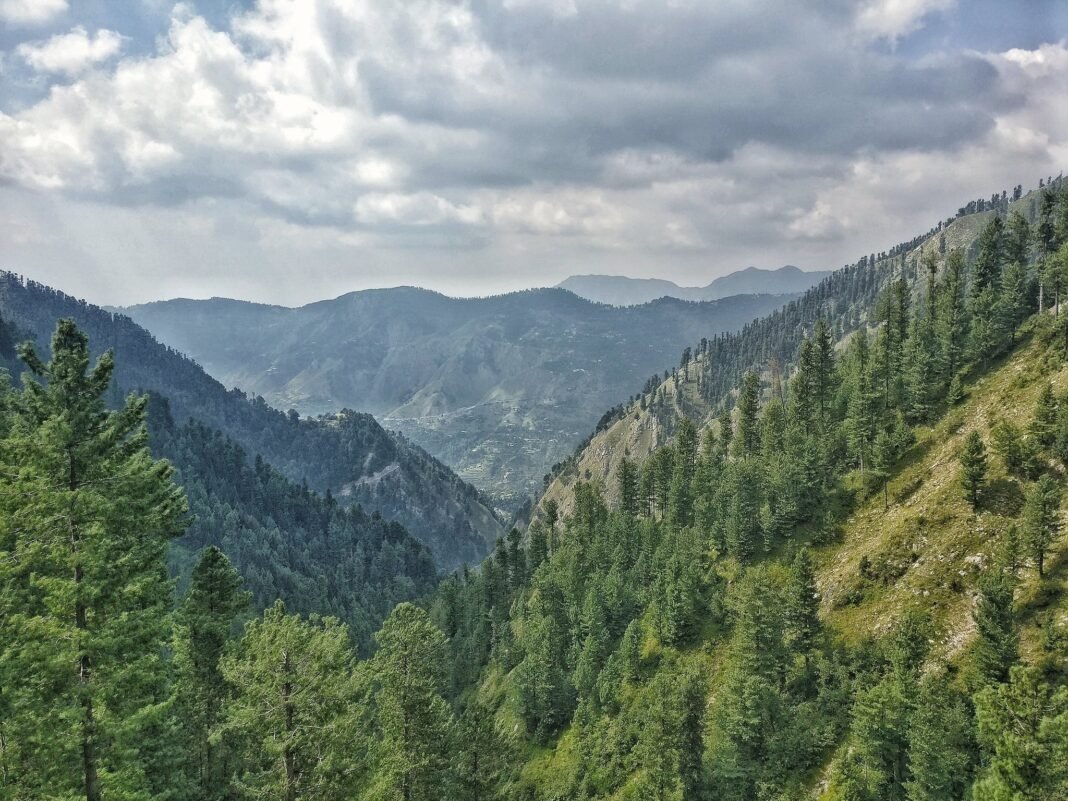
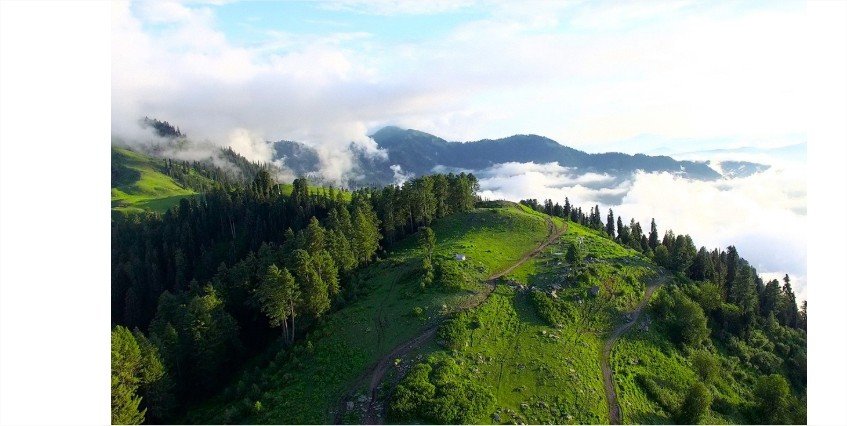
Every Pakistani traveller knows the Naran road — the summer caravans crawling toward Saif-ul-Malook, the packed bazaars, the honking jeeps. But a few kilometres past Balakot, a modest signboard points up a jeep track into a valley most of those travellers never notice. That valley is Ganool (also spelled Ghanool), and those who turn off the main road describe it the same way: the most beautiful, clean and peaceful valley of the Kaghan region. Thick pine forest, red rocks, gushing milky-white streams, lush meadows where you can hear birdsong instead of traffic — Ganool is the Kaghan Valley as it was before the crowds found it.
What makes Ganool genuinely exciting right now is that it is on the cusp of discovery. The Khyber Pakhtunkhwa government has announced an Integrated Tourism Zone (ITZ) at Ghanool, Mansehra, on 59.6 acres, developed with World Bank assistance as part of a province-wide push for planned, sustainable tourism. In other words, the secret is officially out — which means the next few years are the sweet spot: the valley is being recognized and prepared for visitors, but it hasn’t yet been loved to death. Come now and you get the raw, untouched version.
Ganool is also a trekker’s gateway. It is described by those who know it as the doorway to several unbeaten treks — the Manna Meadows route, the old Paprang trail, high ridgelines with views over Shogran, Makra Top, Musa ka Musala and Sharan. You can ride in by jeep, hike the ridgelines, camp under absurdly starry skies, and be back in Balakot the same evening. For families, it’s a clean, crowd-free picnic valley a few hours from Islamabad. For adventurers, it’s the start of trails most Pakistanis have never heard of. Either way, Ganool deserves your visit — ideally before everyone else figures that out.
History of Ganool Tourism Valley
Ganool doesn’t have ancient stupas or royal forts — its history is the quieter history of a Himalayan side valley that life passed by. The valley sits in the lower Kaghan region of Mansehra District, in the Hazara belt of Khyber Pakhtunkhwa, an area of pine-clad hills, terraced fields and Gujjar pastoral settlements that has looked much the same for centuries. While neighbouring Kaghan and Naran grew into household names of Pakistani tourism, Ganool stayed a local secret — known to the people of Balakot and Mansehra, to shepherds and foresters, but absent from the tourism map of Pakistan.
Locals will tell you that absence wasn’t entirely accidental. As one well-known account of the valley puts it, the people of Ganool believe their valley was kept off the tourism map partly for political reasons — powerful interests with land in Shogran, Kaghan and Naran had little incentive to promote a rival destination. Whether or not that tells the whole story, the effect is undeniable: Ganool kept its forests thick, its streams clean and its meadows empty while the famous valleys filled up.
The modern chapter began with Khyber Pakhtunkhwa’s eco-tourism push. Under the provincial Tourism and Culture Authority’s Eco-tourism Project — the same programme that established camping pods at Sharan near Saif-ul-Malook and tourist facilitation centres across the province — the government moved to develop new destinations systematically. The announcement of Integrated Tourism Zones with World Bank assistance changed Ganool’s trajectory: the ITZ at Ghanool Mansehra (59.6 acres), alongside zones at Mankiyal in Swat, Madaklasht and Thandiani, was projected to create some 200,000 direct and indirect jobs and attract around $2.8 billion in investment across the programme. For Ganool, it meant planned roads, facilities and promotion — the valley’s formal debut as a tourism destination.
Today Ganool stands at an interesting crossroads that travellers should appreciate: developed enough to visit (jeep tracks, a basic restaurant or two, the famous Shinkiari Hut), wild enough to feel like a discovery. The Ghanool Welfare Society — a local community body — already runs jeep services from Balakot to the valley’s key points, a sign of the community-led tourism that often works best in these hills. Visit with respect for that balance, and you’ll experience a valley at the exact moment it steps onto the stage.
Top Things to Do in Ganool Tourism Valley
Ride the Jeep Track to Shinkiari Hut
The classic Ganool excursion. From the Ghanool signboard on the Balakot–Naran road (just past the Makra viewpoint), hire a 4×4 jeep for the roughly 1.5-hour track each way (about 3 hours round trip) up to Shinkiari Hut — the end point of the valley road. The track itself is half the adventure: waterfalls, glaciers in the distance, thick forest closing in on both sides, and meadows opening suddenly around bends. The hut is a wooden Forest Department building at a stunning viewpoint — from the top you can see Shogran, Makra Top, Musa ka Musala and Sharan spread out below you. Note: the hut belongs to the Forest Department, so you can’t just walk in and stay — overnight stays need a prior reservation through the department.
Trek to Manna (Danna) Meadows and Peak
For the more ambitious, Danna Shinkiari Peak and its meadows are the valley’s high-altitude prize. The route runs about 48 km from Balakot via the Ghanool intersection (16 km to the intersection, then 29 km of mountain road to the Manna area). Those who have walked the Manna Meadows describe them in almost disbelieving terms — lush, flower-filled high pastures that make even famous meadows elsewhere feel ordinary. A one-day trip to Manna Peak and back to Balakot is doable if you start early; there is no proper family accommodation up there, so treat it as a long day trek.
Walk the Old Paprang Trail
The old trek to Paprang — around 40 km from Balakot via the Manna 1, 2 and 3 meadows — is one of the valley’s classic multi-meadow routes. Each Manna meadow is more beautiful than the last, and the trail is still refreshingly untrodden. A new road under construction was expected to shorten the Balakot–Paprang distance significantly; check locally for the latest on road access before planning.
Photograph Waterfalls, Forests and Red Rocks
Ganool’s signature look — thick pine forest, distinctive red rocks and gushing milky streams — is a photographer’s playground. The jeep track passes several waterfalls, and the birdlife is remarkable: travellers consistently mention the beautiful birdsong that fills the valley. Early morning light in the meadows is the golden hour here.
Picnic in Total Peace
Sometimes the best thing to do in Ganool is gloriously simple: spread a sheet in a meadow, unpack food from Balakot, and listen to the streams. The valley’s cleanliness is its pride — visitors note again and again that you won’t see garbage here. Keep it that way: carry every wrapper back out.
Camp Under the Stars
With no hotels in the upper valley, camping is the way to stay. Bring your own tent and gear, camp near Shinkiari Hut or in the meadows, and wake up above the clouds. Summer nights are cool and the Milky Way on a clear night is unforgettable.
Famous Places In and Around Ganool Tourism Valley
- Shinkiari Hut — the wooden Forest Department hut and viewpoint at the end of the Ghanool jeep track
- Manna / Danna Meadows & Peak — the valley’s celebrated high meadows, ~48 km route from Balakot
- Paprang — the old multi-meadow trekking route beyond Manna
- Makra viewpoint — the turn-off landmark on the Balakot–Naran road, with views of Makra Peak
- Balakot — the gateway town and base camp, with bazaars, eateries and jeep hire
- Shogran & Siri Paye — the famous neighbouring hill station, visible from Ganool’s high points
- Sharan forest — the deodar forest with camping pods, in the wider region
- Kaghan Valley & Naran — the main valley continues up the road; Ganool pairs perfectly with a Naran trip
How to Reach Ganool Tourism Valley
Ganool is a side valley off the main Balakot–Naran road, which makes it unusually easy to add to a Kaghan trip. The key landmark is the Ghanool Valley signboard on the Naran road, a short drive past Balakot and just beyond the Makra viewpoint. From that signboard, you need a 4×4 jeep — the track into the valley is not suitable for ordinary cars.
From Islamabad: Take the Hazara Motorway to Mansehra, then continue to Balakot and on toward Naran. Islamabad to Balakot is roughly 200 km and takes about 4–5 hours. From Balakot, it’s about 30 minutes to the Makra viewpoint and the Ghanool turn-off, then 1.5 hours by jeep to Shinkiari Hut. Determined travellers do visit on a one-day trip from Islamabad — but you must leave very early (by 6 AM at the latest) to fit the jeep track in and return.
From Lahore: Drive to Islamabad via the M-2 (about 4.5 hours), then follow the Islamabad route. This is realistically an overnight trip — stay in Balakot or Mansehra and do Ganool the next day.
From Karachi: Fly to Islamabad (about 2 hours), then drive. The overland journey from Karachi is far too long for a Ganool weekend.
Nearest airport: Islamabad International Airport (ISB).
Road conditions: The Hazara Motorway and the Balakot–Naran road are paved and good. The Ghanool jeep track is rough, steep in places and strictly 4×4 territory — hire through the Ghanool Welfare Society jeep service or Balakot jeep stands. In winter, snow can block the upper track; the valley is at its most accessible from late spring through autumn. Monsoon rains (July–August) can make the track slippery — check conditions locally.
Route Details
- Islamabad → Hazara Motorway → Mansehra → Balakot (4–5 hours).
- Balakot → Naran road for about 30 minutes to the Makra viewpoint.
- Just past the viewpoint, look for the Ghanool Valley signboard — this is where the paved road ends for you.
- Hire a 4×4 jeep (book through Balakot stands or the Ghanool Welfare Society) for the 1.5-hour track to Shinkiari Hut.
- Explore the hut viewpoint, meadows and waterfalls (3-hour round trip by jeep), then return to Balakot — Naran is still reachable the same evening if you started early.
Where to Stay in Ganool Tourism Valley
Be clear-eyed about this: Ganool is still developing, and accommodation in the valley is minimal. That is part of its current charm — plan around it and you’ll be fine.
Mid-range: Balakot town has the nearest proper hotels and guesthouses — comfortable mid-range options with hot water and food, ideal as a base camp for a two- or three-day Ganool excursion. Mansehra (further back) has a wider selection.
Budget and guesthouses: Simple guesthouses and small hotels in Balakot offer clean, budget-friendly rooms. Book ahead on summer weekends and Eid holidays, when the whole Kaghan belt fills up.
Camping: This is the authentic Ganool overnight experience. Bring your own tent, sleeping bag and cooking gear — camp near Shinkiari Hut or in the Manna Meadows. There is no hotel to fall back on in the upper valley, so come self-sufficient. The Forest Department hut at Shinkiari can host overnight guests only with a prior reservation through the department.
Where to Eat: Local Foods of Ganool Tourism Valley
Eating in Ganool requires planning — and that’s not a complaint, it’s a feature. There is only limited food availability along the jeep track (travellers report roughly one restaurant on the route), and nothing in the upper valley, so pack food and water in Balakot before you turn off the main road. You’ll be glad you did when hunger strikes halfway up the track.
Balakot itself is the food base: dhabas serving daal, chicken karahi, BBQ and fresh tandoori roti, plus the region’s pride — Kunhar River trout, served fried or grilled at riverside restaurants along the Kaghan road. The wider Hazara food culture means hearty chapli kebabs, saag, and lassi are easy to find. A dhaba meal runs roughly PKR 300–600 per person; trout costs more (it’s priced by weight — confirm before ordering). Carry snacks, dry fruit and at least 2 litres of water per person for the valley itself.
Weather in Ganool Tourism Valley
Ganool’s weather follows the lower-Kaghan pattern: pleasant summers, cold snowy winters at altitude, and glorious shoulder seasons. The valley floor is milder than the high meadows — temperatures below are approximate for the main visitor areas, with Manna’s heights running several degrees cooler.
| Season | Temperature Range | Conditions |
|---|---|---|
| Winter (Dec–Feb) | -2 to 8°C | Cold; snow at altitude can block the upper jeep track. The valley is quiet and crowd-free. |
| Spring (Mar–May) | 8–20°C | Fresh green forests, melting streams, wildflowers. A lovely, uncrowded time to visit. |
| Summer (Jun–Aug) | 18–30°C | Peak season — warm days, cool nights, everything accessible. Book Balakot stays ahead. |
| Autumn (Sep–Nov) | 10–22°C | Clear skies, golden forests, thinning crowds. Excellent for photography and trekking. |
Monsoon (July–August) brings rain that can make the jeep track slippery — travel with a local driver who knows the track in all conditions.
Language and Culture of Ganool Tourism Valley
The Hazara region’s everyday language is Hindko, with Urdu universally understood and Pashto spoken in parts of the district. In the high pastures you may meet Gujjar herder families who bring their livestock up for the summer — one of the Kaghan Valley’s most distinctive cultural sights, with their traditional tents and pack animals.
The local culture is warmly hospitable but conservative. Dress modestly, greet people politely, and always ask before photographing villagers — especially women. The Ghanool Welfare Society’s community jeep service is a good example of local initiative; using it puts your money directly into the valley. And the valley’s hard-won cleanliness is a point of pride — treat it as a guest’s duty to leave every picnic spot spotless.
Shopping in Ganool Tourism Valley
There is no market in Ganool itself — come for nature, not souvenirs. For shopping, Balakot’s bazaar is your stop: dry fruits (walnuts, almonds, apricots), local honey, woollen caps and shawls, and pine-wood handicrafts. Mansehra’s larger bazaars offer more variety, including traditional Hazara embroidered items. Naran’s tourist bazaar (further up the road) has the full souvenir spread — pashmina-style shawls, gemstones and carved wooden boxes — at tourist prices. There are no shopping malls anywhere near Ganool; the bazaars are the real deal.
Travel Tips for Ganool Tourism Valley
Packing Essentials
Food and at least 2 litres of water per person (buy in Balakot), sun protection, a warm layer even in summer (altitude!), sturdy shoes for meadow walking, rain gear in monsoon, and full camping gear if staying overnight. A rubbish bag — non-negotiable.
Safety Tips
The jeep track is the main risk factor: use experienced local drivers, never attempt it in an ordinary car, and avoid the upper track in heavy rain or snow. Start early so you’re off the track before dark. Tell your Balakot hotel your plans. The area is peaceful, but standard mountain caution applies.
Money & Connectivity
Cash only beyond Balakot — no ATMs, no card machines in the valley. Withdraw in Mansehra or Balakot. Mobile signals (Jazz, Telenor, Zong) work in Balakot and patchily along the lower track; expect little to no signal at Shinkiari Hut and the high meadows. Download offline maps.
Best Time to Visit Ganool Tourism Valley
Summer (June–August) — Peak Accessibility
Everything is open: the full jeep track, the high meadows, camping. Warm days and cool nights. The price is company — this is when the Kaghan belt is busiest, so book Balakot accommodation early.
Spring (April–May) — The Insider’s Choice
Green forests, full streams, wildflowers and far fewer visitors. Some high routes may still hold snow early in the season, but the main valley is glorious.
Autumn (September–October) — Golden and Quiet
Perhaps the finest light of the year, golden foliage, and the summer crowds gone. Excellent for photography and peaceful trekking.
Winter (November–March) — Only for the Prepared
Snow-dusted and crowd-free, but the upper track may be blocked and there’s no winter infrastructure. Best left to well-equipped adventurers with local guidance.
Final Thoughts
Ganool is that rare thing in Pakistani tourism: a genuinely beautiful valley that hasn’t been trampled yet. The pine forests are still thick, the streams still run milky-clean, the meadows still belong to shepherds more than selfie sticks. The Integrated Tourism Zone means change is coming — planned, hopefully sustainable change — but right now you can still have a Himalayan side valley almost to yourself, a few hours from Islamabad.
Go soon, go prepared (food, water, cash, a good jeep driver), and treat the valley’s cleanliness as sacred. For more offbeat journeys, browse our Explore Pakistan collection — and when you’re ready for the high Karakoram, our Malam Jabba travel guide awaits.
FAQs
Where is Ganool Tourism Valley located?
Ganool (Ghanool) is a side valley in Mansehra District, Khyber Pakhtunkhwa, branching off the Balakot–Naran road in the lower Kaghan Valley region — about 30 minutes past Balakot to the Ghanool turn-off.
Why is Ganool called a Tourism Valley?
The Khyber Pakhtunkhwa government designated it an Integrated Tourism Zone (ITZ) — 59.6 acres at Ghanool, Mansehra, developed with World Bank assistance — recognizing its potential as a planned, sustainable tourism destination.
What is the best time to visit Ganool Tourism Valley?
June to August for full access to the jeep track and high meadows; April–May and September–October for fewer crowds and beautiful shoulder-season weather. Winter can block the upper track with snow.
How do I reach Ganool Valley from Islamabad?
Drive the Hazara Motorway to Balakot (4–5 hours), continue 30 minutes toward Naran to the Ghanool Valley signboard past the Makra viewpoint, then hire a 4×4 jeep for the 1.5-hour track to Shinkiari Hut. A very early start makes it possible as a long day trip.
Can I stay overnight in Ganool Valley?
There are no hotels in the valley itself — overnighting means camping with your own gear, or a prior Forest Department reservation for Shinkiari Hut. Most visitors base themselves in Balakot’s hotels.
Is Ganool Valley suitable for families?
Yes, for a day trip — the lower valley’s meadows and streams make a wonderful crowd-free picnic spot. The jeep track is bumpy but safe with a local driver. High-meadow treks suit older children and fit adults.
What food is available in Ganool Valley?
Very little — pack food and water in Balakot before entering the valley. Balakot’s dhabas serve karahi, BBQ and the region’s famous Kunhar River trout.
What is Shinkiari Hut?
A wooden Forest Department hut at the end of the Ganool jeep track, sitting at a spectacular viewpoint overlooking Shogran, Makra Top, Musa ka Musala and Sharan. Day visitors can enjoy the viewpoint; overnight stays require a Forest Department reservation.