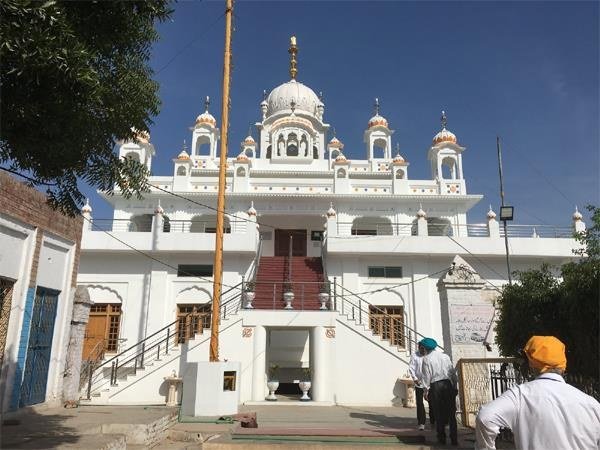
Some destinations you visit for what is there. Gurdwara Baoli Sahib in Rang Mahal, Lahore, you visit for what was there — and for the extraordinary story of how it vanished. In 1599, Guru Arjan Dev, the fifth Sikh Guru, used a purse of 142 gold coins that nobody would claim to build a stepped well and a community kitchen in the heart of Lahore’s walled city. Over the next four centuries the well was filled in, restored by Maharaja Ranjit Singh, filled in again, and finally swallowed by the bazaar — until today only a small garden and a stretch of old Sikh-era brickwork remain, hidden behind the Sunehri Mosque. If you are the kind of traveler who loves history as detective work, this is one of the most fascinating heritage walks in Pakistan.
Quick Facts
- Location: Rang Mahal / Dabbi Bazaar, Walled City of Lahore, Punjab, Pakistan — directly behind the Sunehri (Golden) Mosque, at the intersection of Dabbi and Kashmiri bazaars
- Famous For: The lost stepped well (baoli) built by Guru Arjan Dev in 1599 with 142 unclaimed gold coins; a four-century story of burial, restoration and disappearance
- Nearest City: Lahore itself — the site is inside the historic walled city
- Accessibility: Walkable within the walled city; best reached on foot from Delhi Gate or the surrounding bazaars
- Known Landmarks: The Sunehri Mosque (built over the gurdwara’s old langar), the small PHA park on the site, visible Sikh-era bricks
- Best For: Heritage walkers, Sikh history enthusiasts, photographers of old Lahore, and travelers who love “lost place” stories
Why Visit Gurdwara Baoli Sahib, Rang Mahal
Let us be honest up front: there is no grand gurdwara standing here anymore. What you will find is a small garden — a park maintained by Lahore’s Parks and Horticulture Authority — ringed by shops, in one of the most crowded bazaars of the walled city. And that is exactly what makes it worth the trip. Gurdwara Baoli Sahib is a story you walk through, not a monument you photograph from the gate, and the story is one of the great parables of Punjab.
It begins with an argument about money. A Pathan trader from Bukhara left a purse of 142 gold coins with a Lahore shopkeeper, Chajju Bhagat, and forgot about it; the shopkeeper forgot about it too; when the trader returned and demanded his money, the shopkeeper denied everything, and the trader lost his case in the governor’s court. Months later, while cleaning his safe before Diwali, Chajju found the purse — and tried to return it. The Pathan refused: he had lost his claim, so the money was not his. The shopkeeper could not keep it either, since it was not his. So the two men took the purse to Guru Arjan Dev. The Guru praised their honesty and spent the coins on something that would serve everyone: a baoli, a stepped well, with a langarkhana (community kitchen) beside it, in Dabbi Bazaar. In Samvat 1616 — 1599 AD — the well was built.
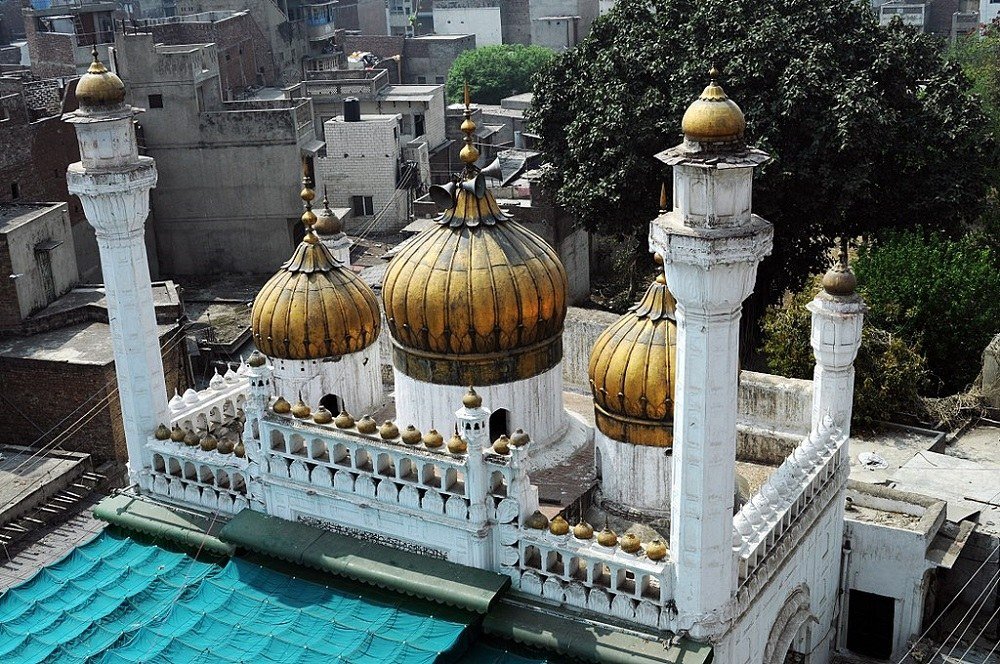
The second reason to come is what happened next, because the well’s afterlife is a compressed history of Lahore itself. It was filled with earth in Samvat 1685 (1628 AD). In the early 1750s, the Mughal governor Mir Mannu filled it again and demolished the langarkhana, building a compact mosque over it — the mosque now known as the Sunehri (Golden) Mosque. In the late 1700s, local Sikhs placed the Guru Granth Sahib inside the mosque building and turned it into a temporary gurdwara. In the early 1830s, Maharaja Ranjit Singh had the baoli cleared and rebuilt a new gurdwara here — the official Sikh court diary, the Umdat Ut Tawarikh of Sohan Lal Suri, records that the Maharaja visited repeatedly and ordered his officers to pay their respects — but he left the mosque standing. In the late 1830s, the Muslims of Lahore appealed through Fakir Azizuddin, and the Maharaja returned the building to use as a mosque, asking only that the call to prayer not be sounded too loudly out of respect for the gurdwara next door. In the 1950s the baoli was filled in once more, the compound’s outer walls were removed, and its inward-facing rooms were converted into outward-facing shops. Today: a garden, a huge tree, and Sikh-era bricks in a wall.
Walk it with that story in your head and the place comes alive. You are standing where Guru Arjan’s well once drew water for the whole neighbourhood, where Ranjit Singh’s officers bowed, where two communities negotiated the use of one sacred compound with remarkable grace. Pair the visit with the walled city’s other wonders — the Wazir Khan Mosque, the Shahi Hammam, Delhi Gate — and you have the single best heritage day in Lahore.
History of Gurdwara Baoli Sahib, Rang Mahal
The shrine belongs to the time of Guru Arjan Dev (1563–1606), the fifth Sikh Guru and the compiler of the Adi Granth, who spent important years in Lahore before the city became the capital of his successors’ empire of memory. The compiler of the Tawarikh-e-Guru Khalsa gives the fullest traditional account of the foundation. A Pathan of Bukhara, leaving Lahore in haste on an expedition, entrusted a purse containing 142 gold coins to Chajju Bhagat, a shopkeeper who had just opened his shop and whose clerk had not yet arrived. Chajju put the purse in his safe and forgot it entirely. When the Pathan returned months later and demanded his money, Chajju denied the deposit — there was no entry in his account books — and the case went to the court of the governor of Lahore, where the Pathan lost.
Days later, cleaning his safe, Chajju found the purse. He went at once to the Pathan with the purse and a shawl as a gift of apology. The Pathan refused to accept it, saying he had lost his claim and had no right over the money. Neither man would take it. The dispute was brought before Guru Arjan Dev Ji, who, seeing both men refuse the money, decided to build a baoli — a stepped well — in Dabbi Bazaar with it, in Samvat 1616 (1599 AD). DiscoverSikhism’s account adds that Bhai Chajju Bhagat and the Pathan personally laid the bag of 142 gold mohars at the Guru’s feet and asked him to use it for religious works; the Guru built the baoli and a langarkhana beside it before leaving Lahore for Amritsar.
The well’s later history is a timeline of Punjab’s rulers. In Samvat 1685 (1628 AD) the baoli was filled with earth. It was restored in Samvat 1891 (1834 AD) during the reign of Maharaja Ranjit Singh, after a florist informed him of its existence — and, according to the Times of India report on researcher Amardeep Singh’s “Jeevay Sanjha Punjab” documentation, the Umdat Ut Tawarikh records the Maharaja’s repeated visits and his orders to his officers to pay respects at the rebuilt gurdwara. The interlude of Mir Mannu in the early 1750s — when the governor filled the baoli, demolished the langarkhana and raised the compact mosque now called the Sunehri Masjid — was followed by the late-1700s episode in which local Sikhs installed the Guru Granth Sahib in the mosque building, and then by Fakir Azizuddin’s successful late-1830s appeal to Ranjit Singh to restore it as a mosque with a quiet azaan.
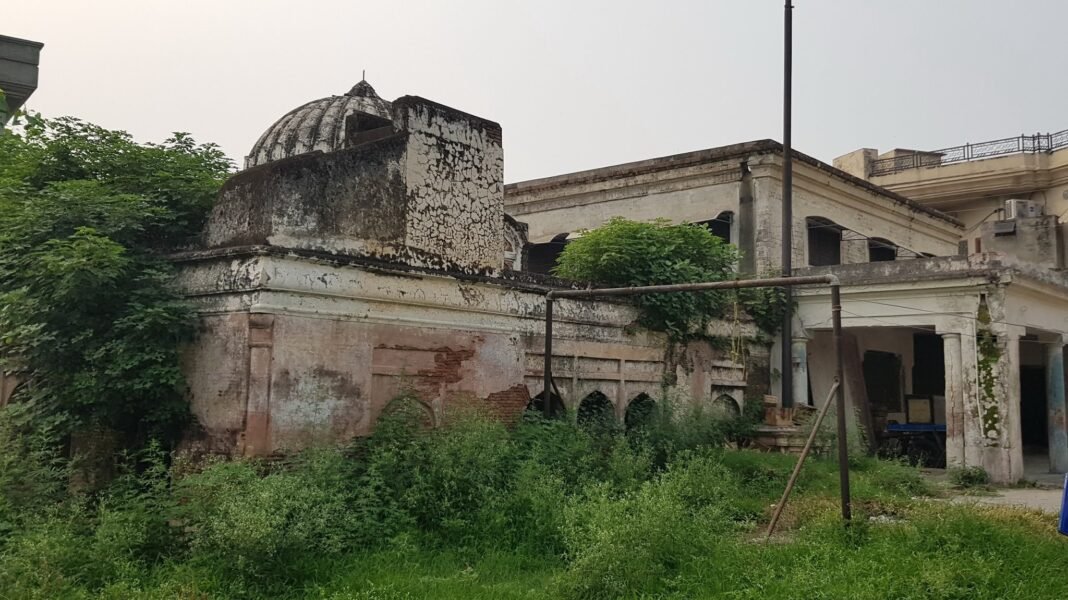
The final chapter came after Partition. In the 1950s, the baoli was filled in yet again; the outer walls of the complex were removed and the rooms around its periphery, which had faced inward, were converted into shops facing outward onto the bazaar. The site today is a small park managed by the Parks and Horticulture Authority of Lahore. As documented in 2024, bricks from the Sikh era can still be seen on the wall to the right of the huge tree when you face it — the last physical signature of Guru Arjan’s well.
Top Things to Do in Gurdwara Baoli Sahib, Rang Mahal
Find the Garden Behind the Sunehri Mosque
This is the treasure hunt at the heart of the visit. Enter Rang Mahal from the road at the intersection of Dabbi and Kashmiri bazaars and work your way behind the Sunehri (Golden) Mosque. The entrance to the old complex is from that side. What you are looking for is the small PHA park — a patch of green with shops around it where people rest — and, facing the huge tree, the Sikh-era bricks on the right-hand wall. Finding them feels like solving a four-hundred-year-old puzzle.
Read the Layers: Mosque, Gurdwara, Bazaar
Stand in the garden and reconstruct the compound in your mind: Guru Arjan’s baoli and langarkhana here in 1599; Mir Mannu’s mosque raised over the kitchen in the 1750s; Ranjit Singh’s rebuilt gurdwara beside it in the 1830s; the 1950s conversion of the whole complex into shops. Few places in Lahore let you read Hindu, Muslim and Sikh history in a single city block. Take photographs of the old brickwork — it is the most tangible surviving evidence.
Walk the Surrounding Bazaars
The site sits at the meeting point of some of the walled city’s oldest markets — Dabbi Bazaar and Rang Mahal Bazaar on one side, Laha Bazaar on another, Kesera Bazaar on the third. This is old Lahore at full volume: spice sellers, cloth merchants, metalworkers, food stalls. Go in the morning, when the light is good and the crowds are thinner, and let yourself get pleasantly lost.
Combine with the Walled City’s Great Monuments
Baoli Sahib works best as one stop on a full walled-city day. From Rang Mahal you are within walking distance of the greatest hits: the Wazir Khan Mosque with its tilework, the restored Shahi Hammam, Delhi Gate, and the birthplace of Guru Ram Das in nearby Chuni Mandi, opposite Multani Muhalla. Finish at the Fort Road Food Street as the evening lights come on.
Famous Places In and Around Gurdwara Baoli Sahib, Rang Mahal
- Sunehri Mosque — directly in front of the site; built over the gurdwara’s original langarkhana.
- Wazir Khan Mosque — the walled city’s tilework masterpiece, a short walk away.
- Shahi Hammam — the restored Mughal-era royal baths near Delhi Gate.
- Delhi Gate — the grand historic entrance to the walled city.
- Chuni Mandi — the neighbourhood containing the birthplace of Guru Ram Das.
- Fort Road Food Street — Lahore’s famous evening food strip by the Badshahi Mosque.
How to Reach Gurdwara Baoli Sahib, Rang Mahal
The site is inside Lahore’s walled city, so the journey is part of the experience.
- From anywhere in Lahore: Take a rickshaw, taxi or ride-hailing car to Delhi Gate or the Rang Mahal area; the last stretch is on foot through the bazaars. The site is behind the Sunehri Mosque at the intersection of Dabbi and Kashmiri bazaars.
- From Islamabad: About 375 km via the M-2 motorway; roughly 4.5 to 5 hours to Lahore, then cross the city to the walled city.
- From Karachi: About 1,200 km by road — fly to Allama Iqbal International Airport, Lahore, and drive into the old city (45 minutes to 1.5 hours depending on traffic).
- Nearest airport: Allama Iqbal International Airport, Lahore.
- Transport options: The walled city’s lanes are too narrow for cars — expect to walk the final 10–15 minutes. Hire a local guide at Delhi Gate if you want the full historical narration; otherwise, ask shopkeepers for “Baoli Sahib” or “Sunehri Masjid”.
Route Details
Head for Delhi Gate, the most convenient entry to this quarter of the walled city. From the gate, move through the bazaar lanes toward Rang Mahal; ask for the Sunehri (Golden) Mosque — everyone knows it. Circle to the back of the mosque, toward the road leading to Rang Mahal at the Dabbi–Kashmiri bazaar intersection. The old gurdwara complex entrance is on this side; the PHA park and garden sit within, ringed by shops. Mornings (9–11 am) are ideal: the bazaars are awake but not yet packed, and the light in the garden is beautiful.
Where to Stay in Gurdwara Baoli Sahib, Rang Mahal
You will stay in Lahore, not at the site itself — and Lahore has everything. For a walled-city trip, the most atmospheric choice is one of the heritage guesthouses and boutique hotels in the old city near Delhi Gate or Bhatti Gate, which put you within walking distance of Baoli Sahib and the morning bazaars. The areas around Mall Road, Anarkali and Gulberg offer the full range of mid-range business hotels, while DHA and the Cantonment host the luxury properties. Budget travelers will find plenty of inexpensive guesthouses near the railway station and in Anarkali. Wherever you stay, plan to reach Rang Mahal by late morning at the latest — the walled city rewards early starters.
Where to Eat: Local Foods of Gurdwara Baoli Sahib, Rang Mahal
You are in the middle of one of the world’s great food cities, so eat accordingly. The lanes around Rang Mahal and Dabbi Bazaar serve classic old-Lahore breakfast: halwa puri, nihari, paye, and lassi so thick you need a spoon. For lunch, the walled city’s dhabas do chargha, chicken karahi, daal fry and fresh tandoori naan at very budget-friendly prices. In the evening, walk to the Fort Road Food Street for barbecue, tikka and falooda with the Badshahi Mosque lit up behind you. Street snacks — samosas, pakoras, dahi bhallay, gol gappay — are everywhere and cost very little. A full day of eating your way through the walled city is one of the cheapest luxuries in Pakistan.
Weather in Gurdwara Baoli Sahib, Rang Mahal
Lahore’s climate is classic Punjab plains: a cool, foggy winter, a glorious spring, a brutal summer with monsoon rains, and a gentle autumn. Since this is an outdoor walking destination through crowded bazaars, season choice matters more than usual.
| Season | Temperature Range | Conditions |
|---|---|---|
| Winter (Nov–Feb) | Around 5–20°C | Cool and foggy mornings; the best season for long bazaar walks |
| Spring (Mar–Apr) | Around 15–32°C | Pleasant and clear; ideal for photography |
| Summer (May–Jul) | Around 30–45°C | Extremely hot; monsoon humidity and downpours from July |
| Autumn (Sep–Oct) | Around 18–32°C | Mild and comfortable as the rains retreat |
Language and Culture of Gurdwara Baoli Sahib, Rang Mahal
The walled city speaks Punjabi first and Urdu second; Lahoris are famously warm, witty and proud of their city, and a visitor showing interest in its history will be adopted within minutes. English works in hotels and with guides. The culture here is old Lahore: tehzeeb (courtesy), food, and a deep, casual coexistence of communities — the Baoli Sahib story itself, with a mosque and a gurdwara sharing one compound for generations, is the neighbourhood’s history in miniature. Dress modestly for the bazaar lanes, ask before photographing people, and accept the inevitable invitations to tea — they are genuine. Bargaining in the bazaars is expected and good-natured.
Shopping in Gurdwara Baoli Sahib, Rang Mahal
The bazaars around the site are among Lahore’s oldest shopping streets. Dabbi, Rang Mahal, Laha and Kesera bazaars sell cloth, spices, traditional shoes, brassware, and everyday goods at old-city prices — this is wholesale Lahore, and the prices show it. Nearby Anarkali and Ichhra are the go-to markets for clothes and embroidery, while the walled city’s own lanes are best for spices, dried fruit, traditional sweets and handicrafts. There are no modern malls in the immediate area — and you will not miss them. For souvenirs, look for hand-embroidered khussas, brass items, and spice mixes from the old bazaars.
Travel Tips for Gurdwara Baoli Sahib, Rang Mahal
Packing Essentials
Comfortable walking shoes (you will be on your feet for hours on uneven lanes), a headscarf, modest clothing, sunscreen, a hat, and a water bottle. A power bank helps — you will take more photos than you expect. In winter, bring a warm layer for foggy mornings.
Safety Tips
The walled city is busy and generally safe for tourists during the day, but the lanes are crowded — keep your phone and wallet secure, stay aware in the thickest bazaar crowds, and consider hiring a local guide, which also helps with navigation. Go in daylight hours; the bazaars wind down after dark.
Money & Connectivity
Carry cash — the old bazaars run on it. ATMs are available around the walled city’s edges (near Delhi Gate and on Circular Road) but not inside the lanes. All major mobile networks have solid coverage in Lahore with fast 4G.
Best Time to Visit Gurdwara Baoli Sahib, Rang Mahal
Winter (November to March)
The perfect season. Cool air, soft light, and comfortable all-day walking through the bazaars. This is when the walled city is at its best — plan your heritage day for these months.
Spring (March to April)
Warm but still pleasant, with clear skies for photography. An excellent second choice, especially March.
Summer (May to August)
Avoid if you can. The walled city’s lanes trap heat, temperatures push past 40°C, and the monsoon makes the crowded bazaars uncomfortable. If you must come, go at opening time and finish by noon.
Autumn (September to October)
A fine shoulder season — the monsoon has eased, the air is clear, and the bazaars are lively without the winter crowds.
Final Thoughts
Gurdwara Baoli Sahib, Rang Mahal, will not give you a grand photo for your album. It will give you something rarer: a four-hundred-year-old story about honesty, water, and how communities share sacred ground, readable in a garden, a mosque, and a stretch of old brickwork behind a bazaar. Come as a detective, not a tourist, and Lahore will reward you.
Make it part of a full walled-city day — Wazir Khan Mosque, Shahi Hammam, Delhi Gate, and dinner at Fort Road Food Street. For more heritage journeys, browse our Explore Pakistan collection, including our Ali Baig Gurdwara travel guide and the Malam Jabba travel guide.
FAQs
Where is Gurdwara Baoli Sahib, Rang Mahal?
Inside Lahore’s walled city, in Rang Mahal / Dabbi Bazaar, directly behind the Sunehri (Golden) Mosque at the intersection of Dabbi and Kashmiri bazaars.
Does the gurdwara building still exist?
No — the baoli was filled in and the complex converted into shops and a garden. The site is now a small PHA park; Sikh-era bricks are still visible on one wall.
Why was the baoli built?
In 1599, Guru Arjan Dev used 142 gold coins that neither a Pathan trader nor a Lahore shopkeeper would claim to build a stepped well and community kitchen for the public.
What is the best time to visit?
November to March, in the morning — cool weather and thinner bazaar crowds.
How do I reach it from Delhi Gate?
Walk through the bazaar lanes toward Rang Mahal and ask for the Sunehri Masjid; the old complex entrance and garden are behind the mosque. The final stretch is on foot.
Is the walled city safe for tourists?
Yes, during daylight hours. The lanes are crowded — keep valuables secure and consider hiring a local guide.
What else can I see nearby?
Wazir Khan Mosque, Shahi Hammam, Delhi Gate, Chuni Mandi (birthplace of Guru Ram Das), and Fort Road Food Street.
Where should I stay?
Heritage guesthouses in the walled city near Delhi Gate for atmosphere, or mid-range and luxury hotels on Mall Road, in Gulberg or DHA.