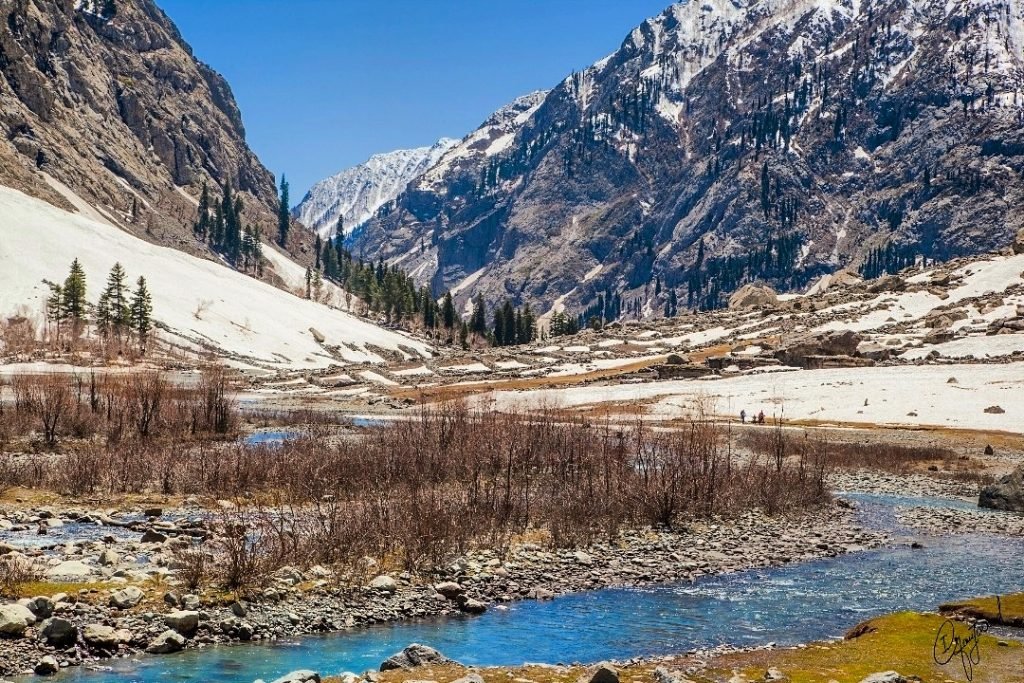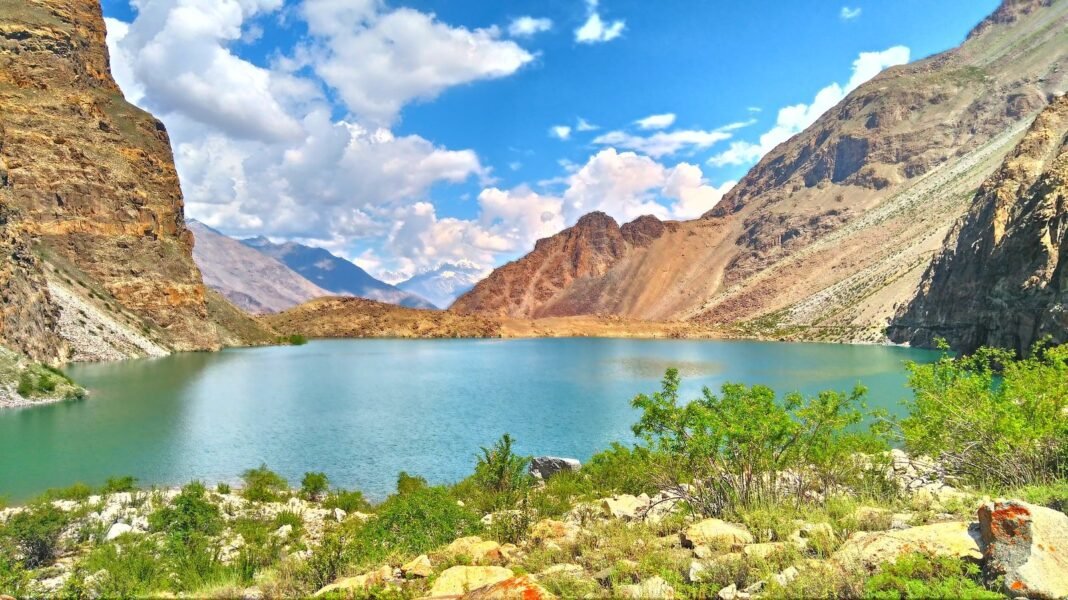
Every famous lake in northern Pakistan has a road to it, a hotel beside it, and a hundred jeeps parked around it. Kharfaq Lake has none of those things — and that is its entire magic. Known to locals as Riochug Tso, this high Karakoram lake sits at around 3,350 metres in a bowl of mountains above Kharfaq village in Ghanche District, reachable only by a steep two-to-four-hour climb that keeps the crowds away. Its reward is total: crystal-clear glacial water, thousands of trout flashing beneath the surface, and a silence so complete you can hear your own heartbeat. This Kharfaq Lake travel guide tells you honestly what it takes to get there — and why it is worth every step.
Quick Facts
- Location: Above Kharfaq village, Ghanche District, Gilgit-Baltistan, Pakistan — in the Karakoram range, southeast of the village.
- Altitude: Around 3,350 metres (approximately 11,000 feet) above sea level.
- Famous For: Its huge trout population (brown trout and indigenous species); a tough, rewarding high-altitude hike; pristine glacial water with no visible outlet.
- Nearest City: Khaplu, approximately 24 km away; Skardu is about 125 km to the west.
- Accessibility: On foot only — a steep 2–4 hour climb from Kharfaq village (about 2 km as the crow flies). A jeep road has been under construction but remains incomplete.
- Known Landmarks: Kharfaq Lake itself, Kharfaq village on the Shyok River, the surrounding Karakoram ridgelines.
- Best For: Fit hikers, trout-fishing enthusiasts, wilderness photographers, and travelers seeking Baltistan’s least-visited lake.
Why Visit Kharfaq Lake
Pakistan’s famous lakes — Attabad, Saif-ul-Malook, Shangrila — are undeniably beautiful, but they are also undeniably busy. Kharfaq Lake is the antidote. There is no road to its shore, no row of hotels, no boat queues. There is just a mountain, a trail, and a lake that most Pakistanis have never heard of. When you finally crest the last ridge and the water opens below you — a sheet of impossible blue-green ringed by high peaks, with not another soul in sight — you will feel something the famous lakes can no longer give you: discovery.
The lake’s second gift is its trout. Kharfaq is famous across Baltistan for its fish: thousands of trout, both stocked brown trout and indigenous species, thrive in its cold, clear, slightly brackish water. For anglers, it is one of the most exciting wild-fishing settings in Gilgit-Baltistan — though you should check current local regulations and permits with village elders or the fisheries department before casting a line, as rules and seasons change. Even if you never fish, watching trout rise in water this clear, this far from any road, is a memory in itself.
And then there is the hike. Let us not romanticize it: the climb from Kharfaq village is steep, gaining serious altitude over a short distance, and it demands genuine fitness. But that difficulty is a filter, and what it filters out is everything that ruins wild places. Kharfaq Lake is for the traveler who believes the best views are earned — who would rather climb three hours for solitude than drive three minutes for a crowd. If that is you, keep reading. This lake has been waiting for you.
History of Kharfaq Lake
Kharfaq Lake has no palace, no battle, no dated monument — its history is the history of the valley that holds it. Kharfaq village, a settlement of around 2,000 people on the Shyok River, belongs to the old cultural world of eastern Baltistan: the Balti people, speakers of a Tibetic language closely related to Ladakhi, who farmed these high valleys for centuries under the Yabgo kings of Khaplu and, after 1840, under the Dogras and then Pakistan. The village sits about 24 km from Khaplu town, the old royal capital, on the ancient Shyok corridor that once carried trade toward Ladakh.
The lake itself — Riochug Tso in the local tongue — entered wider awareness only recently. For generations it was simply the high lake above the village, known to shepherds, grazers and fishermen. Its fame as a trout water grew as Baltistan’s fisheries potential was surveyed in recent decades; Ghanche district is now recognized as having significant cold-water fishery resources, with private trout farms operating in several of its valleys. Travelers began writing about the lake in the 2010s — one widely shared account from 2017 described the “tough hike” and the “fascinating lake” surrounded by high mountains on all sides — and it has been slowly entering the itineraries of serious Baltistan trekkers ever since.
A jeep road toward the lake has been under construction for years but remains incomplete for lack of funds — which, depending on your philosophy of travel, is either a frustration or a blessing. For now, Kharfaq Lake remains what it has always been: a wild high lake that you reach on your own two feet, exactly as the shepherds and fishermen of Kharfaq village always have.
Top Things to Do in Kharfaq Lake
Hike to the Lake from Kharfaq Village
The hike IS the experience. Starting from Kharfaq village, the trail climbs southeasterly up the mountainside — a steep, sustained ascent of roughly 2 km that takes most hikers 2 to 4 hours depending on fitness and acclimatization. The trail is not a manicured tourist path; it is a mountain route. Go with a local guide from the village (strongly recommended), start early in the morning, carry water and snacks, and pace yourself — the altitude gain is significant. The moment the lake appears below you makes every burning step worthwhile.
Trout Fishing
Kharfaq Lake’s fame rests on its fish. The lake holds thousands of trout — brown trout stocked in good numbers alongside indigenous species — visible in the astonishingly clear water. If you fish, do it responsibly: check the current permit requirements and seasonal rules with local authorities or your guide before you go, use appropriate tackle, and respect any catch limits. Even catch-and-release here, with Karakoram peaks mirrored in the water, is the angling memory of a lifetime.
Photography at the Shoreline
With no outlet and no development, the lake’s surface is often glass-calm in the early morning, mirroring the surrounding ridgelines perfectly. The water’s clarity — fed purely by glacial streams — gives it remarkable colour. Bring a polarizing filter if you have one; it cuts the glare and reveals the trout beneath. Dawn and late afternoon are the golden windows; midday light at this altitude is harsh.
Picnic and Rest by the Water
There are no restaurants, no tea stalls, no facilities of any kind at the lake — so pack a proper picnic in Kharfaq village before you climb. Find a flat rock, eat with the peaks for company, and simply sit. The silence here is profound; travelers consistently describe it as one of the most peaceful spots they have ever been.
Wildlife and Bird Watching
The lake and its environs are an important wildlife habitat. The surrounding high pastures are used by local herders for grazing, and the area supports wild animals and rare birds of the Karakoram. Move quietly, keep your distance, and bring binoculars — dawn is the best time.
Famous Places In and Around Kharfaq Lake
- Kharfaq Lake (Riochug Tso) — the high trout lake itself, the entire reason for the journey.
- Kharfaq Village — the 2,000-strong Balti village on the Shyok River where the hike begins; arrange guides and supplies here.
- Khaplu Town — the Ghanche district capital 24 km away, with the Khaplu Palace, Chaqchan Mosque and full tourist facilities; see our Khaplu Valley travel guide and Khaplu Palace travel guide.
- Hushe Valley — the mountaineers’ valley further east, gateway to Gondogoro La and Masherbrum; our Hushe Valley travel guide has details.
- Haldi Cones — the granite spires of the eastern valley, a fine photo stop on the Khaplu road.
How to Reach Kharfaq Lake
Reaching Kharfaq Lake is a two-stage journey: first get to Kharfaq village, then climb. There are no shortcuts — and that is the point.
From Islamabad: Travel to Skardu first — approximately 640 km by road via the Karakoram Highway and Jaglot–Skardu road (14–16 hours, usually with an overnight stop), or fly Islamabad to Skardu in about an hour when weather allows. From Skardu, drive the Skardu–Khaplu road east for approximately 100 km (3–3.5 hours) to Khaplu town, then continue about 24 km to Kharfaq village on the Shyok River.
From Lahore: Motorway to Islamabad (4–5 hours), then the Skardu route as above — 18 to 22 hours by road, or fly via Islamabad to Skardu.
From Karachi: Fly to Islamabad and onward to Skardu; the full road journey exceeds 1,800 km and is a two-day expedition best combined with a wider northern tour.
Nearest airport: Skardu International Airport, roughly 125 km from Kharfaq village. Winter weather frequently disrupts flights — keep buffer days in your itinerary.
The final climb: From Kharfaq village, the lake is about 2 km southeast as the crow flies, but the trail climbs steeply and takes 2 to 4 hours on foot. There is no public transport to the trailhead beyond the village itself; a jeep road is under construction but incomplete. Hire a local guide in the village — the route is not waymarked for outsiders, and a guide also handles permissions and local etiquette.
Road conditions by season: The Skardu–Khaplu–Kharfaq roads are paved and comfortable from May to October. In winter the route is icy and the lake itself is snowbound and inaccessible for hiking; do not attempt the climb in winter conditions.
Transport options: Private car or hired SUV from Skardu is the most flexible; local vans run Skardu–Khaplu from the Skardu terminal (budget seats roughly PKR 300–500), with onward local transport to Kharfaq village. Organized Baltistan tours can include Kharfaq for trekking groups.
Route Details
- Reach Skardu by road (Karakoram Highway + Jaglot–Skardu road) or by air from Islamabad.
- Drive east on the Skardu–Khaplu road (approximately 100 km, 3–3.5 hours) to Khaplu town.
- Continue about 24 km to Kharfaq village on the Shyok River. Overnight here to acclimatize.
- In the village, hire a local guide, pack water, food and sun protection, and confirm the day’s weather.
- Start the climb early morning, heading southeasterly from the village. Allow 2–4 hours up; the lake sits at around 3,350 metres.
- Descend the same day — there are no facilities at the lake, and afternoon weather in the Karakoram can change fast.
Where to Stay in Kharfaq Lake
There is no accommodation at the lake itself — no hotel, no hut, no campsite with facilities. Kharfaq Lake is strictly a day-hike destination: you climb in the morning and descend the same day. Plan accordingly.
Your bases are the village and the towns below. Kharfaq village has simple local guesthouses where you can sleep before an early start — basic rooms, home-cooked Balti food, and the enormous advantage of waking up already acclimatized and minutes from the trailhead. Your host can also arrange your guide.
Khaplu town, 24 km away, offers the full range: the signature Serena Khaplu Palace heritage hotel at the top end, plus mid-range hotels, family-run guesthouses and budget options around the town centre. Most travelers base in Khaplu for comfort and drive to Kharfaq village on hiking day. Skardu works as a staging base the night before, but doing the lake as a day trip from Skardu means a very long day — Khaplu or Kharfaq village overnights are far better.
Wild camping near the lake is not established and not recommended without thorough local consultation — the environment is fragile, the weather unpredictable, and the village community’s wishes come first. Ask your guide; respect the answer.
Where to Eat: Local Foods of Kharfaq Lake
Eat in the village before you climb and after you descend — at the lake, you eat what you carried. Kharfaq village kitchens serve classic Balti food: mamtu (steamed meat dumplings), thukpa (warming noodle soup), buckwheat and barley breads, potatoes, and daal with fresh chapati. After a four-hour descent, a village home-cooked meal tastes like the best food on earth.
Trout is the local pride — Ghanche district has a growing trout-farming tradition, and fresh trout appears on menus in Khaplu town’s hotels and restaurants in season. (Whether fishing is permitted in the lake itself varies; always check current local rules rather than assuming.) Apricots and apricot products from the valley orchards, Balti salt tea, and doodh patti round out the essentials.
For the hike itself, pack in Kharfaq village: bread, boiled eggs, dried apricots, nuts, chocolate and at least two litres of water per person — there is no water source you should drink from untreated on the upper trail, and no shop beyond the village. In Khaplu town, the bazaar dhabas serve filling Pakistani staples at a few hundred rupees per person, while the Serena Khaplu Palace restaurant offers refined Balti and continental dining.
Weather in Kharfaq Lake
At around 3,350 metres, Kharfaq Lake lives in a high-alpine climate: short summers, long frozen winters, and weather that can turn in an hour. The lake’s water level starts rising with snowmelt in May, peaks around mid-July, and the lake freezes under snow in winter. Approximate ranges for this Kharfaq Lake travel guide:
| Season | Temperature Range | Conditions |
|---|---|---|
| Spring (Apr–May) | Approx. 2–12°C | Snowmelt begins; trail may hold snow into May; lake level rising. |
| Summer (Jun–Aug) | Approx. 10–20°C | The hiking window; July–August is the best time, with maximum water level around mid-July. |
| Autumn (Sep–Oct) | Approx. 0–12°C | Cooling fast; early September still hikeable, October brings snow risk. |
| Winter (Nov–Mar) | Approx. −15 to −5°C | Lake frozen and snow-covered; the hike is not feasible. |
Language and Culture of Kharfaq Lake
The people of Kharfaq village are Balti — mountain farmers and herders whose Tibetic language, Balti, is the music of daily life here. Urdu is understood by most adults; English is rare outside the tourism circuit of Khaplu town. The community is Muslim, conservative and close-knit, with the famous Balti hospitality very much intact — a village this far off the tourist map does not see many outsiders, and treats the ones it does see with particular warmth.
On the trail and in the village, the norms are simple: dress modestly, greet people (a smile and “salaam” opens every door), ask before photographing anyone, and respect grazing lands and water sources — the high pastures around the lake are working land for herders. If your guide introduces you to village elders, accept the offered tea; it is both politeness and the traditional briefing before a mountain journey. Leave no litter anywhere on the trail — pack out everything you pack in.
Shopping in Kharfaq Lake
There is no shopping at the lake and essentially none in Kharfaq village beyond daily necessities — and that is fine, because Khaplu town’s bazaar, 24 km away, is one of Baltistan’s best. Stock up there before or after your hike: dried apricots, apricot oil and jam from the valley’s celebrated orchards, hand-carved wooden items in the palace-craft tradition, Balti woolen shawls and caps, and local honey.
In the village itself, you may be able to buy fresh dairy, eggs and bread directly from households for your hike — ask your guesthouse host. There are no malls anywhere in this corner of Ghanche; shopping here means the bazaar, the farm gate and the artisan’s workshop, which is exactly as it should be.
Travel Tips for Kharfaq Lake
Packing Essentials
This is a serious mountain day-hike: broken-in hiking boots with ankle support, layered clothing including a windproof/waterproof shell, sunblock and glacier-grade sunglasses, a hat, at least two litres of water per person, high-energy food, a basic first-aid kit, a headlamp (in case the descent runs late), and trekking poles if you have them — the descent is steep and hard on knees.
Safety Tips
Be blunt with yourself about fitness: this is a steep 2–4 hour climb to 3,350 metres, and it is not recommended for cardiac patients, people with serious medical conditions, or the unacclimatized. Spend at least a night at Khaplu’s altitude before attempting it. Always hike with a local guide, start early, watch the weather (afternoon storms are common in the Karakoram), and turn back if you feel altitude symptoms — headache, nausea, unusual fatigue. Tell your guesthouse your plans and expected return time.
Money & Connectivity
Carry cash for the entire trip — there are no ATMs beyond Khaplu town, and the village is cash-only. Pay your guide fairly and in cash. Mobile signals die quickly once you leave the village: SCOM has the best coverage in Gilgit-Baltistan, but expect no signal at the lake itself. Download offline maps, and enjoy the disconnection.
Best Time to Visit Kharfaq Lake
July–August: The Prime Window
The best months, full stop. The trail is clear of snow, the lake is at its maximum level around mid-July, temperatures are at their mildest (around 10–20°C), and the Karakoram is at its most dramatic. This is when to plan your hike.
June & September: The Shoulder Months
June can still hold snow patches on the upper trail, and September brings the first autumn chill and shorter days — but both are hikeable in good weather with proper gear and an early start. Crowds (such as they are) are nonexistent.
October–May: The Closed Season
Not the time. The lake freezes, snow covers the trail, and the climb becomes dangerous or impossible. Use these months to plan, train, and dream — then come in summer.
Final Thoughts
Kharfaq Lake is not for everyone, and it does not try to be. It is for the hiker who would rather earn a view than drive to one, the angler who dreams of trout in water no road reaches, and the traveler who believes the best places are the ones you have to work for. The climb is steep, the facilities are zero, and the reward is absolute: a silent, trout-filled Karakoram lake that you will likely have entirely to yourself.
Pair it with the cultural riches of nearby Khaplu — the palace, the 14th-century mosque, the bazaar — and you have one of the finest two- or three-day combinations in all of Baltistan: heritage one day, wilderness the next. Kharfaq Lake will not make your trip easy. It will make it unforgettable. Find more wild corners of the country in our Explore Pakistan series.
FAQs
Where is Kharfaq Lake located?
Kharfaq Lake (locally Riochug Tso) sits above Kharfaq village in Ghanche District, Gilgit-Baltistan, Pakistan, at around 3,350 metres in the Karakoram — about 24 km from Khaplu town and 2 km (a steep 2–4 hour hike) from the village.
What is the best time to visit Kharfaq Lake?
July and August. The trail is snow-free, the lake reaches its maximum level around mid-July, and temperatures are mildest. June and September are possible shoulder months; the lake is frozen and inaccessible from roughly October to May.
How do I reach Kharfaq Lake?
Drive to Kharfaq village via Skardu and Khaplu (Skardu–Khaplu road, then 24 km to the village), hire a local guide, and hike 2–4 hours up the steep trail. There is no road to the lake — the jeep track under construction remains incomplete.
Is the hike to Kharfaq Lake difficult?
Yes — it is a steep, sustained climb to 3,350 metres requiring good fitness and acclimatization. It is not recommended for cardiac patients or anyone with serious medical conditions. Go with a local guide and start early.
Can you fish in Kharfaq Lake?
The lake is famous for its thousands of brown and indigenous trout. Fishing regulations and permit requirements change, so check the current rules with local authorities or your guide before fishing, and respect any catch limits.
Is Kharfaq Lake suitable for families?
The villages and Khaplu town are wonderful for families, but the lake hike itself is only suitable for fit, older children and adults. Families with small kids should enjoy Khaplu’s palace, mosque and viewpoints instead.
Where can I stay near Kharfaq Lake?
There is no accommodation at the lake. Stay in simple guesthouses in Kharfaq village (closest to the trailhead) or in Khaplu town 24 km away, which has the Serena Khaplu Palace heritage hotel plus mid-range and budget options.
What should I pack for the Kharfaq Lake hike?
Hiking boots, layered clothing with a waterproof shell, sunblock and sunglasses, a hat, at least two litres of water, high-energy food, a first-aid kit, a headlamp and trekking poles. Pack out all litter — there are no facilities at the lake.