Quick Facts
- Location: Southeastern Baltistan, Gilgit-Baltistan, Pakistan — where the Indus River enters Pakistan from Ladakh
- Altitude: Around 2,500 metres on the valley floor; surrounding peaks and passes rise to 3,000–5,000 metres
- Famous For: Manthokha and Khamosh waterfalls, terraced apricot orchards, historic forts, and the Indus river corridor
- Nearest City: Skardu, approximately 120 km (about 3 hours by road); district headquarters at Tolti
- Accessibility: Paved road for most of the route from Skardu; jeep tracks into the side valleys
- Known Landmarks: Manthokha Waterfall, Khamosh Waterfall, Kharmang Fort, Mehdiabad Valley, Olding
- Best For: Families, couples, photographers, cultural travelers, and first-time Baltistan visitors
Why Visit Kharmang Valley
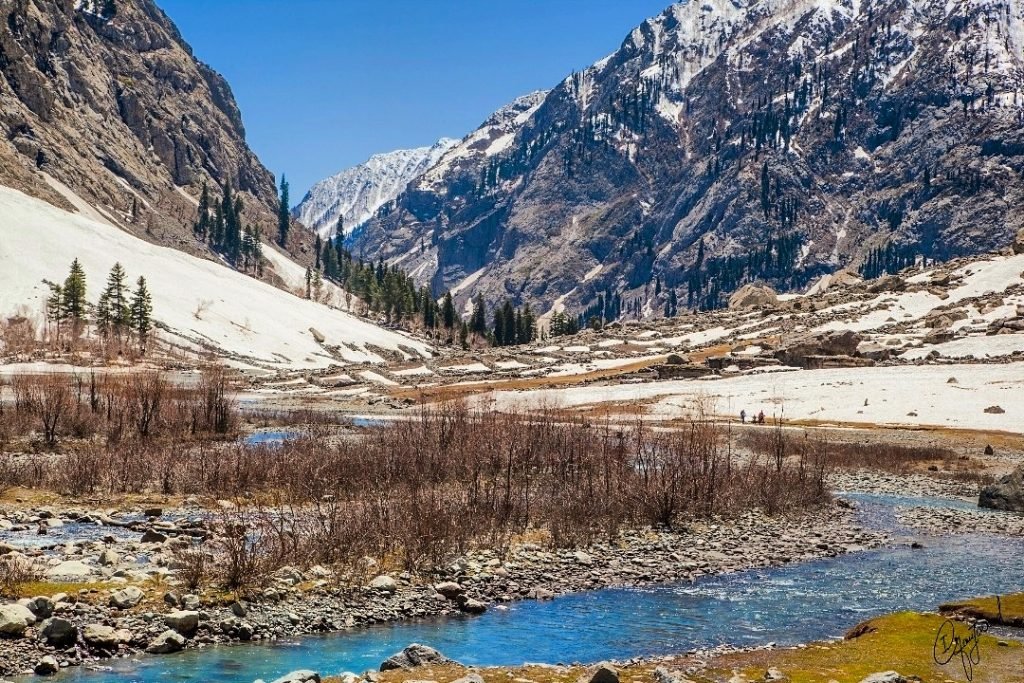
Everyone has heard of Hunza and Skardu. Almost no one outside Baltistan has heard of Kharmang — and that is precisely why you should go. This is the valley where the Indus River, having crossed all of Ladakh, finally enters Pakistan, carving a long fertile corridor between cliffs and terraced fields. It became its own district in 2015, with its headquarters at Tolti, but in spirit it remains what it has always been: the quieter, gentler side of Baltistan, where apricot orchards outnumber tourists and the loudest sound is water falling off a cliff.
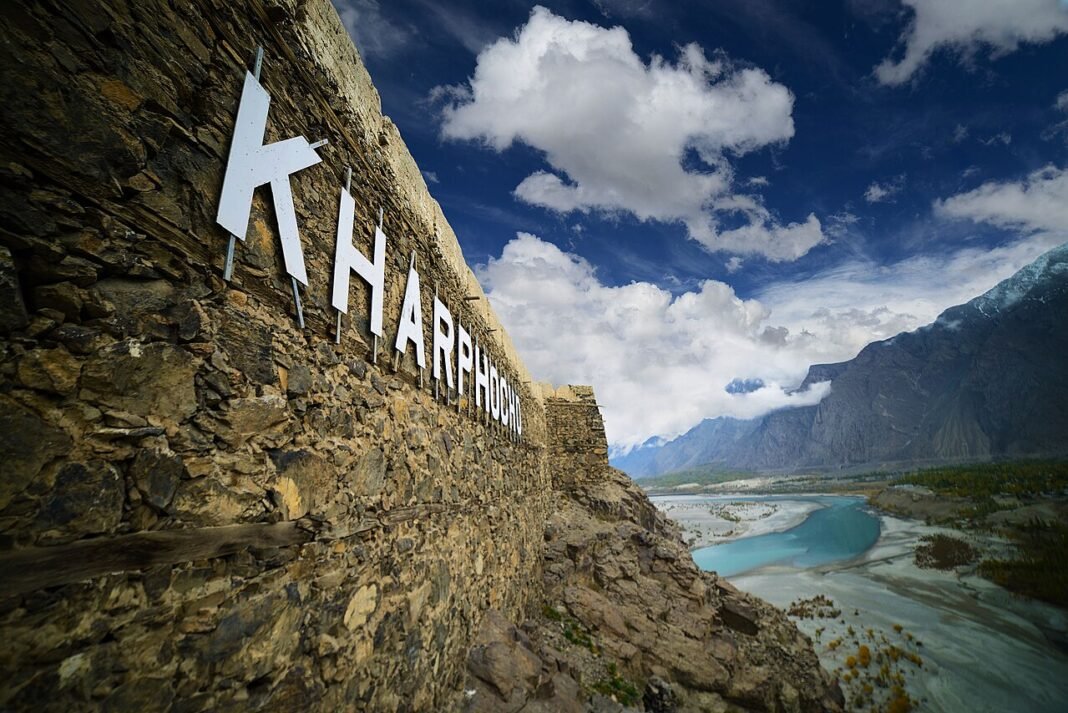
The name itself is a promise. In Balti, khar means fort and mang means abundant — Kharmang is the “valley of forts,” named in the era of Ali Sher Khan Anchan, Baltistan’s greatest king, who raised strongholds here because the valley guarded the strategic corridor of the upper Indus. Those forts still stand, weathered and watchful, above villages where life moves to the rhythm of irrigation channels and harvests.
Kharmang is perfect for travelers who want Baltistan without the crowds. Families will find it easy and safe, with a paved road most of the way from Skardu and attractions that need no trekking boots — the 180-foot Manthokha Waterfall is a short stroll from the parking area, and the valley’s orchards are made for slow picnics. Photographers get blossom season in spring, green terraces in summer, and gold in autumn. Culture lovers get Balti village life at its most authentic. The best time to go is late April through October, with June to September the peak season for full access and the warmest weather. Pair it with Skardu — Kharmang is almost always visited as an extension of a Skardu trip — and see our Hunza Valley travel guide for the classic Baltistan contrast, plus more ideas in our Explore Pakistan collection.
History of Kharmang Valley
Kharmang’s history is written in stone — literally. The valley’s string of forts dates to the era of Ali Sher Khan Anchan, who ruled Baltistan in the late 16th and early 17th centuries (roughly 1560–1625) and briefly united the region’s independent kingdoms under single control. Kharmang’s position on the upper Indus, at the corridor leading toward Ladakh, made it strategically vital, and the forts he built here gave the valley its name: the place abundant in forts. Earlier still, the 1890 Gazetteer of Kashmir and Ladak recorded Kharmang as an old ilaqa (administrative division) of Baltistan, covering the right bank of the Indus from the Ladakh border to the village of Pari, and the Shingo River country down to Tolti on the left bank — a reminder that this valley has been mapped, taxed, and fought over for a very long time.
The region’s deeper past belongs to the Tibetan-Balti world. The Balti people speak a language related to Tibetan, and their stone-and-timber architecture, terraced farming, and irrigation traditions carry centuries of mountain civilization. Islam came to Baltistan through Sufi missionaries — the Noorbakhshi order has historic roots in the region, and a small Noorbakhshi community still lives around Mehdiabad — while most of Kharmang today follows Shia Islam.
In modern times, Kharmang spent decades as a subdivision of Skardu District before being carved out as its own district in 2015, with temporary headquarters at Tolti. The change reflected the valley’s size and identity: some 60,000 people in scattered villages along the Indus and its side valleys, living mainly from subsistence farming, livestock, fruit orchards, and remittances from family members working in Pakistan’s cities and the Gulf states. Tourism is the valley’s newest chapter, and it is still being written — which means visitors today see Kharmang before the crowds arrive.
Top Things to Do in Kharmang Valley
Stand Beneath Manthokha Waterfall
The 180-foot (55-metre) Manthokha Waterfall is Kharmang’s star attraction, and it earns the title. Set in green pastures with streams running through them, backed by the towers of the Karakoram, the fall drops in a white curtain you can hear long before you see. It sits about 80 km from Skardu near Madhupur, roughly a two-hour drive, and the approach road is famously scenic — lined with fruit and nut trees and fields of potatoes and maize. A nearby restaurant serves local trout, and there is a fish farm to visit. Go on a weekday morning for the thinnest crowds, and bring a rain jacket: the spray is part of the experience.
Find the Quiet Khamosh Waterfall
“Khamosh” means silent, and this waterfall deeper in the valley lives up to the name. Fewer tour vans make it this far, so the pools and cascades feel like a private discovery. The drive in passes some of Kharmang’s prettiest villages — slow down, wave at the kids, and stop for the views back down the Indus gorge. It pairs perfectly with Manthokha as a full-day waterfall circuit.
Explore Kharmang Fort
The fort that helped name the valley stands in Kharmang Khas, and while it is a ruin rather than a restored museum piece, that is its charm. Climb up for the classic Baltistan panorama: the Indus threading silver through terraced fields, apricot orchards in geometric green, and the great brown mountains standing guard. Local guides in Tolti can arrange visits and tell the fort’s stories far better than any plaque.
Walk the Terraces of Mehdiabad and Olding
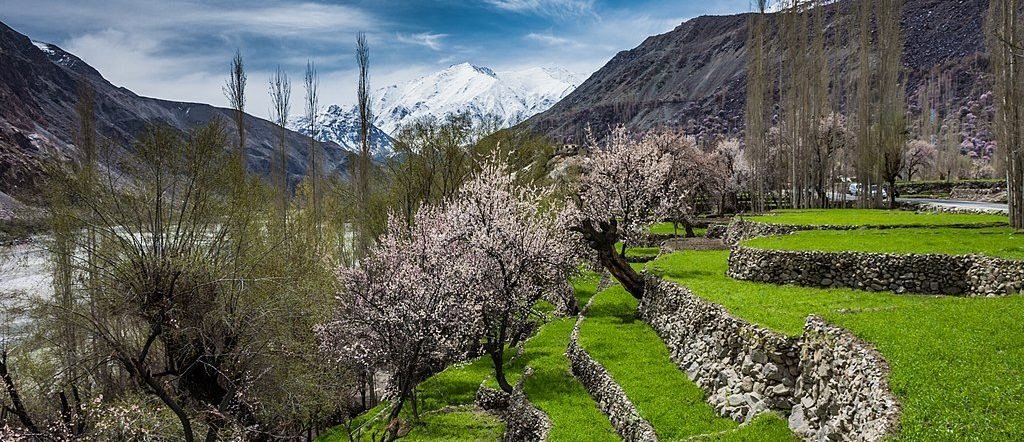
Olding is the largest village of the valley — some 3,000 households — and with Mehdiabad it forms the agricultural heart of Kharmang. Walk the irrigation channels between the terraces, especially in spring when the apricots blossom and in autumn when the poplars turn gold. The famous Pari apples, celebrated for their taste, colour, and sweet smell, come from these orchards, and dried apricots and apricot oil are the valley’s signature products — buy them from the growers, not from a city shop later.
Follow the Indus to the Border Country
Kharmang is where the Indus enters Pakistan from Leh district in Ladakh, and driving the riverside road toward the eastern villages gives you a genuine sense of the river’s scale — this is the same Indus that will flow the entire length of Pakistan to the Arabian Sea. The border area near Olding is sensitive, so carry your CNIC, cooperate cheerfully at check posts, and keep your camera pointed at the landscape, not at installations.
Taste the Valley: Trout, Apricots, and Balti Kitchens
Kharmang’s food experiences are simple and memorable. The trout restaurants near Manthokha serve fish raised in local farms — order it grilled with nothing but salt and lemon. In village homes and small hotels, ask for Balti staples: mamtu (steamed dumplings), balay (hearty noodle soup), khambir (wholewheat flatbread baked on hot stones), and marzan — butter tea, salty and warming. In season, the apricots need no introduction; out of season, dried apricots and apricot oil make the perfect edible souvenirs.
Famous Places In and Around Kharmang Valley
- Manthokha Waterfall — the 180-foot showpiece near Madhupur, ~80 km from Skardu
- Khamosh Waterfall — the quieter cascade deeper in the valley
- Kharmang Fort — historic stronghold above Kharmang Khas village
- Mehdiabad Valley — orchards, terraces, and village walks
- Olding — the valley’s largest village, near the eastern border country
- Tolti — the district headquarters town on the Indus
- Skardu — the gateway city, 120 km away, with its own forts, lakes, and desert
How to Reach Kharmang Valley
Kharmang is reached through Skardu, so every itinerary starts with getting to Baltistan’s capital. From Islamabad, the classic road route runs via the Karakoram Highway (N-35) through Mansehra, Chilas, and Gilgit, then the Skardu Road (S-1) — roughly 630 km and 14–16 hours of serious mountain driving, best split with an overnight stop in Chilas or Gilgit. From Lahore, add about 4–5 hours to reach Islamabad first; most Lahore travelers either drive the whole way over two days or fly to Islamabad and continue by road or air. From Karachi, the road journey is a multi-day expedition of around 1,900 km — the practical choice is flying to Islamabad or Skardu and picking up the road there.
The nearest airport is Skardu International Airport, with regular PIA flights from Islamabad (about an hour) and connections that have expanded in recent years, including international links. From Skardu city, Kharmang is roughly 120 km — about 3 hours — on a road that is paved for most of the route. Hire a private car, a 4×4, or a tour van in Skardu; local drivers know the waterfall turnoffs and the check-post routines. Public vans run toward Tolti and the main villages, but for Manthokha and the side valleys, private transport is far more practical.
Road conditions are good by northern-area standards from Skardu to Tolti and on to Madhupur/Manthokha, but the side valleys and the Khamosh Waterfall track are rougher jeep roads. In winter (November to March), snow and ice can close the higher sections and Skardu flights are weather-dependent — build buffer days into any winter plan. Landslides can briefly block the Skardu Road after heavy rain; check conditions locally before long drives.
Route Details
- Islamabad → Chilas → Gilgit: N-35 Karakoram Highway via Mansehra and Babusar/Naran route (~470 km to Gilgit, 10–12 hours).
- Gilgit → Skardu: S-1 Skardu Road along the Indus (~200 km, 4–5 hours).
- Alternative: Fly Islamabad → Skardu (~1 hour) and skip the road entirely.
- Skardu → Tolti → Madhupur → Manthokha: east along the Indus into Kharmang District (~80 km to the waterfall, ~2 hours).
- Side trips: Khamosh Waterfall, Kharmang Khas fort, and Mehdiabad/Olding villages branch off the main valley road — allow a full second day.
Where to Stay in Kharmang Valley
Kharmang is still early in its tourism story, so accommodation is simple and honest rather than luxurious. Tolti and the larger villages have small guesthouses and family-run lodges with clean rooms, hot water (usually), and home-cooked Balti food — book through a Skardu-based tour operator or ask your driver, as many are not listed online. Near Manthokha Waterfall, a few basic rest houses and camps cater to day-trippers who decide to stay for sunset.
Most visitors base themselves in Skardu, which offers everything from budget hostels to comfortable mid-range hotels and a handful of upscale resorts, and do Kharmang as a long day trip or an overnight excursion. This is the most comfortable strategy for families: Skardu’s amenities by night, Kharmang’s waterfalls by day. For a deeper experience, spend one night in a Tolti guesthouse — the evening walk along the Indus, with the mountains turning pink, is worth the simpler room. Camping is possible in the pastures near the waterfalls with local permission; bring full gear and leave no trace.
Where to Eat: Local Foods of Kharmang Valley
Baltistan’s cuisine is hearty mountain food built for cold evenings, and Kharmang serves it without pretension. The signature dishes to seek out: mamtu, delicate steamed dumplings filled with minced meat and onion; balay, a warming hand-pulled noodle soup; khambir, thick wholewheat bread baked on heated stones and torn apart to scoop up curries; prapu, another beloved noodle dish; and marzan, the salty butter tea that Baltis swear by at altitude. Yak meat appears in winter dishes, and barley — the traditional high-altitude grain — shows up in breads and porridges.
The trout near Manthokha deserves its own mention: raised in local fish farms and grilled fresh at the waterfall restaurants, it is the valley’s most famous meal. In apricot season (June–July), eat the fruit by the handful from orchard stalls; the rest of the year, stock up on dried apricots, apricot kernels, and cold-pressed apricot oil — Kharmang families count these among their most important sources of income, and buying direct supports the growers. A village meal is budget-friendly; the waterfall restaurants charge a little more for the view, and it is worth it.
Weather in Kharmang Valley
Kharmang sits at a moderate altitude for Baltistan — the valley floor is around 2,500 metres — so its climate is drier and warmer than the high valleys, with classic Central Asian extremes: hot, dry summers and cold, snowy winters. Summer days are warm and brilliant, perfect for the waterfalls at full flow; winter brings snow to the upper villages while the valley floor sees hard frosts. Spring arrives with the famous apricot blossom, usually in late March and April, and autumn paints the poplars and orchards gold in October.
| Season | Temperature Range | Conditions |
|---|---|---|
| Winter (Dec–Feb) | -10°C to 2°C | Cold with snow at higher elevations; some roads and side valleys may close |
| Spring (Mar–May) | 5°C to 20°C | Apricot blossom season; pleasant days, cool nights; waterfalls begin to swell |
| Summer (Jun–Aug) | 12°C to 30°C | Warm, dry, and sunny; peak season; waterfalls at full flow; best road access |
| Autumn (Sep–Nov) | 2°C to 18°C | Golden harvest colours; clear skies; excellent photography; nights turn cold |
Language and Culture of Kharmang Valley
The people of Kharmang are Balti — speakers of a language related to Tibetan, heirs to a mountain culture shaped by trade with Ladakh and Central Asia as much as by the valleys around them. Stone-and-timber houses with flat roofs, intricately carved wooden balconies, and willow-lined irrigation channels define the villages. Most of the valley follows Shia Islam, with a small Noorbakhshi community around Mehdiabad; mosques and imambargahs are central to village life, and the old Sufi shrines carry the memory of how Islam came to these mountains.
Visitors are received with the famous Balti warmth — expect offers of tea and dried apricots within minutes of a conversation starting. Dress modestly, ask before photographing people, and remove shoes when entering homes and mosques. The valley is conservative in the best sense: greet elders with respect, accept hospitality graciously, and keep public displays of affection discreet. If you are invited into a home, bringing a small gift of fruit or sweets for the family is appreciated but never required.
Shopping in Kharmang Valley
Kharmang’s shopping is the edible and the handmade. Dried apricots are the valley’s gold — buy them from orchard families in Mehdiabad or Olding, along with apricot oil, which locals use for cooking, massage, and skincare. The Pari apples, famous across Baltistan for their taste, colour, and sweet smell, are worth carrying home in season. Look for hand-knitted woolen socks and caps, and simple Balti handicrafts in Tolti’s small bazaar. For a wider selection — pashmina shawls, gemstones, and woodwork — Skardu’s bazaars are the place; there are no shopping malls in Kharmang, and the valley is better for it.
Travel Tips for Kharmang Valley
Packing Essentials
Layers are everything: warm days and cool nights are the norm from spring through autumn, and a good fleece plus a windproof jacket covers most situations. Sturdy walking shoes handle the waterfall trails and village paths; add a warm down jacket if traveling in the shoulder seasons. Sun protection is non-negotiable at this altitude — sunscreen, sunglasses, and a hat. Carry a reusable water bottle, a small daypack, and a power bank; a basic first-aid kit and any personal medication, since pharmacies thin out beyond Skardu.
Safety Tips
Kharmang is considered safe and welcoming for tourists, including families and foreign visitors. The standard mountain rules apply: do not swim in the waterfall pools or the Indus — currents are deadly and the water is glacier-cold. Stay on marked paths near cliff edges at the waterfalls. Carry your CNIC (or passport for foreign visitors) for the check posts on the eastern roads. Hire local drivers for the side-valley tracks rather than self-driving unfamiliar jeep roads.
Money & Connectivity
Carry cash from Skardu — there are ATMs in Skardu city but essentially none in the Kharmang villages, and small guesthouses and orchard stalls are cash-only. Mobile signals reach Tolti and the larger villages but fade in the side valleys and near the waterfalls; buy a local SIM in Skardu if you need data, and download offline maps. Internet is limited to basic 3G/4G in the main bazaars — embrace the disconnection.
Best Time to Visit Kharmang Valley
Late April to May — blossom season
The apricot and almond orchards erupt in white and pink blossom, the valley floor turns electric green, and the crowds have not arrived yet. Days are mild, nights are cool, and photographers get Baltistan at its most romantic. Some higher tracks may still be clearing snow, but the main sights are all accessible.
June to September — peak season
Warm, dry, and fully open: the waterfalls thunder at full volume, every side valley is reachable, and the long days are made for exploring. This is also when the Pari apples and apricots ripen — time your visit for July if eating the valley is a priority. Book Skardu accommodation ahead in July and August.
October — golden autumn
Kharmang in autumn is quietly spectacular: poplars and orchards turn gold and amber against the brown mountains, the light is soft, and the tourist season’s end means you may have the waterfalls to yourself. Nights are cold — pack accordingly — and check that your chosen guesthouses are still open.
November to March — winter quiet
Snow dusts the upper villages, the valley empties, and Kharmang returns to its own rhythms. Only experienced winter travelers should come: some roads close, Skardu flights are weather-dependent, and guesthouses largely shut. The reward is a Baltistan almost no outsider sees — but it is not a casual trip.
Final Thoughts
Kharmang Valley is Baltistan’s best-kept secret hiding in plain sight. It has the waterfalls, the forts, the orchards, and the Indus itself — everything the famous valleys offer — but it serves them without queues, without inflated prices, and without the feeling that you are watching a place perform for tourists. The valley of forts earns its name twice over: in the stone strongholds of Ali Sher Khan Anchan’s era, and in the quiet fortitude of the Balti villages that keep their terraces green against the desert mountains.
Go for two or three days as part of a Skardu journey: one day for the waterfalls, one for the villages and the fort, and one slow morning on the Indus that you will not want to end. Buy the apricots from the growers, drink the butter tea, and walk the terraces at golden hour. Kharmang does not shout for attention — which is exactly why travelers who find it never forget it. For a wilder contrast nearby, our Deosai National Park travel guide covers the high plateau above these valleys.
FAQs
Where is Kharmang Valley located?
Kharmang Valley is in southeastern Baltistan, Gilgit-Baltistan, about 120 km (3 hours) east of Skardu. It is the valley where the Indus River enters Pakistan from Ladakh, and its district headquarters is at Tolti.
What is the best time to visit Kharmang Valley?
Late April to October, with June to September the peak season for full access and warm weather. April–May brings the apricot blossom; October brings golden autumn colours.
How do I reach Kharmang Valley?
Travel to Skardu first — by road from Islamabad via the Karakoram Highway and Skardu Road (~630 km, 14–16 hours) or by a ~1-hour PIA flight. From Skardu, Kharmang is about 3 hours by road; hire a car or tour van in Skardu.
What does the name Kharmang mean?
In the Balti language, khar means fort and mang means abundant — so Kharmang is the “valley of forts,” named in the era of King Ali Sher Khan Anchan, who built many strongholds here for their strategic value.
Is Kharmang Valley safe for families?
Yes. The road from Skardu is paved for most of the route, the main attractions need no serious trekking, and the valley is known for its hospitality. It is one of the most family-friendly destinations in Baltistan.
Where can I stay in Kharmang Valley?
Simple guesthouses and family-run lodges in Tolti and the larger villages, or base yourself in Skardu — which has hotels at every level — and visit Kharmang as a day trip or overnight excursion.
What food should I try in Kharmang Valley?
Grilled trout at the Manthokha Waterfall restaurants, Balti staples like mamtu dumplings, balay noodle soup, khambir bread, and salty butter tea — plus fresh and dried apricots, the valley’s signature crop.
What are the main attractions of Kharmang Valley?
Manthokha Waterfall (180 feet), Khamosh Waterfall, Kharmang Fort, the orchard villages of Mehdiabad and Olding, the Pari apple orchards, and the Indus river corridor itself.