Some places in Pakistan are beautiful. Some are historic. Very few are both at once — and almost none let you sleep inside the history itself. Khaplu Palace, locally known as Yabgo Khar — “the Fort on the Roof” — is one of those rare exceptions. This 1840 royal residence of the Rajas of Khaplu, rescued from ruin by the Aga Khan Trust for Culture and reborn as a heritage hotel and museum, is the beating heart of Baltistan’s royal past. If you are putting together your own Khaplu Palace travel guide for the year ahead, start here: everything you need — why to come, when to come, and how to make the most of it — is in this feature.
Quick Facts
- Location: Khaplu town, Ghanche District, Gilgit-Baltistan, Pakistan — north of the town centre, south of the Shyok River, at the foot of the Karakoram range.
- Altitude: Around 2,600 metres (approximately 8,500 feet) above sea level.
- Famous For: The finest surviving Tibetan-style royal palace in Pakistan; a working heritage hotel and museum of Balti culture.
- Nearest City: Skardu, approximately 100 km to the west (about a 3 to 3.5-hour drive).
- Accessibility: Road only, via the Skardu–Khaplu road; nearest airport is Skardu, with flights from Islamabad.
- Known Landmarks: Khaplu Palace itself, Chaqchan Mosque, the Khanqah of Khaplu, Thoksikhar viewpoint, the Shyok River.
- Best For: History lovers, heritage travelers, photographers, honeymooners, families, and anyone who wants to experience royal Baltistan without roughing it.
Why Visit Khaplu Palace
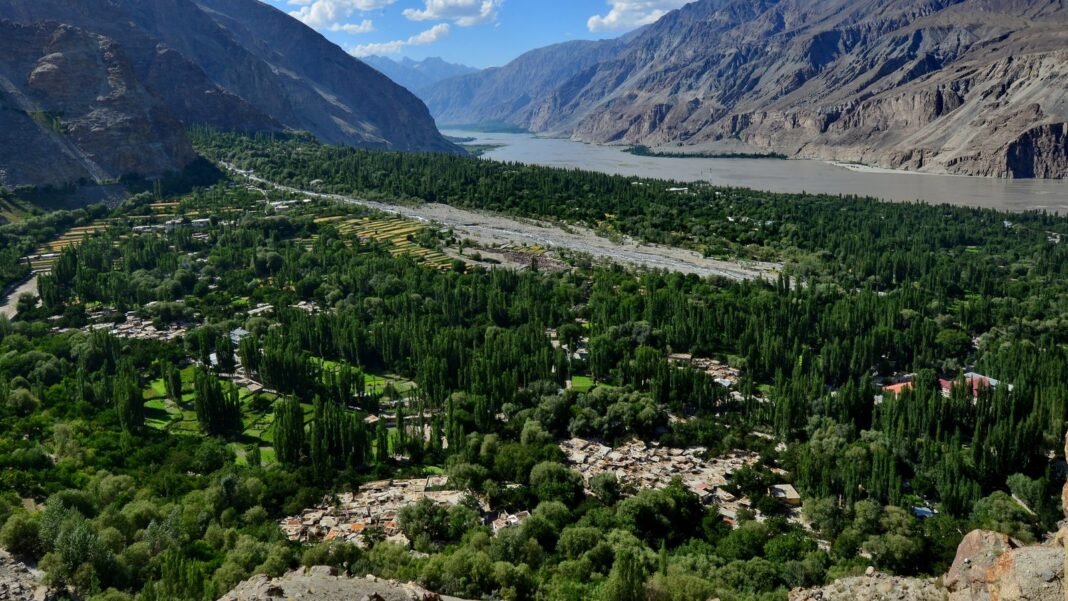
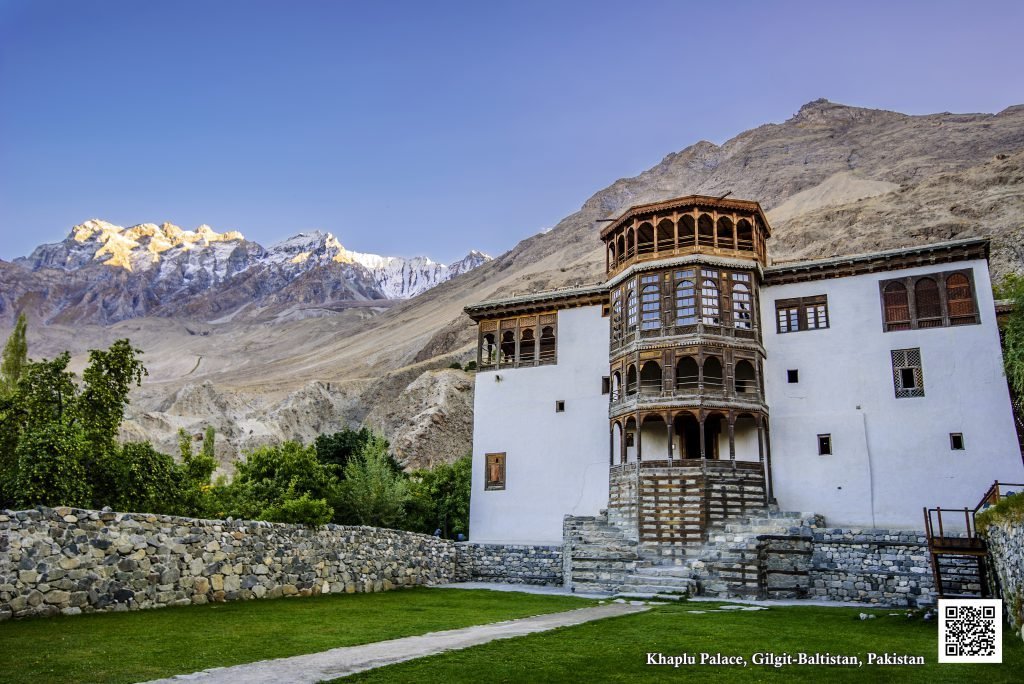
There is a moment, standing in the vast lawn garden of Khaplu Palace as the evening light turns the wooden balconies gold, when the whole valley seems to hold its breath. Behind you rises the five-storey palace — stone walls, intricately carved wooden windows, terraces opening onto views of the Karakoram. Below you lies Khaplu town, green with apricot orchards. It is hard to believe this place was a decaying ruin barely two decades ago, invisible to all but the royal family whose descendants still live nearby.
That transformation is exactly why Khaplu Palace deserves your trip. Between 2005 and 2011, the Aga Khan Trust for Culture carried out one of Pakistan’s most celebrated heritage restorations here under the Aga Khan Historic Cities Programme. The work won the UNESCO Asia-Pacific Heritage Award in 2013 and the Virgin Holidays Responsible Tourism Award in 2012. The result is not a dusty monument you photograph from outside — it is a living place. You can walk through the museum rooms where the royal family’s clothes, cooking utensils, property documents and even marriage certificates are preserved. You can sleep in a room that once belonged to Balti royalty. You can take your morning tea on a terrace where rajas once surveyed their kingdom.
Khaplu Palace is also the perfect anchor for a Baltistan trip. It sits at the eastern edge of the region, close enough to Skardu for an easy drive, yet far enough to feel like another world — greener, quieter, more Tibetan in character. History buffs get a genuine 19th-century royal residence. Photographers get some of the finest carved woodwork in northern Pakistan. Families get a calm, safe, walkable base with gardens for children. And romantics get what may be the most atmospheric heritage hotel in the country, with only around 22 rooms, so it never feels crowded even at full occupancy.
History of Khaplu Palace
Before 1840, the rulers of Khaplu — a dynasty titled Yabgo, meaning “leader” — governed from Thorsikhar, a fort perched on a cliff top above the valley. Local historians note that the Yabgo family shared roots with the monarchs of Chinese Turkestan (today’s Xinjiang), and ruled an independent mountain kingdom long before the modern borders of the region were drawn.
Everything changed in 1840, when the Dogras of Jammu took over Baltistan during their trans-Himalayan conquests. After capturing the region from the Yabgos, the Dogras decided to shift the seat of government from the old cliff-top fort to a new location. According to the account still told by the Yabgo family’s descendants in Khaplu, the site was chosen in an extraordinary way: after consultation with Yabgo Raja Daulat Ali Khan, a great boulder was rolled down from a cliff adjacent to Thorsikhar, and the palace was built on the exact spot where the stone came to rest — at Doqsai village. Kashmiri and Balti artisans shaped the palace there, and it became the royal residence of the Raja of Khaplu, replacing the older fort, whose ruins can still be seen on the higher ground behind the town.
For over a century the palace was the centre of Balti royal life. As writer Jane Ellen Duncan recorded in her 1906 travelogue, the people of Khaplu once lived inside the fort’s premises and were not permitted to build homes outside it; the practice ended after the Maharaja of Kashmir assumed control of the area. The royal family and their descendants lived in the palace for generations, until the building grew too old and needed restoration. The family built new houses in the area, moved out, and handed the palace over to the Aga Khan Trust for Culture.
The restoration, from 2005 to 2011, was a landmark moment for heritage conservation in Pakistan. Craftsmen used traditional materials and techniques to bring the carved wooden balconies, stone masonry and painted interiors back to life. When the palace opened to the public in 2011 — for the first time in some forty years, as the press noted at the time — Pakistanis finally got to see inside the 19th-century royal home of the Dogra-era Rajas. It is now operated as a boutique hotel by Serena Hotels, with a museum in the main building dedicated to the history and culture of Baltistan, and new guest wings constructed around it.
Top Things to Do in Khaplu Palace
Walk Through the Royal Museum
The museum in the palace’s main building is the soul of Khaplu Palace. Room after room holds the belongings of the royal family that lived here from 1840 onward — their clothes and shoes, cooking utensils, furniture, property documents, and marriage certificates translated into several languages. It is less a conventional museum and more a time capsule of Balti royal domestic life. Guides on site tell the stories behind the objects, including the legend of the rolled boulder that chose the palace’s site.
Admire the Wooden Balconies and Courtyards
The palace’s carved wooden balconies, lattice ceilings and traditional courtyards are masterpieces of Balti-Tibetan craftsmanship, blending Tibetan, Kashmiri and Ladakhi influences. Every turn reveals another detail — painted beams, carved window frames, terraced sitting areas. Bring your camera; the morning and late-afternoon light on the woodwork is superb, and photography here is among the best heritage photography anywhere in Gilgit-Baltistan.
Relax in the Palace Gardens
The vast lawn garden in front of the palace, framed by fruit trees with the Karakoram rising behind, is one of the most peaceful spots in the valley. Order tea or a meal on the terrace, read a book, or simply sit. Because the hotel has only about 22 rooms, the grounds stay quiet even in peak season — a rare luxury at a major tourist site.
Take the Guided Heritage Tour
Whether or not you are staying at the hotel, ask about a guided tour. The palace’s guides recount the Yabgo dynasty’s history, the Dogra conquest, the stone-rolling legend and the restoration story with genuine passion. Their stories — especially the ones passed down by the royal family themselves — are the difference between seeing a pretty building and understanding it.
Visit Chaqchan Mosque
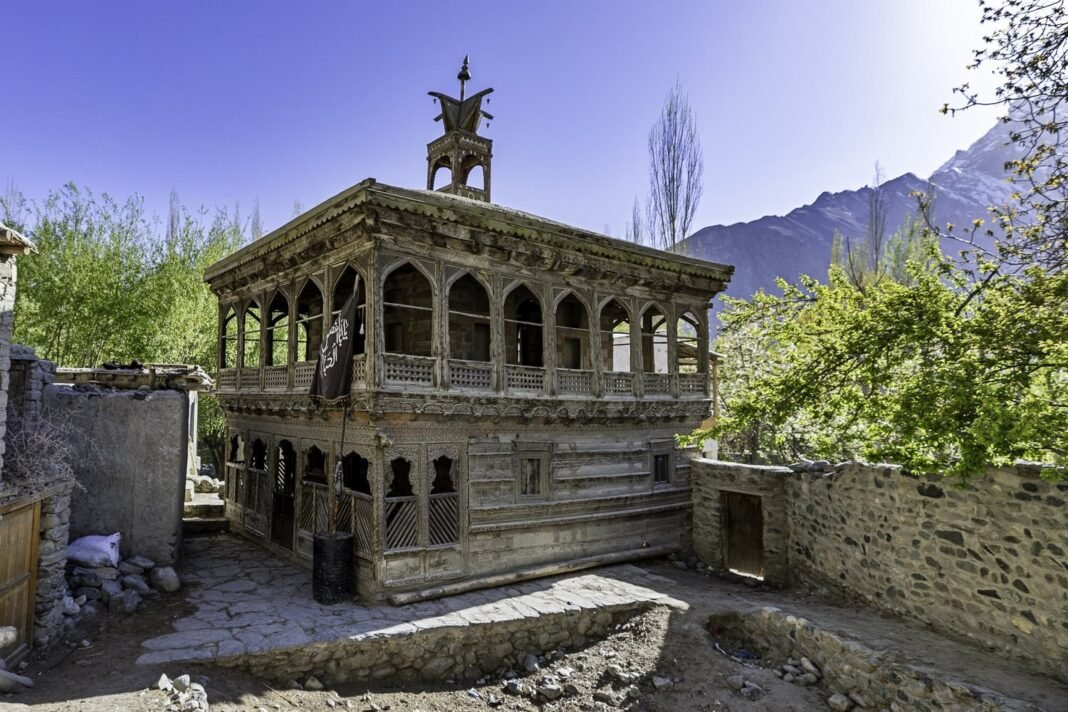
Just a short drive from the palace stands the Chaqchan Mosque, one of the oldest mosques in Pakistan, dating to around 1370 — the era when Baltistan’s people converted en masse from Buddhism to Islam. Its wooden structure is a vibrant mix of Persian, Kashmiri and Tibetan architecture, restored under the Aga Khan Historic Cities Programme, and the first-floor balcony offers a beautiful view of the Masherbrum range and Khaplu town.
Explore the Khanqah and Astana
The Khanqah prayer hall of Khaplu, attributed to Mir Mukhtar Akhyar and built in 1712 AD, is a wooden architectural marvel associated with the Nur Bakhshiya Sufi tradition. The nearby Astana — the grave monument of the saint Sayyed Mohammad — was restored by the Aga Khan Trust for Culture and saved from disintegration. Together with the mosque, these sites make Khaplu a centre of Baltistan’s spiritual heritage.
Climb to the Thoksikhar Viewpoint
Above the town, the Thoksikhar viewpoint (near the old Thorsikhar fort site) gives a sweeping panorama of Khaplu town, the Shyok River and the surrounding peaks. It is also a known rock-climbing area. Go at sunset if you can — the valley glows gold below you.
Famous Places In and Around Khaplu Palace
- Chaqchan Mosque — 14th-century wooden mosque, one of Pakistan’s oldest, about 2 km from the palace.
- Khanqah of Khaplu — 1712 Sufi prayer hall with carved wooden pillars and the restored Astana.
- Thoksikhar Viewpoint — panoramic viewpoint above the town and a rock-climbing spot.
- Haldi Cones — dramatic granite spires east of Khaplu, often compared to the Passu Cones; a superb drive-through photo stop. See our Haldi Cones travel guide.
- Shyok River — the great river of the valley, with rafting opportunities in season.
- Saling Village — a picturesque village on the Khaplu route with views of the Mashabrum peaks.
- Hushe Valley — the mountaineers’ gateway to Masherbrum, Gondogoro La and the great Karakoram glaciers; read our Hushe Valley travel guide.
How to Reach Khaplu Palace
Khaplu is reachable only by road, and the journey is half the pleasure. The palace stands on the upper side of Khaplu town, north of the town centre and south of the Shyok River — ask anyone in town for “Yabgo Khar” and you will be pointed the right way.
From Islamabad: The standard route is Islamabad to Skardu first — approximately 640 km via the Karakoram Highway (N-35) through Mansehra, Besham and Gilgit, then the Jaglot–Skardu road. By private car or coaster it takes roughly 14 to 16 hours, so most travelers break the journey overnight in Naran or Gilgit. The faster option is the daily flight from Islamabad to Skardu (about an hour), weather permitting. From Skardu, Khaplu is approximately 100 km east — a scenic 3 to 3.5-hour drive along the Indus and then the Shyok River, crossing the bridge onto the road running parallel to the Shyok about an hour out of Skardu.
From Lahore: Lahore travelers join the same route via the motorway to Islamabad (about 4 to 5 hours), then continue as above. Total road journey is roughly 18 to 22 hours with rest stops; flying Lahore–Islamabad–Skardu is the comfortable alternative.
From Karachi: Fly to Islamabad (about 2 hours) and then to Skardu, or take the long road journey north. Karachi–Khaplu by road is a two-day expedition of over 1,800 km — only for the truly adventurous, and best combined with a wider northern areas tour.
Nearest airport: Skardu International Airport, approximately 100 km from Khaplu, with flights from Islamabad. In winter, flights are frequently delayed or cancelled by weather, so build buffer days into your plan.
Road conditions by season: The Skardu–Khaplu road is paved and comfortable in summer (May to October). In winter it stays open but can be affected by snow and ice; a 4×4 with chains is advisable from December to February. Landslides are rare on this stretch but possible after heavy rain.
Transport options: Private car or rented SUV from Skardu is the most flexible. Local vans and coasters run between Skardu and Khaplu from the Skardu bus terminal (budget-friendly, roughly PKR 300–500 per seat). Taxis can be hired in Skardu for the day or for a drop. Tour operators in Skardu and Islamabad run packaged Baltistan tours that include Khaplu.
Route Details
- Reach Skardu — by road via the Karakoram Highway and Jaglot–Skardu road, or by air from Islamabad.
- From Skardu city, take the Skardu–Khaplu road eastward. The first stretch follows the Indus River through sandy desert and green villages.
- About an hour out of Skardu, cross the bridge onto the road running parallel to the Shyok River, which flows down from Ladakh.
- Continue through hamlets like Ghawari and Keris, with the Haldi Cones appearing to the east as you near Khaplu.
- Enter Khaplu town. Follow signs or ask for Khaplu Palace / Yabgo Khar — it stands on the upper side of town, reached through a maze of narrow streets that open into the palace’s garden.
Where to Stay in Khaplu Palace
The palace itself is the stay of a lifetime. Serena Khaplu Palace operates inside the restored royal residence as a boutique heritage hotel, with around 22 rooms blending traditional Balti craftsmanship — carved wood, local textiles, stone walls — with modern comfort. It is the most atmospheric place to sleep in the valley, and staying guests get the run of the terraces, gardens and museum at quiet hours. Book well ahead for the June-to-September peak; the room count is small and it fills fast.
Khaplu town also offers solid mid-range options. A cluster of hotels and guesthouses sits around the town centre and along the road into town, many of them family-run with clean rooms, hot water and home-style food. These are comfortable, budget-friendly bases for travelers who visit the palace as a day experience rather than sleeping in it.
Budget travelers will find simple guesthouses and a few hostels in Khaplu, plus the option of staying in Skardu and visiting Khaplu as a long day trip (about 7 hours of driving round-trip — doable but rushed; an overnight in Khaplu is far better). Camping is possible at designated spots around the valley with your own gear, though most visitors prefer the town’s guesthouses. Whatever your tier, Khaplu’s hospitality is famously warm — hosts here treat guests like family.
Where to Eat: Local Foods of Khaplu Palace
Khaplu’s food is classic Balti mountain cuisine — hearty, simple and built on what the valley grows. The star ingredients are buckwheat, barley, apricots and meat, especially in winter. At the Serena Khaplu Palace restaurant, you will find both local and continental dishes made with fresh organic ingredients from the region, and reviewers consistently praise the Balti meat curries and apricot desserts.
In town, look for mamtu — steamed Balti dumplings filled with minced meat and onions, the valley’s most beloved dish — and thukpa, the warming Tibetan-style noodle soup that is perfect after a cold day of sightseeing. Buckwheat breads, apricot oil, dried apricots and apricot juice are everywhere; Khaplu’s orchards produce some of the finest apricots in Baltistan. Balti salt tea (namkeen chai) is the traditional welcome drink, and trout from the valley’s streams appears on many menus in season.
The main bazaar has small restaurants and dhabas serving Pakistani staples — daal, sabzi, chicken karahi, chapati — at very budget-friendly prices; a filling meal at a local dhaba typically costs only a few hundred rupees. Mid-range hotel restaurants charge more but offer cleaner settings and wider menus. If you are staying at the palace, at least one dinner on the terrace, with the mountains fading to purple around you, is close to mandatory.
Weather in Khaplu Palace
At around 2,600 metres, Khaplu enjoys a classic high-mountain climate: crisp air, strong sun, and sharp differences between seasons. Days can be pleasantly warm even when nights are cold, so layers are essential year-round. Here is what to expect in this Khaplu Palace travel guide weather table (all ranges approximate):
| Season | Temperature Range | Conditions |
|---|---|---|
| Spring (Apr–May) | Approx. 8–18°C | Blossom season; apricot and cherry trees flower, days mild, nights chilly, occasional rain. |
| Summer (Jun–Aug) | Approx. 15–27°C | Warm days, cool nights; clearest mountain views; peak tourist season. |
| Autumn (Sep–Nov) | Approx. 5–15°C | Golden foliage, crisp air, harvest time; October is glorious for photography. |
| Winter (Dec–Mar) | Approx. −12 to 2°C | Cold and snowy; palace and valley under snow; flights and roads can be disrupted. |
Language and Culture of Khaplu Palace
The people of Khaplu are Balti — warm, hospitable mountain folk whose language, Balti, is a Tibetic tongue closely related to Ladakhi. Urdu is widely understood, especially by younger people and anyone in tourism, and English is spoken at the Serena hotel. Most Baltis are Muslim, and the valley carries a deep Sufi heritage through the Nur Bakhshiya tradition visible in the Khanqah and Astana.
Cultural norms are conservative but welcoming. Dress modestly — cover shoulders and knees, and women may want a headscarf handy for mosque and shrine visits. Always remove shoes before entering the Chaqchan Mosque or Khanqah, and ask before photographing people, especially women and elders. Guests are sacred in Balti culture: accept the offered salt tea, eat with your right hand, and do not be surprised if a shopkeeper insists you stay for tea. Bargaining in the bazaar is gentle, not aggressive — a smile goes further than a hard bargain.
Shopping in Khaplu Palace
Khaplu’s small bazaar is a treasure chest of Balti crafts. The must-buys are dried apricots, apricot oil and apricot jam from the valley’s orchards — among the best in Pakistan. Look also for hand-carved wooden boxes and furniture in the same tradition as the palace woodwork, Balti woolen shawls and caps, pashmina-style wraps, and traditional jewelry. Cherry and mulberry products appear in season.
Prices are honest and far lower than in Islamabad’s craft markets; the bazaar is small enough that a single unhurried hour covers it. There are no shopping malls in Khaplu — and that is entirely the point. Buy directly from the artisans where you can; your money goes straight to the families who made the things.
Travel Tips for Khaplu Palace
Packing Essentials
Layers, layers, layers: even summer nights at 2,600 metres are cool. Pack a warm jacket, sunblock and sunglasses (mountain sun is fierce), sturdy walking shoes for the palace terraces and town lanes, a reusable water bottle, and any medicines you need — pharmacies in Khaplu are basic. A power bank helps; load-shedding happens.
Safety Tips
Khaplu is among the safest, most peaceful destinations in Pakistan, with very low crime and a community that looks after visitors. Standard mountain precautions apply: acclimatize before strenuous hikes, carry water, check weather before driving, and keep someone informed of your plans on longer treks. Drink bottled or boiled water.
Money & Connectivity
ATMs exist in Khaplu town but can run dry in peak season — carry enough cash from Skardu or Islamabad, as most small shops and guesthouses do not take cards. Mobile signals: SCOM (the local network) works best in Gilgit-Baltistan; Jazz and Telenor have patchy coverage in Khaplu, Zong is weakest. The Serena hotel has Wi-Fi; elsewhere, expect slow or no data — embrace it.
Best Time to Visit Khaplu Palace
Spring (April–May): Blossom Season
The valley erupts in white and pink blossom, the palace gardens wake up, and crowds are thin. Perfect for photographers and romantics. Nights are still cold, and early April can bring late snow.
Summer (June–August): Peak Season
The classic window: warm days, clear skies, the palace in full operation, all roads open, and the Shyok at its most dramatic. Book the Serena rooms months ahead. This is also the best time to combine the palace with Hushe Valley and the high treks.
Autumn (September–October): Golden Season
Arguably the most beautiful weeks of the year — poplars and apricots turn gold and crimson, the harvest is in, and the light is made for photography. Fewer tourists than summer, mild days, cold nights.
Winter (November–March): The Quiet Season
For the hardy only: the palace under snow is hauntingly beautiful, but many hotels close, flights are unreliable, and temperatures plunge well below freezing. Check ahead that the hotel is open before planning a winter trip.
Final Thoughts
Khaplu Palace is not just another stop on a northern areas checklist — it is the rare place that changes how you think about Pakistan’s heritage. A 19th-century royal palace, rescued from ruin and returned to life as a hotel and museum, standing in one of the most beautiful valleys of the Karakoram: that combination exists almost nowhere else in the country. Whether you come for the history, the architecture, the gardens, or simply to sleep where rajas once slept, the palace rewards the journey many times over.
So plan the drive from Skardu, give Khaplu at least two nights, and let the valley work on you slowly. Walk the museum rooms, drink salt tea with the locals, watch the light change on the wooden balconies — and when you leave, you will understand why everyone who visits says the same thing: they will definitely be back. For more inspiration across the region, browse our Explore Pakistan collection.
FAQs
Where is Khaplu Palace located?
Khaplu Palace (Yabgo Khar) stands on the upper side of Khaplu town in Ghanche District, Gilgit-Baltistan, Pakistan — north of the town centre and south of the Shyok River, about 100 km east of Skardu.
What is the best time to visit Khaplu Palace?
May to October. June–August brings the warmest weather and full services; April–May offers blossom season; September–October brings golden autumn colours. Winter (November–March) is very cold with possible road and flight disruptions.
How do I reach Khaplu Palace?
Fly or drive to Skardu, then drive approximately 100 km (3–3.5 hours) east on the Skardu–Khaplu road. The palace is in Khaplu town — ask for “Yabgo Khar”. There is no railway or direct flight to Khaplu itself.
Who built Khaplu Palace and when?
It was built in 1840 by Yabgo Raja Daulat Ali Khan, the Raja of Khaplu, after the Dogras of Jammu shifted the seat of government from the old cliff-top fort at Thorsikhar. Local legend says the site was chosen by rolling a boulder down a cliff and building where it stopped.
Can you stay inside Khaplu Palace?
Yes. The restored palace operates as the Serena Khaplu Palace, a boutique heritage hotel with around 22 rooms, plus a museum of Balti history and culture in the main building. Book well ahead in peak season.
Is Khaplu Palace suitable for families?
Very. It is safe, walkable, and calm, with gardens for children, an educational museum, comfortable hotels at every budget, and gentle sightseeing — no strenuous trekking required to enjoy it.
What local food should I try in Khaplu?
Mamtu (steamed Balti dumplings), thukpa (noodle soup), buckwheat breads, apricot products, Balti salt tea, and seasonal trout. The palace restaurant serves excellent Balti and continental dishes.
Is Khaplu Palace worth combining with other destinations?
Absolutely. It pairs perfectly with Skardu, Shigar, the Haldi Cones, and — for trekkers — Hushe Valley, the gateway to Masherbrum and Gondogoro La. Two to three nights in Khaplu lets you see it all without rushing.