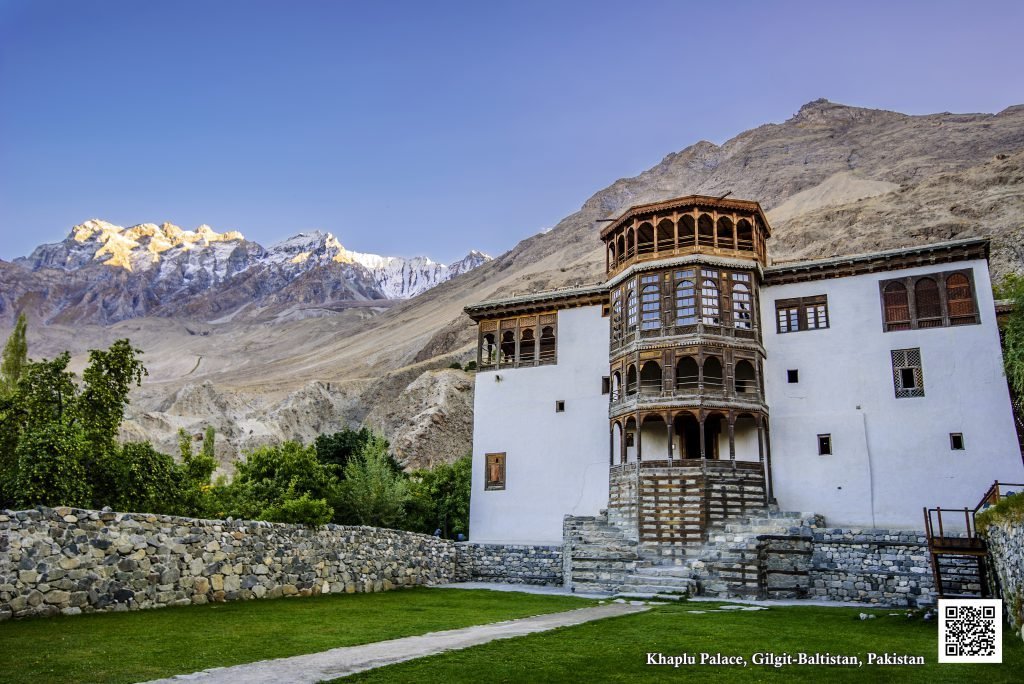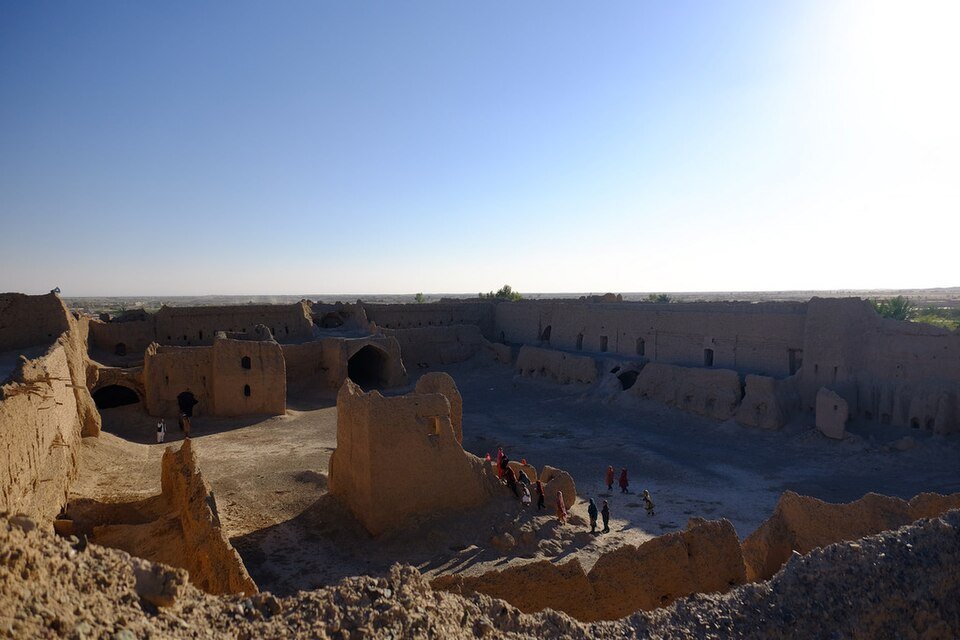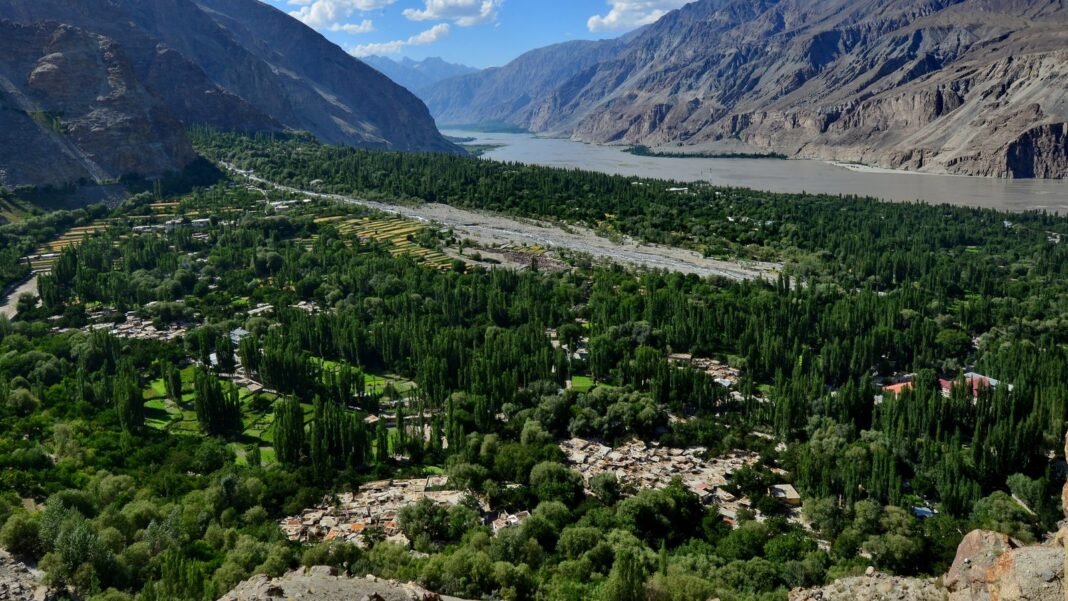
East of Skardu, where the Shyok River sweeps down from Ladakh and the Karakoram crowds in close, lies a valley so green and gentle that early European explorers struggled to describe it. In 1913 the Italian explorer Filippo De Filippi called Khaplu “perhaps the loveliest oasis in all the region” — and more than a century later, the description still holds. Khaplu Valley is Baltistan at its most soulful: a former mountain kingdom of orchards, wooden mosques, polo grounds and granite spires, crowned by one of Pakistan’s great heritage palaces. This Khaplu Valley travel guide is your invitation — and your practical handbook — to the valley the guidebooks always underrate.
Quick Facts
- Location: Eastern Baltistan, Gilgit-Baltistan, Pakistan — centred on Khaplu town, the administrative capital of Ghanche District, on the Shyok River.
- Altitude: Around 2,600 metres (approximately 8,500 feet) at the valley floor; surrounding peaks rise far higher.
- Famous For: Khaplu Palace (Yabgo Khar), the 14th-century Chaqchan Mosque, Haldi Cones, and its role as the gateway to Masherbrum and the great Karakoram treks.
- Nearest City: Skardu, approximately 100 km west (about 3–3.5 hours by road).
- Accessibility: Road only, via the Skardu–Khaplu road; nearest airport Skardu, with flights from Islamabad.
- Known Landmarks: Khaplu Palace, Chaqchan Mosque, Khanqah of Khaplu, Haldi Cones, Thoksikhar viewpoint, Keris suspension bridge.
- Best For: Culture seekers, photographers, families, honeymooners, trekkers heading to Hushe and Gondogoro, and travelers who want Baltistan without the crowds.
Why Visit Khaplu Valley
Most travelers racing between Skardu and Hunza blow straight past the turnoff to Khaplu — and that is exactly why you should take it. While the famous valleys bustle, Khaplu remains what Baltistan used to be: unhurried, deeply traditional, and startlingly beautiful. Apricot orchards step down to the Shyok River. Wooden balconies overhang narrow lanes. Old men play polo on grounds their grandfathers played on. The whole valley feels less like a tourist destination and more like a place that has simply agreed to let you visit.
What sets Khaplu apart is the density of its heritage. Nowhere else in northern Pakistan packs so much history into so small an area: a 19th-century royal palace turned heritage hotel, one of the country’s oldest mosques, a 300-year-old Sufi Khanqah, and the ruins of the cliff-top fort where the Yabgo kings once ruled — all within a few kilometres of each other. You can walk from a Tibetan-style palace to a 14th-century wooden mosque to a polo match in a single afternoon. For culture lovers, that concentration is unmatched.
And then there is the landscape. Khaplu sits at the meeting point of worlds: the Indus and Shyok rivers merge just downstream, the Karakoram rises in granite walls to the north, and the valley floor is a patchwork of green fields and orchards that glows gold in autumn and white-pink with blossom in spring. It is the gentler face of the Karakoram — all the grandeur, none of the harshness. Whether you are a photographer chasing the Haldi Cones at dawn, a trekker acclimatizing before Hushe, a family wanting a safe and easy mountain escape, or a honeymooning couple looking for quiet romance, Khaplu Valley meets you exactly where you are.
History of Khaplu Valley
Khaplu’s recorded history begins as an independent mountain kingdom. Unlike Skardu and Shigar, whose power centred on a single great river valley, the old kingdom of Khaplu spread across three valleys of the Shyok — the present town of Khaplu, the Thalle River valley, and the Hushe and Saltoro valleys. It was ruled by the Yabgo dynasty, whose title meant “leader” and whose family traditions trace their roots to the monarchs of Chinese Turkestan. The kingdom guarded the ancient trade route to Ladakh that ran along the Shyok, and its rulers commanded a string of fortresses — at Haldi in the east, at Kiris as a bulwark against Skardu and Shigar, and above all at Thorsikhar, the cliff-top fort above Khaplu town.
The valley’s spiritual history is older than its palaces. Baltistan was Buddhist for centuries before Sufi saints brought Islam in the 14th century, and Khaplu’s Chaqchan Mosque — dating to around 1370 — belongs to that very first generation of mosques, built as the valley’s people converted en masse from Buddhism to Islam. Its wooden architecture still carries the memory of the Buddhist monasteries that came before, blended with Persian and Kashmiri influences. Three centuries later, in 1712, the saint Sayyed Mohammad of the Nur Bakhshiya order built the Khanqah prayer hall that remains the valley’s spiritual heart.
Politically, the kingdom’s independence ended in 1840, when the Dogras of Jammu conquered Baltistan and shifted the royal seat from Thorsikhar to the new Khaplu Palace below. Like all the princely states of the region, the kingdom of Khaplu was eventually merged into Pakistan in 1972. The valley that 19th-century British officials, explorers and travel writers trekked through — the “loveliest oasis” of De Filippi’s 1913 account — is recognizably the same valley you visit today: the orchards, the wooden architecture, the polo, and the warmth of the Balti people have all survived the century intact.
Top Things to Do in Khaplu Valley
Explore Khaplu Palace (Yabgo Khar)
The valley’s crown jewel needs no introduction — the 1840 royal palace of the Yabgo Rajas, restored between 2005 and 2011 by the Aga Khan Trust for Culture and now run as the Serena Khaplu Palace heritage hotel with a museum of Balti culture. Walk the carved wooden balconies, tour the museum rooms of royal artifacts, and take tea in the gardens. Our dedicated Khaplu Palace travel guide covers it in full detail.
Visit the Chaqchan Mosque
Dating to around 1370, the Chaqchan — “miraculous” — Mosque is one of the oldest mosques in Pakistan and a masterpiece of wooden sacred architecture. Step inside and you are transported: lattice ceilings, wooden grills, colourful paint with gilded accents, the look of a Tibetan monastery married to Islamic devotion. Restored under the Aga Khan Historic Cities Programme, it is now among the valley’s most photographed landmarks. The balcony on the first floor frames the Masherbrum peaks perfectly.
See the Khanqah and Astana
The 1712 Khanqah prayer hall, attributed to Mir Mukhtar Akhyar, is a wooden architectural marvel of the Nur Bakhshiya Sufi tradition, and the adjacent Astana — the grave monument of the saint Sayyed Mohammad — was rescued from ruin by the Aga Khan Trust for Culture. Visit in the quiet of the morning for the full spiritual atmosphere.
Photograph the Haldi Cones
East of Khaplu rise the Haldi Cones — a cluster of sheer granite spires that are Baltistan’s answer to the Passu Cones of Hunza. They are best seen on the drive toward the eastern villages, glowing at sunrise and sunset. Read our Haldi Cones travel guide for the best viewpoints.
Climb to Thoksikhar Viewpoint
Above the town, the Thoksikhar viewpoint offers the classic panorama: Khaplu’s green valley floor, the Shyok River threading through it, and the Karakoram wall beyond. The area around Biamari and Thoqsikhar is also known for rock climbing, and the nearby Dowo Kraming hot spring is a local favourite.
Walk the Keris Suspension Bridge
The traditional suspension bridge at Keris village, west of Khaplu on the Skardu road, is a thrilling photo stop — a swaying wooden crossing over the river gorge, still used by locals. It is the kind of authentic, unpolished experience that makes Khaplu special.
Day-Trip to Saling and Machlu
The villages of Saling and Machlu, south and east of Khaplu, offer postcard Baltistan: terraced fields, orchards, and stupendous views of the Mashabrum (Masherbrum) massif and its sister peaks. Saling in particular has the look of upper Hunza’s Passu village, with its own distinct character.
Try Rafting on the Shyok River
In the summer months, the Shyok River offers rafting stretches for adventure seekers. Arrange through Skardu- or Khaplu-based operators, and always go with licensed guides and proper safety gear — the Shyok is a powerful glacial river.
Use Khaplu as a Trekking Base
Serious trekkers know Khaplu as the gateway to the great Karakoram objectives: Masherbrum (K-1), K-6, K-7 and Chogolisa for mountaineers, and the Gondogoro La crossing, Gondogoro Glacier, Saraksa Glacier, Aling Glacier and the lakes of the high valleys — Daholi, Ghangche and Bara — for trekkers. Most expeditions stage through Hushe Valley, reached via Khaplu; see our Hushe Valley travel guide.
Famous Places In and Around Khaplu Valley
- Khaplu Palace (Yabgo Khar) — the 1840 royal palace, heritage hotel and museum.
- Chaqchan Mosque — 14th-century wooden mosque, one of Pakistan’s oldest.
- Khanqah of Khaplu & Astana — 1712 Sufi prayer hall and restored saint’s shrine.
- Haldi Cones — dramatic granite spires in the eastern valley.
- Thoksikhar Viewpoint — panoramic viewpoint and rock-climbing area above the town.
- Dongsa Viewpoint — viewpoint and chairlift area popular with local visitors.
- Keris Suspension Bridge — traditional swaying bridge on the Skardu road.
- Hushe Valley — the mountaineers’ valley, gateway to Gondogoro La and Masherbrum.
- Kharfaq Lake — a high trout lake reached by a tough hike from Kharfaq village; see our Kharfaq Lake travel guide.
How to Reach Khaplu Valley
Khaplu is reachable only by road, and the valley rewards the journey generously. Khaplu town — the valley’s hub — sits at the eastern end of the drive from Skardu.
From Islamabad: Travel first to Skardu, approximately 640 km via the Karakoram Highway (N-35) and the Jaglot–Skardu road — roughly 14 to 16 hours by car or coaster, usually with an overnight stop. Alternatively, fly Islamabad to Skardu in about an hour (weather permitting). From Skardu, the Khaplu road runs east for approximately 100 km (3 to 3.5 hours), following the Indus past sandy deserts and villages, then crossing to the Shyok River road about an hour out of Skardu and continuing through Ghawari and Keris to Khaplu.
From Lahore: Motorway to Islamabad (4–5 hours), then the Skardu route as above — 18 to 22 hours by road in total, or fly via Islamabad.
From Karachi: Fly to Islamabad and onward to Skardu; the full road journey exceeds 1,800 km and is a two-day expedition best folded into a longer northern tour.
Nearest airport: Skardu International Airport, about 100 km from Khaplu town, with flights from Islamabad. Winter weather frequently disrupts flights, so keep buffer days.
Road conditions by season: The Skardu–Khaplu road is paved and comfortable from May to October. In winter it remains passable but icy in stretches — a 4×4 is wise from December to February. The four or five historic tracks linking Khaplu to Kashmir, Ladakh and the old Yarqand route are not open to tourists.
Transport options: Hire a private car or SUV in Skardu for maximum flexibility, take a local van or coaster from the Skardu terminal (budget seats roughly PKR 300–500), hire a taxi for a day trip, or join an organized Baltistan tour from Islamabad, Lahore or Skardu that includes Khaplu.
Route Details
- Get to Skardu by road (Karakoram Highway + Jaglot–Skardu road) or by air from Islamabad.
- Leave Skardu eastward on the Khaplu road, tracing the Indus through desert and farmland.
- About an hour out, cross the bridge to the Shyok River road, which runs parallel to the river flowing down from Ladakh.
- Pass through Ghawari and Keris villages (photo stop at the Keris suspension bridge).
- Arrive in Khaplu town; the valley’s sights — palace, mosque, Khanqah, viewpoints — fan out within a few kilometres.
Where to Stay in Khaplu Valley
At the top end, the Serena Khaplu Palace is the valley’s signature stay — a genuine 19th-century royal palace operating as a boutique heritage hotel with around 22 rooms, museum access, gardens and terraces. It books out in summer, so reserve early; for honeymooners and heritage lovers there is simply nothing like it in the region.
Mid-range travelers are well served by the cluster of hotels and guesthouses in and around Khaplu town — family-run places with clean rooms, hot water, home-cooked food and famously warm hosts. Several sit within walking distance of the palace and bazaar, making them ideal bases for sightseeing on foot.
Budget options include simple guesthouses in Khaplu and the surrounding villages, where a basic clean room costs very little and the hospitality is enormous. Trekkers heading for Hushe or the high lakes often overnight in Khaplu to acclimatize before pushing higher. Camping with your own gear is possible at spots around the valley. Skardu also works as a base for a rushed day trip, but Khaplu deserves at least two nights — the valley reveals itself slowly, and the early mornings are magical.
Where to Eat: Local Foods of Khaplu Valley
Khaplu’s kitchens serve the best of Balti cuisine. The valley’s orchards and fields dictate the menu: buckwheat and barley breads, apricots in every form, potatoes, and meat — mutton, beef and chicken — prepared in hearty mountain style. Do not leave without trying mamtu, the steamed meat dumplings that are Baltistan’s signature dish, and thukpa, the Tibetan-style noodle soup that warms you from the inside out on a chilly evening.
Balti salt tea is the traditional welcome in every home and many shops — accept it graciously. Apricot oil, dried apricots, apricot jam and fresh apricot juice (in season) are valley specialties; Khaplu’s apricots are considered among the finest in Gilgit-Baltistan. Trout from the valley’s cold streams appears on hotel menus in season, and the Serena Khaplu Palace restaurant serves refined local and continental dishes with organic regional ingredients.
In the bazaar, small restaurants and dhabas serve Pakistani staples — daal, mixed sabzi, chicken dishes, fresh chapati — at very budget-friendly prices; a full dhaba meal typically runs a few hundred rupees per person. Mid-range hotel restaurants offer more variety in cleaner settings. Fruit is absurdly cheap in season: in late summer, you can buy a bag of fresh apricots for almost nothing.
Weather in Khaplu Valley
Khaplu’s valley-floor climate is milder than the high Karakoram around it, but it is still a mountain climate — bright sun, cool nights, and four distinct seasons. Blossom season and autumn colour are the valley’s two great natural spectacles. Approximate ranges for this Khaplu Valley travel guide:
| Season | Temperature Range | Conditions |
|---|---|---|
| Spring (Apr–May) | Approx. 8–18°C | Apricot and cherry blossom; mild days, chilly nights; thin crowds. |
| Summer (Jun–Aug) | Approx. 15–27°C | Warm and clear; best mountain views; peak season for treks and rafting. |
| Autumn (Sep–Nov) | Approx. 5–15°C | Spectacular golden foliage and harvest; superb photography light. |
| Winter (Dec–Mar) | Approx. −12 to 2°C | Snowy and very cold; many hotels closed; flights and roads unreliable. |
Language and Culture of Khaplu Valley
Khaplu is the heartland of the Balti people, whose Tibetic language — Balti, closely related to Ladakhi — is still the language of home and field. Urdu is widely spoken, especially by the young and by everyone in tourism; English is available at the larger hotels. The valley’s religious life blends mainstream Islam with a deep Nur Bakhshiya Sufi heritage, centred on the Khanqah and the Astana shrine.
Balti culture is famous across Pakistan for its hospitality — guests are treated as a blessing, not a business. Polo is the valley passion, played on traditional grounds through the summer; ask locally about matches during your visit. Dress modestly (cover shoulders and knees), remove shoes in mosques and shrines, keep a headscarf handy for religious sites, and always ask before photographing people. In the bazaar, bargaining is gentle and good-humoured. If a shopkeeper offers you salt tea, say yes — some of the best travel memories are made over that cup.
Shopping in Khaplu Valley
The Khaplu bazaar may be small, but it is one of the most rewarding shopping streets in Baltistan. Stock up on dried apricots, apricot oil, apricot jam and cherry products — the valley’s orchards are legendary, and prices are a fraction of Islamabad’s. Hand-carved wooden items (boxes, furniture, decorative pieces) carry on the same craft tradition you see in the palace balconies. Balti woolen shawls, traditional caps and local jewelry make wonderful, lightweight souvenirs.
Trout is sold fresh in season, and honey from the valley’s apiaries is excellent. There are no shopping malls anywhere in the valley — shopping here means the bazaar, the artisan workshops, and the farm gates. Bargain politely, buy directly from makers when you can, and leave room in your bag: you will buy more apricots than you planned.
Travel Tips for Khaplu Valley
Packing Essentials
Pack for four seasons in one day: a warm jacket even in summer, sunblock and quality sunglasses (the high-altitude sun is brutal), sturdy walking shoes, a hat, a reusable water bottle, and a basic first-aid kit with altitude-sickness medication if you plan to trek higher. Power banks are essential — electricity can be intermittent.
Safety Tips
Khaplu is one of the safest and most peaceful valleys in Pakistan. The usual mountain rules apply: acclimatize a day before strenuous hikes, carry water and snacks, check the weather before driving, and tell your hotel your plans if heading into the hills. Drink bottled or boiled water, and go with licensed operators for rafting and treks.
Money & Connectivity
Bring cash — enough for your whole stay. ATMs in Khaplu town exist but run dry in peak season, and small shops, dhabas and village guesthouses are cash-only. For mobile data, SCOM (the Gilgit-Baltistan network) has the best local coverage; Jazz and Telenor are patchy, Zong weakest. Larger hotels offer Wi-Fi, but elsewhere expect to be gloriously offline.
Best Time to Visit Khaplu Valley
Spring (April–May): The Blossom Season
Arguably the valley’s most romantic season. Apricot, cherry and apple blossom washes the valley floor in white and pink, the palace gardens bloom, and you will share it all with hardly any other tourists. Cool nights, mild days — bring a jacket.
Summer (June–August): The Adventure Season
Peak season for a reason: warm clear days, all roads and treks open, rafting on the Shyok, and the high valleys accessible. This is the window for Hushe, Gondogoro and the great peaks. Book accommodation ahead.
Autumn (September–October): The Golden Season
Many photographers call this the best time of all — poplars, apricots and willows turn gold, amber and crimson, the harvest fills the bazaars, and the mountain light is at its most dramatic. Fewer crowds than summer.
Winter (November–March): The Silent Season
Khaplu under snow is achingly beautiful and almost empty — but it is strictly for the hardy. Many hotels close, temperatures plunge, and flights and roads are at the mercy of the weather. Confirm everything is open before you commit.
Final Thoughts
Khaplu Valley is the Baltistan that mass tourism forgot — and that is its greatest gift. In a single valley you get a royal palace, one of Pakistan’s oldest mosques, a living Sufi tradition, granite spires, river gorges, orchards, polo and the friendliest people in the Karakoram. It asks for so little — just the three-hour drive from Skardu — and gives back memories that outshine far more famous destinations.
Give it time: two nights minimum, three if you can. Walk the lanes in the morning, sit in the palace gardens in the evening, eat mamtu in the bazaar, and let the valley’s unhurried rhythm reset yours. Khaplu does not shout for your attention like the bigger valleys do. It simply waits, quietly confident that once you have seen it, you will never stop talking about it. Discover more hidden corners of the country in our Explore Pakistan series.
FAQs
Where is Khaplu Valley located?
Khaplu Valley lies in eastern Baltistan, Gilgit-Baltistan, Pakistan. Its hub is Khaplu town, the administrative capital of Ghanche District, on the Shyok River about 100 km east of Skardu.
What is the best time to visit Khaplu Valley?
May to October. April–May brings blossom season, June–August is peak summer for treks and rafting, and September–October offers golden autumn colours. Winter is very cold with disrupted transport.
How do I reach Khaplu Valley?
Get to Skardu by road (Karakoram Highway) or by air from Islamabad, then drive approximately 100 km (3–3.5 hours) east on the Skardu–Khaplu road. The valley is road-access only.
What are the top attractions in Khaplu Valley?
Khaplu Palace (Yabgo Khar), the 14th-century Chaqchan Mosque, the 1712 Khanqah and Astana, the Haldi Cones, Thoksikhar viewpoint, the Keris suspension bridge, and — for trekkers — the Hushe Valley gateway to Masherbrum and Gondogoro La.
Is Khaplu Valley safe for tourists and families?
Yes — it is among the safest, most peaceful valleys in Pakistan, with very low crime and famously hospitable locals. It is ideal for families: gentle sightseeing, no strenuous hiking required.
Where should I stay in Khaplu Valley?
The Serena Khaplu Palace is the signature heritage stay (book early). Khaplu town also has good mid-range hotels, family-run guesthouses and budget options within walking distance of the main sights.
What food is Khaplu Valley famous for?
Balti cuisine: mamtu (steamed dumplings), thukpa (noodle soup), buckwheat breads, apricot products, salt tea and seasonal trout, plus Pakistani staples in the bazaar dhabas.
How many days do I need for Khaplu Valley?
Two nights minimum to see the palace, mosque, Khanqah, viewpoints and bazaar without rushing; three nights if you want village day-trips to Saling, Machlu or the Haldi Cones, or to acclimatize before a Hushe trek.