Quick Facts
- Location: Gabral Valley, Swat District, Khyber Pakhtunkhwa, Pakistan
- Altitude: Around 3,000 metres (roughly 10,000 feet) above sea level, according to local travel reporting
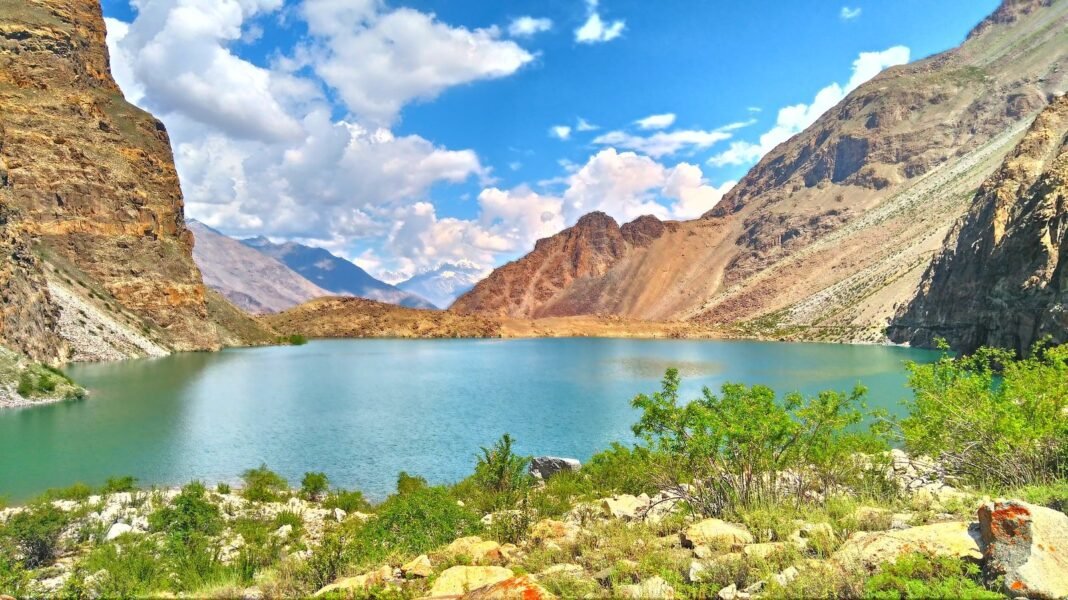
- Famous For: A calm, blue-green alpine lake fed by glaciers, reached by jeep track and trek through the Gabral gorge
- Nearest City: Kalam, approximately 41–45 km by road; Mingora around 143 km
- Accessibility: 4×4 jeep track from the Gabral/Utror side, with a final stretch on foot; summer only
- Known Landmarks: Gabral River, Shahi Bagh, the Utror valley, Badogai Pass road toward Kumrat
- Best For: Trekkers, campers, photographers, and adventure-loving families
Why Visit Kharkhari Lake, Gabral Valley
Some lakes are famous. Others are earned. Kharkhari Lake belongs firmly to the second kind. It sits deep in the Gabral Valley of upper Swat, far beyond the bazaars of Kalam, in a landscape the Express Tribune once called “the jewel in Swat’s crown” — and once you stand on its shore, listening to the kind of silence you can only find above 10,000 feet, you understand exactly what the writer meant.
The journey is part of the reward. From Gabral, the track forks toward Kharkhari and Kumrat, winding along the Utror River before climbing into a world of glaciers, four waterfalls, dense conifer vegetation, and pastures that locals have used for centuries. The final approach is on foot — a few kilometres of high-mountain trekking — and then the lake simply appears: a body of water locals describe as predominantly blue with a hint of green that shifts with the sunlight filtering through its surface. Tourists camp along its banks in summer, and the night sky above it is the kind of spectacle that no city planetarium can touch.
Kharkhari Lake is perfect for travelers who feel that Swat’s easy spots have become a little too easy. If Mahodand is the lake you visit and Kharkhari is the lake you conquer, you will leave with the better story. It suits trekkers and campers first, but determined families with older kids can make it too, provided they take a sturdy 4×4 and give the mountain the respect it deserves. The best time to go is summer — roughly June through September — when the track is open, the wildflowers are blooming, and the days are long enough to do the journey justice.
For more inspiration on the north of Pakistan, browse our Explore Pakistan collection, and if you are building a Swat itinerary, our Kalam Valley travel guide and Gabral Valley travel guide pair perfectly with this trip.
History of Kharkhari Lake, Gabral Valley
Kharkhari is a natural lake with no ancient city or palace attached to it, so its history is really the history of the Gabral Valley around it. Gabral is an old mountain valley in upper Swat where the Gujar people form the main ethnic group, alongside Kohistani communities including the Gawri and Torwali peoples. For generations the valley lived on livestock, terraced farming, and the collection of medicinal herbs that still grow wild in its forests — a way of life shaped by the seasons and the high pastures rather than by kings and empires.
The lake’s name itself carries a small history lesson. In Pashto, “khar” means brown, and local accounts say the lake earned its name from the tint of its water — Kharkhari, essentially, the brownish one. Visitors today often report a different palette: blue with green undertones that change with the light. Names like this survive because they belonged to shepherds and traders who knew the lake long before tourists did, and they are worth keeping.
Modern travelers began hearing about Kharkhari only in the last decade or so, as jeep tracks pushed deeper into the Utror–Gabral region and 4×4 culture boomed across northern Pakistan. Local journalists such as Sherin Zada of Hum News Swat have documented the lake for regional media, noting its position about 43 kilometres from Kalam and its size of roughly 500 metres long and 300 metres wide. The lake is traversed by the Gabral River, a tributary of the Utror River, which in turn joins the Ushu River to form the mighty Swat River — so the water you see at Kharkhari eventually flows all the way down past Mingora and out into the plains. The valley’s old role as a crossing point continues today: the rough track from Gabral over the Badogai Pass connects Swat with Dir and Kumrat, a route once used by traders and now driven by adventurers.
Top Things to Do in Kharkhari Lake, Gabral Valley
Trek to the Lake Shore
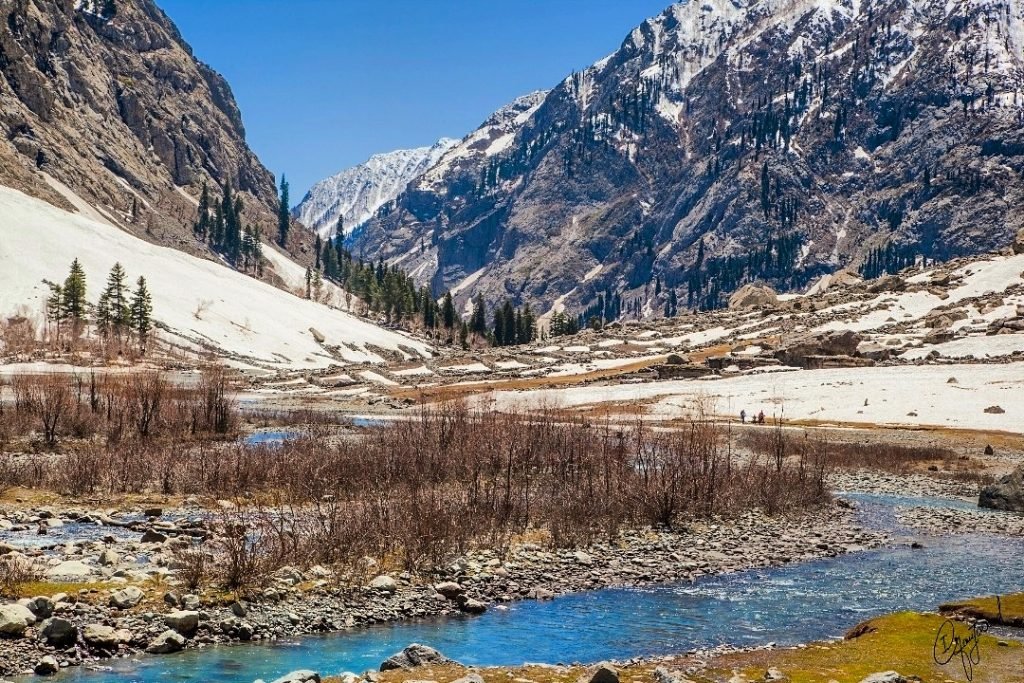
The trek is the signature experience. Depending on where your jeep can reach, the final walk to Kharkhari runs a few kilometres through alpine terrain — the Express Tribune’s reporting describes a four-kilometre stretch after the drive, while experienced local trekkers note the track is jeepable nearly to the end in good conditions. Either way, expect glaciers on the high slopes, waterfalls thundering down side valleys, and meadows dotted with wildflowers in summer. Go early in the morning so you have the lake to yourself, and take a local guide from Gabral or Utror if it is your first high-altitude walk — the weather can change fast.
Camp Under the Stars
There are no hotels at Kharkhari Lake, and that is precisely the point. Summer visitors pitch tents along the banks, and the lake’s famous “hypnotic quietude” — the phrase used by the Express Tribune — settles over the camp as the day-trippers leave. Nights are cold even in August, so bring a proper sleeping bag rated for below freezing. Keep fires small, carry all your waste back out, and never wash directly in the lake. The meadows around Kharkhari are grazing land for local herders; treat them like someone’s home, because they are.
Photograph the Blue-Green Water
Kharkhari rewards patient photographers. The lake’s colour shifts from steel blue to green depending on the sun’s angle and the clouds scudding over the peaks behind it. The cone-shaped peaks that frame the lake give compositions a natural focal point, and the contrast of snow patches, dark pines, and the pale river stones along the shore works beautifully in both wide landscapes and detail shots. Dawn and late afternoon are the best hours; midday sun flattens everything.
Fish and Picnic by the Gabral River
The Gabral River that feeds and drains the lake is cold, fast, and clean. Trout live in these upper Swat streams, and a riverside picnic with food carried from Kalam or Gabral is one of the simplest pleasures of the valley. If you fish, respect local rules and the seasons — the river is a livelihood for people downstream, not just a backdrop for your holiday.
Explore the Waterfalls and Glaciers Along the Track
The approach to Kharkhari passes some four waterfalls and several glacier tongues, according to travel reporting on the route. Stop at them. Most visitors rush for the lake and miss the fact that the valley walls themselves are the show: hanging glaciers, springs bursting from the rock, and medicinal herbs that Gabral families have harvested for generations. A slow drive with frequent stops turns the journey into half the adventure.
Famous Places In and Around Kharkhari Lake, Gabral Valley
- Shahi Bagh — the royal forest meadows near Utror, often combined with a Kharkhari trip
- Mahodand Lake — Swat’s most famous lake, reachable by jeep from Kalam
- Utror Valley — the gateway valley whose river runs beside the Gabral track
- Kalam town — the main tourist base with hotels, restaurants, and jeep hire
- Kumrat Valley — reached via the Badogai Pass from the Gabral fork, for those continuing east
- Ushu Forest — the great cedar forest between Kalam and Mahodand
How to Reach Kharkhari Lake, Gabral Valley
Every route to Kharkhari starts with getting to Kalam, the main town of upper Swat. From Islamabad, take the M-1 and Swat Motorway to Chakdara, then continue through Mingora and Bahrain to Kalam — roughly 340 km in total, or about 7–8 hours of driving in good conditions. From Lahore, add the M-2/M-1 stretch to Islamabad, making it about 700 km and 10–11 hours with sensible rest stops; most Lahore travelers break the journey overnight in Islamabad or Mingora. From Karachi, the realistic options are flying to Islamabad and driving on, or taking the motorway all the way north — a two-day road journey of roughly 1,600 km that serious road-trippers genuinely love but that most families will want to split with overnight halts.
The nearest airport is Saida Sharif Airport near Mingora, though scheduled services are irregular; in practice most visitors fly into Islamabad International Airport and drive. Public transport reaches Kalam — vans and coasters run from Mingora’s general bus stand — but from Kalam onward you need a hired 4×4 jeep or a tour van, as the Gabral track is unpaved, steep, and crossed by streams. Local drivers in Kalam arrange day and overnight trips to the Utror–Gabral side routinely in summer.
Road conditions deserve respect. The road is fine as far as Bahrain, but beyond Kalam it becomes rough, narrow, and in places genuinely hair-raising — one traveler’s account notes that even a family sedan made it to upper Gabral in the right season, while the stretch past Shahi Bagh toward the lake is 4×4 territory. The track is typically open from June to September; outside those months snow closes the higher sections and the lake freezes. Always check conditions in Kalam before setting out, carry a full spare tyre, and start the jeep leg early — afternoon cloudbursts can swell the streams you need to cross.
Route Details
- Islamabad → Mingora: M-1 to Peshawar, Swat Motorway (M-16) to Chakdara, then N-95 to Mingora (~280 km, 4–5 hours).
- Mingora → Bahrain → Kalam: N-95 along the Swat River through Madyan and Bahrain to Kalam (~99 km, 3 hours).
- Kalam → Utror/Gabral: unpaved jeep track north along the Ushu and Utror rivers (~40 km to the Gabral fork, 2–3 hours by jeep).
- Gabral fork → Kharkhari Lake: the track climbs past Gul Bandaj bridge toward the lake — roughly 9–16 km depending on the exact route, about 1–3 hours by 4×4 plus a final trek of a few kilometres on foot in tougher sections.
- Many groups combine the trip with Shahi Bagh, camping at the lake overnight and returning the next day.
Where to Stay in Kharkhari Lake, Gabral Valley
Set expectations honestly: there is nothing to book at the lake itself. Accommodation means camping, and that is part of the magic. Bring a four-season tent, a warm sleeping bag, and a sleeping pad — summer nights at this altitude are genuinely cold, and the wind off the water finds every gap in cheap gear.
Your real base will be Kalam, which offers the full range from budget guesthouses to comfortable mid-range hotels and a few upscale resorts with river views. Utror and Gabral villages have simpler guesthouses and homestay-style rooms run by local families, which are cheaper and put you an hour or more closer to the lake. For trekkers, camping at Shahi Bagh or the Jabba pasture as a halfway stop is a classic move — some groups spend a night there before the final push to Kharkhari, exactly as local trekking accounts describe. Book Kalam hotels in advance for July and August weekends, when the town fills up; on weekdays you can usually walk in and negotiate.
Where to Eat: Local Foods of Kharkhari Lake, Gabral Valley
Nobody is running a restaurant at Kharkhari, so plan your food like an expedition and enjoy the valley’s cooking in the towns. In Kalam’s bazaar and the dhabas of Utror and Bahrain, you will find the staples of upper Swat: chapli kebab sizzling on roadside grills, fresh river trout — the region’s most celebrated dish, usually fried or grilled with minimal spices so the fish speaks for itself — and hearty desi fare like daal, sabzi, and tandoori roti. Breakfast is often parathas with omelette and doodh patti, the milky tea that fuels every northern road trip.
For the lake day itself, pack from Kalam: tinned food, dry fruits, biscuits, bread, cheese, and plenty of water, plus a stove if you want hot tea at the shore. A budget dhaba meal in the valley costs very little, while a trout dinner in Kalam is a moderate splurge — agree on the price before the fish goes on the grill. Carry all packaging back with you; Kharkhari has no bins, and keeping it that way is everyone’s job.
Weather in Kharkhari Lake, Gabral Valley
Kharkhari sits far above Kalam, so treat Kalam’s weather as the mild version and subtract several degrees. The lake is a summer destination, full stop: the track opens when the snow melts and closes when it returns. Days in July and August are pleasantly cool with strong mountain sun; nights are cold year-round. Always carry a warm layer even on a sunny day trip, because the wind at the lake has a way of reminding you where you are.
| Season | Temperature Range | Conditions |
|---|---|---|
| Winter (Dec–Feb) | -15°C to -5°C | Deep snow; track closed, lake frozen; no access |
| Spring (Mar–May) | -5°C to 12°C | Snow melting; track usually still blocked until late May or June; wildflowers begin lower down |
| Summer (Jun–Aug) | 5°C to 22°C | Track open; best trekking and camping; occasional afternoon showers |
| Autumn (Sep–Nov) | -2°C to 15°C | Early autumn still good; golden colours; first snow can close the track by late October |
Language and Culture of Kharkhari Lake, Gabral Valley
The Gabral Valley is home mainly to Gujar families, with Kohistani communities — Gawri and Torwali speakers — also part of the valley’s fabric, while Pashto is widely understood through trade and tourism. Islam is the faith of the valley, and the culture is the classic hospitality of the mountains: guests are honoured, tea appears unasked, and a stranger in difficulty will find help quickly.
Visitors should return the courtesy. Dress modestly — long trousers and sleeves for everyone, and women should carry a shawl or dupatta. Ask before photographing people, especially women and elders; a smile and a greeting in the local manner go a long way. Do not pick the medicinal herbs you see growing wild — they are harvested by local families for use and income. And remember that the pastures around the lake are working grazing land: keep dogs under control, do not disturb livestock, and leave gates as you find them.
Shopping in Kharkhari Lake, Gabral Valley
There is no shopping at the lake, so do your souvenir hunting in Kalam and Bahrain. Kalam’s bazaar sells the usual northern keepsakes: hand-knitted woolen caps and shawls, walnut-wood carvings, embroidered shawls, and packets of dried apricots, walnuts, and wild honey from the valley. Bahrain is known for its handicraft shops along the river road. Bargain politely — it is expected, and done with humour it is part of the fun. There are no shopping malls anywhere near Kharkhari, and none are needed.
Travel Tips for Kharkhari Lake, Gabral Valley
Packing Essentials
Think expedition, not picnic. Four-season tent, sleeping bag rated below freezing, insulated jacket, rain shell, sturdy trekking boots, sun protection (the UV is fierce at altitude), a headlamp with spare batteries, a basic first-aid kit including altitude-sickness awareness, water purification tablets, and all your food and cooking gear. A power bank is essential — there is no electricity at the lake. Trekking poles help on the loose, steep final sections.
Safety Tips
Travel in a group and hire a local jeep driver who knows the track — the stream crossings and the final approach have caught out overconfident visitors. Start early and plan to be off the high track before dark. Watch the weather: clouds building over the peaks mean rain or hail within the hour. Keep a safe distance from the lake’s outlet stream and the waterfalls. Mobile signal is patchy to nonexistent near the lake, so tell someone in Kalam your plan and expected return time.
Money & Connectivity
Carry all the cash you need from Mingora or Kalam — there are no ATMs in Utror or Gabral, and nobody at the lake takes cards (or anything else). Jazz and Telenor signals reach parts of the valley but fade as you climb; Zong is often reported as the most reliable in upper Swat. Download offline maps before you leave Kalam, and keep your phone in airplane mode near the lake to save battery for emergencies.
Best Time to Visit Kharkhari Lake, Gabral Valley
Summer (June to August) — the prime window
This is when Kharkhari Lake travel guides all point you: the jeep track is open, the meadows are green and flower-filled, the lake is at its bluest, and camping is comfortable (if chilly at night). July and August bring the most visitors, so go on weekdays for solitude. Expect the classic mountain pattern of bright mornings and cloudy afternoons.
Early Autumn (September) — the quiet sweet spot
September keeps the track open most years while thinning the crowds to almost nothing. The light is golden, the air is crisp, and the first dusting of snow on the high peaks makes for spectacular photographs. Go in the first half of the month; by late September the weather turns unpredictable.
Late Spring (late May) — for the determined
If the melt is early, late May can offer the valley to yourself — but the track to the lake may still be blocked by snow, and you should confirm conditions in Kalam rather than assuming. This is a shoulder season for experienced trekkers only.
Winter (October to April) — not accessible
Snow closes the high track and the lake freezes. Admire Kharkhari in photographs during these months, and plan your summer trip instead. Kalam itself, meanwhile, becomes a snowy wonderland — see our Malam Jabba guide for Swat’s winter side.
Final Thoughts
Kharkhari Lake is not the easiest lake in Swat, and that is exactly why it matters. In a valley where the famous spots now come with traffic jams and selfie queues, Kharkhari still asks something of you — a long drive, a rough track, a walk at altitude — and pays you back with a silence and a beauty that feel genuinely untouched. The Gujar herders, the glaciers, the blue-green water appearing between the peaks: this is the Swat that travelers used to dream about.
Go in summer, go prepared, and go gently. Camp clean, drive carefully, buy your supplies from the valley’s shops, and leave the lake exactly as the shepherds have kept it for generations. If you do, Kharkhari will give you the story you will be telling for years — the lake you earned, deep in the Gabral Valley, at the top of the world you can reach by road.
FAQs
Where is Kharkhari Lake located?
Kharkhari Lake is in the Gabral Valley of Swat District, Khyber Pakhtunkhwa, about 41–45 km by road from Kalam and roughly 23–26 km from the Utror–Gabral area. It sits at around 10,000 feet above sea level, traversed by the Gabral River.
What is the best time to visit Kharkhari Lake?
June to September, when the jeep track is open and the weather suits trekking and camping. September is quieter. The lake is inaccessible in winter due to snow.
How do I reach Kharkhari Lake from Kalam?
Hire a 4×4 jeep in Kalam for the Utror–Gabral track, then trek the final few kilometres to the lake. The round trip is best done as a full day or an overnight camping trip.
Is Kharkhari Lake safe for families?
Families with older children and a sense of adventure manage it well with a good local driver and proper gear. It is not suitable for small children or anyone with mobility issues because of the rough track and high-altitude walk.
Can I camp at Kharkhari Lake?
Yes — camping on the banks is the standard way to experience the lake, as there are no hotels. Bring a warm tent and sleeping bag, carry all food and water, and leave no trace.
Where can I stay near Kharkhari Lake?
Base yourself in Kalam for the widest choice of hotels, or in simpler guesthouses in Utror or Gabral to be closer to the lake. At the lake itself, only camping is possible.
What food is available around Kharkhari Lake?
Nothing at the lake — pack everything from Kalam. In the valley towns, try fresh river trout, chapli kebab, and classic dhaba fare, plus doodh patti tea.
Why is it called Kharkhari Lake?
Local accounts trace the name to the Pashto word “khar,” meaning brown — a reference to the water’s tint as the valley’s early inhabitants saw it. Today visitors often describe the lake as blue with green undertones in sunlight.