Quick Facts
- Location: Kashmir Road, Mansehra City, Mansehra district, Khyber Pakhtunkhwa, Pakistan
- Altitude: Around 1,090 metres above sea level
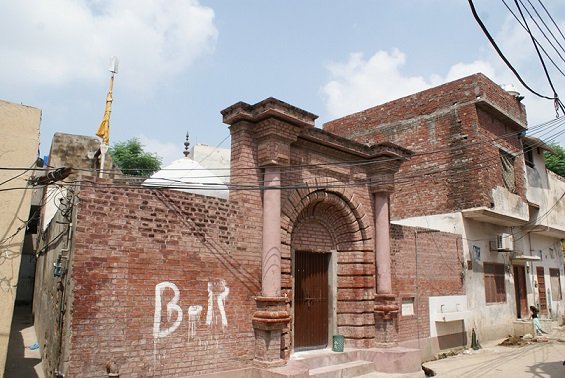
- Famous For: The visit of Guru Hargobind, the sixth Sikh Guru, returning from Kashmir; a distinctive three-storey gurdwara with its Prakashasthan hall, contributor name-tiles, and painted walls
- Nearest City: Mansehra itself; Abbottabad is about 20 km south, Islamabad around 160 km south
- Accessibility: Easy road access on Kashmir Road within the city; reached via the Karakoram Highway / Hazara Motorway corridor
- Known Landmarks: The three-storey shrine building; nearby Mansehra Rock Edicts of Ashoka; the gateway position to Naran and Kaghan
- Best For: Sikh pilgrims, heritage travelers, photographers, and anyone combining a Hazara heritage stop with a Naran–Kaghan mountain trip
Why Visit Gurdwara Chhevin Patshahi, Mansehra
Most travelers know Mansehra as the town you pass through on the way to Naran — a pit stop on the Karakoram Highway, glimpsed through a bus window. But on Kashmir Road, in the middle of the city, stands a three-storey building that most of those travelers never notice: Gurdwara Chhevin Patshahi, the shrine of Guru Hargobind’s return from Kashmir. If you are the kind of traveler who believes the detour is the destination, this one is for you.
The story belongs to the Guru’s great Kashmir journey of 1620. Guru Hargobind — the sixth Sikh Guru, the Miri-Piri saint-soldier — traveled to Kashmir and back, and on his return he passed through Mansehra. The Sikhs of the region, the old accounts say, built this gurdwara at the very site where he stayed, and the Guru pleased the loving sangat by giving them the opportunity of his darshan — his blessed sight. Four centuries later, the building still stands on Kashmir Road: three storeys tall, its Prakashasthan hall once housing the Guru Granth Sahib, its floors and walls set with tiles bearing the names of those who served the shrine, its walls covered in captivating paintings.
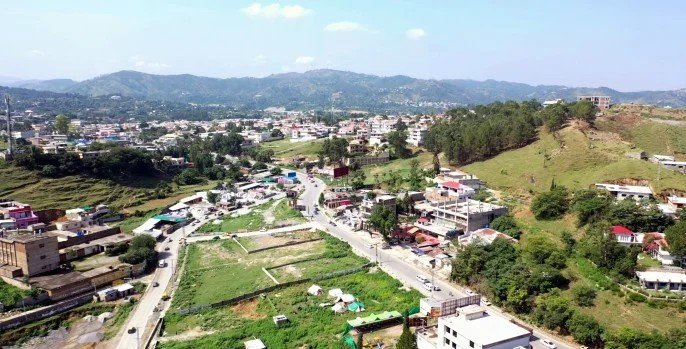
What makes Mansehra’s shrine different from its Punjab cousins is its setting. The Lahore and Gujranwala gurdwaras sit in flat farmland; this one rises in a Himalayan foothill city, where the air smells of pine and the bazaars sell walnuts and honey. Mansehra is the gateway to some of Pakistan’s most beloved mountain country — Naran, Kaghan, Saiful Muluk, Babusar — which means this shrine can be the heritage anchor of a mountain holiday. Do your lakes and meadows by day, and spend an unhurried hour on Kashmir Road with four hundred years of Sikh history.
Be honest with yourself about what you will find: like so many of Pakistan’s smaller gurdwaras, this one no longer holds daily services — the old records note that “once prakash used to take place, but now it is just a building.” Come for the architecture, the painted walls, the name-tiles of long-ago sevaks, and the powerful sense of standing where a Guru once stood at the edge of the mountains. For pilgrims tracing Guru Hargobind’s 1620 journey from Kashmir to the Punjab plains, Mansehra is the essential northern chapter.
History of Gurdwara Chhevin Patshahi, Mansehra
To understand this shrine, you need to understand Mansehra — a city with one of the deepest histories in Pakistan. In the 3rd century BCE, the Mauryan emperor Ashoka had his famous rock edicts carved here in the Kharosthi script; the Mansehra Rock Edicts still survive on the city’s outskirts, marking this as a place of moral proclamation two thousand years before the gurdwara. The region passed through Gandharan, Hindu Shahi, and Mughal hands, and in the early 19th century it fell to the expanding Sikh Empire — Ranjit Singh’s forces took Hazara in 1818–19, bringing a Sikh administration and Sikh settlers to these foothills. It is in that era, and in the Sikh community it planted, that the story of Mansehra’s gurdwaras begins.
The shrine’s own history starts earlier, with the Guru. In 1620, Guru Hargobind undertook his celebrated journey to Kashmir — the same journey commemorated by the great Chhevin Patshahi shrine at Baramulla, where he stayed seven days and where Emperor Jahangir is said to have visited him. Returning from the valley toward the Punjab, the Guru passed through Mansehra. The Sikhs of the region received him with devotion, and after his departure they raised a gurdwara on the site of his stay on what is now Kashmir Road, so that the sangat would always have the place of his darshan.
The building they raised — and that later generations maintained — is architecturally distinctive: three storeys tall, an unusual height for a small-city shrine, with the Prakashasthan (the sanctum where the Guru Granth Sahib was installed) in its hall. The floors and walls were set with tiles inscribed with the names of those who had served the gurdwara — a humble, touching hall of fame of sevaks — and captivating pictures were painted on the walls in the folk-religious style of the region’s shrine art.
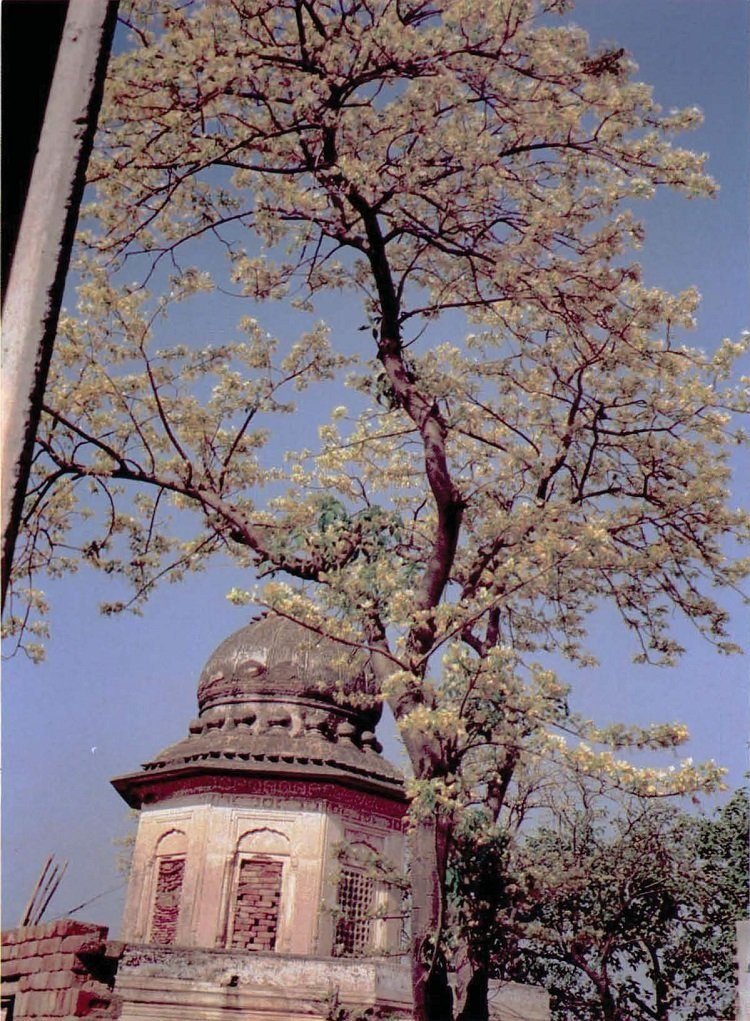
After 1947, the Sikh community of Mansehra departed, and the shrine’s congregational life ended; heritage records note that daily prakash ceased and the building fell silent. But the structure survived — three storeys on Kashmir Road, its tiles and paintings still in place — and it remains documented in Sikh heritage surveys as one of the Chhevin Patshahi shrines of the Hazara region. A second Chhevin Patshahi shrine stands about 8 km from Mansehra at Chitti Gatti, a domed shrine in a roadside garden where a Vaisakhi fair was once enthusiastically attended by the hill people — evidence of how widely Guru Hargobind’s memory is planted in this district.
Top Things to Do in Gurdwara Chhevin Patshahi, Mansehra
Explore the Three-Storey Shrine
Begin with the building itself — it is the tallest and most architecturally ambitious of the small Chhevin Patshahi shrines. Walk around all three storeys from the outside, noting how the structure sits on Kashmir Road like a small urban landmark. The Prakashasthan hall, where the Guru Granth Sahib was once installed with daily ceremony, is the spiritual heart of the building. Even in silence, the proportions of the hall speak of the devotion that raised it.
Read the Name-Tiles of the Sevaks
One of the shrine’s most moving features is also its humblest: the tiles set into the floors and walls bearing the names of those who served the gurdwara. These are not kings or generals — they are the carpenters, donors, sweepers, and granthis of a small hill-city sangat, remembered by name in fired clay. Run your eye over them slowly. In an age of anonymous mega-charity, there is something profoundly beautiful about a community that wrote its servants’ names into the floor.
Study the Wall Paintings
The walls carry captivating pictures in the folk style of the region’s shrine art — the same broad tradition that produced the frescoes of Punjab’s gurdwaras, adapted to Hazara’s palette and idiom. Look for the storytelling panels and decorative borders; photograph them for the record, since paintings like these fade a little every year. They are among the reasons heritage documenters consider this shrine worth preserving.
Visit the Chitti Gatti Shrine
About 8 km from Mansehra, in a garden by the road, stands the domed Gurdwara Chhevin Patshahi of Chitti Gatti — the district’s second shrine to Guru Hargobind’s visit. It has its own curiosities, including a stone Shiv Ling that was traditionally worshipped on its upper floor while the Guru Granth Sahib’s prakash was kept downstairs, served by Hindu priests. A Vaisakhi fair was once held here with great enthusiasm by the surrounding hill people. The two shrines together make a half-day Hazara Sikh-heritage circuit.
See the Mansehra Rock Edicts
While you are in Mansehra, do not miss the Ashokan rock edicts on the city’s edge — fourteen edicts of the emperor Ashoka carved in Kharosthi script in the 3rd century BCE, among Pakistan’s most important ancient inscriptions. A gurdwara of the 17th century and edicts of the 3rd century BCE in the same small city: Mansehra compresses two millennia of sacred history into a single afternoon.
Famous Places In and Around Gurdwara Chhevin Patshahi, Mansehra
- Naran and Kaghan Valley — the beloved mountain valley north of Mansehra, 2–3 hours up the Karakoram Highway; pair the shrine with a mountain trip.
- Lake Saiful Muluk — the legendary high lake above Naran, reached by jeep; the crown jewel of the region.
- Babusar Top — the high pass (around 4,170 m) at the head of the Kaghan Valley, open in summer.
- Abbottabad — the handsome cantonment city 20 km south, with Ilyasi Mosque and Shimla Hill viewpoints.
- Mansehra Rock Edicts — Ashoka’s 3rd-century-BCE inscriptions, a short drive from Kashmir Road.
- More Sikh heritage — follow our Ali Baig Gurdwara travel guide and the Explore Pakistan series for the Punjab shrines of this Guru’s journeys.
How to Reach Gurdwara Chhevin Patshahi, Mansehra
Mansehra sits on the Karakoram Highway (N-35), now paralleled by the modern Hazara Motorway (M-15) — one of the most improved road corridors in Pakistan. The gurdwara is on Kashmir Road within Mansehra city itself, easy to reach once you are in town; any local driver will know Kashmir Road.
From Islamabad: Take the Hazara Motorway (M-15) north to Mansehra — around 160 km, roughly 3 to 3.5 hours in normal traffic. This is the standard approach and the road is excellent. From Lahore: It is a long day’s drive north via the motorway network (M-2 to Islamabad, then M-15 to Mansehra); most travelers from Lahore either drive it in one long day or fly to Islamabad and drive up. From Karachi: Fly to Islamabad International Airport (about 2 hours) and drive north; the road journey from Karachi is a multi-day expedition.
Nearest airport: Islamabad International Airport, around 160 km south. Mansehra has no commercial airport. Road conditions: The Hazara Motorway is a modern, well-maintained expressway; Kashmir Road and city streets are paved but can be congested in the bazaar area. In winter, the motorway is generally kept clear, but check conditions before a January trip. Transport options: Private car or hired van is most flexible; comfortable public coaches and vans run Islamabad–Mansehra constantly from the motorway-era bus terminals, and local Suzuki pickups and rickshaws cover movement within the city.
Route Details
Step by step from Islamabad: (1) Join the Hazara Motorway (M-15) from the Islamabad–Peshawar motorway interchange, following signs for Mansehra/Naran. (2) Drive north through the motorway’s tunnels and viaducts — about 3 hours — to the Mansehra interchange. (3) Enter Mansehra city and navigate to Kashmir Road; the gurdwara’s three-storey building is on this road. (4) Park nearby and explore on foot — the shrine, the bazaar, and a good lunch are all within walking distance. (5) If continuing to the mountains, the Karakoram Highway north from Mansehra leads to Naran (about 2.5–3 hours further). Allow a full day from Islamabad for the shrine plus the Rock Edicts and Chitti Gatti.
Where to Stay in Gurdwara Chhevin Patshahi, Mansehra
Mansehra is a proper city with a real hotel market — no need to day-trip this one unless you prefer Islamabad as a base. Staying overnight also lets you do the shrine, the Rock Edicts, and Chitti Gatti without rushing.
Mid-range and comfortable: Mansehra has a solid stock of mid-range hotels and guesthouses along the Karakoram Highway and near the city center — clean, heated in winter (ask — mountain nights are cold), and reasonably priced. These are the practical choice for heritage travelers. Budget: Simple hotels and rest houses around the bus stands and bazaar are very affordable; standards are basic but honest. Luxury: True luxury is thin in Mansehra itself — travelers wanting top-tier comfort usually base in Islamabad (3 hours south) or in Naran’s better hotels in season. Camping: Not in the city; save the camping for the Kaghan Valley meadows further north, where designated campsites operate in summer.
In the Naran season (May–September), Mansehra’s hotels fill with mountain-bound travelers, so book ahead if your shrine visit falls in those months.
Where to Eat: Local Foods of Gurdwara Chhevin Patshahi, Mansehra
Hazara’s food is hearty mountain-Punjab cooking, and Mansehra’s bazaars serve it well. The essentials: chapli kebab — the great flat minced-meat kebab of the northwest, best eaten fresh off the griddle with naan; namkeen gosht — meat cooked with minimal spice so the flavor speaks; slow-cooked daal and sabzi with tandoori roti; and thick, sweet lassi. In winter, look for kehwa (green tea) and roasted peanuts and walnuts from street vendors — the Hazara hills produce excellent walnuts and honey, and both are sold everywhere in the bazaar.
Kashmir Road and the main bazaar have rows of simple restaurants and dhabas; eat where the local crowd is thickest. Prices are modest — a full dhaba meal is easy on the wallet. For the sweet tooth, try the local halwa varieties and fresh jaggery in season. Carry snacks and water if you are combining the shrine with the Chitti Gatti and Rock Edicts circuit, since those legs have fewer food stops.
Weather in Gurdwara Chhevin Patshahi, Mansehra
At around 1,090 metres, Mansehra is noticeably cooler than the Punjab plains — a proper foothill climate. Winters are cold with occasional frost, summers are warm but rarely punishing, and the monsoon (July–August) brings heavy rain to these hills. Spring and autumn are the sweet spots: clear, mild, and green.
| Season | Temperature Range | Conditions |
|---|---|---|
| Winter (Dec–Feb) | Around 2–12°C | Cold, occasionally frosty mornings; clear mountain air; the quietest season |
| Spring (Mar–Apr) | Around 10–26°C | Mild and fresh; hillsides green; excellent for the shrine and sightseeing |
| Summer (May–Jun) | Around 20–34°C | Warm days, pleasant evenings; peak season for onward travel to Naran |
| Monsoon (Jul–Aug) | Around 22–32°C | Heavy rain spells; lush but landslide-prone on hill roads — check conditions |
| Autumn (Sep–Nov) | Around 10–26°C | Clearing skies, crisp air; arguably the finest season in Hazara |
Language and Culture of Gurdwara Chhevin Patshahi, Mansehra
Mansehra is the heart of Hindko-speaking Hazara — Hindko is the mother tongue of the city, warm and distinct from the Punjabi of the plains. Urdu is universally understood and works everywhere; Pashto and Gojri are spoken by significant minorities. English is understood in hotels and by educated locals.
Hazara culture is conservative and deeply hospitable. Dress modestly (this matters more here than in Lahore — long sleeves and covered legs for everyone), greet with “Assalam-o-Alaikum,” and accept hospitality graciously. At the gurdwara site, the usual courtesies apply: cover your head, keep your voice low, and treat the building — currently silent as a shrine — with the respect due to a sacred place. Photography of the exterior, tiles, and paintings is the point of the visit; ask before photographing people in the bazaar. If you are Sikh and wish to offer a quiet ardas at the shrine, do so discreetly and respectfully.
Shopping in Gurdwara Chhevin Patshahi, Mansehra
Mansehra’s bazaars are a pleasure for shoppers who like things with a mountain flavor. The signatures: walnuts and honey from the Hazara hills — buy from reputable shops and taste before you commit; dry fruits (almonds, apricots, pistachios) sold by weight; woolen shawls and sweaters for the cold season; and local handicrafts including woodwork. The main bazaar around Kashmir Road and the Karakoram Highway has everything in dense, colorful rows. Prices are generally lower than Islamabad’s. There is no need for a mall — the bazaar is the experience, and the walnuts are the souvenir.
Travel Tips for Gurdwara Chhevin Patshahi, Mansehra
Packing Essentials
Layers — Mansehra’s mountain air means cool mornings and evenings even in summer, and genuinely cold nights in winter. A head covering for the shrine, sturdy walking shoes for the Rock Edicts and Chitti Gatti legs, sun protection (mountain sun is strong), and a warm jacket from November to February. Bring a camera with room for lots of photos: tiles, paintings, bazaar, and mountains.
Safety Tips
Mansehra is a calm, settled city and the Hazara corridor is one of Pakistan’s most traveled tourist routes. Standard sense applies: keep valuables discreet in bazaars, use registered transport for the Naran road, and check weather and road conditions before monsoon-season hill driving (landslides can briefly close the Karakoram Highway). At the shrine, which is not an active congregation, keep to public areas and be respectful of neighboring properties.
Money & Connectivity
Mansehra city has banks and ATMs, so cash is easy — but carry enough for the Chitti Gatti and Rock Edicts legs, where card acceptance is nil. All major mobile networks (Jazz, Telenor, Zong, Ufone) cover the city and the Hazara Motorway well; signals weaken in the deeper Kaghan valleys if you continue north. Fuel up and download offline maps in Mansehra before heading for Naran.
Best Time to Visit Gurdwara Chhevin Patshahi, Mansehra
Spring (March to May) — Lovely
Mild days, green hillsides, and clear views — spring is ideal for combining the shrine with the Rock Edicts and the Chitti Gatti circuit. The road to Naran typically opens in May, so late spring lets you do heritage and mountains in one trip.
Summer (June to September) — Good, with a Monsoon Caveat
Warm and lively, with Mansehra buzzing as the gateway to Naran season. July–August brings heavy monsoon rain to Hazara — the shrine itself is fine in rain, but check hill-road conditions if continuing north.
Autumn (October to November) — The Finest Season
Crisp air, clear skies, golden light on the hills — autumn in Hazara is hard to beat. Crowds thin after the Naran season, hotels are cheaper, and the shrine visit is at its most peaceful.
Winter (December to February) — Quiet and Cold
Cold mornings, occasional frost, and the fewest visitors. The shrine is accessible year-round via the motorway, and winter light is beautiful for photography — just bring a proper jacket and check for any weather advisories.
Final Thoughts
Gurdwara Chhevin Patshahi, Mansehra is the mountain chapter of Guru Hargobind’s story — the shrine of his return from Kashmir, standing three storeys tall on Kashmir Road with its hall of remembrance, its name-tiles of sevaks, and its painted walls. It is not a living congregation anymore, and it would be wrong to pretend otherwise. But as a place of memory, beautifully built and quietly waiting, it rewards the traveler who stops instead of passing through.
Pair it with the Rock Edicts of Ashoka and the Chitti Gatti shrine for a full Hazara heritage day, or let it be the soulful first stop of a Naran–Kaghan mountain journey. Either way, you will leave Mansehra knowing it as more than a pit stop. Keep discovering the country’s layered sacred geography with our Explore Pakistan series — from Malam Jabba’s slopes to Hunza’s valleys.
FAQs
Where is Gurdwara Chhevin Patshahi, Mansehra?
On Kashmir Road in Mansehra City, Khyber Pakhtunkhwa — about 160 km north of Islamabad via the Hazara Motorway.
Which Guru is associated with this gurdwara?
Guru Hargobind, the sixth Sikh Guru, who passed through Mansehra returning from Kashmir in 1620; local Sikhs built the shrine at the site of his stay.
What is special about the building?
It is three storeys tall with its Prakashasthan in the hall; its floors and walls are set with tiles naming the shrine’s servants, and its walls carry paintings.
Is the gurdwara still active?
No — daily services ended after 1947 and it is now a heritage building rather than a living congregation; visit respectfully as a historical site.
What is the best time to visit?
March–May and October–November are ideal; the shrine is accessible year-round via the motorway.
How do I reach Mansehra from Islamabad?
Drive the Hazara Motorway (M-15) north — around 160 km, roughly 3 to 3.5 hours — then navigate to Kashmir Road in the city.
Can I combine it with a mountain trip?
Easily — Mansehra is the gateway to Naran, Kaghan, Saiful Muluk, and Babusar Top; the shrine makes a perfect heritage stop on the way up.
What else is nearby?
The Mansehra Rock Edicts of Ashoka, the Chitti Gatti Chhevin Patshahi shrine (8 km), Abbottabad (20 km south), and the full Naran–Kaghan circuit.