Quick Facts
- Location: Kotli Bhaga village, on the road from Eminabad to Mianwali Bungalow, Gujranwala district, Punjab, Pakistan
- Altitude: Around 230 metres above sea level (the upper Punjab plain)
- Famous For: The pipal tree under which Guru Hargobind, the sixth Sikh Guru, is believed to have sat — still standing; a small shrine with a Manji Sahib and Thara Sahib beside it
- Nearest City: Gujranwala, a short drive away; Lahore is around 80 km to the south
- Accessibility: Road access via Eminabad; the village is 2 km from the Chak Ram Das bridge bus stop
- Known Landmarks: The ancient pipal tree; the small gurdwara, Manji Sahib, and Thara Sahib; 16 ghumaon of endowed land
- Best For: Sikh pilgrims, heritage travelers, tree and nature lovers, photographers, and anyone exploring Gujranwala’s Sikh heritage
Why Visit Gurdwara Chhevin Patshahi, Kotli Bhaga
There are shrines you visit for their domes, and there are shrines you visit for something alive. Kotli Bhaga is the second kind. The gurdwara here is small — a modest building on a village road in Gujranwala district — but beside it stands a pipal tree that tradition says sheltered Guru Hargobind himself. Four centuries after the sixth Sikh Guru is believed to have sat beneath it, the tree is still there. You can stand in its shade. That is the whole pilgrimage, and it is enough.
Trees are the quiet witnesses of Sikh history in Punjab. Where buildings were abandoned, repurposed, or left to fade after 1947, the old trees kept growing. The pipal at Kotli Bhaga has outlasted the Sikh Empire, the British Raj, Partition, and every storm since — a living link to a morning four hundred years ago when the Guru rested here on his travels. For anyone who feels history most keenly through living things, this is one of the most moving small shrines in Pakistan.
The shrine itself tells the familiar, poignant story of Punjab’s village gurdwaras. A small gurdwara was raised to commemorate the Guru’s visit, with a Manji Sahib (a low seat-platform) and a Thara Sahib close by marking the exact spot. The villagers endowed 16 ghumaon of land for its upkeep, and once a year, on the 14th of Chait, a fair gathered here in the Guru’s honor. After Partition the Sikh sangat left, families settled in the building, and the fair fell silent. The shrine today is not in good condition and needs preservation — which makes visiting, photographing, and writing about it a small act of care.
And there is a practical case for Kotli Bhaga too. It sits in the Gujranwala–Eminabad belt, one of the richest corridors of Sikh heritage in Pakistan — within reach of Gurdwara Rori Sahib at Eminabad, where Guru Nanak himself stayed, and the grand Damdama Sahib shrine at Gujranwala. Fold Kotli Bhaga into a day’s circuit of this belt and you will see, in a single drive, how deeply the Gurus’ footsteps are pressed into this soil.
History of Gurdwara Chhevin Patshahi, Kotli Bhaga
Kotli Bhaga is a village on the road leading from Eminabad toward Mianwali Bungalow, in Gujranwala district. Its bus stop is at Chak Ram Das bridge, from which the village lies 2 km off the main road — a small settlement in the green, canal-watered plain between Gujranwala and the Ravi. Like much of this belt, it was a mixed Sikh-Muslim village before Partition, with a Sikh community large enough to raise and endow its own shrine.
The shrine commemorates Guru Hargobind, the sixth Sikh Guru (1595–1644). Sikh historical accounts place the Guru’s travels through the upper Punjab in the early 17th century — the same journeys that carried him toward Kashmir in 1620 and through the villages of the Lahore and Gujranwala districts. At Kotli Bhaga, the Guru is believed to have rested beneath a pipal tree. The sangat marked the spot: a small gurdwara was built in his honor, and close beside it a Manji Sahib and a Thara Sahib were raised at the exact place of his sitting. The pipal tree itself was preserved as a living relic — and it stands to this day.
The village community endowed 16 ghumaon of land to the darbar for its maintenance, and a fair was held every year on the 14th of Chait (late March) to honor the Guru’s visit — a spring gathering of the sangat that must have been a bright day in the village calendar. Before Partition, the shrine would have had its granthi, its daily service, and its langar on festival days, like hundreds of village gurdwaras across Punjab.
1947 broke the pattern. The Sikh families of Kotli Bhaga left for India, and in time people settled in the gurdwara building itself. Heritage surveys record the shrine as occupied and not in good condition, in need of preservation — though the pipal tree, the Manji Sahib, and the Thara Sahib remain as the enduring markers of the sacred spot. The shrine is documented in Iqbal Qaiser’s survey of historical Sikh shrines in Pakistan and in Sikh heritage records, keeping its story alive for the pilgrims and travelers who still seek it out. It stands as a quiet reminder that preservation is urgent: buildings can wait only so long.
Top Things to Do in Gurdwara Chhevin Patshahi, Kotli Bhaga
Stand Beneath the Pipal Tree
This is the reason to come. Find the great pipal beside the shrine — broad-crowned, thick-trunked, older than any living memory in the village — and stand in its shade. Sikh tradition holds that Guru Hargobind sat beneath this very tree. Whether you come as a pilgrim or a traveler, take a few unhurried minutes here. Pipal trees (Ficus religiosa) are sacred in both Sikh and Hindu tradition, and there is something profoundly still about being under one that has watched four centuries pass. Photograph it in the soft light of morning or late afternoon, when the canopy glows.
See the Manji Sahib and Thara Sahib
Close to the tree stand the small Manji Sahib and Thara Sahib — the seat-platform and raised platform that mark the exact spot of the Guru’s presence. These humble structures are the architectural vocabulary of memory in rural Sikh shrines: where a grand gurdwara could not be built, a platform sufficed to say “he was here.” Look for them beside the tree, and read them as what they are — four-hundred-year-old signposts.
Visit the Small Gurdwara
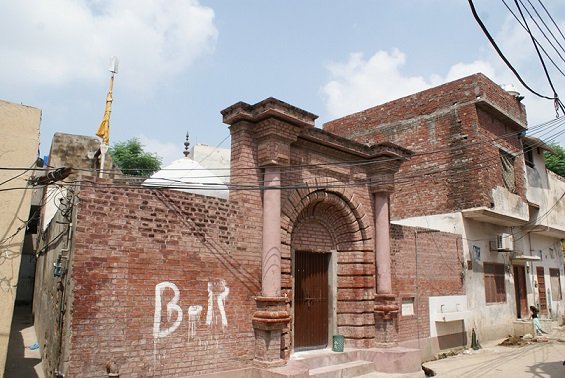
The gurdwara building itself is modest, and it is currently settled by local families, so view it from the outside with respect. Note its simple village-shrine form — a world away from the grand domed gurdwaras of the cities, and all the more touching for it. This is what most of Punjab’s Sikh heritage actually looks like: small, sincere, and fading. Your photographs contribute to the record of a building that preservationists hope will one day be restored.
Walk the Eminabad Road
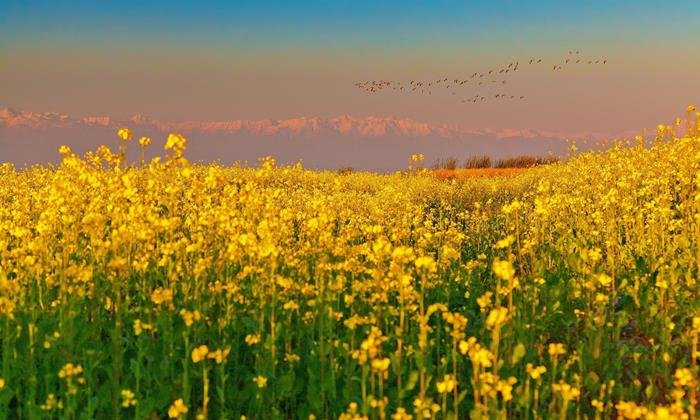
The road from Eminabad to Mianwali Bungalow, with Kotli Bhaga 2 km off the Chak Ram Das bridge stop, runs through classic upper-Punjab farmland — wheat, rice, and sugarcane by season, buffalo carts, and the slow rhythm of village life. A short walk along the village lanes, past the 16 ghumaon of endowed land that once supported the shrine, gives you the landscape the Guru traveled. In March, when the historic fair would have been held on the 14th of Chait, the fields are at their most beautiful.
Famous Places In and Around Gurdwara Chhevin Patshahi, Kotli Bhaga
- Gurdwara Rori Sahib, Eminabad — where Guru Nanak Dev Ji stayed; Eminabad is the gateway town on whose road Kotli Bhaga lies, and its shrines are the natural companion visit.
- Gurdwara Damdama Sahib, Gujranwala — the grand shrine of Baba Sahib Singh Bedi near the railway line in Gujranwala city, with its langar tradition.
- Gurdwara Khara Sahib (Mattu Bhaike) — another Chhevin Patshahi shrine of Gujranwala district, commemorating Guru Hargobind’s 1620 return from Kashmir; handed to the Sikh community in 2019.
- Gujranwala city — famous across Pakistan for its food; the city’s old bazaars and hearty food streets are worth the detour.
- Lahore’s shrine circuit — pair this trip with the Ali Baig Gurdwara travel guide or a full Lahore heritage day via our Explore Pakistan series.
How to Reach Gurdwara Chhevin Patshahi, Kotli Bhaga
Kotli Bhaga is reached via Eminabad, the historic town on the Gujranwala–Lahore corridor. From Eminabad, take the road toward Mianwali Bungalow to the Chak Ram Das bridge bus stop; the village is 2 km from there. A private car or hired van is the comfortable option, though local transport can get you to the bridge stop.
From Lahore: Drive north on the GT Road or motorway toward Gujranwala (around 80 km, roughly 1.5 hours), then continue to Eminabad — a short drive further — and on to Chak Ram Das bridge and the village. From Islamabad: Take the M-2 motorway south to the Gujranwala/Lahore interchanges (around 270 km to Gujranwala, roughly 3.5 hours), then local roads to Eminabad and the village. From Karachi: Fly to Lahore (Allama Iqbal International Airport, about 90 km from the shrine area) and drive up; the road journey from Karachi is a multi-day undertaking.
Nearest airport: Allama Iqbal International Airport, Lahore, around 90 km away. Nearest railway station: Eminabad has rail connections on the main line; from the station, hire local transport to Chak Ram Das bridge and the 2 km village road. Road conditions: The GT Road and Eminabad roads are good; the final 2 km village track is narrow and can be rough after monsoon rain. Transport options: Private car is easiest; buses and wagons run Lahore–Gujranwala–Eminabad constantly, with rickshaws covering the last stretch from the bridge stop.
Route Details
Step by step from Lahore: (1) Head north on the GT Road (N-5) or take the Lahore–Islamabad motorway toward Gujranwala. (2) Continue to Eminabad, the historic Sikh-heritage town south of Gujranwala — worth a stop at Rori Sahib. (3) From Eminabad take the road toward Mianwali Bungalow to the Chak Ram Das bridge bus stop. (4) Turn off for Kotli Bhaga village, 2 km from the bridge; ask for the gurdwara and the old pipal tree — every villager knows it. (5) Visit the tree, the platforms, and the shrine exterior respectfully, then return the same way. Allow a full day from Lahore if combining with Eminabad and Gujranwala’s shrines.
Where to Stay in Gurdwara Chhevin Patshahi, Kotli Bhaga
Stay in Gujranwala or Lahore — Kotli Bhaga is a village with no lodging, and both cities are close enough for a comfortable day trip. Gujranwala is the nearer base and has a real hotel market of its own.
Luxury: Gujranwala’s top hotels and Lahore’s five-star properties (around 1.5 hours south) both work; Lahore offers more choice if you are combining the trip with a longer Punjab tour. Mid-range: Gujranwala has solid mid-range business hotels along and near the GT Road — clean, air-conditioned, and well-priced — ideal for a shrine-circuit overnight. Budget: Guesthouses and budget hotels cluster near Gujranwala’s bus stands and railway station; basic but serviceable. Camping: Not appropriate in this settled agricultural belt; use the towns.
Gujranwala is famous for its food, so an overnight here has a delicious upside — plan dinner around the city’s renowned barbecue and desi-ghee cooking.
Where to Eat: Local Foods of Gurdwara Chhevin Patshahi, Kotli Bhaga
If Lahore is Punjab’s food capital, Gujranwala is its most enthusiastic eater — the city’s love of food is legendary across Pakistan. This is the land of chargha, sizzling taka-tak, mutton karahi cooked in desi ghee, daal mash, and lassi so thick it stands up in the glass. Gujranwala’s food streets and old-bazaar eateries are institutions; ask any local for their favorite barbecue spot and prepare for a passionate debate.
Near Kotli Bhaga itself, eat village-style: dhabas along the Eminabad road serve daal, sabzi, fresh tandoori roti, and doodh patti. In harvest seasons you may find fresh gur (jaggery) and sugarcane juice — the upper Punjab’s sweet signatures. Eminabad’s bazaar has simple eateries and sweet shops worth a stop. Carry water for the village leg; meals are cheapest at dhabas and most memorable when shared with the Punjabi generosity that insists you eat more.
Weather in Gurdwara Chhevin Patshahi, Kotli Bhaga
Kotli Bhaga sits on the upper Punjab plain, slightly cooler than Lahore in winter and just as hot in summer. November to March is the pleasant window; late March — the season of the historic 14 Chait fair — is particularly lovely, with mild days and green fields.
| Season | Temperature Range | Conditions |
|---|---|---|
| Winter (Dec–Feb) | Around 3–19°C | Cool, often foggy mornings; crisp and pleasant by midday |
| Spring (Mar–Apr) | Around 14–34°C | Mild and green; the historic fair season; ideal for the visit |
| Summer (May–Jun) | Around 29–44°C | Hot and dry; visit at dawn or not at all |
| Monsoon (Jul–Sep) | Around 27–37°C | Humid with heavy rain; lush fields, muddy tracks |
| Autumn (Oct–Nov) | Around 14–31°C | Clearing and comfortable; a fine shoulder season |
Language and Culture of Gurdwara Chhevin Patshahi, Kotli Bhaga
Punjabi is the village tongue — the central-Punjab dialect, warm and expressive — with Urdu understood by everyone and English workable in Gujranwala city. The culture is Punjabi Muslim village culture: hospitality is a point of honor, elders are deferred to, and guests are fed.
Shrine etiquette: cover your head near the gurdwara and the pipal tree, dress modestly, and keep the area clean — the tree is sacred ground. The shrine building is occupied as a residence, so confine yourself to the exterior, the tree, and the platforms; ask permission before photographing people or homes. If villagers gather around your visit — and they may, out of curiosity and pride — accept tea if offered and share what you know of the shrine’s history; these exchanges are often the best part of the trip. Sikh pilgrims wishing to offer ardas under the tree will find villagers respectful; a local guide smooths the way.
Shopping in Gurdwara Chhevin Patshahi, Kotli Bhaga
There is no shopping at the shrine, but Gujranwala and Eminabad reward a browse. Gujranwala’s bazaars are famous for steel and brass utensils, sports goods (the region is a manufacturing hub), and hearty street food rather than souvenirs. Eminabad’s old bazaar has traditional sweet shops and everyday Punjabi goods. For Sikh-heritage keepsakes — books on Sikh history, devotional music — Lahore’s Urdu Bazaar and Anarkali are the better bet on your way home. Pick up fresh gur, shakkar, or seasonal citrus from village vendors near Kotli Bhaga; they travel well and taste of the place.
Local Events and Festivals
The festival historically tied to this shrine is the fair of 14 Chait (late March). Before Partition, the sangat gathered at Kotli Bhaga every year on this date to honor Guru Hargobind’s visit — a spring fair of congregation and celebration under the pipal tree. Like the Maghi fair at Hudiara, it ended with the dispersal of the Sikh population in 1947, but its date survives in the shrine’s records.
If you visit in late March, you will be there in the fair’s season — the fields green, the weather mild — which lends the trip a quiet resonance. For living Sikh festivals in the region, time a wider Punjab trip around Baisakhi (April) or the Guru Nanak birth anniversary (November), when the great yatras fill Nankana Sahib and the region’s gurdwaras. There is no current fair at Kotli Bhaga itself.
Travel Tips for Gurdwara Chhevin Patshahi, Kotli Bhaga
Packing Essentials
A head covering for the shrine, comfortable walking shoes for the 2 km village stretch, sun protection, and water. In winter, layer for foggy mornings; in summer, go at dawn with a hat and extra water. A camera with a decent zoom helps you photograph the pipal canopy without trampling the ground beneath it.
Safety Tips
This is peaceful farmland and visitors are welcome, but standard rural-Punjab sense applies: travel with a local driver or guide, keep ID with you, and stay on public paths. The shrine is a private residence — never enter uninvited, keep noise low, and supervise children around the property. The old pipal is precious; do not carve, climb, or light fires near it.
Money & Connectivity
Bring cash from Gujranwala or Lahore — no ATMs in the village, and dhabas are cash-only. Mobile signals from all major networks cover the Eminabad road corridor well, though data can be slow inside the village. Save offline maps for the final 2 km, where signposting is by word of mouth.
Best Time to Visit Gurdwara Chhevin Patshahi, Kotli Bhaga
Winter (November to March) — Best Overall
Cool, dry, and clear — the classic Punjab winter is made for village heritage trips. Morning fog is common in December–January, so plan to arrive late morning. Visiting in late March puts you in the season of the historic 14 Chait fair.
Spring (March to April) — Beautiful
Mild temperatures and the greenest fields of the year. Early April is still comfortable; by late April the heat begins to build.
Summer and Monsoon (May to September) — Avoid
Intense heat followed by drenching humidity and muddy village tracks. If you must travel then, make it a dawn visit and be back on the main road by mid-morning.
Autumn (October to November) — Very Good
The rains retreat, the air clears, and temperatures settle — an excellent, crowd-free window for the shrine circuit.
Final Thoughts
Of the four Chhevin Patshahi shrines in this series, Kotli Bhaga may be the smallest — and it may stay with you the longest. There is something about a living tree as a monument: domes can crumble and frescoes can fade, but the pipal that shaded Guru Hargobind four centuries ago is still shading travelers today. It asks for nothing but a little reverence and, urgently, a little preservation for the shrine beside it.
Come in the mild season, walk the 2 km from Chak Ram Das bridge, stand under the old tree, and then carry the story home — to Gujranwala’s food streets for dinner, and beyond. Small shrines survive when people remember them. Keep exploring Punjab’s layered heritage with our Explore Pakistan series, from the heights of Malam Jabba to the valleys of Hunza.
FAQs
Where is Gurdwara Chhevin Patshahi, Kotli Bhaga?
In Kotli Bhaga village, Gujranwala district — on the Eminabad to Mianwali Bungalow road, 2 km from the Chak Ram Das bridge bus stop.
Which Guru is associated with Kotli Bhaga?
Guru Hargobind, the sixth Sikh Guru, who is believed to have rested under the village’s pipal tree.
Does the pipal tree still exist?
Yes — heritage surveys record that the pipal tree under which the Guru sat is still standing beside the shrine, along with a small Manji Sahib and Thara Sahib.
What is the best time to visit?
November to March; late March is the season of the historic 14 Chait fair once held here.
How do I reach it from Lahore?
Drive north toward Gujranwala (about 1.5 hours), continue to Eminabad, then take the Mianwali Bungalow road to Chak Ram Das bridge and the 2 km village road.
Can I go inside the gurdwara?
The building is currently occupied as a residence; view it from outside and focus your visit on the pipal tree and the platforms.
Is it suitable for families?
Yes — a gentle day trip, best combined with Eminabad’s and Gujranwala’s other Sikh shrines and the city’s famous food.
What else is nearby?
Gurdwara Rori Sahib at Eminabad, Damdama Sahib and Khara Sahib in Gujranwala district, and Gujranwala’s legendary food streets.