


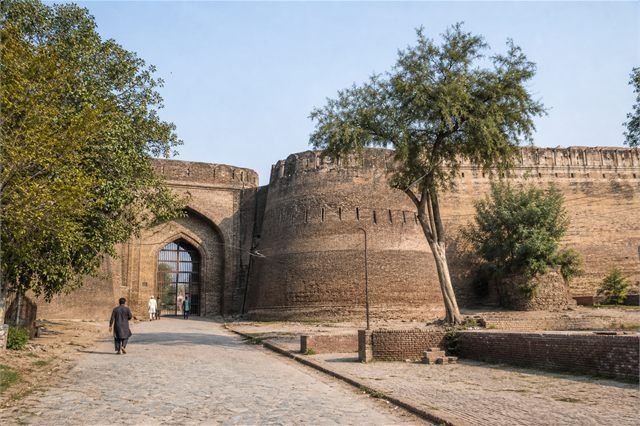
This Gurdwara Gurusar, Rehsema (Salehpur) travel guide takes you to the edge of the map — a border village in Sialkot district, just over a kilometre from the international border, where three shrines of Guru Hargobind once stood and where a dry pond filled with sweet water at the touch of the Guru’s lance. Inside you will find the full story of Gurusar Sahib and its vanished sarovar, the sister shrines of Kund Sahib and Tahli Sahib, how to reach Salehpur from Lahore, Islamabad, Sialkot and Karachi, the best time to visit, where to stay and eat, and how to combine this remote heritage stop with Sialkot’s own great sights — from Iqbal Manzil to the workshops that make the world’s footballs.
Quick Facts
- Location: Half a kilometre from Rehsema village (now called Salehpur), district and tehsil Sialkot, Punjab, Pakistan — just over 1 km from the Indian border
- Altitude: Around 255 metres above sea level (Sialkot plain)
- Famous For: The shrine of Guru Hargobind where the Guru made sweet water gush from a long-dry pond by throwing his lance into it; one of three Guru Hargobind shrines in the village (with Kund Sahib and Tahli Sahib); a sarovar now levelled and a gurdwara once used as shelter
- Nearest City: Sialkot, the district capital
- Accessibility: Reached by crossing the embankment near Chaprar; border-area travel — follow local advice and carry identification
- Known Landmarks: The Gurusar shrine building, the levelled site of the sacred pond, the surviving tapashtan (meditation quarter) at Kund Sahib nearby
- Best For: Sikh pilgrims tracing Guru Hargobind’s travels, borderlands heritage travellers, off-the-beaten-track explorers, anyone combining Sialkot’s history with its living industry
Why Visit Gurdwara Gurusar, Rehsema (Salehpur)
There are shrines you visit for their beauty, and shrines you visit for their story — and then there are shrines you visit because getting there is itself an act of remembrance. Gurusar, at Rehsema (now Salehpur), is all three at once, and the journey is part of the meaning. This is a border village: the international border lies just over a kilometre away, the fields run to the horizon, and the quiet here has a particular quality — the quiet of a place the world hurries past. Half a kilometre from the village stands the shrine of Guru Hargobind, the sixth Sikh Guru, on ground made sacred by one of the most vivid miracles in the Sikh tradition of this region.
The story is told simply, as the best stories are. The Guru came to this spot and found a pond long dried up — cracked earth where water had once been. He took his lance and threw it into the dry bed. Where the lance cut the earth, fresh sweet water poured out around the wound, filling the pond. A sarovar was born from a spear-throw. Whether you read it as miracle or as metaphor — the warrior-saint bringing life to dead ground — it is a story that has carried across four centuries, and standing on the levelled ground where the pond once lay, you feel its weight.
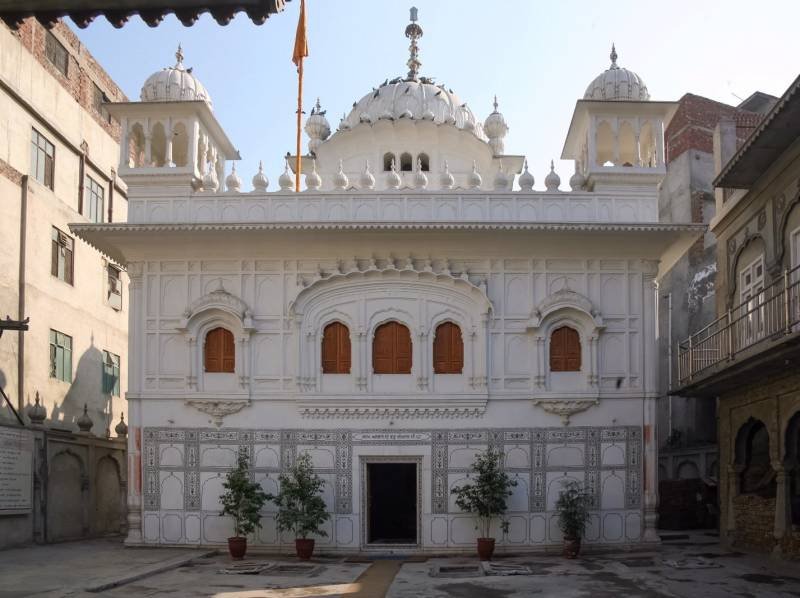
The honest traveller should know what remains. The gurdwara where the Prakash of the Guru Granth Sahib was once held is no longer a working shrine; the building has been used as shelter, and the sacred pond has been levelled. Of the village’s three Guru Hargobind shrines — Kund Sahib, Gurusar Sahib and Tahli Sahib — Kund Sahib has been completely destroyed, though its tapashtan, the little meditation quarter at the edge of the old kund, still stands. This is not a polished pilgrimage centre. It is a memory-site in farm country, near a border fence, kept alive by story rather than stone.
And that is precisely why it deserves the journey. Pakistan’s Sikh heritage is usually encountered at the great centres — Nankana Sahib, Kartarpur, Panja Sahib — where the crowds gather and the domes gleam. Gurusar is the other half of the story: the small shrines of the countryside, the village sacred sites, the places where the Gurus walked and the water answered. Come here, and you will understand the Sikh heritage of Punjab the way the villagers of Rehsema have always understood it — not as monuments, but as neighbours. Pair it with Sialkot city, an hour or so away, and you have one of the most unusual and rewarding heritage days in the province.
History of Gurdwara Gurusar, Rehsema (Salehpur)
Rehsema’s sacred history belongs to Guru Hargobind, the sixth Sikh Guru (1595–1644) — the Guru who, after his father Guru Arjan’s martyrdom in 1606, took up the two swords of miri and piri and transformed the Sikh community into a sant-sipahi (saint-soldier) brotherhood. The Guru travelled widely through the Punjab, and the villages of the Sialkot region — then, as now, a fertile plain of wheat and rice between the Chenab and the hills — preserve several traditions of his visits. Rehsema, a border village of Sialkot district and tehsil, preserves three.
The village’s three gurdwaras of Guru Hargobind were Kund Sahib, Gurusar Sahib and Tahli Sahib — a remarkable concentration for a single village, and a measure of how deeply the Guru’s travels marked this countryside. Gurusar Sahib stood about half a kilometre from the village, on the site of the Guru’s sarovar. The tradition holds that the pond there had dried up long ago — dead ground, useless to the village. When Guru Hargobind arrived, he threw his lance into the dry bed, and fresh sweet water poured out around the wound the lance had cut in the earth. The pond filled; the place became Gurusar — the Guru’s tank — and a gurdwara rose beside it where the Prakash of the Guru Granth Sahib was held.
Kund Sahib, the first of the three shrines, centred on the village’s old kund (pond); Tahli Sahib took its name from the tahli (shisham) tree under which the Guru is said to have rested — the tree-shrines of the Punjab, some of the oldest sacred sites in the Sikh tradition. Together the three formed a small sacred landscape: water, tree and tank, the elemental holy places of the countryside.
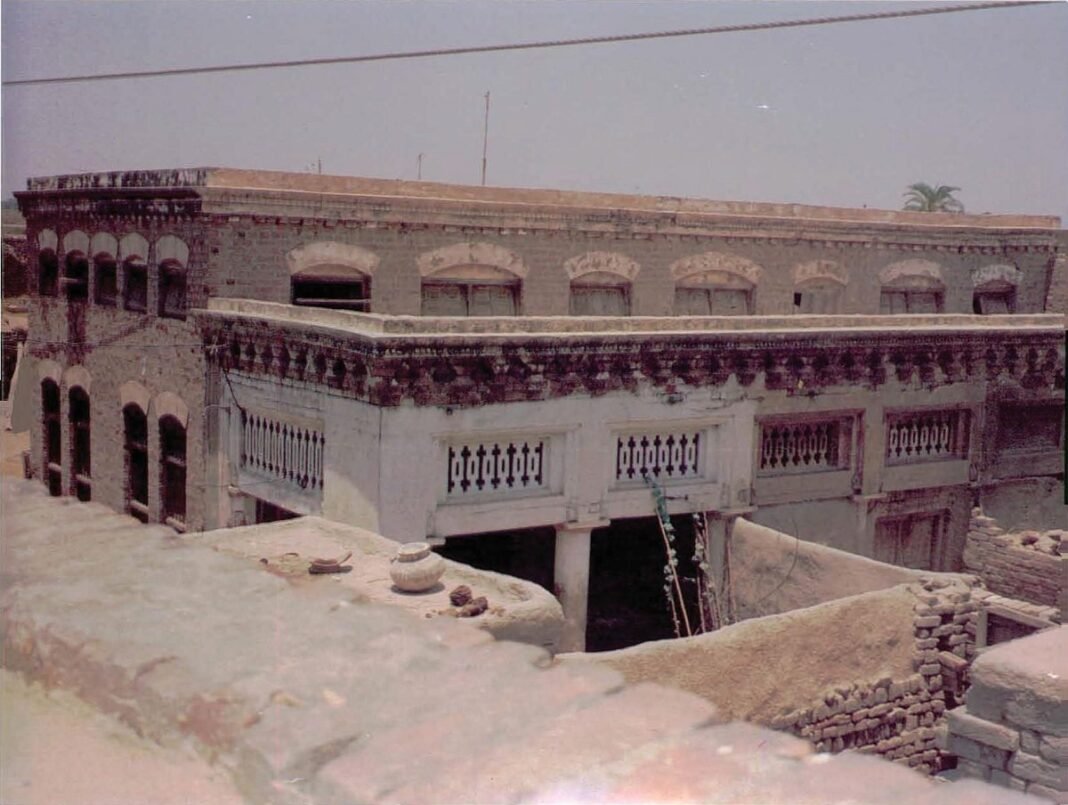
What happened to them is the familiar story of West Punjab’s Sikh heritage after 1947. The Sikh community of the Sialkot border villages migrated across the new border, and the shrines lost their congregations. Gurdwara Gurusar’s building survived but was used by local people as shelter; its sacred pond — the miracle sarovar of the Guru’s lance — was levelled, its ground returned to the fields. Kund Sahib was completely destroyed; only the tapashtan, the meditation quarter at the edge of the old kund, still stands today — a single small building keeping faith with a vanished complex.
The village itself changed its name: Rehsema is now called Salehpur. It remains what it has always been — a farming village reached by crossing the embankment near Chaprar, living its quiet life a kilometre from one of the most sensitive borders in the world. The shrines sleep in its fields. For the heritage traveller, Rehsema-Salehpur is a lesson in how history survives: not always in stone — sometimes in a story about a lance and a dry pond, told by people who never saw either, four hundred years on.
Top Things to Do in Gurdwara Gurusar, Rehsema (Salehpur)
Stand Where the Lance Struck
The heart of your visit is the levelled ground of the old sarovar, half a kilometre from the village — the pond that the Guru filled with his lance. There is no water now, no shrine in worship; there is a field, a story, and the border quiet. Stand there and let the story do its work. This is pilgrimage in its oldest form: not to a building, but to ground made sacred by an act. Bring the reverence the place deserves, and the imagination to see water where the wheat grows.
Visit the Shrine Building and the Tapasthan
Seek out the Gurusar shrine building itself — used as shelter in recent times, but still the structure where the Prakash was once held — and then find the surviving tapashtan at Kund Sahib, the little meditation quarter at the edge of the destroyed shrine’s kund. The tapashtan is the most intact piece of Rehsema’s sacred architecture: a small, humble building that has outlasted everything around it. Together they tell the whole story of the village’s three shrines in two stops.
Walk the Village and the Embankment
Rehsema-Salehpur is reached by crossing the embankment near Chaprar, and the walk itself is part of the experience: the raised bank, the fields on either side, the village appearing ahead. The village is a working Punjabi farming settlement — wheat, rice, buffaloes, children on the lanes. Walk it respectfully, greet the elders, and if you are lucky, someone will tell you the story of the Guru’s lance in their own words. The oral tradition here is the real monument.
Respect the Border
This is a border village, just over a kilometre from the international border, and that shapes everything about visiting. Follow local advice scrupulously, carry your identification, do not photograph anything that looks like a security installation, and do not stray toward the border fence. Check with locals or your guide about any permissions needed. The border quiet is part of the place’s power — honour it by being a careful, unobtrusive guest.
Make It a Sialkot Heritage Day
Gurusar pairs naturally with Sialkot city, the district capital. After the village, drive into Sialkot for the rest of the day: Iqbal Manzil, the birthplace of Allama Iqbal, the national poet; the old Sialkot Fort; the Sialkot Cathedral and the city’s colonial-era streets; and the living industry — the workshops and showrooms of the sports-goods and surgical-instruments trades that made Sialkot famous worldwide. The contrast is the point: a sleeping shrine in the morning, the most industrious city in Punjab by afternoon.
Famous Places In and Around Gurdwara Gurusar, Rehsema (Salehpur)
Iqbal Manzil, Sialkot — the birthplace and museum of Allama Muhammad Iqbal, the poet-philosopher of the Pakistan Movement. Sialkot Fort — the ancient fort of the city, with layers going back two millennia. Gurdwara Bair Sahib, Sialkot — the city’s historic Sikh shrine under the ber tree. Marala Headworks — the great Chenab barrage near Sialkot, a favourite evening spot. Kartarpur Corridor (Narowal district) — the great gurdwara of Guru Nanak’s final years lies in the neighbouring district, for pilgrims extending the journey. Sialkot’s sports-goods bazaars — showrooms selling the footballs and gear the city exports to the world.
How to Reach Gurdwara Gurusar, Rehsema (Salehpur)
Salehpur (Rehsema) is a border village of Sialkot district, reached by crossing the embankment near Chaprar. The practical approach is to base yourself in Sialkot city, hire a car with a driver who knows the border villages, and drive out to the village — the shrine sites lie about half a kilometre from the settlement. Because this is a border area, travel with identification, follow local advice, and consider engaging a local guide through your Sialkot hotel.
From Lahore: Around 130 kilometres via the M-11 Sialkot–Lahore motorway, roughly 1.5 to 2 hours by car — the easiest approach. From Sialkot city, drive out to the border villages (your driver will know the Chaprar embankment crossing).
From Islamabad: Around 200 kilometres via the M-2 and connecting roads through Gujrat/Daska, roughly 3 to 3.5 hours. Many travellers combine Sialkot with Gujranwala or Wazirabad in a single heritage sweep of the region.
From Karachi: Around 1,500 kilometres by road — fly. Sialkot International Airport has direct connections from Karachi (and from the Gulf), and it is the natural gateway for this trip; the city is about 30–45 minutes from the airport.
Nearest airport: Sialkot International Airport — Pakistan’s first privately built international airport, with domestic and Gulf connections. Rail: Sialkot Junction connects to Lahore and the main-line network. Road conditions: The M-11 motorway is excellent; rural roads to the village are metalled but narrow, and the embankment crossing needs care in the monsoon. Winter fog (December–January) can slow early-morning driving.
Route Details
Step 1: Reach Sialkot by motorway (from Lahore), road (from Islamabad) or air (from Karachi). Step 2: Hire a car with a driver who knows the border villages; carry your CNIC/passport. Step 3: Drive to Rehsema-Salehpur via the embankment near Chaprar. Step 4: Visit the Gurusar site (half a kilometre from the village) and the Kund Sahib tapashtan on foot, with a villager or guide. Step 5: Return to Sialkot for Iqbal Manzil, the fort and the bazaars — or continue to Kartarpur in neighbouring Narowal district.
Where to Stay in Gurdwara Gurusar, Rehsema (Salehpur)
Salehpur is a farming village with no tourist accommodation — and that is part of its charm. Every visitor overnights in Sialkot city, which has a solid range of hotels for an industrial city: comfortable mid-range business hotels serving the sports-goods and surgical trade, plus budget guesthouses. The cantonment area and the roads near the airport hold the best options, with restaurants, Wi-Fi and hot water as standard in the mid-range bracket.
Do not expect resort luxury; do expect efficiency — Sialkot’s hotels are built for travelling businessmen, which means good beds, strong showers and early breakfasts. Book ahead during the Sialkot trade fairs and in the winter wedding season. For pilgrims doing an extended Sikh-heritage circuit, Lahore remains the grand headquarters (Kartarpur, Nankana Sahib and the Lahore shrines), with Sialkot as the base for the border-village shrines.
Where to Eat: Local Foods of Gurdwara Gurusar, Rehsema (Salehpur)
The village eats what the fields grow: this is the wheat-and-dairy belt at its most generous. In Salehpur itself, expect the hospitality of a Punjabi farming village — fresh tandoori rotis, daal, seasonal saag in winter with makki di roti and white butter, and lassi thick enough to stand a spoon in. If a villager invites you for tea, accept — it is the beginning of every good story in this part of Punjab.
Sialkot city, your base, has the full Punjabi repertoire: chicken karahi and mutton karahi at the highway dhabas, tandoori chicken, seekh kebabs, paye for breakfast, and sweet shops selling barfi, gulab jamun and jalebi. The food streets near the city’s clock tower and cantonment bazaar are lively in the evenings. Meals are hearty and inexpensive; eat where the crowds are, drink bottled or boiled water, and save room — Sialkot’s traders eat well, and their restaurants show it.
Weather in Gurdwara Gurusar, Rehsema (Salehpur)
The Sialkot plain shares the upper Punjab’s classic four-act climate: a foggy winter, a brief glorious spring, a long hot summer and a monsoon that arrives in July. The shrine visit is entirely outdoors — fields, the levelled sarovar ground, the village lanes — so the cool, clear months from November to March are by far the most comfortable. The monsoon (July–September) can make the embankment crossing and field paths muddy; plan accordingly.
| Season | Temperature Range | Conditions |
|---|---|---|
| Winter (Dec–Feb) | 4–21°C | Cool days, cold nights; dense morning fog common |
| Spring (Mar–Apr) | 15–33°C | Pleasant and green; wheat ripening in the fields |
| Summer (May–Aug) | 26–40°C | Hot and dry, then monsoon humid; visit at dawn |
| Autumn (Sep–Nov) | 16–33°C | Cooling, clearing skies; excellent for village walks |
Language and Culture of Gurdwara Gurusar, Rehsema (Salehpur)
The village speaks Punjabi — the soft, musical Punjabi of the Sialkot plain — with Urdu as the bridge language for visitors. The culture is that of the Punjabi farming village: deeply hospitable, respectful of elders, and proud of its land. Guests are a blessing; you will be offered tea, then food, then more tea. Accept graciously.
Border-village etiquette matters here. Dress modestly (shalwar kameez blends in perfectly), keep your voice down near homes, ask before photographing people — especially women — and never photograph anything connected with border security. At the shrine sites, observe the Sikh courtesies even though no congregation gathers: cover your head, remove your shoes at any threshold, and behave quietly. If you meet village elders, a few minutes of respectful conversation will teach you more than any guidebook; the story of the Guru’s lance lives in their telling of it.
Shopping in Gurdwara Gurusar, Rehsema (Salehpur)
There is no shopping in Salehpur beyond the village’s small general stores — and that is as it should be. Save your rupees for Sialkot city, where the shopping is world-class in the most literal sense. Sialkot manufactures the majority of the world’s hand-stitched footballs, and the sports-goods showrooms sell top-quality footballs, cricket gear, hockey sticks and fitness equipment at factory prices. The city’s surgical instruments industry — scalpels, forceps and precision tools exported to hospitals worldwide — also has showrooms, though these are trade-oriented.
The city’s bazaars add leather goods (bags, jackets, gloves), bagpipes and musical instruments (another Sialkot specialty), and the everyday Punjabi market goods: cloth, crockery, dry fruits and sweets. Bargaining is expected in the bazaars and friendly everywhere. There are modern shopping plazas in the city for fixed-price buying. A Sialkot football, bought where it was made, is the definitive souvenir of this trip.
Travel Tips for Gurdwara Gurusar, Rehsema (Salehpur)
Packing Essentials
Sturdy walking shoes that can handle field paths and the embankment, a headscarf or cap for the shrine sites, sunscreen and plenty of water (there are no shops at the shrine ground), a warm layer for winter mornings when the fog lies thick over the fields, and your identification — essential in a border village.
Safety Tips
The border location is the defining safety consideration: follow local advice exactly, carry ID, stay with your guide or driver, do not approach the border fence, and do not photograph security installations. The village itself is peaceful and welcoming; the precautions are about the border, not the people. Check current travel advisories for the Sialkot border belt before your trip.
Money & Connectivity
Carry cash — there are no ATMs in the village, and the dhabas and village shops are cash-only. Withdraw in Sialkot city before driving out. Mobile coverage (Jazz, Telenor, Zong, Ufone) is generally good in the Sialkot plain, including 4G, though it can be patchy right at the border. Download offline maps before you leave the city.
Best Time to Visit Gurdwara Gurusar, Rehsema (Salehpur)
November to March — The Ideal Season
Cool, clear and made for walking: the fields are green or golden, the fog burns off by mid-morning, and the village lanes are at their most inviting. Winter is also when the dhabas serve their heartiest food. This is the season for the border villages.
April and October — The Shoulder Months
Warm but manageable. April brings the wheat harvest — the fields around the shrine turn gold, a beautiful sight. October brings the first cool air after the monsoon. Start early in the day and carry water.
May to September — The Hot and Wet Season
Summer heat is fierce on the open plain, and the monsoon (July–September) can make the embankment crossing and field paths difficult. If you must come, visit at dawn, and check local conditions before setting out — a villager’s advice on the paths is worth more than any forecast.
Final Thoughts
Gurdwara Gurusar will not give you the polished pilgrimage experience of the great shrines — and it was never trying to. It gives you something rarer: a story about a lance and a dry pond, told for four hundred years in a village a kilometre from the border; a levelled sarovar under wheat; a little meditation cell that outlasted everything around it. In the age of the mega-shrine, there is profound honesty in a sacred site kept alive by memory alone.
Come in the cool months, come with a guide who knows the border villages, come with your head covered and your expectations open — and let Rehsema-Salehpur show you the other half of Punjab’s Sikh heritage: not the monuments, but the neighbours. Then drive back to Sialkot as the sun drops over the Chenab plain, and end the day where Iqbal was born, in the most industrious city in Pakistan. For more journeys through the country’s sacred and historic places, explore our Explore Pakistan collection, from the calm of Malam Jabba to the valleys of Hunza.
FAQs
Where is Gurdwara Gurusar located?
Half a kilometre from Rehsema village — now called Salehpur — in district and tehsil Sialkot, Punjab, just over 1 km from the Indian border. It is reached by crossing the embankment near Chaprar.
What is the best time to visit?
November to March, when the weather is cool and clear — ideal for walking the fields and village lanes. Avoid the monsoon months for the embankment crossing.
How do I reach Salehpur from Lahore?
About 130 km via the M-11 Sialkot–Lahore motorway (1.5–2 hours) to Sialkot city, then drive out to the village with a local driver who knows the border area.
What is the story of the Guru’s lance?
Tradition holds that Guru Hargobind found the village pond long dried up; he threw his lance into the dry bed, and fresh sweet water poured out around the wound in the earth, filling the pond — which became known as Gurusar, the Guru’s tank.
Is the gurdwara still active?
No. The building where the Prakash was once held has been used as shelter, and the sacred pond has been levelled. It is a heritage memory-site, not a working shrine.
Is it safe to visit a border village?
Yes, with the right precautions: carry identification, follow local advice, stay with your guide, do not approach the border fence, and do not photograph security installations.
Where should I stay?
Sialkot city — it has comfortable mid-range business hotels and budget guesthouses, 30–45 minutes from the airport and the base for the village trip.
What else is there to see nearby?
The village’s other Guru Hargobind shrines (Kund Sahib’s surviving tapashtan, Tahli Sahib), and in Sialkot city: Iqbal Manzil, Sialkot Fort, Gurdwara Bair Sahib, Marala Headworks and the sports-goods bazaars.
, Pakistan? Discover why it deserves your visit, the best time to go and top things to do.)