Quick Facts
- Location: Village of Jai Sukh Wala (now Jaisak), on the main road from Mandi Bahauddin to Marala, Mandi Bahauddin District, Punjab
- Altitude: Around 220 metres — the flat, fertile plains of the Chaj Doab between the Jhelum and Chenab rivers
- Famous For: A beautiful three-storey gurdwara built in Maharaja Ranjit Singh’s reign; the spot where Guru Nanak turned aside an angry mystic’s curse on the village; two historic tanks and a great travellers’ inn
- Nearest City: Mandi Bahauddin (about 16 km west); Phalia is about 11 km south
- Accessibility: Easy drive on paved roads from Mandi Bahauddin; nearest airports at Lahore and Islamabad
- Known Landmarks: The three-storey gurdwara building, the twin sarovars (tanks), the grave of Bhai Bhag, the Rasul–Qadirabad Link Canal nearby
- Best For: Sikh-heritage travellers, history lovers, photographers of colonial-era architecture, and quiet Punjab-countryside explorers
Some shrines draw you with grandeur; others draw you with a story you cannot forget. Gurdwara Kair Sahib, Jai Sukh Wala has both. Rising three storeys over a Punjabi village in Mandi Bahauddin district, this is one of the finest surviving Ranjit Singh-era gurdwaras in Pakistan — and it guards a remarkable tale: the day Guru Nanak arrived from Dinga to find an angered mystic about to curse the whole village, and talked him out of it with a single lesson about who truly holds the right to punish. The building has lived many lives since — Sikh shrine, then home to a hundred families — and visiting it today is a moving encounter with the layered history of rural Punjab. For travellers tracing the sacred geography of the province, this pairs naturally with the other heritage stops in our Explore Pakistan collection.
Why Visit Gurdwara Kair Sahib, Jai Sukh Wala
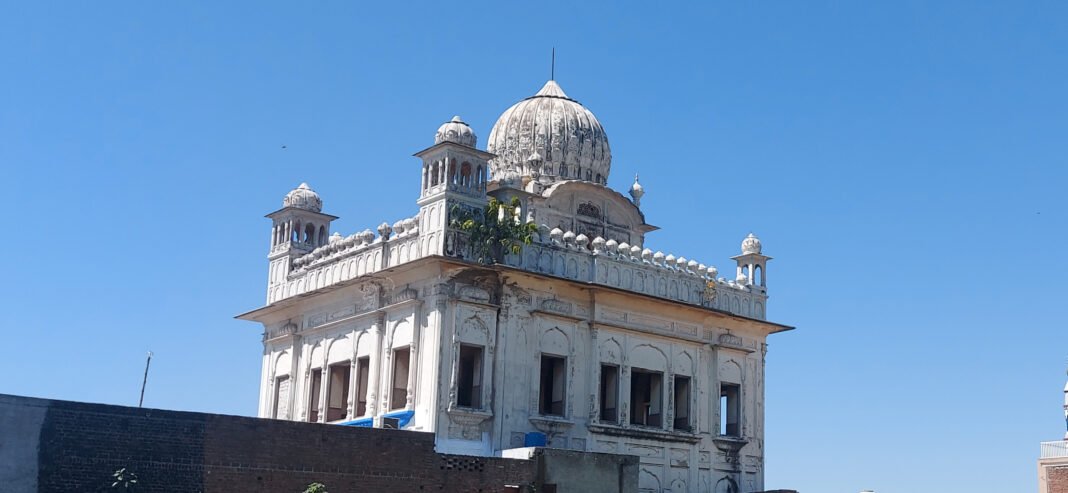
First, the architecture alone is worth the drive. Built during the reign of Sher-e-Punjab Maharaja Ranjit Singh in the early 19th century, the gurdwara is a handsome three-storeyed structure — the kind of confident, elegant Sikh architecture that once dotted the Punjab countryside. Two elegant tanks were built on its left-hand side, one reserved for women, and a very large inn (serai) was raised to accommodate visiting congregations. Even in its weathered state, the scale of the complex tells you how important this place once was.
Second, the story. When Guru Nanak arrived in this village from Dinga, he found the villagers in fear: an annoyed mystic, angered by something, was preparing to lay a curse upon them all. The Guru prevailed upon him to abandon the idea, teaching him that the right to punish lies in the domain of God alone — a perfect, compact lesson in Nanak’s theology of divine justice and mercy. The mystic’s grandson, Bhai Bhag, went on to lead a simple and fair life, and his grave still lies in the cool shade of a tree on the far side of the gurdwara’s tank. It is a story about forgiveness that you can stand inside.
Third, this is a journey into a Punjab most travellers never see. Jai Sukh Wala — known today as Jaisak — sits in the green heart of the Chaj Doab, the fertile land between the Jhelum and Chenab rivers. The drive from Mandi Bahauddin passes wheat fields, sugarcane and canal water, and the village itself was a significant Sikh settlement before 1947. For anyone interested in the shared history of the Punjab, the trip is as rewarding as the destination.
A note of honest expectation: the gurdwara is not currently an active place of worship. About a hundred families have settled in the great inn and parts of the complex, and an occupant of the prakash room does not allow visitors inside. Come to admire the building from outside, to stand by the tanks, to visit Bhai Bhag’s grave, and to reflect on the history — and come with respect for the people who now call the old serai home. Heritage travel at its best is also an exercise in empathy, and Kair Sahib offers both.
History of Gurdwara Kair Sahib, Jai Sukh Wala
The sacred history of this place begins with Guru Nanak Dev Ji himself. Travelling through the region on his way from Dinga, the Guru arrived in the village then called Jai Sukh Wala at a moment of crisis: an angered mystic, nursing some grievance against the villagers, was preparing to punish them with a curse. In the spiritual worldview of the time, such a curse was a thing to be genuinely feared. Guru Nanak intervened — not with counter-magic, but with teaching. He prevailed upon the mystic to abandon his plan and explained to him the meaning of the One Lord, convincing him that the right to punish others belongs to God alone. The village was spared, and the lesson became the founding memory of the shrine.
The mystic’s family, remarkably, became part of the shrine’s story rather than its villains. His grandson Bhai Bhag is remembered as a man who led a simple and fair life, and his grave — set in the cool shade of a tree on the other side of the gurdwara’s tank — remains one of the site’s most evocative features. It is a quiet monument to the idea that people, like places, can be redeemed.
The shrine’s great age of splendour came with Maharaja Ranjit Singh, the Sikh emperor of Punjab (reigned 1801–1839). During his reign a beautiful three-storeyed building of the Gurdwara Sahib was constructed here, along with the two elegant tanks and the vast inn for visiting sangats (congregations). The Maharaja bestowed on the gurdwara an estate with an annual income of five thousand and forty squares of agricultural land — a rich endowment that speaks to the shrine’s importance in the Sikh sacred landscape. Fairs used to be held here on Vaisakhi, and in the months of Chaiter and Bhadun, drawing pilgrims from across the region.
Partition in 1947 changed everything. The Sikh community of Jai Sukh Wala — once a significant settlement, with thousands of Sikhs recorded in the old Mandi Bahauddin town itself — migrated east, and the great complex was left without its congregation. Over the decades the buildings were occupied and divided: the inn that once sheltered pilgrims now houses around a hundred families, and a police official occupying the prakashasthan (recitation room) does not permit visitors to enter. What became of the Maharaja’s forty squares of endowed land is not known. The gurdwara stands today as a beautiful, melancholy survivor — architecturally intact in its essentials, historically priceless, and waiting for the restoration its significance deserves. Travellers moved by Guru Nanak’s journeys may also want to read our Gurdwara Bal Lila Sahib, Nankana Sahib travel guide, covering the town where the Guru was born.
Top Things to Do in Gurdwara Kair Sahib, Jai Sukh Wala
Admire the Three-Storey Facade
Stand back across the road and take in the full height of the Ranjit Singh-era building. Three storeys of early-19th-century Sikh architecture, with its characteristic arches, cornices and domed kiosks, make this one of the most photogenic historic gurdwaras in the region. Morning light is kindest to the facade — arrive before 10 am for the best photographs.
Walk the Twin Tanks
The two elegant sarovars on the gurdwara’s left-hand side were central to the shrine’s life — one of them reserved for women, a thoughtful detail of the original design. Walk their perimeter quietly, watch the reflections of the old building in the water, and imagine the Vaisakhi fairs when these tanks would have been ringed with pilgrims.
Visit the Grave of Bhai Bhag
On the far side of the tank, under the cool shade of a tree, lies the grave of Bhai Bhag — the mystic’s grandson who chose a simple and fair life. It is a humble spot, but it completes the founding story of the shrine: anger turned aside, a family redeemed, a village blessed. Few visitors make it to this corner; those who do find it the most peaceful part of the complex.
Explore Jaisak Village and the Canal Country
Jaisak (the modern name of Jai Sukh Wala) is a classic canal-colony Punjabi village of about five thousand people. Take a slow walk or drive through the surrounding fields — wheat, rice and sugarcane depending on the season — and stop at the Rasul–Qadirabad Link Canal that flows near the village. The canal banks at sunset, with buffaloes cooling in the water and egrets settling for the night, are pure rural Punjab.
Famous Places In and Around Gurdwara Kair Sahib, Jai Sukh Wala
Mandi Bahauddin city — the district capital 16 km west, grown around the historic grain market that gave it the “Mandi” in its name; good bazaars and food. Chillianwala — about 17.5 km north of Jaisak, site of the famous Battle of Chillianwala (January 1849) between the Sikh Empire and the British, with memorials. Phalia — the tehsil town 11 km south, a typical Punjab market town. Rasul–Qadirabad Link Canal — the major canal flowing near the village, scenic at its bridges. Gujrat — the historic city to the east, known for its pottery, furniture and the shrine of Shah Daula.
How to Reach Gurdwara Kair Sahib, Jai Sukh Wala
Jai Sukh Wala lies on the main road from Mandi Bahauddin to Marala, within Mandi Bahauddin tehsil — an easy day trip from Lahore or Islamabad on good paved roads. The village is about 16 km east of Mandi Bahauddin city, so navigate to Mandi Bahauddin first and then follow the Marala road east.
From Lahore: about 240 km by road, roughly 3 to 3.5 hours via the M-2 motorway and connecting highways through Gujranwala and Daska, or via Gujrat and Phalia. Leave Lahore after breakfast and you will be at the gurdwara by midday. Daewoo and other coach services run frequently to Mandi Bahauddin and Gujrat, from where local vans and rickshaws cover the last stretch.
From Islamabad: about 180–200 km, roughly 3–4 hours by car via the M-2 to the Kallar Kahar/Sargodha interchanges and on through the GT Road network, or via Jhelum and the road south to Mandi Bahauddin. An easy half-day drive each way.
From Karachi: there are no direct flights to Mandi Bahauddin — fly to Lahore or Islamabad (1.5–2 hours) and continue by road (3–4 hours). Allow a full day for the combined journey, or break it with a night in Lahore.
Nearest airports: Allama Iqbal International Airport, Lahore, and Islamabad International Airport are the practical gateways. Rail: Mandi Bahauddin is on the railway network with connections to Lahore and Rawalpindi; from the station, hire a rickshaw or taxi for the 16 km to Jaisak.
Local transport: Within Mandi Bahauddin, Suzuki vans, rickshaws and Qingqis run the rural routes. For Jaisak, a private rickshaw from Mandi Bahauddin city is simplest — agree the fare for the round trip and ask the driver to wait while you explore.
Route Details
Step by step: (1) Reach Mandi Bahauddin city from Lahore, Islamabad or Gujranwala. (2) Take the main road east toward Marala (signposted; ask for “Jaisak” or “Jai Sukh Wala” — older residents know the historic name). (3) After about 16 km you enter Jaisak village; the gurdwara complex is prominent on the roadside — the three-storey building is unmistakable. (4) Park respectfully, greet any residents, and explore the exterior, the tanks and Bhai Bhag’s grave on foot. Remember that the buildings are people’s homes now: keep your voice down, ask before photographing residents, and do not attempt to enter locked or occupied rooms.
Where to Stay in Gurdwara Kair Sahib, Jai Sukh Wala
Jaisak is a village, so plan to sleep in Mandi Bahauddin city, 16 km away. The city offers a solid range of mid-range hotels and guesthouses aimed at business and wedding travellers — clean, air-conditioned rooms with attached baths at very reasonable rates. These are comfortable bases for a heritage day trip, with restaurants and markets within easy reach.
Budget travellers will find simple guesthouses and highway motels on the city’s approach roads — basic but perfectly serviceable for a night. There are no luxury hotels in Mandi Bahauddin; travellers wanting more polish should base themselves in Gujranwala (about 80 km) or Lahore and do Kair Sahib as a long day trip. Given the short driving times from both cities, many visitors do exactly that: breakfast in Lahore, the gurdwara by midday, canal-country sunset, dinner back in the city.
If you are touring Sikh heritage sites across Punjab, Mandi Bahauddin also works as an overnight stop between Lahore/Gujranwala and the Jhelum–Rawalpindi belt. Book by phone a day ahead in wedding season (winter), when the city’s hotels fill up.
Where to Eat: Local Foods of Gurdwara Kair Sahib, Jai Sukh Wala
This is the Punjab of the dhabas — and eating here is a joy. The canal-irrigated farmland around Jaisak produces superb wheat, rice, sugarcane and dairy, and the local food shows it. Start the day with desi-ghee parathas and a tall glass of lassi (sweet or salted) at a Mandi Bahauddin dhaba. For lunch, the classics: saag with makhan (white butter) and makki di roti in winter, daal fry with tandoori roti year-round, and chanay (chickpea curry) that the region does exceptionally well.
Meat lovers should try murgh cholay and the slow-cooked nihari served at the city’s old eateries, and in the evening look for seekh kebabs and tikkas grilling over coals in the bazaar. Finish with gulab jamun or barfi from a local halwai, and wash it down with doodh patti chai. Everything is budget-friendly — a generous dhaba meal costs only a few hundred rupees per person. If you are offered food by villagers near the gurdwara, accept graciously; Punjabi hospitality is legendary and refusing can cause genuine disappointment.
Weather in Gurdwara Kair Sahib, Jai Sukh Wala
Mandi Bahauddin district has a classic Punjab-plains climate: long, sweltering summers, a monsoon-drenched late summer, and short, cool, dry winters. The best visiting weather coincides with the wheat-harvest landscape of winter and early spring, when the fields around Jaisak are at their greenest and the air is clear.
| Season | Temperature Range | Conditions |
|---|---|---|
| Winter (Dec–Feb) | 3°C – 20°C | Cool and dry; the best season. Crisp mornings, mild sunny days; occasional frost at night. |
| Spring (Mar–Apr) | 15°C – 33°C | Pleasant and green; March is lovely, April warms up. Wheat harvest colours the fields gold. |
| Summer (May–Jun) | 25°C – 45°C+ | Intensely hot and dry; temperatures can touch 48°C. Travel only with care and hydration. |
| Monsoon (Jul–Sep) | 26°C – 37°C | Hot and humid with heavy monsoon rains; the countryside turns lush but roads can flood. |
| Autumn (Oct–Nov) | 15°C – 32°C | Cooling and drying; comfortable for travel, clear skies, harvest activity in the fields. |
Language and Culture of Gurdwara Kair Sahib, Jai Sukh Wala
The language of the land is Punjabi — spoken as a first language by over nine in ten people in the district, in the local Jatki dialect close to standard Punjabi. Urdu is widely understood, so visitors will manage easily, and you will hear it in shops and offices. English is limited to educated circles in the city.
Culturally, this is the Punjab of legendary hospitality: guests are a blessing, and you will likely be offered tea, lassi or a meal with genuine warmth. Dress modestly (shalwar kameez blends in perfectly), greet elders with respect, and remove your shoes if invited into a home. At the gurdwara complex, remember you are visiting a place that is both a historic shrine and people’s homes — keep noise down, dress conservatively, cover your head near the religious structures, and ask permission before photographing residents. A small, polite interaction with the families living in the old serai — many of whom know the building’s history — can be the most memorable part of your visit.
Shopping in Gurdwara Kair Sahib, Jai Sukh Wala
Mandi Bahauddin’s bazaars serve an agricultural district, and the shopping reflects it. The city’s grain market — the “mandi” that named the town — is a sight in itself at harvest time, though it is a working market rather than a souvenir stop. For take-home shopping, look for khaddar (handloom cotton) and lawn fabric in the cloth markets, embroidered phulkari-style textiles, and brass and steel household goods.
Food souvenirs travel best: packets of desi ghee, gur (jaggery) and shakkar from the sugarcane belt, dried pulses and rice from the mandi, and fresh barfi and pateesa from the city’s halwais. Prices are refreshingly low compared to Lahore and Islamabad, and bargaining is gentle and good-humoured. There are no malls here — the traditional bazaar, with its tea stalls and chatter, is the whole experience.
Local Events and Festivals
The shrine’s own festival calendar belongs to history now: the old accounts record that fairs used to be held at Kair Sahib on Vaisakhi and in the months of Chaiter and Bhadun, when the tanks and the great inn would fill with pilgrims. Those melas no longer take place, but the wider region still celebrates the seasons that framed them.
Baisakhi (April) remains the great Punjabi festival of harvest and, for Sikhs, of the Khalsa — celebrated with fairs, bhangra and community meals across the district. The wheat harvest in April–May and the rice transplanting season bring their own rural festivities. If your interest is the Sikh heritage calendar specifically, time a wider Punjab tour for Baisakhi and combine Kair Sahib with the active gurdwaras of the province, where the festival is celebrated in full.
Travel Tips for Gurdwara Kair Sahib, Jai Sukh Wala
Packing Essentials
For a winter trip: a warm jacket for cold mornings and evenings (temperatures can dip near freezing), comfortable walking shoes for the village lanes and tank perimeter, sun protection for midday, and a headscarf for the shrine. In summer: light cotton clothes, a wide-brimmed hat, sunglasses, sunscreen and at least two litres of water per person — the Punjab plains in June are unforgiving. A power bank is useful; village electricity can be intermittent.
Safety Tips
The area is peaceful rural Punjab and safe for visitors, including families. The main precautions are practical: stick to the main roads, avoid driving the village lanes after dark (unlit, with the occasional stray animal), and drink bottled or boiled water. Be sensitive around the occupied buildings — do not peer into homes or enter courtyards uninvited. If you are a foreign visitor, the usual registration courtesies for travel in Punjab apply; check current guidance before you go.
Money & Connectivity
Bring cash from Mandi Bahauddin city — there are ATMs there, but none in the village. Small notes are useful for rickshaws, tea stalls and any donation you wish to leave. Mobile coverage from Jazz, Telenor, Zong and Ufone is good along the main road and in the village. There is no entry fee at the gurdwara; if you wish to contribute to the shrine’s upkeep, ask the residents how best to do so.
Best Time to Visit Gurdwara Kair Sahib, Jai Sukh Wala
Winter (November to March) — the ideal season
Cool, dry and sunny, with daytime temperatures of 10–22°C and the fields green with wheat. This is the comfortable season for walking the village, photographing the gurdwara and sitting by the tanks. December and January mornings can be foggy on the plains — plan to arrive after 10 am if driving from Lahore.
Spring (March to April) — beautiful but warming
The countryside is at its most photogenic as the wheat ripens to gold. Baisakhi in April brings festive energy across Punjab. By late April temperatures push past 35°C, so keep outdoor exploration to mornings.
Summer and Monsoon (May to September) — avoid if you can
Daytime highs of 40–48°C make sightseeing genuinely uncomfortable, and the monsoon months add humidity and the risk of flooded rural roads. If you must come, visit at dawn and retreat to air conditioning by 10 am.
Autumn (October to November) — the pleasant shoulder
Heat easing, skies clearing, harvest activity in the fields — October and November are lovely for a quiet heritage drive through the canal country.
Final Thoughts
Gurdwara Kair Sahib, Jai Sukh Wala is not a polished tourist attraction, and therein lies its power. It is a real place with a real story — of a Guru who chose mercy over vengeance, of an emperor’s patronage, of a community scattered by history and a building that endures through it all. Standing by the old tanks with the three-storey facade rising above you, the centuries feel very close indeed.
Come in winter, when the Punjab air is crisp and the fields are green. Walk gently, look closely, and speak kindly with the people who live among these old stones — they are the latest chapter of the shrine’s story. And when you leave, carry the Guru’s lesson from this village with you: that the right to punish belongs to God alone, and mercy is always the stronger choice. For more journeys through the sacred and historic Punjab, browse our Explore Pakistan guides — or head north next, with our Malam Jabba travel guide for a complete change of scenery.
FAQs
Where is Gurdwara Kair Sahib located?
In the village of Jai Sukh Wala (now called Jaisak), on the main road from Mandi Bahauddin to Marala, about 16 km east of Mandi Bahauddin city in Punjab.
What is the best time to visit Gurdwara Kair Sahib, Jai Sukh Wala?
November to March, when the weather is cool and dry (3–22°C). Avoid May–June, when temperatures can exceed 45°C.
How do I reach Jai Sukh Wala from Lahore?
Drive about 240 km (3–3.5 hours) via the M-2 and connecting roads to Mandi Bahauddin, then 16 km east on the Marala road to Jaisak village.
Is the gurdwara still active for worship?
No. The complex is currently occupied by local families and an official in the prakash room does not allow visitors inside. You can respectfully view the building exterior, the tanks and Bhai Bhag’s grave.
What is the story of Guru Nanak at Kair Sahib?
Guru Nanak arrived from Dinga to find an angered mystic about to curse the villagers. The Guru persuaded him to abandon the curse, teaching that the right to punish lies in God’s domain alone.
Who was Bhai Bhag?
The mystic’s grandson, remembered for leading a simple and fair life. His grave lies in the shade of a tree on the far side of the gurdwara’s tank.
Where can I stay near Jai Sukh Wala?
In Mandi Bahauddin city (16 km away), which has mid-range hotels and guesthouses. Many visitors day-trip from Lahore or Gujranwala instead.
What food should I try in the area?
Classic Punjabi dhaba food: desi-ghee parathas, lassi, saag with makhan, daal, chanay, seekh kebabs and sweets like barfi from Mandi Bahauddin’s halwais.