Quick Facts
- Location: Topanwala, on the main road just beyond the crossroad, Dera Ismail Khan city, Khyber Pakhtunkhwa
- Altitude: Around 175 metres — the low Indus plains at the southern edge of KP
- Famous For: A former temple of the goddess Kali where Guru Nanak’s arrival is said to have toppled the idol; a grand red-brick Ranjit Singh-era building with white domes; a living symbol of Sindh–Punjab’s shared sacred history
- Nearest City: Dera Ismail Khan (the shrine is inside the city)
- Accessibility: Easy city drive; Dera Ismail Khan Airport nearby; well connected by road to Lahore, Islamabad and Multan
- Known Landmarks: The spired temple-gurdwara at Topanwala, the Indus River, Kafir Kot ancient temples, the old city bazaars
- Best For: Sikh-heritage travellers, students of religious history, photographers of historic architecture, and travellers crossing between Punjab and KP
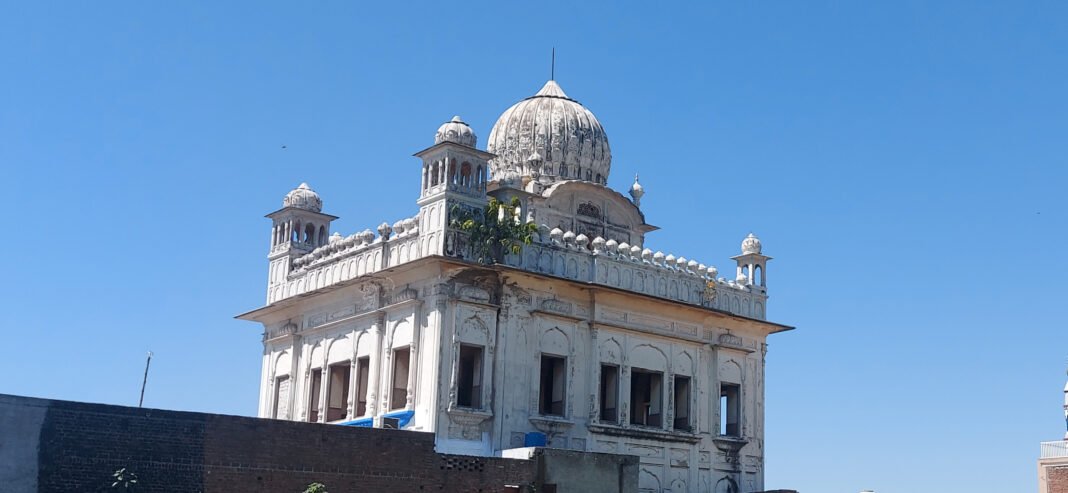
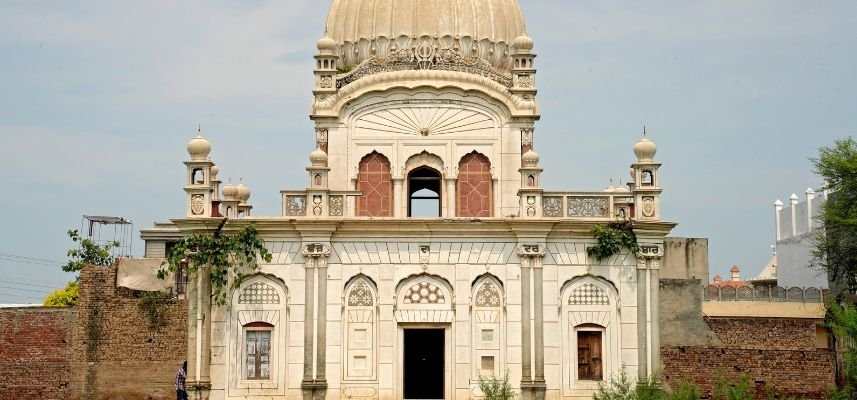
Of all the shrines associated with Guru Nanak in Pakistan, few have a story as dramatic as Gurdwara Kali Devi, Dera Ismail Khan. This was once a temple of Kali, the fierce Hindu goddess — until, tradition says, the moment the Guru entered the town, her idol toppled to the ground of its own accord. The priest set it upright; it fell again. And in the conversation that followed, idol worship at this spot gave way to the worship of the One Formless Lord. The temple came to be known as Gurdwara Kali Devi to commemorate that extraordinary day. Today the grand red-brick building with its white domes still rises over Topanwala, its spire visible above the surrounding streets — a monument to one of the most striking episodes in the Guru’s travels. If you are mapping the sacred sites of the country, file this under essential reading in our Explore Pakistan collection.
Why Visit Gurdwara Kali Devi, Dera Ismail Khan
First, the story is unforgettable. During his fourth udasi — the great journey that carried him toward the holy lands of Arabia — Guru Nanak came to Dera Ismail Khan. At the time, the shrine at Topanwala was a mandir where the goddess Kali was worshipped. The Guru stayed at some distance from the temple, but the moment he entered the town, the murti of Kali is said to have toppled to the ground. The priest lifted it and tried to prop it up, only to watch it fall a second time. A bystander cried out that a sant — a saint — had come to the town, and that this must be happening because of his presence. The priest went to the Guru, who explained to him the meaning of the One Lord and counselled him to become His devotee. After this incident the worship of idols was abolished here and the prakash of the Guru Granth began. It is one of the most vivid conversion narratives in the entire corpus of Sikh sacred geography — and you can stand on the ground where it happened.
Second, the building itself is remarkable. Raised in the reign of Maharaja Ranjit Singh to commemorate the Guru’s refuge here, it is a large three-storeyed structure of cut and moulded red brick, crowned with striking white domes — one great central dome and smaller ones around it. Its architecture is deliberately different from most gurdwaras in the country: the exterior still looks much like the ancient Hindu temple it once was, with the spire visible hanging over the surrounding structures from the street. For architecture lovers, it is a fascinating hybrid — a Sikh shrine wearing a temple’s silhouette.
Third, Dera Ismail Khan itself rewards the curious. This is the southernmost city of Khyber Pakhtunkhwa, a historic Indus crossing with a distinct Saraiki culture, famous dates, and some of the oldest Hindu temple ruins in the region at nearby Kafir Kot. Most travellers speed through D.I. Khan on the Indus Highway; those who stop discover a city with real depth.
A word of honest expectation, as always in this series: the shrine is no longer an active gurdwara. A school is presently housed in the premises, and the Guru Granth Sahib is no longer present — over time, the old habits reasserted themselves and the priests once again placed the idol of Kali Devi, which is how the place kept its distinctive name. Come to see the building, to stand where the story unfolded, and to reflect on the ebb and flow of faith at a single sacred address across five centuries. And come respectfully: it is a school and a neighbourhood landmark first, a heritage site second.
History of Gurdwara Kali Devi, Dera Ismail Khan
The history of this shrine is the history of a single, transformative encounter. When Jagat Guru Nanak Dev Ji came to Dera Ismail Khan during his fourth world travels — the udasi that took him westward toward Arabia — the building at Topanwala was a functioning temple of Kali. The Guru did not go to the temple; he stayed at some distance from it. But sacred tradition insists that the moment he entered the town, the idol of the goddess fell to the ground. The priest picked it up and set it upright; it fell again. When a witness suggested that a saint had arrived and that the idol’s fall was due to his presence, the priest sought the Guru out. Nanak explained the meaning of the One Lord to him and advised him to become a devotee of the One. The old worship was abolished, the prakash of the Guru Granth was begun, and the place entered Sikh sacred history.
What happened next is a very human coda, honestly preserved in the old accounts: as time passed, the priests once again placed the idol of Kali Devi in the shrine. Old habits, the chroniclers note, fit like a pair of well-worn shoes. Rather than being renamed, the temple came to be known as Gurdwara Kali Devi — “the Gurdwara of Kali Devi” — to commemorate the event. The name itself is a small historical document, preserving both the Guru’s triumph and the community’s complicated memory of it.
The shrine’s architectural glory belongs to the Sikh Empire. Maharaja Ranjit Singh, who took a personal interest in the shrines associated with Guru Nanak’s travels, had a grand new building raised here: large, three-storeyed, of red brick with white domes, set around a rectangular courtyard with its own pool. It was built to commemorate the place where Guru Nanak once took refuge, and its scale announced the importance the empire attached to the site.
Dera Ismail Khan’s own history frames the shrine. The city sits on the west bank of the Indus at the southern tip of KP, in the heart of the Saraiki belt. It was a frontier garrison town of the Durrani and then Sikh empires before the British made it a district headquarters; the Imperial Gazetteer noted its melancholy fame in 1870, when Sir Henry Durand, Lieutenant Governor of the Punjab, was killed here in an elephant accident. Through the 20th century the city remained a meeting point of Saraiki, Pashtun and Punjabi cultures — and its old Hindu and Sikh shrines, like Kali Devi, are the architectural memory of a more religiously mixed past. A school now occupies the gurdwara premises, which at least means the historic building is maintained and in daily use. For another D.I. Khan shrine with a Sikh connection, see our Gurdwara Amir Shah Singh, Dera Ismail Khan travel guide.
Top Things to Do in Gurdwara Kali Devi, Dera Ismail Khan
See the Red-Brick Shrine at Topanwala
Find the shrine on the main road just beyond the Topanwala crossroad — look up and you will see the spire rising over the surrounding workshops and houses. Walk the street slowly and take in the exterior: the red-brick mass, the white domes, the temple-like silhouette that makes this building unlike any other gurdwara in Pakistan. Remember it is a working school — visit outside school hours, keep noise down, and ask permission before entering the compound or photographing.
Stand Where the Idol Fell
The compound centres on a rectangular courtyard connecting the entrances, with the old pool of the shrine. Standing here, retell yourself the founding story: the Guru at his distance, the toppling murti, the priest’s two attempts, the conversation about the One Lord. Heritage travel is at its richest when the story and the stones meet, and few sites in Pakistan stage that meeting as dramatically as this one.
Visit the Kafir Kot Temples
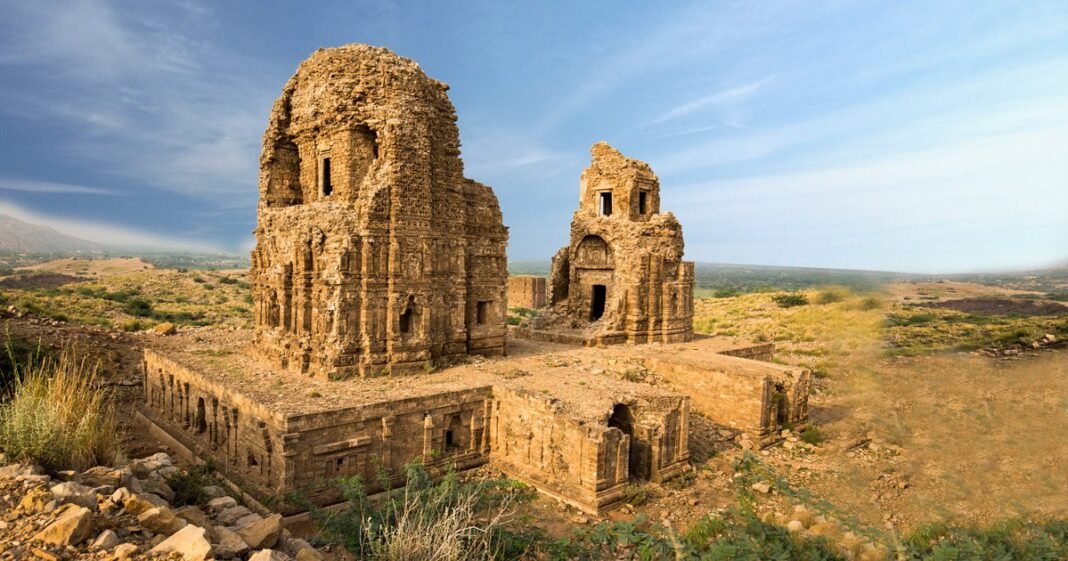
No trip to D.I. Khan is complete without Kafir Kot — the spectacular ruined Hindu temples on the hills west of the city, among the oldest in the region. Their weathered stone towers, standing against big skies, are the perfect companion piece to the Kali Devi story: the deep pre-Islamic religious landscape of the Indus frontier, of which the Topanwala shrine was once a living part.
Walk the Indus Riverfront
Dera Ismail Khan lives with the Indus. An evening walk along the river — watching the wide brown water slide past, the fishing boats, the sunset over the far bank — is the city’s simplest and best pleasure. It is also the perfect place to reflect on how this river has carried saints, soldiers and traders past this city for millennia.
Famous Places In and Around Gurdwara Kali Devi, Dera Ismail Khan
Kafir Kot / Bilot temples — ancient Hindu temple ruins on the hills near the city, among the region’s oldest. Indus riverfront — the city’s evening promenade and boat points. Topanwala bazaar — the old neighbourhood around the shrine, good for a walking wander. D.I. Khan old city markets — traditional bazaars with dates, dry fruits and Saraiki handicrafts. Gurdwara Amir Shah Singh — another historic Sikh shrine of the city (see our dedicated guide).
How to Reach Gurdwara Kali Devi, Dera Ismail Khan
Dera Ismail Khan sits on the N-55 Indus Highway, well connected to Punjab and the rest of KP. The shrine is inside the city at Topanwala — any local driver will know the crossroad.
From Lahore: about 375 km via Bhakkar, roughly 5.5–6 hours by car — the most direct route, on decent highways. Daewoo and other coach services run to D.I. Khan via Bhakkar in about 6.5 hours. (A longer motorway route via Islamabad is also possible but adds distance.)
From Islamabad: roughly 6–8 hours by car depending on route and traffic, via Talagang and Mianwali or via the M-1/M-14 western corridor. Many travellers break the journey at Mianwali.
From Karachi: a long haul — over 850 km by road. The practical option is to fly to Islamabad, Lahore or Multan and continue by road (4–6 hours from Multan). Dera Ismail Khan Airport exists but has limited scheduled services; check current schedules before planning around it.
From Multan: about 4–5 hours by road via Muzaffargarh and the Indus Highway — the natural approach for travellers touring southern Punjab.
Local transport: Rickshaws and Suzuki pickups handle city hops cheaply. For Topanwala, tell the driver “Topanwala, Kali Devi wala mandir/gurdwara” — the spire is a local landmark. A hired car for the day lets you combine the shrine with Kafir Kot and the riverfront efficiently.
Route Details
Step by step: (1) Enter Dera Ismail Khan city via the Indus Highway. (2) Navigate to the Topanwala crossroad on the main road (ask any local — “Topanwala chowk”). (3) Continue just beyond the crossroad; the shrine’s spire becomes visible over the rooftops and workshops on the main road. (4) Park nearby and approach on foot. Visit outside school hours (mornings before classes or late afternoon), dress modestly, keep your voice low, and ask the school staff or caretaker before entering the compound. An hour is plenty for the shrine itself; allow half a day with Kafir Kot.
Where to Stay in Gurdwara Kali Devi, Dera Ismail Khan
Dera Ismail Khan is a divisional city with a reasonable spread of accommodation. Mid-range hotels in the city centre offer air-conditioned rooms, attached baths and in-house restaurants at budget-friendly rates — the standard choice for business travellers and tourists alike, and perfectly comfortable. Several are located conveniently for both the city sights and the highway.
At the simpler end, guesthouses and highway motels on the city’s approaches offer basic rooms for the night — fine for a stopover, especially if you are driving the Indus Highway between Punjab and the south. Travellers wanting more upmarket comfort typically stay in Multan or Islamabad and visit D.I. Khan as a long day trip, though that makes for a tiring day.
For a heritage-focused trip, one night in D.I. Khan works well: arrive by afternoon, see the Kali Devi shrine and the old bazaars, catch sunset on the Indus, and drive out to Kafir Kot the next morning before continuing your journey. Book ahead if travelling during the winter wedding season, when city hotels fill.
Where to Eat: Local Foods of Gurdwara Kali Devi, Dera Ismail Khan
D.I. Khan sits in the Saraiki belt, and the food is pure southern comfort. The district is famous for its dates — the sweet Dhakki variety is the local pride — so start by buying a bag from any bazaar; they are superb and travel well. Meals centre on tandoori roti with daal, saag and seasonal vegetables, and the region’s lassi is thick enough to stand a spoon in.
Meat dishes follow the frontier style: namkeen gosht, chicken karahi and seekh kebabs grilling in the evening bazaars. In winter, look for sohan halwa-style sweets and gur (jaggery) from the sugarcane harvest. The old city has the best concentration of traditional eateries — follow the smell of fresh tandoori roti. As elsewhere in the region, a full dhaba meal costs only a few hundred rupees per person, and the hospitality is famously warm: it is not unusual for a shopkeeper to press dates or tea on a visitor.
Weather in Gurdwara Kali Devi, Dera Ismail Khan
D.I. Khan has a harsh continental climate: blazing summers, a brief monsoon, and short, mild winters. The shrine visit is entirely outdoors and on foot, so winter is overwhelmingly the best season — summer sightseeing here is genuinely punishing.
| Season | Temperature Range | Conditions |
|---|---|---|
| Winter (Dec–Feb) | 4°C – 20°C | Mild days, cool nights; the ideal season. Clear skies, comfortable for walking the old city. |
| Spring (Mar–Apr) | 15°C – 35°C | Pleasant early, warming fast; March is good, April turns hot by midday. |
| Summer (May–Jun) | 27°C – 45°C | Extremely hot and dry; among Pakistan’s hottest cities. Avoid midday outdoor activity entirely. |
| Monsoon (Jul–Sep) | 27°C – 42°C | Hot and humid with monsoon showers; brief cool spells but sticky heat between rains. |
| Autumn (Oct–Nov) | 15°C – 35°C | Cooling down; November is very pleasant and a fine shoulder season for travel. |
Language and Culture of Gurdwara Kali Devi, Dera Ismail Khan
Saraiki is the mother tongue of Dera Ismail Khan, spoken by nearly three-quarters of the population — a sweet, musical language you will hear everywhere from the bazaars to the riverbank. Pashto (about one in six residents) and Urdu (about one in ten) complete the city’s soundscape, and Urdu will get you through any interaction as a visitor.
Culturally, D.I. Khan blends Saraiki warmth with frontier reserve. Guests are honoured — expect offers of tea and dates — but the social atmosphere is more conservative than in central Punjab, so dress modestly (shalwar kameez is ideal) and be mindful in your interactions, particularly as a mixed or foreign group. At the shrine-cum-school, the courtesies are those of any respected neighbourhood institution: quiet voices, permission before photographing, no disruption of school activity. The city’s religious landscape — mosques, the old temples, the Sikh shrines — is best approached with the same respectful curiosity you would bring to any living heritage.
Shopping in Gurdwara Kali Devi, Dera Ismail Khan
The old bazaars of D.I. Khan are the place to shop. Dates are the number-one buy — the local Dhakki dates, date syrup and stuffed dates are excellent and cheap at source. Dry fruits, gur and shakkar, and Saraiki ajrak-style textiles and khaddar cloth make good gifts.
The city’s markets also sell traditional lacquered woodwork and brass items from the frontier craft tradition, and the spice shops are fragrant with the masalas of the Saraiki kitchen. Prices are low and bargaining is expected but gentle. As with the other cities in this series, skip any hunt for a modern mall — the old bazaar, with its tea houses and date merchants, is the attraction.
Travel Tips for Gurdwara Kali Devi, Dera Ismail Khan
Packing Essentials
Winter (the recommended season): layered clothing — warm mornings and evenings, mild middays — plus a light jacket, comfortable walking shoes, sun protection and a headscarf. Summer: only attempt travel here with light cotton, a hat, sunglasses, sunscreen and serious hydration — but honestly, choose winter. Carry bottled water year-round, and a small torch if you plan to explore the old bazaar lanes after dusk.
Safety Tips
D.I. Khan is a frontier city; the tourist areas (Topanwala, the riverfront, Kafir Kot road) are calm in daytime. Travel with a local driver if you are unfamiliar with the area, avoid unnecessary night driving on highways, keep valuables discreet, and check current travel advisories before your trip, as conditions in the wider region can change. At the shrine, remember it is a school: never enter classrooms uninvited and keep clear during school assembly hours.
Money & Connectivity
ATMs are available in the city centre — withdraw there, as the Topanwala area has fewer. Carry small notes for rickshaws and bazaar shopping. Jazz, Telenor, Zong and Ufone all have good coverage in the city. There is no ticket or fee at the shrine; any contribution to the school or shrine upkeep should be offered through the staff, not pressed on individuals.
Best Time to Visit Gurdwara Kali Devi, Dera Ismail Khan
Winter (November to February) — the season to choose
Mild days of 15–20°C, cool nights, clear skies: perfect for the shrine, the bazaars, Kafir Kot and the Indus riverfront. December and January are the peak comfort months. This is when D.I. Khan shows its best face.
Spring (March to April) — good, then hot
March remains pleasant for sightseeing; by April the heat builds past 35°C and midday outings become uncomfortable. Shift heritage walks to morning and evening.
Summer and Monsoon (May to September) — avoid
With highs of 42–45°C and humid monsoon spells, this is the most punishing season in the region. Heritage travel here in June is an endurance test, not a pleasure.
Autumn (October to November) — the gentle shoulder
The heat breaks, the skies clear and the date harvest fills the bazaars. November is an excellent, crowd-free alternative to midwinter.
Final Thoughts
Gurdwara Kali Devi, Dera Ismail Khan is a shrine with a plot twist built into its very name — a gurdwara named for a goddess, commemorating the day one saint’s presence overturned an idol and an entire theology. Whether you read the founding story as history, legend or something in between, standing in the red-brick courtyard with the white domes overhead, you are standing inside one of the most psychologically vivid episodes of Guru Nanak’s travels.
Come in winter, when the Indus plains are gentle and the city’s bazaars are piled high with dates. See the spire at Topanwala, drive out to the ancient silence of Kafir Kot, and end your day on the riverbank as the sun drops behind the far shore. Dera Ismail Khan is not on the standard tourist trail — which is exactly why the travellers who stop here remember it. For more off-the-beaten-path heritage across the country, keep exploring our Explore Pakistan guides, and for the mountains when you are ready, our Hunza Valley guide awaits.
FAQs
Where is Gurdwara Kali Devi located?
At Topanwala, on the main road just beyond the crossroad in Dera Ismail Khan city, Khyber Pakhtunkhwa. Its spire is visible over the surrounding streets.
What is the best time to visit Gurdwara Kali Devi, Dera Ismail Khan?
November to February, with mild days of 15–20°C. Avoid May–June, when temperatures reach 42–45°C.
How do I reach Dera Ismail Khan from Lahore?
About 375 km via Bhakkar, roughly 5.5–6 hours by car; coach services take about 6.5 hours. From Islamabad it is a 6–8 hour drive.
Why is it called Gurdwara Kali Devi?
It was originally a temple of the goddess Kali. After Guru Nanak’s visit — when the idol is said to have toppled twice — idol worship was replaced by the Sikh prakash. When the idol was later restored by priests, the place kept the name “Gurdwara Kali Devi” to commemorate the event.
Is the gurdwara still active?
No. A school is housed in the premises and the Guru Granth Sahib is no longer present. Visit respectfully outside school hours and ask staff before entering the compound.
What else can I see in Dera Ismail Khan?
The ancient Kafir Kot/Bilot temples, the Indus riverfront, the old city bazaars (famous for dates), and our other covered shrine, Gurdwara Amir Shah Singh.
Where can I stay in Dera Ismail Khan?
Mid-range hotels in the city centre are the standard choice; simple guesthouses line the highway approaches. Many visitors combine it with a Multan or Bhakkar stopover.
What food is Dera Ismail Khan famous for?
Its dates (especially the Dhakki variety), Saraiki staples like daal, saag and tandoori roti, thick lassi, frontier-style kebabs and karahi, and jaggery sweets in winter.