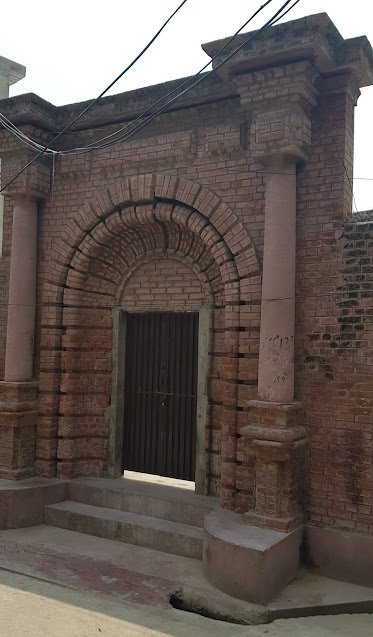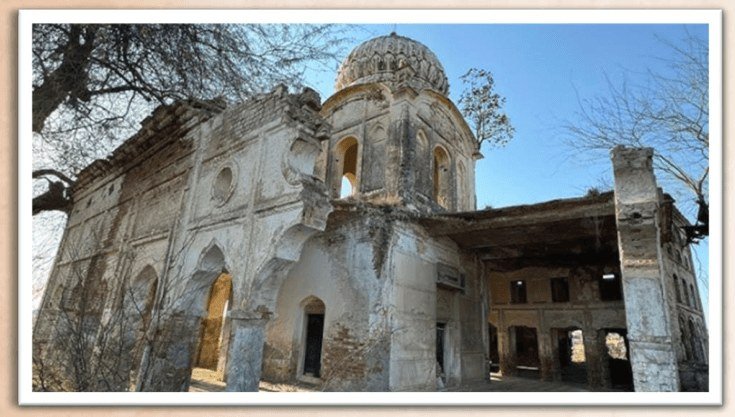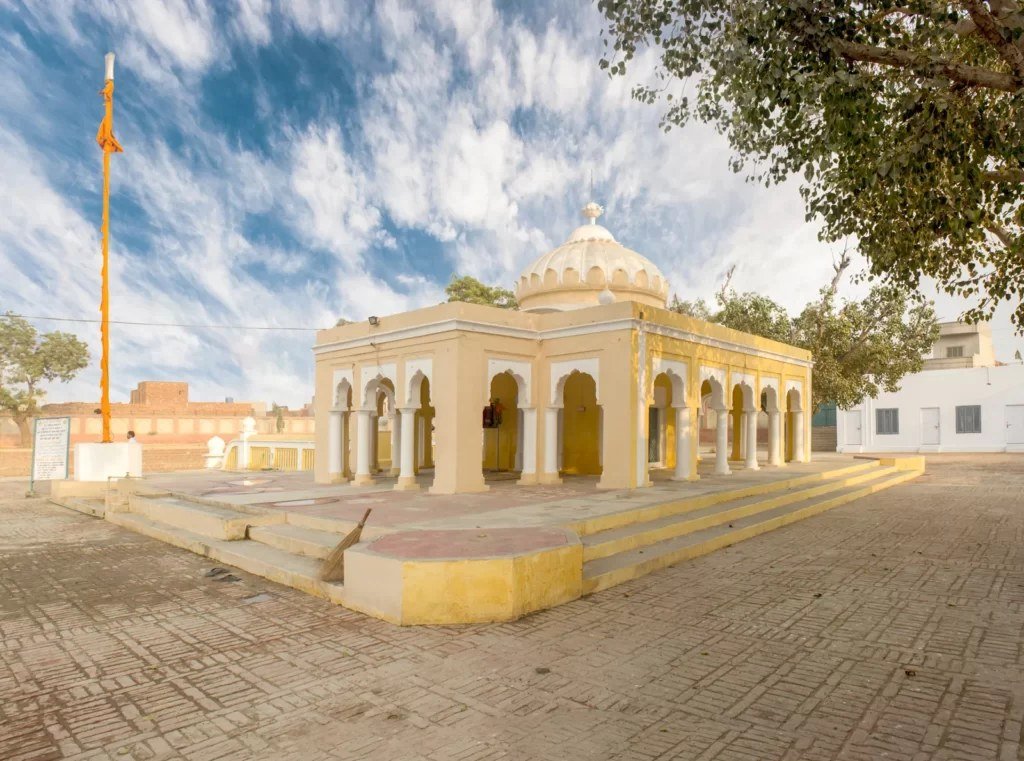
Every great life has a childhood, and every childhood has small moments that hint at what is coming. In Nankana Sahib — the birthplace of Guru Nanak Dev Ji — one of those moments is preserved in a field that became a shrine. Gurdwara Kiara Sahib stands on the very plot of land where, as a boy grazing his father’s cattle, the young Nanak was accused of ruining a farmer’s crop — only for the field to be found untouched, green and whole. It is a gentle story, but it is also the reason this quiet gurdwara draws pilgrims from around the world. This Gurdwara Kiara Sahib travel guide will help you plan a visit to one of the most touching stops on the Nankana Sahib heritage trail.
Quick Facts
- Location: Nankana Sahib city, Punjab, Pakistan — roughly 1–2 km from Gurdwara Janam Asthan, near Gurdwara Mal Ji Sahib
- Altitude: Around 194 metres (flat Punjab plain)
- Famous For: The miraculous field (kiara) from Guru Nanak’s boyhood, when cattle grazed a farmer’s crop yet left it unharmed
- Nearest City: Lahore, about 91 km east; Faisalabad is about 75 km west
- Accessibility: Easy — Nankana Sahib is on the motorway network; the gurdwara opens when Sikh yatrees arrive (ask at Janam Asthan)
- Known Landmarks: The square domed sanctum with circumambulatory verandah, the walled field, and the dry sarovar
- Best For: Sikh pilgrims, spiritual travellers, families, photographers, and anyone exploring Guru Nanak’s birthplace
Why Visit Gurdwara Kiara Sahib, Nankana Sahib
Nankana Sahib is one of the holiest cities in Sikhism — the birthplace of Guru Nanak — and most visitors come for the great Gurdwara Janam Asthan. But the city’s soul lives in its smaller shrines, the ones that mark the intimate, human moments of the Guru’s early life. Kiara Sahib is the most charming of them. It is not the site of a birth or a battle; it is the site of a boy lost in meditation while his cattle wandered, and of a miracle so gentle that it converted a complaint into reverence. Standing in that field, you are standing in Guru Nanak’s childhood.
There is something deeply moving about the modesty of this place. The gurdwara is a simple, handsome building — a square sanctum with a dome, wrapped by a verandah for circumambulation, set on a raised plinth inside a walled field. It does not overwhelm you; it invites you to slow down. Pilgrims describe the feeling of walking the same ground where the young Guru rested under a tree, unaware that his cattle had strayed, and where an angry farmer’s complaint dissolved into wonder. For Sikh visitors, it is an essential stop on the Nankana circuit. For non-Sikh travellers, it is a beautiful window into how sacred geography works — how a community remembers holiness not only in grand temples but in fields, trees, and small mercies.
Kiara Sahib also gives you the full Nankana Sahib experience in miniature. Because it sits within the cluster of the city’s historic gurdwaras — Janam Asthan, Bal Lila, Mal Ji Sahib, Patti Sahib — you can walk a complete pilgrimage route in a single morning, ending here in the quiet of the field. And the timing is exciting: a restoration effort led by the overseas Sikh community is underway at Kiara Sahib, which means the shrine is receiving fresh attention and care. Visiting now means witnessing a heritage site being lovingly brought back to life.
This destination is perfect for Sikh heritage travellers tracing Guru Nanak’s life, for families who want a meaningful day trip from Lahore or Faisalabad, and for photographers drawn to the serene geometry of small Punjabi shrines. It is also ideal if you have already seen Pakistan’s big-ticket sites and want something intimate, authentic, and uncrowded. For the broader journey, our Explore Pakistan guides cover everything from Malam Jabba’s snowy slopes to the shrines of Punjab — and Kiara Sahib belongs on that list.
History of Gurdwara Kiara Sahib, Nankana Sahib
The story of Kiara Sahib comes from the Janam Sakhis, the traditional biographies of Guru Nanak’s early life. When Nanak was a young boy in Talwandi — the village that would later be renamed Nankana Sahib — his father sent him to graze the family’s cattle. The boy, already inclined toward deep spiritual contemplation, would let the animals roam while he sat engrossed in meditation under a shady tree. One day the cattle strayed into a farmer’s field and, as the farmer saw it, damaged his crop. Furious, he complained to Rai Bular, the local chief, who came to inspect the damage with the farmer. But when they reached the field, they found it untouched — as green and fresh as before, as if the cattle had never passed through. In another telling, the Guru simply looked kindly at the field and it turned green. Hindus and Muslims alike saw the divine in the boy from that day, and the field itself came to be reverently called “Kiara Sahib” — kiara meaning a field or plot of land.
A gurdwara was raised on that sacred field. According to historical accounts, the Panth (the Sikh community) took over its management in February 1921, during the great Gurdwara Reform Movement — before that, it had been managed by a trio of mahants. The present building’s story has several layers: the main structure dates to the era of Maharaja Ranjit Singh in the early 19th century, while the shrine was reconstructed by Sant Gurmukh Singh Sevavale in the 1930s, in the decade before Partition. The water tank (sarovar) within the complex was built by Baba Gurmukh Singh of Patiala in 1946. A large endowment — 45 squares (morabbas) of agricultural land in the village of Daria — was attached to the gurdwara, a sign of how generously the community supported it.
Partition in 1947 changed everything. Like the other gurdwaras of Nankana Sahib, Kiara Sahib came under the Pakistan Waqf Board’s administration. The holy tank stands dry today, and the Guru Granth Sahib is not ceremonially opened here on a daily basis — the shrine functions as a monument that comes alive when Sikh yatrees (pilgrims) arrive, particularly in the November and February yatra seasons. For decades it waited quietly. That is now changing: in 2026, a restoration effort led by Sarbjit Singh of Australia and the Australia Sangat Nankana Sahib Charitable Organization began work on reviving Gurdwara Kiara Sahib — a heartening chapter in which the global Sikh diaspora is reclaiming the small shrines of Guru Nanak’s childhood, one building at a time.
The wider history of Nankana Sahib frames all of this. Originally called Raipur, then Rai-Bhoi-di-Talwandi after its founder Rai Bhoi, the town was renamed Nankana Sahib in honour of Guru Nanak, who was born here in 1469. The great Janam Asthan gurdwara at his birthplace was originally built around 1600 and renovated by Maharaja Ranjit Singh in 1819–20. In February 1921, the town witnessed the Nankana massacre, when the mahant’s men fired on Akali protesters — a tragedy that galvanised the Gurdwara Reform Movement across Punjab. Kiara Sahib’s own transfer to Panth management that same month was part of that historic wave.
Top Things to Do in Gurdwara Kiara Sahib, Nankana Sahib
Walk the Sacred Field
The field itself is the shrine’s soul. Walk its boundary slowly and imagine the scene the Janam Sakhis describe: the boy in meditation, the straying cattle, the furious farmer, and then the wonder of the unharmed crop. The gurdwara’s boundary wall encloses the historic plot, so you are literally walking inside the story. Early morning, when the light is soft and the town is quiet, is the finest time.
Admire the Domed Sanctum
The gurdwara building is a study in humble elegance: a square sanctum crowned with a dome, ringed by a circumambulatory verandah, all raised on a plinth. It is smaller and simpler than the great Janam Asthan, which makes its proportions feel intimate and human. Photographers will love the clean lines and the way morning light plays on the dome. Remember to cover your head and remove your shoes before entering.
See the Historic Sarovar
Within the complex stands the sacred tank built in 1946. It is dry today — a common sight at Partition-era shrines — but its presence tells the story of how these gurdwaras were once complete, living institutions with water, land, and daily worship. The dry sarovar is a poignant reminder of 1947’s rupture, and of the restoration work now underway.
Combine It with Mal Ji Sahib
Kiara Sahib sits close to Gurdwara Mal Ji Sahib, and the two make a natural pair. Mal Ji Sahib marks another childhood miracle: a cobra shading the sleeping Nanak from the afternoon sun after the shade of the mal tree receded. Its interiors are decorated with ancient ceramic tiles, each depicting a cobra — a detail you will not see anywhere else. Visiting both shrines together gives you two chapters of the Guru’s boyhood in one walk.
Complete the Nankana Sahib Gurdwara Circuit
Use Kiara Sahib as part of a full morning visiting the city’s historic gurdwaras. Start at the majestic Janam Asthan (the birthplace), continue to Bal Lila — where the young Nanak played with his friends, and the subject of our Gurdwara Bal Lila travel guide — then Patti Sahib, where the young Guru learned to read, and finish at Kiara Sahib and Mal Ji Sahib. It is one of the most rewarding heritage walks in Pakistan.
Famous Places In and Around Gurdwara Kiara Sahib, Nankana Sahib
- Gurdwara Janam Asthan (1–2 km): The great gurdwara at Guru Nanak’s birthplace; the centre of Nankana Sahib’s spiritual life.
- Gurdwara Bal Lila (nearby): Marks the playground of the young Guru Nanak and his friends.
- Gurdwara Mal Ji Sahib (next door): The cobra-shade miracle; famed for its ancient cobra-motif tiles.
- Gurdwara Patti Sahib (in town): Where the young Nanak received his early education.
- Nankana Sahib old city: Traditional bazaars and the everyday life of one of Sikhism’s holiest cities.
How to Reach Gurdwara Kiara Sahib, Nankana Sahib
Nankana Sahib is well connected by road, and Kiara Sahib is inside the city, a short drive or walk from the main Janam Asthan complex. Because the gurdwara opens for Sikh yatrees and visitors on request, check at the Janam Asthan offices on arrival — the caretakers will guide you to Kiara Sahib and open it for you.
From Lahore: About 91 km west, roughly 1.5 to 2 hours by car. Take the M-3 motorway toward Nankana Sahib/Faisalabad and exit for the city, or use the older Lahore–Jaranwala road. This is the classic day-trip route.
From Islamabad: Roughly a half-day drive — around 4.5 to 5.5 hours via the M-2 motorway south to the M-3 interchange, then west to Nankana Sahib. Many travellers combine it with a Lahore stopover.
From Karachi: Over 1,000 km — fly to Lahore (Allama Iqbal International Airport) and drive the 91 km west to Nankana Sahib. Faisalabad International Airport is another option, about 75 km away.
Nearest airport: Allama Iqbal International Airport, Lahore (~91 km). Faisalabad airport is closer in distance but has fewer flights.
Road conditions: The motorways (M-2/M-3) are excellent. City roads in Nankana Sahib are flat and easy; the lanes around the gurdwaras are narrow but walkable. Winter fog (December–January) can slow morning driving — plan accordingly.
Transport options: Private car or hired van is the most flexible, especially for visiting multiple gurdwaras. Public buses and vans connect Lahore and Faisalabad with Nankana Sahib regularly. Organised Sikh yatra groups include Kiara Sahib in their Nankana itineraries during the November and February pilgrimage seasons.
Route Details
Lahore → Nankana Sahib → Kiara Sahib: Leave Lahore on the M-3 motorway heading toward Faisalabad. Take the Nankana Sahib exit and follow signs into the city (about 91 km total, 1.5–2 hours). Head for Gurdwara Janam Asthan in the city centre — it is the landmark everyone knows. From Janam Asthan, Kiara Sahib lies roughly 1–2 km away near Gurdwara Mal Ji Sahib; ask at the Janam Asthan office for the caretaker, who will open the shrine and guide you. The whole gurdwara circuit can be walked or covered by rickshaw in one morning.
Where to Stay in Gurdwara Kiara Sahib, Nankana Sahib
Nankana Sahib is a major pilgrimage city, so it is well equipped for overnight visitors — though in its own modest way. The city has yatree sarais (pilgrim rest houses) associated with the main gurdwaras, which accommodate Sikh pilgrimage groups, especially during the November and February yatra seasons. These are simple, clean, and atmospheric — you fall asleep in one of Sikhism’s holiest cities, which is an experience in itself.
Mid-range hotels and guesthouses cluster in the city centre near the main bazaar and the gurdwara complex, offering air-conditioned rooms at budget-friendly rates. They are functional rather than luxurious, but perfectly comfortable for a night or two. If you want more choice, Faisalabad (about 75 km west) and Lahore (91 km east) both offer the full range from budget to luxury, and many visitors do Nankana Sahib as a day trip from either city. During Gurpurab in November, book ahead — the city fills with pilgrims from around the world.
Where to Eat: Local Foods of Gurdwara Kiara Sahib, Nankana Sahib
Eating in Nankana Sahib is a joy, and it comes in two delicious forms. The first is langar — the free community kitchen at Gurdwara Janam Asthan, where simple, hearty vegetarian meals (daal, sabzi, roti, rice, kheer) are served to all visitors regardless of faith. If you have never eaten langar sitting in rows on the floor with hundreds of fellow travellers, Nankana Sahib is the place to do it. It is not just a meal; it is the living expression of the equality Guru Nanak preached.
The second is the city’s own Punjabi food. The bazaars around the gurdwaras are lined with dhabas serving desi-ghee parathas, halwa puri breakfasts, chanay, saag with makki di roti in winter, and endless cups of doodh patti (milky tea). Sweets shops sell barfi, gulab jamun, and jalebi fried fresh through the day. A full meal at a dhaba is very budget-friendly — a few hundred rupees per person eats like royalty. In November, during Gurpurab, the whole city takes on a festive, food-filled atmosphere.
Weather in Gurdwara Kiara Sahib, Nankana Sahib
At around 194 metres on the Punjab plain, Nankana Sahib shares central Punjab’s climate: mild winters, a short spring, intense summers, and a humid monsoon. The pilgrimage seasons — November and February — fall in the most pleasant months, which is no coincidence. Here is the year at a glance:
| Season | Temperature Range | Conditions |
|---|---|---|
| Winter (Dec–Feb) | 5°C – 20°C | Cool and often foggy in the mornings; bright, pleasant afternoons. Peak yatra season. |
| Spring (Mar–Apr) | 16°C – 33°C | Warm and pleasant; Baisakhi (mid-April) brings pilgrims and festivity. |
| Summer (May–Jun) | 30°C – 45°C | Extremely hot; avoid midday sightseeing. |
| Autumn (Oct–Nov) | 15°C – 32°C | Clear and comfortable; Gurpurab (November full moon) is the year’s highlight. |
The monsoon (July–September) brings humidity and heavy showers. For the most comfortable heritage walks, visit between October and March.
Language and Culture of Gurdwara Kiara Sahib, Nankana Sahib
Punjabi is the mother tongue of Nankana Sahib, spoken everywhere from the bazaar to the gurdwara courtyard; Urdu is universally understood. The city’s culture is shaped by its unique identity as the birthplace of Guru Nanak — a place where Sikh heritage is woven into everyday Muslim-majority Punjabi life. During yatra seasons, the city becomes beautifully cosmopolitan, with pilgrims from India, Canada, the UK, and beyond filling the streets, and local shopkeepers switching effortlessly between Punjabi, Urdu, Hindi, and English.
Gurdwara etiquette applies at Kiara Sahib: cover your head, remove your shoes, dress modestly, and avoid tobacco and alcohol on the premises. Because the shrine is opened on request, be patient and courteous with the caretakers — a small donation to the gurdwara’s upkeep is customary and appreciated. The restoration work underway is a community labour of love; ask about it respectfully and you will hear the pride in people’s voices.
Shopping in Gurdwara Kiara Sahib, Nankana Sahib
The bazaars around Nankana Sahib’s gurdwaras are made for pilgrims and souvenir hunters alike. Stalls near Janam Asthan sell Sikh religious items — rumallas (cloth coverings for the scripture), khandas (the Sikh emblem), prayer books, and CDs of kirtan music — alongside Punjabi handicrafts, phulkari embroidery, and traditional khussas. During Gurpurab and Baisakhi, the markets overflow with festive goods and the bargaining is friendly.
For everyday shopping, the main city bazaar offers cloth, utensils, and excellent mithai (sweets) shops — pick up a box of fresh barfi or patisa for the road. There are no large shopping malls in Nankana Sahib; the experience here is the traditional bazaar, which suits the city’s timeless character perfectly.
Local Events and Festivals
Guru Nanak Gurpurab (November, full moon of Kartik): The biggest event of Nankana Sahib’s year — the birth anniversary of Guru Nanak, celebrated at Janam Asthan with akhand paths (continuous scripture recitation), kirtan, processions, and langar on a massive scale. Thousands of Sikh yatrees arrive from around the world, and the whole city glows. Kiara Sahib, as part of the sacred circuit, comes alive during the celebrations.
Baisakhi (13–14 April): The Sikh harvest festival and the anniversary of the Khalsa’s founding is also celebrated in Nankana Sahib with yatrees, kirtan, and festive bazaars. Spring weather makes it a lovely time to walk the gurdwara circuit.
Yatra seasons (November & February): These are the months when organised Sikh pilgrimage groups visit Pakistan’s gurdwaras, and Kiara Sahib is opened for them. Even outside the big festivals, visiting in these months means the shrines are active and caretakers are present.
Travel Tips for Gurdwara Kiara Sahib, Nankana Sahib
Packing Essentials
A headscarf or cap is essential for gurdwara visits (spares are usually available at entrances, but bring your own). Comfortable walking shoes for the gurdwara circuit, sunscreen and sunglasses for most of the year, and warm layers plus a shawl for December–January, when mornings are cold and foggy. Carry water and a small daypack.
Safety Tips
Nankana Sahib is a peaceful pilgrimage city and very safe for visitors, including families and foreign tourists. During Gurpurab the crowds are large but well managed. Keep your belongings secure in bazaars, agree rickshaw fares in advance, and carry identification — standard practice for travel in Punjab.
Money & Connectivity
Cash is king in the bazaars and dhabas; ATMs are available in the city centre. All major mobile networks (Jazz, Telenor, Zong, Ufone) have good coverage and 4G data in Nankana Sahib. Many hotels and guesthouses offer Wi-Fi.
Best Time to Visit Gurdwara Kiara Sahib, Nankana Sahib
Winter — November to February (Best Season)
This is when Nankana Sahib shines. November brings Gurpurab — the birth anniversary of Guru Nanak — when the city is at its most vibrant and Kiara Sahib welcomes streams of yatrees. December and January are cooler and quieter, perfect for unhurried heritage walks, though morning fog can delay starts. February brings the second yatra season. If you can only visit once, come in November.
Spring — March to April (Festive)
Pleasant temperatures, green fields, and Baisakhi in mid-April make spring the second-best season. The gurdwara circuit is comfortable to walk, and the festive atmosphere is infectious.
Summer — May to June (Avoid Midday)
Intensely hot. Only the determined should come now — and plan gurdwara visits for early morning or evening. The shrines’ cool interiors offer relief, but the walks between them are gruelling at noon.
Monsoon and Autumn — July to October (Mixed)
July–September is humid with heavy rain; October turns dry and pleasant. Late October into November is arguably the finest window of all — clear skies, comfortable air, and Gurpurab on the horizon.
Final Thoughts
Gurdwara Kiara Sahib is proof that holiness does not need grandeur. A boy, a field, some wandering cattle, and a moment of grace — that is all it took to make this plot of land sacred for five centuries. In our loud, hurried age, there is something profoundly restorative about standing in a quiet field in Nankana Sahib and remembering that the small, kind moments of a life are the ones history keeps.
Come for Gurpurab if you can, when the city sings. Come in February if you prefer the shrines to yourself. Either way, walk the full circuit — Janam Asthan, Bal Lila, Patti Sahib, Mal Ji Sahib, and Kiara Sahib — and let the childhood of Guru Nanak unfold around you, one small shrine at a time. Then keep wandering: our Explore Pakistan collection and the Hunza Valley guide will take you from Punjab’s sacred plains to the roof of the world.
FAQs
Where is Gurdwara Kiara Sahib located?
It is in Nankana Sahib city, Punjab, Pakistan — roughly 1–2 km from Gurdwara Janam Asthan, near Gurdwara Mal Ji Sahib.
What is the story behind Kiara Sahib?
As a boy grazing his father’s cattle, the young Guru Nanak rested in meditation while the cattle strayed into a farmer’s field. When the farmer complained to Rai Bular and the field was inspected, the crop was found completely unharmed — a miracle. The field (kiara) became sacred.
What is the best time to visit?
November (for Guru Nanak’s Gurpurab) and February (yatra season) are ideal. October to March generally offers the best weather.
Is the gurdwara open daily?
It opens when Sikh yatrees arrive and for visitors on request — check at the Gurdwara Janam Asthan offices, and the caretakers will open it for you.
How far is Nankana Sahib from Lahore?
About 91 km west — roughly 1.5 to 2 hours by car via the M-3 motorway. It makes an easy day trip.
Is Nankana Sahib safe for families and foreign visitors?
Yes. It is a peaceful pilgrimage city that regularly hosts international visitors. Normal travel precautions apply.
Where can I stay in Nankana Sahib?
Yatree sarais (pilgrim rest houses), mid-range hotels and guesthouses in the city centre, or day-trip from Lahore or Faisalabad.
What should I eat in Nankana Sahib?
Do not miss langar at Gurdwara Janam Asthan — the free community meal served to all. The bazaars also offer classic Punjabi dhaba food: parathas, halwa puri, chanay, and doodh patti.