Every child who grows up in Punjab hears the story: the boy who slept under a tree while the sun moved across the sky — and the tree’s shadow stayed exactly where it was, guarding his sleep. That boy was Guru Nanak, that tree was a van (mal) tree, and the gurdwara that marks the spot is Mal Ji Sahib. If you are planning the Nankana Sahib pilgrimage, this gurdwara mal ji sahib, nankana sahib travel guide will show you why this quieter shrine — 1.5 km from the great Janam Asthan — deserves a full, unhurried place on your itinerary.
Quick Facts
- Location: About 1.5 km east of Gurdwara Janam Asthan, Nankana Sahib city, on the main road toward Sheikhupura; near Nankana railway station
- Famous For: The childhood miracle of Guru Nanak — the van (mal) tree whose shade did not move while he slept, and the cobra that shaded his face
- Nearest City: Sheikhupura (about 50 km east); Lahore (about 100 km east)
- Accessibility: Very easy — inside Nankana Sahib city on a main road; reachable by car, wagon, or train to Nankana station
- Known Landmarks: The historic van tree, the 1935 water tank, the domed gurdwara building with its domelets and corner kiosks
- Best For: Sikh pilgrims, families, history lovers, anyone doing the full Nankana Sahib circuit
Why Visit Gurdwara Mal Ji Sahib, Nankana Sahib
Most visitors to Nankana Sahib come for the Janam Asthan — the magnificent gurdwara at Guru Nanak’s birthplace — and many never go further. That is a pity, because Nankana Sahib is not one shrine but a constellation, and Mal Ji Sahib is one of its brightest small stars. This is where the Guru’s childhood becomes tangible. Not the theology, not the institution — the boy. A boy grazing his family’s buffaloes in a forest that once stood here, falling asleep in the cool shade, and waking to a story his whole village would retell for five centuries.
The second reason is the tree. The van tree under which Guru Nanak slept is, by the accounts of the shrine’s historians, still there — its long branches now touching the ground with age. There are not many places in the world where you can stand beside a living thing that was present at the founding moment of a faith. Whether you accept the miracle or read it as legend, the tree is real, it is old, and it is worth the pilgrimage on its own.
Third, Mal Ji Sahib completes the Nankana story. The Janam Asthan tells you where the Guru was born; Patti Sahib where he went to school; Bal Lila where he played as a child; Kiara Sahib where the cattle strayed into the farmer’s field and no damage was found; Tambu Sahib where he hid after the sachha sauda. Mal Ji Sahib is the chapter about the shade that would not move and the cobra that spread its hood over the sleeping child. Skip it and your Nankana pilgrimage is missing a page.
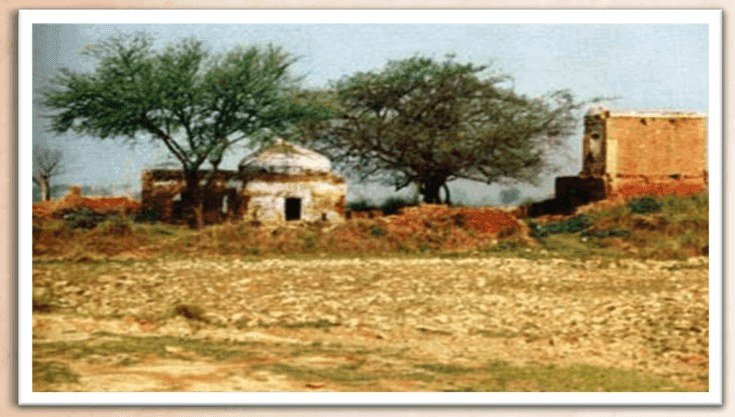
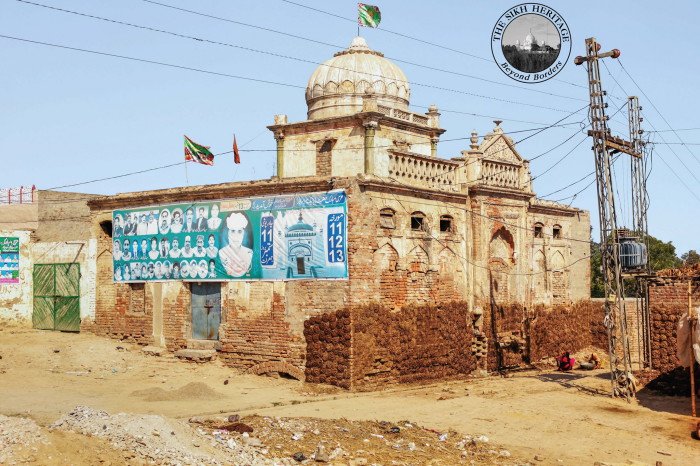
Finally, it is a beautiful building in its own right — larger and more imposing than nearby Kiara Sahib, with broad copings mounted with domelets around the central dome, domed kiosks at the roof corners, and porches on the sides of the hall. First built by Diwan Kaura Mal in 1748 and renovated under Maharaja Ranjit Singh, it carries the architectural signature of the Sikh golden age. Come for the story; stay for the building.
History of Gurdwara Mal Ji Sahib, Nankana Sahib
To understand Mal Ji Sahib, you have to go back to Talwandi — the village of Rai Bhoe, where Guru Nanak was born in 1469 and spent the first 15 years of his life. The village would later be renamed Nankana Sahib in his honour. In those days, the area around what is now the city was dense forest, and the young Nanak grazed his family’s buffaloes here.
The Janam Sakhis — the traditional life-stories of the Guru — record the anecdote that gave this shrine its name. One day the boy Nanak was sleeping on the ground under a mal tree, also called van (identified in the Sikh encyclopaedic tradition as Quercus incana). In the afternoon, as Rai Bular — the Muslim chief of Talwandi and one of the first to recognize the divine light in the boy — rode past with his men, they noticed something impossible: while all other shadows had lengthened and shifted eastward with the sun, the shade of that particular tree stood still over the sleeping Nanak. The Bala Janam Sakhi gives a slightly different version: as the tree’s shadow shifted, a black cobra was seen spreading its hood over Guru Nanak’s face, protecting it from the sun — and it held that position until he woke. Impressed by the miracle, Rai Bular became a devotee. The place where the tree’s shade was found by Rai Bular came to be called Gurdwara Mal Ji Sahib. (Mal, also called jal and van, is simply the shady tree of the story.)
The gurdwara on this site was first built by Diwan Kaura Mal — the noble administrator of the mid-18th century whom the Sikhs called “Mitha Mal” (sweet) for his protection of the community during the darkest years of persecution. He built it, along with Gurdwara Bal Lila, in 1748. It was later renovated during the time of Maharaja Ranjit Singh, in the early 1800s — and the building you see today, with its central dome ringed by domelets, its corner kiosks and side porches, reflects that renovation. The gurdwara now stands amid the dense urban areas of modern Nankana Sahib, a reminder of how the forest of the Guru’s childhood became a city.
Two later details complete the picture. In 1935, a water tank was constructed by the Gurdwara Parbandhak Committee under the leadership of Sardar Bahadur Mahtab Singh — it stands 5 feet above ground level and is still a landmark of the complex. And a vast endowment of 3,000 acres of land was attached to the shrine in its name. Today, the prakash of the Guru Granth Sahib does not take place here, but yatris (pilgrims) visit and, in the words of the shrine’s chroniclers, “get spiritual satisfaction.” The tree, the tank, and the domed hall remain — the essential Mal Ji Sahib, intact.
Top Things to Do in Gurdwara Mal Ji Sahib, Nankana Sahib
See the Historic Van Tree
This is the reason the shrine exists. The van (mal) tree under which the young Nanak slept is still standing in the complex — look for the great old tree whose long branches touch the ground. Stand under it at midday and think about the story: the shadow that would not move, the cobra’s hood. It is one of the most evocative single trees in Pakistan, and most visitors walk right past it on their way to the hall. Do not make that mistake.
Enter the Domed Hall
The gurdwara building is worth studying in its own right: the square sanctum under its central dome, the broad copings mounted with domelets, the domed kiosks at the corners of the roof, the porches on the sides of the hall. It is larger and more imposing than nearby Kiara Sahib, and it shows the confident Sikh architecture of the Ranjit Singh era. Remove your shoes, cover your head, and enter quietly — this is an active place of reverence even without daily prakash.
See the 1935 Water Tank
The water tank built in 1935 by the Gurdwara Parbandhak Committee under Sardar Bahadur Mahtab Singh stands 5 feet above ground level — a handsome piece of early-20th-century shrine infrastructure. Water tanks (and wells) are sacred architecture in the Punjab tradition; this one has served pilgrims for 90 years.
Walk the Full Nankana Circuit
Mal Ji Sahib sits 1.5 km east of the Janam Asthan on the Sheikhupura road, which makes it the natural second stop on a walking or driving circuit: Janam Asthan (birthplace) → Patti Sahib (the school) → Bal Lila (childhood play) → Mal Ji Sahib (the shade miracle) → Kiara Sahib (the field of the cattle) → Tambu Sahib (the sachha sauda tent-tree). Doing the circuit in story order turns a set of buildings into a biography. Our Gurdwara Bal Lila Sahib, Nankana Sahib travel guide covers one of the essential stops.
Visit at Gurpurab or Saka Nankana Time
If your dates are flexible, time your visit for Gurpurab (November), when Nankana Sahib fills with yatris from around the world, or Saka Nankana (February), the commemoration of the 1921 martyrs. The small shrines glow a little brighter when the whole city is celebrating.
Famous Places In and Around Gurdwara Mal Ji Sahib, Nankana Sahib
Gurdwara Janam Asthan: The birthplace of Guru Nanak, 1.5 km west — the anchor of Nankana Sahib and one of Sikhism’s holiest sites.
Gurdwara Bal Lila Sahib: Where the Guru played as a child — detailed in our Gurdwara Bal Lila Sahib travel guide.
Gurdwara Patti Sahib, Kiara Sahib, Tambu Sahib: The school, the field, and the tent-tree — all within the Nankana Sahib city circuit, all walkable or a short drive apart.
Sheikhupura (50 km): The district city, with Hiran Minar — the famous Mughal-era tower and tank — as its star attraction.
Lahore (100 km): For the grand Mughal and Sikh monuments (Badshahi Mosque, Lahore Fort, Ranjit Singh’s samadhi), browse our Explore Pakistan collection.
How to Reach Gurdwara Mal Ji Sahib, Nankana Sahib
Nankana Sahib is one of the most accessible pilgrimage cities in Pakistan — on a main road, on the railway line, and about two hours from Lahore. Mal Ji Sahib itself is inside the city, on the Sheikhupura road, near the railway station.
From Lahore: Roughly 100 km via Sheikhupura (Lahore–Sheikhupura about 56 km on the M2 corridor, Sheikhupura–Nankana about 52 km), around 2 hours by car. The most common route for pilgrims and tourists alike.
From Islamabad: About 300 km via the M2 motorway (Islamabad–Lahore, then the Nankana turn), roughly 4 to 4.5 hours. Very doable as a long day trip, better as an overnight.
From Karachi: About 1,300 km by road — fly to Lahore (Allama Iqbal International Airport) and drive 2 hours to Nankana Sahib. Many Karachi-based yatris do exactly this during Gurpurab.
Nearest airport: Allama Iqbal International Airport, Lahore (about 2 hours by road).
By train: Nankana Sahib has its own railway station, and Mal Ji Sahib is near it — the station is nearer to this shrine than to some others in the city. Trains from Lahore make this one of the few major shrine cities you can reach without a car.
Transport options: Private car, hired van, public wagons from Lahore and Sheikhupura, and rail. Inside Nankana Sahib, rickshaws and Qingqis connect all the gurdwaras of the circuit.
Road conditions: The Lahore–Sheikhupura–Nankana roads are good metalled highways, fine in all seasons. City streets around the shrine can be congested during Gurpurab — allow extra time in November.
Route Details
Step 1: From Lahore, take the route toward Sheikhupura (M2 corridor), then follow the Sheikhupura–Faisalabad/Nankana road to Nankana Sahib city (about 2 hours). Step 2: In the city, head for Gurdwara Janam Asthan — every driver knows it. Step 3: From Janam Asthan, take the main road east toward Sheikhupura for 1.5 km; Mal Ji Sahib is on this road, near the railway station. Step 4: Continue the circuit to Kiara Sahib and Tambu Sahib, or loop back into the city.
Where to Stay in Gurdwara Mal Ji Sahib, Nankana Sahib
Nankana Sahib is a pilgrimage city, so it is set up for visitors — though the range is simpler than Lahore’s. Mid-range hotels and guesthouses cluster in the city centre and along the main roads; they are clean, affordable, and used to hosting yatris, so expect early breakfasts and helpful staff who know the gurdwara circuit by heart. Pilgrim accommodation: During major gatherings like Gurpurab, the gurdwara administration and local organizations arrange sarais and community lodging — book or confirm well ahead for November. Luxury: There is no five-star hotel in Nankana Sahib itself; travelers wanting luxury stay in Lahore (2 hours) or Sheikhupura and drive in for the day. For most visitors, one night in Nankana Sahib — arriving in the afternoon, doing the circuit at a pilgrim’s pace, sleeping in the holy city — is the ideal rhythm.
Where to Eat: Local Foods of Gurdwara Mal Ji Sahib, Nankana Sahib
Nankana Sahib’s food is classic central-Punjab fare, and the pilgrimage economy means you will eat well and cheaply. The city’s dhabas and restaurants serve daal, sabzi, chicken karahi, biryani and fresh tandoori roti at very budget-friendly prices. In winter, look for saag with makki di roti and glasses of thick lassi — the seasonal staples of this wheat belt. Sweets shops near the gurdwaras sell barfi, patisa and laddu, the traditional prasad-adjacent treats of a pilgrimage town. During Gurpurab and other major gatherings, langar — the free community kitchen — is served at the main gurdwaras, and every visitor is welcome regardless of faith; it is one of the most moving meals you will ever eat. Carry water for the circuit itself, and note that alcohol and tobacco have no place in the shrine areas.
Weather in Gurdwara Mal Ji Sahib, Nankana Sahib
Nankana Sahib shares the Punjab plains climate — the same rhythm as Lahore, a touch cooler in winter. The gurdwara circuit involves walking between shrines, so winter and spring are the comfortable seasons, and Gurpurab’s November timing is climatically perfect.
| Season | Temperature Range | Conditions |
|---|---|---|
| Winter (Nov–Feb) | ~7–22°C | Cool and clear; ideal for the walking circuit; Gurpurab season |
| Spring (Feb–Apr) | ~15–30°C | Mild and green; Saka Nankana falls in February; excellent visiting weather |
| Summer (May–Jun) | ~30–45°C | Hot afternoons; do the circuit early morning or late evening |
| Monsoon/Autumn (Jul–Oct) | ~25–38°C | Humid monsoon July–August; autumn clears and cools |
Language and Culture of Gurdwara Mal Ji Sahib, Nankana Sahib
Punjabi is the language of Nankana Sahib — this is, after all, the city named for the Guru of Punjabi spirituality — and you will hear it in its most devotional register around the gurdwaras. Urdu is universally understood; English is spoken in hotels and by guides. The culture is pilgrimage culture: the city exists, in large part, to receive yatris, and it does so with practiced warmth. Gurdwara etiquette applies at every shrine on the circuit: cover your head, remove your shoes, dress modestly, and leave tobacco and alcohol outside. Photography inside the sanctum is generally discouraged — ask the sevadar (attendant) if unsure. If you are not Sikh, you are still entirely welcome; the langar hall does not ask your religion, and neither does the city.
Shopping in Gurdwara Mal Ji Sahib, Nankana Sahib
The bazaars around the Janam Asthan are the natural shopping stop: religious books, prints and posters of the gurdwaras, rumallas (cloths for the Guru Granth Sahib), kirpans and kara bracelets, and Punjabi juttis and textiles. The city’s sweet shops are worth a visit in their own right — take home patisa and barfi. Everyday bazaars in the city sell everything a pilgrim needs, from headscarves (if you forgot yours) to snacks for the road. There is no modern shopping mall in Nankana Sahib; for that, Sheikhupura or Lahore is the answer. The most meaningful souvenir, most visitors agree, is a photograph of the old van tree at Mal Ji Sahib.
Local Events and Festivals
Nankana Sahib is one of the great festival cities of Sikhism, and Mal Ji Sahib shares in the seasons. Gurpurab — the birth anniversary of Guru Nanak, in November — is the biggest event of the year: thousands of yatris, processions, kirtan, and langar on a massive scale. Saka Nankana in February commemorates the martyrs of the 1921 Nankana Sahib tragedy, when reformist Sikhs were killed trying to free the gurdwaras from corrupt management — a solemn and deeply significant anniversary observed at the shrines. Vaisakhi in April, the spring harvest festival and the anniversary of the Khalsa, brings processions and celebration. If you can align your visit with any of these three, do — the small shrines like Mal Ji Sahib are at their most alive when the city is celebrating.
Travel Tips for Gurdwara Mal Ji Sahib, Nankana Sahib
Packing Essentials
Head covering (essential — carry your own scarf); slip-off shoes; modest clothing covering shoulders and knees; sun protection for the between-shrines walks; water; and a small bag for the shoes you will be removing repeatedly. In November (Gurpurab), a warm layer for early mornings.
Safety Tips
Nankana Sahib is a well-policed pilgrimage city, especially during festivals, and safe for all visitors including families and foreign tourists. The usual sense applies: keep valuables close in crowds, agree rickshaw fares before riding, and drink bottled or filtered water. During Gurpurab the crowds are large — keep children close and fix a meeting point.
Money & Connectivity
ATMs exist in Nankana Sahib city, but carry enough cash for the day — small shops, rickshaws and dhabas are cash-only. All major mobile networks (Jazz, Telenor, Zong, Ufone) cover the city well. During Gurpurab, networks can get congested; download offline maps in advance.
Best Time to Visit Gurdwara Mal Ji Sahib, Nankana Sahib
Winter (November–February)
The best season overall: cool, clear, and crowned by Gurpurab in November — the single most atmospheric time to be in Nankana Sahib. February adds Saka Nankana.
Spring (February–April)
Mild, green, and lovely; Vaisakhi in April brings the spring festival energy. The van tree at Mal Ji Sahib is at its freshest.
Summer (May–June)
Hot — plan shrine visits for early morning (6–9 a.m.) and late afternoon. The domed hall stays relatively cool inside, which helps.
Monsoon and Autumn (July–October)
Humid in the monsoon months; autumn (September–October) is pleasant and crowd-free — a good choice if you want the shrines to yourself.
Final Thoughts
There is a moment at Mal Ji Sahib that this whole guide has been building toward: standing under the old van tree, looking up through branches that were old when your grandparents were born, and remembering the boy who slept here while the sun moved and the shade stayed. It is a small moment, and it is the entire point. The great Janam Asthan will impress you; Mal Ji Sahib will move you.
Do the full circuit. Walk it in story order, from birth to school to play to the shade that would not move. Eat the langar. Buy the patisa. And when you leave Nankana Sahib, you will carry something no photograph quite captures — the feeling that you have walked through a childhood that changed the world. That is what this gurdwara mal ji sahib, nankana sahib travel guide wanted for you. For the next chapter of the journey, our Explore Pakistan collection waits — including the mountain soul of Hunza Valley and Malam Jabba.
FAQs
Where is Gurdwara Mal Ji Sahib, Nankana Sahib?
About 1.5 km east of Gurdwara Janam Asthan in Nankana Sahib city, on the main road toward Sheikhupura, near the railway station.
What is the best time to visit?
November to February — cool weather plus Gurpurab (November) and Saka Nankana (February). Spring is also lovely.
How do I reach Mal Ji Sahib from Lahore?
About 100 km via Sheikhupura, roughly 2 hours by car; or take the train to Nankana Sahib station, which is near the shrine.
Is the historic van tree still there?
Yes — the van (mal) tree under which Guru Nanak slept still stands in the complex, its long branches now touching the ground.
Is it suitable for families?
Absolutely. Nankana Sahib is a family pilgrimage city; the circuit is easy walking and the city is set up for visitors of all ages.
Where should I stay?
In Nankana Sahib’s hotels and guesthouses for the pilgrimage atmosphere, or in Lahore (2 hours) for luxury options.
What food will I find?
Classic Punjabi dhaba food at budget prices, winter saag and lassi, sweets near the gurdwaras — and langar, the free community kitchen, during gatherings.
Who built Gurdwara Mal Ji Sahib?
It was first built by Diwan Kaura Mal in 1748 and renovated under Maharaja Ranjit Singh; the 1935 water tank was added by the Gurdwara Parbandhak Committee.