There is a gurdwara in Kasur district that stands on a mound above the town — and it exists because of one of the strangest, wisest stories Guru Nanak ever left behind. The villagers threw stones at him. He blessed them. The next village honoured him. He told them to scatter. This gurdwara malji sahib, kanganpur travel guide is for the traveler who wants the Punjab of paradox and poetry: a shrine on a tibba, a tree that remembers, and a lesson about human nature that has outlived five centuries.
Quick Facts
- Location: On a tibba (mound) on the outskirts of Kanganpur town, Kasur district, Punjab
- Famous For: The “Vasde Raho” (be settled) blessing — Guru Nanak’s paradoxical blessing on the villagers who pelted him with stones
- Nearest City: Kasur; Lahore (about 120 km north)
- Accessibility: By road from Lahore via Chunian/Kanganpur; the shrine is on a mound at the town’s edge — a short climb
- Known Landmarks: The gurdwara building (rebuilt 1939) on the mound, the historic wan tree, the town of Kanganpur below
- Best For: Sikh pilgrims, heritage travelers, storytellers, photographers of old Punjab
Why Visit Gurdwara Malji Sahib, Kanganpur
Visit for the story first, because it is one of the great ones. When Guru Nanak came to Kanganpur — then a very small village in the Nakka region — the local people would not let him settle. They pelted stones at him. And the Guru, in response to stones, gave a blessing: “Vasde Raho” — be settled, stay settled. He departed for the next village, Manak De Ke, a tiny place whose people received him with great honour and love. And on leaving them, he said the opposite: “Ujjar Jaho” — be scattered. Bhai Mardana, bewildered, asked the obvious question: why bless those who hurt you and scatter those who honoured you? The Guru’s answer is the reason this shrine matters: the people of Kanganpur, he said, would spread evil wherever they went, so it was best they stay settled here; the loving people of Manak De Ke would spread virtue and love wherever they went after being scattered. It is a story about human nature disguised as a travel anecdote — and you can stand on the very mound where it happened.
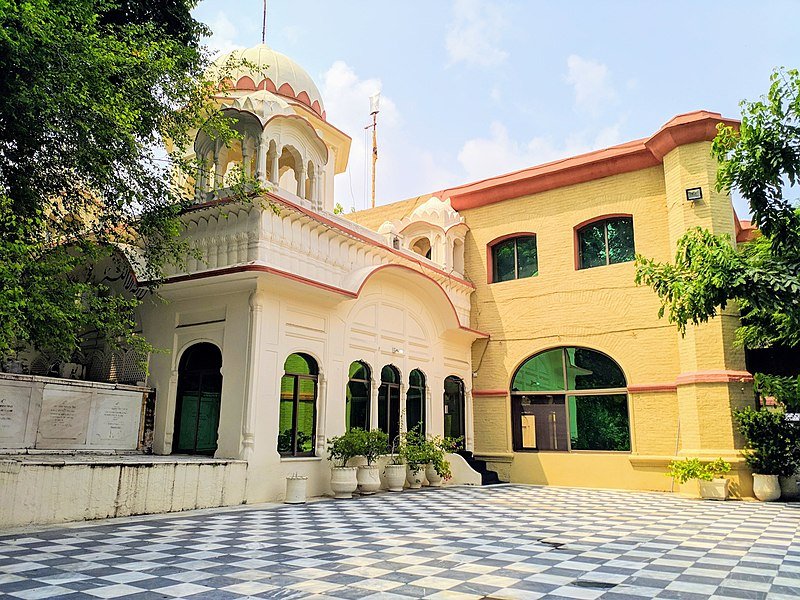
Second, the place itself is striking. The gurdwara stands high on a tibba — a natural mound — on the edge of what has grown from a tiny village into a large town. Climbing it gives you the classic Punjab view: the town spreading below, fields beyond, the big sky. The present building dates to 1939, and the wan tree under which Guru Nanak stayed is still there. It is in good condition, the heritage surveys note, though with absolutely no maintenance — another shrine aging in public, holding its stories in brick and bark.
Third, Kanganpur rewards the combiner. The district around it is dense with small historic gurdwaras — Qadiwind, Kalu Khara, the Moti Masjid Mohalla gurdwara in Kanganpur’s newer quarter — and with the Sufi landscape of Kasur. A day that starts at Malji Sahib’s mound and ends in Kasur city, the city of Bulleh Shah, is one of the richest heritage days southern Punjab offers.
Finally, visit because almost nobody does. The great shrines get the yatras; the mound at Kanganpur gets the occasional heritage traveler and the memories of the town. Your visit — your photographs, your telling of the story afterward — is part of keeping it on the map.
History of Gurdwara Malji Sahib, Kanganpur
The history of Malji Sahib is the history of a blessing that sounds like a curse and a curse that sounds like a blessing. Gurdwara Malji Sahib stands in the large town of Kanganpur, in Kasur district of West Punjab. When Guru Nanak came to this place — coming, the accounts say, to establish the town in the Nakka region — the local people did not let him settle and pelted stones at him. At this, the Guru said to these people “Vasde Raho” (be settled, remain settled) and departed.
The wan tree under which Guru Nanak had stayed became known by the name of Malji Sahib, and the accounts agree that this tree is still there. From Kanganpur the Guru set his foot in the village of Manak De Ke, a tiny little village. The people of this village gave him great honour and love — and yet, departing, the Guru told them to be scattered (“Ujjar Jaho”). Bhai Mardana was surprised and asked why those who gave him pain received the blessing of remaining settled, while those who honoured him were told to scatter. The Guru replied that the scattered people of Manak De Ke would spread virtue wherever they went, while the people of Kanganpur would spread evil wherever they went — and so it was ordained that the latter stay settled and the former scatter. The proof, the tradition says, is in the landscape: Kanganpur grew into a large, settled town, while Manak De Ke remained a tiny village.
The gurdwara that marks the Kanganpur side of the story stands high on the tibba on the border of the village. The present-day building was built in 1939. Its priests, in the pre-Partition years, were Namdharis — also known as Kukas (Kookas), a distinct sect — and a fair used to be held here on the first of Chait (March), the start of the Sikh year, attended by Sikhs from the neighbouring regions in large numbers. After Partition in 1947, the local Sikh community migrated to India and the prakash of the Guru Granth Sahib ceased; it does not take place here now.
Two footnotes complete the history. The first is a local legend, recorded by the shrine’s chroniclers: that the descendants of those who pelted stones at the Guru suffer from gilhar, a throat-related ailment — and that this is the only area in the whole of Punjab where people suffer from it. Read it as the village’s own moral of the story, kept alive in folklore. The second is the surveyors’ verdict on the building’s condition: it is in good condition even today, but there is absolutely no maintenance. The mound, the 1939 building, and the old wan tree wait — as they have waited for decades — for the visitors who will remember them.
Top Things to Do in Gurdwara Malji Sahib, Kanganpur
Climb the Tibba
The gurdwara stands high on its mound, and the short climb is the visit’s natural opening. From the top, Kanganpur spreads below you — the large town that the Guru blessed to “stay settled” — with the flat fields of Kasur district running to the horizon. It is the best vantage point in the area and the best place to feel the scale of the story: a tiny village then, a town now, the blessing apparently working.
See the 1939 Gurdwara Building
The present building dates to 1939 — late enough to be well documented, old enough to carry real character. Walk around it and note the brickwork and the dome; this is the architecture of the last generation of pre-Partition gurdwara building in West Punjab. Remember the etiquette: cover your head, remove your shoes, dress modestly. The building is in good condition but unmaintained, so watch your step and treat it gently.
Find the Historic Wan Tree
The wan tree under which Guru Nanak stayed — the tree that gave the shrine its name, Malji Sahib — is still there. Ask a local to point it out; old trees in these compounds are often ringed with small markers of reverence. Like the van tree at Nankana Sahib’s Mal Ji Sahib, this is a living relic: stand under it and you are standing where the story happened.
Visit the Moti Masjid Mohalla Gurdwara
Kanganpur has a second historic gurdwara, situated in the Moti Masjid Mohalla (locality) of the newer part of town. The two together make a proper Kanganpur visit — the mound shrine of the blessing story, and the town shrine of the settled community. Ask locally for directions; the mohalla name is well known in town.
Make the Manak De Ke Comparison
If you have the time and a driver willing, continue to the tiny village of Manak De Ke — the “be scattered” side of the story. Seeing the large, bustling Kanganpur against the tiny Manak De Ke turns the Guru’s paradox from a tale into a landscape you can read. Few heritage experiences in Punjab are this narratively satisfying.
Famous Places In and Around Gurdwara Malji Sahib, Kanganpur
Kasur city: The district city, home of Bulleh Shah’s shrine, the old fort area, and the famous Kasuri fish and methi cuisine — the natural lunch stop.
Gurdwara Bhai Bahlol, Qadiwind: Another Kasur-district gurdwara for the heritage circuit — see our Gurdwara Bhai Bahlol, Qadiwind travel guide.
Gurdwara Baba Ram Thaman Ji, Kalu Khara: The saint’s shrine elsewhere in Kasur district — our Gurdwara Baba Ram Thaman, Kalu Khara travel guide covers it.
Dipalpur and Okara belt: Historic towns south-west of Kanganpur with their own old shrines — see our Gurdwara Chota Nanakiana, Dipalpur travel guide. For the big-picture journeys, browse Explore Pakistan, Hunza Valley and Malam Jabba.
How to Reach Gurdwara Malji Sahib, Kanganpur
Kanganpur lies south of Lahore in Kasur district, reachable by road via Chunian. It is a longer drive than the Lahore–Kasur run — plan it as a full day trip, or combine it with an overnight in Kasur.
From Lahore: Roughly 120 km south (the Kanganpur Railway Station road distance from Lahore Junction is recorded at about 123 km), around 2.5 to 3 hours by car via the Chunian–Kanganpur road. Leave early to have the cool hours for the mound.
From Islamabad: About 500 km via the M2 to Lahore, then south to Kanganpur — 7 to 8 hours. This is a two-day trip: overnight in Lahore, then Kanganpur as a day excursion.
From Karachi: About 1,300 km by road — fly to Lahore’s Allama Iqbal International Airport and drive south. Budget at least two to three days for a comfortable trip.
Nearest airport: Allama Iqbal International Airport, Lahore.
Transport options: Private car or hired van is strongly recommended — public transport to Kanganpur exists (wagons and buses from Lahore toward Chunian/Kasur) but the last stretch to the mound is easiest with your own vehicle. Kanganpur has a railway station on the local line, but services are infrequent; check timings before relying on the train.
Road conditions: The Lahore–Chunian road is metalled and reasonable; the Chunian–Kanganpur stretch is a district road — fine in dry weather, slower after monsoon rains. The mound itself is a short climb on foot.
Route Details
Step 1: Leave Lahore heading south toward Chunian (via the Raiwind/Chunian road). Step 2: From Chunian, follow the road to Kanganpur town. Step 3: At the town’s edge, look for the tibba (mound) — the gurdwara on top is visible from a distance; ask for “Malji Sahib” or “tibba wala gurdwara.” Step 4: Park at the base and climb the short path to the shrine; the wan tree and the building are both on the mound.
Where to Stay in Gurdwara Malji Sahib, Kanganpur
Stay in Kasur city or Lahore — Kanganpur town has no tourist lodging. Kasur city (the closer option) has simple, clean mid-range hotels and guesthouses around the main bazaar, perfectly fine for a night and well placed for a morning start toward the mound. Lahore, about 2.5–3 hours north, offers the full range from five-star hotels to budget guesthouses in Gulberg, DHA and Model Town — the right choice if you are combining Kanganpur with other Punjab shrines over several days. Whichever you choose, arrange your driver the evening before: the Chunian–Kanganpur road is best driven in daylight, and you want to reach the tibba before the afternoon heat.
Where to Eat: Local Foods of Gurdwara Malji Sahib, Kanganpur
Eat in Kanganpur town or Kasur city. The town’s dhabas serve the standard, excellent Punjab roadside menu — daal fry, chicken karahi, fresh tandoori roti, omelettes, and lassi — at genuinely budget-friendly prices. Kasur city, the district’s food capital, is famous across Punjab for its fried fish and for Kasuri methi, the dried fenugreek that seasons dishes nationwide; if you eat one meal in the district, eat it in Kasur. In winter, the seasonal saag with makki di roti appears everywhere in this wheat-growing belt. Carry water and snacks for the mound itself — there are no shops at the shrine — and note that no langar is currently served at Malji Sahib.
Weather in Gurdwara Malji Sahib, Kanganpur
Kanganpur sits on the southern Punjab plains, a touch hotter and drier than Lahore. The mound is exposed, with little shade except the old trees, so winter and spring are the seasons to aim for — and the clear winter light is the photographer’s friend.
| Season | Temperature Range | Conditions |
|---|---|---|
| Winter (Nov–Feb) | ~7–23°C | Clear and cool; the best season for the mound climb and photography |
| Spring (Feb–Apr) | ~16–32°C | Mild and pleasant; fields green; very good visiting weather |
| Summer (May–Jun) | ~32–46°C | Very hot and exposed on the mound; visit at dawn only |
| Monsoon/Autumn (Jul–Oct) | ~26–38°C | Humid monsoon July–August; the mound path can be slippery; autumn is fine |
Language and Culture of Gurdwara Malji Sahib, Kanganpur
Punjabi is the language of Kanganpur, in the warm southern-Lahore-region accent; Urdu works everywhere. The town’s culture is small-town Punjab — conservative, hospitable, and curious about visitors in the best way. At the shrine, standard gurdwara etiquette: cover your head, remove your shoes, modest dress, no tobacco or alcohol on the premises. Because the “Vasde Raho” story is the town’s own founding legend, asking older residents about it is not just polite — it is fieldwork. You will hear versions with local color no book contains. If the conversation turns to the gilhar legend, listen with respect; it is folklore, not medicine, and the town tells it as a moral tale.
Shopping in Gurdwara Malji Sahib, Kanganpur
There is no souvenir market at the shrine — shop in Kanganpur’s bazaars or Kasur city’s instead. The district’s signature buy is Kasuri methi (dried fenugreek), sold in every spice shop and genuinely of this soil. Everyday Punjabi textiles, khussas, and the town’s sweets make good, honest souvenirs. There are no shopping malls in Kanganpur; the nearest modern retail is in Kasur or back in Lahore. As with the other small shrines of this batch, the absence of a gift shop is a feature, not a bug.
Local Events and Festivals
The historic fair of Malji Sahib was held on the first of Chait (March) — the start of the Sikh year — and in the pre-Partition years drew Sikhs from the neighbouring regions in large numbers. That fair belongs to history now; no annual festival is currently documented at the shrine. For living festival atmosphere, align the wider trip with the Sikh calendar: Vaisakhi in April, the great spring festival; Gurpurab in November, Guru Nanak’s birth anniversary, when yatris gather at Nankana Sahib and the major gurdwaras; and Saka Nankana in February. In Kasur city, the urs of Bulleh Shah is one of Punjab’s great Sufi gatherings — a fitting counterpoint to a day spent on the Guru’s mound.
Travel Tips for Gurdwara Malji Sahib, Kanganpur
Packing Essentials
Head covering; shoes you can remove easily (you will be taking them off at the shrine); sun protection — the mound is exposed; plenty of water; and a camera with a zoom lens for the town-and-fields panorama from the top. In winter, a jacket for the early drive south.
Safety Tips
Kanganpur is a normal, settled Punjab town and safe for day visitors. The one real caution is the mound itself: the path can be uneven and slippery after rain, so wear grippy shoes and climb in daylight. As at any shrine, keep valuables close, agree transport fares in advance, and carry ID.
Money & Connectivity
Cash in rupees — no ATMs at the shrine, and town shops are cash-only. Kasur city has ATMs. Mobile signals (Jazz, Telenor, Zong, Ufone) cover Kanganpur town well; data on the mound is usually usable. Save offline maps of the Chunian–Kanganpur road before leaving Lahore.
Best Time to Visit Gurdwara Malji Sahib, Kanganpur
Winter (November–February)
The best season: cool, crystal-clear, perfect for the climb and the views. November also brings Gurpurab energy to Punjab’s gurdwaras generally.
Spring (February–April)
Mild days, green fields, and comfortable climbing weather. The historic Chait fair month (March) is a nice time to reflect on what the shrine’s festival season once was.
Summer (May–June)
Avoid if possible — the exposed mound bakes in 45°C afternoons. If you must come, arrive at sunrise and leave by 9 a.m.
Monsoon and Autumn (July–October)
Humid monsoon; the mound path can be slick. September–October dries out and cools — a solid, crowd-free choice.
Final Thoughts
“Vasde Raho” — be settled. It is a strange blessing to receive after throwing stones, and a stranger one to carry for five hundred years. But Kanganpur did stay settled: the tiny village became a town, the town kept the mound, and the mound kept the tree. Standing up there, looking down at the place the Guru blessed against all logic, you understand that the story was never really about the stones. It was about what people become — and about a teacher who saw it before they did.
That is why Malji Sahib deserves the drive south from Lahore. Not for grandeur — the building is unmaintained and the fair is history — but for one of the wisest stories in the Punjab canon, told by the landscape itself. This gurdwara malji sahib, kanganpur travel guide ends where the visit should begin: on the tibba, under the old wan tree, thinking about Mardana’s question and the Guru’s answer. For more of Punjab’s hidden chapters, explore our Explore Pakistan collection — or head for the hills with Hunza Valley and Malam Jabba.
FAQs
Where is Gurdwara Malji Sahib, Kanganpur?
On a tibba (mound) on the outskirts of Kanganpur town, Kasur district, Punjab — about 120 km south of Lahore.
What is the best time to visit?
November to March — cool, clear weather for the mound climb. Avoid the May–June heat.
How do I reach Kanganpur from Lahore?
Drive about 120 km south via Chunian — roughly 2.5 to 3 hours by car. A private car or hired van is the best option.
What is the “Vasde Raho” story?
When villagers pelted stones at Guru Nanak, he blessed them with “Vasde Raho” (be settled) — while telling the honouring villagers of nearby Manak De Ke to “be scattered” — explaining that the scattered would spread virtue wherever they went.
Is the historic wan tree still there?
Yes — the wan tree under which Guru Nanak stayed, which gave the shrine its name, still stands on the mound.
Is it suitable for families?
Yes, with care on the mound path (uneven ground). The climb is short and children enjoy the story and the views.
Where can I stay nearby?
Kasur city has simple mid-range hotels (closest); Lahore (2.5–3 hours) has the full range.
When was the current building constructed?
The present-day gurdwara building was built in 1939; its pre-Partition priests were from the Namdhari (Kuka) tradition, and a fair was held each March on the first of Chait.