


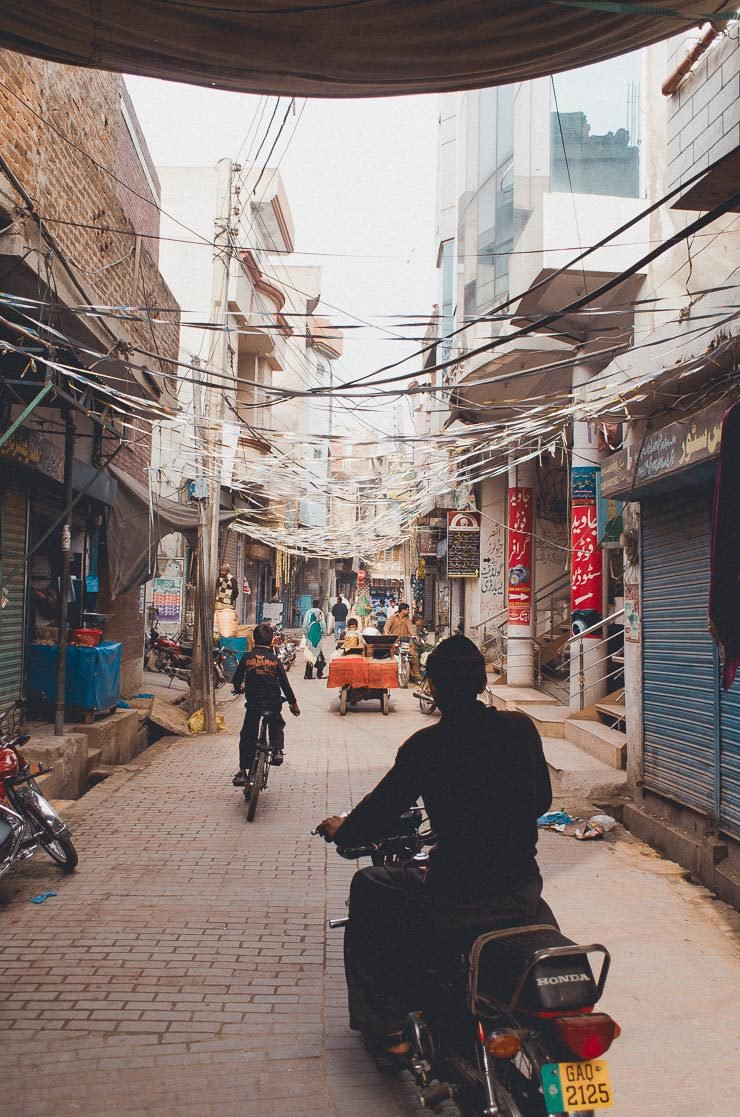
Some destinations you visit for what is there. Others you visit for what happened there. Dinga, a busy town in tehsil Kharian of Gujrat district, belongs to the second kind. A shrine called Nanak Sar once stood outside the town near the Mandi Bahauddin road, marking the visit of Guru Nanak — and though the building has collapsed and a bus stand now occupies the site, the story of what the Guru did here is one of the sharpest, most human episodes in the lore of his travels. This Gurdwara Nanaksar (site), Dinga travel guide is for travelers who collect stories, not just sights — and for anyone tracing Guru Nanak’s footsteps through the Punjab plains.
Quick Facts
- Location: the site of the former Nanak Sar shrine, outside Dinga town near the Mandi Bahauddin road; Dinga is in tehsil Kharian, Gujrat district, Punjab, Pakistan
- Altitude: around 230 meters (Punjab plains)
- Famous For: the visit of Guru Nanak and his famous encounter with a Hindu ascetic who claimed he would fast for forty days; the old well that once watered the shrine’s tank
- Nearest City: Kharian on the GT Road; Gujrat city is the district capital
- Accessibility: easy — Dinga is a well-connected town on the road network between Kharian and Mandi Bahauddin
- Known Landmarks: the bus stand now occupying the shrine site, the old well in the fields across the roadside wall, Dinga’s busy bazaars
- Best For: story-driven travelers, heritage pilgrims, photographers of everyday Punjab, and road-trippers on the GT Road corridor
Why Visit Gurdwara Nanaksar (site), Dinga
Let us be upfront: you will not find a standing gurdwara at Dinga. The shrine called Nanak Sar, built outside the town near the Mandi Bahauddin road, has collapsed, and a bus stand now stands on the site. If your idea of a destination is a monument to photograph, Dinga will disappoint you. But if your idea of a destination is a story to stand inside of, Dinga is one of the most rewarding stops in this whole series.
The story is worth the journey by itself. When Guru Nanak set foot here, a Hindu ascetic had staged a public drama: beating a drum, he announced to the town that he would meditate for forty days without eating. Guru Nanak stopped the announcement. When the forty days were complete, the ascetic fainted — and when he came to, he saw that no one had come to see him. Then Guru Nanak took up the drum himself and announced to the town that the ascetic was lying: he had not spent forty days without food; he had been feeding himself with his ego. And the Guru gave the town the line that has outlived every brick of the shrine: without destroying the ego, no one can be a Jogi, a Sufi, a Sant, or a Faqir.
That is a story about honesty, humility, and the difference between performance and prayer — and it happened right here, on ground you can still walk. The well that once supplied water to the shrine’s tank still stands in the fields, on the other side of the wall constructed along the road, a quiet survivor reminding visitors of bygone days. Standing by that well, with buses pulling in and out of the stand where the shrine stood, you feel the layers of Punjab’s history in a single frame: the sacred, the everyday, and the vanished, all at once.
Practically, Dinga is also a wonderful window into small-town Punjab as it actually lives. The town’s bazaars are busy and authentic, the food is excellent and cheap, and the surrounding countryside — between Kharian and Mandi Bahauddin — is classic Punjab farmland. Come for the story of the drum and the ascetic; stay for the town.
History of Gurdwara Nanaksar (site), Dinga
Dinga is described in the old surveys as a very famous town of tehsil Kharian in Gujrat district — a market town on the routes between the GT Road corridor and Mandi Bahauddin. Its place in Sikh tradition comes from the visit of Jagat Guru Nanak Dev Ji, the founder of the Sikh faith (1469–1539), during his extensive missionary travels across the region.
According to the historical tradition recorded in surveys of Sikh shrines in Pakistan, a shrine called Nanak Sar was built outside the town near the Mandi Bahauddin road to commemorate the Guru’s visit. The name “Nanak Sar” — the tank or resting place of Nanak — follows the pattern of many Guru Nanak shrines: a spot of water, rest, and remembrance. A well in the fields provided water to the tank, standing on the other side of the wall constructed along the road.
The defining episode of Dinga’s tradition is the encounter with the ascetic. When Guru Nanak arrived, a Hindu ascetic had set up what the tradition frankly calls a drama: he made a public announcement to the beat of a drum that he would meditate for forty days without eating — a spectacle designed to draw crowds and awe. Guru Nanak stopped the public announcement. The ascetic completed his forty days, but when he emerged, he fainted — and on coming to, he witnessed that none had come to see him. The performance had found no audience.
Then Guru Nanak himself announced to the beat of the drum that the ascetic was lying: he had not truly spent forty days without food, for he had been feeding himself with his ego all along. And the Guru gave the teaching that defines the episode — that without destroying the ego, no one can be a Jogi, a Sufi, a Sant, or a Faqir. It is one of the most direct statements in the Nanak tradition about the difference between outward show and inward truth, and Dinga is where it was spoken.
Time has not been kind to the shrine’s stones. The Nanak Sar building has now collapsed, and a bus stand occupies the site — the everyday life of the town quite literally built over the sacred ground. The well in the fields survives as the last physical witness. Dinga’s story is thus a parable of heritage itself: buildings fall, but the teaching spoken on the ground outlasts them.
Top Things to Do in Gurdwara Nanaksar (site), Dinga
Stand at the Shrine Site by the Bus Stand
The site of the former Nanak Sar shrine lies outside the town near the Mandi Bahauddin road, where a bus stand now operates. Walk the ground with the story in mind: this is where the shrine of Guru Nanak’s visit stood, and where the Guru confronted the ascetic’s forty-day drama. There is no plaque and no marker — which is exactly why your visit matters. Stand quietly for a few minutes, keep your head covered out of respect for what the ground remembers, and take a photograph of the place as it is today: sacred history under everyday life.
Find the Old Well in the Fields
Across the road, on the other side of the wall constructed along the road, the old well still stands in the fields — the well that once provided water to the shrine’s tank. This is the one surviving physical trace of Nanak Sar, and it is worth seeking out. Ask a local to point you to it; the farmers around know the old well. Photograph it in the late afternoon light, when the fields glow and the well’s old brickwork shows its age beautifully.
Retell the Story of the Drum
Do what the tradition itself does: tell the story out loud. Whether you are traveling with family, friends, or a guide, recount the episode of the ascetic, the forty days, the fainting, and the Guru’s drum-beat announcement at the very spot where it happened. Stories are the real monument at Dinga, and every retelling rebuilds a little of what the collapsed shrine lost.
Explore Dinga’s Bazaars
Dinga is a famous market town, and its bazaars are the living heart of the place. Walk the main market streets, browse the shops selling everything from cloth to farm tools, and sample the street food. This is small-town Punjab at its most authentic — no tourist staging, just daily life. The bazaar is also where you will find the town’s best-known eateries.
Famous Places In and Around Gurdwara Nanaksar (site), Dinga
- Kharian — the tehsil town on the GT Road, the gateway to Dinga, with its own historic character
- Mandi Bahauddin — the district town down the road from the shrine site, set amid some of Punjab’s richest farmland
- Gujrat City — the district capital, famous for its pottery, ceramics, and furniture
- Gurdwara Chhevin Patshahi, Buzurgwal — another historic gurdwara of Gujrat district, a natural companion visit
- Rohtas Fort (near Jhelum) — the great 16th-century fortress, a longer but rewarding day trip from the Kharian area
How to Reach Gurdwara Nanaksar (site), Dinga
Dinga sits in tehsil Kharian of Gujrat district, connected by road to Kharian town (on the GT Road) and to Mandi Bahauddin. The shrine site lies outside the town near the Mandi Bahauddin road — ask any local for the bus stand on that road and the old well across from it.
Route Details
From Lahore (roughly 170 km, about 3 to 3.5 hours): Drive up the GT Road (N-5) through Gujranwala and Gujrat to Kharian, then take the road toward Dinga/Mandi Bahauddin. The GT Road is in good condition; the Kharian–Dinga stretch is a normal district road.
From Islamabad (roughly 120 km, about 2 to 2.5 hours): Take the GT Road south through Jhelum and Sarai Alamgir to Kharian, then on to Dinga. This is an easy half-day drive, and the road is good in all seasons except heavy monsoon spells.
From Karachi (roughly 1,350 km): Fly to Sialkot International Airport or Lahore’s Allama Iqbal International Airport and drive from there. The long overland journey is only for the most dedicated road-trippers.
Nearest major airport: Sialkot International Airport (roughly 1.5 hours by road) or Lahore’s Allama Iqbal International Airport. Public transport: Dinga is well served by buses and wagons from Kharian, Gujrat, and Mandi Bahauddin — fitting, given that the shrine site itself is now a bus stand. A rickshaw covers local distances within the town.
Where to Stay in Gurdwara Nanaksar (site), Dinga
Dinga is a working market town rather than a tourist town, so accommodation is simple: local guesthouses and small hotels serving traders and travelers on the Kharian–Mandi Bahauddin route. They are clean, basic, and inexpensive — perfectly fine for an overnight stop.
For more choice, base yourself in Kharian on the GT Road or in Gujrat city, both a short drive away, where mid-range hotels with air conditioning and restaurants are available. A mid-range hotel in these towns typically costs a few thousand rupees per night. Many travelers visit Dinga as a day trip from the GT Road corridor — drive in for the story and the bazaars, and sleep in Kharian or Gujrat. There is no camping scene here; this is town-and-farmland Punjab.
Where to Eat: Local Foods of Gurdwara Nanaksar (site), Dinga
The food between Kharian and Mandi Bahauddin is the Punjab of the dhabas — and the dhabas here are excellent. Start with the classics: daal fry and chicken karahi with tandoori naan, seekh kebabs straight off the coals, and in winter, the inevitable and glorious sarson da saag with makki di roti. Dinga’s bazaar eateries serve all of this at prices that will make city dwellers smile — a full dhaba meal typically costs a few hundred rupees per person.
Do not skip the sweet side of the street: fresh jalebi from the morning kadhai, barfi and gulab jamun from the mithai shops, and thick lassi in the tall glasses Punjab is famous for. The GT Road dhabas around Kharian are institutions in their own right — truck drivers know good food, and they eat here. Drink bottled water, carry snacks for the roadside stops, and leave room for a second round of chai.
Weather in Gurdwara Nanaksar (site), Dinga
Dinga shares the hot-plains climate of Gujrat district: a mild, fog-touched winter, a blazing late spring and early summer, and a heavy monsoon. The shrine site is entirely open — a bus stand and fields — so the cool months are the comfortable window for exploring on foot.
| Season | Temperature Range | Conditions |
|---|---|---|
| Winter (Dec–Feb) | 9°C to 24°C | Mild days, cool nights, occasional fog on the GT Road — the best season for the visit |
| Spring (Mar–Apr) | 16°C to 37°C | Warming fast; harvest season in the fields, good light for photography |
| Summer (May–Jun) | 27°C to 42°C | Fiercely hot; keep any outdoor exploring to early morning or evening |
| Autumn (Oct–Nov) | 16°C to 33°C | Dry and pleasant; the second-best window for the trip |
The monsoon (July–September) brings heavy rain to the district — avoid the trip then, when field paths flood and the light is flat. Winter fog on the GT Road deserves respect: drive after it lifts, and never rush a foggy highway.
Language and Culture of Gurdwara Nanaksar (site), Dinga
Punjabi is the language of Dinga — the robust, warm dialect of the Gujrat plains — and Urdu is understood everywhere. The town’s culture is that of a Punjab market town: commercial, hospitable, and deeply rooted. Traders, farmers, and travelers have mixed here for generations, and a visitor asking about the old Nanak Sar will be met with interest rather than suspicion.
The cultural heart of Dinga’s story is the Guru’s teaching on the ego — that without destroying it, no one can be a Jogi, a Sufi, a Sant, or a Faqir. It is a teaching that cuts across religions, and it is worth carrying with you as you walk the town. Show the usual courtesies at the shrine site: cover your head, keep your voice respectful, dress modestly, and remember that the bus stand workers and passengers around you are going about their day. Ask before photographing people, accept offered tea graciously, and bargain with a smile in the bazaars.
Shopping in Gurdwara Nanaksar (site), Dinga
Dinga’s bazaars are working markets, not tourist shops — which makes them more interesting, not less. You will find cloth merchants, steel and crockery sellers, farm-supply shops, and the everyday goods of Punjab town life, all at honest local prices. For a traveler, the best buys are practical: a warm shawl in winter, sturdy everyday items, and above all the edible souvenirs — fresh mithai, packets of dry fruits and nuts, and the region’s excellent rice.
For the famous Gujrat-district specialties, head to Gujrat city itself: the district is renowned for its pottery and ceramics, its furniture, and its electric fans. Bargaining is normal in the bazaars. You will not find shopping malls in Dinga; Gujrat city and Kharian cover modern retail needs.
Travel Tips for Gurdwara Nanaksar (site), Dinga
Packing Essentials
Pack a head covering for the shrine site, comfortable walking shoes (the ground around the old well is uneven field), sun protection, drinking water, and a camera. In winter, bring a jacket for the cool evenings; the GT Road fog can make early mornings genuinely chilly.
Safety Tips
Dinga and the Kharian–Mandi Bahauddin corridor are safe for daytime travel, and the town is accustomed to strangers passing through. The shrine site is a working bus stand — stay aware of moving vehicles, keep children close, and do not wander into private fields without asking the farmer. Visit the old well in daylight.
Money & Connectivity
ATMs are available in Dinga town and plentiful in Kharian and Gujrat, but carry cash for the bazaars, dhabas, and rickshaws — small vendors are cash-only. Mobile coverage from all major networks is strong along the GT Road and in Dinga, with reliable 4G for navigation.
Best Time to Visit Gurdwara Nanaksar (site), Dinga
Winter (November to March) — the best season
Mild days, cool nights, and clear light make winter ideal for walking the shrine site, finding the old well, and exploring the bazaars. This is the season the region’s heritage travelers recommend.
Spring (March to April) — harvest time
The fields around Dinga are at their most alive during the wheat harvest. Mornings are pleasant; afternoons heat up fast, so plan accordingly.
Summer (May to June) — for the hardy only
Temperatures push past 40°C. If you come now, do the shrine site at dawn, retreat to shade by mid-morning, and save the bazaars for the evening.
Monsoon (July to September) — skip it
Heavy rains, flooded field paths, and humid, overcast days. The story will wait for October.
Final Thoughts
Dinga offers something rare in heritage travel: a destination where the building is gone but the meaning is intact. The Nanak Sar shrine has collapsed, the bus stand hums where pilgrims once gathered, and only the old well still keeps its silent watch in the fields. But the story Guru Nanak spoke here — about the ascetic, the drum, the forty days, and the ego that no fasting can starve — is as alive as the day it was told. Some places you visit with your eyes. Dinga you visit with your ears and your conscience.
As you continue through the Explore Pakistan series, pair Dinga with Gurdwara Chhevin Patshahi at Buzurgwal, another historic gurdwara of Gujrat district, for a full day of Sikh heritage in the region. Come in winter, find the old well, tell the story of the drum — and leave Dinga understanding a little better what Guru Nanak meant when he said the ego must die before the saint can live.
FAQs
Where is the Gurdwara Nanaksar site in Dinga?
Outside Dinga town near the Mandi Bahauddin road, in tehsil Kharian, Gujrat district, Punjab, Pakistan. The shrine has collapsed and a bus stand now occupies the site; the old well survives in the fields across the road.
What is the history of Nanak Sar at Dinga?
Guru Nanak visited Dinga, and a shrine called Nanak Sar was built outside the town near the Mandi Bahauddin road. Here the Guru confronted a Hindu ascetic who claimed he would fast for forty days, teaching that without destroying the ego no one can be a Jogi, Sufi, Sant, or Faqir.
What is the best time to visit Dinga?
November to March, for mild, clear weather. Avoid the May–June heat and the July–September monsoon.
How do I reach Dinga from Lahore or Islamabad?
From Lahore, drive the GT Road through Gujranwala and Gujrat to Kharian (about 3–3.5 hours), then on to Dinga. From Islamabad, take the GT Road south via Jhelum to Kharian (about 2–2.5 hours).
Is Dinga safe for families?
Yes. It is a busy, welcoming market town. Keep to daylight hours at the shrine site (a working bus stand), supervise children near traffic, and visit the old well with a local guide.
Where can I stay near Dinga?
Simple guesthouses in Dinga town, or mid-range hotels in Kharian and Gujrat city a short drive away.
What food should I try in Dinga?
Dhaba classics — daal fry, chicken karahi, seekh kebabs, tandoori naan — plus jalebi, mithai, and thick Punjabi lassi from the bazaar.
Can I combine Dinga with other heritage sites?
Yes — pair it with Gurdwara Chhevin Patshahi at Buzurgwal in Gujrat district, or with a GT Road swing through Gujrat city and Rohtas Fort.
, Dinga, Pakistan? Discover why it deserves your visit, the best time to go, top things to do and how to reach.)