


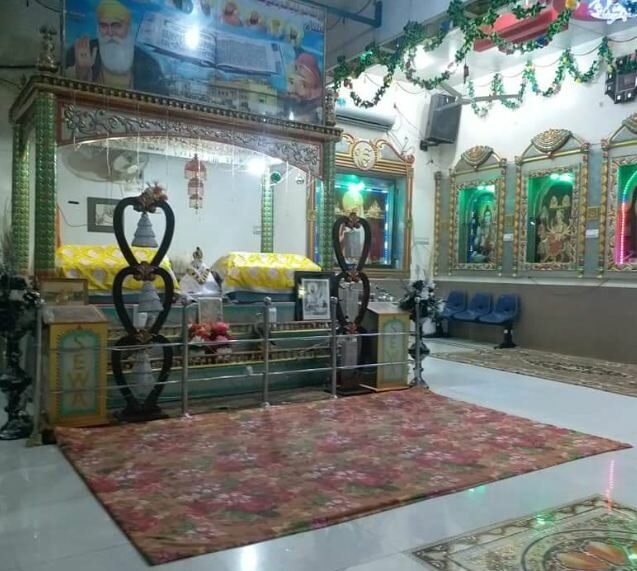
There is a kind of quiet that you only find in old shrines in small towns — the quiet of a place that has been prayed in every day for longer than anyone can remember. The Gurdwara Nanakwara Narankarian (Chota Darbar) in Kandhkot, Sindh, is exactly that kind of place. Tucked into the streets of this northern Sindh town, two lanes from its bigger twin darbar, it is a small double-storey shrine built like a house, where the Guru Granth Sahib is given prakash and the sangat gathers twice a day, every day. If you want to understand the living, breathing Sikh heritage of Sindh — not the grand monuments of Lahore but the intimate, community-held shrines where Nanakpanthi priests still keep the morning and evening maryada alive — then this gurdwara deserves a place on your travel map. This Gurdwara Nanakwara Narankarian travel guide will walk you through its history, how to reach Kandhkot, when to go, and what to expect when you step inside.
Quick Facts
- Location: Kandhkot town, Kashmore District (Kashmore–Kandhkot), northern Sindh, Pakistan — near the borders with Punjab and Balochistan
- Famous For: The “Chota Darbar” — Kandhkot’s second shrine commemorating the visit of Guru Nanak Dev Ji, standing two lanes from the Vadda (bigger) Darbar
- Nearest City: Sukkur, roughly 130–140 km south via the N-55 Indus Highway
- Accessibility: Road access via the N-55 Indus Highway; nearest functional airport at Sukkur; Karachi is a full day’s drive south
- Known Landmarks: The Vadda Nanakwara Darbar (main shrine, two lanes away), the Indus river plains around Kandhkot
- Best For: Spiritual travelers, Sikh heritage explorers, history lovers, and anyone tracing Guru Nanak’s journeys through Sindh
- Visit Tip: Come in the morning or evening, when prakash is held and the sangat gathers — the shrine is at its most alive then
Why Visit Gurdwara Nanakwara Narankarian (Chota Darbar), Kandhkot
Most travelers who come looking for Sikh heritage in Pakistan head straight for Nankana Sahib or Kartarpur. That is understandable — those are the famous names. But Pakistan’s Sikh story is much wider than its postcards, and some of its most touching chapters are written in small towns like Kandhkot. The Gurdwara Nanakwara Narankarian, affectionately called the Chota Darbar, is one of those chapters. It exists for a simple, powerful reason: Guru Nanak Dev Ji once came to this place, and the people who remembered that visit built a shrine so that no generation would forget it.
What makes the Chota Darbar special is its intimacy. This is not a fortress-like complex or a grand marble dome. It is a double-storey building laid out like a house, served by Nanakpanthi priests, where the sangat assembles twice daily for the prakash of Guru Granth Sahib. When you sit on the floor of that darbar hall, you are not a tourist looking at a monument — you are a guest in a living place of worship, welcomed the way gurdwaras have welcomed travelers for centuries. The shabads, the smell of the darbar, the quiet rhythm of a small-town sangat — this is heritage you experience with your whole self, not through a camera lens.
Then there is the twin-shrine story. Kandhkot holds not one but two shrines to Guru Nanak’s visit: the Vadda Darbar and, two lanes away, the Chota Darbar. Visiting both together tells you something no single shrine can — how deeply one visit, centuries ago, rooted itself in a community’s memory. Walk the two lanes between them and you are walking through the Kandhkot that Sikh, Hindu, and Muslim residents have shared for generations. Few places in Pakistan offer that layered, on-the-ground sense of a shared sacred geography.
Finally, Kandhkot itself rewards the curious. This is northern Sindh — the land of the N-55 Indus Highway, of Sindhi-Baloch culture, of scorching summers and gentle winters, of bazaars where languages mix. A day trip to the Chota Darbar can easily fold in a look at rural Sindh that most tourism itineraries never touch. If your idea of travel includes going where the tour buses do not, this small shrine in a small town might just be one of the most memorable stops of your Pakistan journey.
History of Gurdwara Nanakwara Narankarian (Chota Darbar), Kandhkot
The history of the Gurdwara Nanakwara Narankarian begins, as so many Sikh shrines do, with a journey. During his udasis — the missionary travels that carried him across the subcontinent in the early 1500s — Guru Nanak Dev Ji came to this place. The shrine was built to commemorate that arrival, preserving the memory of the Jagat Guru’s presence in what is today the Kashmore district of Sindh. It is also known as the Chota Darbar, standing at a distance of two lanes from the Vadda (bigger) Darbar that marks the same sacred memory on a larger scale.
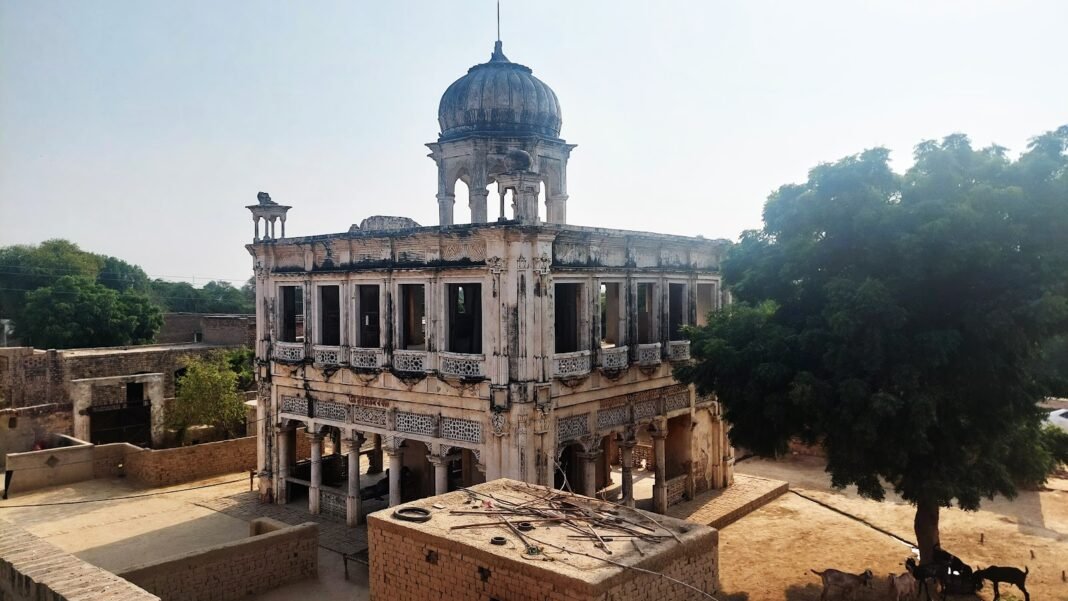
The shrine’s character reflects the community that has kept it. The priests are Nanakpanthi Hindus — followers of Guru Nanak’s teachings from within the Hindu tradition — and the gurdwara is built as a double-storey house rather than a grand domed complex. This is the classic pattern of Sindh’s Sikh heritage: small, community-maintained shrines where devotion continued uninterrupted through the centuries, long before and long after Partition. The prakash of Guru Granth Sahib takes place here, and the sangat assembles twice daily, keeping the maryada of the shrine alive morning and evening.
Kandhkot’s wider history is the history of northern Sindh’s river plains — a region crossed by traders, armies, and saints for millennia, sitting at the edge of the Indus and the borders of Sindh, Punjab, and Balochistan. The town grew as a market and administrative center, and its Sikh and Hindu communities were long part of its commercial and cultural life. The twin Nanakwara darbars stand as the visible legacy of that plural past. While the grand narratives of Sikh history focus on Punjab, the Chota Darbar reminds visitors that Guru Nanak’s message traveled deep into Sindh too — and was remembered there.
Today the shrine continues as a working place of worship rather than a museum piece. That continuity is its real historical value: you are visiting a site whose religious life has never paused, maintained by the same Nanakpanthi tradition that has served it for generations. When you plan your Gurdwara Nanakwara Narankarian visit, remember you are stepping into living history, not a preserved one.
Top Things to Do in Gurdwara Nanakwara Narankarian (Chota Darbar), Kandhkot
Join the Sangat at the Daily Gatherings
The single best thing to do at the Chota Darbar is also the simplest: be there when the sangat gathers. Prakash of Guru Granth Sahib is held and the congregation assembles twice daily, in the morning and the evening. Arrive a little early, cover your head, remove your shoes at the entrance, and take your seat in the darbar hall. You do not need to be Sikh to be welcome — gurdwaras receive all visitors — but you should follow the basic etiquette: sit quietly, accept the atmosphere, and stay through the ardas if you can. There is no more honest way to experience this shrine than as part of its daily rhythm.
Walk the Two Lanes to the Vadda Darbar
The Chota Darbar’s story is incomplete without its bigger twin. The Vadda (bigger) Nanakwara Darbar stands just two lanes away, and walking between the two is a short pilgrimage in itself. Compare the two shrines, notice how the neighborhood flows around them, and talk to the local devotees — many will happily tell you how the two darbars relate. Together they form Kandhkot’s little sacred quarter, and visiting both gives you the full picture of how Guru Nanak’s visit is remembered here.
Meet the Nanakpanthi Priests
The priests of the Chota Darbar are Nanakpanthi Hindus, and they are the living memory of this shrine. If you visit respectfully and show genuine interest, they can share the stories of the darbar — how the prakash is conducted, how the sangat has kept the shrine through the years, and what the twin-darbar tradition means to Kandhkot. These conversations are the difference between seeing a building and understanding a place. A small donation to the golak (offering box) is the customary way to show gratitude.
Explore Kandhkot Town and the Indus Plains
Once you have paid your respects, take an hour to see Kandhkot itself. This is a working northern-Sindh town on the N-55 Indus Highway — bazaars, tea stalls, and the flat green-and-ochre landscape of the Indus plains stretching to the horizon. The town sits near where Sindh meets Punjab and Balochistan, and its markets reflect that mix. It is not a polished tourist town, and that is precisely its charm: an unfiltered look at everyday Sindh.
Famous Places In and Around Gurdwara Nanakwara Narankarian (Chota Darbar), Kandhkot
- Vadda Nanakwara Darbar — the bigger twin shrine, two lanes from the Chota Darbar
- Kandhkot Bazaar — the town’s main market street, for an authentic northern-Sindh bazaar experience
- Indus River banks — the great river flows through this region; ask locally for the nearest accessible bank
- Kashmore town — the district headquarters, a short drive away
- Sukkur — roughly 130–140 km south, with the famous Lansdowne and Ayub bridges over the Indus, the Sukkur Barrage, and the Gurdwara Jind Pir in Sukkur
How to Reach Gurdwara Nanakwara Narankarian (Chota Darbar), Kandhkot
Kandhkot lies on the N-55 Indus Highway in northern Sindh, and reaching it is a straightforward road journey. The nearest major city is Sukkur, roughly 130–140 km to the south — a drive of around two and a half to three hours depending on traffic and road conditions. From Sukkur, take the N-55 north through the Indus plains toward Kashmore and Kandhkot; the road is a national highway and generally in drivable condition, though you should allow extra time in the summer heat or after monsoon rains.
From Karachi, Kandhkot is a long journey — a full day’s drive north via the N-5 and N-55, best broken with an overnight stop in Sukkur or Hyderabad. Most travelers combine a Kandhkot visit with a wider northern-Sindh itinerary rather than attempting it as a day trip from Karachi. From Lahore or Islamabad, the route runs south through Multan and then into Sindh via the national highways; this is a two-day journey by road, and flying into Sukkur and driving up is far more practical.
The nearest airport is Sukkur (Begum Nusrat Bhutto International Airport), which has regular domestic connections. From Sukkur airport, hire a private car or take a coach/bus north on the N-55 to Kandhkot. Within Kandhkot, the gurdwara is in the town itself — ask any local for the “Nanakwara darbar” or “Chota Darbar” and you will be directed the last short distance. Auto-rickshaws and motorcycle rickshaws handle local hops easily.
Public transport options include intercity coaches and vans that ply the Sukkur–Kandhkot–Kashmore corridor on the N-55 throughout the day. If you are traveling independently, a private car with a driver is the most comfortable option for this region, especially in summer. Road conditions are generally fair on the highway; inside town, expect narrow streets and the usual bustle of a Sindh market town.
Route Details
- Sukkur to Kandhkot: Take the N-55 Indus Highway north from Sukkur. Pass through the Indus plains toward Kashmore district. Kandhkot is roughly 130–140 km — allow 2.5–3 hours.
- Entering Kandhkot town: Follow signs into the town center; the Nanakwara darbars are in the older part of town.
- Finding the shrine: Ask for the “Vadda Darbar” (main Nanakwara shrine) — the Chota Darbar (Gurdwara Nanakwara Narankarian) stands two lanes away from it. Any shopkeeper near the darbar quarter can point you the last few steps.
- Etiquette on arrival: Cover your head (a scarf or the handkerchiefs often available at the entrance), remove your shoes, wash your hands, and enter the darbar hall quietly.
Where to Stay in Gurdwara Nanakwara Narankarian (Chota Darbar), Kandhkot
Kandhkot is a small town, and accommodation here is simple and functional rather than touristic. The town has basic hotels and guesthouses catering mainly to business travelers and people passing through on the N-55 — clean rooms, fans or air-conditioning, and attached baths are the norm, and you should set your expectations accordingly. For a heritage visit of a day or two, these are perfectly adequate: you will spend your time at the shrines and in the bazaar, not in your room.
If you prefer more comfort, base yourself in Sukkur, roughly two and a half to three hours south. Sukkur is a proper city with mid-range hotels offering air-conditioned rooms, restaurants, and more reliable services. Many travelers exploring northern Sindh’s Sikh heritage — including the Gurdwara Jind Pir in Sukkur — use Sukkur as their base and do Kandhkot as a day trip, returning in the evening. This is the most comfortable strategy, especially in the hot months.
For the budget-conscious, the coach and van network makes it entirely feasible to arrive in Kandhkot in the morning from Sukkur, spend the day between the two darbars, and head back by evening. Wherever you stay, book nothing fancy — the experience here is the shrine and the town, and a simple clean room nearby is all you need.
Where to Eat: Local Foods of Gurdwara Nanakwara Narankarian (Chota Darbar), Kandhkot
Northern Sindh’s food is hearty, and Kandhkot’s eateries serve the classics of the region. Expect Sindhi biryani with its tangy aloo-and-masala punch, sai bhaji (the beloved spinach-and-lentil dish) with rice, koki (crisp spiced flatbread), and Sindhi curry at the local dhabas. Morning starts with dal pakwan or puri with chai at the bazaar stalls — a breakfast worth waking up for.
Because Kandhkot sits near the Punjab and Balochistan borders, you will also find Punjabi-style tandoori items and Baloch-influenced grilled meats in the mix. Meals at local dhabas are very budget-friendly — a filling lunch of curry, roti, and lassi costs little by city standards. Carry drinking water with you, and in summer, keep hydrated: fresh lassi and sugarcane juice from bazaar vendors are the local answer to the heat.
A note for gurdwara visitors: many shrines serve or are near langar (the free community kitchen). If langar is being served during your visit, you are welcome to partake — sit in the pangat (rows), accept what is offered, and eat with the same humility as everyone around you. It is one of the most moving parts of visiting any gurdwara.
Weather in Gurdwara Nanakwara Narankarian (Chota Darbar), Kandhkot
Kandhkot sits in the low Indus plains, and its climate is classic northern Sindh: a short, pleasant winter and a very long, very hot summer. Daytime temperatures in winter hover in the comfortable low-to-mid twenties, while summer routinely pushes toward 50°C — among the hottest readings in Pakistan. Rain is scarce and falls mostly in the monsoon months, when humidity makes the heat feel even heavier. Plan around the heat, not the rain.
| Season | Temperature Range | Conditions |
|---|---|---|
| Winter (Nov–Feb) | 10–25°C | Pleasant days, cool nights; the best season for visiting the shrine |
| Spring (Mar–Apr) | 20–35°C | Warming up fast; mornings still comfortable, afternoons hot |
| Summer (May–Jul) | 30–50°C | Extreme heat, among Pakistan’s hottest; avoid midday outdoor activity |
| Autumn (Aug–Oct) | 25–40°C | Monsoon humidity then gradual cooling; October becomes bearable |
Language and Culture of Gurdwara Nanakwara Narankarian (Chota Darbar), Kandhkot
Sindhi is the main language of Kandhkot, with Saraiki, Balochi, and Urdu widely understood given the town’s border-district position. A few words of Sindhi greeting — “Assalam-o-Alaikum” works everywhere, and “Mehrbani” (thank you) earns smiles — go a long way. The local culture blends Sindhi and Baloch tribal traditions: hospitality is taken seriously, and a traveler asking directions will often be walked to the door personally.
Inside the gurdwara, Sikh etiquette applies: cover your head, remove shoes, dress modestly (cover shoulders and knees), and avoid smoking or alcohol anywhere near the shrine. Photography inside the darbar hall should only be done with permission — when in doubt, put the camera away and simply be present. Women and men sit in the hall together or in designated areas; follow what the local sangat does.
Kandhkot is a conservative small town, so modest dress in the bazaar is appreciated too. The Hindu and Sikh communities here are part of the town’s fabric — the Nanakpanthi priests of the Chota Darbar are a living link to that plural heritage, and respectful curiosity about their tradition is welcome. Bargaining in the bazaar is gentle rather than aggressive; a smile does more than a hard line.
Shopping in Gurdwara Nanakwara Narankarian (Chota Darbar), Kandhkot
Kandhkot’s bazaar is a working town market, not a tourist strip — which makes it genuinely interesting. You will find everyday Sindhi goods: ajrak (the iconic block-printed shawl of Sindh), Sindhi topi caps, ralli quilts with their bold patchwork, and brass and steel household ware. These make far more meaningful souvenirs than anything mass-produced: an ajrak bought in a northern-Sindh bazaar carries the place with it.
Food shopping is equally rewarding. Look for dates, dry fruits, and local spices sold by weight, plus the region’s gur (jaggery) in winter. There are no shopping malls in Kandhkot — the bazaar is the mall — and prices are local prices, refreshingly free of tourist markup. If you want a wider selection, Sukkur’s markets on your way back south offer more of everything.
Travel Tips for Gurdwara Nanakwara Narankarian (Chota Darbar), Kandhkot
Packing Essentials
A head covering (light scarf or dupatta) is essential for the gurdwara — carry your own rather than relying on finding one at the door. Comfortable slip-on shoes make the shoes-off routine easy. In winter (the best season), pack a light jacket for cool mornings and evenings; in summer, which you should avoid if possible, you would need sun protection, a hat, and serious hydration. A water bottle, sunscreen, and modest, breathable clothing cover every season.
Safety Tips
Kandhkot is a small, close-knit town where visitors — especially respectful ones — are generally safe and well looked after. Standard Pakistan travel sense applies: travel the N-55 in daylight, keep valuables discreet, and let your hotel know your plans. The shrine quarter is calm and welcoming. As with any religious site, avoid visiting during Friday prayer times if you are combining the trip with mosque visits nearby, and always ask before photographing people.
Money & Connectivity
Carry cash — Kandhkot’s bazaar and small eateries run on cash, and while ATMs exist in town, they can be unreliable; withdraw in Sukkur before heading north. Mobile signals from the major networks (Jazz, Telenor, Zong, Ufone) cover the N-55 corridor and Kandhkot town, though data speeds vary. Download offline maps before you leave Sukkur, and save the shrine’s location with a local contact’s number.
Best Time to Visit Gurdwara Nanakwara Narankarian (Chota Darbar), Kandhkot
Winter (November to February) — The Ideal Season
This is when to come. Daytime temperatures sit in the pleasant low-to-mid twenties, nights are cool, and the darbar’s morning and evening gatherings happen in perfect comfort. The clear winter light is also kind to the town — good for walking the lanes between the two darbars and for photography in the bazaar. If you can choose any month, choose December or January.
Spring (March to April) — Warm but Workable
Early spring mornings are still pleasant, but by April the heat is building fast toward 40°C. If you visit now, plan shrine visits for early morning or late evening and rest through the midday hours. The advantage: fewer travelers on the road and a quieter town.
Summer (May to July) — Avoid if Possible
Kandhkot’s summers are among the hottest in Pakistan, with temperatures pushing toward 50°C. The shrine is open and the sangat still gathers, but the heat makes everything — walking, waiting, traveling — punishing. If you must come in summer, visit the darbar at dawn or after sunset and stay hydrated.
Autumn (August to October) — Cooling Down
The monsoon brings humidity rather than heavy rain here, and September can still be very hot. By October, temperatures start easing into the thirties and the town becomes visitable again. Late October is a reasonable shoulder-season choice if winter dates do not work.
Final Thoughts
The Gurdwara Nanakwara Narankarian (Chota Darbar) will not overwhelm you with scale, and that is exactly its gift. In a double-storey house of a shrine, two lanes from its bigger twin, a small sangat gathers twice a day to keep a centuries-old promise: that Guru Nanak’s visit to this corner of Sindh will not be forgotten. To visit is to be briefly adopted into that keeping — to sit, to listen, to share the quiet.
Come in winter, come in the morning or evening, walk the two lanes to the Vadda Darbar, and let Kandhkot show you its unhurried, plural-hearted self. This is the Pakistan that rewards travelers who look past the famous names — and the Chota Darbar is one of its gentlest, most genuine stops. For more journeys through the country’s sacred and scenic corners, explore the Explore Pakistan collection.
FAQs
Where is Gurdwara Nanakwara Narankarian (Chota Darbar) located?
It is in Kandhkot town, Kashmore District, northern Sindh, Pakistan — two lanes from the Vadda (bigger) Nanakwara Darbar, on the N-55 Indus Highway corridor.
What is the Chota Darbar famous for?
It is Kandhkot’s second shrine commemorating the visit of Guru Nanak Dev Ji to the area. It is known for its intimate, house-like double-storey building, its Nanakpanthi priests, and the twice-daily prakash and sangat gatherings.
What is the best time to visit the Chota Darbar in Kandhkot?
November to February. Winter days are pleasant (10–25°C), while summers are among Pakistan’s hottest and best avoided. Visit in the morning or evening to join the daily sangat.
How do I reach Kandhkot from Sukkur?
Take the N-55 Indus Highway north from Sukkur — roughly 130–140 km, about 2.5–3 hours by car. Coaches and vans also run the Sukkur–Kandhkot corridor through the day.
Is the gurdwara open to non-Sikh visitors?
Yes. Like all gurdwaras, it welcomes everyone. Cover your head, remove your shoes, dress modestly, and follow the sangat’s lead inside the darbar hall.
Is Kandhkot suitable for a family trip?
Yes, especially in winter. The shrine visit is calm and short, the town is welcoming, and families can combine it with a Sukkur-based northern-Sindh itinerary. Keep summer heat in mind with children and elders.
Where can I stay near the Chota Darbar?
Kandhkot has simple, budget-friendly hotels and guesthouses. For more comfort, stay in Sukkur (2.5–3 hours south) and visit Kandhkot as a day trip.
What local food should I try in Kandhkot?
Try Sindhi biryani, sai bhaji with rice, koki, and dal pakwan for breakfast at the bazaar dhabas. Fresh lassi and sugarcane juice are the classic coolers.
, Kandhkot? Discover why it deserves your visit, the best time to go and how to reach.)