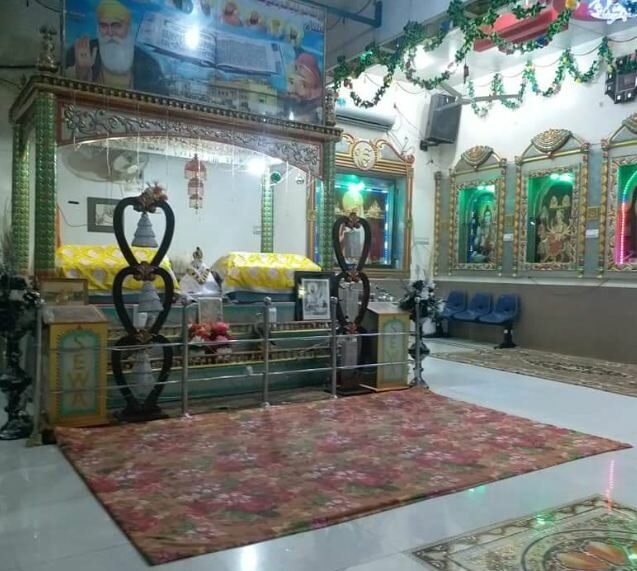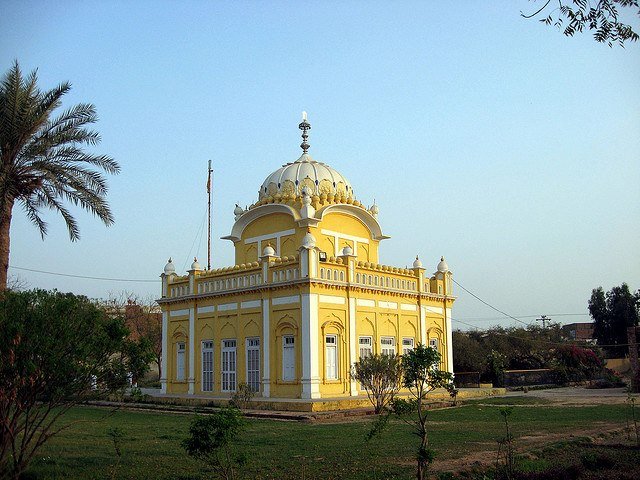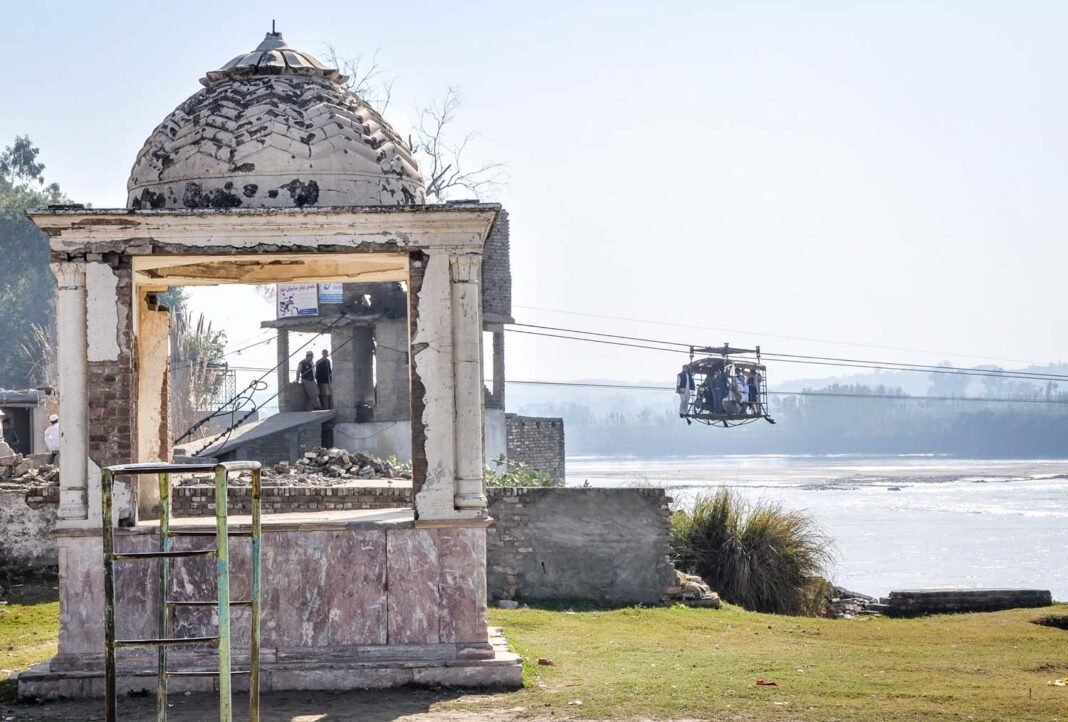
On the banks of the Kabul River at Nowshera, where the water slides green and wide past the fields of Khyber Pakhtunkhwa, stands one of the most evocative Sikh heritage sites in Pakistan: the Gurdwara Nihang Singh Chhaoni. Built like a fort and joined to the samadh of Akali Phoola Singh — the legendary Nihang general who fell in the Battle of Nowshera in 1823 — this is a place where history did not happen in books but on the very ground you stand on. The open field beside the gurdwara, about a square and a half of it, is where Nihang Singhs once practised the skills of war. The river that carried armies and traders for centuries still flows beside it. If you are drawn to the places where Sikh and frontier history collide — the martial, river-edged, windswept side of Pakistan’s heritage — this Gurdwara Nihang Singh Chhaoni travel guide will convince you to make the trip, and show you how.
Quick Facts
- Location: Banks of the Kabul River, Pir Sabaq area, Nowshera District, Khyber Pakhtunkhwa, Pakistan
- Famous For: The fort-like gurdwara attached to the samadh of Akali Phoola Singh Nihang, and the open ground where Nihang Singhs practised warfare
- Nearest City: Nowshera city (about 7 km); Peshawar roughly 45 km west
- Accessibility: Road via GT Road / N-5 and the M-1 motorway corridor; nearest airport Peshawar (Bacha Khan International)
- Known Landmarks: Samadh of Akali Phoola Singh (four-doored chaukhandi), the “Sikh Barrack” brick structure, Kabul River, Pir Sabaq village
- Best For: History lovers, Sikh heritage pilgrims, photographers, and travelers interested in the Sikh-era frontier
- Visit Tip: The site sits by the river — visit on a clear winter morning for the best light and the calmest water
Why Visit Gurdwara Nihang Singh Chhaoni, Nowshera
Some heritage sites are beautiful. Some are important. The Gurdwara Nihang Singh Chhaoni is both — and it is also something rarer: a place that still feels like the battlefield it commemorates. Stand on the open ground beside the gurdwara and you are standing where Nihang Singhs, the blue-clad warrior order of the Khalsa, drilled with their weapons two centuries ago. Look at the samadh — a small chaukhandi, a room with a door in each of its four walls — and you are looking at the cremation memorial of Akali Phoola Singh, one of the most formidable generals of Maharaja Ranjit Singh’s army, who died fighting at this very spot in 1823. Few places in Pakistan compress that much martial history into one riverside plot.
The setting does half the storytelling. The gurdwara is built in the form of a fort — elegant and strong, as the old surveys describe it — and its location by the Kabul River adds what one early account called “much to its grace.” The river is not scenery here; it is the reason the battle happened here, the reason armies moved through this valley, the reason Nowshera mattered. On a clear winter day, with the Hindu Kush foothills hazy in the distance and the river running steel-blue, the site has a stark, windswept beauty that photographs cannot quite capture but will try their best to.
There is also a living, unfolding story to witness. The Archaeology Department of Khyber Pakhtunkhwa has announced plans to conserve and restore this Sikh-era site — the samadh, the gurdwara, and the adjoining brick “Sikh Barrack” that likely served as a pilgrim guesthouse — to boost religious tourism and draw Sikh devotees and history enthusiasts from around the world. The site survived the devastating floods of 2010, which submerged and damaged it; seeing it now, on the cusp of restoration, is to catch a heritage site at a hinge moment in its history. Come now and you see it raw; come later and you may see it reborn.
And practically speaking, this is one of the most accessible Sikh heritage sites in Khyber Pakhtunkhwa. It sits a short drive from Nowshera city, under an hour from Peshawar, and about two hours from Islamabad — an easy day trip that pairs beautifully with Peshawar’s old city or a slow drive along the Kabul River. If your Pakistan itinerary has room for one frontier-heritage detour, make it this one.
History of Gurdwara Nihang Singh Chhaoni, Nowshera
The story of this gurdwara is inseparable from the story of Akali Phoola Singh (1761–1823), the Nihang Sikh leader who became one of the most trusted and feared generals of the Sikh Khalsa Army. Phoola Singh was born in 1761 and devoted himself to the strict, martial discipline of the Nihang order — the “eternal” warriors of the Khalsa, recognizable by their blue robes, tall turbans, and formidable weaponry. He rose to command a significant portion of Ranjit Singh’s forces on the northwestern frontier, where the Sikh empire was pushing its borders toward Afghanistan and Kashmir in the early 19th century.
In 1823, the contest for the Peshawar valley came to a head at the Battle of Nowshera (also associated with Pir Sabaq). Sikh forces under Ranjit Singh’s command faced a coalition of Pashtun and Afghan forces led by Azim Khan Barakzai. The fighting was fierce, and Akali Phoola Singh — leading from the front in the Nihang tradition — fell in the battle. He was cremated on the spot where he died, on the banks of the Kabul River at Pir Sabaq. In his honour, the samadh and the gurdwara were raised: the samadh a small four-doored chaukhandi marking the cremation site, the gurdwara beside it built in the form of a fort, strong and elegant.
The site’s later history follows the arc of the frontier itself. The vacant land beside the gurdwara — about a square and a half — remained part of the shrine’s holding, remembered as the ground where the Nihangs practised their war skills. After 1947, like so many Sikh sites in what became Pakistan, the complex fell quiet. Time and the river took their toll, and the catastrophic floods of 2010 submerged the site and damaged its structures. Yet the samadh and the fort-like gurdwara endured — weathered, but standing.
In January 2025, the site entered a new chapter when the Khyber Pakhtunkhwa Archaeology Department, led by Director Dr. Abdul Samad, announced plans to conserve and restore it in collaboration with the province’s Board of Investment, explicitly to promote Sikh heritage tourism. The department framed the project as part of a wider effort to celebrate the region’s Sikh and British-era history and open it to local and international visitors. For a site that commemorates a battle fought over 200 years ago, restoration is a fitting next verse: the warrior’s memorial becoming a bridge between peoples.
Top Things to Do in Gurdwara Nihang Singh Chhaoni, Nowshera
Stand Before the Samadh of Akali Phoola Singh
Begin at the samadh itself — the small chaukhandi with a door in each of its four walls. This is the cremation memorial of the Nihang general, and it is the emotional heart of the site. Walk slowly around it, take in the simplicity of its form, and remember what it marks: a commander who chose the front line over the command tent. Whether or not you are Sikh, the samadh commands a particular reverence — this is a soldier’s grave, and it asks for a soldier’s respect.
Explore the Fort-Like Gurdwara
The gurdwara beside the samadh is built in the form of a fort — thick, strong, and elegant — a deliberate echo of the Nihang martial tradition it serves. Walk its perimeter and note how the building sits in the landscape: defensive in posture, graceful by the river. The structure has weathered two centuries and a great flood; its survival is part of its story. As restoration work proceeds under the archaeology department’s plans, the building may look different on future visits — photograph it now, and come back later to see the difference.
Walk the Old Nihang Training Ground
The vacant land beside the gurdwara, about a square and a half, is where the Nihang Singhs practised the skills of war — horsemanship, swordsmanship, and the drilled maneuvers of the Khalsa’s most formidable order. It is empty ground now, but stand in it and imagine it full of blue-clad horsemen at full gallop. For anyone interested in military history, this field is the site’s most evocative feature: a parade ground frozen in time.
Watch the Kabul River
The river is the site’s constant companion. The Kabul flows wide here, and the bank near Pir Sabaq offers long, contemplative views — especially in the clear air of winter. Local life continues around it: the famous chairlifts and boats that ferry villagers across, farmers in the riverside fields, and the distant hum of Nowshera. Bring a little time to simply sit by the water; the contrast between the river’s calm and the battle it witnessed is the whole story of this place in one frame.
Visit the “Sikh Barrack”
Adjacent to the samadh stands a brick structure locally known as the “Sikh Barrack,” believed to have served as a guesthouse for pilgrims visiting the shrine. It is a humbler building than the gurdwara, but it tells an important part of the story: this was never just a memorial — it was a living pilgrimage site, with infrastructure for the devotees who came to pay their respects to Akali Phoola Singh across the generations.
Famous Places In and Around Gurdwara Nihang Singh Chhaoni, Nowshera
- Pir Sabaq village — the historic village by the Kabul River, about 7 km from Nowshera city, home to the shrine of Pir Sabaq Baba
- Nowshera city and cantonment — a historic garrison town with British-era architecture
- Risalpur — nearby cantonment town, home to the Pakistan Air Force Academy
- Peshawar — roughly 45 km west, with the Gurdwara Guru Hatri, the Bala Hisar Fort, Qissa Khwani Bazaar, and the Peshawar Museum
- Cherat hills — the pine-covered hill station above Nowshera, visible on clear days
How to Reach Gurdwara Nihang Singh Chhaoni, Nowshera
Nowshera sits on one of Pakistan’s great historic corridors — the GT Road (N-5) — and is one of the easiest heritage sites in KP to reach. From Islamabad, take the M-1 motorway west toward Peshawar and exit for Nowshera; the drive is about 150 km and takes roughly two hours in normal traffic. The site itself is in the Pir Sabaq area, on the banks of the Kabul River a few kilometres from Nowshera city — ask locally for the “Phoola Singh samadh” or the “Nihang Singh gurdwara” and you will be guided the last stretch.
From Peshawar, Nowshera is roughly 45 km east — under an hour on the GT Road or the M-1. This makes the gurdwara a natural half-day add-on to any Peshawar visit: see the old city in the morning, drive out to Pir Sabaq for the riverside gurdwara in the afternoon. From Lahore, the journey is about 400 km via the M-2 and M-1 motorways — roughly five to six hours — making it a comfortable long day trip or, better, part of a Peshawar–Nowshera overnight itinerary.
The nearest airport is Bacha Khan International Airport, Peshawar, with domestic and international connections. From the airport, Nowshera is a straightforward drive east. Public transport is easy on this corridor: wagons, coasters, and buses run constantly between Peshawar, Nowshera, and Islamabad on the GT Road, and rickshaws or hired cars handle the last kilometres to Pir Sabaq and the riverbank.
Road conditions are good on the motorway and GT Road year-round. The approach roads near the riverbank can be rough and, in the monsoon or after heavy rain, muddy — a car with decent clearance is wise, and in wet weather ask locally about the riverbank track before driving down it. The restoration plans announced by the archaeology department may improve visitor access over time; for now, treat the last stretch as an adventure.
Route Details
- Islamabad to Nowshera: M-1 motorway west toward Peshawar; take the Nowshera exit. About 150 km, roughly 2 hours.
- Nowshera city to Pir Sabaq: Head toward Pir Sabaq village, about 7 km from the city center, on the Kabul River bank.
- Finding the site: Ask for the samadh of Akali Phoola Singh / Gurdwara Nihang Singh Chhaoni by the river. The fort-like gurdwara and the domed chaukhandi samadh are visible from the riverbank track.
- On arrival: Cover your head, remove shoes before entering the gurdwara or approaching the samadh closely, and dress modestly. The riverbank can be slippery — wear sturdy shoes.
Where to Stay in Gurdwara Nihang Singh Chhaoni, Nowshera
Nowshera is a working garrison and market town rather than a tourist hub, and its accommodation reflects that: simple, clean hotels and guesthouses aimed at business travelers and visitors to the cantonment area. For a day trip to the gurdwara, you hardly need more — arrive, visit the site, eat in town, and move on. Room rates at this tier are budget-friendly, and a clean air-conditioned room is easy to find.
For more comfort and choice, base yourself in Peshawar, roughly 45 minutes west. Peshawar offers the full range from mid-range business hotels to the city’s grand old Serena, plus guesthouses in University Town and Hayatabad. Staying in Peshawar also lets you fold the Nowshera gurdwara into a richer itinerary: the old walled city, the museums, and the bazaars deserve at least a full day on their own.
Alternatively, Islamabad — about two hours east — works as a base if you are doing the gurdwara as a long day trip, with the capital’s full range of hotels at every tier. Whichever you choose, book ahead in winter (the best visiting season), when Peshawar’s hotels fill with both tourists and business travelers.
Where to Eat: Local Foods of Gurdwara Nihang Singh Chhaoni, Nowshera
You are in the land of chapli kebab — and you should eat accordingly. Nowshera and Peshawar’s chapli kebabs, the great flattened patties of spiced minced meat studded with tomato and pomegranate seeds, fried crisp at roadside tandoors, are among Pakistan’s essential food experiences. Pair them with hot naan and a glass of qahwa (green tea), the frontier’s answer to everything.
The region’s meat cuisine runs deep: namkeen gosht (meat cooked with minimal spices so the flavor shines), seekh kebabs, charsi tikka (the famous slow-grilled meat of the Peshawar valley), and Kabuli pulao with its sweet carrots and raisins. In Nowshera town, the bazaar eateries serve all of this at local prices — a full kebab-and-naan meal is very budget-friendly. For dessert, Peshawar’s famous kulfi and ice cream shops are worth the short drive west.
Vegetarian visitors should note that the frontier table is meat-heavy, but dal, sabzi, and mixed vegetable curries are always available, and the tandoori naan and parathas are superb everywhere. As at any gurdwara visit, keep an eye out for langar if the shrine is active during your visit — the community kitchen’s simple dal-roti is both a meal and a memory.
Weather in Gurdwara Nihang Singh Chhaoni, Nowshera
Nowshera sits in the Peshawar valley, and its climate is classic frontier plains: cold, sometimes foggy winters; a brief, glorious spring; long, fierce summers when temperatures push toward 40°C; and a hot, humid monsoon. The river moderates the air slightly at the site itself, but not enough to blunt a July afternoon. Winter is the season this place was made for — clear skies, crisp air, and the Kabul River at its most beautiful.
| Season | Temperature Range | Conditions |
|---|---|---|
| Winter (Nov–Feb) | 2–18°C | Cold mornings, occasional fog, clear sunny days; best season for the riverside site |
| Spring (Mar–Apr) | 15–30°C | Pleasant and green; ideal for combining with Peshawar sightseeing |
| Summer (May–Jun) | 28–40°C | Hot and dry; visit at dawn or dusk, carry water |
| Autumn (Jul–Oct) | 25–38°C | Monsoon humidity Jul–Aug, then gradual cooling; October turns pleasant |
Language and Culture of Gurdwara Nihang Singh Chhaoni, Nowshera
Nowshera is a meeting point of languages: Hindko is widely spoken in the city, Pashto dominates the surrounding villages including Pir Sabaq, and Urdu works everywhere. A greeting of “Assalam-o-Alaikum” opens every door. The culture here carries the frontier’s famous code of hospitality — guests are honored, and a traveler showing genuine interest in local heritage will find no shortage of guides, storytellers, and cups of qahwa.
At the gurdwara and samadh, standard Sikh-shrine etiquette applies: cover your head, remove your shoes, dress modestly, and keep the site’s solemn character in mind — this is, above all, a warrior’s memorial. Ask before photographing any caretakers or devotees. In the villages around Pir Sabaq, dress conservatively and be mindful that you are in a traditional rural community; women travelers will be most comfortable in local-style modest dress, and everyone should avoid public displays of affection.
One cultural note worth carrying with you: this site commemorates a battle between Sikh and Pashtun/Afghan forces, and local memory of that history is layered and complex. Approach it with the respect it deserves — as shared heritage, not as a partisan monument. The archaeology department’s restoration framing gets this right: “every stone tells a story,” and the story belongs to everyone.
Shopping in Gurdwara Nihang Singh Chhaoni, Nowshera
Nowshera’s bazaars serve a garrison town, not tourists — which means honest goods at honest prices. Look for Peshawari chappals (the region’s famous leather sandals), Pakol caps and topis, khaddar cloth, and the frontier’s excellent dry fruits — almonds, pistachios, and dried apricots from the northern valleys pass through these markets. Honey from the nearby hills is another good buy.
For a wider selection, Peshawar’s bazaars — Qissa Khwani, Sarafa, and the namak mandi — are under an hour west and offer everything from tribal jewelry and carpets to gemstones and brassware. There are no shopping malls at the riverside site itself (and none needed); the experience here is the history, the river, and the quiet. Buy your souvenirs in Nowshera town or Peshawar on the way back.
Travel Tips for Gurdwara Nihang Singh Chhaoni, Nowshera
Packing Essentials
A headscarf for the gurdwara and samadh is non-negotiable — bring your own. Sturdy, slip-on shoes handle both the shoes-off etiquette and the uneven riverbank ground. In winter, pack warm layers — mornings by the river are genuinely cold, and fog can linger. Year-round, carry water, sun protection, and a power bank; there are no facilities at the site itself, so treat it as a self-sufficient excursion.
Safety Tips
The Nowshera–Peshawar corridor is a well-traveled, settled area, and the site is a short hop from town. Standard precautions apply: travel in daylight, keep valuables out of sight, and let someone know your plans. The riverbank deserves real caution — the Kabul River is powerful, banks can be undercut, and there are no lifeguards or barriers. Do not wade in, and keep children well back from the water’s edge. During the monsoon or after heavy rain, check local advice before driving the riverbank track.
Money & Connectivity
Bring cash — there are no card facilities at the site or in the riverside village, and the nearest reliable ATMs are in Nowshera city. Mobile coverage from Jazz, Telenor, Zong, and Ufone is good along the GT Road and in Nowshera town; it can be patchy right at the riverbank. Download offline maps and save your route before leaving town.
Best Time to Visit Gurdwara Nihang Singh Chhaoni, Nowshera
Winter (October to March) — The Perfect Season
This is when the site shines. Cool, clear days, the river running clean and blue, and comfortable temperatures for walking the grounds and the riverbank. Morning fog can be atmospheric rather than obstructive, usually burning off by mid-morning. If you visit once, visit in December or January.
Spring (March to April) — Lovely and Green
The valley is at its greenest, temperatures are mild, and the whole Peshawar–Nowshera region is pleasant. An excellent time to combine the gurdwara with wider sightseeing — Peshawar’s old city, the Khyber Pass viewpoints, and the spring bazaars.
Summer (May to September) — Hot but Possible
Valley temperatures reach 36–40°C from May to September, and the riverside offers little shade. If summer is your only option, come at dawn or in the late evening, carry plenty of water, and keep the visit short. The monsoon months add humidity and the risk of a swollen river — admire it from a safe distance.
Final Thoughts
The Gurdwara Nihang Singh Chhaoni is not a polished monument, and that is precisely why it matters. It is a fort-like shrine on a riverbank, a four-doored samadh, and an empty field where warriors once drilled — the physical memory of Akali Phoola Singh and the Nihang tradition, kept alive by stone, water, and the sheer stubbornness of history. With restoration now on the horizon, the site stands at a rare moment: still raw, still quiet, still entirely itself.
Go in winter. Stand by the samadh in the morning light, walk the old training ground, and watch the Kabul River do what it has done for millennia — flow past, indifferent and eternal. Then drive back toward Peshawar or Islamabad knowing you have stood in one of the most storied square kilometres of the Sikh frontier. For more journeys into Pakistan’s layered past, browse the Explore Pakistan collection.
FAQs
Where is Gurdwara Nihang Singh Chhaoni located?
On the banks of the Kabul River in the Pir Sabaq area of Nowshera District, Khyber Pakhtunkhwa — about 7 km from Nowshera city and roughly 45 km east of Peshawar.
Who was Akali Phoola Singh?
A Nihang Sikh leader and senior general in Maharaja Ranjit Singh’s Khalsa Army (1761–1823). He fell in the Battle of Nowshera in 1823 and was cremated on this spot; the samadh and gurdwara were raised in his honour.
What is the best time to visit?
October to March. Winter brings clear skies and comfortable temperatures; summers in the Peshawar valley reach 36–40°C and are best avoided for a riverside visit.
How do I reach the gurdwara from Islamabad?
Take the M-1 motorway west toward Peshawar and exit at Nowshera — about 150 km, roughly two hours. From Nowshera city, head to Pir Sabaq village on the Kabul River bank and ask for the Phoola Singh samadh.
Is the site being restored?
Yes — in January 2025 the Khyber Pakhtunkhwa Archaeology Department announced conservation and restoration plans for the samadh, gurdwara, and adjoining “Sikh Barrack,” in collaboration with the province’s Board of Investment, to promote Sikh heritage tourism.
Is it safe for families?
The Nowshera–Peshawar corridor is well-traveled and the site is close to town. Families visit comfortably in the cooler months; keep children away from the riverbank edge and travel in daylight.
Where can I stay nearby?
Nowshera town has simple budget hotels. For more comfort, stay in Peshawar (about 45 minutes west) or do the trip as a day excursion from Islamabad (about two hours east).
What should I wear and bring?
Cover your head and dress modestly for the gurdwara and samadh; wear sturdy slip-on shoes for the riverbank; bring water, sun protection, and cash, as there are no facilities at the site.