Some places pull you in with grandeur. Others pull you in with a story. Gurdwara Pehli Patshahi in the village of Fateh Bhinder, near Daska in Punjab’s Sialkot district, is the second kind. This is a small, weather-beaten shrine on the southern edge of a farming village, and it marks the spot where Guru Nanak — the founder of Sikhism — stopped and stayed with his followers on his way back from the Jammu and Kashmir region, before moving on toward Kartarpur. If you care about Sikh heritage, about the forgotten shrines that dot the villages of Pakistani Punjab, or about standing in a place where history feels close enough to touch, this is one of the most quietly powerful stops you can add to a Punjab itinerary.
This gurdwara pehli patshahi fateh bhinder travel guide walks you through everything: why the shrine matters, its real history, how to reach the village, what the weather is like through the year, where to stay and eat, and the best time to plan your visit.
Quick Facts
- Location: Southern edge of Fateh Bhinder village, Daska tehsil, Sialkot district, Punjab, Pakistan. The village sits near Govind Ke and is approached via the Glotian (Ghalotian) side.
- Altitude: Around 240 metres above sea level — flat agricultural plains of upper Punjab.
- Famous For: Guru Nanak’s stay here on his return journey from Jammu and Kashmir toward Kartarpur; a building noted for its roughly 100 decorated windows and doors on all four sides; marble flooring with fine stone inlay work; Punjabi inscriptions on its inner and outer walls.
- Nearest City: Daska (tehsil headquarter); the larger city of Gujranwala lies roughly 20 kilometres away on the Daska Road.
- Accessibility: Reachable by road from Daska, Sialkot or Gujranwala; the last stretch is a village road. Best visited with your own car or a hired taxi.
- Known Landmarks: The gurdwara building itself; the Marala–Ravi Link Canal passes near the village.
- Best For: Sikh-heritage pilgrims, history enthusiasts, architecture lovers, and off-the-beaten-path travellers exploring Punjab.
Why Visit Gurdwara Pehli Patshahi, Fateh Bhinder
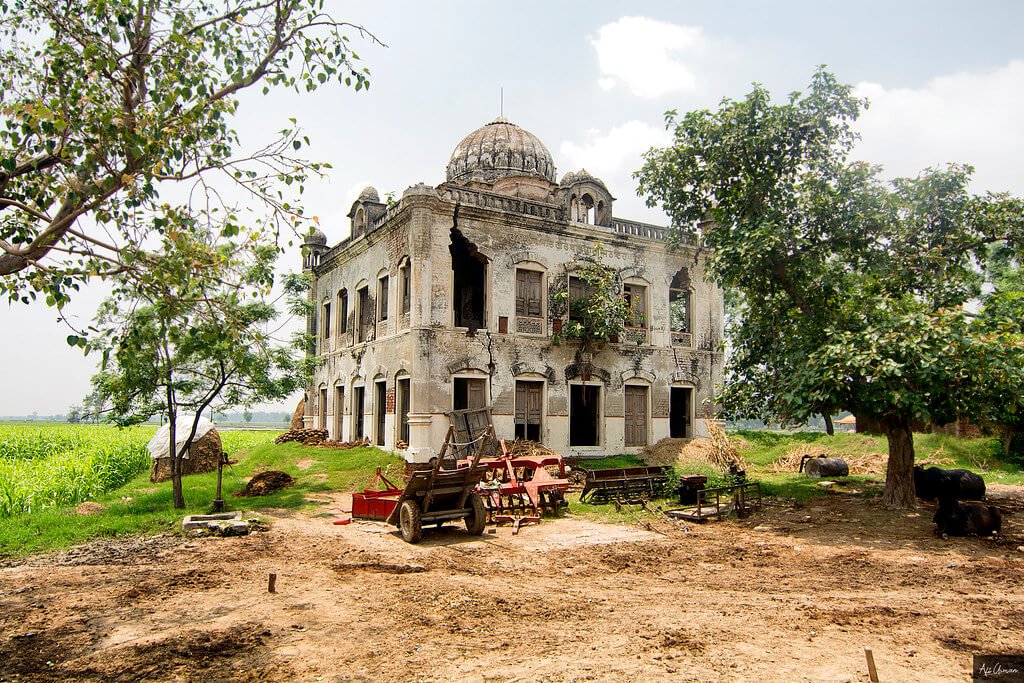
Let us be honest with you: this is not a polished tourist attraction with ticket counters and souvenir shops. The gurdwara at Fateh Bhinder is half-ruined, its second-floor roof partly collapsed since the 2005 earthquake, its walls cracked and worn. And that is exactly why it is worth visiting. There are only around 250 documented historical Sikh shrines still standing in Pakistan, most of them in small villages like this one, and most of them slowly fading. Every year that passes, a few more disappear. Visiting now is not just tourism — it is bearing witness.
The story of this place gives it its weight. Tradition holds that Guru Nanak, returning from his travels in the Jammu and Kashmir region, stopped here with his followers and stayed for a few days at the request of the local sangat, the congregation of devotees. From Fateh Bhinder he moved on to Kartarpur, where he would eventually settle. Devotees later raised a gurdwara on the exact spot where he stayed, with a langar (community kitchen) alongside it. For Sikh pilgrims, this makes the shrine a living chapter in the Guru’s journeys across the land that is now Pakistan.
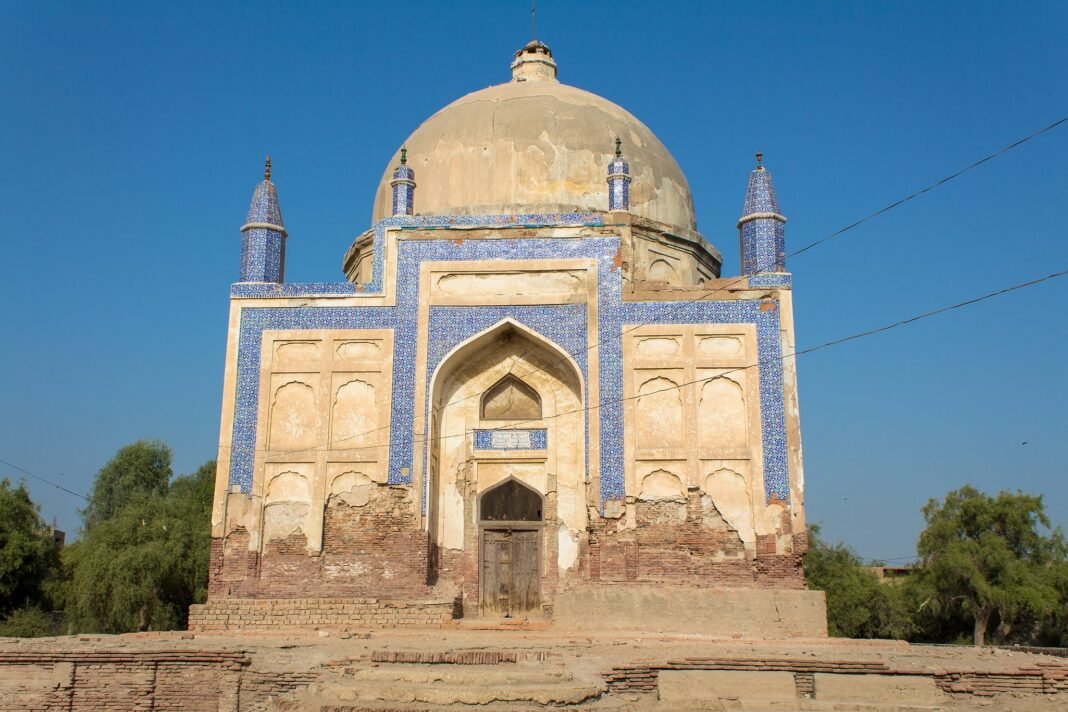
Then there is the building itself. Even in its damaged state, visitors describe it as remarkably beautiful: around a hundred windows and doors set into all four sides, decorated frames, marble floors laid with intricate kandakari (stone inlay) work, and inscriptions in Punjabi script on the walls inside and out. It sits on slightly raised ground at the southern edge of the village, catching the evening light over green wheat fields. If you have any love for old architecture, the gurdwara rewards slow looking — every doorway and fading inscription tells you something about the community that built it.
Finally, this is the kind of trip that changes how you see Punjab. You drive out of the highway noise, turn off the main road, cross five kilometres of rural track through sugarcane and wheat, and arrive in a quiet village where the most significant building is a Sikh shrine tended by Muslim neighbours. Baba Afzal, a local resident, told the Express Tribune that Sikh pilgrims — including, in earlier decades, visits associated with Indian prime minister Indira Gandhi — have been coming here for darshan (reverent viewing) for years, and that pilgrims still arrive every year. That continuity, that gentle hospitality between faiths, is worth the journey on its own.
History of Gurdwara Pehli Patshahi, Fateh Bhinder
To understand this gurdwara, you need to start with Guru Nanak himself. Born in 1469 at Rai Bhoi di Talwandi (now Nankana Sahib), Guru Nanak spent years travelling across the subcontinent and beyond on journeys known as udasis, spreading his message of one God, honest work, and compassion. The villages between Sialkot, Daska and Kartarpur in what is now Pakistan’s Punjab are thick with places he visited, and Fateh Bhinder is one of them.
According to the tradition recorded in Sikh heritage surveys, Guru Nanak came to Fateh Bhinder on his return from the Jammu and Kashmir region. The local sangat welcomed him with devotion, and he stayed here for a few days before continuing to Kartarpur, the town on the Ravi where he would settle and eventually pass away in 1539. Devotees built a gurdwara at the spot where he stayed. The name “Pehli Patshahi” — the First Guru — marks its association with Guru Nanak himself, and one plaque at the site notes that he came here from Sialkot via Babe Di Ber. A langar khana (community kitchen) was built beside the shrine, and the tradition grew that Sikh pilgrims visiting the gurdwara were given a silver coin on their departure — a mark of how generously the shrine was endowed in its heyday.
The present building does not date to the Guru’s lifetime. Visitors who have documented the site believe the standing structure was probably raised in the early decades of the twentieth century, which fits the style of its decorated doors and marble flooring. It was built on elevated ground at the southern edge of the village, its four sides each pierced with rows of windows and doors — around a hundred in total — a design that lets light and air flood the prayer hall.
The wider region has its own deep history. Daska is one of the oldest settled regions of the subcontinent and has long been an important trade route and cultural centre. At Partition in 1947, the Sikh community of the area migrated east, and the gurdwaras they left behind — Fateh Bhinder among them — fell silent. Over the decades, without a local sangat to maintain it, the building deteriorated. The 2005 earthquake left many cracks in its walls and roof, and the roof of the second floor collapsed. In October 2020, the Express Tribune featured the shrine in its series on the forgotten gurdwaras of Daska, describing it as historically significant but dilapidated. The Shiromani Gurdwara Parbandhak Committee (SGPC), the main Sikh representative body in India, later wrote to the Pakistani government about the shrine’s state of disrepair, asking for urgent repairs or permission to send volunteers to do the work. And there is hopeful news: in February 2026, the shrine was reported to be undergoing assessment for restoration after remaining closed since Partition — a development heritage travellers should follow, because a restored Fateh Bhinder could become one of the notable stops on Punjab’s Sikh heritage circuit.
Top Things to Do in Gurdwara Pehli Patshahi, Fateh Bhinder
Pay Your Respects at the Shrine
The heart of the visit is the gurdwara itself. Whether you are a Sikh pilgrim or a curious traveller, the right way to enter is the traditional one: cover your head, remove your shoes, wash your hands, and walk in quietly. Stand in the prayer hall for a while and let the place speak. Knowing that this ground is where Guru Nanak stayed with his followers gives even a short visit a quiet gravity.
Study the Architecture
Give yourself time to look at the building properly. Count the windows and doors — there are said to be around a hundred on the four sides — and notice the decorative work on their frames. Look down at the marble floor with its kandakari inlay, and look for the Punjabi inscriptions on the inner and outer walls. Heritage photographers should come in the late afternoon, when the low sun rakes across the southern facade and the cracks and carvings photograph beautifully.
Walk the Village and the Canal Banks
Fateh Bhinder is a typical Punjabi farming village — not a prosperous one, but warm and welcoming. A big canal, believed to be the Marala–Ravi Link Canal, passes near the village, and the surrounding fields are lush green, especially during the July rains. A slow walk through the lanes, a chat with farmers at the tube well, and a look at village life make the trip richer than a shrine visit alone.
Talk to the Locals
The Muslim residents of the village have been the informal custodians of this Sikh shrine for generations. Ask respectfully about the gurdwara’s history and you will often hear stories you will not find in any book — about pilgrim groups who came in the 1980s, about the langar tradition, about the silver-coin custom of the old days. These conversations are the real souvenir of a trip like this.
Combine It With Daska’s Other Shrines
Daska tehsil has several old gurdwaras, and heritage travellers often pair Fateh Bhinder with the shrine at nearby Ghalotian Khurd. If you are doing a Sikh heritage run through this belt, plan a full day: Fateh Bhinder in the morning, Ghalotian Khurd after lunch, and Sialkot city by evening.
Famous Places In and Around Gurdwara Pehli Patshahi, Fateh Bhinder
Daska City: An ancient trade-route town with old bazaars and a colourful past — the tehsil headquarter and your gateway to the village.
Gurdwara Chhevin Patshahi, Ghalotian Khurd: Another historic shrine in the same tehsil, associated with the sixth Sikh Guru — an easy pairing with Fateh Bhinder.
Sialkot: The district city, home of the poet-philosopher Allama Iqbal’s birthplace (Iqbal Manzil), the old Sialkot Fort area, and the Gurdwara Bair Sahib and Gurdwara Baoli Sahib shrines.
Kartarpur Sahib: The great gurdwara on the Ravi where Guru Nanak settled — the natural next stop on a Guru Nanak trail through this region.
Gujranwala: Punjab’s famous food city, roughly 20 kilometres away — ideal for ending the day with a proper desi dinner.
How to Reach Gurdwara Pehli Patshahi, Fateh Bhinder
Fateh Bhinder sits in the triangle between Daska, Sialkot and Gujranwala, and the most practical approach is through Daska. The village is almost 20 kilometres from Gujranwala city on the Daska Road; from the main road you turn westward into the rural area for about five kilometres to reach the village. The gurdwara stands on the southern edge of the village, reachable from the Glotian (Ghalotian) side.
Route Details
From Lahore (around 105 km, roughly 2 hours): Take the Lahore–Sialkot Motorway (M-11) toward Sialkot, then head for Daska on the Daska Road. From Daska, follow local directions toward Govind Ke and Glotian; the village road to Fateh Bhinder is signposted locally — ask for “Fateh Bhinder” and the gurdwara is well known in the area.
From Sialkot (around 30 km, roughly 45 minutes): Drive southwest to Daska, then take the village road toward Govind Ke/Glotian. The gurdwara is on the south side of the village.
From Gujranwala (around 20 km, roughly 30–40 minutes): Take the Daska Road east; about five kilometres before reaching Daska town, turn west into the rural tracks leading to Fateh Bhinder.
From Islamabad (around 230 km, roughly 4–4.5 hours): Travel south via the motorway network toward Lahore/Sialkot and join the M-11 corridor to Daska.
From Karachi: Fly to Lahore or Sialkot — Sialkot International Airport is the closest airport, roughly 35–40 km from the area — then drive to Daska.
Road conditions: The highways to Daska are good paved roads. The last five kilometres into the village are rural roads — fine in dry weather, but they can get muddy after heavy monsoon rain, so a car with decent ground clearance is a good idea in July and August. In winter (December–January), dense fog can reduce visibility on early-morning drives; plan to arrive after 10 a.m.
Transport options: The easiest option is your own car or a hired taxi from Lahore, Sialkot or Gujranwala. Public vans and buses run on the main Daska–Gujranwala and Daska–Sialkot roads, from where you can hire a rickshaw or motorcycle-rickshaw for the village stretch. There is no direct public transport to the gurdwara door.
Where to Stay in Gurdwara Pehli Patshahi, Fateh Bhinder
There are no hotels or guesthouses in Fateh Bhinder village itself — it is a small farming settlement — so plan to base yourself in a nearby city and visit the gurdwara as a day trip. Daska town has simple, budget-friendly hotels and guesthouses that suit an overnight stop if you want an early start. Sialkot, about 30 km away, offers a wider choice of mid-range hotels with proper amenities. For the most comfortable trip, many heritage travellers stay in Lahore — roughly two hours away — and cover Fateh Bhinder along with Daska and Sialkot’s other shrines in a single day. Gujranwala is another convenient base with plenty of eating options. If you are travelling with a Sikh pilgrim group, group organisers in Lahore sometimes arrange heritage tours of this belt; check with tour operators in advance rather than expecting walk-in arrangements at the village.
Where to Eat: Local Foods of Gurdwara Pehli Patshahi, Fateh Bhinder
The food here is the food of rural upper Punjab, and it is delicious in its simplicity. In the village, expect hospitality rather than restaurants — villagers may offer you chai or lassi, and accepting graciously is part of the experience. For proper meals, head to Daska or the dhabas (roadside eateries) along the Daska–Gujranwala road. The classics of the region are all here: sarson da saag with makki di roti in winter, dal fry and mixed sabzi, tandoori naan fresh from the clay oven, and thick, creamy lassi. Gujranwala, nearby, is famous across Punjab as a food city — its charpai restaurants serve some of the best desi barbecue, chargha and desi ghee dishes in the province, and it makes a perfect dinner stop after your village visit. A dhaba meal in this area is very budget-friendly, typically a few hundred rupees per person. Carry your own drinking water for the village visit, and if you have dietary restrictions, eat your main meal in Daska or Gujranwala where there are more choices.
Weather in Gurdwara Pehli Patshahi, Fateh Bhinder
Fateh Bhinder lies on the flat plains of upper Punjab, so its weather follows the classic Punjab pattern: pleasant winters, a glorious spring, a fierce summer, and a humid monsoon. The best months for a visit are November to March, when the air is crisp and the fields are green.
| Season | Temperature Range | Conditions |
|---|---|---|
| Winter (Dec–Jan) | 3°C to 18°C | Cold, often foggy mornings; clear sunny afternoons. Carry a warm jacket. |
| Spring (Feb–Mar) | 12°C to 28°C | The loveliest season — mild days, blooming fields, excellent for travel. |
| Summer (Apr–Jun) | 28°C to 43°C | Very hot and dry, especially May–June. Travel early morning or late afternoon. |
| Monsoon/Autumn (Jul–Sep) | 28°C to 38°C | Hot and humid with heavy showers; village tracks can get muddy. |
| Autumn (Oct–Nov) | 15°C to 30°C | Pleasant and dry; a great shoulder season for heritage trips. |
Language and Culture of Gurdwara Pehli Patshahi, Fateh Bhinder
Punjabi is the mother tongue here — the Majhi dialect of upper Punjab — with Urdu widely understood and some English among the younger generation. The village culture is the warm, hospitable culture of rural Punjab: guests are honoured, chai is offered quickly, and elders are greeted with respect. Because you are visiting a Sikh shrine, a few points of etiquette matter. Cover your head before entering the gurdwara (carry a scarf or handkerchief), remove your shoes, wash your hands at the entrance, and avoid tobacco and alcohol anywhere near the shrine. Dress modestly — long trousers or shalwar kameez, and shoulders covered. If you take photographs inside, do so quietly and ask any people present first. A small, respectful donation to the shrine’s upkeep is appreciated but never demanded.
Shopping in Gurdwara Pehli Patshahi, Fateh Bhinder
Fateh Bhinder village itself has only basic village shops, so plan your shopping in the nearby cities. Daska’s bazaars sell everyday goods, fresh produce and local textiles at honest prices. Sialkot is the real shopping draw of the district — it is world-famous for sports goods, and its markets are also good for leather goods and surgical instruments at factory prices. If you are passing through Gujranwala, its utensil and furniture markets are well known across Punjab. For souvenirs of a Sikh heritage trip, the best finds are often books on Sikh history and postcards available at the larger gurdwaras and bookshops in Lahore or Sialkot. There are no shopping malls in this rural belt — come for the authentic bazaars instead.
Travel Tips for Gurdwara Pehli Patshahi, Fateh Bhinder
Packing Essentials
Pack for the season and the setting. A head covering (scarf or large handkerchief) is essential for entering the gurdwara. Comfortable walking shoes that you can slip off easily at the shrine entrance are ideal. In winter, bring a warm jacket and something for foggy mornings; in summer, a hat, sunscreen and plenty of water. A power bank, basic first-aid kit and your own drinking water are sensible for any rural trip. If you are a photographer, the late-afternoon light on the gurdwara’s southern face is the shot to plan for.
Safety Tips
This is a peaceful rural area and visitors are treated with great warmth. Standard precautions apply: travel in daylight, keep valuables out of sight, and let someone know your route if you are heading into the village tracks alone. The gurdwara building is structurally damaged — do not climb on it, lean on cracked walls, or enter any section that looks unstable, especially the upper floor. Drive carefully on the rural tracks, and in winter fog keep your headlights on and your speed down.
Money & Connectivity
Carry cash — there are no ATMs in the village, and the nearest ones are in Daska town. Mobile signals from the major networks (Jazz, Telenor, Zong, Ufone) generally work in the area, though data speeds can dip on the village tracks. Download offline maps before you leave Daska. Fuel up in Daska or Gujranwala; do not expect petrol pumps in the village.
Best Time to Visit Gurdwara Pehli Patshahi, Fateh Bhinder
Winter (November to February) — The Best Season
Crisp air, golden wheat fields, and clear skies make winter the ideal time for this trip. Daytime temperatures sit comfortably between 15 and 20 degrees, perfect for walking around the village and spending unhurried time at the shrine. Just watch out for morning fog in December and January — plan to reach after 10 a.m.
Spring (March) — Beautiful and Mild
March is lovely: mild weather, green fields, and the countryside at its most photogenic. This is also a good time to combine the trip with other heritage sites in the Sialkot–Daska belt.
Summer (April to June) — Hot, Travel Early
The shrine can still be visited in summer, but May and June are brutally hot on the plains. If you must travel then, start at dawn, finish by late morning, and carry lots of water.
Monsoon (July to September) — Lush but Muddy
The rains turn the whole area beautifully green, but the village tracks can get slippery and the humidity is heavy. Check the weather before setting out, and prefer a vehicle with good ground clearance.
Final Thoughts
Gurdwara Pehli Patshahi at Fateh Bhinder will not impress you with marble domes or manicured lawns. It will impress you with something rarer: authenticity. This is a shrine that has survived Partition, decades of neglect and an earthquake, kept alive by the memory of the village and the devotion of pilgrims who still find their way here. Standing in its worn prayer hall, you are standing where Guru Nanak stood — and that connection, across five centuries, is something no grand new monument can give you.
If you are building a Sikh heritage journey through Pakistani Punjab — Kartarpur, Nankana Sahib, the shrines of Sialkot and Daska — make room for Fateh Bhinder. Go soon, go respectfully, and go before restoration changes it. Places like this are the reason heritage travel matters: they remind us that history lives in villages, not just in museums. For more inspiration across the country’s heritage sites, browse our Explore Pakistan collection, and pair this trip with our guides to Gurdwara Chhevin Patshahi, Ghalotian Khurd and Gurdwara Bair Sahib, Sialkot.
FAQs
Where is Gurdwara Pehli Patshahi, Fateh Bhinder located?
It stands on the southern edge of Fateh Bhinder village in Daska tehsil, Sialkot district, Punjab — near Govind Ke, approached from the Glotian side, roughly 20 km from Gujranwala on the Daska Road.
What is the best time to visit Gurdwara Pehli Patshahi, Fateh Bhinder?
November to March is the best window, with winter (November–February) offering the most pleasant weather for a village heritage trip.
How do I reach Gurdwara Pehli Patshahi, Fateh Bhinder?
Drive to Daska from Lahore (around 105 km), Sialkot (around 30 km) or Gujranwala (around 20 km), then take the village road toward Govind Ke/Glotian. A private car or hired taxi is the easiest option.
Is Gurdwara Pehli Patshahi, Fateh Bhinder safe to visit?
Yes. It is a peaceful farming village where visitors are welcomed warmly. The only caution is the damaged building itself — do not climb on cracked walls or enter unstable sections.
Is it suitable for families?
Yes, as a day trip from Daska, Sialkot or Gujranwala. There are no facilities at the village, so bring water, snacks and sun protection for children.
Where can I stay near Gurdwara Pehli Patshahi, Fateh Bhinder?
There are no hotels in the village. Daska has basic hotels, Sialkot has mid-range options, and Lahore — about two hours away — is the most comfortable base.
What food is available near the gurdwara?
The village offers simple hospitality; proper meals are found at dhabas along the Daska–Gujranwala road and in Daska town — saag, makki di roti, dal, tandoori naan and lassi. Gujranwala nearby is famous for desi food.
What makes this gurdwara historically special?
It marks the spot where Guru Nanak stayed with his followers on his return from the Jammu and Kashmir region before moving to Kartarpur. Its early-20th-century building is noted for around 100 decorated windows and doors, marble floors with stone inlay, and Punjabi inscriptions — and it is currently being assessed for restoration after decades of neglect.