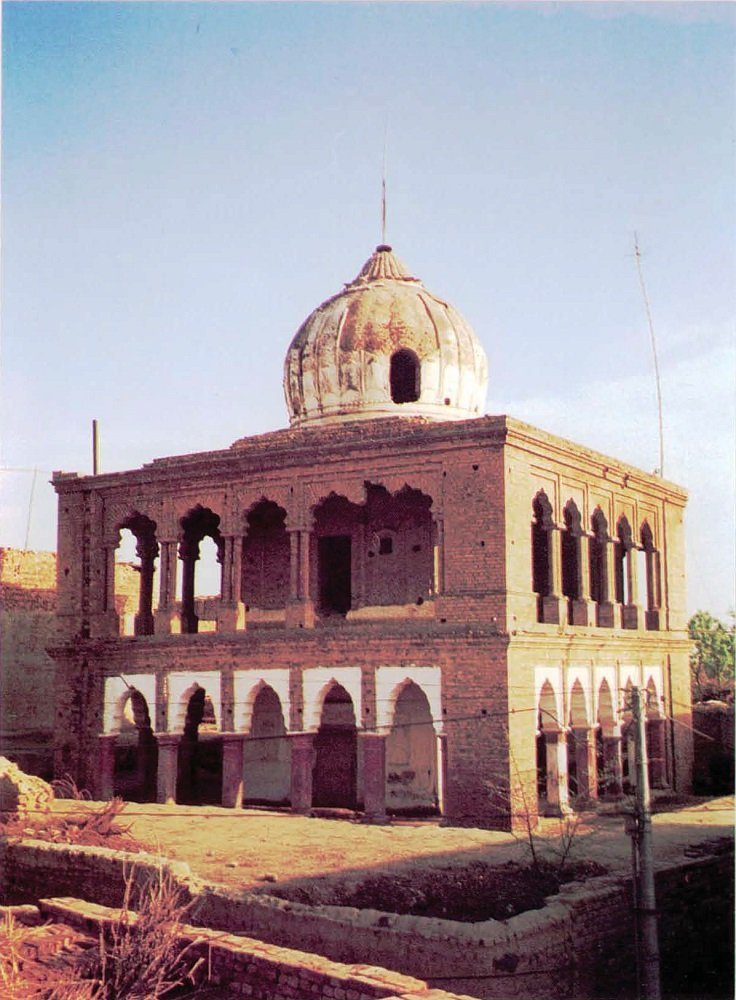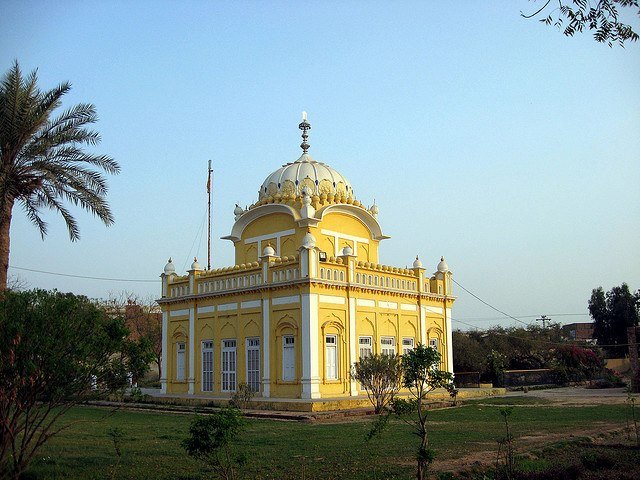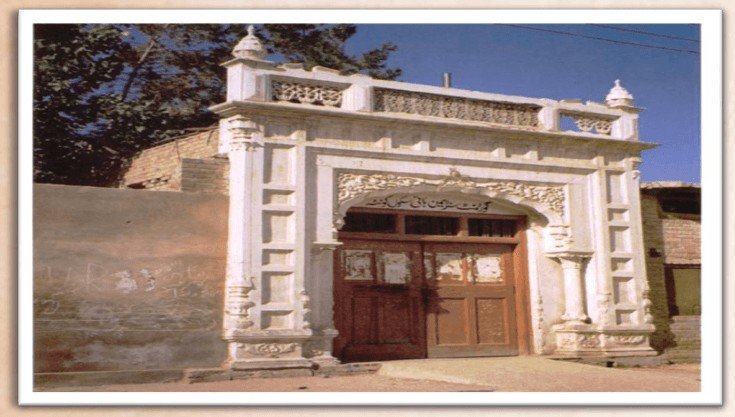
Quetta surprises most first-time visitors. They come expecting a frontier outpost and find a valley city of orchards and mountains, where Baloch, Pashtun and Hazara cultures meet — and where, on Masjid Road in the old city, a domed shrine remembers a visit from Guru Nanak himself. Gurdwara Tilganji Sahib, Quetta is one of the most remarkable Sikh heritage sites in Pakistan: a shrine named for the sesame seeds the Guru scattered as blessing, standing behind a gate built like a mosque, its courtyards now shared with a government school. If you want to understand the real, layered, wonderfully complicated Pakistan, this is the kind of place that teaches it.
Quick Facts
- Location: Masjid Road, central Quetta, Balochistan, Pakistan — within the grounds of Government Sandeman School
- Altitude: Around 1,680 metres (Quetta valley)
- Famous For: Guru Nanak’s visit during his third udasi (travels); the sesame (til) he distributed as parshad, giving the shrine its name
- Nearest City: Quetta itself — the shrine is in the city centre
- Accessibility: Easy city access by taxi or rickshaw; Quetta International Airport and Quetta railway station connect the city to Pakistan
- Known Landmarks: The domed shrine building; the mosque-style main gate; the sarai (inn), langar/dining hall and prakashasthan within the complex
- Best For: Sikh heritage pilgrims, cultural travellers, photographers, and anyone exploring Quetta’s old city and its layered history
Why Visit Gurdwara Tilganji Sahib, Quetta
Of all the gurdwaras in Pakistan, Tilganji Sahib may be the most thought-provoking. Start with the name: when Guru Nanak graced Quetta during his third great journey, devotees gathered to see him, and he honoured them by distributing til — sesame seeds — as parshad. The shrine took its name from those seeds: Tilganji, the place of sesame. It is a small, human, beautiful detail, and it captures the Guru’s whole teaching in miniature — blessing shared in the humblest form.
Then there is the building itself, which tells Quetta’s story in stone. The main gate is built in the style of a mosque; inside stands a beautiful, strong domed building, with a sarai for travellers, a dining hall, and a prakashasthan — the room of the scripture’s presence. The complex reads like a palimpsest of the city’s cultures, Sikh and Muslim heritage literally sharing walls. For travellers interested in how faiths and communities intertwine, there are few more eloquent sites in the country.
Tilganji Sahib is also a living story, not just an old one. Government Sandeman School functions within the shrine’s precincts today, and the local Sikh sangat has gone to court seeking the shrine’s possession — a reminder that heritage in Pakistan is not frozen in the past but negotiated in the present. Visiting with respect and curiosity connects you to that living heritage in a way no museum can.
And then there is Quetta itself — the “fruit garden of Pakistan,” ringed by the Chiltan, Zarghun and Takatu mountains, famous for its apples, cherries and dry fruits, its sajji and its doodh patti. A visit to Tilganji Sahib slots perfectly into a day exploring the old city: the shrine in the morning, the bazaars and the Archaeological Museum of Balochistan in the afternoon, and sajji under the evening sky. Few Pakistani cities reward the curious traveller as richly.
History of Gurdwara Tilganji Sahib, Quetta
The history of Tilganji Sahib reaches back to the travels of Guru Nanak (1469–1539), the founder of Sikhism, whose four great journeys — the udasis — carried him across South Asia and beyond. According to Sikh tradition, the Guru graced Quetta during his third udasi, the journey that took him westward through the frontier regions. When he arrived, devotees and seekers came to see him, and Guru Nanak honoured the gathering by distributing til (sesame seeds) as parshad — the blessed offering. From those seeds the shrine took its name: Tilganji Sahib, the revered place of sesame.
The shrine that grew on Masjid Road in Quetta became a handsome complex: a beautiful and strong domed building at its heart, fronted by a main gate built in the manner of a mosque — an architectural detail that speaks volumes about the cultural synthesis of the region. Within the walls were all the institutions of a living gurdwara: a sarai (inn) for the stay of travellers and pilgrims, a dining hall for langar, and a prakashasthan for the Guru Granth Sahib.
The twentieth century brought the upheavals that reshaped so much of the subcontinent’s sacred geography. After Partition, the shrine’s precincts came to house Government Sandeman School, which functions inside the holy complex to this day, with a new school building constructed on the gurdwara’s vacant land. The Sikh sangat of Quetta — the small but enduring local Sikh community — has filed a suit in the lower courts seeking to regain possession of the shrine, a legal chapter that remains part of the site’s modern story.
Quetta’s own history frames the shrine: an ancient valley settlement on the trade routes to Kandahar, developed as a British garrison town in the nineteenth century, devastated by the great earthquake of 1935 and rebuilt, and today the capital of Balochistan. Through all of it, Tilganji Sahib has stood on Masjid Road — a quiet witness to five centuries of the valley’s life.
Top Things to Do in Gurdwara Tilganji Sahib, Quetta
See the domed shrine and its mosque-style gate
Begin at the main gate — built, remarkably, in the style of a mosque — and step into the complex to find the beautiful domed shrine building within. The contrast is the point: this is Quetta’s layered heritage made visible. Because the Government Sandeman School functions inside the precincts, visit during school hours and ask politely at the school office; explain your interest respectfully and you will generally be welcomed. Dress modestly, keep voices low near classrooms, and remember you are a guest in a working school.
Reflect on the sesame-seed story
Every shrine has its founding moment; Tilganji’s is among the loveliest — Guru Nanak scattering sesame seeds as blessing to the devotees of Quetta during his third udasi. Stand in the courtyard and picture that gathering five centuries ago. It is a story about generosity in small things, and it lands differently when you are standing where it happened.
Explore the sarai, dining hall and prakashasthan
The complex preserves the classic anatomy of a historic gurdwara: the sarai where travellers once rested, the dining hall where langar was served to all without distinction, and the prakashasthan. Even where present use has changed, the architecture tells you how the place once lived — walk it slowly and read the building like a book.
Meet Quetta’s Sikh community story
Quetta’s small Sikh sangat keeps the flame of this heritage alive, including through its legal efforts to regain the shrine. If you encounter community members, listen more than you speak — their story of holding onto heritage in a frontier city is one of the most moving in Pakistan. Always ask before photographing people.
Pair the shrine with Quetta’s old city
Tilganji Sahib sits on Masjid Road in central Quetta, minutes from the city’s historic core. Combine your visit with the Archaeological Museum of Balochistan, the bustling bazaars, and the old city’s colonial-era architecture for a full day of discovery.
Famous Places In and Around Gurdwara Tilganji Sahib, Quetta
- Archaeological Museum of Balochistan — the province’s history from prehistoric Mehrgarh to the present.
- Hanna Lake — the beloved reservoir and picnic spot in the hills east of the city.
- Quetta Bazaar / Liaquat Bazaar — dry fruits, handicrafts and the famous market bustle.
- Hazarganji Chiltan National Park — juniper slopes and the rare Chiltan markhor, southwest of the city.
- Ziarat — the hill station of juniper forests and the Quaid’s Residency, a few hours north.
How to Reach Gurdwara Tilganji Sahib, Quetta
The shrine is on Masjid Road in central Quetta, inside the Government Sandeman School grounds — any local taxi or rickshaw driver will know Masjid Road. Ask for the Sandeman School if the shrine name draws a blank.
From Karachi: around 700 km via the N-25 through the Bolan Pass — a spectacular but long drive of 10–12 hours; or fly to Quetta (about 1.5 hours) and take a taxi into the city.
From Lahore: around 1,000 km by road — realistically a flight to Quetta, then local transport. There is no sensible same-day road option.
From Islamabad: around 880 km by road (12–14 hours via D.I. Khan and Zhob, or via Sukkur); flying via Karachi or Lahore is far more practical.
Nearest airport: Quetta International Airport, about 12 km from the city centre — 25–30 minutes by taxi.
Nearest railway station: Quetta railway station, well connected to Karachi, Lahore and Rawalpindi by Pakistan Railways; the Bolan Mail and other services make this a classic rail journey.
Road conditions: The N-25 (Karachi–Quetta) is a major highway, dramatic through the Bolan Pass; winter snow can affect high sections from December to February — check conditions before a winter road trip. City roads are fine year-round.
Transport options: Within Quetta, taxis and auto-rickshaws are plentiful and cheap; ride-hailing apps operate in the city. For intercity travel, PIA and private airlines fly the Karachi/Islamabad/Lahore–Quetta sectors, and Daewoo-style coaches run the highways.
Route Details
Fly into Quetta International Airport (or arrive at Quetta railway station), take a taxi or rickshaw to Masjid Road in the city centre, and ask for Government Sandeman School — the shrine stands within its grounds. Visit during school working hours, introduce yourself politely at the office, and request permission to see the old shrine building. If driving from Karachi, take the N-25 north through Hub, Bela and the Bolan Pass to Quetta; fuel and food stops are spaced along the highway, so plan halts in daylight.
Where to Stay in Gurdwara Tilganji Sahib, Quetta
Quetta is a provincial capital with solid options at every level. Mid-range hotels on and around Jinnah Road and in the cantonment area offer comfortable air-conditioned rooms — the default choice for most travellers. Budget hotels and guesthouses near the railway station and in the old city serve backpackers and pilgrims at very modest rates. Higher-end hotels in the cantonment and on Samungli Road provide the most comfort, with heating that matters in winter. There is no accommodation at the shrine itself (it shares its grounds with a school), so base yourself in the city — Masjid Road is central, and nowhere in Quetta is more than 20 minutes away. In winter, confirm your hotel has heating; in summer, confirm the air conditioning works — Quetta’s climate swings hard.
Where to Eat: Local Foods of Gurdwara Tilganji Sahib, Quetta
Quetta is one of Pakistan’s great food cities, and eating here is half the trip. The signature dish is sajji — whole lamb or chicken roasted slowly over coals, a Baloch masterpiece best eaten fresh at the evening sajji houses. Rosh (also called dampukht) — meat slow-cooked in its own fat and juices with minimal spice — is the connoisseur’s choice. Khaddi kebab (meat roasted in a pit), landi (dried winter meat, a highland tradition), and hearty Balochi pulao round out the meat lover’s tour. For breakfast, nothing beats Quetta’s doodh patti — the city’s legendary milky chai — with fresh naan, and the bakeries’ roshandan sweets. Quetta’s dry fruits — almonds, pistachios, apricots, chilghoza pine nuts — are the famous take-home; buy from the bazaar’s trusted shops. A street-food meal is very budget-friendly; a full sajji dinner at a proper restaurant costs modestly more but is worth every rupee.
Weather in Gurdwara Tilganji Sahib, Quetta
Quetta’s high-valley climate (around 1,680 m) is the most dramatic of any Pakistani city: freezing, sometimes snowy winters and warm, dry summers, with spring and autumn widely considered the finest seasons in the country. Pack for the season — this is not a one-wardrobe city.
| Season | Temperature Range | Conditions |
|---|---|---|
| Winter (Dec–Feb) | Around -2 to 14°C | Cold; nights below freezing, snowfall December–February; heat your rooms |
| Spring (Mar–Apr) | Around 5–26°C | Magnificent — blossoms, clear air, the best season to visit |
| Summer (May–Aug) | Around 15–37°C | Warm dry days, cool nights; far more pleasant than the plains |
| Autumn (Sep–Nov) | Around 2–32°C | Clear and golden; fruit-harvest season, ideal for travel |
Language and Culture of Gurdwara Tilganji Sahib, Quetta
Quetta is a meeting point of languages: Pashto, Balochi and Brahui are all spoken, with Urdu as the common bridge — visitors will manage fine in Urdu. The culture blends Baloch and Pashtun traditions of hospitality and honour with the easygoing mix of a garrison and university city. Dress conservatively (this matters more here than in Lahore or Islamabad), greet with “Assalam-o-Alaikum,” and accept tea when offered — refusing hospitality is the one real faux pas. At the shrine, the usual courtesies apply: cover your head, remove shoes, keep voices down, and remember the schoolchildren sharing the compound. Quetta has seen security challenges over the years; check current travel advice, stick to well-travelled areas, travel in daylight where possible, and you will find a city that is warm, proud and welcoming.
Shopping in Gurdwara Tilganji Sahib, Quetta
Quetta’s bazaars are a destination in themselves. The famous dry-fruit markets — almonds, pistachios, walnuts, dried apricots and mulberries, and the prized chilghoza pine nuts — are the classic Quetta purchase; buy from established shops and taste before you buy. Balochi embroidery — vivid mirror-work and needlework on shawls, waistcoats and wall hangings — makes a beautiful, authentic souvenir. Look for hand-knotted rugs, leather goods, and onyx and marble handicrafts from the region’s mines. Liaquat Bazaar and the surrounding old-city markets are the hunting grounds; bargaining is expected and good-natured. No mega-malls define the experience here — the traditional bazaar is the point.
Local Events and Festivals
Quetta’s small Sikh sangat keeps the community’s calendar alive, and the year’s high point is Guru Nanak Gurpurab — the Guru’s birth anniversary on the full moon of Kartik in November — observed with kirtan, prayers and langar wherever the community gathers. The city’s wider calendar adds colour for every visitor: spring brings Nauroz (March 21) celebrations among Quetta’s Hazara and Baloch communities, and the fruit-harvest season of late summer and autumn turns the valley’s orchards — and its markets — into a festival of flavour in their own right. If you visit in November, ask locally about Gurpurab gatherings; visitors are traditionally welcomed.
Travel Tips for Gurdwara Tilganji Sahib, Quetta
Packing Essentials
Quetta demands seasonal packing: heavy winter layers (December–February nights drop below freezing), light layers for spring/autumn, and sun protection plus a jacket for cool summer evenings. Sturdy walking shoes for the old city, a headscarf or cap for the shrine, lip balm and moisturiser (the air is very dry), and a reusable water bottle.
Safety Tips
Check current travel advisories before your trip, stay in well-known areas, travel in daylight on intercity roads, and keep identification with you. In the city itself, the old bazaars are busy and welcoming — keep valuables discreet as you would anywhere. Drink bottled water.
Money & Connectivity
ATMs and banks are plentiful in Quetta city — but carry cash for bazaars, taxis and dhabas. All major networks (Jazz, Telenor, Zong, Ufone) cover the city well; data can be slower than in Lahore or Karachi. Most mid-range hotels have Wi-Fi. Fuel up before long highway drives — stations thin out beyond the city.
Best Time to Visit Gurdwara Tilganji Sahib, Quetta
Spring (March–May) — the best season
Quetta at its most beautiful: blossoms, mild days around 20–26°C, clear mountain air. The ideal window for the shrine, the bazaars and day trips to Hanna Lake.
Autumn (September–November) — equally superb
Golden light, harvest season, pleasant temperatures — and Guru Nanak Gurpurab in November for those who want the Sikh calendar’s biggest festival.
Summer (June–August) — warm but workable
Days reach the mid-30s but nights cool off; far more comfortable than the Punjab plains. A fine time if spring and autumn are full.
Winter (December–February) — for snow lovers only
Beautiful in its way, with occasional snowfall, but nights fall below freezing and the school-shrine visit needs warm clothing and flexible plans. Check road conditions if driving the Bolan Pass.
Final Thoughts
Gurdwara Tilganji Sahib is not the easiest shrine to visit, nor the grandest — and that is precisely why it matters. A handful of sesame seeds, scattered five hundred years ago, gave this place its name. A mosque-style gate, a domed shrine, a school full of children, and a community holding onto its heritage through the courts: this is Pakistan’s history not as a monument but as a living argument.
Come for the story of Guru Nanak’s third journey, stay for Quetta — the sajji, the dry fruits, the mountain air — and leave understanding this frontier valley a little better. Few single sites open up a city the way Tilganji Sahib opens up Quetta. For more journeys into Pakistan’s heritage, browse our Explore Pakistan collection, or climb north to Malam Jabba and the Hunza Valley.
FAQs
Where is Gurdwara Tilganji Sahib, Quetta?
On Masjid Road in central Quetta, Balochistan — within the grounds of Government Sandeman School. Ask any taxi driver for Masjid Road or the Sandeman School.
Why is it called Tilganji Sahib?
When Guru Nanak visited Quetta during his third udasi, he distributed til (sesame seeds) as parshad to the devotees who came to see him. The shrine is named for those sesame seeds.
Can visitors enter the shrine?
Yes, with courtesy: the Government Sandeman School functions inside the precincts, so visit during school hours, introduce yourself at the office, dress modestly and keep noise down near classrooms.
What is the best time to visit Quetta?
March–May and September–November — mild weather, clear skies, and (in autumn) harvest season. Winter brings freezing nights and occasional snow.
How do I reach Quetta?
Fly to Quetta International Airport from Karachi, Lahore or Islamabad (about 1.5 hours from Karachi), or take the train to Quetta railway station. The shrine is a short taxi ride from either.
Is Quetta safe for tourists?
Check current travel advisories, stick to well-travelled areas, travel in daylight on highways, and keep ID with you. The old city and bazaars are busy and welcoming to respectful visitors.
What should I eat in Quetta?
Sajji, rosh/dampukht, khaddi kebab and Balochi pulao — plus the legendary doodh patti chai and the city’s famous dry fruits to take home.
What else is worth seeing nearby?
The Archaeological Museum of Balochistan, Hanna Lake, Liaquat Bazaar’s dry-fruit markets, Hazarganji Chiltan National Park, and — with more time — Ziarat’s juniper forests.