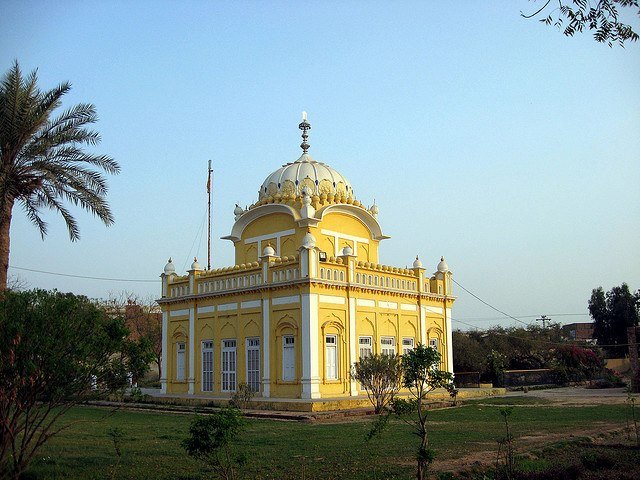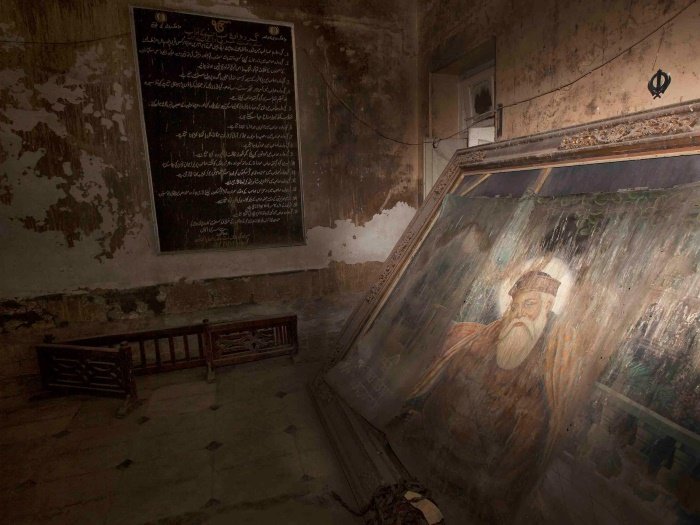
High on the Balochistan plateau, 124 kilometres south of Quetta, the old princely town of Kalat holds one of Pakistan’s most quietly remarkable Sikh shrines. The Guru Nanak Darbar, Kalat is not a grand marble complex — it is a living gurdwara tucked into the Hindu quarters of the town, where Prakash is still held daily, the sangat gathers twice a day, and the langar runs on land grants made generations ago by the Khan of Kalat himself. If you want to experience Sikh heritage as a living, breathing community tradition rather than a museum piece, Kalat is where you come.
This Guru Nanak Darbar Kalat travel guide covers why this remote Balochistan shrine deserves your journey, the story of the Khan’s patronage and the old Nanak Mandir outside town, when the plateau weather is kindest, and how to reach Kalat from Quetta, Karachi, and Islamabad.
Quick Facts
- Location: Hindu quarters of Kalat town, on the Quetta–Karachi road (N-25), Kalat District, Balochistan
- Altitude: Around 2,000 metres above sea level (Kalat sits on the high Balochistan plateau)
- Famous For: A living gurdwara with daily Prakash; the old Nanak Mandir shrine 3 km outside town; langar and land grants from the Khan of Kalat
- Nearest City: Quetta, 124 km north
- Accessibility: Good paved road (N-25) from Quetta; roughly a 2–2.5 hour drive
- Known Landmarks: Guru Nanak Darbar (new town), the old Nanak Mandir, Kalat Fort (Meeri), the old city ruins
- Best For: Sikh pilgrims, heritage travellers, off-the-beaten-path explorers, photographers, cultural travellers interested in Balochistan
Why Visit Guru Nanak Darbar, Kalat
Most Sikh heritage itineraries in Pakistan follow a familiar arc — Nankana Sahib, Kartarpur, Panja Sahib, Lahore. Kalat breaks that mould completely. Getting here means climbing onto the Balochistan plateau, driving the historic Quetta–Karachi road past juniper-dotted hills, and arriving in a town where the gurdwara is not a monument to the past but the centre of a living community. The Darbar holds Prakash every single day, and the sangat meets twice daily — this is a shrine that breathes.
The story that makes Kalat special is the bond between the shrine and the Khanate. The old Darbar was repaired by the Khan of Kalat, the first caretaker was the Udasi saint Baba Annkhandi Das, and the Khan endowed land to the gurdwara while the langar itself ran on his account — an estate that, remarkably, still stands in the gurdwara’s name. In an age of fading patronage, Kalat offers a rare, documented story of a Muslim ruler sustaining a Sikh shrine, and that story of shared heritage is worth the journey alone.
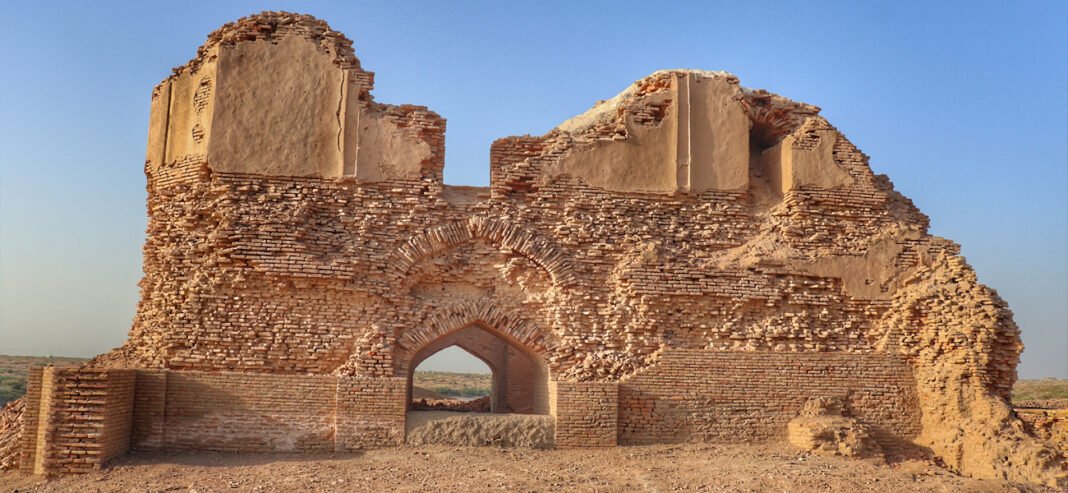
Then there is the town itself. Kalat was the seat of the former Kalat state, and its citadel — the Meeri fort — still broods over the old city. Walking from the Darbar in the new town’s Hindu quarter out to the old Nanak Mandir, 3 kilometres beyond the city, you pass through layers of Balochistan’s history: princely ramparts, desolate old-city lanes, and then the quiet of the old shrine. It is heritage travel at its most atmospheric, far from any tourist crowd.
Finally, Kalat rewards the traveller who likes their destinations unpolished and real. There are no tour buses here, no souvenir touts at the gurdwara gate — just a community that gathers twice a day, a kitchen that feeds whoever comes, and a high-plateau town with some of the clearest night skies in Pakistan. For anyone building a deeper Explore Pakistan journey beyond the usual circuit, Kalat is the chapter you will remember longest.
History of Guru Nanak Darbar, Kalat
Kalat’s recorded Sikh heritage begins with the town’s own story. Kalat stands on the Quetta–Karachi road, 124 kilometres from Quetta, and was for generations known as Kalat state — the seat of the Khans who ruled this part of Balochistan. The shrine of Guru Nanak Sahib was originally situated in the old city. But after the dissolution of the state and the desolation that followed, the old city declined and a new city was built — and it is inside the Hindu quarters of this new city that the present Gurdwara, the Guru Nanak Darbar, stands.
The Darbar’s history is defined by an unusual and touching patronage. The old Darbar — the original shrine — was repaired by the Khan of Kalat himself. Its first priest (caretaker) was the Udasi saint Baba Annkhandi Das, from the ascetic Udasi tradition that has long maintained many of the subcontinent’s historic gurdwaras. The Khan of Kalat went further than repairs: he made grants of land to the gurdwara, and the langar — the free community kitchen — was run on his account. That estate remains in the gurdwara’s name to this day, a living legal thread connecting the shrine to its princely benefactor.
The old shrine, known as the Nanak Mandir, still stands about three kilometres outside the new city — a quieter, older layer of the same sacred geography. The new Darbar, by contrast, is described as being built like a house: unpretentious, domestic in scale, and utterly alive. Prakash takes place here daily, and the sangat meets twice a day — a rhythm of devotion that has continued through the town’s transformation from princely capital to district headquarters.
What this history tells the visitor is something larger than one shrine. Kalat’s gurdwara survived the end of a princely state, the decline of an old city, and the building of a new one — sustained by a Muslim ruler’s grants, an Udasi saint’s care, and a small community’s daily devotion. In a region whose heritage is often told only through forts and battles, the Guru Nanak Darbar offers a gentler, more inclusive history of Balochistan.
Top Things to Do in Guru Nanak Darbar, Kalat
Join the Sangat at the Daily Gatherings
The heart of the Kalat experience is the Darbar’s daily rhythm. Prakash is held every day, and the sangat gathers twice daily for prayer and kirtan. Visitors are welcome — cover your head, remove your shoes, and sit quietly with the congregation. Few heritage sites in Pakistan let you participate so directly in a living tradition; the warmth of a small, close-knit sangat is something large-city gurdwaras cannot replicate.
Walk Out to the Old Nanak Mandir
Three kilometres outside the new city stands the old shrine, the Nanak Mandir — the original Darbar repaired by the Khan of Kalat, where Baba Annkhandi Das served as the first caretaker. The walk (or short drive) out to it takes you past the old city’s ruins and into the open plateau landscape. The old shrine is quieter and more weathered than the new Darbar, and standing there you can feel the deeper age of Kalat’s Sikh heritage.
Explore Kalat Fort (Meeri) and the Old City
No visit to Kalat is complete without seeing the great citadel of Meeri, the fortified palace-complex that was the seat of the Khans of Kalat. Its mud-brick ramparts rise above the old town in one of Balochistan’s most evocative skylines. Wander the lanes of the old city below, where the desolation that followed the state’s dissolution is still written into the abandoned quarters — a photographer’s dream in the golden late-afternoon light.
Share a Meal at the Langar
The langar at the Guru Nanak Darbar carries a special history: it was once run on the Khan of Kalat’s account, on land the Khan granted. Sitting down to the simple vegetarian meal here connects you to that story of cross-community generosity. As always with langar, everyone eats together, everyone is welcome, and the food — cooked by volunteers — tastes of the place itself.
Famous Places In and Around Guru Nanak Darbar, Kalat
- The old Nanak Mandir — the original shrine 3 km outside the new city, repaired by the Khan of Kalat.
- Kalat Fort (Meeri) — the historic citadel of the Khans of Kalat, dominating the old town skyline.
- Old city ruins — the desolate quarters of the former princely capital, atmospheric for walking and photography.
- Kalat bazaar — the town’s market, good for Balochi embroidery and a taste of daily plateau life.
- The Quetta–Karachi road (N-25) — the historic highway itself, with juniper hills and wide plateau vistas on the drive from Quetta.
How to Reach Guru Nanak Darbar, Kalat
Kalat lies on the N-25 Quetta–Karachi highway, 124 km south of Quetta, and the road is the whole story of getting here. The highway is paved and in generally good condition, climbing from Quetta onto the high plateau. From Quetta, the drive takes roughly 2 to 2.5 hours. Once in Kalat town, the Guru Nanak Darbar is in the Hindu quarters of the new city — any local driver or shopkeeper can point you to it, and the old Nanak Mandir is 3 km outside town on the old-city side.
From Quetta: This is the natural gateway. Take the N-25 south from Quetta toward Karachi; Kalat is 124 km down this road. Taxis, private cars, and intercity vans/coaches running the Quetta–Karachi route all pass through Kalat — ask to be dropped in Kalat town. Quetta International Airport, with flights from Islamabad, Karachi, and Lahore, is the nearest airport.
From Karachi: Kalat sits on the same N-25 highway that runs from Karachi to Quetta, so the journey is a single long road trip north — a full day’s drive through Khuzdar and the Lasbela plains up onto the plateau. Most travellers break the journey or travel overnight by coach. Alternatively, fly Karachi to Quetta and drive the final 124 km.
From Islamabad/Lahore: Fly to Quetta (the fastest option), then drive south on the N-25. Overland travel from the north means crossing the whole of Balochistan — possible but very long, so the Quetta flight plus road combination is what most visitors choose.
Road conditions and transport options: The N-25 is a major national highway and generally well maintained, though it is a two-lane road in stretches — drive in daylight, as is wise across rural Balochistan. Private car or hired taxi from Quetta gives the most flexibility; intercity coaches are the budget option. Within Kalat, the town is small and walkable, with local taxis and rickshaws for the trip out to the old Nanak Mandir. Winters can bring frost and occasional snow to the plateau — check conditions before a December–February trip.
Route Details
- Quetta → Kalat: Leave Quetta south on the N-25 (Quetta–Karachi highway). The road climbs through juniper country onto the plateau; Kalat town appears 124 km later, roughly 2–2.5 hours.
- In Kalat town: Head for the new city’s Hindu quarters — ask for the Guru Nanak Darbar (Gurdwara). The Darbar is built like a house; locals know it well.
- Old Nanak Mandir: From the town, take the road 3 km out toward the old city to reach the original shrine repaired by the Khan of Kalat.
- Kalat Fort (Meeri): Visible above the old town — combine it with the old-shrine visit in one outing.
Where to Stay in Guru Nanak Darbar, Kalat
Kalat is a small plateau town, so set expectations for simple, honest accommodation rather than resorts. The town has a handful of basic hotels and guesthouses along the main road and near the bazaar — clean rooms, usually with heating for the cold plateau nights, at very modest prices. These are functional overnight stops rather than destinations in themselves, and they are perfectly adequate for a one- or two-night heritage visit.
For more comfort, Quetta — 124 km north — is the practical base. Quetta has the full range from budget hotels to comfortable mid-range and a few upper-end options, and the 2–2.5 hour drive to Kalat makes a day trip entirely feasible. Many heritage travellers do exactly this: sleep in Quetta, drive down for the Darbar, the old Nanak Mandir, and the fort, and return by evening.
Pilgrim accommodation: As with gurdwaras elsewhere, visiting sangat can sometimes arrange simple stays through the Darbar’s management — worth asking if you are travelling as part of a Sikh pilgrim group. Camping on the open plateau is possible in the milder months for well-equipped travellers, but the town’s guesthouses are the simpler choice given the cold nights.
Where to Eat: Local Foods of Guru Nanak Darbar, Kalat
Eating in Kalat means eating Balochi food — hearty, meat-centric, and cooked over open flame. The dish to seek out is sajji, Balochistan’s most famous contribution to Pakistani cuisine: whole chicken or lamb marinated only in salt, skewered and slow-roasted over coals until the skin crisps and the meat falls apart. In Kalat you will find it at local restaurants and roadside setups along the N-25, often served with naan or khamiri roti and nothing else — it needs nothing else.
Other local staples include khaddi kabab (meat slow-cooked in a pit), rosh (a slow-cooked meat and fat preparation), and simple dal and sabzi plates at the town’s dhabas. Breakfast is typically parathas with chai, and the plateau’s cold mornings make a strong case for a second cup. Vegetarian travellers will be happiest at the gurdwara’s langar — the free community kitchen serves simple dal, roti, and rice to all — and at dhaba dal-and-roti meals. Meals in Kalat are very budget-friendly; a full sajji meal at a local restaurant costs far less than its city equivalents.
Weather in Guru Nanak Darbar, Kalat
At around 2,000 metres, Kalat has a true high-plateau climate: cold, sometimes snowy winters and warm but rarely oppressive summers. The air is dry year-round, the sun is strong, and nights are cool even in summer. This is sweater weather country for much of the year — pack accordingly. Here is the seasonal picture:
| Season | Temperature Range | Conditions |
|---|---|---|
| Winter (Dec–Feb) | -2°C – 12°C | Cold with frost; occasional snowfall in January. Days can be crisp and sunny. Carry heavy warm clothing. |
| Spring (Mar–May) | 4°C – 28°C | Warming steadily; March can still be chilly, May pleasantly warm. The best all-round season. |
| Summer (Jun–Aug) | 15°C – 32°C | Warm days, cool nights, very dry. A fine time to visit — far milder than the plains. |
| Autumn (Sep–Nov) | 4°C – 29°C | Clear, golden, cooling fast after October. November nights turn properly cold. |
Rainfall is low throughout the year; the wettest months are February–March with light showers. Winter road frost is the main seasonal hazard.
Language and Culture of Guru Nanak Darbar, Kalat
Kalat sits in the heart of Brahui-speaking country — Brahui is the distinctive Dravidian-origin language of the region — with Balochi also widely spoken. Urdu works for hotels, transport, and shops, and you will manage fine as a visitor with Urdu and basic English. The town’s small Hindu and Sikh community, centred on the Darbar, adds Punjabi to the linguistic mix during gatherings.
Culturally, this is conservative tribal Balochistan. Dress modestly — long sleeves and trousers for everyone is the respectful default — and ask permission before photographing people, especially women. At the gurdwara, follow the usual etiquette: cover your head, remove shoes, and accept langar graciously if offered. The community here is small and close-knit; a polite, unhurried manner opens doors that hurried tourism cannot. Evenings in Kalat are quiet — the town winds down early, and the plateau stars do the entertaining.
Shopping in Guru Nanak Darbar, Kalat
Kalat’s bazaar is a working town market, not a tourist souk — which is exactly why it is worth a wander. Look for Balochi embroidery: hand-stitched shawls, waistcoats, and cushion covers in the bold geometric patterns of the region, sold at a fraction of Quetta or Karachi prices. Dates and dry fruits from Balochistan’s orchards — almonds, apricots, and local dates — make excellent portable souvenirs.
You will also find everyday Balochi crafts: woven rugs, traditional caps, and simple silver jewellery in the bazaar’s smaller shops. Bargaining is normal and good-natured. There are no shopping malls in Kalat — for anything beyond the bazaar, Quetta’s markets are 124 km north. Buy here for the authentic and the handmade, and because your rupees support the town directly.
Travel Tips for Guru Nanak Darbar, Kalat
Packing Essentials
Layers are everything on the plateau: a warm jacket or shawl even in summer (nights are cool), sturdy walking shoes for the old city and the walk to the Nanak Mandir, sun protection (the high-altitude sun is fierce), a headscarf for the gurdwara, and a basic first-aid kit. Carry snacks and water for the Quetta–Kalat drive.
Safety Tips
Kalat town itself is calm and welcoming, and the gurdwara community looks after visitors. That said, this is rural Balochistan: travel the N-25 in daylight, keep to the main road, and check current travel advice before your trip as conditions in the province can change. Register with your hotel, keep family informed of your plans, and carry identification. Winter drivers should be ready for frost on the plateau road.
Money & Connectivity
Carry cash — Kalat has limited banking, and while there are ATMs in town, they are not always reliable. Stock up on cash in Quetta. Mobile signals work in Kalat town itself but thin out quickly on the surrounding plateau; download offline maps before leaving Quetta. Fuel up in Quetta or at reliable highway pumps — do not let the tank run low on the N-25.
Best Time to Visit Guru Nanak Darbar, Kalat
Spring (April–May): The Prime Window
Spring is Kalat at its best — mild days, cool nights, clear skies, and the plateau shaking off winter. The Darbar’s daily gatherings continue regardless of season, but spring makes the walks to the old Nanak Mandir and the fort genuinely pleasurable. If you can only pick one season, pick this one.
Summer (June–August): Warm Days, Cool Nights
Summer on the plateau is gentle compared with the furnace of the plains — highs around 30°C, nights refreshingly cool. It is a comfortable season for the drive and the sightseeing, though the landscape is at its driest and most golden-brown.
Autumn (September–October): Clear and Golden
Early autumn brings some of the year’s clearest weather and beautiful light for photography around the fort and old city. By November the nights turn cold, so pack accordingly if you come late in the season.
Winter (December–February): For the Hardy
Winter is cold — daytime highs barely reach double digits, nights drop below freezing, and January can bring snow. The Darbar, of course, carries on. Winter visits suit travellers who want Kalat at its most stark and empty, but check road conditions and pack serious warm clothing.
Final Thoughts
The Guru Nanak Darbar of Kalat is proof that the most meaningful heritage sites are not always the grandest. A house-like gurdwara in a small plateau town, sustained by a Khan’s centuries-old land grants, a saint’s care, and a community that still gathers twice a day — this is living history in its purest form. Add the brooding Meeri fort, the windswept old city, and some of Pakistan’s clearest mountain-plateau skies, and Kalat becomes far more than a stop on the Quetta–Karachi road.
If your Pakistan travels have already taken you to the great shrines of Punjab or the peaks of Malam Jabba and Hunza, let Kalat be your next frontier: a destination that rewards the journey with authenticity no curated attraction can match. Come in spring, stay for the evening gathering, eat at the langar, and drive out to the old Nanak Mandir at golden hour. You will leave understanding Balochistan — and Sikh heritage — a little more deeply.
FAQs
Where is the Guru Nanak Darbar in Kalat?
It stands in the Hindu quarters of Kalat’s new town, on the N-25 Quetta–Karachi highway, 124 km south of Quetta. The older shrine, the Nanak Mandir, is 3 km outside the town near the old city.
What is the best time to visit Kalat?
April to October. Spring (April–May) is ideal — mild days and clear skies. Winter (December–February) is very cold with possible snow, though the Darbar remains open.
How do I reach Kalat from Quetta?
Drive or take a taxi/coach south on the N-25 Quetta–Karachi highway — 124 km, roughly 2 to 2.5 hours. Quetta International Airport is the nearest airport.
Is Kalat safe for tourists?
Kalat town is calm and the gurdwara community is welcoming. Travel the highway in daylight, check current travel advice for Balochistan before your trip, carry cash and ID, and keep family informed of your plans.
Can non-Sikhs visit the Darbar?
Yes — all are welcome. Cover your head, remove your shoes, dress modestly, and you may join the sangat’s gatherings and the langar meal.
Where can I stay in Kalat?
Basic hotels and guesthouses in Kalat town cover simple overnight stays. For more comfort, base yourself in Quetta (124 km north) and visit Kalat as a day trip.
What food should I try in Kalat?
Balochi sajji — slow-roasted chicken or lamb cooked over coals — is the essential dish, plus khaddi kabab and dhaba dal-roti meals. The gurdwara langar serves a free vegetarian meal to all visitors.
What is the story of the Khan of Kalat and the gurdwara?
The Khan repaired the old Darbar, appointed the Udasi saint Baba Annkhandi Das as its first caretaker, granted land to the gurdwara, and ran its langar on his account — an estate that remains in the gurdwara’s name today.