Quick Facts
- Location: Historic core of Gujranwala’s old city, near Shairanwala Bagh, Punjab, Pakistan
- Famous For: Traditionally identified as the birthplace and childhood home of Maharaja Ranjit Singh (born 13 November 1780), founder of the Sikh Empire
- Nearest City: Gujranwala city centre; about 80 km north of Lahore
- Accessibility: Easy road access via the Grand Trunk Road; the old-city lanes around it are best explored on foot
- Known Landmarks: Late-18th-century haveli with cusped-arch facade, bangla-style roofs and a central courtyard; currently under conservation by the Walled City of Lahore Authority (project launched May 2024)
- Best For: Sikh heritage travellers, history lovers, architecture admirers, and heritage day trips from Lahore
Why Visit Haveli of Maharaja Ranjit Singh, Gujranwala
Maharaja Ranjit Singh — Sher-e-Punjab, the Lion of Punjab — ruled an empire that stretched from the Khyber Pass to Kashmir, and his samadhi in Lahore draws visitors from around the world. But every legend has a beginning, and his began here, in a brick mansion in the old city of Gujranwala. Also, this is the haveli traditionally identified as the birthplace and early residence of Ranjit Singh, born here on 13 November 1780.
Standing in its courtyard, you are at the starting point of the most remarkable rise in Punjab’s history: a boy from a Gujranwala misl family who united the Sikh confederacies and built an empire that held off both the Afghans and the British.
For Sikh travellers, this site carries deep emotional weight. Also, Lahore has the Maharaja’s tomb and his fort; Gujranwala has his roots. In fact, the haveli holds the story of his father Mahan Singh, leader of the Sukerchakia Misl, and of the household in which the future Maharaja spent his childhood. Pair it with the nearby Haveli of Hari Singh Nalwa — the birthplace of Ranjit Singh’s greatest general, just streets away — and you have the two founding stories of the Sikh Empire within a single old-city walk.
The 2024 Restoration
There is another reason to come now. After decades of neglect, the haveli is finally being restored. The Walled City of Lahore Authority launched a full conservation project in May 2024 — structural consolidation, roof treatment, flooring, woodwork and the removal of encroachments — and the building is being brought back to life for heritage tourism. Visiting during the restoration era means seeing history being saved in real time. It puts you ahead of the crowds that will surely come once the work is complete.
Add Gujranwala’s famous food — karahi, tikka, paye and the wrestler-sized portions of the City of Wrestlers — and this becomes one of the most rewarding day trips you can make from Lahore. It is history you can touch, in a city that will feed you better than almost anywhere else in Punjab.
History of Haveli of Maharaja Ranjit Singh, Gujranwala
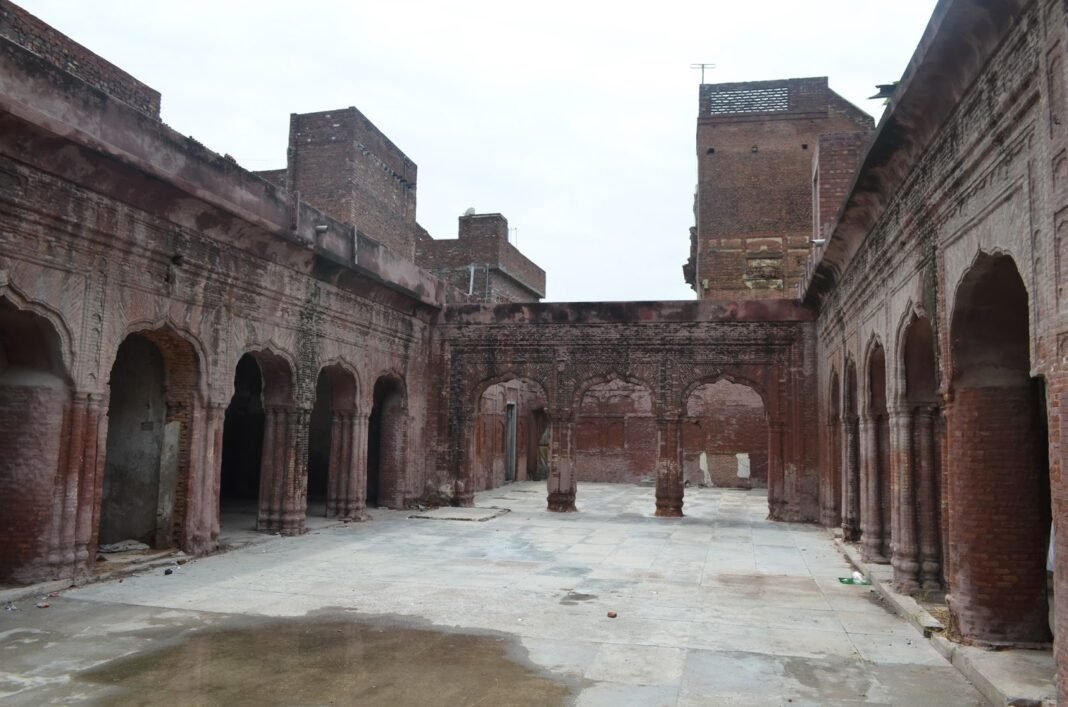
Ranjit Singh was born in this haveli on 13 November 1780, the son of Mahan Singh (1756–1792), the leader of the Sukerchakia Misl — one of the Sikh confederacies that rose as Mughal power faded in Punjab. Also, the haveli, dating to the late 18th century, reflected the wealth and eminence of Mahan Singh’s position. In fact, it is shaped as a long rectangle, oriented north-south. Its south facade — built of brick and plaster inset with wood — is organised in the Mughal manner as a symmetrical series of panels separated by ornamental columns spanned with cusped arches.
Above the main entrance rise gently curving bangla-style roofs, a fashion that came to the Mughal Empire from Bengal in Shah Jahan’s era.
The young Ranjit Singh spent most of his childhood here. Also, his father Mahan Singh was himself a formidable warrior, credited with conquering the great Rohtas Fort. In fact, the household’s courtyards and halls would have rung with the coming and going of the misl’s retainers and extended family. After Mahan Singh’s death in 1792, the twelve-year-old Ranjit Singh inherited the misl’s leadership, and from this Gujranwala base he began the campaigns that would unite Punjab under one crown.
From Refugee Shelter to Heritage Site
The haveli’s fortunes declined after 1947. During Partition it was used as a shelter for Muslim refugees arriving from India. Later it was converted into a police post, which occupied the building until 2006. It was then handed over to the Department of Archaeology and Museums and declared a protected cultural heritage building — though for years, funds allocated for its restoration went unutilised and encroachments, including makeshift dwellings and shops, crowded its forecourt.
The turnaround began in May 2024. Also, the Walled City of Lahore Authority launched a dedicated conservation project, expected to complete by November 2025. The work includes structural consolidation (underpinning, masonry arch strengthening, column restoration, parapet walls), roof treatment with wooden battens and waterproofing, flooring restoration with brick, terrazzo and Mughal tiles, electrification and illumination, decorative rendering, plastering and pointing, and traditional woodwork including doors, windows and jharokas. Crucially, the encroachments have been removed. For the first time in decades, the birthplace of the Lion of Punjab is being treated with the respect its history demands.
Nearby, at Sheranwalan Bagh, stands another piece of the family’s story: the tomb of Mahan Singh, Ranjit Singh’s father, with a baradari whose interiors still carry beautiful carved peacocks. District authorities have planned restoration of the tomb as well, clearing the encroachments that had turned it into a godown — another sign that Gujranwala’s Sikh heritage is finally getting its due.
Top Things to Do in Haveli of Maharaja Ranjit Singh, Gujranwala
Explore the Restored Facade and Courtyard
The south facade is the architectural highlight: symmetrical brick-and-plaster panels, cusped arches. Also, the bangla-style roof profiles over the main entrance. In fact, inside, the courtyard, columns and surviving rooms give you the layout of an 18th-century Punjabi noble household. With the WCLA restoration underway, you can see conservation craftsmanship — traditional masonry, lime plastering and woodwork — being practised on a living building. Photography of the facade is excellent in the morning light.
Pair It with the Nalwa Haveli
A short distance away stands the Haveli of Hari Singh Nalwa, the birthplace of the Maharaja’s greatest general. Also, the two havelis together tell the founding story of the Sikh Empire — the king and his commander, born streets apart in the same old city. In fact, no heritage trip to Gujranwala is complete without both.
Visit Mahan Singh’s Tomb at Sheranwalan Bagh
At nearby Sheranwalan Bagh, find the tomb of Mahan Singh, Ranjit Singh’s father. Also, the baradari with its carved peacock interiors. The district administration has cleared encroachments here and proposed full restoration — visit now to see the site at the start of its revival.
Walk the Old City
The haveli’s forecourt was long crowded by shops and vendors. The restoration has cleared the encroachments, but the surrounding old-city lanes remain full of life. Walk them slowly — metalworkers, spice sellers and the everyday theatre of Gujranwala’s bazaars make the history feel lived-in rather than distant.
Famous Places In and Around Haveli of Maharaja Ranjit Singh, Gujranwala
- Haveli of Hari Singh Nalwa: Birthplace of the Sikh Empire’s great general, in Kasera Bazaar — the essential companion visit.
- Sheranwalan Bagh: Garden quarter with Mahan Singh’s tomb and carved baradari.
- Gurdwara Damdama Sahib, Gujranwala: The city’s historic gurdwara — see our full travel guide.
- Eminabad: Historic town east of Gujranwala with gurdwaras linked to Guru Nanak’s era, including Gurdwara Rori Sahib.
- Lahore Fort and Samadhi of Ranjit Singh: Complete the story in Lahore — the Maharaja’s seat of power and his final resting place. If the mountains are calling instead, our Hunza Valley guide is a perfect next read.
How to Reach Haveli of Maharaja Ranjit Singh, Gujranwala
The haveli stands in the historic core of Gujranwala’s old city, near Shairanwala Bagh, within a densely built urban area connected to the Grand Trunk Road. For example, like the rest of the old city, the final approach is on foot. In fact, the lanes are narrow, and parking is best arranged at the edge of the old quarter.
- From Lahore: About 80 km north, roughly 1.5 to 2 hours by car via the Grand Trunk Road (N-5). An easy, well-signposted drive in all seasons.
- From Islamabad: About 250 km, roughly 4 hours via the M-2 motorway. Exit toward Gujranwala and follow the old-city signs.
- From Karachi: Around 1,350 km by road — fly to Lahore or take the train, then drive. Gujranwala Railway Station is on the main line and connects with Lahore and beyond.
- Nearest airport: Allama Iqbal International Airport, Lahore (about 80–90 km away). Hire a car or take an intercity van from Lahore’s bus terminals.
- Transport options: Private car is most comfortable; ride-hailing and public vans run constantly between Lahore and Gujranwala. Inside the old city, walk — and consider hiring a local guide who knows the haveli’s history and the restoration work.
Route Details
Lahore to the haveli: Take the Grand Trunk Road (N-5) north from Lahore toward Gujranwala. Also, on entering the city, follow signs for the old city. Park near the edge of the old quarter. The inner lanes around the haveli are too narrow and crowded for cars. Ask any local for “Ranjit Singh wali haveli” or the birthplace of Maharaja Ranjit Singh. It is one of the old city’s most famous landmarks. Because conservation work is ongoing, check locally whether interior access is open on your visit day. The facade and courtyard area are viewable regardless.
Where to Stay in Haveli of Maharaja Ranjit Singh, Gujranwala
Gujranwala works beautifully as a day trip from Lahore, but staying over lets you experience the city’s famous food scene at night. Also, mid-range hotels along the Grand Trunk Road and near Rahwali Cantt are the most comfortable bets — clean, modern and close to the old city. Wikivoyage’s city guide notes options like Hotel Global Village near Rahwali Cantt, opposite the well-known DC Colony housing area.
Budget travellers can choose from numerous guesthouses in Saddar and near the railway station. Also, for a more upscale stay, the newer housing developments — Citi Housing, DC Colony and Master City — have better-appointed properties. Most heritage visitors pair Gujranwala with a Lahore base, where five-star hotels are plentiful, and drive up for the day. Either way, plan your stay around the food: an evening of Gujranwala karahi and kebabs is non-negotiable.
Where to Eat: Local Foods of Gujranwala
You cannot visit Gujranwala without eating like a wrestler. Also, the city is famous throughout Pakistan for its food. In fact, the old city around the haveli is the best place to taste it.
Must-try dishes: Begin with tikka and seekh kebabs, then graduate to chicken or mutton karahi. Also, Allah Rakha at Sialkoti Darwaza is renowned for its karahi, seekh kebab, grilled goat chops and dal fry. Ghanni kay Pai serves the legendary paye that draws families from across the country. For the adventurous, chiray (sparrow) and batair (quail) at places like Shahbaz Tikka are a true Gujranwala specialty you will not find done better anywhere else.
Drinks and sweets: Wash it down with Pehalwani Badami Sharbat, the wrestler’s almond drink, or a towering falooda. Also, Thick Punjabi lassi and traditional sweets fill the old-bazaar shops.
Food streets and bazaars: The old city and Ghalla Mandi areas come alive in the evening — sizzling kebab stalls, biryani vendors, tandoori chicken fresh from the clay oven. Also, eating here is budget-friendly: generous, honest Punjabi food at prices that make Lahore look expensive. In fact, come hungry.
Weather in Haveli of Maharaja Ranjit Singh, Gujranwala
Gujranwala shares the Punjab plains climate: brief, pleasant winters and long, fierce summers. Since the haveli visit involves walking old-city lanes, time your trip for the cooler months.
| Season | Temperature Range | Conditions |
|---|---|---|
| Winter (Dec–Feb) | 5–20°C | Cool and pleasant; foggy December–January mornings. Best for heritage walks. |
| Spring (Mar–Apr) | 15–30°C | Mild and comfortable; lovely light for photographing the facade. |
| Summer (May–Aug) | 28–42°C | Very hot, often above 40°C. Visit early morning; rest at midday. |
| Autumn (Sep–Nov) | 15–32°C | Cooling down nicely; October–November are excellent. |
Note: ranges are approximate for the Gujranwala plains. Also, the July–September monsoon brings humid, rainy spells.
Language and Culture of Haveli of Maharaja Ranjit Singh, Gujranwala
Punjabi (Majhi dialect) is the language of the old city, with Urdu universally understood. Also, the culture is proudly Punjabi: the City of Wrestlers, generous hospitality, bhangra and giddha at weddings. A food culture that borders on religion. For Sikh visitors, the haveli is a site of deep reverence — treat it accordingly. You will find locals respectful and welcoming in return. Dress modestly in the old city (shoulders and knees covered), ask before photographing people or entering private spaces, and remember that restoration work may mean some areas are temporarily closed. A local guide enriches the visit enormously — they carry the oral history that no plaque can.
Shopping in Haveli of Maharaja Ranjit Singh, Gujranwala
Combine your heritage walk with Gujranwala’s bazaars. Saddar Bazaar is the main market for clothing and electronics. Also, Model Town Market has boutiques and branded stores; Gulshan Market is known for electronics and home goods. In fact, Gujranwala’s real shopping distinction is its industry — ceramics, sanitary ware, steel utensils and metal goods are manufactured here, and prices on quality kitchenware and hardware are excellent. Look for handcrafted metal items in the old bazaars near the haveli. No invented malls here — the authentic experience is the working bazaar.
Travel Tips for Haveli of Maharaja Ranjit Singh, Gujranwala
Packing Essentials
Comfortable walking shoes are essential for the old-city lanes. Also, carry water, sunscreen and a hat in the warmer months; a light scarf is useful year-round. In fact, a camera is a must — the cusped-arch facade and bangla roofs photograph beautifully in morning light.
Safety Tips
The old city is busy and generally safe in daylight. As a result, visit with a companion or guide, keep valuables discreet in crowded lanes, and respect any barriers around the active restoration site — conservation work means loose masonry and restricted areas. Park outside the old quarter and walk in.
Money & Connectivity
ATMs are easy to find in Saddar and along GT Road. Also, carry cash for the bazaars, where cards are rarely accepted. All major mobile networks (Jazz, Telenor, Zong, Ufone) have strong 4G coverage in Gujranwala, including the old city.
Best Time to Visit Haveli of Maharaja Ranjit Singh, Gujranwala
Winter (November–March): The Best Season
Cool, dry days are perfect for exploring the haveli, the old-city lanes and the food streets. Winter is also when Sikh heritage groups most often visit. Also, the atmosphere around the site is at its most vibrant.
Spring (March–April): Beautiful and Mild
Pleasant temperatures and clear skies — excellent for photography and for combining the haveli with the Nalwa haveli and Eminabad in one trip.
Summer (May–August): Only If You Must
Extreme heat makes midday sightseeing miserable. If summer is your only option, visit at dawn, hydrate, and retreat indoors by late morning. Also, monsoon rains can make lanes slippery.
Autumn (September–October): A Smart Shoulder Season
The heat breaks and the crowds thin. Also, October is one of the most comfortable months for a heritage day trip from Lahore.
Final Thoughts
Every empire has an address where it began. For the Sikh Empire, that address is a brick haveli in Gujranwala’s old city — and after decades of neglect, it is finally getting the care it deserves. For example, the WCLA’s restoration is returning the birthplace of Maharaja Ranjit Singh to something like its 18th-century dignity, and visiting now means witnessing that revival firsthand.
Walk its courtyard, trace the cusped arches with your eyes, then cross the old city to the Nalwa haveli and finish with the best karahi of your life. That is a day in Gujranwala you will not forget. For more heritage journeys across the country, browse our Explore Pakistan collection — and when you are ready for the high mountains, our Malam Jabba guide awaits.
FAQs
Where is the Haveli of Maharaja Ranjit Singh?
In the historic core of Gujranwala’s old city, near Shairanwala Bagh, Punjab — about 80 km north of Lahore on the Grand Trunk Road.
Was Ranjit Singh really born here?
The haveli is traditionally identified as the birthplace and childhood home of Maharaja Ranjit Singh, born 13 November 1780, son of Mahan Singh of the Sukerchakia Misl. Also, it is a protected cultural heritage building.
Is the haveli open to visitors?
A conservation project by the Walled City of Lahore Authority (launched May 2024) is restoring the building. The facade and surroundings are viewable; check locally about interior access during the works.
What is the best time to visit?
November to March — cool, dry weather ideal for walking the old city. Also, Avoid May–August heat.
How do I get there from Lahore?
Drive north on the Grand Trunk Road (N-5), about 80 km / 1.5–2 hours. Intercity vans, buses and trains also connect Lahore and Gujranwala.
What else can I see nearby?
The Haveli of Hari Singh Nalwa (Kasera Bazaar), Mahan Singh’s tomb at Sheranwalan Bagh, Gurdwara Damdama Sahib. Also, Eminabad’s historic gurdwaras.
Is it suitable for families?
Yes — a daytime heritage visit with a guide is comfortable for families. Also, dress modestly and wear walking shoes for the old-city lanes.
What food should I try in Gujranwala?
Chicken and mutton karahi, tikka, seekh kebabs, paye (Ghanni kay Pai), chiray and batair game birds, falooda, Badami Sharbat and Punjabi lassi.