Quick Facts
- Location: Khuzdar city, Khuzdar District, Balochistan — at the apex of a narrow valley, roughly 400 kilometres from Karachi and 300 kilometres from Quetta.
- Altitude: Around 1,237 metres (about 4,000 feet) above sea level.
- Famous For: Layers of military history — from the Arab-era ruins of ancient Turan to the 19th-century fort built by the Khan of Kalat after the 1869 battle of Jhalawan.
- Nearest City: Khuzdar itself, a district and divisional headquarters of Balochistan.
- Accessibility: Reachable by road on the N-25 National Highway (the RCD Highway), which links Pakistan with Iran and Turkey. A small airport sits near the city.
- Known Landmarks: The ruins of the old Arab-built fort near the town, the painted-pottery fort of the Khan of Kalat, and the archaeological mounds around Khuzdar.
- Best For: History lovers, travellers exploring off-the-beaten-track Balochistan, and road trippers driving the Karachi–Quetta corridor.
Why Visit Hazar Ganji Fort, Khuzdar
Khuzdar is one of those places where the ground under your feet has been a crossroads for well over a thousand years. Also, and the Hazar Ganji Fort is your doorway into that story. Most visitors race past Khuzdar on the N-25 highway between Karachi and Quetta, stopping only for fuel or tea. But those who pause discover a city that was once the capital of the Arab province of Turan, the headquarters of the Arab general commanding the Indian frontier, and later a battleground of the Kalat State.
The fort standing here today is the visible anchor of all that history. The Khan of Kalat built it after his 1869 victory over the people of Jhalawan. It is a structure that has watched Balochistan change from a medieval frontier to a modern province.
Balochistan Where History Still Lives
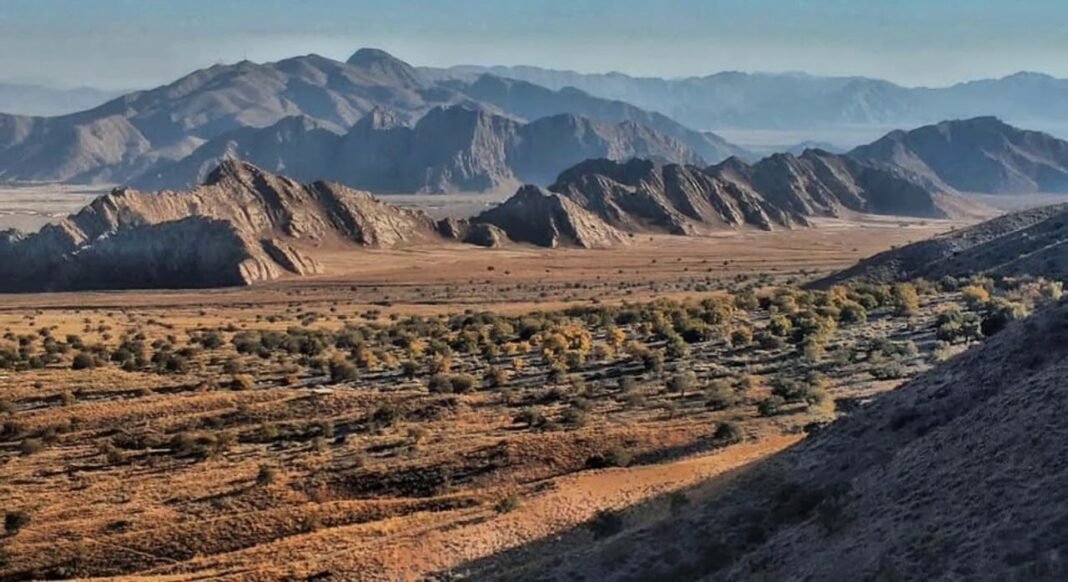
What makes the visit compelling is not a polished museum experience but the opposite: an authentic, working corner of Balochistan where history is still part of daily life. The painted pottery associated with the Khan’s fort, the ruins of the older Arab-built fort close to the town. The ancient mounds that archaeologists are still keen to explore give Khuzdar the feel of a place whose story is not finished. The city sits at the apex of a narrow valley at roughly 1,237 metres. The air is cooler and drier than the plains below.
The mountain-and-valley setting gives every drive in and out a sense of theatre — long descents, rocky gorges. The sudden green of irrigated patches around the town.
Hospitality in the Heart of Balochistan
Hazar Ganji Fort also works as the perfect excuse to see a side of Balochistan that travel media rarely shows. Khuzdar is described as the “heart of Balochistan,” a divisional headquarters with a university, a growing cantonment, and some of the province’s most important tribal towns — Zehri, Naal, Wadh and Khuzdar itself. The tribes here — Bizenjo, Mengal, Zarakzai, Zehri, Jattak and others — are known for their hospitality. A visitor who treats the place with respect is likely to be met with the famous Baloch code of hospitality, where a guest is honoured.
For photographers, the combination of old fort walls, mud-brick townscapes and dramatic valley light is quietly spectacular.
Finally, there is the journey itself. The drive to Khuzdar is an attraction in its own right. The N-25 winds through the Bolan Pass route’s dramatic geology, and whether you come from Karachi or Quetta you pass through landscapes that change from coastal plain to rugged mountain desert. If you are the kind of traveller who collects routes as well as destinations, Hazar Ganji Fort belongs on your list. It is not a day-trip theme park. It is a real place with real depth, and it rewards the traveller who takes it seriously.
History of Hazar Ganji Fort, Khuzdar
The documented history of Khuzdar begins with the Arab conquest of the region in the early Islamic centuries. Under Arab rule, this area formed the province of Turan, with Khuzdar as its capital — an important cantonment and the headquarters of the Arab general commanding the Indian frontier. The Arabs built a fort here, the ruins of which still survive close to the town. The area around Khuzdar is scattered with remnants of painted pottery that speak to a long-settled, cultivated landscape.
For travellers interested in the early Islamic history of South Asia, Khuzdar is one of the few places in Pakistan where that chapter is still visible on the ground.
The Khan’s Victory Fort
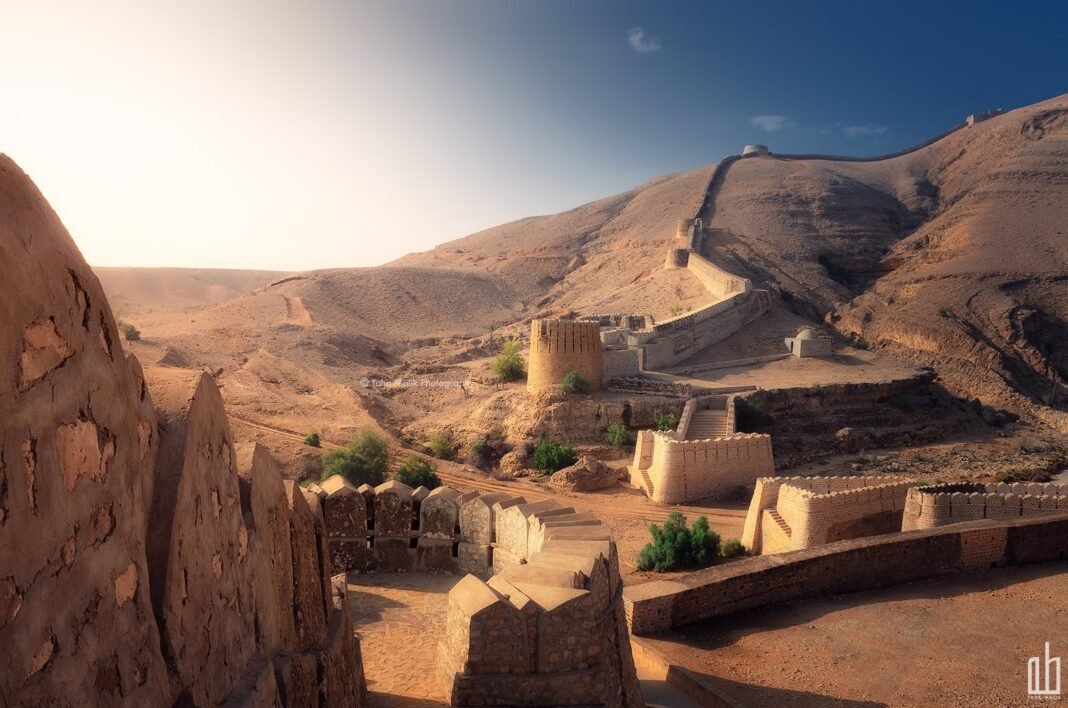
After the Arab period, Khuzdar became part of the Kalat State. Also, it was in this period that the fort most visitors see today took shape. In 1869, the region was the scene of a major battle between the people of Jhalawan and the Khan of Kalat, Mir Khuda Khan. The Khan emerged victorious — and to mark the victory he built a fort here, the structure of painted pottery that, according to historical accounts, still stands. This is the Hazar Ganji Fort that travellers come to see: a 19th-century Khanate-era fortress rising from one of Balochistan’s oldest continuously inhabited towns.
A Garrison Town Across Twelve Centuries
Khuzdar’s modern administrative story is shorter but telling. Previously part of the Kalat District, Khuzdar was upgraded to a separate district on 1 March 1974 and later became a divisional headquarters, divided into the tehsils of Khuzdar, Zehri, Naal and Wadh. A university now stands on its outskirts. It began as a college and is now a full campus on 200 acres in the foothills. A large military complex near the city will make Khuzdar the second-largest cantonment in Balochistan after Quetta. The town that once commanded the Arab Indian frontier is, in other words, still a garrison town — just as it was twelve centuries ago.
That continuity is exactly what makes standing in front of Hazar Ganji Fort feel so grounded: the same strategic valley, the same command of the mountain passes, the same sense of a place that has always mattered.
For the historically curious, it is also worth knowing that Khuzdar’s archaeological story is far from complete. Several ancient mounds around the district have yielded artefacts, and archaeologists are eager to explore them further — hoping they will reveal how the region’s ancient cultures farmed, built and traded in this demanding environment. Sites like the giant dykes known locally as GOR BUNDs hint at a sophisticated agrarian society that learned to farm a dry, rocky valley long before modern engineering arrived. Visiting Khuzdar now means seeing a historic landscape in the middle of being understood — a rare privilege for a heritage traveller.
Top Things to Do in Hazar Ganji Fort, Khuzdar
Explore the Fort Walls and Painted Pottery
The centrepiece of any visit is the fort itself. Meanwhile, the Khanate-era fort built after the 1869 battle, with its association of painted pottery work. In fact, walk the perimeter, study the wall construction, and look for the pottery details that give the structure its character. Because the fort is a working heritage site rather than a ticketed attraction, the experience is informal. Hire a local guide in Khuzdar bazaar who can point out the historical features and explain which sections are original and which have been repaired. Photography here is excellent in the soft light of early morning and late afternoon.
The valley air is clearest and the walls take on a warm tone.
Visit the Ruins of the Old Arab Fort
Close to the town stand the ruins of the old fort built by the Arabs. A much older layer of Khuzdar’s military history, dating back to the era when the city was the capital of Turan and the headquarters of the Arab general commanding the Indian frontier. These ruins are fragmentary rather than intact, so bring your imagination and a knowledgeable local companion. Standing among the old stones with the valley spread below is one of those quiet moments that makes the long drive worthwhile: you are looking at the frontier of the early Islamic world, twelve hundred years on.
Walk the Khuzdar Bazaar
Khuzdar’s main bazaar is the city’s living room — a busy commercial strip where tribespeople from across the district come to trade. Also, wander through the stalls, sample fresh dates, look at the dry fruits, and watch the pace of a real Balochistan market town. This is also the best place to arrange a guide, buy supplies for onward travel, and take the measure of local hospitality. The bazaar comes alive in the cooler hours of morning and evening. Much of the city’s business is done.
Drive the Valley Ridges for Panoramic Views
Khuzdar sits at the apex of a narrow valley, and short drives or walks up the surrounding ridges give sweeping views over the town, the fort and the long sweep of the N-25 disappearing into the mountains. These are natural, undeveloped viewpoints — not tourist lookouts — so ask locally for a safe route and go with a companion. The reward is some of the most dramatic road-and-valley scenery in interior Balochistan, especially at sunset when the whole valley floor glows.
Visit the University Campus on the Outskirts
The Balochistan University of Engineering and Technology campus on the outskirts of Khuzdar, set in the foothills on a 200-acre site, is an interesting stop for travellers interested in the region’s modern development. It symbolises Khuzdar’s role as the educational hub of central Balochistan. A reminder that this ancient frontier town is also building the province’s future. Check visitor access with the administration before going.
Famous Places In and Around Hazar Ganji Fort, Khuzdar
- The Khanate Fort (Hazar Ganji Fort): The 19th-century fort built by Mir Khuda Khan after the 1869 battle — the town’s landmark.
- Old Arab Fort Ruins: Fragmentary ruins near the town from Khuzdar’s era as capital of Arab Turan.
- Khuzdar Main Bazaar: The commercial heart of the district, ideal for dates, dry fruits and local crafts.
- GAAJ Historical Sites: A mysterious, still-unexplored area near Khuzdar that archaeologists hope to study further.
- GOR BUNDs (Giant Dykes): Ancient water-management earthworks spread across the region — evidence of a sophisticated agrarian past.
- Ancient Mounds: Archaeological mounds around Khuzdar yielding artefacts and painted pottery.
- University Campus Foothills: The 200-acre BUET campus in the foothills on the city’s outskirts.
How to Reach Hazar Ganji Fort, Khuzdar
Khuzdar lies on the N-25 National Highway (the RCD Highway), the main road corridor linking Pakistan with Iran and Turkey — which makes it one of the most straightforward historic towns in Balochistan to reach by road. Also, the city is about 400 kilometres from Karachi and 300 kilometres from Quetta. The fort itself stands in the town, within easy reach of the bazaar and the main road. There is no complicated last leg: once you are in Khuzdar, the fort is a short drive or walk away.
Route Details
- From Karachi (~400 km, 6–8 hours): Take the N-25 (RCD Highway) north from Karachi through Bela and into the Lasbela hills, then onward through the winding mountain road to Khuzdar. The road is paved but mostly single-carriageway, with steep climbs, sharp bends and heavy truck traffic — plan for a full day’s drive, leave Karachi early, and avoid driving this stretch after dark.
- From Quetta (~300 km, 5–6 hours): Take the N-25 south from Quetta toward Mastung and Kalat, then continue through the dramatic passes to Khuzdar. The scenery is outstanding — mountain desert, gorge roads and occasional green valleys — and the Bolan Pass corridor is the classic Balochistan driving experience. Again, daylight driving only.
- From Islamabad or Lahore: Fly to Quetta or Karachi first, then drive to Khuzdar as above. Quetta International Airport and Jinnah International Airport Karachi both have regular flights from both cities. Road-only travel from Islamabad is a very long journey (well over 1,500 km) and is only for the most committed road trippers.
- Nearest airport: Khuzdar has its own small airport near the city, used mainly for limited services. Most visitors will find it far more practical to fly into Quetta or Karachi and drive the N-25.
Road conditions by season: The N-25 is an all-weather paved highway, but summer (May–August) brings extreme heat and dust. The monsoon months can bring flash floods on low crossings. Mountain stretches can be chilly at dawn.. Still, winter (December–February) is the most comfortable driving season, with cool, clear air — Check local conditions before departure.
Choosing Your Transport
Transport options: Self-driving in a sturdy car or SUV is the most flexible option. The highway is rough in places, so a high-clearance vehicle is ideal. Also, public buses and coaches run the Karachi–Quetta route daily and stop at Khuzdar. This makes the town accessible even without your own vehicle. For a relaxed trip, join a tour group from Karachi or Quetta that includes Khuzdar on a Balochistan circuit — local operators know the road, the fuel stops and the etiquette.
Where to Stay in Hazar Ganji Fort, Khuzdar
Khuzdar is a district headquarters with a steady stream of officials, traders and travellers. Also, it has a reasonable range of places to stay. But this is frontier Balochistan, not a resort town, so set expectations accordingly. There are no internationally branded hotels here, and no five-star properties; the accommodation is honest, functional and affordable.
Mid-range hotels: The city centre around the bazaar has a cluster of mid-range hotels and motels catering to business travellers and government visitors. These typically offer air-conditioned rooms, attached bathrooms and in-house dining — perfectly comfortable for a night or two. Also, the best base for exploring the fort and the town. Walk-ins are usually possible, but calling ahead is wise during busy trading periods.
Budget guesthouses: Simpler guesthouses and lodges around the bus stands and main road offer clean, basic rooms at very modest rates. They are the choice of traders and local travellers, and while facilities are simple, the hospitality is genuine.
Government rest houses: Khuzdar, as a divisional headquarters, has official rest houses and inspection bungalows. They are sometimes available to travellers with prior permission or a letter of introduction. Enquire if you are travelling on official business or with a government contact.
Camping: Camping around the fort or the town is not recommended for independent travellers — stick to established accommodation in the city. If you are on an organised expedition with local hosts, follow their guidance on where to camp.
For a longer Balochistan trip, many travellers base themselves in Quetta, which offers a far wider choice of hotels. They visit Khuzdar as part of a road circuit. Stop at the Archaeological Museum of Balochistan for context on the region’s ancient history before heading out.
Where to Eat: Local Foods of Hazar Ganji Fort, Khuzdar
Eating in Khuzdar means eating Balochi food at its most authentic. The dishes here are not restaurant inventions but the everyday cooking of Brahui and Baloch households. Also, the food is hearty, meat-heavy and flavoured simply: salt, black pepper, a little turmeric, and the taste of wood fire.
Sajji: The signature dish of Balochistan. A whole lamb (or chicken) marinated in just salt, skewered and slow-roasted over an open fire until the skin is crisp and the meat falls apart. Also, Khuzdar’s sajji shops do it the traditional way. A good sajji with fresh kaak bread is one of the great eating experiences of Pakistan.
Khaddi kabab: Meat — usually a whole goat or lamb — cooked slowly in a pit dug in the ground, sealed and left to roast in its own heat for hours. It is a celebratory dish, often prepared for weddings and gatherings, but some Khuzdar eateries serve it on order.
Kaak: The hard, round Balochi bread baked on hot stones, with a dense, nutty flavour and a shelf life of weeks. Also, it travels well — buy a few to take on the road.
Balochi mutton roast and namkeen gosht: Salt-and-pepper mutton dishes that showcase the quality of Balochistan’s free-range livestock. Also, simple, rich and deeply satisfying.
Dates and doodh patti: Khuzdar bazaar sells excellent dates from the region’s palm groves, and no meal in Balochistan ends without doodh patti — strong milk tea, served in proper glasses, always with ceremony. Also, a day’s food here is budget-friendly by any standard: expect to eat very well for a fraction of what a city restaurant costs. In fact, restaurants cluster around the bazaar and the bus stands. Ask your hotel for the current favourite sajji house, as reputations shift.
Weather in Hazar Ganji Fort, Khuzdar
Khuzdar’s elevation of about 1,237 metres gives it a high-desert climate: hot summers, cool winters. Also, a big swing between day and night temperatures. Rainfall is low and concentrated in the winter months and the late-summer monsoon spillover. The most comfortable visiting weather runs from October through March, when days are warm and nights are crisp.
| Season | Temperature Range | Conditions |
|---|---|---|
| Winter (Dec–Feb) | 3°C to 18°C | Cold, dry and clear. January is the coldest month, with chilly nights; days are pleasant and sunny. |
| Spring (Mar–May) | 10°C to 33°C | Warming up fast. March is lovely; by May the heat is building and the air is very dry. |
| Summer (Jun–Aug) | 24°C to 38°C | Hot and dry, with the wettest spell (around August) bringing brief, heavy showers. |
| Autumn (Sep–Nov) | 8°C to 33°C | Excellent. October is the driest month; days are warm, nights cool, skies brilliantly clear. |
Khuzdar gets roughly 250–335 mm of rain a year — a fraction of what the Punjab plains receive — so whatever the season, expect sunshine. The main weather factor to plan around is heat in summer and cold nights in winter, not rain.
Language and Culture of Hazar Ganji Fort, Khuzdar
Khuzdar is a Brahui and Baloch town, and its culture reflects both. Also, Brahui — a Dravidian language spoken by millions in Balochistan — and Balochi are the everyday languages of the district, alongside Urdu, which is understood in the bazaar and used with visitors. The major tribes of the district include the Bizenjo, Mengal, Zarakzai, Zehri, Gongav and Jattak, among others, and over 99 percent of the population is Muslim.
The cultural code here is built on honour and hospitality. The Baloch tradition of mehman nawazi — treating a guest with elaborate courtesy — is real and deeply felt: a visitor who is polite and respectful will often find themselves offered tea, food and help with directions without asking. Dress modestly (long trousers and covered shoulders for men and women), ask permission before photographing people, and accept offered tea when you can — refusing hospitality can cause genuine offence. In a town like Khuzdar, where tourists are still rare, how you behave reflects on every visitor who follows.
Shopping in Hazar Ganji Fort, Khuzdar
Khuzdar bazaar is the district’s main shopping centre and the natural place to pick up regional specialities. There are no shopping malls here — this is a traditional bazaar town, and that is its charm. Also, look for fresh and dried dates from the region’s palm groves, a good selection of dry fruits (almonds, pistachios, apricots). In fact, Balochi handicrafts: hand-embroidered fabrics with the distinctive geometric patterns of Baloch needlework, woven shawls and traditional caps. Kaak bread makes an edible souvenir with a long shelf life.
Prices are set by haggling in the traditional style — start at about half the asking price and settle somewhere in the middle, always with good humour. Anything you buy directly from local makers puts money straight into the local economy. This in this part of Balochistan matters more than most visitors realise.
Travel Tips for Hazar Ganji Fort, Khuzdar
Packing Essentials
Pack for a high-desert climate: sunscreen, sunglasses and a hat are non-negotiable year-round. Also, a warm jacket or shawl for winter nights (and cool early mornings in spring and autumn). Comfortable walking shoes for the fort grounds and bazaar. A refillable water bottle — the air is dry and you dehydrate faster than you expect. And a small first-aid kit, because pharmacies outside the main towns stock basics but not much more. Carry a power bank: electricity supply in smaller Balochistan towns can be intermittent.
Safety Tips
Khuzdar is a district headquarters and generally receives a steady flow of official and commercial visitors. Balochistan as a whole requires sensible precautions. Check current travel advisories before your trip, travel the N-25 only in daylight, and let someone know your route and expected arrival time. In town, keep valuables discreet, avoid isolated areas after dark, and follow the advice of your hotel or local contacts. Hiring a local guide is not just good for history — it is good for safety, too.
Money & Connectivity
Bring cash: Khuzdar’s banks have ATMs, but card acceptance in shops and restaurants is limited and digital payments are unreliable. Data speeds vary and coverage thins out quickly on the mountain roads.. Still, mobile signals from the major networks (Jazz, Telenor, Zong, Ufone) are available in the town, Download offline maps before you leave Karachi or Quetta.
Best Time to Visit Hazar Ganji Fort, Khuzdar
October to March — The Best Season
This is the sweet spot. Also, days are warm and sunny (roughly 18–30°C), nights are cool and crisp, the air is clear. The N-25 is at its most pleasant to drive. October is the driest month of the year, and winter brings the valley’s sharpest, bluest light — perfect for photography of the fort and the surrounding hills. If you have one window for Khuzdar, make it these months.
April to May — Warm but Manageable
Temperatures climb fast through spring, reaching the low 30s by May, and the air is extremely dry. Sightseeing is still possible in the mornings and evenings, but plan midday rest. The upside: the town is quiet and the bazaar is at its most authentic, with none of the thin winter crowds.
June to September — The Hot Season
Summer in Khuzdar is genuinely hot — highs reach 38°C and the sun is fierce. August brings the year’s main rainfall (still modest by most standards). This can cause brief flash-flood hazards on low road crossings. Unless you love extreme heat, visit in another season. If you must travel in summer, start drives before dawn and rest through the afternoon.
Final Thoughts
Hazar Ganji Fort will not give you the polished, gift-shop experience of a famous monument. And that is precisely why it is worth the drive. It is a real fort in a real town. It carries twelve centuries of frontier history, from the Arab capital of Turan to the Khanate’s 1869 victory. This valley has commanded the same mountain passes since the first armies marched through. For travellers who want Pakistan beyond the postcards, Khuzdar offers something rare: history you can touch, hospitality you will remember. A road journey through some of the most dramatic country in Balochistan.
Plan it as part of a longer Balochistan circuit — pair it with the dramatic Bolan Pass, the museums and bazaars of Quetta. The slow coastal road to Gwadar — and give Khuzdar at least a full day. Also, the fort, the bazaar, the valley views and the sajji are a combination that no rushed drive-by can deliver. Explore more ideas in our Explore Pakistan collection and start building your Balochistan itinerary.
FAQs
Where is Hazar Ganji Fort, Khuzdar?
The fort stands in Khuzdar city, Khuzdar District, Balochistan — at the apex of a narrow valley on the N-25 National Highway, about 400 kilometres from Karachi and 300 kilometres from Quetta.
What is the history of Hazar Ganji Fort?
Khuzdar was the capital of the Arab province of Turan and later part of the Kalat State. Meanwhile, the present fort was built by the Khan of Kalat, Mir Khuda Khan, after his victory over the people of Jhalawan in the 1869 battle. Older ruins near the town date back to the Arab-built fort of the early Islamic period.
What is the best time to visit Hazar Ganji Fort, Khuzdar?
October to March is ideal — warm sunny days, cool nights and clear skies. Also, summer (June–August) is very hot, with highs around 38°C.
How do I reach Khuzdar from Karachi and Quetta?
Drive the N-25 (RCD Highway): about 400 km and 6–8 hours from Karachi, or 300 km and 5–6 hours from Quetta. Public buses and coaches also run the Karachi–Quetta route and stop at Khuzdar.
Is Khuzdar safe for tourists?
Khuzdar is a district headquarters with regular official and commercial traffic. Also, Balochistan requires sensible precautions: check current advisories, travel the highway in daylight, hire a local guide, and follow local advice.
Is Hazar Ganji Fort suitable for families?
The town and fort area are fine for families, though facilities are basic. This is frontier Balochistan, not a resort. The bazaar, food and fort visit are all family-friendly during the day.
Where can I stay in Khuzdar?
Khuzdar city has mid-range hotels around the bazaar, budget guesthouses near the bus stands, and official rest houses (sometimes available with prior permission). Also, there are no luxury hotels — keep expectations practical.
What food should I try in Khuzdar?
Sajji (slow-roasted lamb), khaddi kabab (pit-roasted meat), kaak bread, namkeen gosht, fresh dates and doodh patti — all at very budget-friendly prices in the bazaar eateries.