Iran Hormuz Offer Hinges on End to US Naval Blockade
Iran has offered to reopen the Strait of Hormuz if the United States lifts its naval blockade, Tehran’s ambassador to Pakistan said on Saturday. The Iran Hormuz offer was conveyed through Pakistan, and it sits inside a Pakistan-brokered interim deal reached in June to end the conflict between Iran and the United States.
Ambassador Reza Amiri Moghadam set out the offer at a seminar in Islamabad. He said Iran had recently told Washington, through Pakistan, that it was prepared to reopen the strait. He then accused US President Donald Trump of rejecting the proposal by insisting that the blockade of Iranian ports would continue.
Pakistan and Qatar helped broker the June agreement. It sought to restore shipping through the strait, lift the US naval blockade, and open negotiations toward a broader deal covering Iran’s nuclear programme. Moghadam said Iranian officials had conveyed their willingness to reopen the strait during visits to Tehran by Chief of Defence Forces Field Marshal Asim Munir, provided Washington ended its blockade.
What the Iran Hormuz offer involves
The offer links two steps. Iran would reopen the strait, and the United States would end its naval blockade of Iranian ports. The June interim deal framed the exchange as a first step, with wider talks on Iran’s nuclear programme to follow.
So far, that exchange has not happened. Moghadam said Washington rejected the proposal, and the standoff over the strait continues. The war, which began with joint US and Israeli strikes on February 28, is now nearing its eighth month.
For Pakistan, the channel matters. Islamabad helped broker the June deal, and the envoy chose an Islamabad seminar to put the offer on the record.
Tehran to study Makkah defence pact
Moghadam also said Tehran would study the Makkah Joint Defense Agreement signed by Pakistan, Saudi Arabia and Turkiye before deciding whether to support it. “We will study the Makkah Agreement, and if it is good, we will support it,” he said.
The agreement was signed after renewed attacks by Iranian-backed Houthi rebels in Yemen on Saudi Arabia. The three signatories say it will strengthen collective deterrence and expand defence cooperation. Turkish and Pakistani officials say it is defensive and does not target Iran or any other country. Turkiye has ruled out sending troops into Yemen to attack the Houthis, while Pakistan says its role would be strictly defensive.
Pressure grows inside Iran
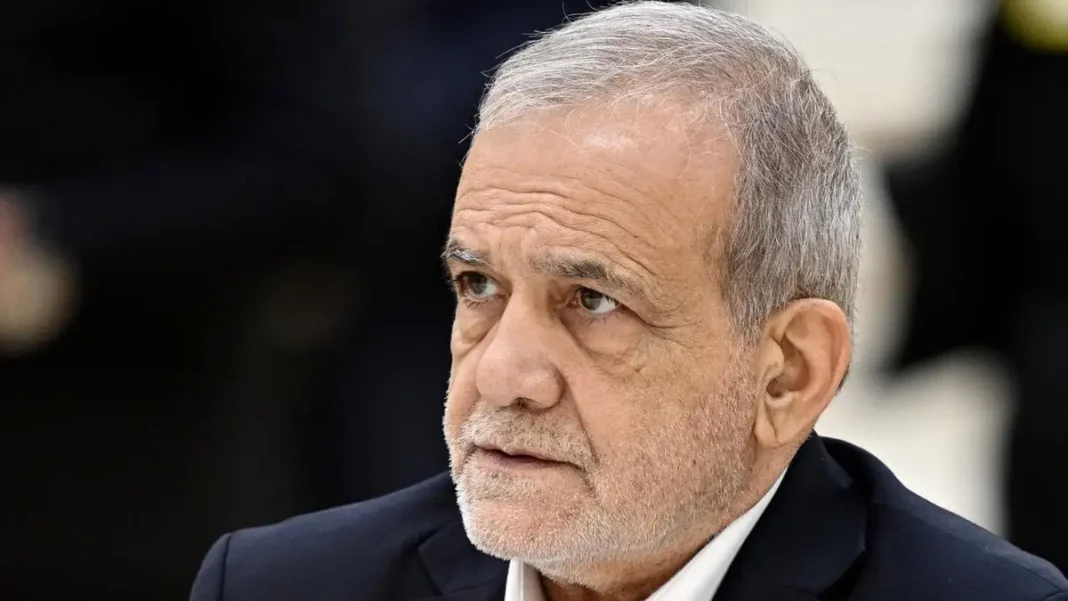
Iranian President Masoud Pezeshkian said on Saturday that many Iranians are struggling to put food on the table as the economic pressure of the war mounts. In remarks broadcast on state television, he blamed the United States for the failure of the interim deal but called for a fresh attempt at concluding one.
“We were having negotiations; the cowards messed everything up,” Pezeshkian said. “I still think we should go and conclude it.” He added that Iran must get out of what he called a state of neither war nor peace.
Iran’s armed forces chief of staff, Major General Ali Abdollahi, struck a harder line. He said the US Navy was no longer capable of approaching the waters around the Persian Gulf or Iran’s territorial waters, and warned that US forces would never return to the Strait of Hormuz.
A violent Saturday across the region
The envoy’s remarks came on a day of sharp escalation. Yemen’s Houthi rebels denied targeting the holy cities of Makkah and Madina after Saudi authorities reported responding to falling shrapnel from interceptions in those areas. “What the Saudi enemy is promoting about our forces targeting towards the holy areas of Makkah and Madina is a great and huge lie,” Houthi military spokesman Yahya Saree said.
Saudi Arabia’s civil defence agency said it had intercepted two ballistic missiles launched toward the Makkah and Madina regions, with debris falling in Jeddah, Taif and Rabigh. Saree, meanwhile, claimed seven Houthi operations over the past day, including strikes on Riyadh’s King Khalid International Airport, an Aramco facility in Yanbu, the Rabigh oil refinery and the East-West oil pipeline. Saudi Arabia has not immediately commented on those claims.
The disruption has already reached travellers. Air India suspended flights to Riyadh and Dammam until November 7 and to Jeddah until October 31, citing the security situation. Shipping costs show why the deal matters beyond the region: Feature Pakistan earlier reported oil shipping costs of $254,000 a day amid attacks around Hormuz.