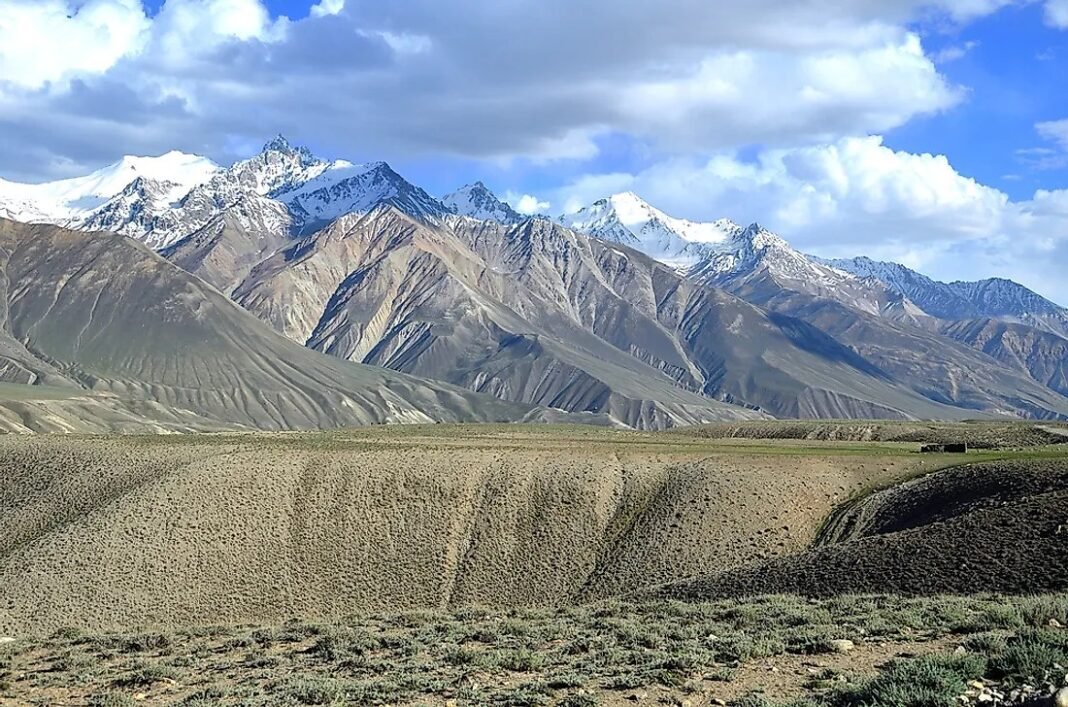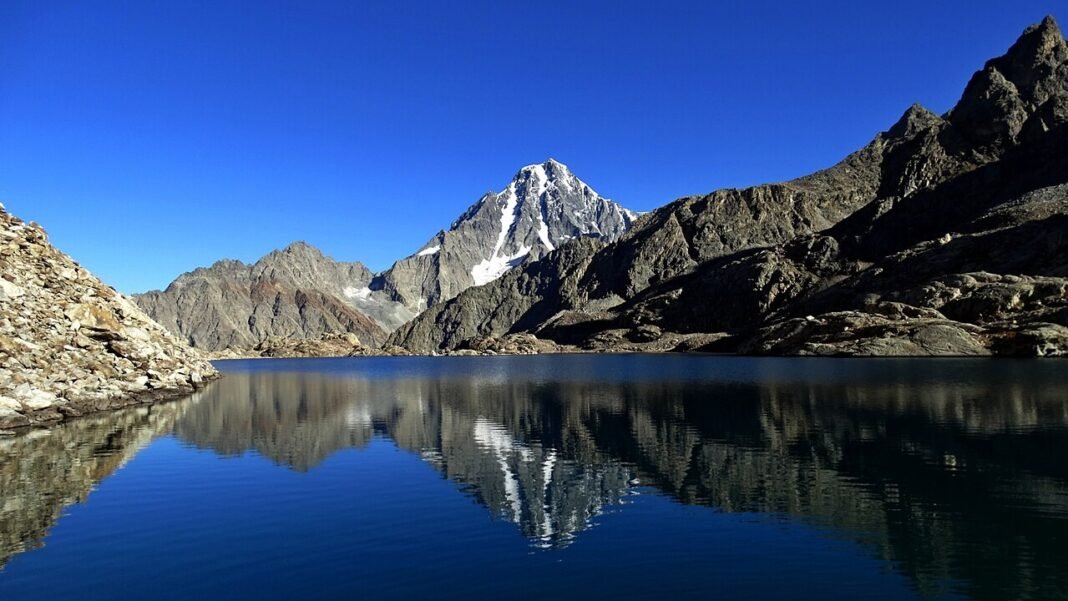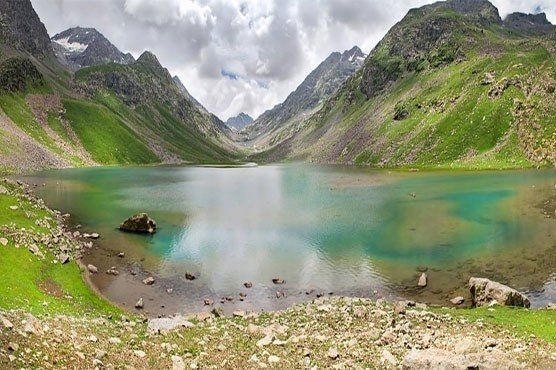
High above the Utror Valley, past the last jeep track and beyond the treeline, lies a lake so still that the mountains double themselves in its surface. Izmis Lake is one of Swat’s best-kept secrets. A glacial lake ringed by natural caves, reached only by those willing to walk for it. In 2021, when Dawn’s photographers published their pictures of its mirror-like water, travellers across Pakistan started asking the same question: where is Izmis Lake, and how do I get there? This izmis lake travel guide answers both — and tells you why this hidden lake deserves your next adventure.
Quick Facts
- Location: South-west of Utror Valley, Swat District, Khyber Pakhtunkhwa, above the treeline
- Altitude: around 11,200–11,550 feet (roughly 3,400–3,520 metres) above sea level
- Famous For: Mirror-like glacial water; the natural caves that gave the lake its name; one of Swat’s most remote accessible lakes
- Nearest City: Kalam (gateway town), then Utror village; Mingora is the nearest large city
- Accessibility: Drive to Kalam, jeep to Utror and on to Loypanrghalay valley, then a 3–6 hour trek
- Known Landmarks: The caves around the lake, Kalam Banda grazing hamlet, Loypanrghalay Valley
- Best For: Trekkers, photographers, nature lovers, and travellers seeking Swat beyond the crowds
Why Visit Izmis Lake
Swat has famous lakes — Mahodand draws the crowds, Kundol draws the romantics — but Izmis draws the adventurers. The reason is simple: you cannot drive to it. Also, a small jeep-able track from Utror runs part of the way and ends in the valley called Loypanrghalay, and from there the lake reveals itself only to those who walk. That single fact filters out the noise. What remains is one of the quietest, most untouched alpine lakes in the whole of Swat.
The Lake You Have to Earn
The lake’s name tells its own story. In Kohistani, Izmis means “caves,” and the lake sits cupped by natural caves in the surrounding rock. The local people named the water after the stone that guards it. When Dawn’s photographers reached it in 2021, they found water so clear and calm it worked like a mirror, doubling the green slopes and grey peaks above it. It is the kind of beauty that makes you lower your camera for a moment just to be sure it is real.
The journey is the reward here as much as the destination. The trek threads through dense forests and past waterfalls, across flower-covered alpine meadows where cows, lambs and goats graze in summer. You will pass Kalam Banda, a small highland hamlet where the graziers of Utror spend their summers in stone-and-earth huts — people who have even built their own small hydro power plant up here, a quiet marvel of mountain self-reliance. Few travel experiences in Pakistan feel this genuinely remote while still being reachable in a long weekend from Islamabad.
And then there is the timing of it all. Swat’s famous lakes are changing fast — more hotels, more jeeps, more crowds every year. Izmis, for now, is still the lake you have to earn. Go now, go gently, and leave nothing behind but footprints. This is the Swat that travellers dream about when they close their eyes.
History of Izmis Lake
Izmis Lake has no recorded ancient history — no forts, no inscriptions, no old empires fought over it. Also, its story is the story of the high pastures of Swat: for generations, the graziers of the Utror Valley have brought their animals up to these meadows every summer, building small stone-and-earth shelters around the lake’s edges and living here for the warm months. The lake served, and still serves, as a watershed for a small stream that mingles with the River Swat down in Utror — water that has sustained the valley’s fields and villages for as long as anyone remembers.
The wider region’s history gives the lake its context. Also, Swat was the heartland of the ancient Gandhara civilisation, dotted with Buddhist stupas and monasteries two thousand years ago. The Butkara stupas near Mingora are the most famous survivors. Later the valley became the princely state of Swat under the Wali. This acceded to Pakistan in 1947 and merged into the province in 1969. Through all of this, the high lakes above Utror stayed what they were: summer pastures, known to shepherds and hunters, invisible to the outside world.
Izmis entered the public imagination only recently. National media coverage — notably Dawn’s 2021 photo feature on the “mirror-like” lake drawing tourists to Utror — introduced it to a generation of Pakistani travellers hungry for new destinations. Since then it has grown steadily as a trekking objective, while remaining far less developed than Mahodand or Kundol. Its history as a travellers’ destination is still being written, and visitors today are among its earliest chapters.
Top Things to Do in Izmis Lake
Trek from Loypanrghalay to the Lake
The signature experience. Meanwhile, after the jeep track ends in Loypanrghalay valley, the trek to Izmis takes roughly 3–6 hours depending on your pace and the exact route conditions, winding between sprawling green meadows carpeted with wildflowers of every colour. In fact, the track climbs steadily through forest and open pasture, with waterfalls along the way. Hire a local guide from Utror. The route is not signposted, weather changes fast, and a guide knows both the path and the mountain’s moods.
Photograph the Mirror Water
Early morning is magic: before the breeze picks up, the lake’s surface turns to glass and the surrounding peaks reflect perfectly. Also, this is the shot that made the lake famous. It rewards the traveller who camps nearby or starts the trek at dawn. A polarising filter helps cut the glare on bright days.
Explore the Caves
The natural caves that gave Izmis its name ring the lake in the surrounding rock. They are shallow, wild caves — not developed or lit — so explore carefully with a headlamp and a guide, and watch your footing on the loose stone around their mouths. Also, standing in a cave mouth looking back across the lake is one of the finest views in Swat.
Meet the Graziers at Kalam Banda
The small hamlet of Kalam Banda sits on the highland route, where Utror’s graziers spend their summers in rustic stone huts and welcome travellers in their own warm, unhurried way. Also, ask about their lives, their animals, and the little hydro plant they built to bring power to these heights. Buy nothing you do not need, take nothing but pictures, and accept the tea.
Birdwatching at the Peat Marshes
The lake’s watershed areas have turned to peat-land and marshes. These make excellent feeding grounds for migratory birds as well as local species. Also, bring binoculars — the high meadows around Izmis are alive with birds in summer. The marshes at the lake’s edge are the best place to watch them.
Camp Under the Stars
There are no hotels at Izmis, and that is the point. Also, a night of camping on the meadows near the lake — with the peaks black against a sky full of stars — is the definitive Izmis experience. Bring a proper tent, a warm sleeping bag, and everything you need; carry all rubbish back down with you.
Famous Places In and Around Izmis Lake
- Utror Valley — the gateway valley, with its own forests, streams and traditional villages.
- Kundol Lake — another beautiful alpine lake north of Utror, a moderate trek away.
- Mahodand Lake — Swat’s most famous lake, in the Paloga Valley beyond Ushu; pair it with Izmis on a longer trip.
- Kalam — the bustling gateway town with bazaars, hotels and restaurants.
- Bahrain — the riverside town on the way up, famous for its trout and handicrafts; see our Bahrain, Swat travel guide.
- Daral Lake — a high alpine lake reachable from the Gabin Jabba side; see our Daral Lake travel guide.
How to Reach Izmis Lake
The journey to Izmis is a three-stage adventure: road, jeep track, and boots. Also, from Islamabad, drive to Kalam via the Swat Motorway, Mingora and Bahrain — roughly 300 km and 7–8 hours of driving through some of the prettiest valley road in the country. In fact, the Swat Motorway has cut hours off this journey in recent years. The road up to Kalam is now in good shape for most of the year.
From Kalam, hire a 4×4 jeep for the run to Utror and onward along the small link road toward the lake. Also, this track ends in the valley called Loypanrghalay — and here the vehicles stop. In fact, from this point the lake is reached on foot, a trek of roughly 3–6 hours through forest, meadow and waterfall country. Most travellers do Kalam → Utror → trek start in one long day, trek to the lake the next morning, and return the day after.
From Lahore, Karachi and the Nearest Airport
From Lahore, the standard approach is to drive or fly to Islamabad first and join the northern route from there. Also, allow a full day to reach Kalam. From Karachi, fly to Islamabad and continue by road. The whole trip needs at least 4–5 days to do comfortably.
Scheduled flights are limited — most travellers use Islamabad International Airport and drive.. Still, the nearest airport is Saidu Sharif Airport near Mingora, Within Swat, jeeps are the essential transport for the Kalam–Utror–Loypanrghalay legs. Book through your Kalam hotel or a local tour operator, and confirm the track’s condition before you set out, especially early or late in the season.
Road conditions: the Islamabad–Kalam road is generally good in summer. Meanwhile, the jeep track beyond Utror is rough and narrow — strictly 4×4 territory — and can be affected by landslides after heavy rain. The trekking route itself is a mountain path, not a constructed trail. It is passable roughly from June to October and snowbound outside that window.
Route Details
- Islamabad → Mingora → Bahrain → Kalam: Swat Motorway to Mingora, then the valley road via Bahrain to Kalam (7–8 hours total).
- Kalam → Utror: 4×4 jeep ride into the Utror Valley; arrange a local guide here.
- Utror → Loypanrghalay: continue by jeep on the small link road to the end of the track.
- Loypanrghalay → Izmis Lake: trek 3–6 hours through forests, meadows and waterfalls to the lake.
- Return: trek back to the jeep, drive to Utror/Kalam; or camp a night at the lake first.
Where to Stay in Izmis Lake
There is no accommodation at the lake — and seasoned travellers will tell you that is its greatest luxury. Also, your options divide neatly by stage of the journey. In Kalam, you will find the full range: mid-range hotels along the main bazaar road, family-run guesthouses. A few higher-end riverside properties. Book ahead in July and August, when Kalam fills up. In Utror, simpler guesthouses and rooms in local homes serve trekkers heading for the high lakes — basic, clean, and full of local character.
At the lake itself, camping is the only option and the best one. Also, bring your own tent and a sleeping bag warm enough for near-freezing nights even in summer. Camp on the meadows, well back from the water’s edge and the marshy watershed areas, and follow strict leave-no-trace practice: carry out everything you carry in, and bury or pack out all waste. If you would rather not camp, it is possible — with an early start and strong legs — to trek to the lake and back to Utror in a very long day. You will miss the dawn mirror and the stars.
Where to Eat: Local Foods of Izmis Lake
On the trek and at the lake, you eat what you carry — pack dry fruits, nuts, energy bars and plenty of water, plus a packed lunch from Kalam or Utror. The graziers at Kalam Banda may share tea and simple food if you ask politely and offer fair payment.. Still, there are no restaurants beyond the villages,
Back in the valley towns, eat like Swat eats. Trout is the region’s pride — fresh from the cold streams, usually fried or grilled, served at restaurants in Kalam, Bahrain and Utror. Chapli kebab, the great Pashtun flat kebab of minced meat and spices, is everywhere and excellent. Also, try lamb karahi, slow-cooked in its own fat with tomatoes and green chillies, and finish with local honey and walnuts. In fact, a full meal at a Kalam dhaba or restaurant is budget-friendly by city standards — hearty food at honest mountain prices.
Weather in Izmis Lake
Izmis sits above the treeline at around 3,400–3,500 metres. Meanwhile, its weather is pure high mountain: brilliant sunshine one hour, cold wind and cloud the next. In fact, summer days are mild and glorious, nights are cold year-round, and snow can arrive as early as October and linger into May. The trekking window is short and precious — plan around it.
| Season | Temperature Range (at the lake) | Conditions |
|---|---|---|
| Winter (Nov–Feb) | -15°C to -2°C | Deep snow; lake frozen; trek route closed |
| Spring (Mar–May) | -5°C to 10°C | Snow melting; route opens late May at the earliest; streams high |
| Summer (Jun–Sep) | 2°C to 18°C | Prime trekking season; meadows in flower; cold nights |
| Autumn (Oct) | -8°C to 8°C | Golden light, fewer trekkers; early snow can close the route |
Language and Culture of Izmis Lake
The Utror Valley is home to Kohistani-speaking communities (the lake’s very name is a Kohistani word), alongside Pashto speakers. Also, Swat’s valleys are a meeting point of languages and cultures. The summer graziers you meet on the trail belong to Utror’s villages and carry generations of knowledge about these pastures. Greet people warmly, dress modestly, ask before taking photographs, and accept hospitality graciously.
Mountain etiquette matters here more than anywhere: stay on established paths to protect the fragile alpine meadows, never wash with soap in the lake or streams, and keep noise down at the water’s edge. Also, this is a watershed that feeds the valley below. The people of Utror are proud of their lake; treat it with the same respect they do.
Shopping in Izmis Lake
There is nothing to buy at the lake — and nothing you need. Do your shopping in Kalam bazaar before you head up: woollen shawls and caps, Swati embroidery, walnuts, dried apricots and local honey make fine souvenirs. Bahrain, on the way up, is famous for its handicraft shops — handwoven shawls, woodwork and traditional woollens. Buy trekking snacks (dry fruit, biscuits, chocolate) in Kalam, where prices are fairer than at the smaller villages.
Travel Tips for Izmis Lake
Packing Essentials
Sturdy broken-in trekking boots, warm layers (fleece + windproof shell), a warm hat and gloves even in summer, rain gear, sunscreen and sunglasses (the high-altitude sun is fierce), a headlamp, a water bottle and purification tablets, high-energy snacks, a basic first-aid kit. Also, a fully charged phone with a power bank. If camping: a 3-season tent and a sleeping bag rated below freezing.
Safety Tips
Never trek alone — hire a local guide from Utror. Start early to avoid afternoon weather, and turn back if clouds build over the peaks. The altitude (around 3,500 m) can cause headaches and nausea; ascend gradually and hydrate well. Mobile signals are patchy beyond Utror, so tell your hotel your trekking plan and expected return time.
Money & Connectivity
Carry all the cash you need in rupees from Kalam. Also, there are no ATMs in Utror or beyond, and no card payments anywhere on the route. Mobile coverage (Jazz and Telenor work best in upper Swat) fades on the trek. Expect to be offline at the lake. Download offline maps before you leave Kalam.
Best Time to Visit Izmis Lake
Summer (July–September) — the trekking season
This is when Izmis is at its best: the route is open, the meadows are green and flower-covered, the graziers are in residence at Kalam Banda. The lake sits unfrozen and mirror-calm on still mornings. July and August are the busiest (though “busy” at Izmis still means a handful of trekkers). September brings crisper air and golden light.
Late Spring (June) — the shoulder
The route usually opens in June as the snow melts, but check conditions locally. A heavy winter can delay the opening by weeks. Early-season trekkers get the lake nearly to themselves, with snow patches still on the surrounding slopes.
Autumn (October) — beautiful but risky
October brings spectacular clear days and autumn colour in the forests below. Meanwhile, the first snow can arrive any time and close the trek without warning. In fact, go only with a guide and a flexible plan.
Winter and Early Spring (November–May) — closed
The lake is frozen, the route is snowbound, and the jeep track beyond Utror is impassable. Wait for summer — the mirror will still be there.
Final Thoughts
Izmis Lake is not the easiest lake in Swat to reach, and that is precisely why you should go. In a valley where the famous lakes grow busier every year, Izmis remains a place you earn with your legs. A mirror of water ringed by caves, guarded by meadows. It shared only with shepherds, birds, and the few travellers willing to walk for wonder. It is Swat as it used to be, and as it still can be if we tread lightly.
So pack your boots, find a guide in Utror, and walk up past the last jeep track into the quiet. The lake will be waiting, perfectly still, perfectly itself. For more hidden corners of the valley, explore our Explore Pakistan collection — or start planning with our Malam Jabba travel guide for Swat’s most famous mountain resort.
FAQs
Where is Izmis Lake located?
Izmis Lake is in Swat District, Khyber Pakhtunkhwa, south-west of the Utror Valley at a high altitude above the treeline.
What is the best time to visit Izmis Lake?
July to September is the prime trekking season. Also, the route is open, the meadows are green. The lake is unfrozen. June and October are possible but weather-dependent.
How do I reach Izmis Lake?
Drive to Kalam, take a 4×4 jeep to Utror and on to Loypanrghalay valley where the track ends, then trek 3–6 hours to the lake. A local guide from Utror is strongly recommended.
Is Izmis Lake safe for families?
The lake suits active families with older children who can handle a long mountain trek. Also, it is not suitable for small children or anyone with mobility issues — there are no facilities at the lake.
What does “Izmis” mean?
In Kohistani, Izmis means “caves”. Also, the lake is named for the natural caves in the rock surrounding it.
Can I camp at Izmis Lake?
Yes — camping is the only overnight option at the lake. Also, bring your own tent and warm sleeping bag, camp back from the water’s edge, and carry out all rubbish.
What food is available near Izmis Lake?
Nothing at the lake itself — carry your own supplies. Also, In Kalam, Bahrain and Utror you will find trout, chapli kebab, lamb karahi and dhabas at budget-friendly prices.
How difficult is the Izmis Lake trek?
Moderate to challenging: a 3–6 hour uphill trek at altitudes up to around 3,500 metres. Also, good fitness, proper boots and a local guide are essential.