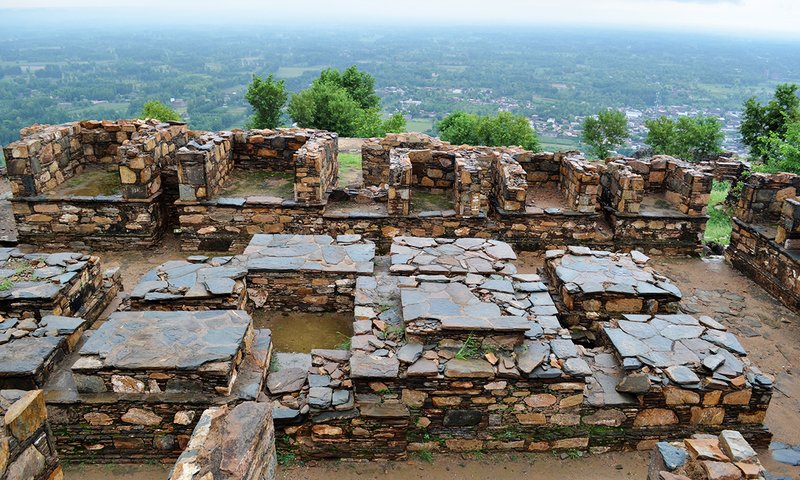
There is a hilltop in the Mardan district where the wind has been blowing across the same stones for nearly two thousand years. Stand on the summit at Jamal Garhi and you are standing inside one of the oldest Buddhist monastic settlements of ancient Gandhara — a walled complex of chapels, courtyards, assembly halls and a great circular stupa, spread around you the way it was when monks walked here in the age of the Kushan kings. Few travellers know it exists, which is exactly what makes it special. This Jamal Garhi Buddhist Monastery, Mardan travel guide brings together everything you need to plan a visit: the real history of the site, why it rewards a detour, the best time to go, and how to reach it from Islamabad, Lahore and Karachi.
Quick Facts
- Location: Jamal Garhi village, on the Mardan–Katlang Road, Mardan district, Khyber Pakhtunkhwa, Pakistan
- Altitude: Around 150 metres above the surrounding plains, on the western offshoot of Paja Hill
- Famous For: A Buddhist monastery and main stupa from the 1st to the 5th century AD; sculptures from the site are held in the British Museum, the Indian Museum in Kolkata, the Lahore Museum and the Peshawar Museum
- Nearest City: Mardan, about 13 kilometres to the south
- Accessibility: Reached by road off the Mardan–Katlang Road; the final climb to the hilltop site is steep — best done on foot, by bike or in a sturdy vehicle
- Known Landmarks: The main circular stupa, votive stupa courts, assembly hall, vaulted chambers and the ancient water tank
- Best For: History lovers, archaeology enthusiasts, Buddhist pilgrims, photographers and travellers looking for uncrowded heritage sites
Why Visit Jamal Garhi Buddhist Monastery, Mardan
Pakistan’s Buddhist heritage has a few famous names — Taxila, Takht-i-Bahi, Shahbaz Garhi — and then it has Jamal Garhi, which belongs to a rarer category: a great monastic site that almost nobody visits. The monastery sits on a rugged hilltop high above the plains, so the first thing that hits you is not the stones but the silence. From the summit you look down over wheat fields and villages with the Paja ridge behind you, and it is easy to understand why the monks of Gandhara chose this spot for meditation, teaching and refuge.
The archaeology here is genuinely world-class. This was a complete Buddhist settlement, not a single monument: a main circular stupa ringed by chapels packed close together, middle and lower courts of smaller votive stupas, an assembly hall, vaulted chambers, secular buildings with open courtyards, and even a water tank cut to supply the community. The 19th-century excavations pulled out sculptures that now sit in the British Museum in London and the Indian Museum in Kolkata, while a Kharoshti inscription discovered here rests in the Peshawar Museum. Recent excavations have found coins of the Kushan king Huvishka, a Buddha statue and the remains of a two-storey house. You will walk through all of this with no ticket queues, no crowds and no barriers — just the ruins and the sky.
Jamal Garhi is also perfect for travellers who want to connect the dots of Gandharan history. Its northern border touches Takht-i-Bahi, the UNESCO World Heritage monastery, and Shahbaz Garhi — where Emperor Ashoka’s rock edicts are carved into boulders — lies to the northeast. Taken together, the three sites form a day-long circuit through two thousand years of Buddhism in this valley. Few heritage itineraries in Pakistan offer that much depth in one short drive.
And there is the human side. The site is known to the villagers below as the “Jamal Garhi Kandarat” or “Kafiro Kote”, names that carry centuries of local memory. Buddhist visitors still come here for worship every year, so the site remains a living place of reverence, not a dead museum. If you are the kind of traveller who prefers a quiet ruin where you can hear the wind meditating among the stones, as one journalist memorably put it, Jamal Garhi should be on your list.
History of Jamal Garhi Buddhist Monastery, Mardan
The monastery at Jamal Garhi dates from the 1st century BC to the 5th century AD, flourishing through the greatest age of Buddhism in the region the Greeks and Romans called Gandhara. The site is believed to have witnessed, in succession, the rise and fall of three dynasties — the Indo-Parthians, the Kushans and the Little Kushans — before being destroyed in the invasions of the White Huns. A Kharoshti inscription recovered during the 1907–08 excavation is dated to the Samvat year 359, which corresponds to 275 AD, placing the monastery’s mature period squarely in the Kushan era.
The modern rediscovery began in 1848, when the British explorer and archaeologist Sir Alexander Cunningham first identified the ruins during his visit to the Shahbaz Garhi region. In 1852 Colonel Lumsden opened the main stupa, though little of value was found at the time. The decisive excavation came in 1871, when Lieutenant Cromten of the Royal Engineers dug the site and unearthed a large number of Buddhist sculptures — carvings that were carried off to the collections of the British Museum and the Indian Museum in Calcutta, where many of them still reside.
The early 20th century brought more systematic work. Excavations in 1907–08 recovered the dated Kharoshti inscription; further digs by the Archaeological Survey of India in 1920–21 unearthed a schist inscription that the German Indologist Heinrich Lüders attributed to the Dharmaguptaka school of Buddhism, suggesting the monastery belonged to that sectarian tradition. Supervision and conservation work continued under Muhammad Sharif in 1922, and the 1920–24 conservation programme recovered more statues. Most recently, excavations in 2012 — funded by the Government of Japan and UNESCO and carried out by students of Hazara University — discovered coins dating to 158–195 AD attributed to King Huvishka, along with a Buddha statue, a terracotta plate inscribed in Kharoshti script, five rooms of a two-storey house and traces of a lake.
Today the ruins are a protected archaeological site, managed by the province’s archaeology authorities, and officials of the Directorate of Archaeology and Museums of Khyber Pakhtunkhwa have confirmed that antiquities from the site are preserved for display in museums in London, Kolkata, Lahore and Peshawar. The hilltop that once echoed with chanting is quiet now — but every stone here has a documented past, which is more than most famous monuments can claim.
Top Things to Do in Jamal Garhi Buddhist Monastery, Mardan
Walk the Main Stupa Court
The centrepiece of the complex is the great circular stupa, set in a courtyard ringed by chapels packed closely together. Walk the circuit slowly and look at how the chapels crowd around the stupa — this was deliberate monastic design, keeping the sacred heart of the settlement enclosed and intimate. Early morning or late afternoon light turns the weathered schist golden, and this is the best time for photographs.
Explore the Votive Stupa Courts
Beyond the main court lie the middle and lower votive stupa courts — clusters of smaller stupas, each surrounded by its own chapels. These were the monuments of devotion raised by individual monks, nuns and patrons over centuries, and wandering among them gives you a feel for how a living monastery grew, layer by layer, generation by generation. The site plan here is remarkably complete, which is why archaeologists describe Jamal Garhi as a full Buddhist settlement rather than a single shrine.
See the Assembly Hall and Vaulted Chambers
The monastery’s assembly hall, vaulted chambers and secular buildings with open courtyards show the practical side of monastic life: where the community gathered, studied and stored provisions. Standing inside these roofless walls, you can still read the room divisions clearly, and it is not hard to imagine the daily rhythm of a community that lived by the monastic rule of the Dharmaguptaka school, to which this monastery is attributed.
Find the Ancient Water Tank
To the west of the main stupa courtyard sits a water tank that supplied the monastery — a reminder that even spiritual settlements needed engineering. It is one of the most interesting details of the site, because it speaks to the self-sufficiency of the community perched on this hilltop, and to the hydraulic skill of its builders.
Follow the Museum Trail
The finest sculptures from Jamal Garhi left Pakistan in the 19th century, so no visit is complete without planning a museum leg. The Peshawar Museum holds the Kharoshti inscription from the site alongside one of the world’s great Gandhara collections; the Lahore Museum and the National Museum in Karachi also preserve Jamal Garhi material. Seeing the actual carvings — the stupa drum panels, the Indo-Corinthian capitals — after walking the ruins is a genuinely moving experience.
Famous Places In and Around Jamal Garhi Buddhist Monastery, Mardan
- Takht-i-Bahi — the UNESCO World Heritage Buddhist monastery, whose northern boundary touches the Jamal Garhi area; the essential companion visit.
- Shahbaz Garhi — boulders carved with the edicts of Emperor Ashoka from the 3rd century BC, to the northeast.
- Sahri Bahlol — the fortified monastic complex near Takht-i-Bahi, also part of the UNESCO listing.
- Peshawar Museum — the Kharoshti inscription and Gandhara sculptures from Jamal Garhi, about 80 km away in Peshawar.
- Asota Megalithic Circle — the mysterious prehistoric stone circle near Swabi, a very different but nearby ancient wonder.
How to Reach Jamal Garhi Buddhist Monastery, Mardan
Jamal Garhi sits on the Mardan–Katlang Road, roughly 13 kilometres northeast of Mardan city in Khyber Pakhtunkhwa. It is well connected to Pakistan’s road network, and Mardan itself lies on the main routes between Peshawar and the north.
- From Islamabad: About 200 km via the M-1 Motorway to the Mardan interchange, then the Mardan–Katlang Road — roughly 3 to 3.5 hours by car.
- From Lahore: Roughly 480–500 km via the M-2 to the M-1, exiting for Mardan — about 6.5 to 7.5 hours by car. Breaking the journey in Peshawar makes it comfortable.
- From Karachi: Far too long to drive comfortably — fly to Peshawar or Islamabad and continue by road. The Peshawar drive to the site is about 82 km, around 1 hour 15 minutes.
- Nearest airport: Bacha Khan International Airport, Peshawar — about 75 km away, around 1 hour 10 minutes by car.
- By train: Nowshera is the nearest railhead; from there continue by road to Mardan and on to the site.
- Local transport: Public vans and buses run from Mardan toward Katlang; the monastery turn-off is on the Mardan–Katlang Road. From the road, the final stretch up the hill is steep — hire a local car or take a bike, and expect to walk the last part.
Route Details
- From Peshawar, take the Peshawar–Charsadda Road or the M-1 to the Mardan interchange, then head into Mardan city.
- From Mardan, follow the Mardan–Katlang Road northeast toward Jamal Garhi village (about 13 km).
- Ask locals for the monastery turn-off — the site is known locally as the Jamal Garhi Kandarat or Kafiro Kote, and villagers will point the way.
- Climb the final hill road: it is steep, so park below and walk up if your vehicle is not suited to the gradient. A cloudy day makes the walk particularly pleasant.
Where to Stay in Jamal Garhi Buddhist Monastery, Mardan
Jamal Garhi is a day-trip site, so most visitors stay in Mardan or Peshawar. Mid-range hotels and guesthouses cluster in Mardan city, a short drive from the site — comfortable, affordable and perfectly fine for a heritage trip. Peshawar, about 80 km away, offers the region’s widest range of accommodation, from well-established mid-range hotels to a couple of higher-end options, and works well if you are combining Jamal Garhi with the Peshawar Museum and the old city. Budget guesthouses are available in both Mardan and along the Katlang Road. There is no accommodation on the hilltop itself, and camping is not advised at the archaeological site. Book ahead if you are travelling on a weekend, when domestic tourists head to the valley’s heritage sites.
Where to Eat: Local Foods of Jamal Garhi Buddhist Monastery, Mardan
The Mardan valley is Pashtun country, and its food is the hearty, meat-forward cuisine the region is famous for. The unmissable dish is chapli kebab — the spiced minced-meat patty that the Peshawar valley claims as its own — best eaten hot from roadside grills in Mardan. Kabuli pulao, lamb karahi, seekh kebab and daleem are all widely available, and the region’s qehwa (green tea) is the standard accompaniment. Mardan’s bazaars have fresh bakeries, sweet shops selling jalebi and barfi, and fruit stalls piled with the valley’s produce in season. For a meal near the site, eat in Mardan city before or after your visit — meals are budget-friendly, and a filling lunch typically costs only a few hundred rupees per person. Carry your own drinking water for the hilltop walk.
Weather in Jamal Garhi Buddhist Monastery, Mardan
The Mardan valley has a hot-summer continental climate: summers are genuinely hot, winters are cool and sometimes frosty, and the monsoon brings green hills from July to September. The hilltop site is exposed, with little shade, so plan the walk for the cooler months or for early morning.
| Season | Temperature Range | Conditions |
|---|---|---|
| Winter (Dec–Feb) | 2°C – 15°C | Cool, clear days; frost possible; excellent for climbing the hill |
| Spring (Mar–Apr) | 15°C – 28°C | Pleasant and green; arguably the finest season to visit |
| Summer (May–Jul) | 28°C – 43°C | Hot and dry; visit very early in the morning if you must come now |
| Autumn (Aug–Nov) | 20°C – 35°C | Monsoon greenery fading into harvest season; good light for photography |
Language and Culture of Jamal Garhi Buddhist Monastery, Mardan
Pashto is the language of the valley, and the local culture is Pashtun, with its strong traditions of hospitality (melmastia) and honour. Urdu is widely understood in Mardan city. Visitors should dress modestly — long trousers or shalwar kameez are appropriate for both men and women — and ask before photographing local people. The monastery is a protected archaeological site and a place of Buddhist reverence: do not climb on the stupas or walls, do not remove stones, and treat the ruins with the same respect you would a mosque or shrine. Alcohol is prohibited and there are no dining facilities at the site, so eat before you arrive.
Shopping in Jamal Garhi Buddhist Monastery, Mardan
Mardan’s bazaars are the place to shop on this trip. Look for Peshawari chappals in soft leather, khaddar and woollen fabrics, and the valley’s honey, which local beekeepers sell in the markets. Dried fruits and nuts — almonds, walnuts, apricots — are good-value souvenirs, and the region’s olive oil is increasingly sold in Mardan’s shops. Antiquities are strictly off-limits: anything that looks ancient is protected by law and cannot be bought or taken home.
Travel Tips for Jamal Garhi Buddhist Monastery, Mardan
Packing Essentials
Sturdy walking shoes with grip for the steep hill path, a hat and sunscreen (the site has almost no shade), at least a litre of drinking water per person, and a camera with a wide-angle lens for the stupas and the panoramic views. Carry a light jacket in winter — the hilltop is windy.
Safety Tips
The site is safe for visitors, including families, but stick to daylight hours and stay on the marked paths — the ruins include old foundations and uneven ground. Hiring a local guide from the village adds both safety and context. Keep your vehicle locked and valuables out of sight at the parking area.
Money & Connectivity
Carry cash — there are no ticket counters or card facilities at the ruins, and roadside vendors deal in cash only. ATMs are available in Mardan city. Mobile signals from all major networks work in the Mardan valley; coverage on the hilltop itself can be patchy.
Best Time to Visit Jamal Garhi Buddhist Monastery, Mardan
October to April — the ideal season
Cool, clear and dry, this is the window when the hill climb is comfortable and the valley is at its most beautiful. October and November bring harvest-season light; February and March turn the fields green. This is also when Buddhist pilgrim visitors are most likely to be at the site.
May to September — the cautious season
The valley is hot and the exposed hilltop offers no shade, so only attempt the climb very early in the morning. The monsoon months (July–August) can make the path slippery but also drape the hills in green — photographers who don’t mind the heat get dramatic skies.
Final Thoughts
Jamal Garhi is the kind of place that rewards the traveller who goes looking. It has the antiquity of Taxila and the monastic completeness of Takht-i-Bahi, yet it remains almost entirely off the tourist map — which means you can stand alone among two-thousand-year-old chapels and listen to the same wind the monks heard. For history lovers and Buddhist pilgrims alike, it is one of the most underrated heritage experiences in Pakistan.
Combine it with Takht-i-Bahi and Shahbaz Garhi for a full Gandhara day, then stop at the Peshawar Museum on your way home to see the sculptures this hilltop gave to the world. Few itineraries in Khyber Pakhtunkhwa offer this much history in a single short drive — and Jamal Garhi, patient and quiet, is waiting for visitors who will treat it with the respect it deserves.
FAQs
Where is Jamal Garhi Buddhist Monastery located?
In Jamal Garhi village on the Mardan–Katlang Road, about 13 kilometres northeast of Mardan city in Khyber Pakhtunkhwa, on a hilltop roughly 150 metres above the plains.
What is the best time to visit Jamal Garhi?
October to April, when the weather is cool and dry. Spring (March–April) is particularly beautiful, and the steep climb is comfortable in the cooler months.
How do I reach Jamal Garhi from Islamabad?
Drive about 200 km via the M-1 Motorway to Mardan (3–3.5 hours), then take the Mardan–Katlang Road northeast to Jamal Garhi village. The final climb to the hilltop site is steep.
Is Jamal Garhi safe for families and foreign tourists?
Yes — the site is safe and welcoming for families, history lovers and foreign visitors, including Buddhist pilgrims who come every year. Visit in daylight and stick to the paths.
Where can I see the sculptures found at Jamal Garhi?
Many are in the British Museum in London and the Indian Museum in Kolkata. The Kharoshti inscription and fine Gandhara carvings from the site are displayed at the Peshawar Museum, with more material in the Lahore Museum.
Where should I stay when visiting Jamal Garhi?
Stay in Mardan city (mid-range hotels and guesthouses, about 13 km away) or in Peshawar (about 80 km, with the widest choice of accommodation). There is no lodging at the site itself.
What food is the Mardan region known for?
Chapli kebab, kabuli pulao, lamb karahi, seekh kebab and qehwa (green tea) — the hearty Pashtun cuisine of the Peshawar valley, widely available and budget-friendly in Mardan’s bazaars.
Why do locals call the site “Kafiro Kote”?
“Kafiro Kote” (the fort of the non-believers) is a folk name reflecting the valley’s memory of the pre-Islamic past — the Buddhist monks who built the monastery centuries before Islam arrived in the region. The name “Kandarat” similarly points to an old fortified place.
For more heritage journeys across the country, browse the Explore Pakistan collection, compare notes with Malam Jabba, or walk another Gandharan site in the Gandhara Art Village, Taxila travel guide and the Bhir Mound, Taxila travel guide.